Wachau Apricots: The Wachauer Marille, Blossom, Harvest and Buying Guide
Wachau apricots are the protected Wachauer Marille grown along the Danube. Here is when the blossom peaks, when fruit ripens and what to buy in the valley.
On this page
Wachau apricots are small, aromatic apricots grown in a protected zone along the Danube in Lower Austria, sold under the name Wachauer Marille g.U. The trees blossom for roughly ten days to three weeks between late March and early April, and the fresh fruit is picked from late June to early August, which means two short windows decide whether a trip lines up with flowers or with fruit. This guide covers where the orchards sit, how the harvest and farm stands work, and what to buy beyond the fresh fruit.
One product ties the valley to a wider Austrian table: apricot jam is the filling at the center of a Sachertorte, the Viennese cake of chocolate glaze and apricot jam that appears in every coffee house case. The same fruit is what makes Marillenknödel possible, dumplings wrapped around whole apricots in potato dough or curd cheese dough, and it is the reason a bottle of Wachau apricot brandy is worth understanding before you buy.
What the Wachauer Marille is and why these apricots taste different
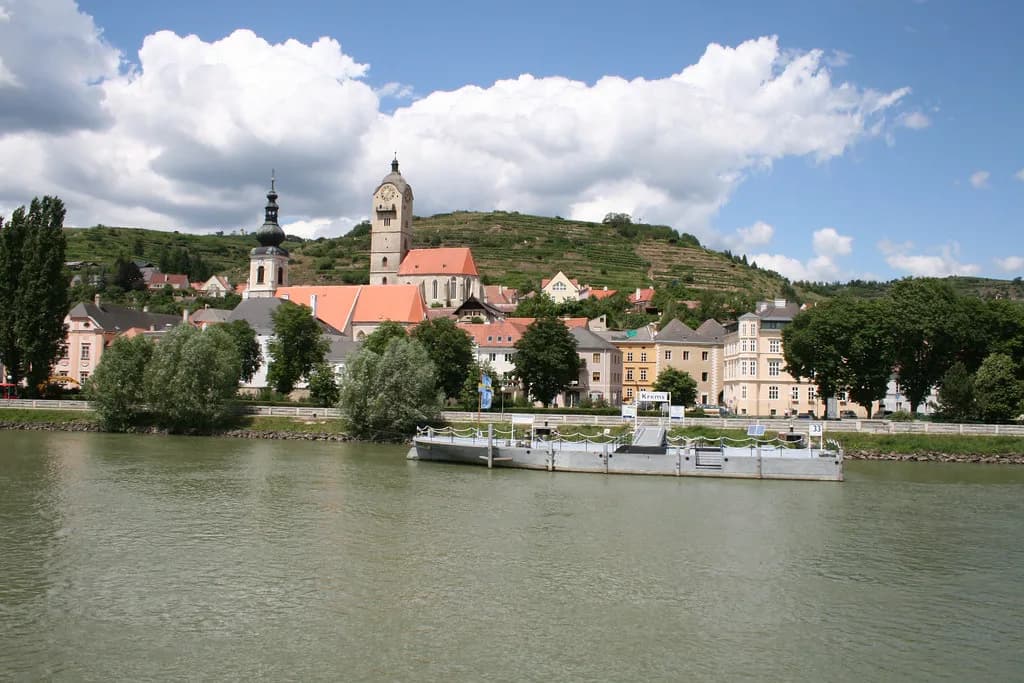
The Wachauer Marille g.U. is a protected designation covering fruit grown in a listed set of municipalities, including Krems an der Donau, Dürnstein, Spitz, Weißenkirchen in der Wachau, Rossatz-Arnsdorf, Mautern an der Donau and Aggsbach. A farm stand selling apricots at the eastern end of the valley may therefore be selling the same protected fruit as one near Spitz, while a seller just outside the boundary is not.
Growers credit the flavor to the valley's climate and its bedrock soils, combined with day-to-night temperature swings and more than a century of local growing practice. The fruit is picked only when tree-ripened and by hand, which is why a Wachau apricot tastes different from a firm supermarket apricot that was picked early for shipping.
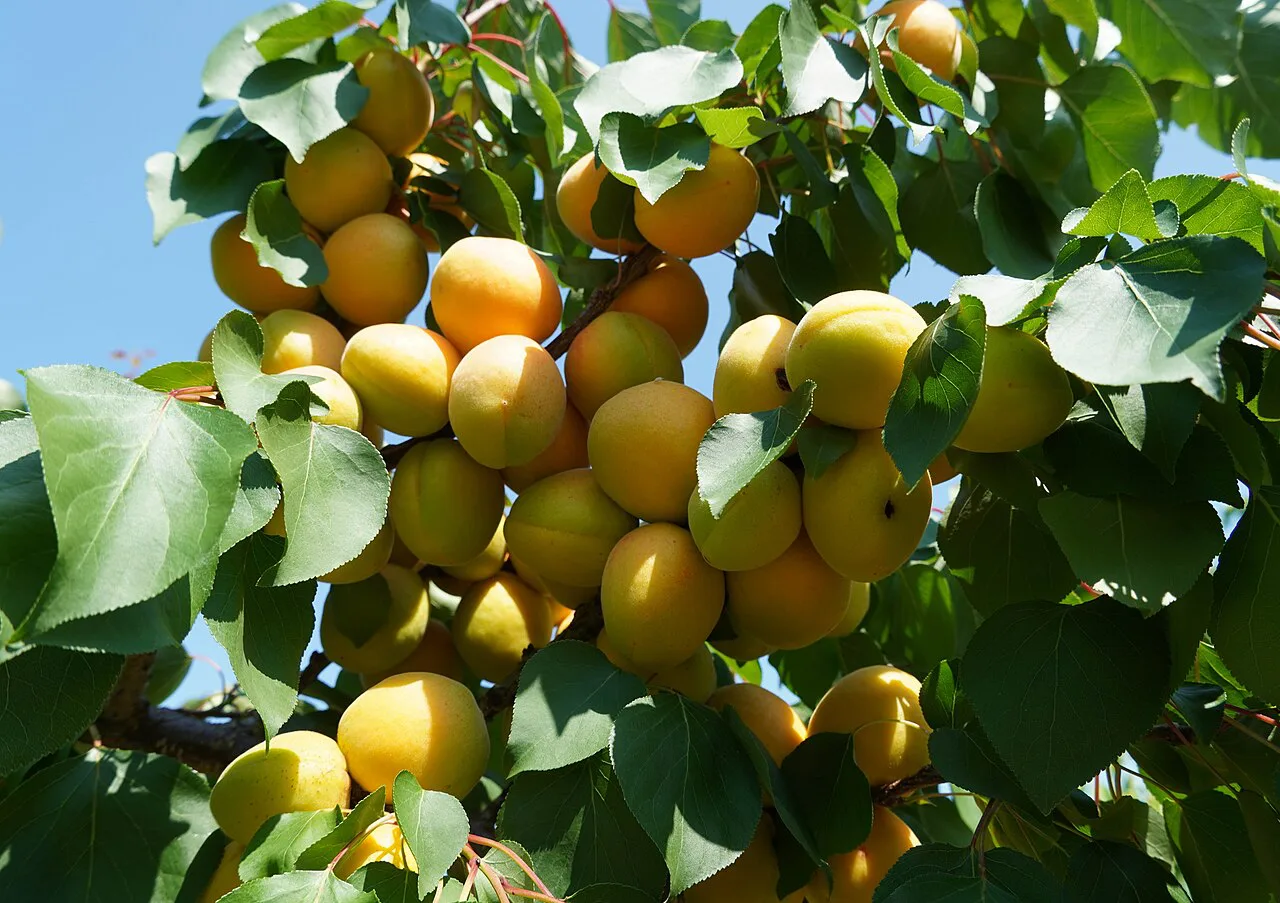
Variety matters too. Local growers keep several cultivars with staggered ripening dates, from early Rosenmarille through Große Gemeine Marille, Ananas Marille, Gelbe Wachauer and Kremser Marille, and that spread is what stretches the fresh-fruit season across roughly six weeks instead of a single fortnight. Apricots reached the Wachau long before the tourist trade: the first documented record of the fruit in the valley dates to 1509, and plantings expanded after phylloxera devastated the vineyards around 1890.
Where in the Wachau the apricots grow, from Krems to Spitz and Rossatz-Arnsdorf
The orchards follow the Danube on both banks. On the south bank, Rossatz-Arnsdorf is described as the largest apricot-growing municipality in the region, and it is where the Marillenmeile, a signed apricot-orchard trail, runs in seven stages of about 2 to 6 kilometers each. On the north bank, plantings run from the Krems side through Dürnstein, Weißenkirchen and Spitz toward Aggsbach Markt, with the latest blossom in the Spitzer Graben.
Are Wachau apricots the same as regular apricots? They are the same species, but Wachauer Marille g.U. is a protected name limited to fruit grown in a defined list of municipalities along the Danube, picked tree-ripe and by hand.
Can I buy fresh Wachau apricots online? No. Fresh fruit is sold at the farm stand in the valley, and the Rohrendorf bei Krems farm Marillen Familie Weiss states that it does not deliver or ship; its online shop covers jam, nectar, liqueur, brandy and gift boxes.
What is the difference between Marillenlikör and Marillenedelbrand? Marillenlikör is a sweet apricot liqueur at roughly 17.5 percent alcohol, while Marillenedelbrand is an apricot brandy at roughly 43 percent. Both are made from the same fruit; the brandy is a distillate and is served in small measures.
Krems an der Donau is the practical gateway: it sits at the eastern mouth of the valley and is the town most travelers reach first by rail. Rohrendorf bei Krems, just north of Krems on the B35, is where one family farm sells its own apricots from a roadside stand.
When the apricot trees blossom and how long the bloom lasts
Blossom timing shifts with spring temperatures, but as a general rule the Wachau bloom falls in the last weeks of March and the first weeks of April, and it lasts anywhere from ten days to three weeks depending on weather. The bloom starts near Krems and moves up the valley, ending latest in the Spitzer Graben, so a traveler who arrives at the very start of the window should head east rather than west.
A live webcam showing the current state of the blossom is the reliable way to time a visit, since the exact peak is not set in advance. After the petals fall, the trees need about three months to ripen the fruit.
Where to see and walk through blossoming apricot orchards
Orchards are working farmland, not parks, so the practical approach is to use the marked routes that cross them. The Marillenmeile in Rossatz-Arnsdorf is laid out in short stages, which lets you walk a couple of kilometers through blooming trees and stop without committing to a full day.
The regional tourism board publishes a blossom map showing orchard locations alongside Wachaubahn stops and bus lines, plus a downloadable blossom guide for the season. Ferries across the Danube let you switch banks to see the slopes from the opposite side, which is often the better view of a hillside orchard.
In 2026 the region sold a Frühlingsticket Wachau valid from March 13 to April 26, covering unlimited rides on the Wachau buses, ferries and the Wachaubahn on any single Friday, Saturday, Sunday or public holiday, at 14 euros for adults and 7 euros for children. That was that year's offer, so book the current season's ticket rather than assuming the same dates or prices.
When fresh Wachau apricots are ripe and how the harvest runs
Fresh fruit is available from late June to early August, an unusually long stretch for apricots because the different varieties ripen in sequence. Harvest is by hand and selective: pickers return to the same trees repeatedly rather than stripping them in one pass, so a stand can have fruit one morning and none the next.
Growers recommend pre-ordering because the daily harvest varies and a walk-up visit can end at an empty stand. Reserve the quantity you want for a specific pickup day and you skip the lottery of showing up mid-morning on a busy July weekend.
This is why the fresh season and the blossom season reward different planning: the bloom is a landscape event you can watch from a road, while the fruit is a retail event that depends on someone else's harvest that morning. If a stand is sold out, the same farm's jam, nectar or spirits are usually still available.
Buying fresh fruit at a farm stand: pickup at Rohrendorf bei Krems
Marillen Familie Weiss grows apricots in Rohrendorf bei Krems and sells picked-to-order fruit from a stand directly on the B35 between Krems and Rohrendorf, open daily from 8:00 to 17:00 in June and July. Order ahead for the quantity you need, choose a pickup day, and expect a sample before you buy; outside those months the same farm sells its products from its farm outlet.
The stand works for travelers without a car, since the B35 is the main road along that stretch of the valley and roughly a short ride from Krems. Bring cash or a card, plan around a 17:00 closing, and do not count on shipping: this farm does not deliver or mail fresh fruit.
What to buy beyond fresh fruit: jam, nectar, liqueur and apricot brandy
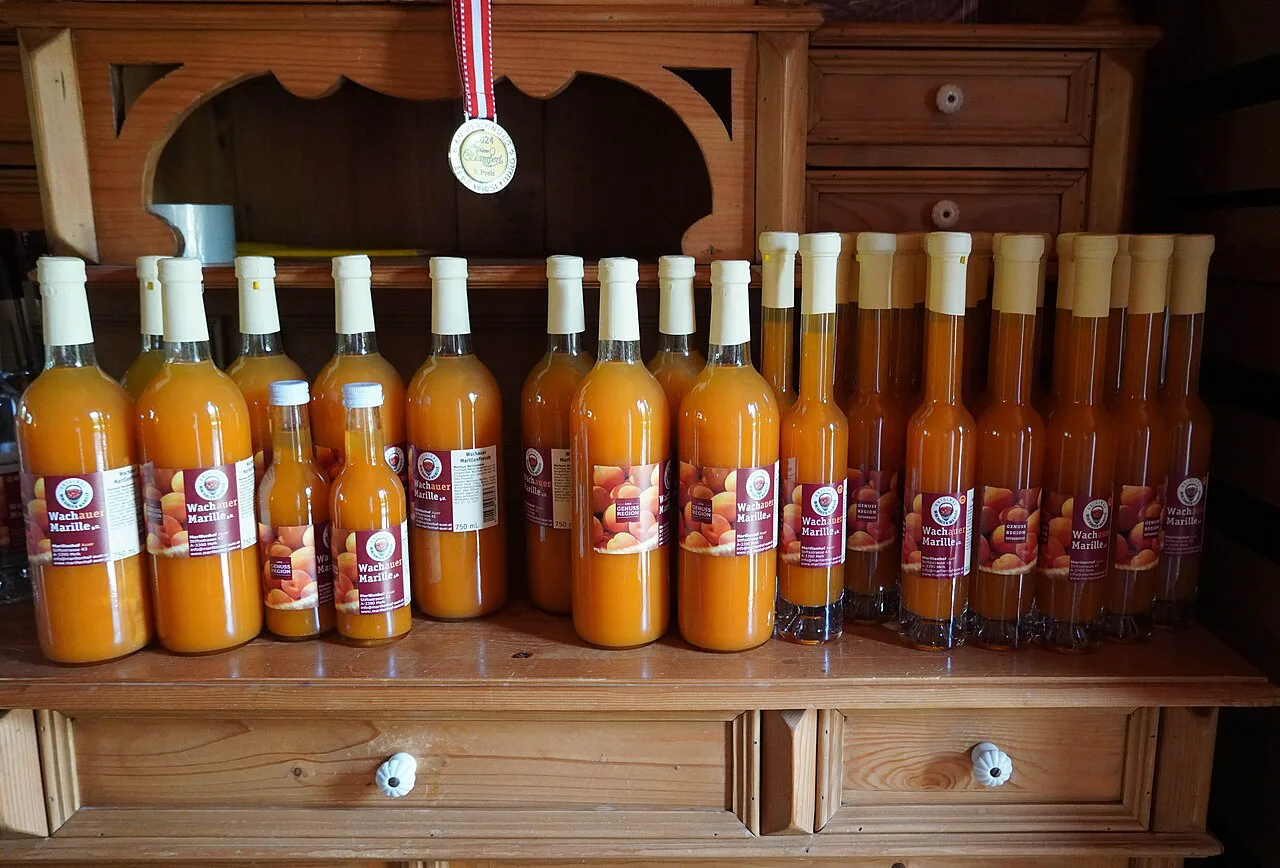
The valley's apricots reappear in a predictable set of products: apricot jam, apricot nectar, apricot liqueur and apricot brandy, known in German as Marillenlikör and Marillenedelbrand. The alcohol content tells you what you are carrying: the liqueur is a sweet, fruity pour at roughly 17.5 percent alcohol, while the brandy is a clear distillate at roughly 43 percent, closer to a spirit than a dessert drink.
A distillery in the Wachau also sells apricot spirits, liqueurs and apricot-based body lotion, which makes a compact souvenir that survives a flight better than a crate of fruit. Buy spirits at the end of a day of driving, and check the shipping rules for your home country before you plan to mail bottles.
In Austrian pastry, apricot jam is the standard filling for a Sachertorte and a common one in Krapfen, the jam-filled doughnut sold across the country, so a jar bought in the Wachau is a practical bridge between the valley and the coffee-house case. The dessert side of the story, from Marillenknödel to Kaiserschmarrn, covers the wider range of Austrian desserts you will meet on the same trip, and it is worth reading before you go if you want to know what to order with the fruit you bring home.
How apricot orchards fit a Danube-valley route by Wachaubahn, bus or ferry
The Wachaubahn and the valley bus lines run along the Danube with stops near the orchards, and the ferries connect the two banks, so a car is not required to reach a farm stand or an orchard trail. Build the day around one bank, cross by ferry, and return by train or bus rather than trying to cover Krems to Spitz on foot.
A workable route on the north bank starts in Krems, stops at the Rohrendorf stand for fruit, then continues to Dürnstein and Spitz with a ferry crossing to Rossatz-Arnsdorf for the Marillenmeile. Reverse the direction in late March if you want to start where the blossom opens first.
There is a wider dessert trail through Austria if you are building a food itinerary, from Gugelhupf and Linzer Torte to Germknödel and Salzburger Nockerl, and Austrian coffee house culture is the natural place to eat cake after a day in the orchards. Use a single day for the apricots themselves and keep the rest for the towns.
Practical trade-offs: short seasons, fast-selling stands and blossom crowds
Both apricot windows are short, and neither is guaranteed. A cold snap can shorten the bloom, a storm can cut the harvest, and the busiest weekends in late March draw real crowds into the narrow valley roads. If your dates are fixed, aim for the middle of a window rather than its edges and keep an orchard walk as the plan rather than a specific tree.
Fresh fruit is the least reliable purchase and the most memorable one, so treat jam, nectar and brandy as the fallback that never depends on the morning's picking. That way a sold-out stand costs you an hour, not the whole point of the trip.
Blossom or fruit: which Wachau trip to book
Choose the blossom if you want the landscape, accept a fixed spring window and can travel on short notice when the webcam shows open flowers. Choose late June to early August if you want to eat the fruit itself, and pre-order from a specific farm stand rather than hoping to find one stocked.
Either way, the valley rewards a loose plan: one bank by train or bus, one crossing by ferry, and a stop for apricot products that keeps regardless of the harvest. If you only have one day, put the orchards first and the towns second.
Explore more Austria guides
Frequently Asked Questions
Are Wachau apricots the same as regular apricots?
They are the same species, but Wachauer Marille g.U. is a protected name limited to fruit grown in a defined list of municipalities along the Danube, picked tree-ripe and by hand. Growers credit the valley's bedrock soils, temperature swings and long local growing tradition for the aroma.
Can I buy fresh Wachau apricots online?
No. Fresh fruit is sold at the farm stand in the valley, and the Rohrendorf bei Krems farm Marillen Familie Weiss states that it does not deliver or ship; its online shop covers jam, nectar, liqueur, brandy and gift boxes. Pre-order fresh apricots for pickup during the June and July season.
What is the difference between Marillenlikör and Marillenedelbrand?
Marillenlikör is a sweet apricot liqueur at roughly 17.5 percent alcohol, while Marillenedelbrand is an apricot brandy at roughly 43 percent. Both are made from the same fruit; the brandy is a distillate and is served in small measures.
Why is apricot jam so common in Austrian cakes?
Apricot jam is the classic filling in a Sachertorte and appears in Krapfen and other pastries, which is why a jar from the Wachau is a practical souvenir.
Sources
Notes for your next Austrian town break
Optional updates when we add or revise town guides.
You might also like


Continue reading
More guides you'll find useful