Things to Do in Innsbruck: Old Town, Palaces and Cable Cars
Plan your time in Innsbruck by area: the Altstadt and Goldenes Dachl, Hofburg and Schloss Ambras, the Bergisel, and the cable cars above town.
On this page
Innsbruck's best sights fit into two clusters: the compact Altstadt with the Goldenes Dachl at its heart, and the mountain terraces reached by the Hungerburgbahn and Nordkettenbahn above the city. Plan one walking day through the center and hold a half day for the trip up to Seegrube and Hafelekar, because the cable car ride is the part most visitors underestimate. This guide sorts the city by area, flags what sits outside the center, and names the rail add-ons that work from Innsbruck's main station.
What Innsbruck is best known for
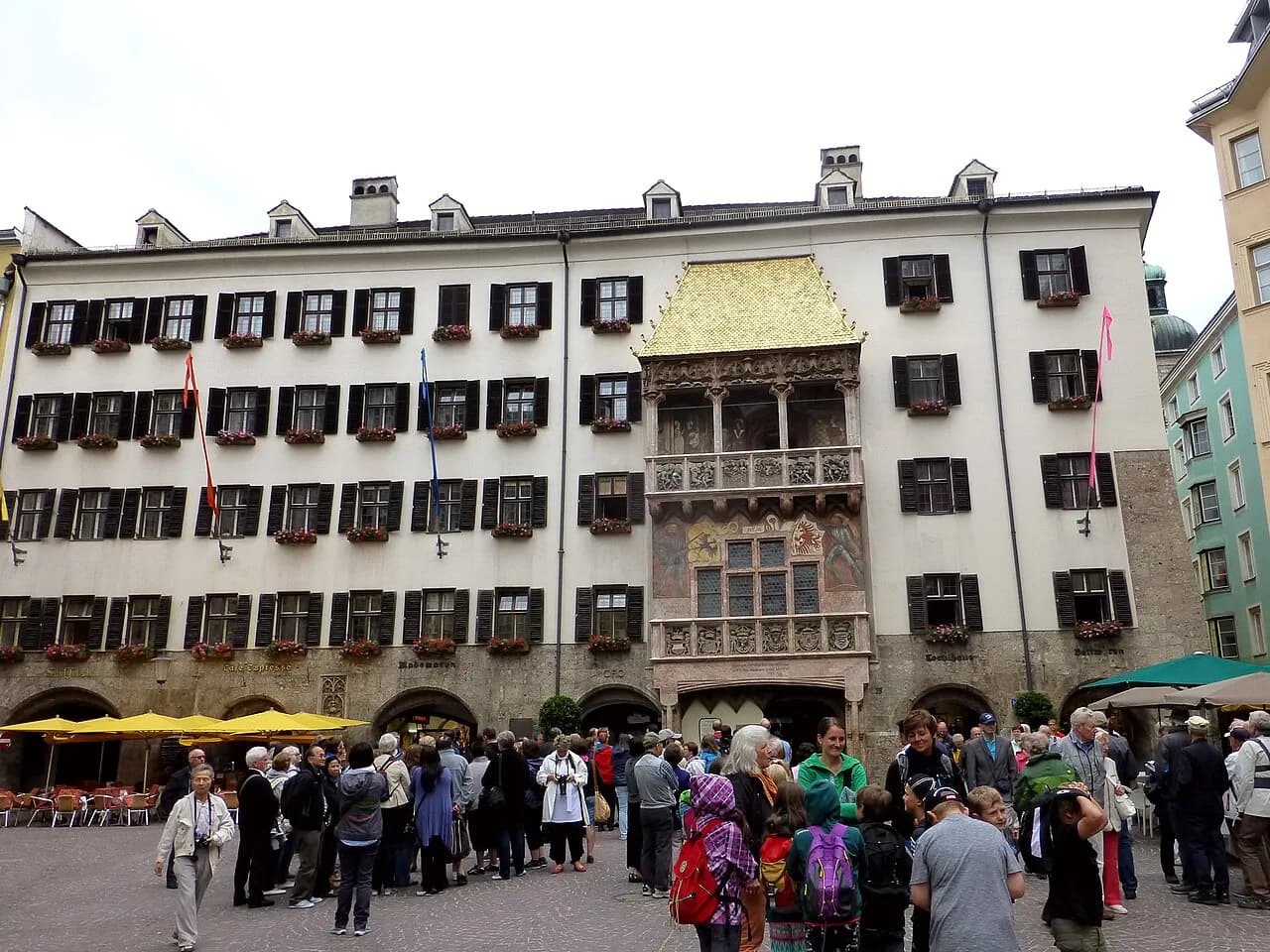
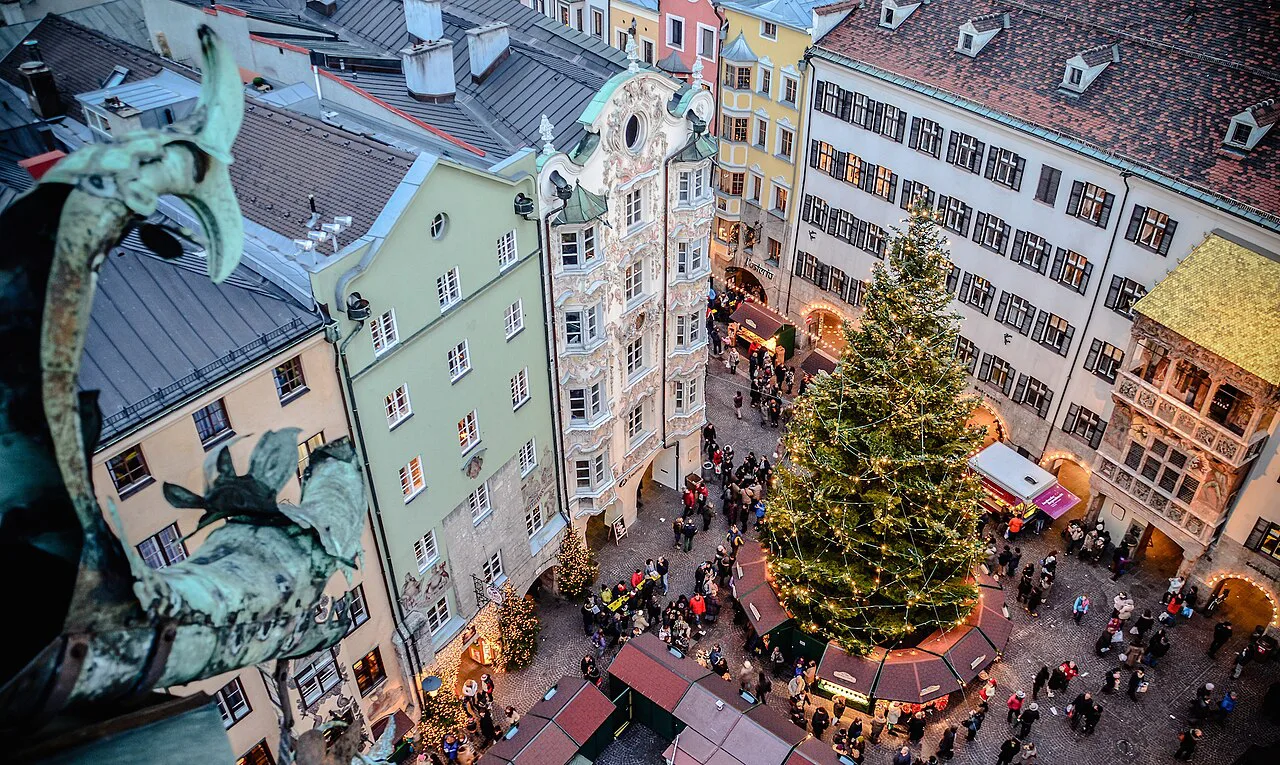
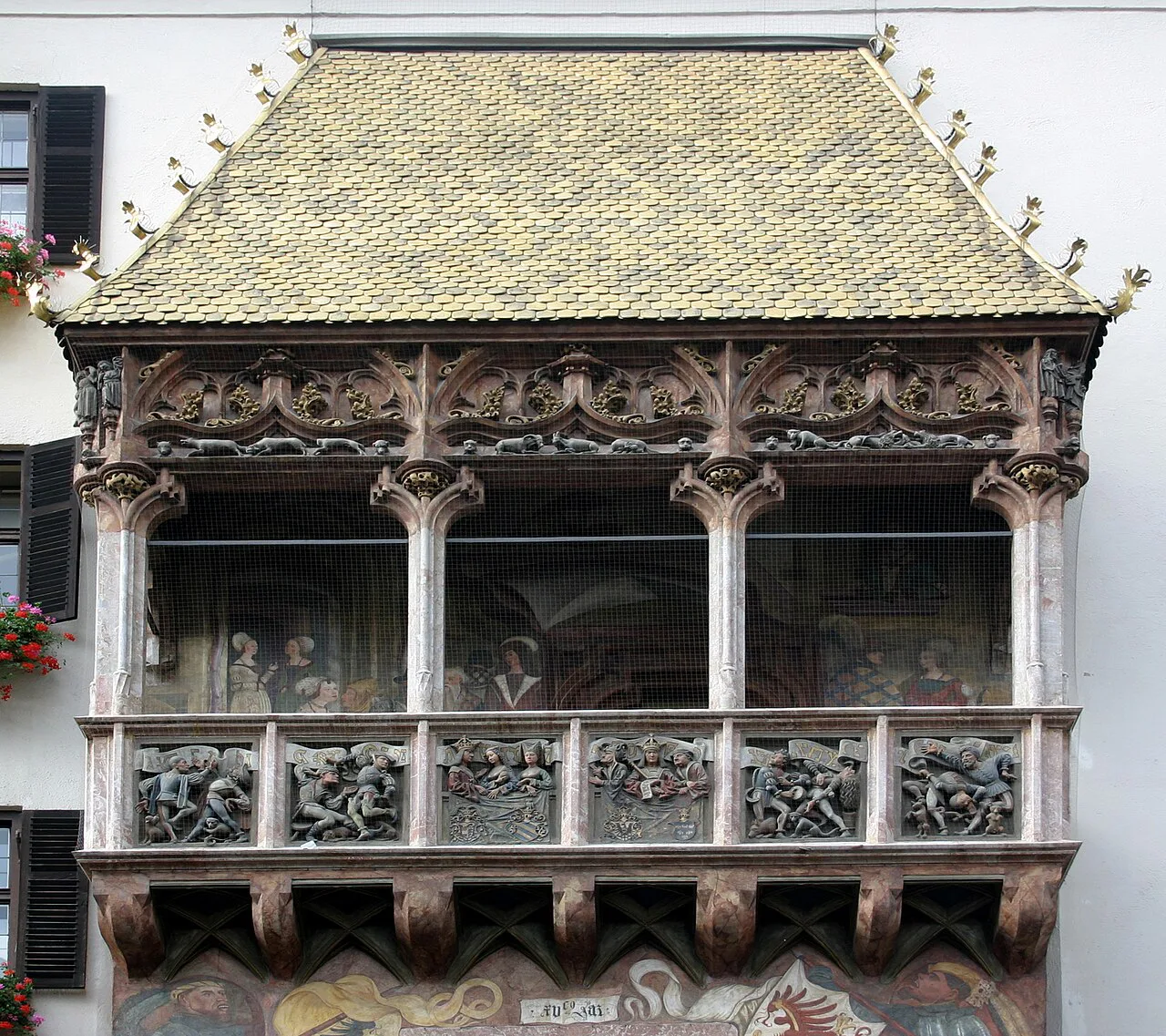
The Goldenes Dachl is the city's signature monument, a late-Gothic oriel whose roof was covered with 2,657 fire-gilded copper shingles, commissioned by Emperor Maximilian I around his marriage to Bianca Maria Sforza of Milan. It belongs to the Neuer Hof, the residence of Duke Friedrich IV in the fifteenth century, and since 2007 the building has also housed the Museum Goldenes Dachl. Stand in the square below to see the shingles catch the light, then decide whether the museum's interior is worth your time before committing.
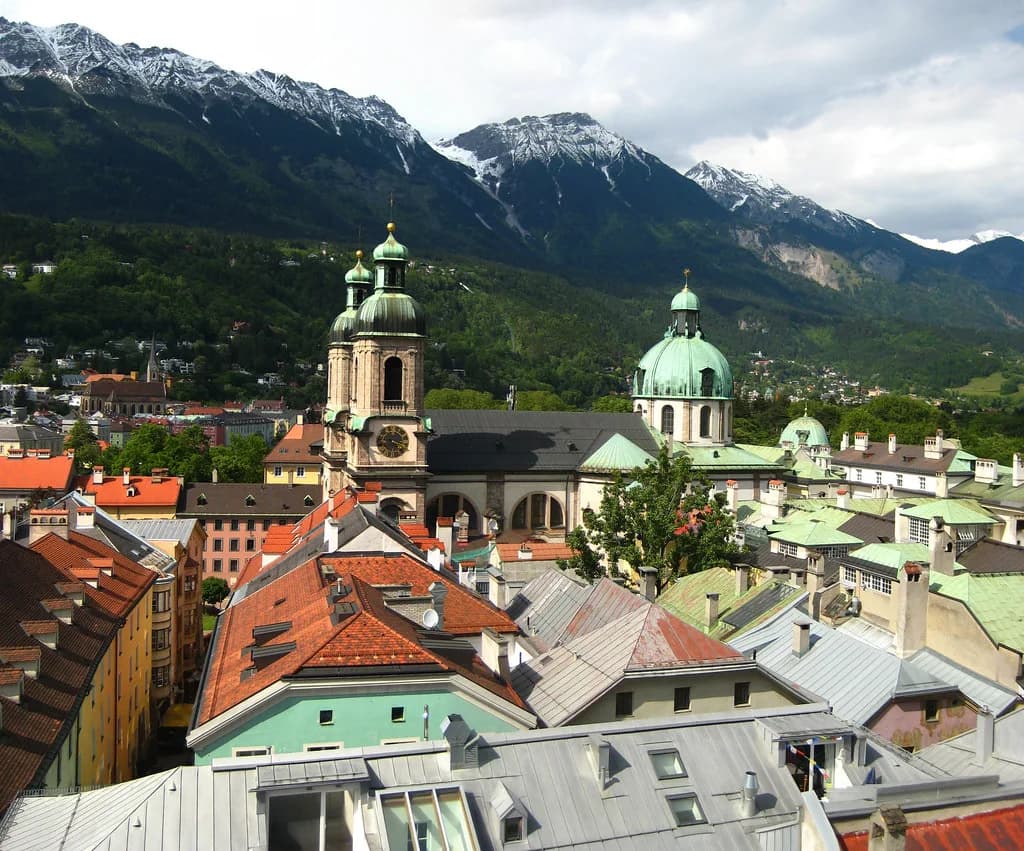
Beyond that one monument, Innsbruck is an imperial city with a Habsburg palace, a court church holding Maximilian's monumental tomb, and a baroque cathedral, all within a few minutes of each other on foot. Add the modern layer, the Zaha Hadid-designed Bergiselschanze ski jump and the Hungerburgbahn funicular, and you get a city that reads imperial and contemporary in the same afternoon.
How Innsbruck is laid out
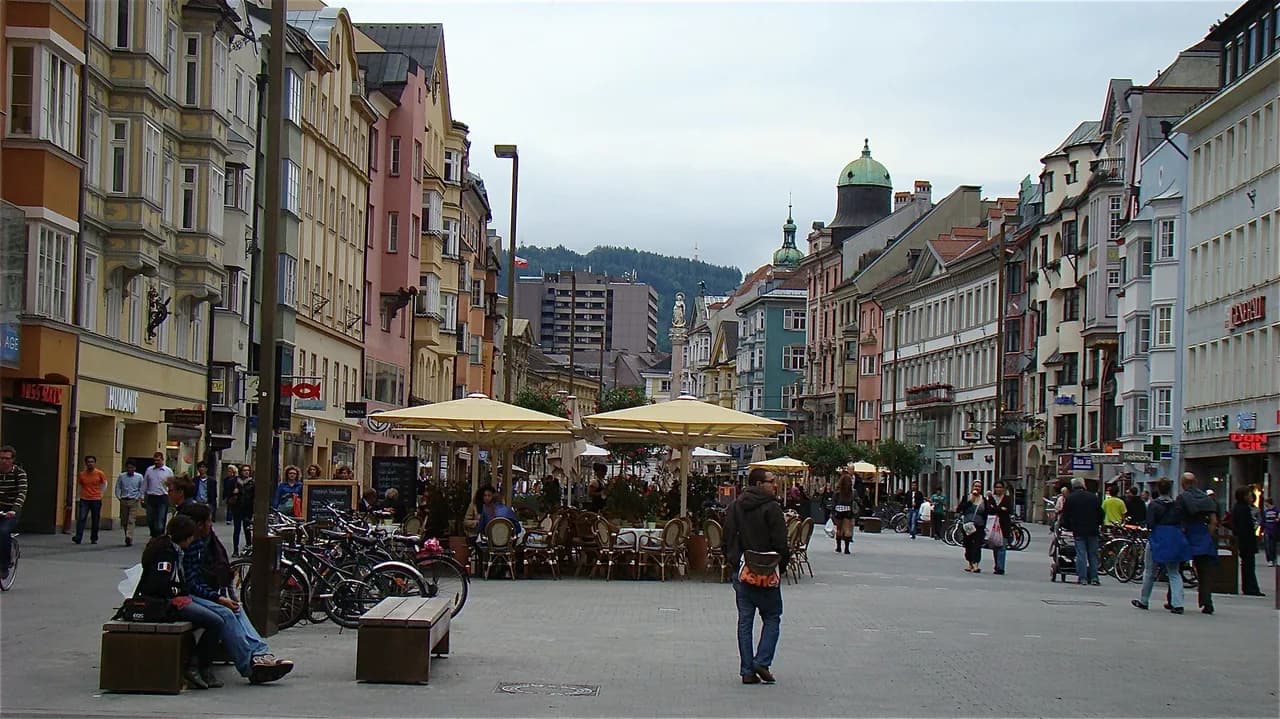
The old town sits on the south bank of the Inn, a tight grid of lanes anchored by the Goldenes Dachl and the Stadtturm, with Maria-Theresien-Straße running south toward the Triumphpforte and the Anna column. The riverfront is where the postcard view lives: the colorful house row of Mariahilfstraße on the north bank, best seen from the opposite side of the Inn or from the Innbrücke. Once you understand that the center is walkable in a loop and the mountains rise directly to the north, planning gets simple.
Two major sights break the walking plan: Schloss Ambras sits above town to the southeast, and the Bergiselschanze with the Tirol Panorama stands on the Bergisel hill to the south. Both need a tram or bus rather than a stroll, so slot them into separate blocks instead of trying to fold them into an old-town loop. The Altstadt Innsbruck rewards a slow pass in the morning before the day-trippers arrive.
The Altstadt sights
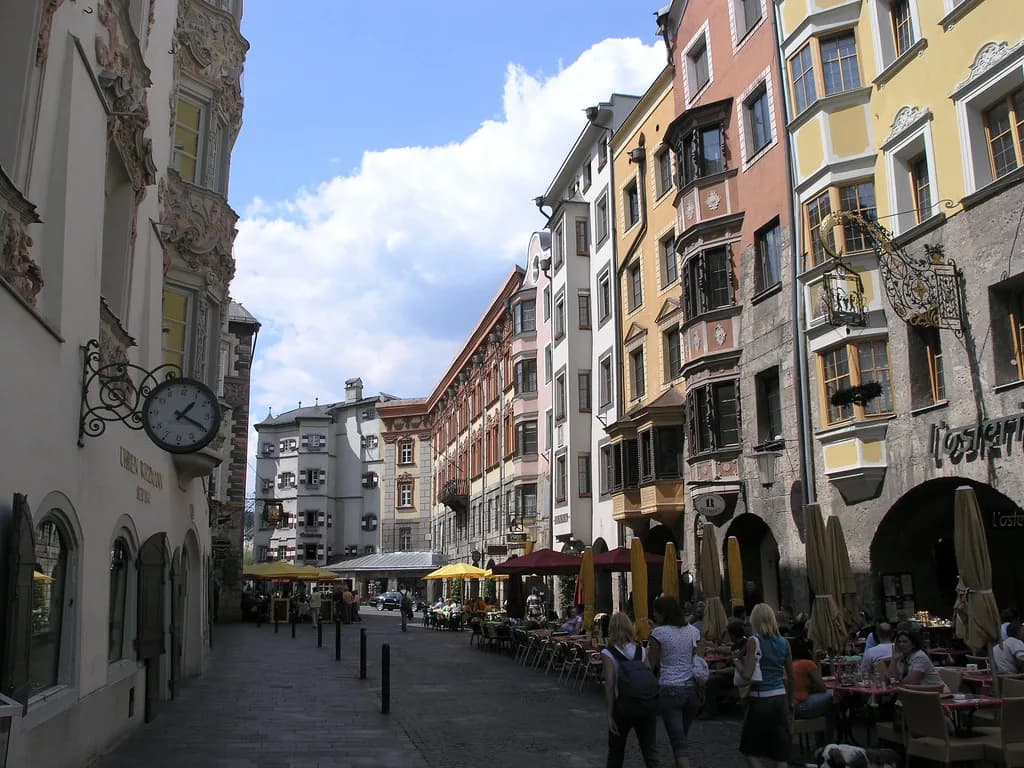
Start at the Goldenes Dachl and work outward: the Stadtturm offers a climb for a rooftop view over the shingled roofs, the Hofkirche holds Maximilian I's monumental tomb surrounded by bronze figures, and the Dom zu St. Jakob anchors the lanes with its baroque interior. Each is small enough to take in on foot within a short stretch, which is why the Altstadt works as a single morning rather than a checklist spread over days.
The Hofkirche and the Dom are the two stops that reward a slower pace, one for its imperial tomb and the other for its stucco and frescoes. If you are choosing between them on a tight schedule, the Hofkirche carries the stronger story for anyone following the Maximilian thread through the city, and its cenotaph is one of the great Renaissance monuments in the Alps. Confirm opening times before you build a day around either.
Imperial Innsbruck: Hofburg and Schloss Ambras
The Hofburg, the Habsburg residence on the edge of the old town, now runs as a museum with state rooms and imperial apartments, and it pairs naturally with the Altstadt walk since it sits minutes from the Goldenes Dachl. Schloss Ambras, the Renaissance palace above town, is the bigger outing: it holds collections and armories in a setting that needs its own half day once you count the tram ride each way. Treat them as two separate visits rather than one imperial circuit.
Modern architecture and the Bergisel
The Bergiselschanze, redesigned by Zaha Hadid, stands on the hill where ski jumping has taken place since 1927, and a slant elevator carries visitors up to the tower with its viewing platform and restaurant. At the parking area below, the Tirol Panorama with the Kaiserjägermuseum rounds out the visit, so budget the hill as one block rather than two separate trips. Check the schedule of events on the jump before you go, since the tower and its access can be affected on competition days.
Back at river level, the Mariahilfstraße house row on the north bank is the city's most photographed facade, a line of bright fronts in red, green, orange, light blue, yellow and pink. Photographers work it from the Marktplatz side or from the Innbrücke, and early morning or evening gives the cleanest light and the thinnest crowds. The Hölblinghaus nearby adds a painted baroque facade worth a look on the same walk.
Getting up the mountain: Nordkettenbahn and Hungerburgbahn
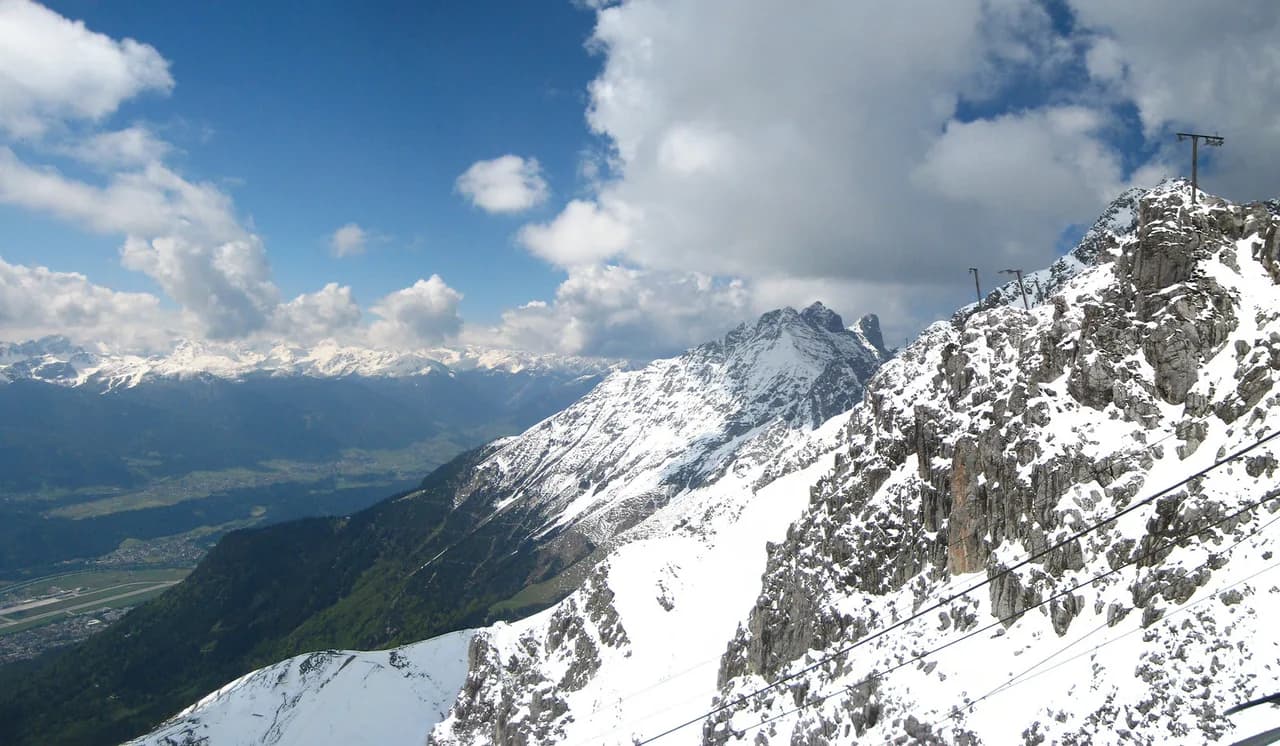
The Hungerburgbahn funicular climbs from the city to the Hungerburg, where the Nordkettenbahn cable car continues to Seegrube and then to Hafelekar at roughly 2,300 meters. This is the half-day commitment in Innsbruck: the ride up, time on the terraces, and the descent together take longer than the old town loop, and weather at the top decides whether the trip pays off. Go on a clear morning and keep the center for the afternoon.
The Innsbruck Card bundles public transport with entry to museums and sights, and it extends to the mountain railways around the city, which makes it worth pricing out if you plan both the cable cars and several museums in the same visit. Compare the card against the individual tickets you actually intend to buy rather than assuming it saves money.
Markets and food around the Marktplatz
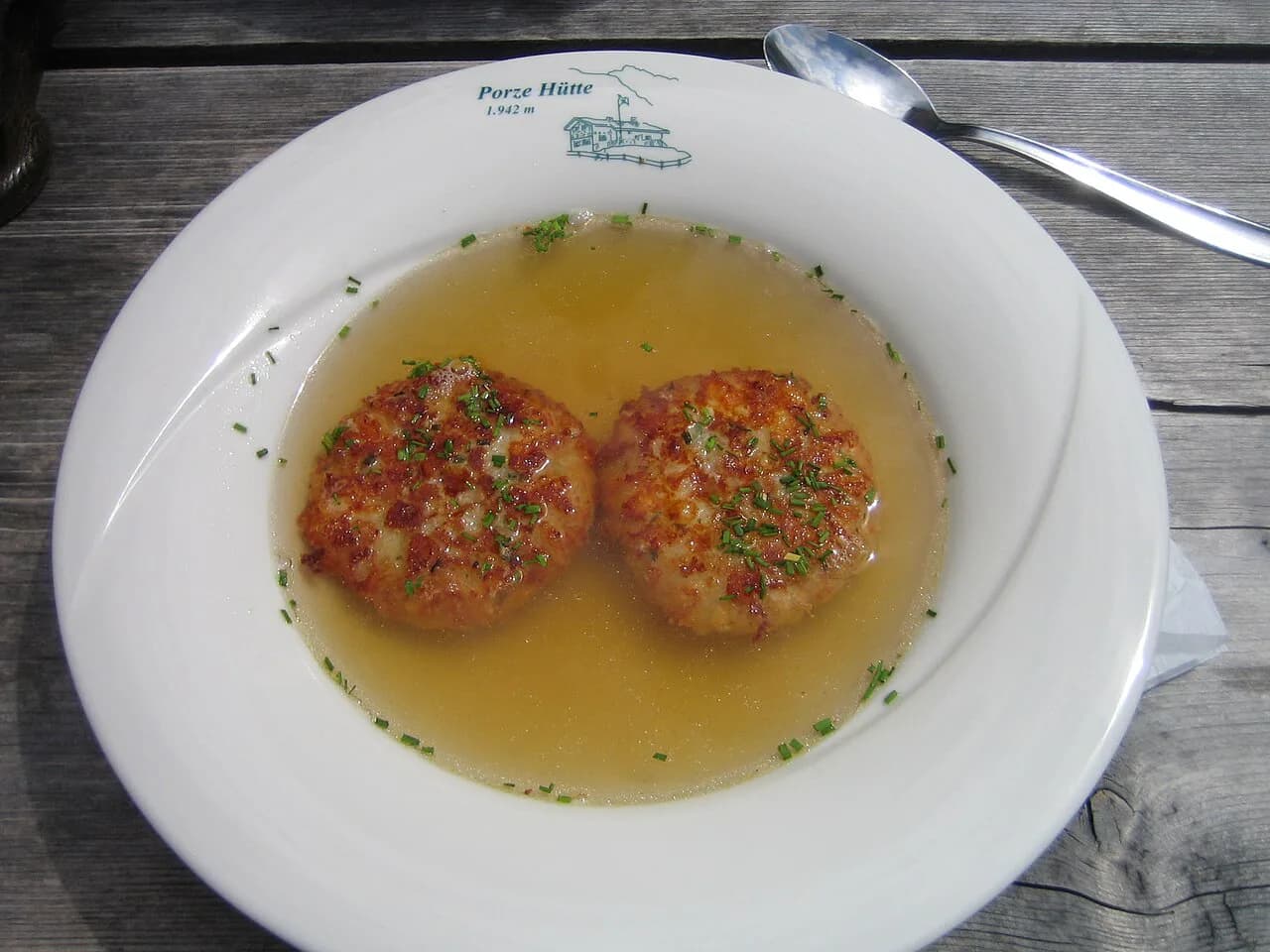
The Marktplatz and its Markthalle give you a central stop for a casual lunch between the riverfront and the old town lanes, close enough to the Mariahilfstraße viewpoint to combine the two. Tyrolean cooking means dumplings, Speck and hearty plate-sized dishes, and the coffee-house habit carries over from Vienna with more mountain air. For a sit-down meal, our guide to the best restaurants in Innsbruck covers old-town terraces and Austrian cooking in more detail.
Towns and castles within reach
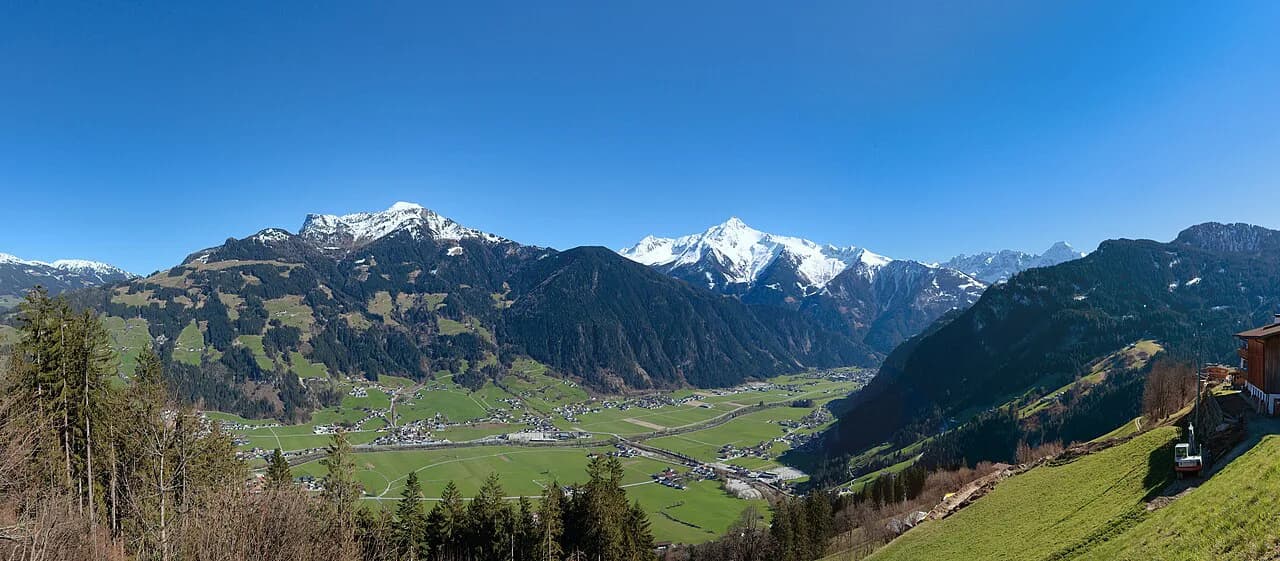
Innsbruck works as a base for the wider Tyrol: Kitzbühel with its old town and Schwarzsee, Kufstein with its fortress and the Römerhofgasse lane, and the Renaissance Schloss Tratzberg are all reachable as rail or road add-ons, along with the silver mine at Schwaz and the Museum Tiroler Bauernhöfe. Hopfgarten has its own station and regional buses, so a car is not essential for these outings.
Hall in Tirol, just east of the city, pairs a preserved old town with Burg Hasegg and the Münze Hall, the mint that once struck the taler. It is a compact half day and an easy counterweight to the busier Innsbruck center. Farther afield, the Hohe Salve above Hopfgarten rises to 1,828 meters and carries the Salvenkirchlein chapel on its summit, reached by mountain railway in the warmer months.
Arriving and getting around
Innsbruck's main station sits south of the old town, and from there trams and buses cover the center, the Bergisel and the valley stations of the mountain railways. The compact Altstadt itself is a walking zone, so you will spend most of your time on foot once you arrive. For the mountain trip, ride the tram to the Hungerburgbahn valley station rather than trying to drive up.
If you want a structured shape for the day, an Innsbruck itinerary that sequences the Altstadt in the morning and the Nordkette in the afternoon saves you from doubling back across the river. Our museums in Innsbruck guide covers the Hofburg, the Tirol Panorama and the Tyroler Volkskunstmuseum in more depth than this overview.
Which Innsbruck day suits your trip
Build the day around the Altstadt loop first, because the Goldenes Dachl, Stadtturm, Hofkirche and Dom sit within minutes of each other and reward an unhurried morning. Keep the Nordkettenbahn for a clear afternoon, and treat Schloss Ambras and the Bergisel as separate tram trips rather than folding them into the center. If you like this compact, walkable old-town format, compare it with the things to do in Graz, where a similar historic core meets a hilltop viewpoint.
If you have a second day, spend it on a rail add-on like Hall in Tirol or Kufstein rather than squeezing another museum into the old town. Check current opening times and any event closures at the Bergisel before you set out, and confirm the mountain railway is running for the season you visit.
Explore more Innsbruck guides
- Best Restaurants in Innsbruck for Austrian Food and Old Town Terraces
- Hall in Tirol
- Igls: What to See in Innsbruck's Village Above the Valley
- Innsbruck Altstadt
- Innsbruck in Summer
- Innsbruck Map
- Innsbruck Parks
- Museums in Innsbruck
- Patscherkofel
- Seefeld in Tirol
- The Innsbruck Card
- Churches in Innsbruck
- Innsbruck Cafes
- Innsbruck History
- Innsbruck Itinerary
- Innsbruck Tours
- Innsbruck Viewpoints
- Innsbruck Walking Tour
- One Day in Innsbruck
- Shopping in Innsbruck
Frequently Asked Questions
What should you not miss in Innsbruck?
The Goldenes Dachl and the lanes around it are the essential stop, followed by the Hofkirche for Maximilian's monumental tomb and the Stadtturm for the rooftop view. If the weather is clear, the ride up to Seegrube and Hafelekar is the experience that sets Innsbruck apart from other Austrian old towns.
Are two days enough for Innsbruck?
Two days cover the Altstadt, the Hofburg, one mountain trip and either Schloss Ambras or the Bergisel without rushing. Trying to add all of them plus a day trip in two days means cutting time on the mountain or skipping the palaces.
What can you do in Innsbruck in one day?
Spend the morning on the Altstadt loop from the Goldenes Dachl to the Hofkirche and Dom, cross to the Inn riverfront for the Mariahilfstraße view, then take the Hungerburgbahn and Nordkettenbahn up in the afternoon if the sky is clear. Skip Schloss Ambras and the Bergisel, which need their own tram trips.
Sources
Notes for your next Austrian town break
Optional updates when we add or revise town guides.
You might also like
Continue reading
More guides you'll find useful