Innsbruck Altstadt: A Walking Guide to the Old Town
Innsbruck's Altstadt packs its sights into a compact pedestrian core. Here is how the lanes, arcades, squares and churches fit together on one walk.
On this page
Innsbruck's Altstadt is small enough to walk end to end in a single loop, and the whole point is the street itself: a narrow pedestrian axis lined with arcaded ground floors, deep medieval plots behind the facades, and a square anchored by a tower. Allow two to three hours for the core at an unhurried pace, and longer if you stop at every courtyard and church. This guide follows the old town in walking order, explains what the building types mean, and links single sights to their own pages.
Why the Altstadt is compact: one axis, one square, a few lanes
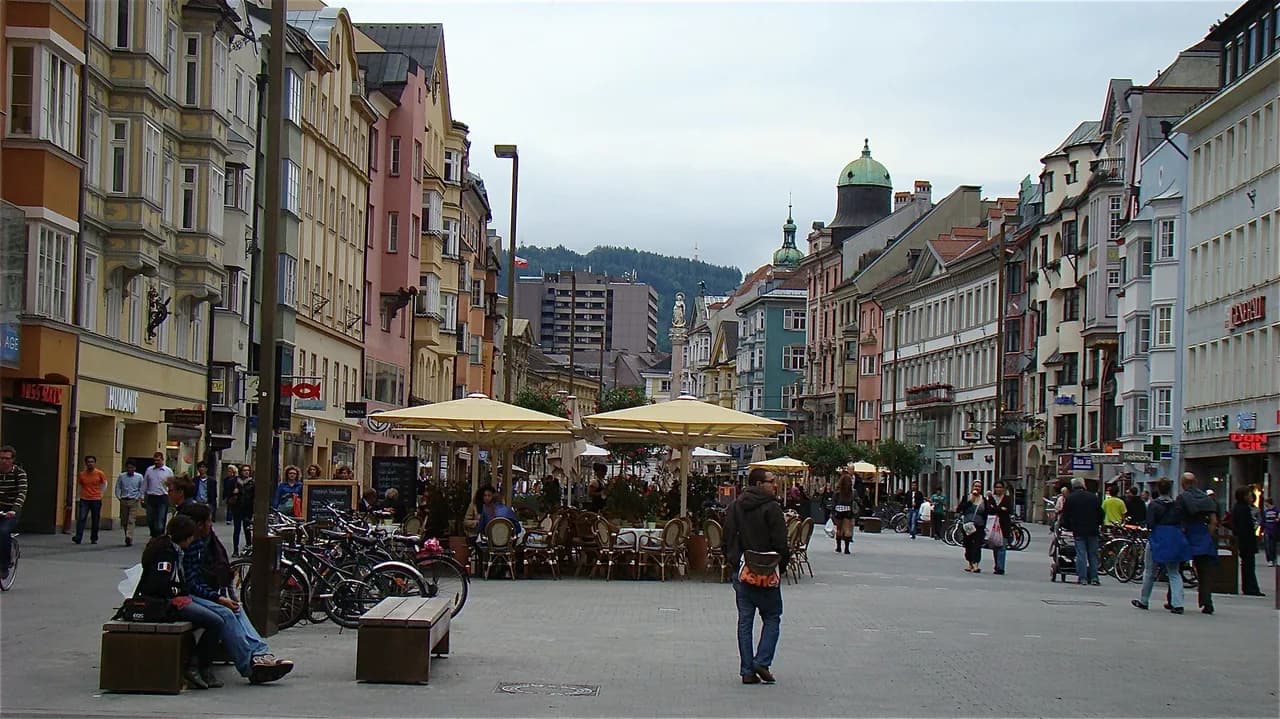
The old town works as a route because almost everything sits along or just off one street, today a pedestrian zone. Vehicle traffic ran straight through the lanes until 1972, and old photographs of Herzog-Friedrich-Straße show it packed with parked cars. The tight footprint is what makes a loop practical: you can drift off into a side lane and rejoin the main axis a minute later.
Orientation is simple. Herzog-Friedrich-Straße runs as the spine, the Stadtturm and Altes Rathaus form the square that interrupts it, and lanes such as Seilergasse lead away toward the Inn and the Ottoburg. A town plan is worth carrying if you want to find those side lanes without backtracking.
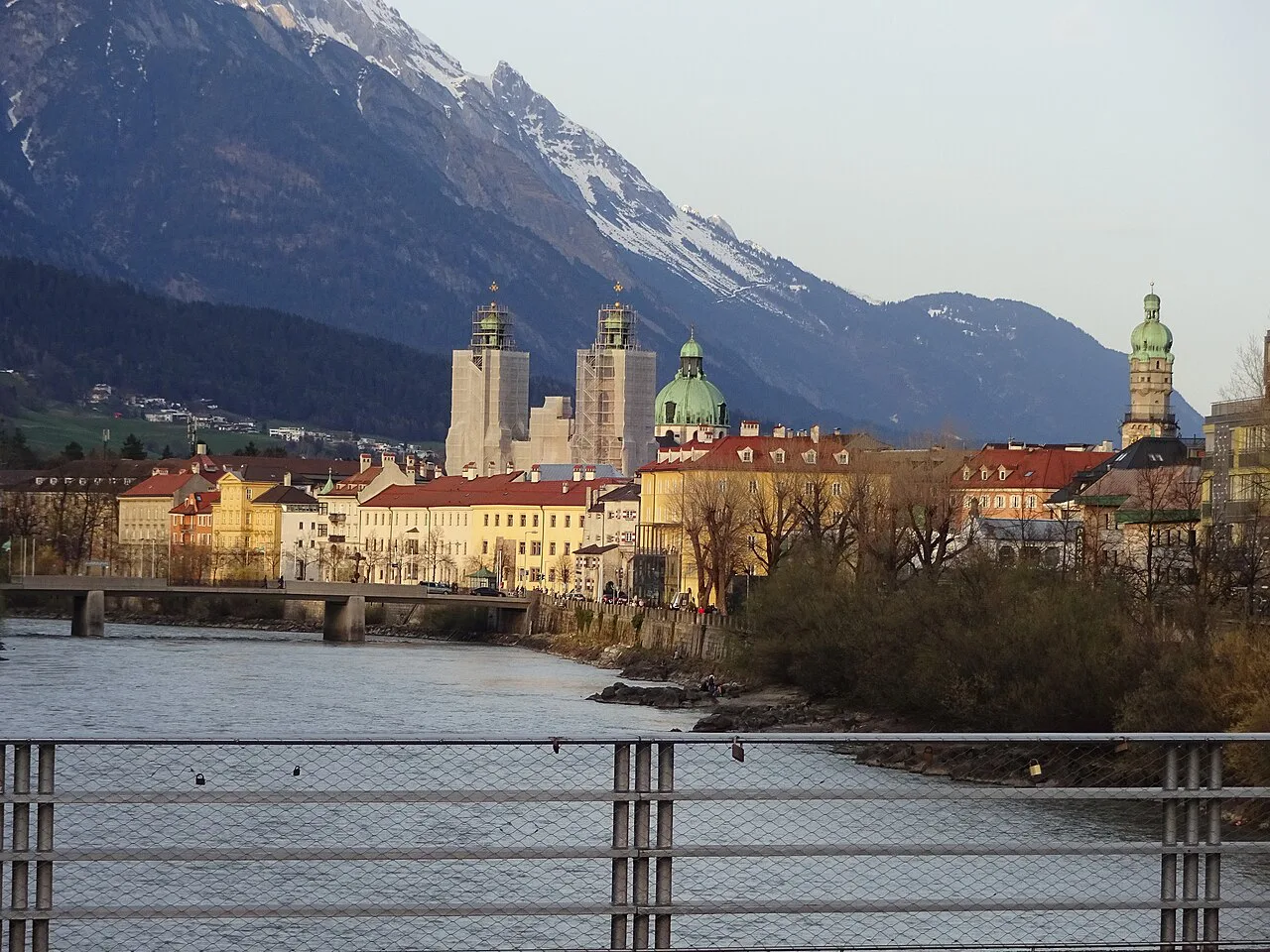
Herzog-Friedrich-Straße: arcades, trade and the old Kramgasse
The main axis was known in the Middle Ages as the Kramgasse, named for the merchants, or Krämer, whose trade made the town rich. It lay on the main route between Venice and Augsburg, so the shopfronts you pass handled long-distance commerce for centuries, not just local retail. The street was renamed in the nineteenth century after the Tyrolean ruler.
Look down at ground level. Wealthy traders built the arcades, called Chramen, as the town's first shopping street, and behind them the plots run narrow and deep: a sales room at the front, a vaulted storeroom and cellar behind it, living rooms above.
The painted facades, signs and reliefs were practical before they were decorative, guiding people to a house before street numbering arrived in the eighteenth century. A coat of arms still visible opposite the Gasthaus Weisses Kreuz recalls the town's place on the trade routes. The tough local stone, Höttinger Breccie, is why so many houses survived earthquakes and wartime bombing.
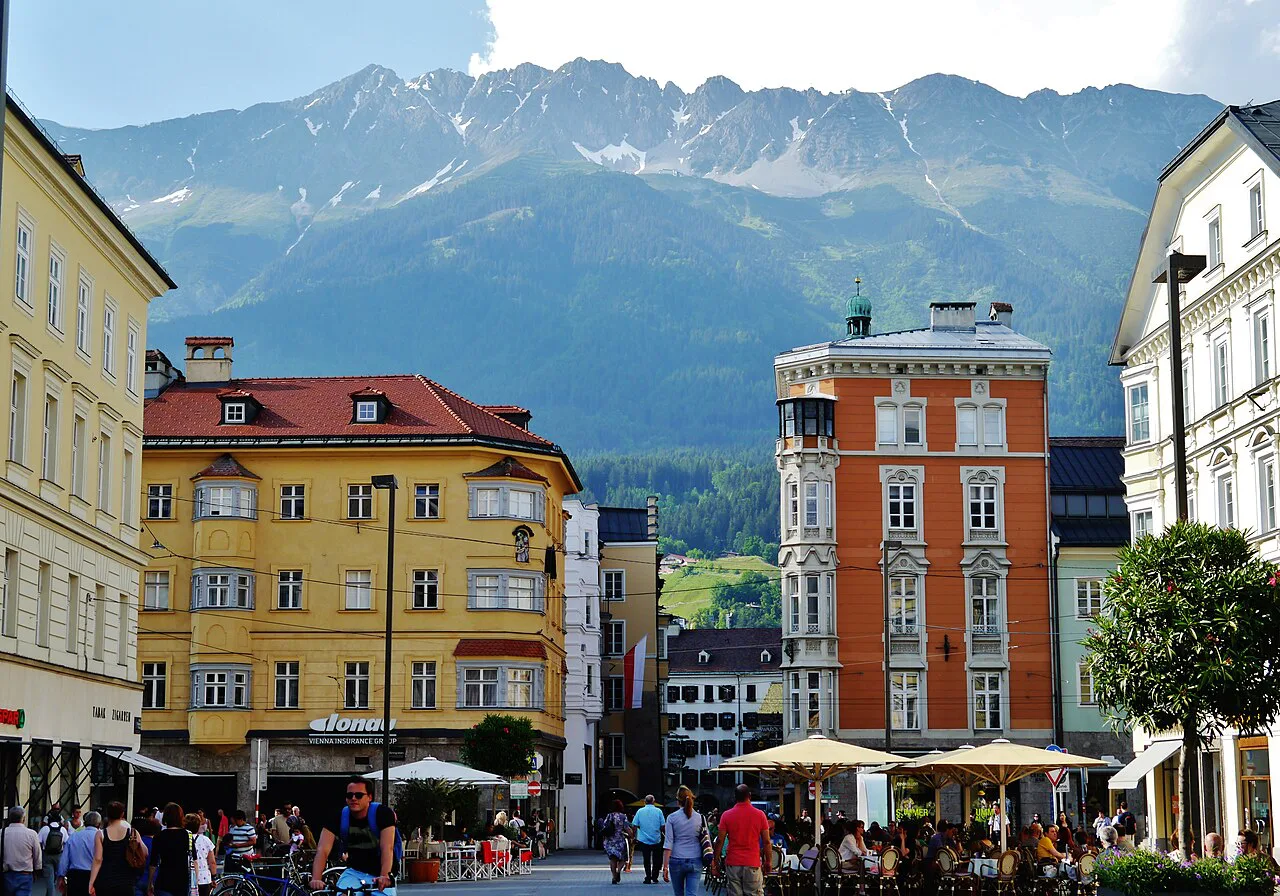
The Goldenes Dachl and the facades around it
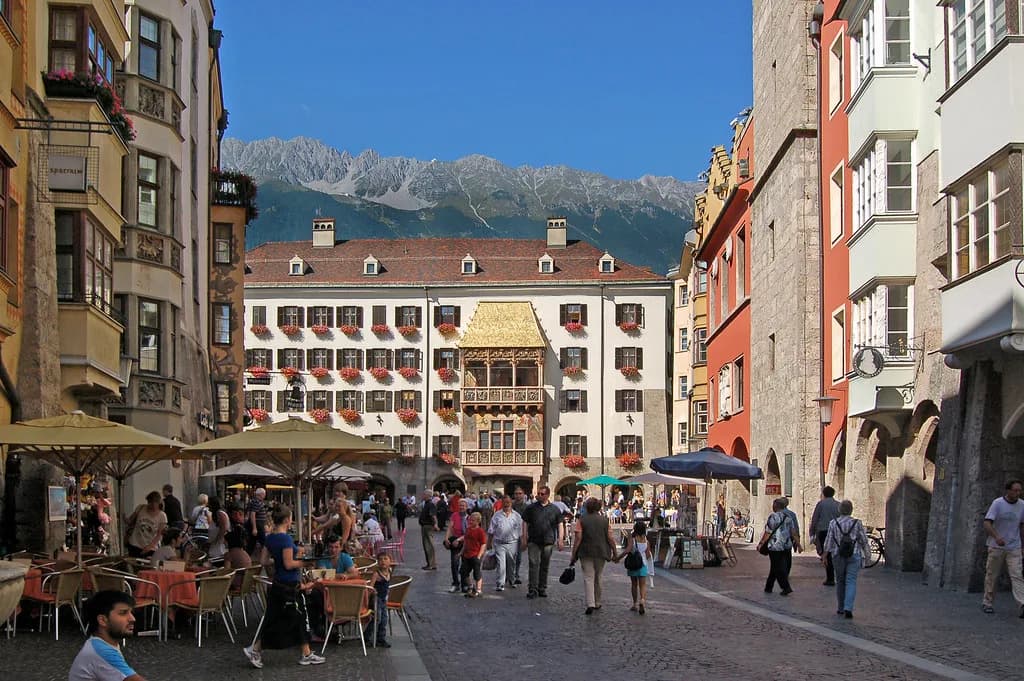
The Goldenes Dachl is the old town's signature sight, and its oriel and roof sit directly on the main axis, so you meet it without planning. Treat it as a waypoint rather than an excursion and slot it into the wider list of Things to Do in Innsbruck, including the interiors and museums that need their own time. Admission details for the building itself are handled separately from the street.
The neighboring Helblinghaus is the other facade people stop for, its stucco ornament layered over a much older house core. Nearby, the figures known as the Quaternionenadler and the Hofzwerg and Burgriese reward a slow look upward.
The Stadtturm and Altes Rathaus: the square that anchors the old town
The Stadtturm and Altes Rathaus together form the hinge of the walk, a small square where the built-up street suddenly opens. The tower gives you a fixed landmark for the rest of the day: from almost anywhere in the core you can find your way back to it.
Climbing the tower and touring the Rathaus are separate decisions from walking the square, and each has its own admission and access arrangements. Check the current offer at the ticket desk or the operator's own page before you build your timing around a climb.
Burgher houses, courtyards and the stone they are made of
Most of what you photograph in the Altstadt began as plain homes and workshops, not monuments. Many cores date to the fifteenth and sixteenth centuries, when timber upper floors were replaced in stone, and they were later restored without destroying the Gothic structure.
The deep-plot layout still shapes the streets. Merchants kept a Steingaden, a masonry storeroom with a cellar, behind the shop, with living rooms above and small gardens or stables in the rear courtyards. Peeking into a passage shows how far back these narrow houses extend.
Dom Sankt Jakob and the Ritschn channel in front of it
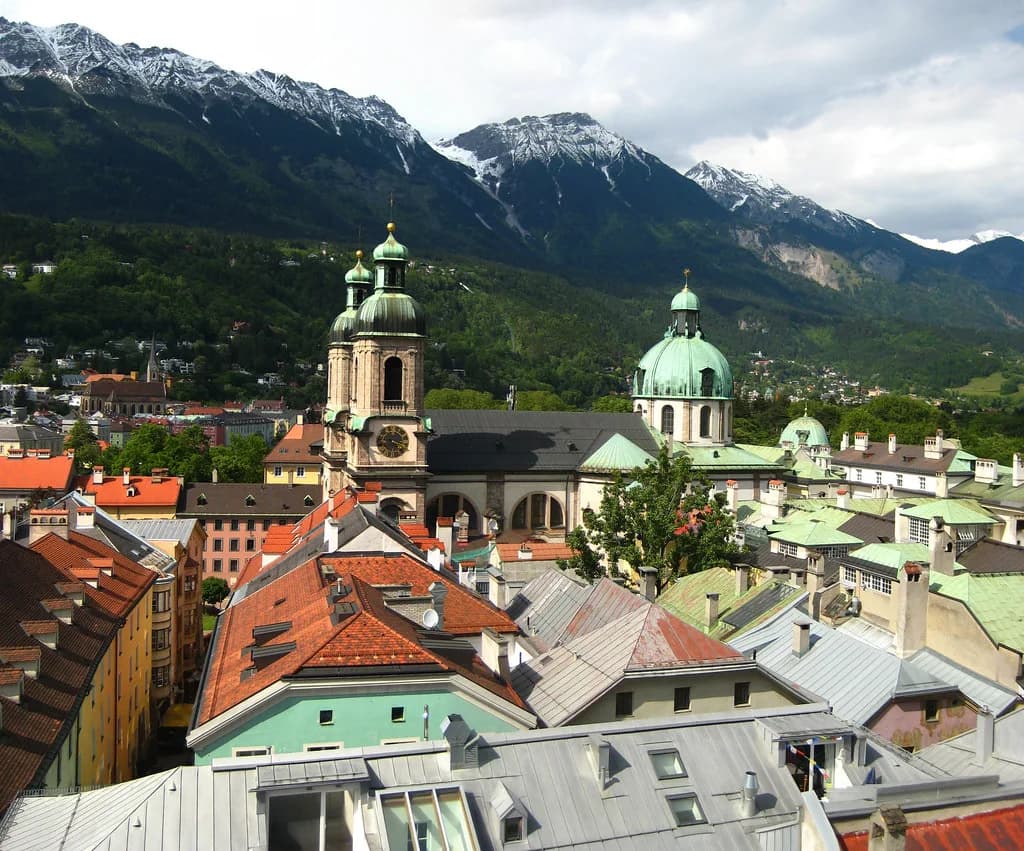
Dom Sankt Jakob lies just off the main axis, and the area in front of the cathedral holds a rare survivor: a channel of the Ritschn, the small watercourses that once ran through town to carry off waste and keep the streets cleaner. One of them is still visible in front of the cathedral, a detail most visitors walk straight past.
To continue with the town's other religious buildings after the cathedral, the full set of churches gives each one its own entry.
Side lanes and courtyards: Seilergasse, the Ottoburg, Trautsonhaus and Katzung
The side lanes are where the old town stops being a promenade. Seilergasse runs toward the Inn, while the Trautsonhaus and Katzung stand as some of the most distinctive burgher houses off the main axis, and the stout Ottoburg marks the edge of the medieval core.
Buildings along the route carry their own histories: the Deutschordenshaus and the Alte and Neue Stadtschule mark the old town's institutional side. The Vier-Viecher-Eck and the Claudiana, the former government building, fill in the picture of a town that was also an administrative center.
Cafes and inns along the route
Three historic houses on the walk are landmarks in their own right. Café Munding, the Gasthaus Weisses Kreuz and the Gasthof Goldener Adler all stand on or near the main axis, each with a long history in the old town. Menus, opening hours and prices change, so check with each business directly; for other options see the guide to the best restaurants in Innsbruck.
For a proper sit-down meal, the old town's Austrian kitchens are concentrated within a few minutes of the tower square. Pair the walk with a lunch stop and you get the architecture and the food in one loop.
A walking order for the Altstadt and how much time it takes
Start at the Dom Sankt Jakob end, look for the Ritschn channel, then follow the main axis east past the facades toward the Goldenes Dachl, which you can view from the street as part of the free things to do in Innsbruck. Continue to the Stadtturm and Altes Rathaus square, then work the side lanes, Seilergasse and the Inn edge before returning to the axis. That order keeps the big sights spread evenly instead of bunching them at the start.
Budget two to three hours for the loop without interiors; add time for the tower, the cathedral or a meal. The walk is flat and short, but cobbles and arcades make slow going if you are looking up.
Where the Altstadt sits in an Innsbruck day
The old town is the natural anchor of a day in Innsbruck, with the museums and the riverbank within walking distance of the loop. If you want to go deeper into collections and period rooms, this guide to museums in Innsbruck picks up where the streets leave off.
Official city and town plans from Innsbruck tourism help you connect the core to the rest of the city without guesswork. Look one up before you arrive and mark the loop in advance.
Beyond the center, Hall in Tirol and Igls make easy additions to an Innsbruck stay when you want a different scale of town.
What the Altstadt costs: free streets, paid interiors
Walking the lanes, the arcades and the squares is a public-street experience with no entry ticket, and that is where most of the old town's character lives. Admission applies only when you enter a sight such as a museum or a church interior with a visitor offer, and each operator sets its own ticket price.
The Innsbruck Card can bundle several admissions, which is worth checking if you plan to enter more than one sight. Compare the card's inclusions against the individual prices.
Should you walk the Altstadt first or last?
Walk the Altstadt early in your stay, because it teaches you the town's shape: the axis, the tower square and the lanes that lead to the river. For the deeper history behind the streets, read up on Innsbruck's past. Everything else in Innsbruck becomes easier to place once you have done the loop.
If you have only an afternoon, do the main axis and the tower square and skip the side lanes. If you have a full day, add the cathedral, one museum and a meal, and leave the extended sights for a second visit.
Explore more Innsbruck guides
Frequently Asked Questions
Is the Innsbruck Altstadt free to visit?
The lanes, arcades and squares are public streets you can walk without a ticket. You pay only when you enter a sight such as a museum or a church interior with a visitor offer, and each operator sets its own admission.
How long does it take to walk the Innsbruck Altstadt?
Two to three hours covers the main axis, the tower square and the side lanes at an easy pace. Add time for church visits or a meal.
What is the Ritschn in front of Innsbruck Cathedral?
It is a surviving channel of the small watercourses that once ran through the old town to carry off waste water and refuse. One is still visible in front of Dom Sankt Jakob.
Sources
Notes for your next Austrian town break
Optional updates when we add or revise town guides.
You might also like
Continue reading
More guides you'll find useful