Hall in Tirol: The Old Town, Burg Hasegg Mint and How Long You Need
Plan a visit to Hall in Tirol, Tyrol's largest preserved old town: the medieval center, Burg Hasegg mint, St. Nikolaus church and the walk in from the station.
On this page
Hall in Tirol is the easiest half-day add-on to an Innsbruck trip: the largest and best-preserved old town in Tirol, ten minutes by bus or train from the capital, and compact enough to walk in a few hours. It also has a genuine headline sight in Burg Hasegg, the castle where the minting of the first taler began. This guide lays out the two main squares and the lanes between them, the churches and museums worth your time inside the medieval walls, and how to fit Hall into a route through Austria without giving it more hours than it needs.
Treat Hall as its own town rather than an extension of Innsbruck. Its streets were shaped by salt mining and minting wealth, and the old center is busy with ordinary shops and cafes rather than staged for visitors.
Why Hall in Tirol is worth the short trip from Innsbruck
Hall earned its wealth from salt: the salt works and the trade on the Inn made it a hub of medieval commerce, and around ten million tons of salt were extracted over the centuries. In the 15th century the sovereign mint was moved to Hall, and the first taler was struck here. That combination of salt money and minting is what you still read in the townscape today, from the castle tower to the merchant houses.
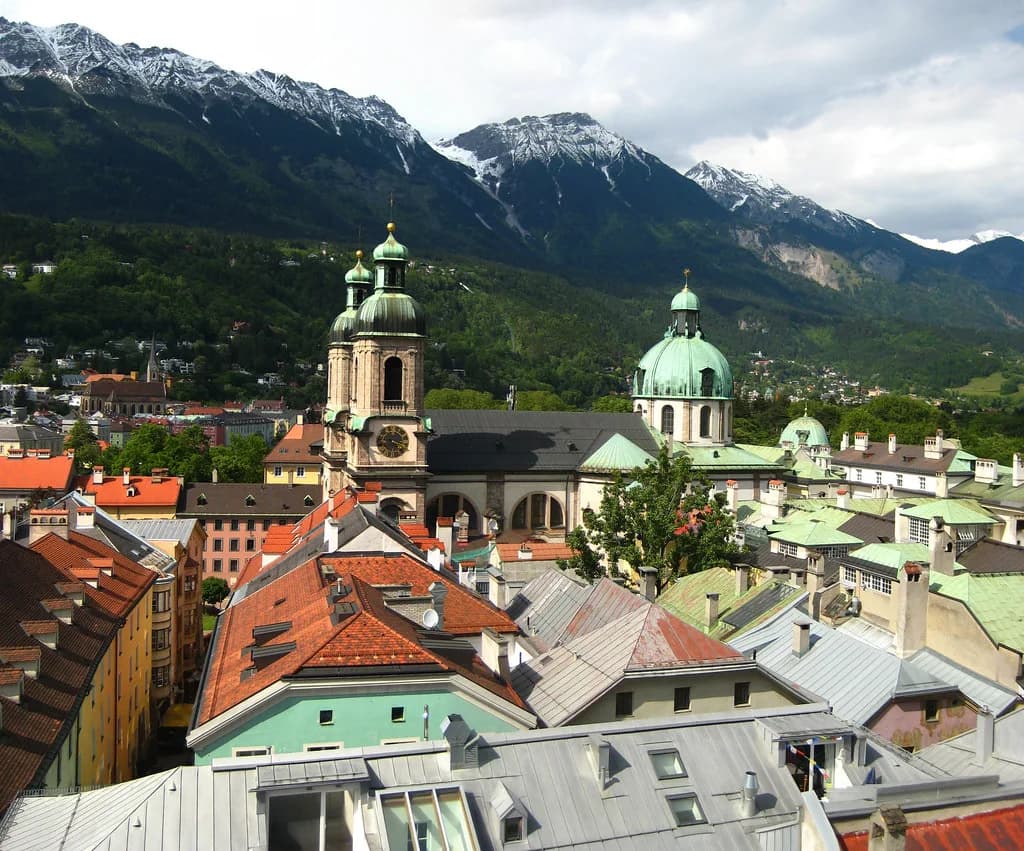
The town received its charter in 1303 and grew into one of Austria's most substantial medieval cities, with an old center that is larger than the one in the neighboring capital. What that means in practice for a visitor is density: Gothic parish church, baroque Jesuit church, castle with mint museum, and lanes of painted facades within a few minutes of each other.
If your Innsbruck plans already lean toward churches, museums and old streets, Hall duplicates some of that in miniature and adds the mint story Innsbruck does not have. If your time in the capital is short, budget the town as a morning or afternoon out rather than a separate stop.
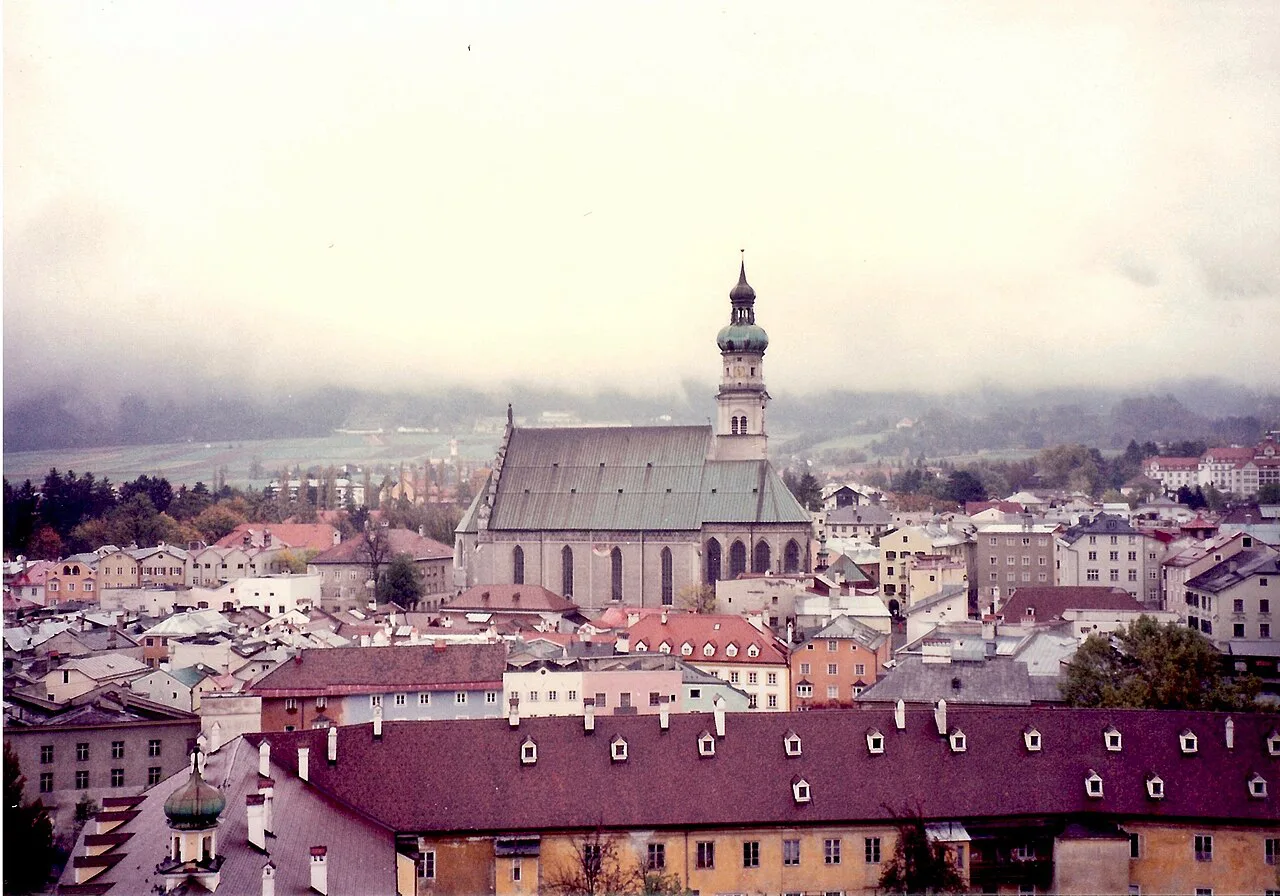
How the old town is laid out: Unterer Stadtplatz, Oberer Stadtplatz and the lanes between
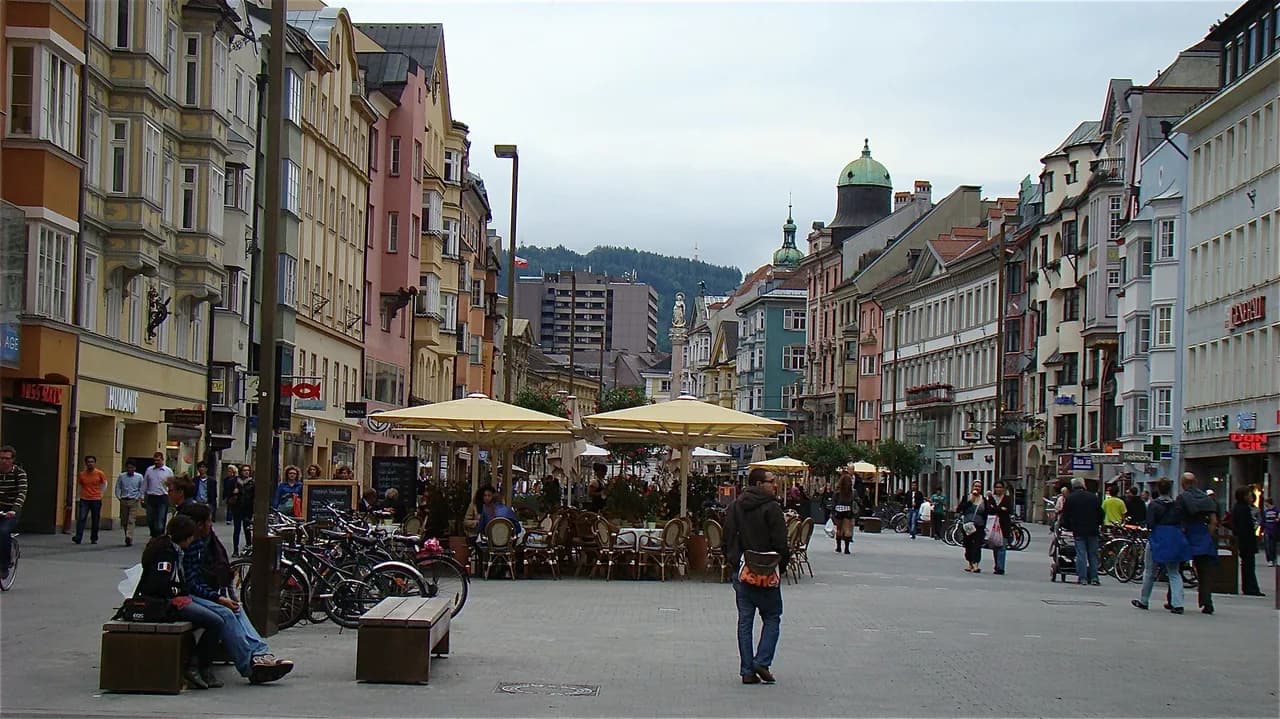
Hall's center runs along a spine of two squares: the Unterer Stadtplatz at the lower end and the Oberer Stadtplatz above it, linked by lanes that twist between tall houses. The tourist office sits at Unterer Stadtplatz 19, which makes the lower square a sensible place to start and orient yourself. From there you can walk uphill through the shopping streets toward the upper square without needing a map.
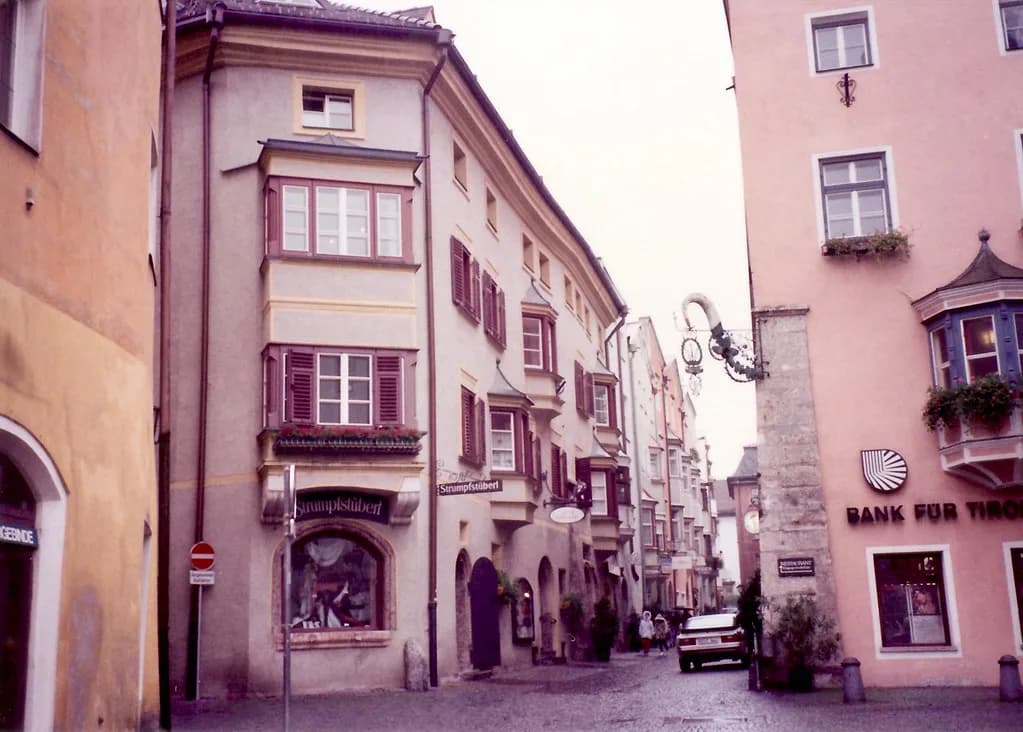
The lanes between the squares are where Hall feels most like a living town rather than a monument: shop signs project over the street, passages cut through buildings, and you keep catching glimpses of the mountains above the roofs. Walk them slowly and in both directions, because the views uphill and downhill are different.
Saturday brings a market to the upper square alongside fruit and vegetables, so a weekend visit puts you in the middle of normal town life rather than a sightseeing bubble.
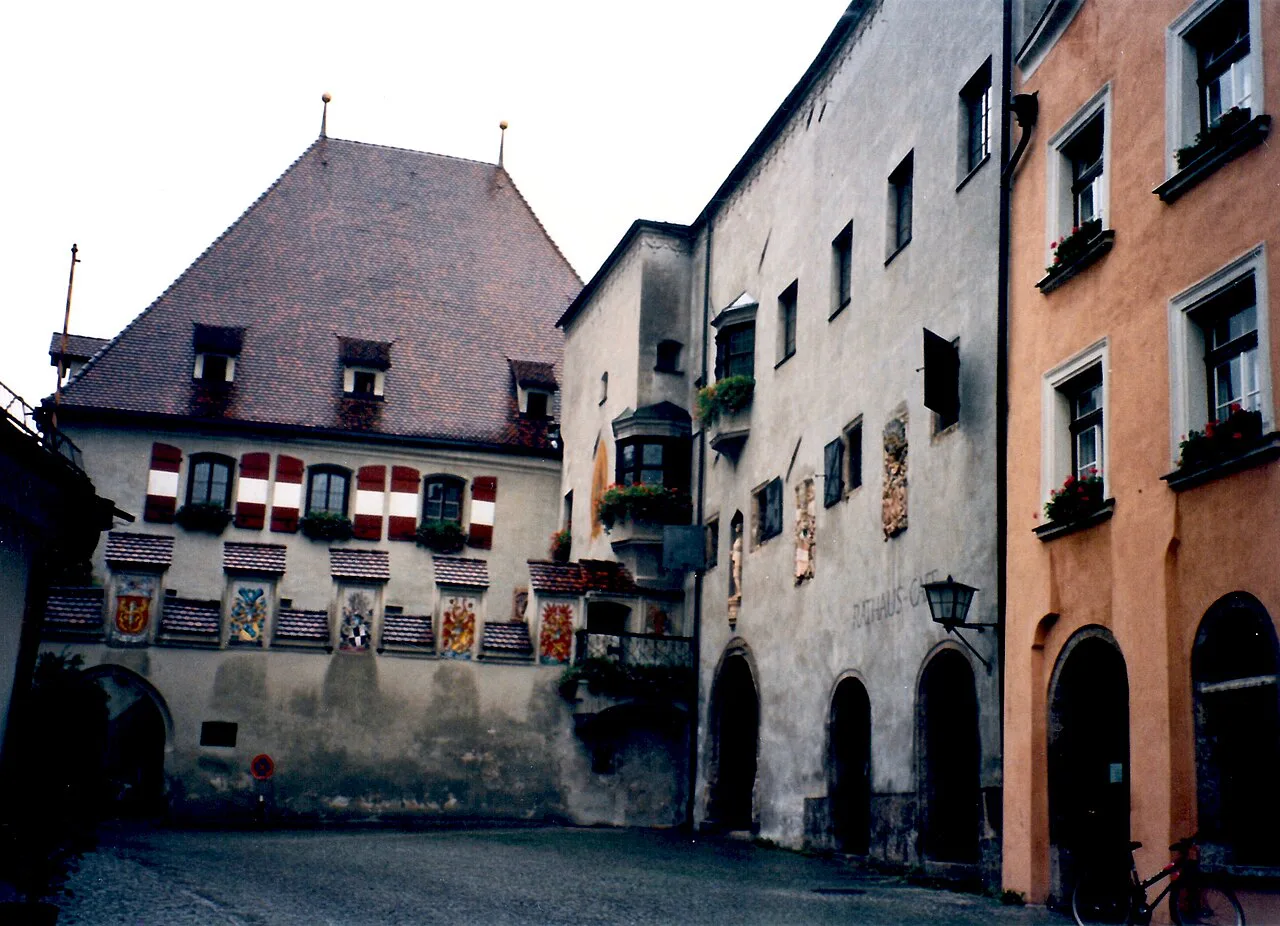
Burg Hasegg and the Münzerturm: the mint that struck the first taler
Burg Hasegg anchors the lower edge of the old town, and its Münzerturm, the mint tower, is the landmark you see first from the approach. The castle is the reason to give Hall more than a stroll: it housed the mint that produced the first taler, the coin whose name traveled across Europe and eventually into the word dollar. Climb or circle the tower for the view over the roofs before or after the museum.
Check the castle's own opening days and ticket prices before you travel, since the museum keeps its own seasonal schedule separate from the town's sights. Entry is paid, and it is the one item in Hall where a small outlay clearly buys something you will not see in Innsbruck.
The Münze Hall museum inside Burg Hasegg
Inside Burg Hasegg, the Münze Hall museum explains the minting process and the history of the taler, making it the most substantial indoor stop in town. It suits anyone interested in how money was actually made, from the blanks to the struck coin, and it gives a rainy morning a purpose.
Pair the mint with a walk through the streets it paid for, and the painted facades and civic buildings start to make sense as the visible output of that trade.
The Bergbaumuseum and Hall's salt-mining wealth
The Bergbaumuseum covers the salt mining that made Hall rich, and the tourist office runs a museum visit directly after its late-morning city tour, opening at 11:30 a.m. That sequence is the simplest way to get both the town's story and its underground economy in one block of time.
If you are choosing between the two museums, take the mint if you want the taler story and the salt museum if you want the reason the town existed at all. Doing both fits comfortably into a full day but not into a quick stop between trains.
Churches to step into: Pfarrkirche St. Nikolaus, the Jesuitenkirche and St. Magdalenenkapelle
The Pfarrkirche St. Nikolaus is the Gothic parish church, and the Jesuitenkirche nearby is the baroque counterpart, so the two give you both architectural eras in one short walk. Both sit close to the squares and the Stiftsplatz, which lets you string them together without backtracking.
St. Magdalenenkapelle is small but holds a late-Gothic winged altar and frescoes, including scenes in which the damned and the saved are shown side by side. It rewards a ten-minute stop rather than a full visit, and it is the kind of detail that separates Hall from a generic old town.
For the church interiors of the regional capital, including the Hofkirche and its bronzes, the Innsbruck churches guides will save you a detour on a short trip.
The Rathaus (Königshaus) and the Stiftsplatz cluster
The Rathaus, also called the Königshaus, is a popular civil wedding venue, and its facade carries a row of coats of arms worth a look even from the square. Around the Stiftsplatz a cluster of churches and chapels sits within a couple of minutes of each other, so you can cover the civic and religious core of Hall in one loop.
Build the loop around the squares rather than a checklist: start at the Unterer Stadtplatz, climb to the Oberer Stadtplatz, then work through the Stiftsplatz and back down past Burg Hasegg.
City tours: the year-round Monday, Thursday and Saturday schedule
Hall runs guided old-town walks year-round on Monday, Thursday and Saturday at 10 a.m., with a visit to the Bergbaumuseum following at 11:30 a.m. If a guided explanation of the lanes and facades matters to you, plan your day around one of those mornings and book the museum slot into the same block.
Tours and museum entry are paid; confirm the current price with the tourist office at Unterer Stadtplatz 19 when you arrive.
How long Hall needs: a half-day from Innsbruck versus a full day
A half-day covers the two squares, the parish church, St. Magdalenenkapelle and a lap past Burg Hasegg with time for a coffee. Add the mint museum and you need most of a day; add both museums plus a guided walk and the salt story, and a full day is honest.
The trade-off is simple: Hall rewards a slow morning much more than a fast circuit, and its lanes are quiet compared with the crowds around Innsbruck's Goldenes Dachl. If you only have a couple of hours, skip the museums and walk the center instead of rushing both.
Getting there and away: train, bus and where you arrive relative to the old town
Hall sits about six kilometers from Innsbruck and is served by train and bus, so the transfer is short enough to do twice in a day. Check current departures and fares on the ÖBB and Postbus timetables rather than relying on any fixed schedule, since they change with the season.
From the station, follow the signs toward the center and you reach the Unterer Stadtplatz on foot in a short walk; the tourist office there is the natural first stop for a map and current opening times.
Where to eat and drink in the old town
The lanes hold cafes tucked into old buildings, which makes a mid-morning coffee or a late lunch part of the walk rather than a separate errand. The Milchbar Max & Engels on the Krippgasse is one such spot, notable for its interior as much as its drinks.
For a fuller meal, the squares and side streets have restaurants and guesthouses serving Tyrolean cooking; check menus and hours on the door, since these vary by day and season. If you would rather eat in the capital, the guide to the best restaurants in Innsbruck covers the old-town terraces there.
Saturday's market on the upper square is the practical option for fruit, bread and cheese if you want a picnic rather than a table.
Honest trade-offs: quiet lanes versus Innsbruck's bustle, and what closes when
Hall's great advantage is that its old town is lived-in and comparatively uncrowded, so you can walk the lanes at your own pace even on a weekend. The cost is that it has fewer blockbuster sights than the capital: one castle-museum, two churches worth entering and a handful of lanes, which is exactly why a half-day is the right unit.
Museum opening days and seasonal hours are the main planning risk, so check the castle and salt museum schedules for your dates. Outside those hours the squares, churches and lanes remain free to walk, and the tower view is the consolation prize on a Monday.
Should Hall in Tirol be a half-day or a full day?
Give Hall a half-day if you want the squares, churches and a coffee, and a full day if the mint and salt museums are the point of the trip. Either way, anchor the visit to a Monday, Thursday or Saturday morning if you want the guided walk and the 11:30 a.m. museum visit that follows it.
Pair it with the capital's own sights rather than treating it as a replacement: the Things to Do in Innsbruck and the Innsbruck Altstadt guide show what to keep in the city and what Hall does better in miniature.
Explore more Innsbruck guides
- Igls: What to See in Innsbruck's Village Above the Valley
- Innsbruck in Summer
- Innsbruck Map
- Innsbruck Parks
- Museums in Innsbruck
- Patscherkofel
- Seefeld in Tirol
- The Innsbruck Card
- Innsbruck Cafes
- Innsbruck History
- Innsbruck Tours
- Innsbruck Viewpoints
- Innsbruck Walking Tour
- One Day in Innsbruck
- Shopping in Innsbruck
Frequently Asked Questions
Do you need a car to visit Hall in Tirol from Innsbruck?
No. Hall is about six kilometers from Innsbruck and is served by train and bus, so the car can stay parked. Check current departures and fares on the ÖBB and Postbus timetables for your dates.
Are the Hall old-town tours offered in English?
The tourist office publishes fixed tour days and times, Monday, Thursday and Saturday at 10 a.m., with a Bergbaumuseum visit following at 11:30 a.m., but it does not publish which language each departure is given in. Ask at Unterer Stadtplatz 19 or by phone before you build your morning around it.
Sources
Notes for your next Austrian town break
Optional updates when we add or revise town guides.
You might also like
Continue reading
More guides you'll find useful