Innsbruck History: A Timeline Tied to the Buildings You Can Still See
Innsbruck's history runs from a 12th-century market town to a Habsburg capital. Trace the dates on the buildings, churches and museums you can visit today.
On this page
Innsbruck entered the record as a small market town first mentioned in 1180, was chartered in 1239, and passed to the Habsburgs in 1363 before becoming capital of all Tyrol in 1429. Those four dates are the backbone of any visit, because each one left a structure you can still walk into: the narrow lanes of the old town, the imperial palace on its cobbled courtyard, and the churches and museums that carry the later chapters. This guide ties the timeline to those places and gives the published hours and ticket rates for the houses that tell the story.
Medieval Innsbruck: a market town on the Inn
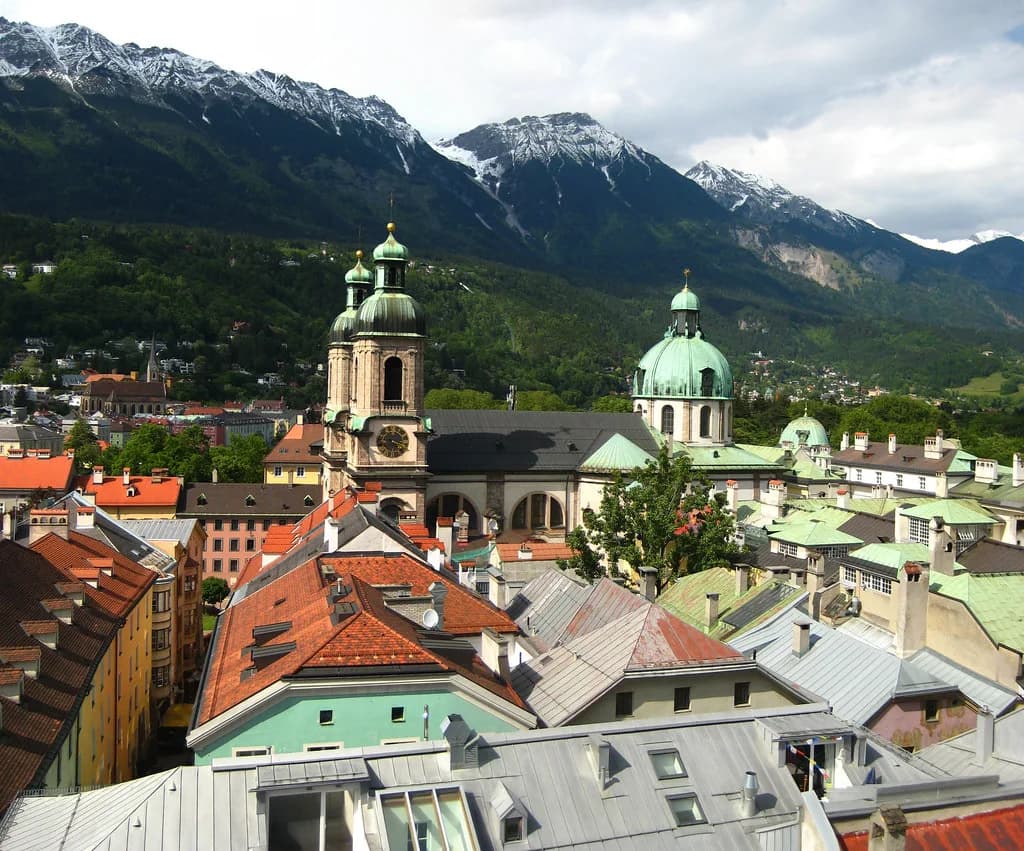
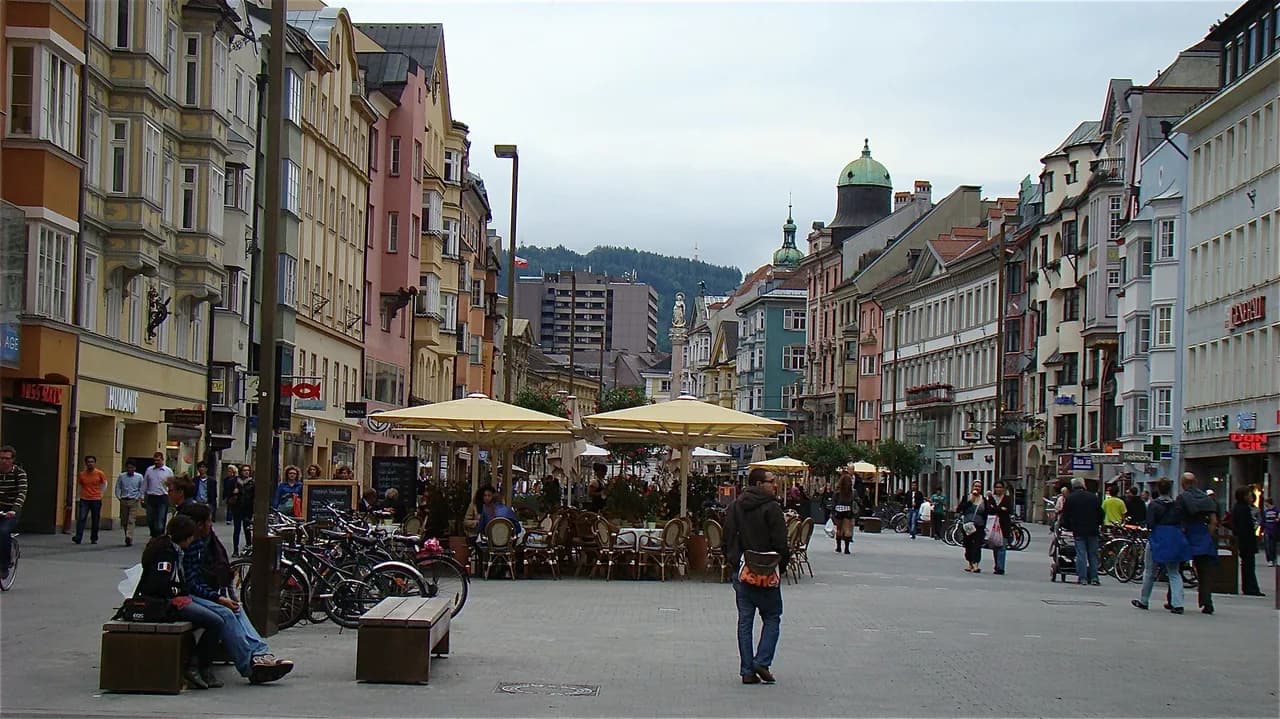
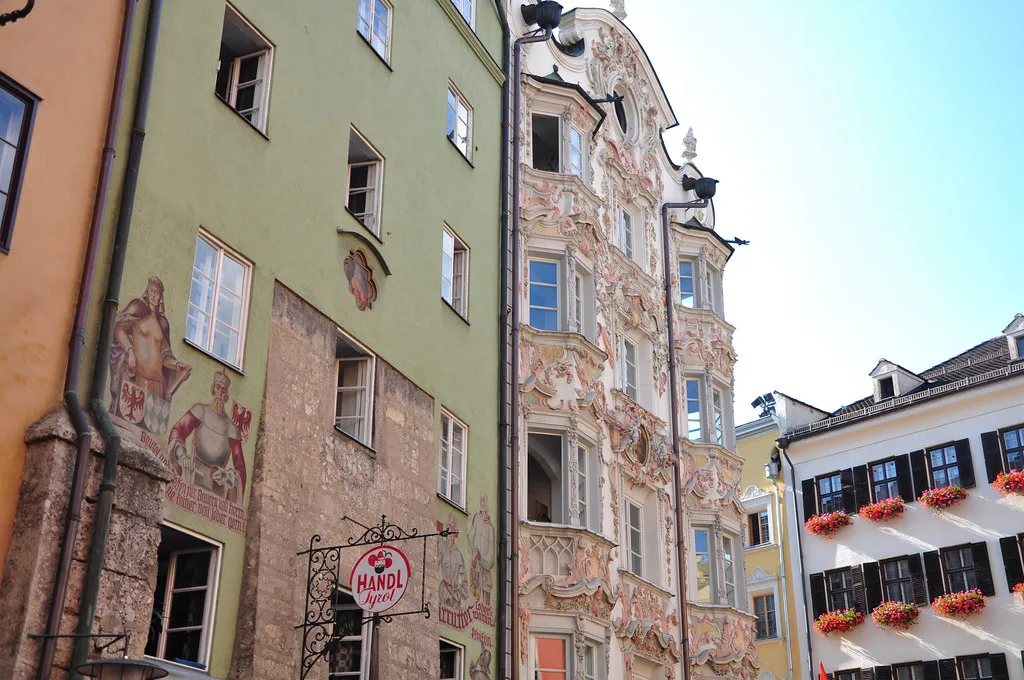
The settlement began as a small market town first mentioned in 1180 and was chartered in 1239, a promotion that mattered because the town sat where the Inn Valley route crossed the river. The old town still reads as a medieval plan: narrow streets lined with buildings that were later refaced in baroque style. Start your walk in the Innsbruck Altstadt, where the street line and the river crossing explain why the market grew here rather than anywhere else in the valley.
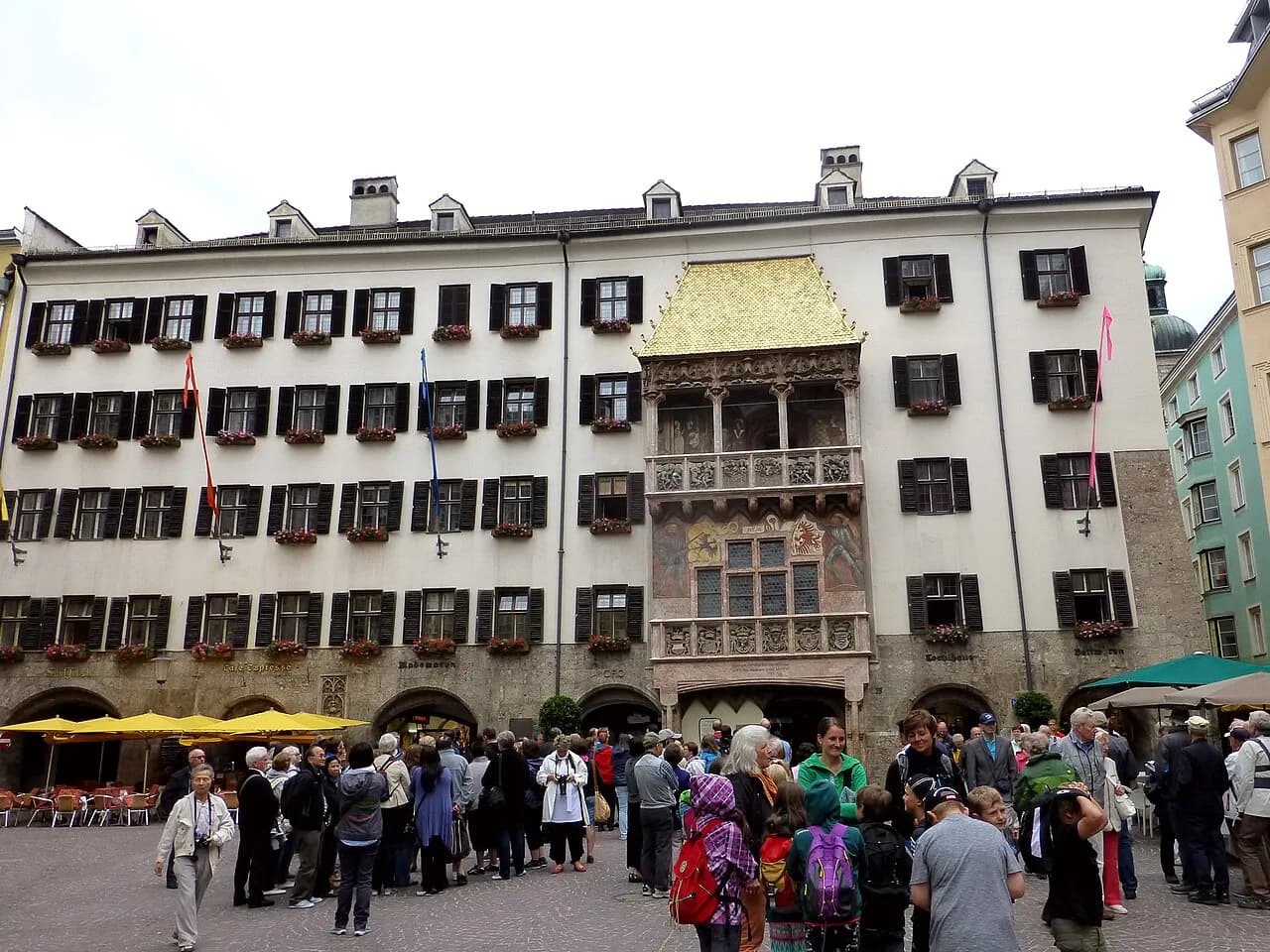
For the medieval layers, the Hofkirche, the court church, holds the tombs and bronzes that make the Habsburg court tangible, and it stands on streets laid out under the medieval charter. The Altstadt's most photographed facade, the Goldenes Dachl, belongs to the later Habsburg story rather than the medieval one, but it stands on the same street grid the 13th-century charter established.
1363 to 1429: how Innsbruck became the Tyrolean capital
In 1363 the town passed to the Habsburgs, and in 1429 it became the capital of all Tyrol, a promotion that turned a river market into an administrative center. That shift is why the historic core has a palace, a court church and a weapons depot within a few minutes of each other. When you walk the Altstadt, the density of institutional buildings is the physical record of that 15th-century decision.
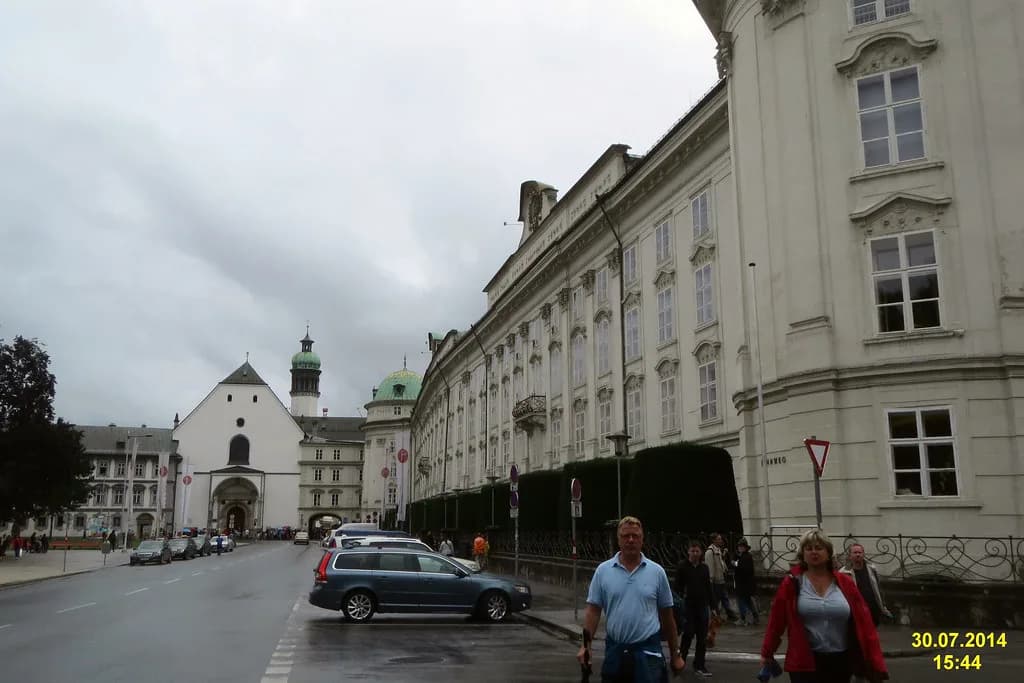
The Hofburg Innsbruck is the clearest survivor of that courtly era, and its great courtyard, enclosed by the palace and paved in cobblestones, took its current dimensions in the 16th century when the residence was remodeled as a Renaissance palace. It was then given a baroque face between 1765 and 1770, with sculptural elements and the Austrian shield on the gables. The courtyard and state rooms are offered as event venues, so visiting depends on the palace's event schedule rather than a standing museum ticket.
Maximilian I and the court that reshaped the city
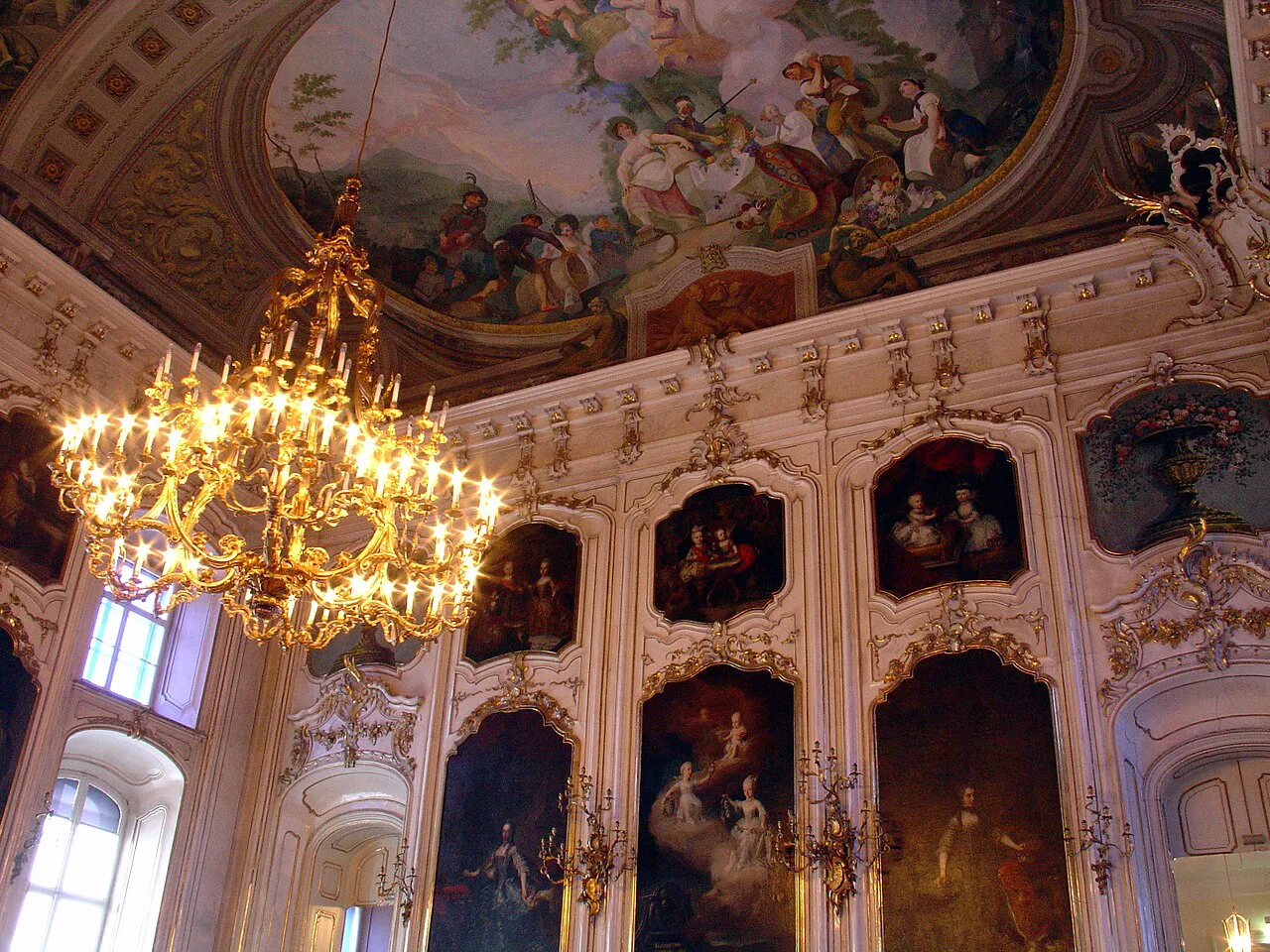
In the 15th century Innsbruck became a center of European politics and culture under Emperor Maximilian I, and the court's appetite for representation left the buildings that now anchor the historic center. The Hofkirche is the most direct monument to that program, and the Hofburg's Giant Hall carries oil paintings of the imperial family hung between its windows.
The Giant Hall measures 31.5 by 13 meters with an 11-meter ceiling, dimensions that made it the most sumptuous state room in the Alpine region and the setting for a public banquet in August 1765 when Maria Theresa's son Leopold of Tuscany married the Spanish infanta Mary Ludovica. The room is a rental venue today, so access depends on the palace's event schedule rather than a fixed museum ticket. If the state rooms are your priority, confirm access with the palace before you build a day around them.
The Habsburg sights you can visit: Hofburg, Hofkirche and the panorama
Three stops carry the Habsburg and Napoleonic story in a compact radius: the Hofburg courtyard and state rooms, the Hofkirche, and TIROL PANORAMA mit Kaiserjägermuseum on the Bergisel. The Hofkirche opens Monday to Saturday 9 to 17 and Sunday and holidays 12.30 to 17, with last entry at 16.30. That Sunday afternoon start is the detail that trips up visitors who plan a morning church visit, so slot the Hofkirche into a weekday or a late Sunday.
TIROL PANORAMA opens Wednesday to Monday 9 to 17 with last entry at 16.30, which means Tuesday is its closing day. The house holds the Riesenrundgemälde, the largest painted artwork in Tyrol at 1,000 square meters, showing the third Battle of Bergisel on 13 August 1809. A permanent exhibition, Schauplatz Tirol, follows the panorama and examines the myth of Tyrol, so allow more than the few minutes the painting alone would take.
The 19th century on canvas: Diemer's panorama and the 1809 battle
The panorama was painted by the Munich artist Michael Zeno Diemer under the supervision of the history painter Franz von Defregger, and the two completed it in just three months. What you see is not a neutral landscape but a staged reconstruction of the third Bergisel battle of 13 August 1809, with the landscape, the people and the Tyrolean drive for freedom arranged as a single scene. Reading it as a historical document rather than a curiosity changes how long you spend in front of it.
The building frames the painting with stations that introduce the history and the people involved before you reach the viewing platform, so you arrive at the scene as a participant rather than a passerby. The 1809 rising under Andreas Hofer is the event the panorama commemorates, and the same anniversary shaped the palace's later use: in 1909, for the centenary of the Tyrolean Uprising, Emperor Francis Joseph I gathered dukes, officials and artists for a banquet across the Guard Hall, Giant Hall and Audience Hall.
Innsbruck in the 20th century: annexation, war and the postwar city
The 20th century is the hardest chapter to read from the street, because the buildings that carry it are museums and displays rather than monuments, and the institutions that hold those collections set the access. The Ferdinandeum is closed for renovation until 2028, so its material is reached through the other houses of the Tiroler Landesmuseen in the meantime.
The Ferdinandeum's library has moved into the Tiroler Volkskunstmuseum during the renovation, where it is open Tuesday to Thursday 9 to 13 and Friday 9 to 17, with no registration required. That gives you a research stop inside a museum, and only part of the holdings is accessible during the works, with younger publications and the entire newspaper collection unavailable.
Museums that carry the timeline: what each house shows and what it costs
The Tiroler Landesmuseen publish a single price structure across their houses: a combination ticket at €14 for adults and €11 reduced, or a single-house ticket at €9 and €7, with free entry under 19. The same rates apply at the Volkskunstmuseum, the Hofkirche, the Zeughaus, TIROL PANORAMA and Museum Aguntum. Buy the combination if you plan to visit more than one house in a day, because the difference between the two rates is small.
Hours differ by house even though prices do not. The Volkskunstmuseum is open daily 9 to 17, the Zeughaus Tuesday to Sunday 9 to 17, TIROL PANORAMA Wednesday to Monday 9 to 17, the Hofkirche Monday to Saturday 9 to 17 with Sunday and holidays from 12.30, and Aguntum Tuesday to Sunday 10 to 16. Last entry is 16.30 wherever the house closes at 17, so a 16.45 arrival gets you nothing. If you are choosing between museums, our guide to museums in Innsbruck lays out the options by collection.
A half-day loop through the historic center
Start in the Altstadt at the street grid the 1239 charter set, then walk the Hofburg courtyard before the state rooms open to events, and finish at the Hofkirche or TIROL PANORAMA depending on the day. A weekday gives you every house at full hours; a Sunday afternoon narrows the Hofkirche to a 12.30 start, and a Tuesday closes TIROL PANORAMA entirely. Build the loop around those three constraints and the rest fits.
The Bergisel site sits above the old town, so pair it with a walk back down rather than a separate trip; the panorama and its exhibition are the natural end point because they tie the 1809 story to the streets you crossed earlier. For orientation before you set out, a visitor map of the old town shows its compact layout, and the full list of things to do in Innsbruck helps you decide what to cut if the museum hours run short.
One planning note on closures and opening hours
The two closures that matter most are the Ferdinandeum, shut for renovation until 2028, and TIROL PANORAMA's Tuesday closing day. The Hofkirche's Sunday and holiday opening runs from 12.30 to 17, which is the single most common scheduling mistake for a church-and-palace morning. The Landesmuseen site is the authority for all of these, and the library's special closures, including 8 December and the Christmas period through 6 January, follow the same calendar logic.
Which Innsbruck history stop earns your half day?
If you have one half day, spend it on the Hofburg courtyard and the Hofkirche in the old town, then choose between TIROL PANORAMA and the Volkskunstmuseum based on whether the 1809 story or the courtly collections interest you more. Check the day of the week first: Tuesday removes the panorama, and Sunday morning removes the Hofkirche. That single check is what turns the timeline from a list of dates into a walk you can actually complete.
Explore more Innsbruck guides
Frequently Asked Questions
Why is Innsbruck so famous?
Innsbruck is known for its position as a Habsburg residence city and capital of Tyrol, and for the concentration of imperial buildings in its old town, from the Hofburg to the Hofkirche. The 1809 Bergisel fighting is commemorated in the Riesenrundgemälde at TIROL PANORAMA, one of the largest painted artworks in the Alpine region.
Was Innsbruck bombed in WWII?
The Tiroler Landesmuseen do not hold a single dedicated Innsbruck war museum, and the Ferdinandeum, which holds the city's older collections, is closed for renovation until 2028. Its library is now in the Tiroler Volkskunstmuseum, but only part of the holdings is accessible during the works, with younger publications and the entire newspaper collection unavailable.
Sources
Notes for your next Austrian town break
Optional updates when we add or revise town guides.
You might also like
Continue reading
More guides you'll find useful