Innsbruck Tours: Walking, Themed and Museum Tours Compared
Compare Innsbruck tours by what they cover: Altstadt history, Hofburg state rooms, Schloss Ambras, Wilten's churches and the Bergisel panorama.
On this page
Pick an Innsbruck tour by where it starts, not by its title: an Altstadt walk keeps you inside the compact old town, while Wilten, Schloss Ambras and the Bergisel each sit outside it and consume a half day or more. This guide sorts the city's guided options by geography and theme, names the stops each one hits and explains how to combine two without wasting a morning on transfers.
Innsbruck is the capital of Tyrol and the natural base for the province's baroque palaces, abbeys and Alpine roads. If this is your first stop, the broader list of things to do in Innsbruck helps you see what else fills a day beyond a guided walk.
What an Innsbruck tour actually covers: the Altstadt core versus outlying sights
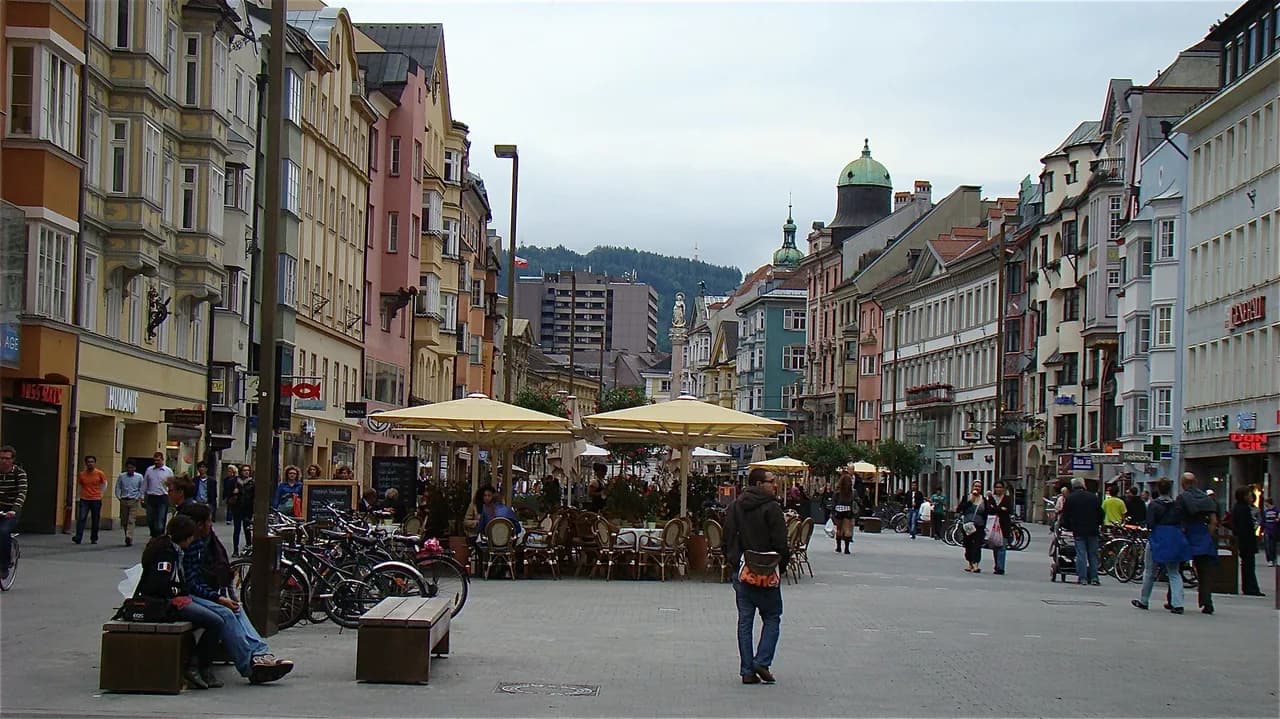
The old town is small enough that a guided walk can stitch together the Goldenes Dachl, the Hofkirche and the medieval lanes in one continuous loop. That core is where most first-time visitors spend their hours, and it is the easiest place to join a tour on foot without any transfer.
Everything else demands a decision. Wilten lies south of the center and has its own start point at the Triumphpforte, Schloss Ambras sits above the city on the eastern side, and the Bergisel and its Tirolpanorama require a climb or a bus ride. Booking a tour that begins in Wilten while you are standing in the Altstadt is the most common planning mistake, because no transfer from the old town to Wilten is built into that walk as standard.
Treat the Altstadt as one unit and the outlying sights as separate excursions. A single old-town walk plus one outlying tour is a realistic day; three guided tours is not, once you add the walking between them.
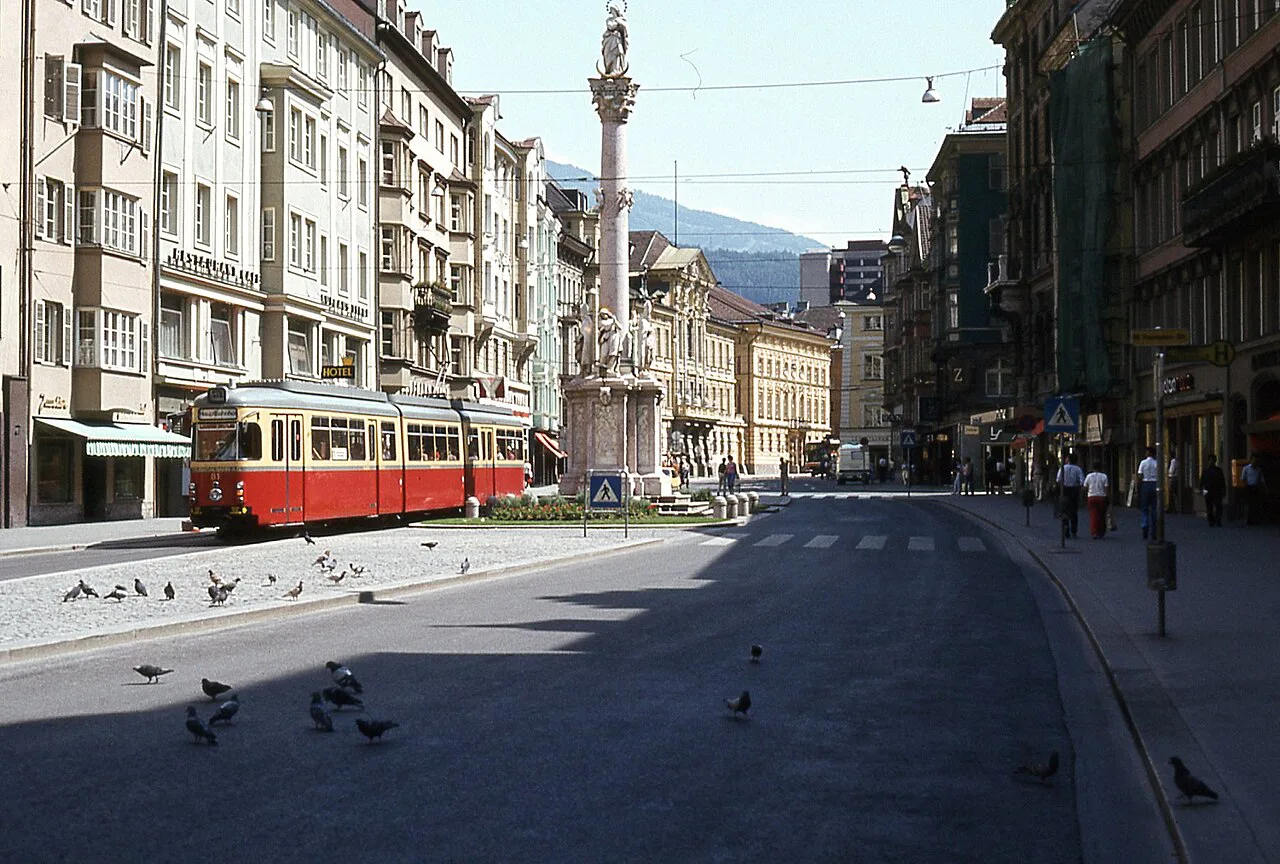
Walking tours of the Altstadt: Goldenes Dachl, Hofkirche and the medieval lanes
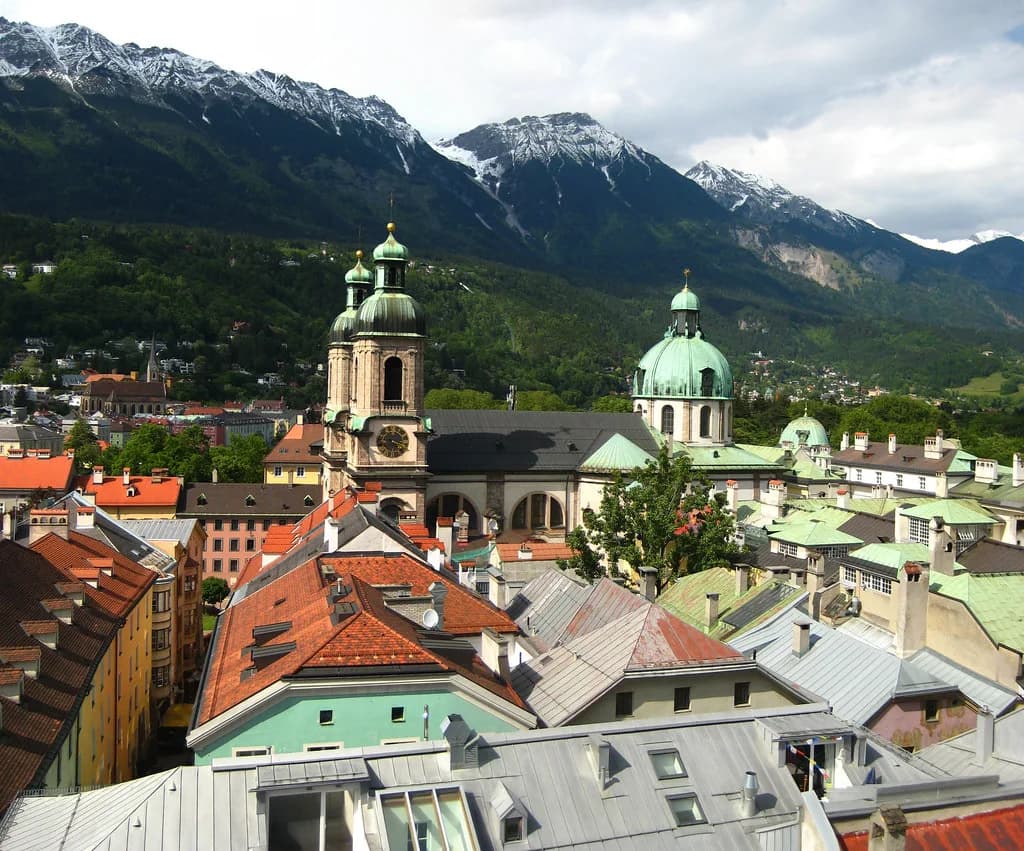
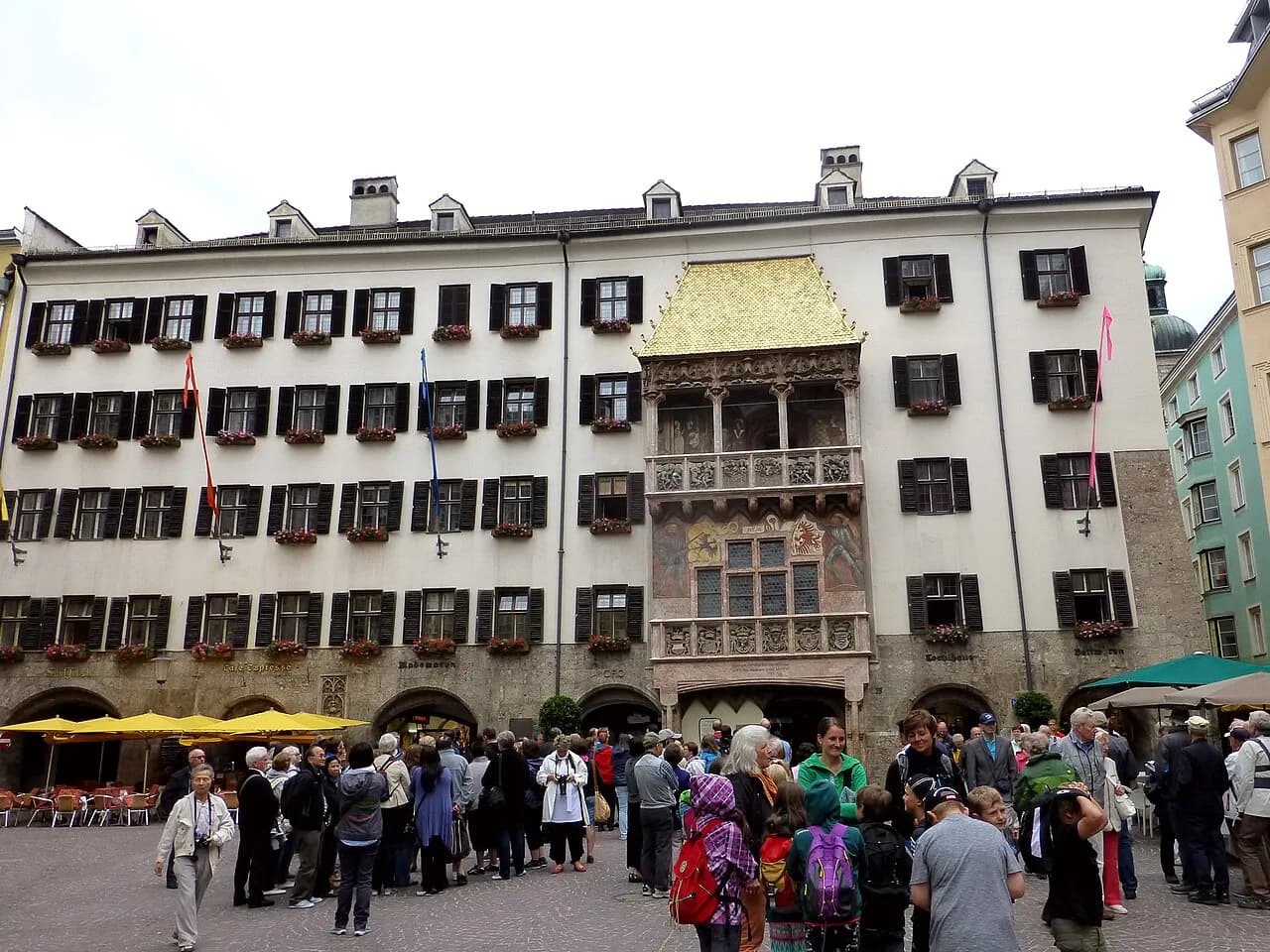
The classic old-town walk covers the imperial heart of the city: the Goldenes Dachl balcony, the Hofkirche with its bronze figures, the Hofburg facade and the lanes between them. Guides use these buildings to tell the story of the city from its medieval growth through the Habsburg centuries, so the walk doubles as an orientation for the rest of your stay.
The Hofgarten at the edge of the Altstadt, next to the Hofburg and the Landestheater, is a ten-hectare park that has passed through Renaissance, baroque and English landscape phases over roughly 600 years. Local guides routinely fold a pass through it into a city walk, and it is also where the Fiaker carriage rides and the Hofgarten bus parking area sit, which makes it a practical meeting point for group tours.
If you want to understand the lanes themselves rather than just pass through them, the dedicated Innsbruck Altstadt guide covers the layout building by building, which is useful before or after a guided walk.
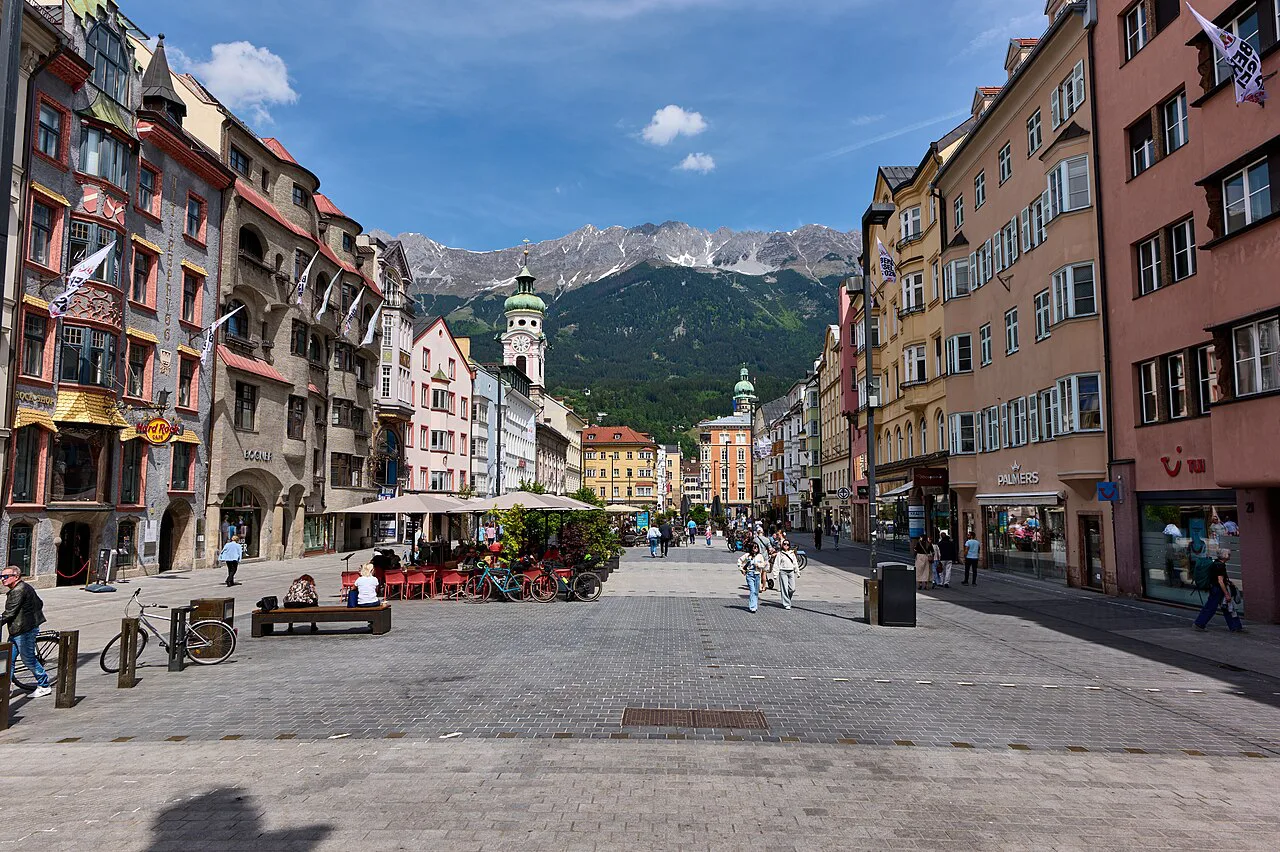
Themed walks: Maximilian I, everyday trades, and the city's last 100 years
Themed walks give the old town a sharper focus than a general overview. One program follows Emperor Maximilian I from the Goldenes Dachl to the Hofkirche and through the medieval lanes, covering his life, his women and his political ambitions. Another traces vanished trades such as bathhouse keepers, ropemakers and market women, and a third compares historic photographs with today's streets to show how the city center has been rebuilt.
A separate walk digs into the city's Jewish history, and others cover the Middle Ages, medicine, markets and religion in Innsbruck. These are narrow by design: you get depth on one subject instead of a survey, which suits a second visit or a traveler who has already done the standard circuit.
Note who these programs are built for. Several themed walks are pitched at local groups, company events and school classes, with duration and meeting point agreed individually rather than fixed in a public schedule, so an independent traveler should ask whether a private booking is the only way in.
Baroque interiors: a Hofburg-focused tour and what the state rooms add
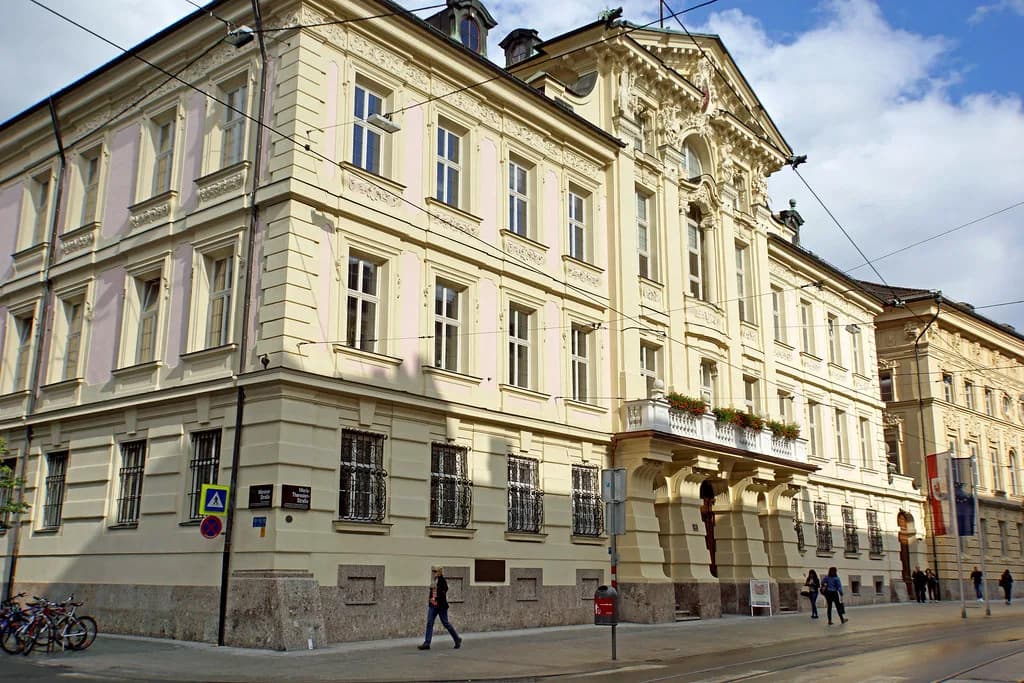
A Hofburg-centered tour shifts the focus indoors to the imperial state rooms and their baroque decoration, using those rooms to explain how the court lived rather than how the city looked. The trade-off is time spent inside one building instead of covering several squares, so this suits travelers who care more about interiors and court life than about street-level orientation.
Because the Hofburg sits directly beside the Hofgarten, a palace tour paired with a short garden walk makes a coherent half day without any transport. Ask the operator what the palace tour actually includes, since the format is agreed with each group rather than run to a fixed published itinerary.
Schloss Ambras: the castle museum tour and why it sits outside the center
Schloss Ambras is presented as the oldest museum still in its original location, holding armor, weapons and art-cabinet pieces in coral, coconut shell and ivory, plus one of the finest halls in the Alps. A guided visit turns a room-by-room castle museum into a narrative about collecting in the sixteenth century, which is hard to reconstruct from labels alone.
The castle sits above the city rather than in it, so this is a half-day commitment once you count getting there and back. If your time in Innsbruck is one full day, choose between Ambras and an old-town walk rather than trying to squeeze both.
Wilten on foot: the Basilika, the Stiftskirche and the Wiltener Friedhof
The Wiltener Spaziergang starts at the Triumphpforte and heads into the district that holds the roots of Innsbruck. The route pairs the Wiltener Basilika, a minor basilica with a rococo interior that was once a pilgrimage site, with the Stiftskirche of the Premonstratensian Stift Wilten, which existed before the city was founded; the tour uses the two churches to trace the relationship between church and state.
Along the way you see the two giant figures Haymon and Tyrsus, the Wiltener Friedhof with its wrought-iron grave crosses, and the story of the Wiltener Sängerknaben boys' choir. The Basilika is described as possibly standing on the remains of a fourth-century church, in which case it would be the oldest church in the Alps.
For the wider picture of the city's religious buildings, from the Hofkirche to the Dom, the guide to churches in Innsbruck is a useful companion to this walk.
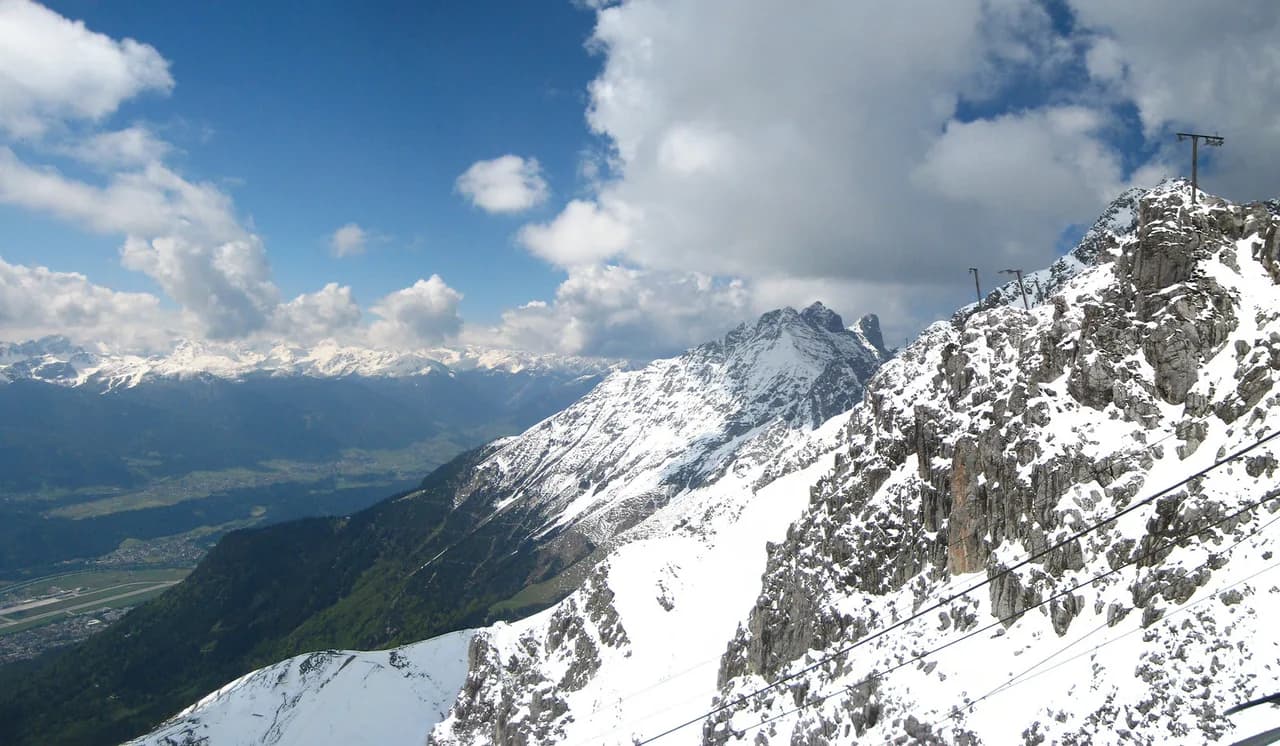
Bergisel and the Tirolpanorama: the 1809 battle panorama explained
The Tirolpanorama at Bergisel displays the third Bergisel battle of August 13, 1809 in a circular panorama covering 1,000 square meters, set inside a painted Tyrolean mountain landscape. A guided explanation supplies the background and aftermath of those years and introduces the main figures, which the painting alone cannot do.
Bergisel is uphill from the center, so this tour works best combined with a general city walk on the same day rather than as a standalone outing. Confirm the meeting point in advance, since a tour that begins at the panorama is not the same booking as one that begins in the Altstadt.
Bells and craft: the Graßmayr bell foundry tour
The Graßmayr foußndry tour takes you into a working bell foundry that the operator describes as Austria's only one, run by the same family for 14 generations. You see bronze casting as a craft rather than a museum display, which makes it the most unusual item in the city's tour menu and a good choice for travelers who have already covered the imperial sights.
Craft tours depend on workshop activity, so ask about access and timing when you book rather than assuming a daily public slot.
Museum tours in Innsbruck: Hofkirche, Dom, Volkskunstmuseum and Ferdinandeum
Guided museum visits exist for the Hofkirche with its Maximilian monument, the Innsbrucker Dom, the Tiroler Volkskunstmuseum and the Tiroler Landesmuseum Ferdinandeum, along with the Hofburg, the Stadtturm, the Goldenes Dachl museum and the Zeughaus. A guide is most valuable in the Volkskunstmuseum and Ferdinandeum, where the collections are dense and the labels assume background knowledge.
For opening days, ticket prices and which collections are currently on show, check each museum's own site before you commit, since these change by season. The overview of museums in Innsbruck sorts the collections by subject so you can decide which one deserves a guided hour.
Public departures versus private bookings, and how to combine tours
Some operators run public departures that anyone can join, while others build every walk around a private group with its own date, duration and end point. Public slots are cheaper per person and easier to slot into a short trip, but private bookings let you combine themes, for example an old-town walk plus a museum visit or a city drive, in a single block.
Combination is a decision about time, not an upsell. Pairing the Wiltener Spaziergang with a museum tour works because both are on the same side of the city, while pairing an Altstadt walk with the Bergisel panorama means a deliberate trip uphill. Decide which pairing you want before you inquire, and ask the operator to quote the combined arrangement.
Matching a tour to your available hours and starting point
With one day, take a single old-town walk in the morning and use the afternoon for the Hofburg or the Hofgarten on foot. With two days, add Wilten or Bergisel on day two and keep Schloss Ambras for a trip where the transfer does not eat your morning.
Build the day around the starting point. Tours beginning at the Triumphpforte, at the Hofgarten bus parking area or up at Bergisel cannot be chained back to back without travel time between them, and the operators set duration and meeting point case by case.
Leave room for an unguided meal afterward. The best restaurants in Innsbruck for Austrian food and Old Town terraces are clustered in the center, which is where most walks end.
What to confirm before you book: meeting point, language and duration
Confirm four things in writing: the exact meeting point, the language the guide will use, the length of the walk and whether entry to any building is included. Several Innsbruck programs are adjustable to the group, which means duration and start point are agreed individually rather than published.
Ask which stops are guaranteed. A tour described as including a garden or a church may pass it without entering, and a museum tour may cover only part of a collection, so a short email before booking saves disappointment on the day.
Which Innsbruck tour should you book first?
Book one Altstadt walk first: it orients you in the lanes, covers the Goldenes Dachl and Hofkirche, and costs the least time. Then add exactly one outlying tour, choosing Wilten for churches and wrought-iron crosses, Bergisel for the 1809 panorama or Schloss Ambras for the castle collections.
If you have only a few hours, stay on foot in the center and skip the outlying sights rather than rushing between them. Confirm the meeting point, language and duration with the operator when you book, and check museum entry separately where a tour does not include it.
Explore more Innsbruck guides
Sources
Notes for your next Austrian town break
Optional updates when we add or revise town guides.
You might also like
Continue reading
More guides you'll find useful