Churches in Innsbruck: Historic Churches Worth Stepping Into
Innsbruck's churches run from an eighteenth-century Baroque cathedral to a 1906 Protestant church with Reformation figures in its windows. Here is what to see.
On this page
Two Innsbruck churches are worth building a walk around: the eighteenth-century cathedral, Dom zu St. Jakob, in the Old Town, and the Christuskirche in Saggen, a Protestant church that opened in 1906 with Reformation figures in its windows. This guide covers what to look for inside each one, why Tyrol's Catholic identity pushed the Protestant congregation out to Saggen, and how to slot both into a walk across the city.
Innsbruck is not a church-touring city on the scale of Rome, but the two interiors here set up a contrast you can read in half a day: gilded Baroque drama in one, white walls and critical stained glass in the other. Bring that comparison with you and the buildings stop being background scenery.
Which churches in Innsbruck are worth stepping into
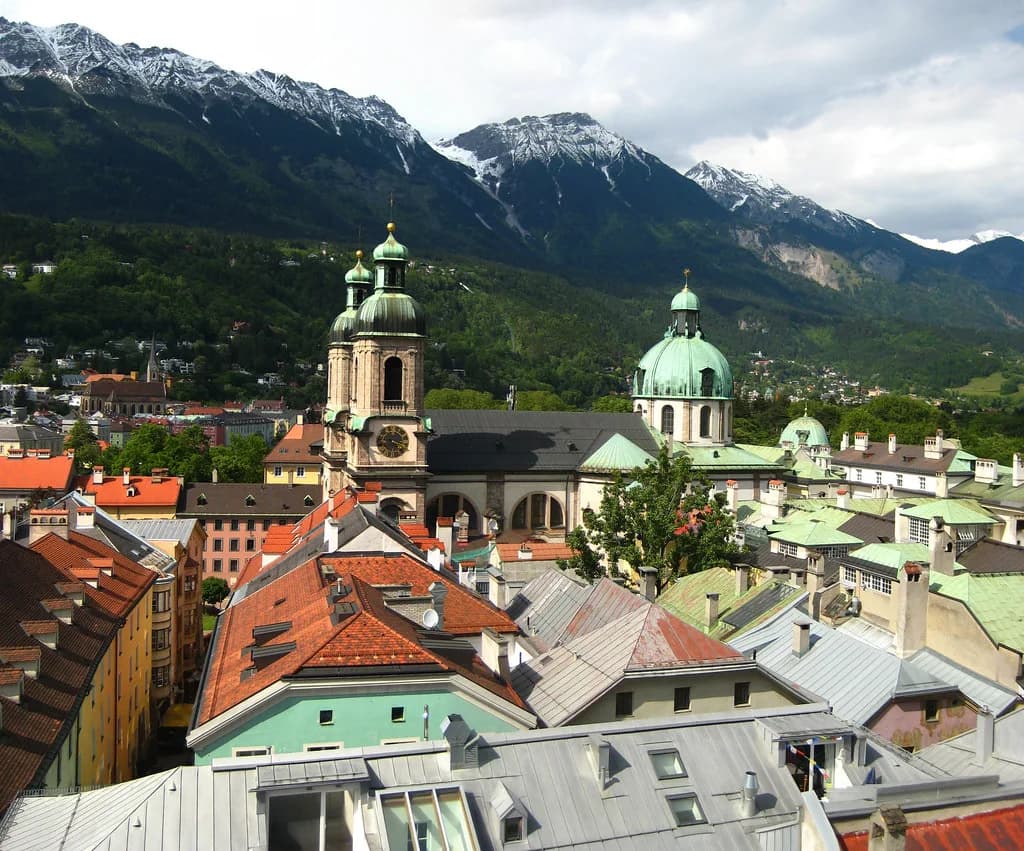
Start with the cathedral, Dom zu St. Jakob, an eighteenth-century Roman Catholic church that serves as the seat of the Diocese of Innsbruck. Its location puts it directly on any circuit of the Altstadt, so it costs you no detour.
The second stop is the Evangelische Christuskirche on Richard-Wagner-Strasse in Saggen, north of the old center across the Inn. It is a late-monarchy building from 1906, and its interest is historical as much as aesthetic: the windows commemorate the Reformation in a city that had long kept Protestant worship behind closed doors.
Skip the assumption that every active congregation is a sight. The Free Evangelical Church on Reichenauer Strasse is a working church that holds Sunday worship at 10 am with English and Farsi translation, not a historic monument, and it belongs on your list only if you are looking for an English-language service.
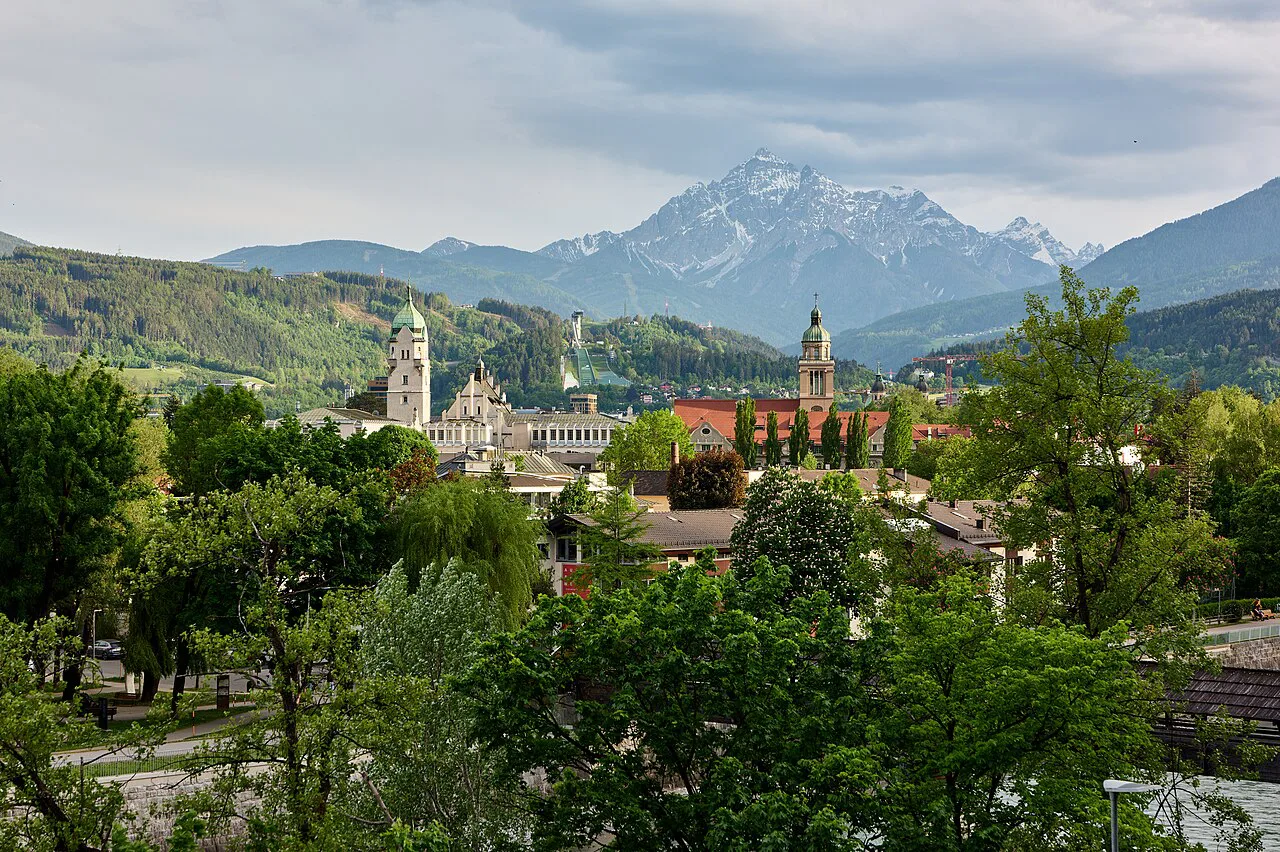
Innsbruck Cathedral (Dom zu St. Jakob): the eighteenth-century Baroque cathedral
The cathedral is the city's Catholic anchor, an eighteenth-century church that serves as the seat of the Diocese of Innsbruck. Come in expecting the Baroque interior that goes with that date, the kind of space where plasterwork, altarpieces and side chapels reward slow looking rather than a quick photo from the door.
Entry to the cathedral is free, which makes it the easiest church stop to fold into a sightseeing day. Treat it as a ten-to-twenty-minute pause between the surrounding squares rather than a destination in itself, and check the posted door times when you arrive in case a service is about to begin.
Where to look: the high altar and the nave ceiling carry the Baroque message, and the side chapels give you quieter corners to stand in. If you have already seen the Hofkirche and the Hofburg nearby, the cathedral completes a compact trio of Habsburg-era religious and court architecture within a few minutes' walk. The wider Altstadt walk around them is mapped out in the guide to the Altstadt von Innsbruck.
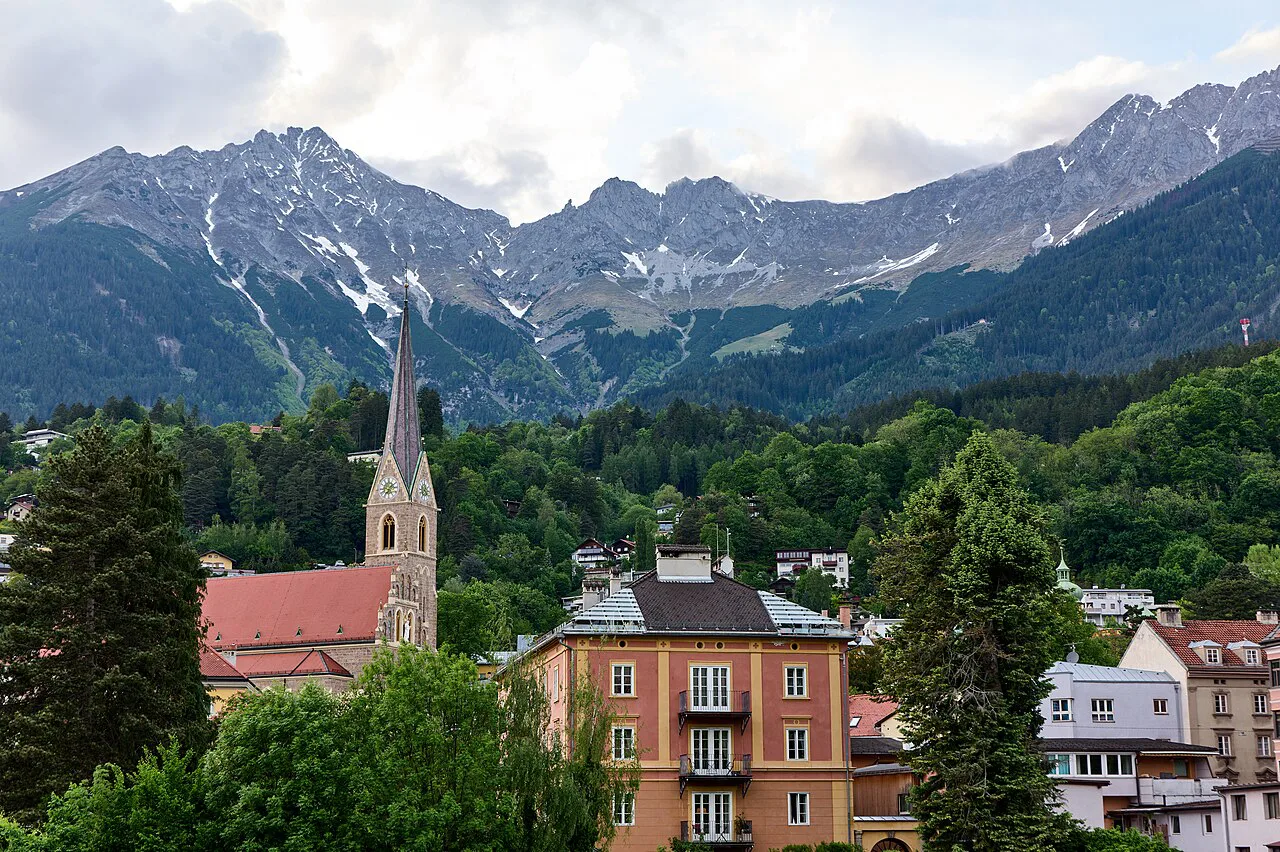
The Christuskirche in Saggen: Tyrol's Protestant church, opened in 1906
Architecturally, the Christuskirche does not announce itself as Protestant from the street: it mixes neo-Gothic and neo-Romanesque elements, with a pointed tower set against round arches and a barrel vault. It was built with Höttinger Breccia from the old quarry below the Hungerburg, the same local stone used on other Innsbruck landmarks including the Triumphal Arch.
The break with the Catholic city happens inside. Splendor is used sparingly here, in the classic Protestant Manner, so the walls stay modest and the attention goes to the windows. Those windows were made by the Tyrolean Institute for Glass Painting and Mosaics in Innsbruck, and they carry subjects you will not find in a Baroque parish church.
Look also at the fresco on the adjoining rectory, painted by Ernst Nepo, the same artist responsible for the fresco of Saint Theresia at the entrance to the Theresienkirche on the Hungerburg. It is an easy detail to miss on the way in, so circle the building once before you leave.
What the Christuskirche windows show
Instead of cherubs and saints, the stained glass depicts the Reformation figures Zwingli, Luther and Melanchthon. For a Tyrolean congregation in 1906, putting the reformers in the windows was a statement about belonging, not just decoration.
The windows go further into politics. One shows Gustavus Adolphus, the Swedish king who fought the Habsburgs in the Thirty Years' War, a subject that reads as contemporary criticism of Catholic rulers. Another depicts the expulsion of the Zillertal Inclinants, Protestants forced to emigrate from the Zillertal to Prussia in 1837, which did not flatter the Austrian ruling house.
Read the windows in that order, reformers first, then the Swedish king, then the exiles, and the building becomes a short illustrated argument about religious power in Tyrol. It is the reason to make the walk out to Saggen rather than confining yourself to the Old Town.
Why Tyrol's Catholic identity shaped where Innsbruck's Protestants worshiped
Tyrol understood itself as a holy land in a strictly Catholic sense, and that did not change after 1848. Even after Emperor Franz Joseph I's Protestant Patent of 1861 allowed Protestants to practice their faith, services in Innsbruck could only be held in private.
In 1879 the city's Protestant community bought the school building in Kiebachgasse because it at least offered a chapel, and the Catholic press reacted with outrage. Growth through immigration from outside the region soon pushed the congregation past that provisional Old Town space, and private donations paid for a church of its own. The city provided the building site in Saggen, which is why the Christuskirche sits outside the medieval center.
The Reformation had deep roots in Tyrol before that: in the early sixteenth century the mining towns of Hall and Schwaz were its main centers, with miners arriving from Saxony and preachers spreading Lutheran ideas. If the Habsburg and Reformation backdrop interests you, the broader Innsbruck history guide fills in the political side.
Reading a Baroque Catholic interior against a plainly decorated Protestant one
The contrast is the point of seeing both. At the cathedral, ornament carries the theology: altars, gilding and imagery direct your eye upward and toward the sacred. At the Christuskirche, restraint does the same work by subtraction, leaving the glass to speak.
Practically, this means you look at different things in each building. In the cathedral, scan the chapels and the main altar; in Saggen, walk the length of the nave and read each window. Set aside longer for the Christuskirche than its plain walls suggest.
Matching a church stop to an Old Town walk versus the walk out to Saggen
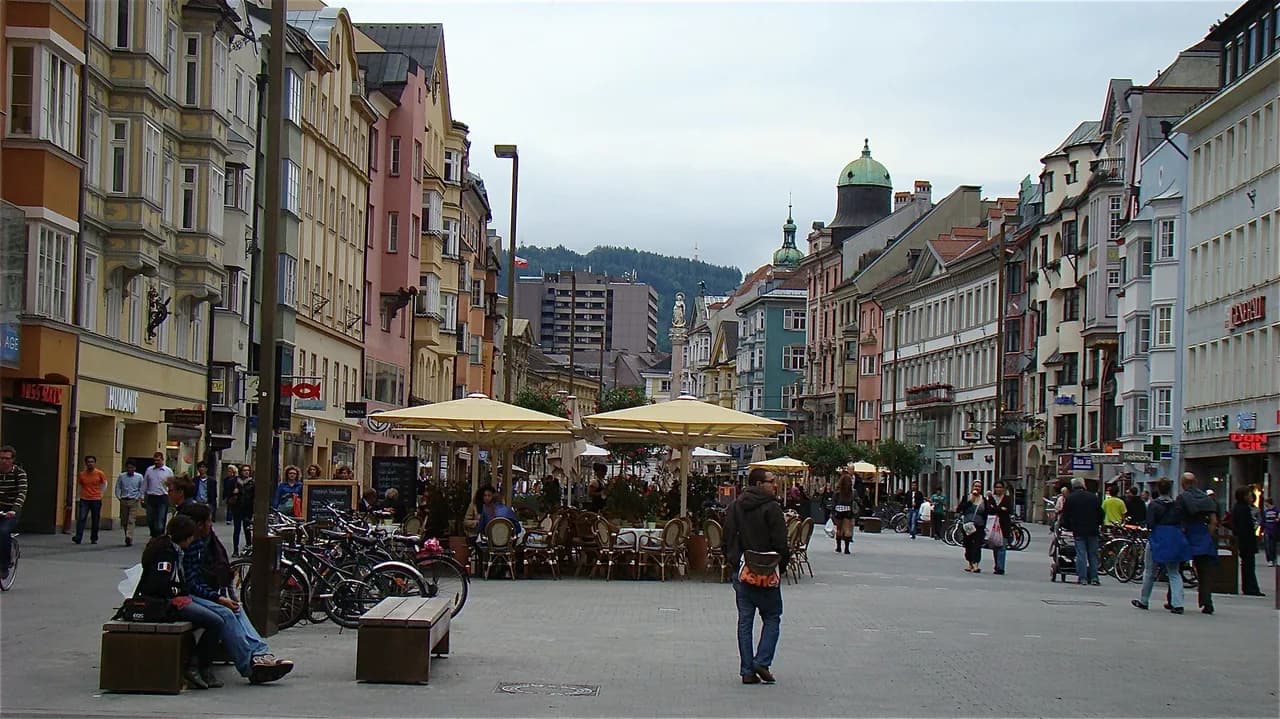
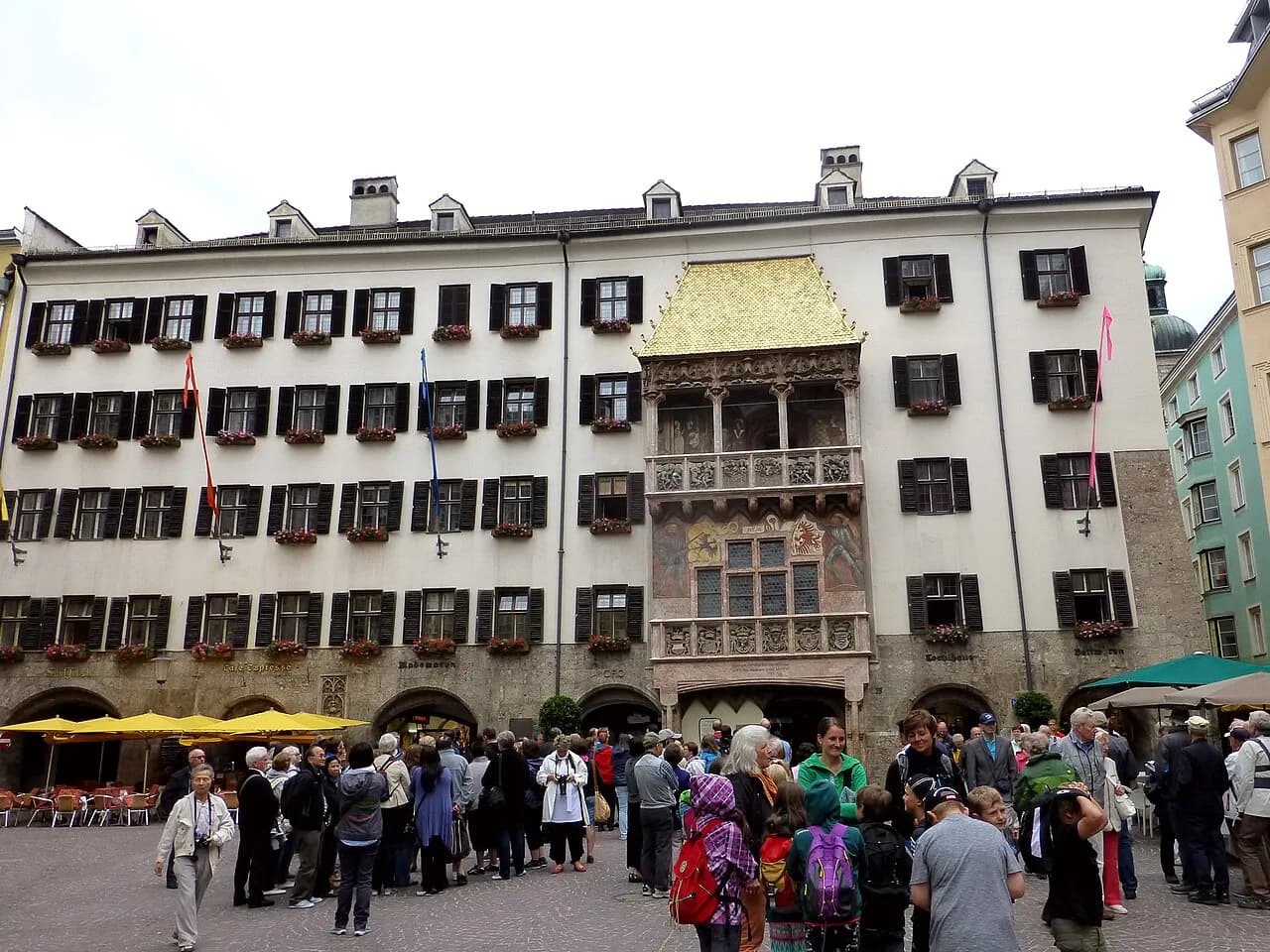
The cathedral fits an Old Town loop without any planning: pair it with the Hofkirche and the Hofburg, then continue past the Goldenes Dachl and the Helbling Haus. The city's 3D-printed and painted landmarks are covered in the guide to things to do in Innsbruck, and the surrounding streets in the Altstadt walk.
Saggen is a separate excursion. Richard-Wagner-Strasse sits across the Inn to the north, roughly a twenty-minute walk from the old center, so count it as a half-hour round trip on foot before you even look at the church. If you are building a full day, sketch it first on the Innsbruck map, since the Inn Valley geography decides what chains together comfortably.
If you only have one church slot, take the cathedral; if you have a spare hour and an interest in Reformation history, the walk to Saggen earns its time. Pair it with a wander along the Inn River afterward, which softens the return leg.
Practical points: entry, service times and quiet visiting
The cathedral is described as free to enter, so no ticket decision is involved. Both churches are active places of worship, so step in quietly, keep the camera discreet during prayer, and leave when a service is being set up rather than photographing around it.
Neither the cathedral nor the Christuskirche operates like a museum with a fixed visitor schedule: doors open around services, and those times change. Check the notice board on the door when you arrive rather than relying on a printed plan, and if you want an English-language service, the Free Evangelical Church lists Sunday worship at 10 am.
Which church suits your Innsbruck day
If your time in Innsbruck is short, put Dom zu St. Jakob on the Old Town walk and let the free entry make it a no-risk stop. If you have an extra hour and any curiosity about how a Protestant congregation survived in Catholic Tyrol, make the walk to Saggen and read the Christuskirche windows in order.
Do both in one day and the two interiors explain more about the city than a single label ever could. Check door times on arrival and build the rest of the day around them.
Explore more Innsbruck guides
Frequently Asked Questions
Is Innsbruck Cathedral free to enter?
It is described as free to enter, so no ticket is needed for a visit. Because it is a working Catholic church, check the posted door times when you arrive rather than planning around a fixed schedule.
What should I look at in the Christuskirche windows?
Look for the reformers Zwingli, Luther and Melanchthon first, then the Swedish king Gustavus Adolphus, and finally the scene of the Zillertal Protestants expelled to Prussia in 1837. Together they argue a specific Tyrolean Protestant grievance rather than illustrating generic Bible stories.
Sources
Notes for your next Austrian town break
Optional updates when we add or revise town guides.
You might also like
Continue reading
More guides you'll find useful