Innsbruck Walking Tour: A Self-Guided Route Through the Old Town
A self-guided Innsbruck walking tour through the Old Town, with stops in order, walking distances and what to look at at each one, plus when to book a guide.
On this page
A self-guided Innsbruck walking tour fits inside the compact Altstadt, where the Golden Roof, the Stadtturm, the Triumphal Arch, the Hofkirche and the Hofburg sit within a few minutes of each other on foot. Plan roughly three hours of walking and looking, more if you add the Tyrolean Folk Art Museum or climb the tower. This route gives the stops in order with walking times, says what to look at at each one, and then sets out when a guided tour earns its keep and how the tip-based free tours work.
Start at the Golden Roof (Goldenes Dachl)
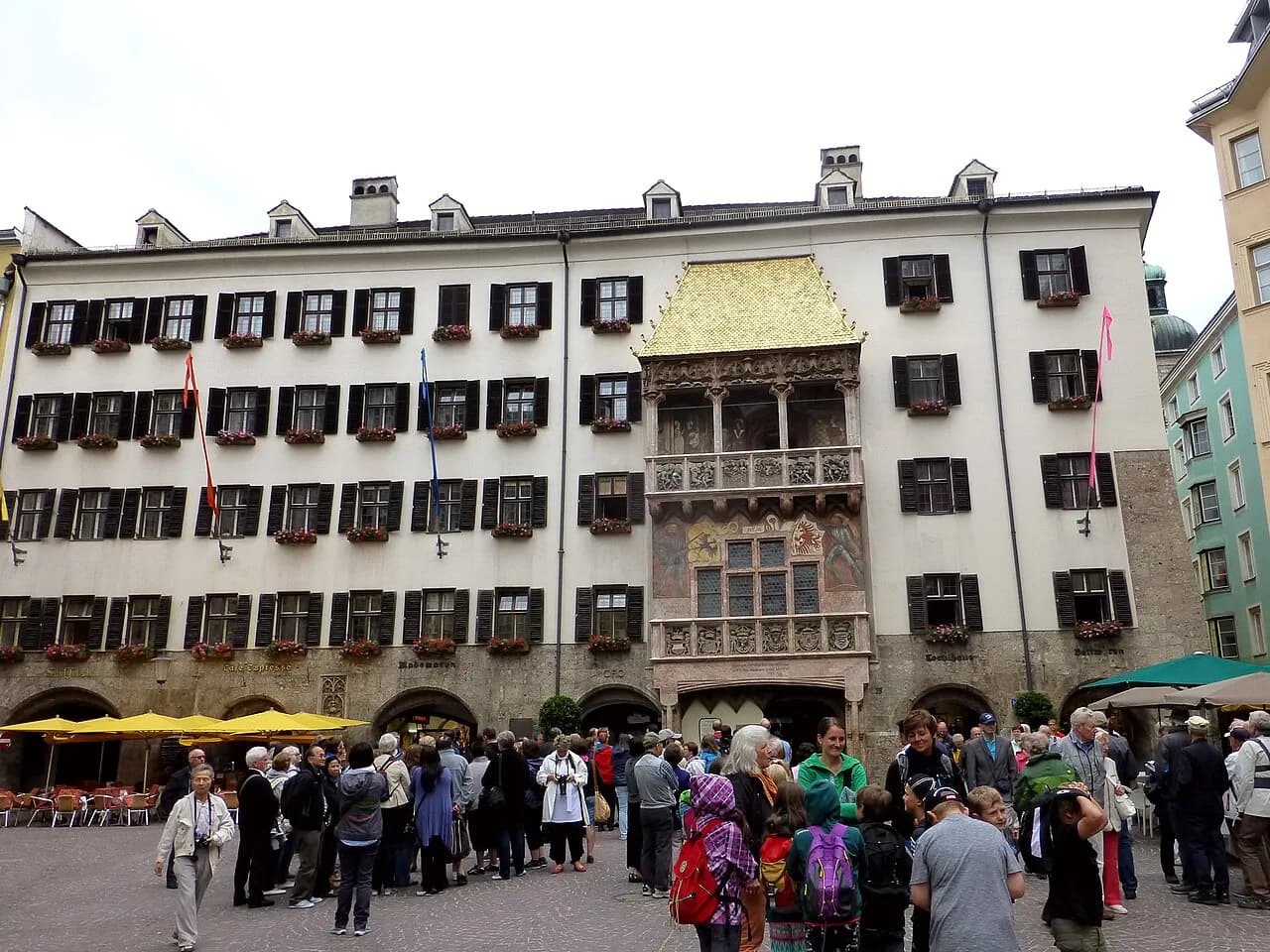
Begin on Herzog-Friedrich-Strasse at the Goldenes Dachl, the Golden Roof, which the city's tour tradition treats as the emperor's balcony and which remains the image most travelers carry home from Innsbruck. Stand back across the lane first: the point of the balcony is how it projects over the street, so a few steps back shows the roof and the facade better than standing directly underneath. Give it ten minutes on the outside, then walk the length of Herzog-Friedrich-Strasse toward the tower.
The Old Town lanes to the Stadtturm
The Stadtturm, Innsbruck's medieval civic tower, closes the eastern end of the Old Town and rises directly above the square where the lanes fan out. The tower is the best orientation point on the walk, so use its base to fix your bearings before heading south into the side streets. If you plan to climb, do it early: the stairs are narrow and the landing at the top fills up as the morning goes on.
From the tower, zigzag through the lanes rather than retracing Herzog-Friedrich-Strasse; the parallel streets carry the same painted facades and arched arcades with a fraction of the foot traffic. This is the part of the walk where a printed or downloaded Innsbruck map pays for itself, because the lanes bend and the street signs sit high on the walls.
Herzog-Friedrich-Strasse and the Triumphal Arch
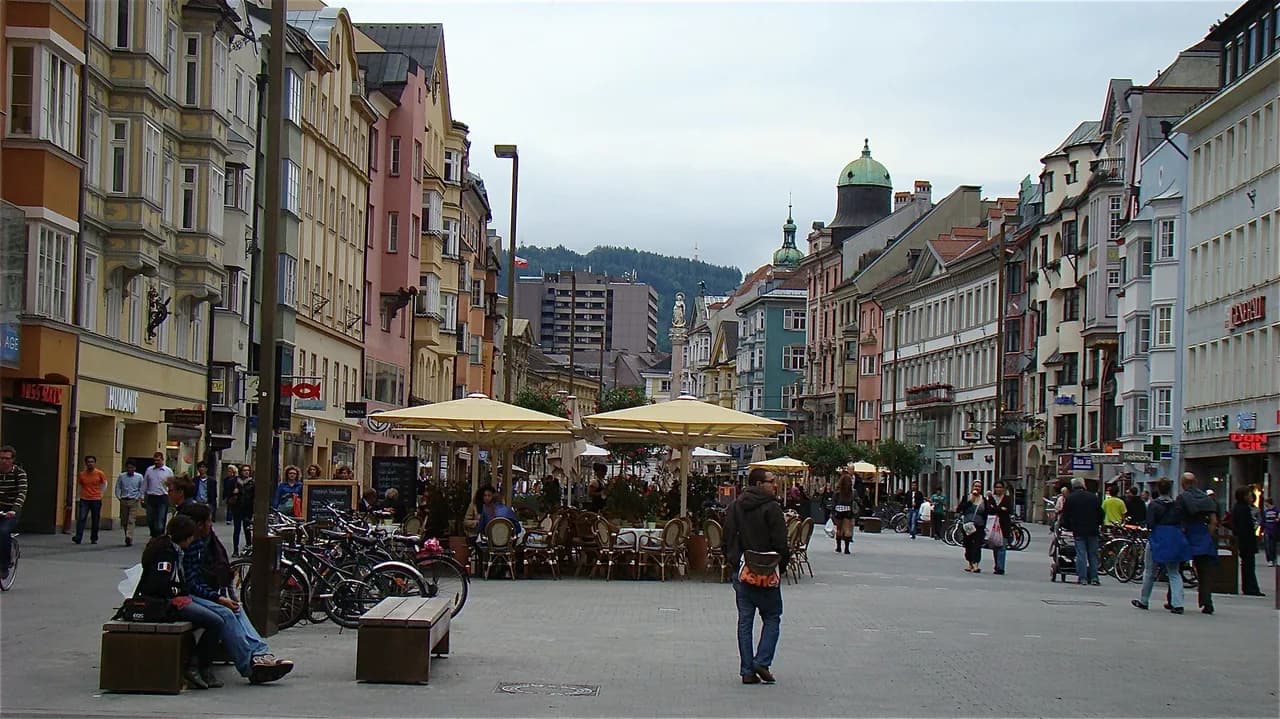
Herzog-Friedrich-Strasse is the spine of the Innsbruck Altstadt: a long, slightly curving pedestrian street lined with arcaded shopfronts, town houses and cafe tables, which you have now walked in both directions. Read it as a processional route rather than a shopping street, because that is how the imperial court used it.
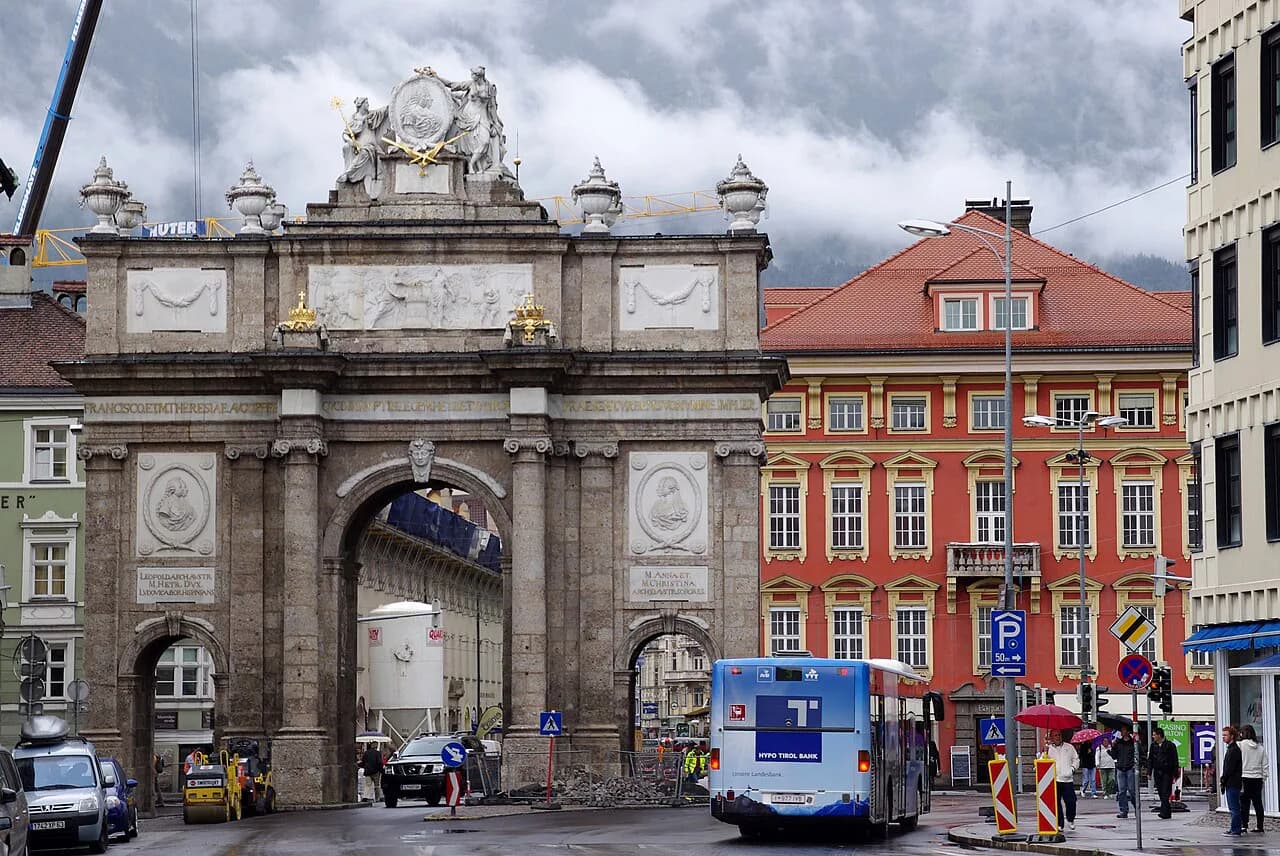
The tour operator’s Old Town route names the Triumphal Arch, the former parliament (Altes Landhaus), the Imperial Palace, the medieval Stadtturm and the churches among its stops. The arch stands on the Old Town route; give it fifteen minutes and photograph it from across the street so both faces read at once.
Hofkirche and the Cathedral of St. James
The Hofkirche, the court church, is the one the city's free tours single out as a must-see, and it stands beside the Tyrolean Folk Art Museum. Budget at least thirty minutes inside; the nave rewards a slow circuit, and the light changes as you move around it.
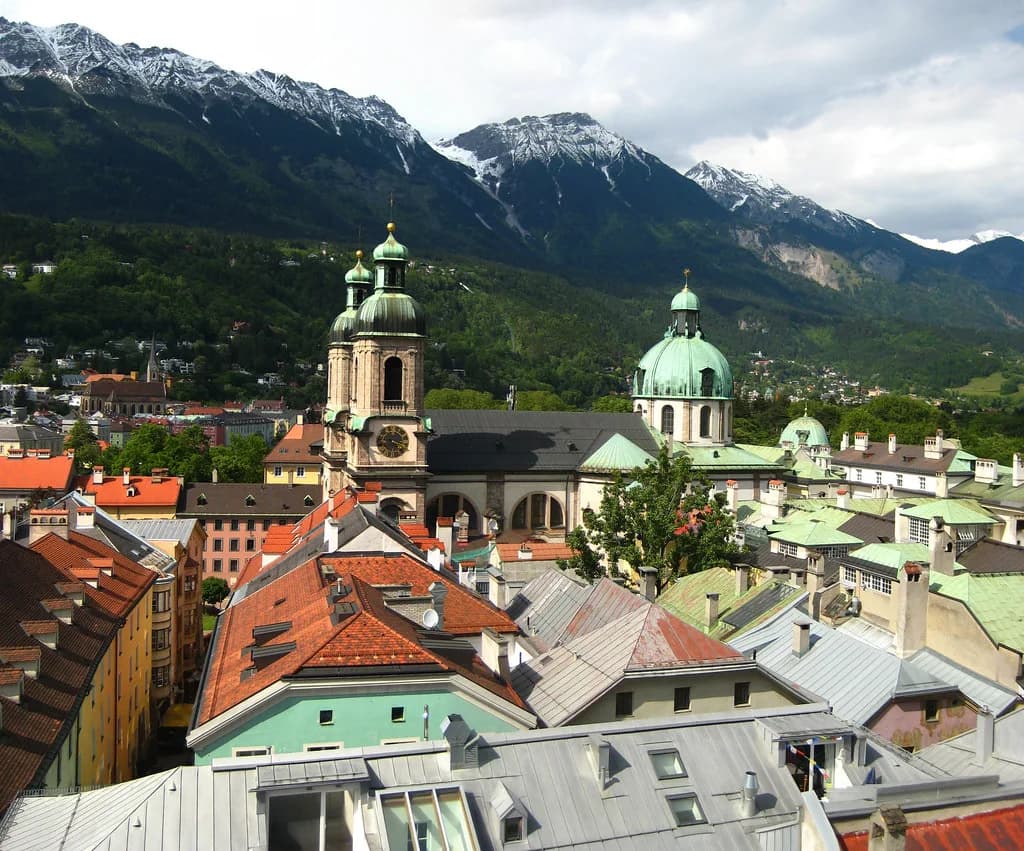
The Cathedral of St. James, the Dom zu St. Jakob, stands a few minutes away and pairs a bright baroque interior with the city's principal Catholic parish role. Twenty minutes covers the nave and the altarpiece, unless a service is under way, in which case step back and keep the visit short. Dress and quiet inside both churches follow the usual European conventions.
If you are collecting the city's religious buildings rather than only the two on this route, the Innsbruck churches guide goes further out, but keep the Old Town pair as the core. The two interiors together take under an hour and give the walk its strongest contrast with the street facades outside.
Altes Landhaus and the Tyrolean assembly
The Altes Landhaus, the old Tyrolean assembly building, sits on a quiet street a short step from the cathedral and gives the walk its government quarter: a dignified baroque facade, a courtyard and the sense of a provincial capital with its own institutions. Allow ten to fifteen minutes from the street.
Imperial Palace (Hofburg) and the Liberation Monument
The Hofburg, the imperial palace, closes the Old Town loop with a long, plain facade that hides a sequence of state rooms and a chapel. Even from the street the scale tells you that this was an imperial residence and not a provincial manor; the interior visit is the optional part and can be saved for a second pass.
The tour operator also lists the Liberation Monument, commemorating those who died during the Second World War, on its Old Town description rather than on this route, so treat it as an optional add-on if you pass it. If you do, read the inscription, look at the setting and move on. Treat it as a memorial rather than a sight, and keep voices down.
Tyrolean Folk Art Museum as an indoor extension
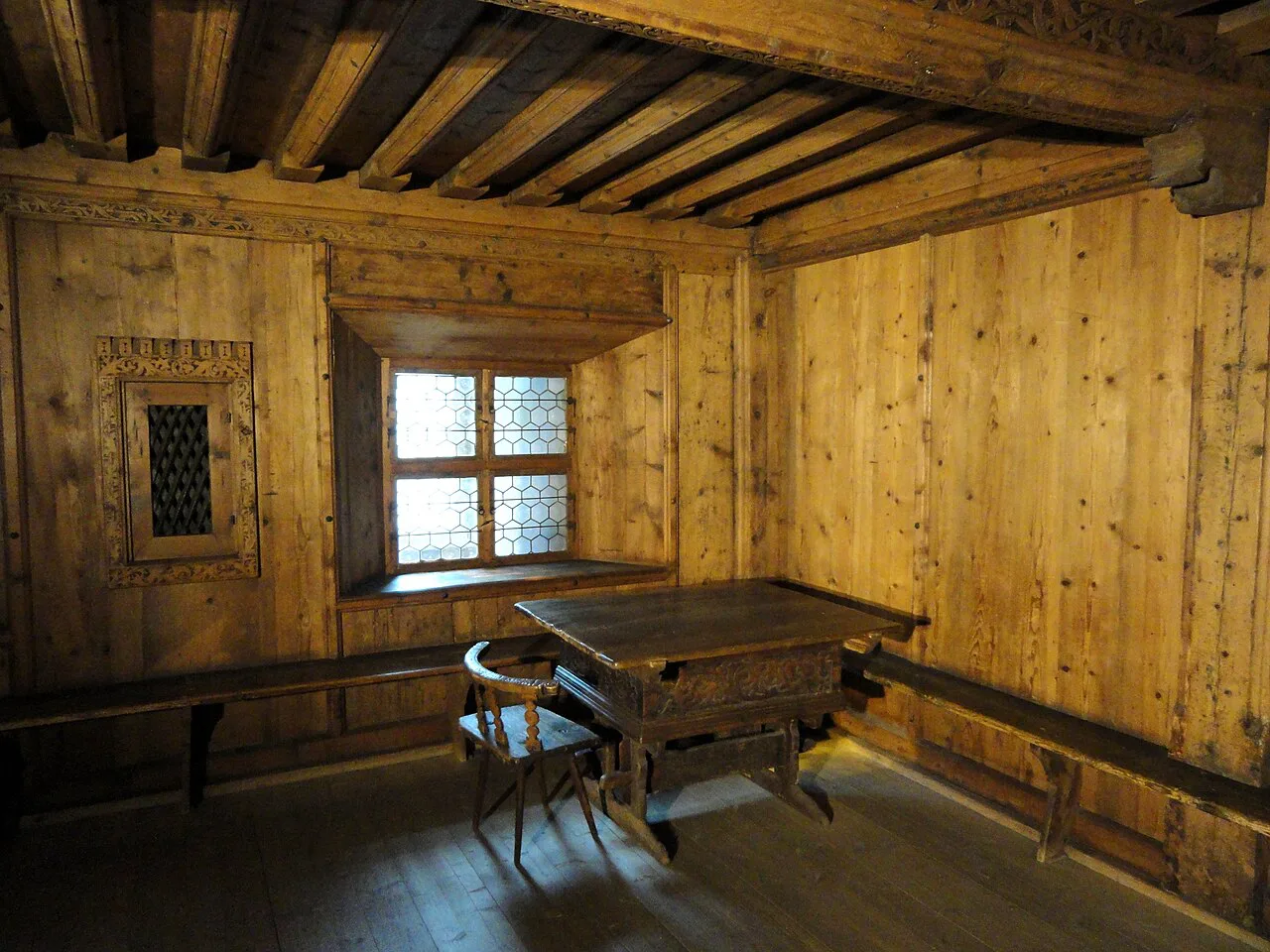
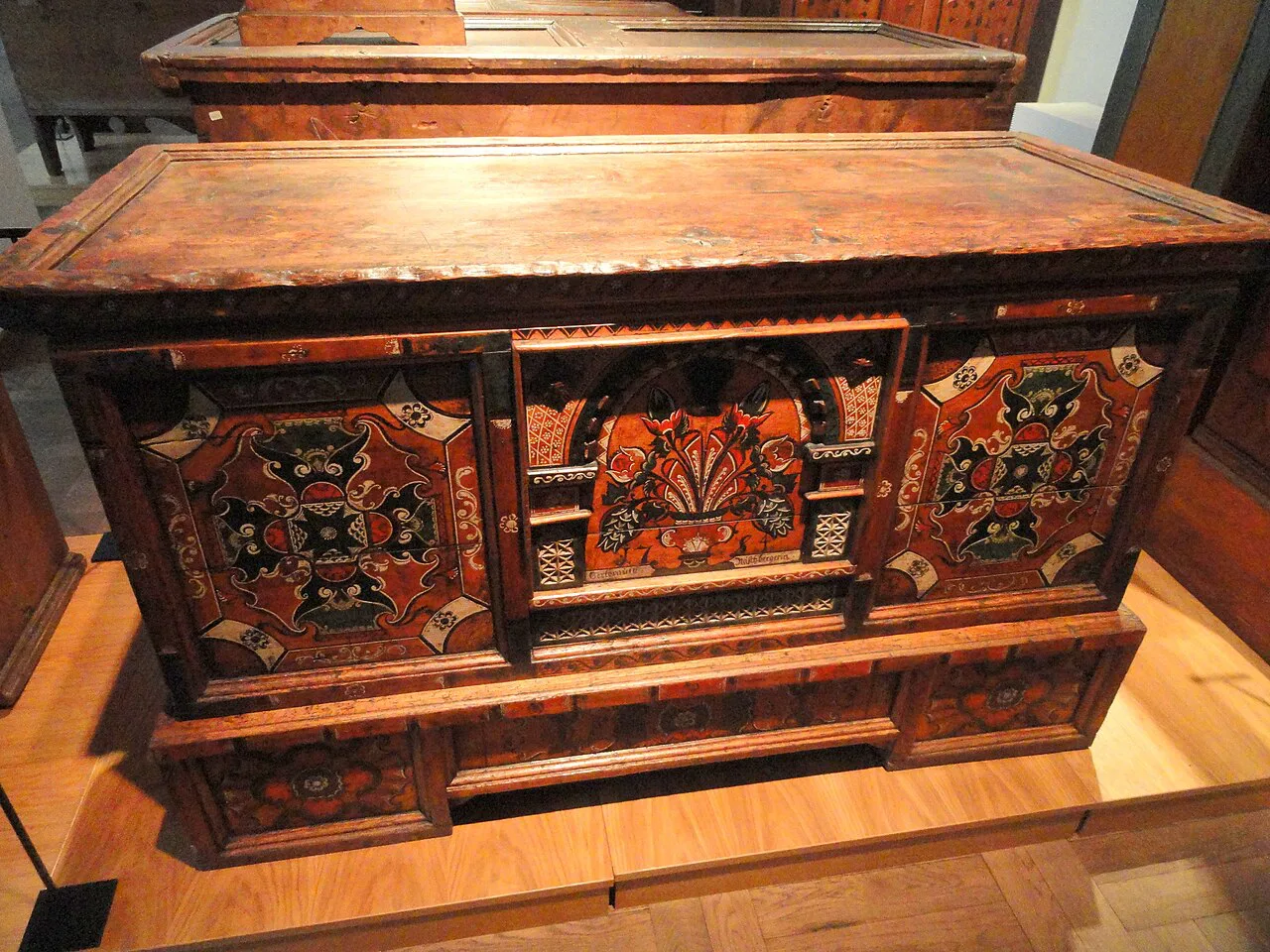
The Tyrolean Folk Art Museum, the Tyroler Volkskunstmuseum, sits beside the Hofkirche and is the obvious indoor addition when rain or a cold wind arrives, with period interiors, craftwork and devotional objects from across the Tyrol. Add an hour if you go in, and treat it as the substitute for a tower climb rather than an extra stop on top of everything else. For more options on a wet day, this guide to the museums in Innsbruck sorts the rest by collection type.
A shorter official alternative: Walk 7, Authentic Innsbruck
The city's own tourism board publishes Walk 7, Authentic Innsbruck, rated easy and given as 4 km with 66 m of uphill, which makes it a useful alternative if you want a signed route rather than a list of stops. Use it when you have already seen the headline squares and want the residential streets behind them; pair it with the Old Town loop rather than replacing it.
Beyond the Old Town: Tyrol Panorama, Bergisel and the Nordkette
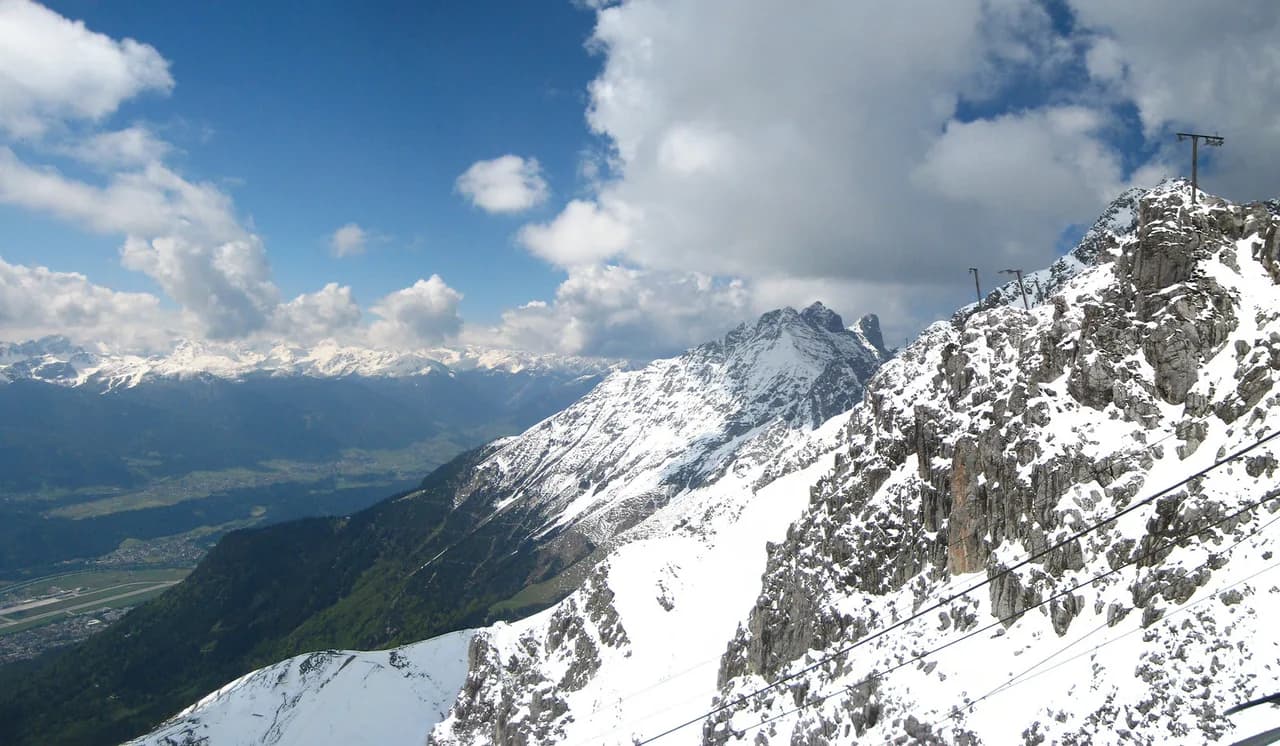
Treat Tyrol Panorama, the Bergisel arena and the Nordkette as a separate half-day, not an extension of the Old Town walk, because each one sits above or outside the center and takes real time to reach. Tyrol Panorama houses the 360-degree painting of the Battle of Bergisel, with the Bergisel ski jump next door. The Nordkette cable car, reached by the Hungerburg funicular, lifts you to an alpine setting above the city.
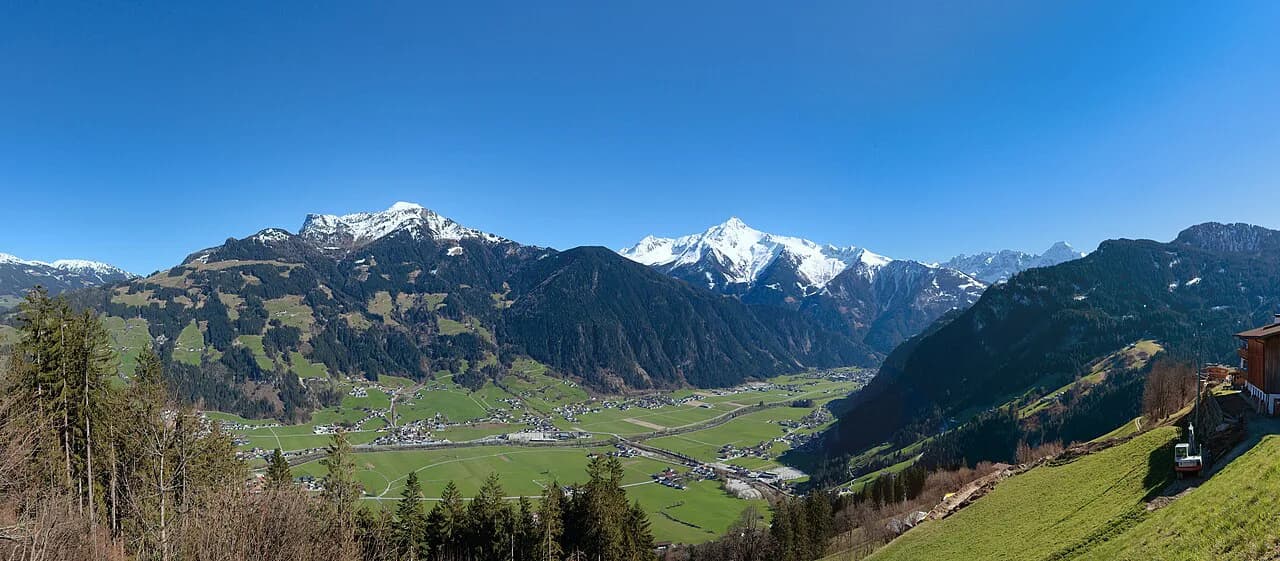
Plan the mountain half-day around the weather, since the point of the cable car is the view, and give the panorama and the jump their own block of time rather than squeezing them in after the churches. The wider Inn Valley and the villages above the city, such as Igls, fill further days if you have them.
When a guided tour or a free walking tour is worth it
Book a guided walk when you want the Golden Roof, the Hofkirche and the Triumphal Arch explained as one imperial story, and skip it if you mainly want to look at the streets at your own pace. The free tours in Innsbruck work on a tip model: there is no set price, the guides rely on what participants give at the end, and you reserve a place in advance so that the meeting point details and a map reach you by email before the tour. Each guide sets their own group limit, so book ahead rather than turning up.
The free-tour operator also lists a free self-guided tour of three hours with flexible timing, so you can compare a guided loop with doing it yourself. Tipping is discretionary; give what the tour was worth to you rather than a token amount, and carry cash in small notes.
Practical constraints on the day
Several stops on this route are ticketed interiors, and the free tours require you to book in advance, so read the booking confirmation before you set out and plan outdoor stops for when an interior is closed. Churches may be closed to visitors during services, and the Hofburg and the folk art museum are paid interior visits, so decide which ones you actually want and pay for those only.
The Old Town is at its busiest in the middle of the day, so start at the Golden Roof at opening time and do the churches before lunch, leaving the lanes and the arcades for the quieter late afternoon. If a stop turns out to be closed, the walk still works: the street layout, the arch and the facades carry the route without any ticket at all, and there is plenty of free things to do in Innsbruck when the budget or the clock runs short.
Which Innsbruck walk to choose
Choose the self-guided Old Town route if you have half a day and want the Golden Roof, the Stadtturm, the arch, the churches and the Hofburg in one continuous loop with no schedule but your own. Choose a tip-based guided tour if the imperial story matters to you and you would rather hear it than read it, reserving ahead so the meeting point reaches you by email. Either way, keep Bergisel and the Nordkette for a separate morning when the weather is clear.
Explore more Innsbruck guides
Frequently Asked Questions
Where does a free walking tour in Innsbruck start?
The full meeting point details and a map come in the booking confirmation email. Reserve before the day you want to walk, and read the email before you leave.
Do you have to book a free walking tour in Innsbruck?
Yes, according to the tour operator. Booking is required so the meeting point details reach you in time and the guide can plan group numbers. Booking is free and done online, and you can message the guide with questions after reserving, up until the tour starts.
Are free walking tours in Innsbruck really free?
There is no set price. The guides are paid by the tips participants give at the end, so budget for a contribution that reflects the value of the tour and carry cash for it.
Where can you walk in Innsbruck outside the Old Town?
The city's tourism board publishes Walk 7, Authentic Innsbruck, rated easy at 4 km with 66 m of uphill, which leads through the streets beyond the headline squares. The Nordkette and Bergisel are a separate half-day rather than a walking extension.
Sources
Notes for your next Austrian town break
Optional updates when we add or revise town guides.
You might also like
Continue reading
More guides you'll find useful