Kaiserschmarrn: Austria's Torn Pancake, How It's Served and Eaten
Kaiserschmarrn is Austria's torn, caramelized pancake, dusted with sugar and served with plum or apple compote. Here's what to expect and how it's eaten.
On this page
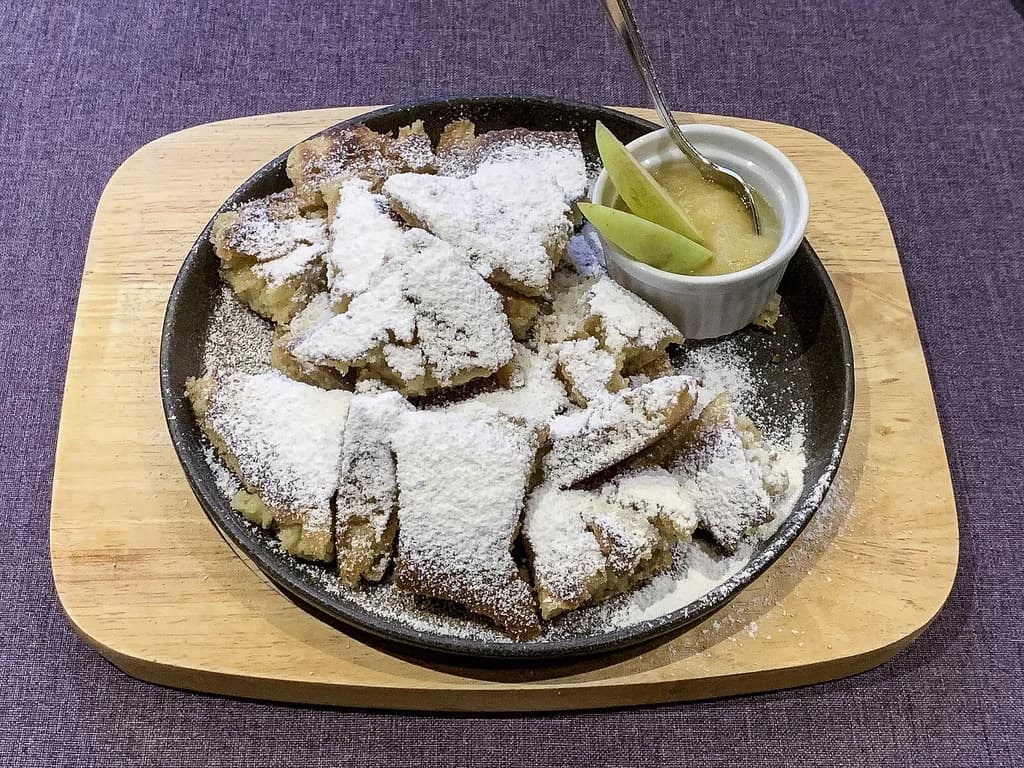
Kaiserschmarrn is a thick, fluffy Austrian pancake that is torn into rough pieces while it cooks, caramelized in butter and sugar, and finished with a heavy dusting of powdered sugar. It is not a crepe and not a neat folded pancake: the torn, irregular pieces are the point, and they give the dish its name. This guide covers what it tastes like, where the imperial legend comes from, the raisins argument, and how to order it at a mountain hut or a cafe without overfacing yourself.
A torn pancake, not a crepe
The batter is poured thick into a buttered pan and cooked until the underside sets, then flipped and pulled apart with two forks into bite-sized pieces. Those pieces stay soft and eggy inside while the edges pick up color, and the cook often sprinkles sugar into the free space of the pan so it caramelizes before being mixed through. That tearing step is what separates Kaiserschmarrn from a pancake you cut with a knife, and it is why the pieces arrive uneven and glossy rather than flat.
What it tastes like and the texture to expect
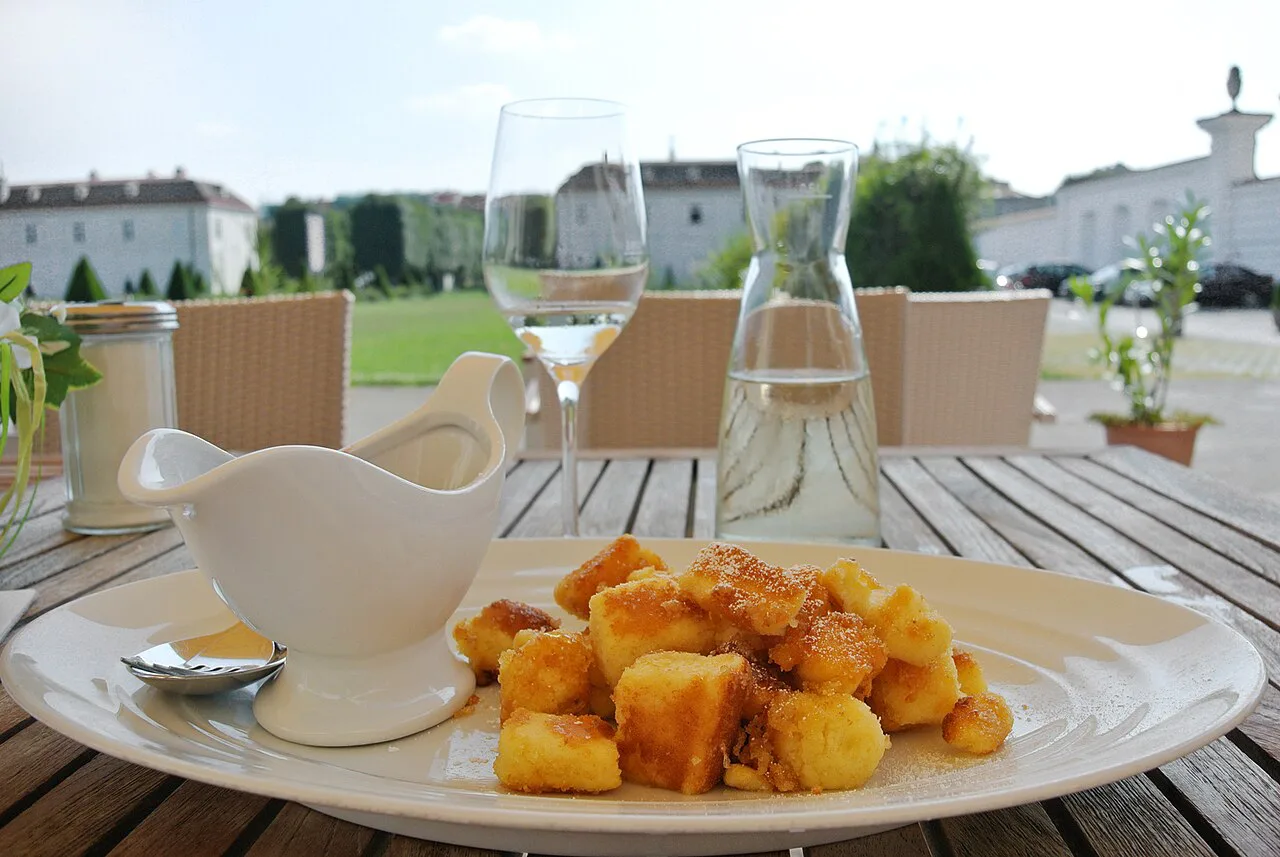
Expect a sweet, buttery pancake with a light crumb and caramelized patches where the sugar caught in the pan. The powdered sugar on top adds another layer of sweetness, so the tart compote alongside is there to cut through it rather than decorate the plate. Because the whites are beaten separately and folded in, the interior is airy rather than dense, and a good portion pulls apart in soft strands instead of sitting like a solid cake. If you have eaten a Salzburger Nockerl, the texture is in the same family of light, egg-rich Austrian desserts.
What does Kaiserschmarrn taste like? Sweet, buttery and lightly eggy, with soft interior pieces and caramelized edges, finished with powdered sugar. The plum compote or apple sauce on the side adds tartness to balance it.
Is Kaiserschmarrn served with or without raisins? It depends on the kitchen and the diner. Traditionalists treat rum-soaked raisins as part of the dish, plenty of eaters skip them, and some huts, such as the Tappenkarseehütte, serve the raisins separately on the side so you can add them yourself.
Is Kaiserschmarrn a dessert or a main course? It works as both. In town cafes it is usually listed among the desserts, while at alpine huts and mountain restaurants it is often served as a hearty dish in its own right, substantial enough to make a lunch.
The name and the Emperor Franz Joseph story
The name splits into Kaiser, meaning emperor, and Schmarrn, which translates loosely as a mess, a mishmash or even nonsense, a fair description of a pancake that has been deliberately torn apart. The usual story links the dish to Emperor Franz Joseph I, who is said to have had a fondness for it, though it is told as a legend rather than a documented kitchen record. What is clearer is the setting it came from: simple, rich alpine cooking, sometimes prepared over an open wood-fired hearth, which is why it sits so naturally on mountain-hut menus. It belongs to the wider family of Austrian desserts tied to the Habsburg court, alongside confections like the Sachertorte.
With or without raisins: the Austrian debate
Order Kaiserschmarrn in Austria and you may be asked, half in jest, whether you want it with or without, meaning rum-soaked raisins folded into the batter. Traditionalists treat the raisins as part of the original, while plenty of eaters skip them, and the question is genuinely contested rather than a formality. At the Tappenkarseehütte in the Salzburg mountains, the rum-soaked raisins are served in a separate small dish on the side, so you can add them yourself and keep the pancake plain if you prefer. If you are unsure, ask for them on the side and taste the difference.
How it is made, in brief
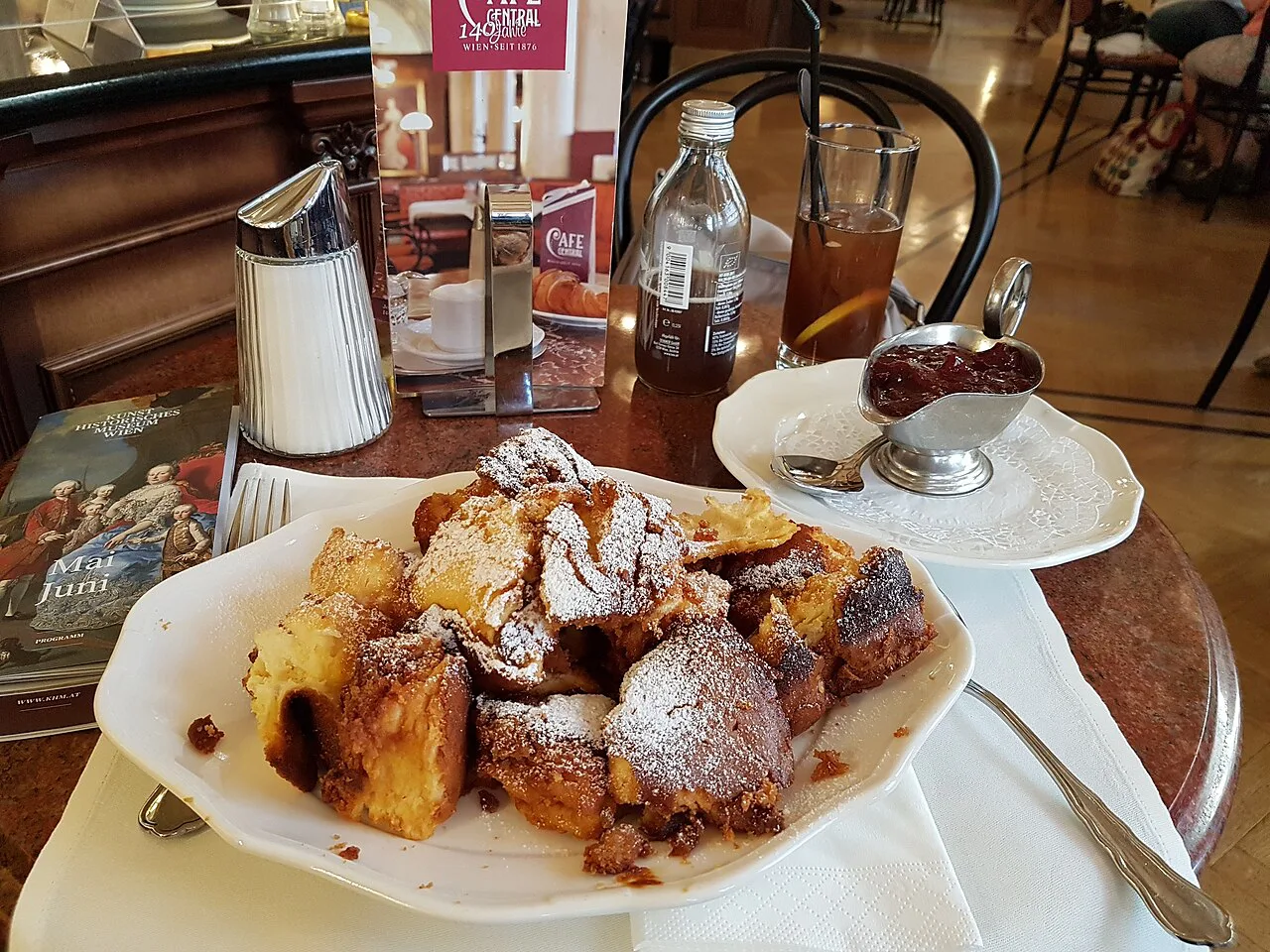
The method starts by separating the eggs, mixing the yolks with flour, milk, a pinch of salt and often a little sugar, then folding in egg whites beaten to stiff peaks to keep the batter light. Raisins soaked in rum are the classic addition; nuts, cherries, plum jam or apple pieces are added by some cooks but are personal variations rather than the base recipe. The batter goes into a buttered pan, sets on the bottom, is flipped, then torn into pieces with two forks while sugar caramelizes around them. The pan-and-forks method is what produces the characteristic ragged pieces.
How it is served: powdered sugar, plum compote, apple sauce
A portion arrives under a thick veil of powdered sugar, with a small bowl of fruit compote or sauce on the side. Plum puree is a classic pairing, and apple sauce, elderflower puree, apple puree, cranberry jelly, cherry or strawberry compote all turn up depending on the kitchen and the season. The compote is not a garnish to be pushed aside: spoon a little over each bite to balance the sugar and butter. If you want a second Austrian dessert for the table, an Apfelstrudel is the natural lighter counterpart.
Dessert or main course: how mountain huts serve it
In a city cafe, Kaiserschmarrn is usually listed among the desserts and ordered after a meal. In the Alps it often appears as a full, hearty dish in its own right, ordered at lunch at a mountain hut or alpine restaurant and eaten as the main event rather than a sweet finish. That double life is worth knowing before you order: at altitude, a single portion can be a whole lunch, while at a cafe table it is more sensibly shared. Judge the portion against what else is on the menu rather than assuming it is a small dessert.
Where travelers encounter it: huts and cafes
You will find Kaiserschmarrn on the menus of alpine huts and mountain restaurants along walking and cable-car routes, and in town cafes and konditoreien across Austria and Bavaria. The alpine-hut version is the one to seek out if you want the dish in its natural setting, served warm from the pan after a morning outdoors, and the Tappenkarseehütte in the Salzburg mountains is one hut known for serving the raisins separately. In town, pair it with a melange at a traditional Austrian coffee house rather than a quick espresso bar, since the dish rewards a slow sit-down.
How to order it and what a portion involves
Menus usually list Kaiserschmarrn as a single item with the compote already included, so ask what the portion covers if it is not spelled out. Prices vary by region and by whether you are in a hut or a city cafe, so read the menu board or ask before ordering rather than budgeting from a guidebook figure. If you are eating a full meal, consider splitting one portion between two and adding a coffee, because the dish is rich and the servings tend to be generous. This is also the moment to settle the raisins question with your server.
Eating it well: share, order it fresh, coffee alongside
Kaiserschmarrn is at its best straight from the pan, so order it when you are ready to eat rather than letting it sit while you finish a main course. Because the sugar and butter make it filling, sharing one portion and adding a coffee or a small dessert afterward is the comfortable way to eat it, especially before a long afternoon. Keep it in proportion with the rest of the Austrian dessert table: it is one sweet among many, from the Linzer Torte to the Gugelhupf, and the fun is in trying several across a trip.
Order it once in the mountains if you can
The most memorable version is the one eaten at a hut after a morning outdoors, with a bowl of plum compote on the side and the raisins served separately if you ask. In town, order it as a shared dessert with coffee and treat it as one stop on a wider tour of Austrian desserts rather than a standalone meal. Either way, ask about portion size and raisins before you order, and let the compote do the balancing.
Explore more Austria guides
Frequently Asked Questions
What does Kaiserschmarrn taste like?
Sweet, buttery and lightly eggy, with soft interior pieces and caramelized edges, finished with powdered sugar. The plum compote or apple sauce on the side adds tartness to balance it.
Is Kaiserschmarrn served with or without raisins?
It depends on the kitchen and the diner. Traditionalists treat rum-soaked raisins as part of the dish, plenty of eaters skip them, and some huts, such as the Tappenkarseehütte, serve the raisins separately on the side so you can add them yourself.
Is Kaiserschmarrn a dessert or a main course?
It works as both. In town cafes it is usually listed among the desserts, while at alpine huts and mountain restaurants it is often served as a hearty dish in its own right, substantial enough to make a lunch.
Sources
Notes for your next Austrian town break
Optional updates when we add or revise town guides.
You might also like
Continue reading
More guides you'll find useful