Austrian Desserts: Kaiserschmarrn, Sachertorte and Strudel
Austrian desserts for travelers: what Kaiserschmarrn, Sachertorte, Apfelstrudel, Buchteln and Gugelhupf are, and how coffee-house custom shapes the order.
On this page
Austrian desserts reward travelers who know the difference between a plated dish and a small cake. Kaiserschmarrn is a full portion of torn pancake, while a slice of Sachertorte or Marmorgugelhupf is an afternoon companion to coffee. This guide explains the classics one by one, traces the origin stories that are actually documented, and shows how dessert fits a route through the country.
What Austrian desserts are: sweet dishes at meals and in the afternoon
Austrian sweets divide into two practical groups. Some are sit-down dishes served warm as a dessert or even as a light meal, and others are cakes and pastries eaten with coffee in the afternoon. Knowing which is which keeps you from ordering a plate of pancake when you wanted a small slice.
The warm dishes include Kaiserschmarrn, Topfenpalatschinken, Buchteln with vanilla sauce, and the seasonal plum and apricot dumplings. The cold side is the bakery counter: Sachertorte, Marmorgugelhupf, Linzer Torte and the small cookies that appear in Advent. Viennese cuisine is known for its range of sweets, hot or cold, served as a starter, a dessert or a course in its own right, as a survey of traditional Austrian sweets lays out.
Kaiserschmarrn: torn pancake with fruit compote, and why it is a full plate
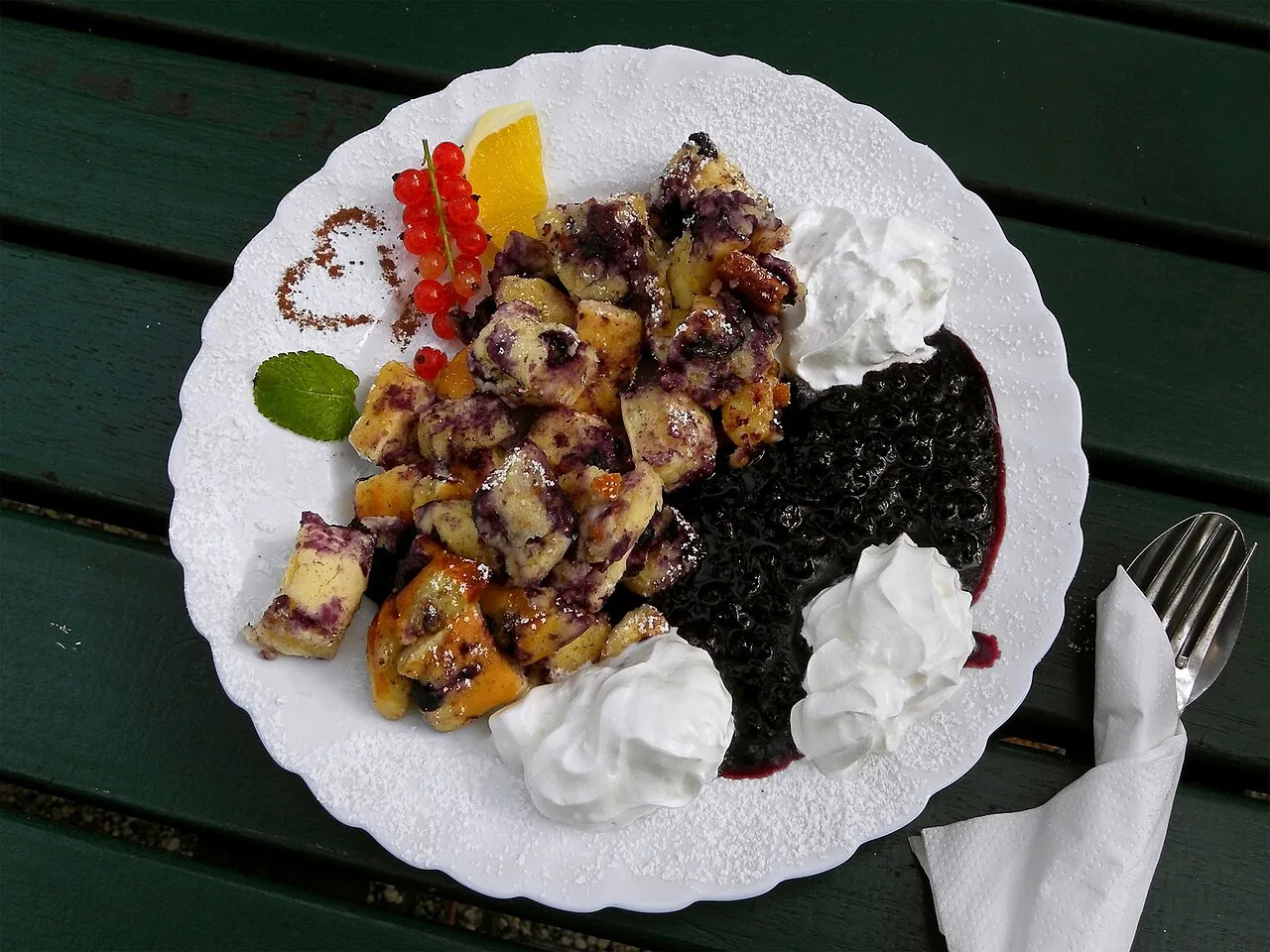
Kaiserschmarrn is a thick pancake torn into pieces while it cooks, dusted with sugar and served with a fruit compote. The portion is generous: in most places it works as a shared dessert or a light lunch rather than a bite between sights. One popular legend says Emperor Franz Joseph I liked Palatschinken for dessert and that torn or thick ones were passed to the staff under the Kaiserschmarrn name. If you want the full background on the dish before you order it, see the guide to Kaiserschmarrn.
What fruit is Austria known for? Apricots are the fruit most closely tied to Austrian sweets, above all in Marillenknödel and the apricot jam inside Sachertorte. Plums appear in Germknödel and in the carnival-time Schlosserbuben.
Is Sachertorte the same as a chocolate cake? It is denser and less sweet than a standard chocolate layer cake, with a thin apricot jam layer between the sponge and the glaze. Order it by the slice with whipped cream, and buy it from a café or confectioner rather than a station kiosk for better texture.
Can I eat Kaiserschmarrn as a main course? Yes. It is often listed among main dishes rather than desserts, and one portion is large enough for a light lunch.
Order it where you have time to sit, not at a standing counter. If two of you are touring a town in the afternoon, splitting one Kaiserschmarrn leaves room for cake later; if you are hiking or driving afterward, treat it as the meal and skip the sandwich. The compote changes with the season, so ask what comes with it before you commit.
Sachertorte: the 1832 Franz Sacher story and the chocolate glaze
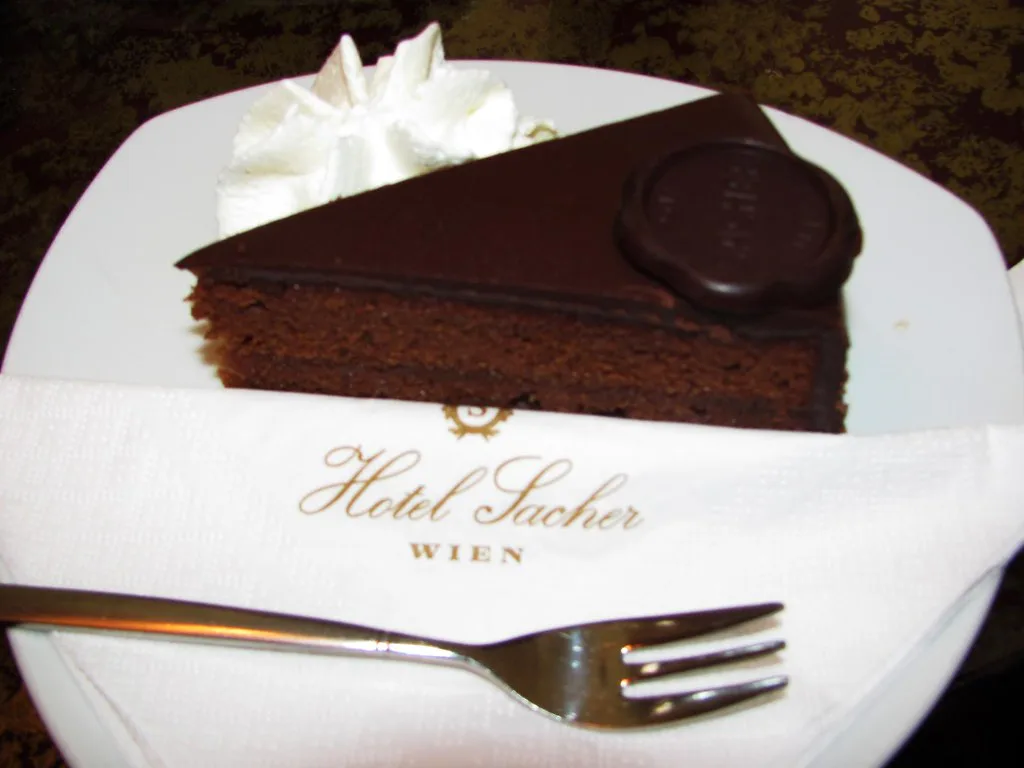
Sachertorte is a dense chocolate cake with a thin layer of apricot jam under a dark chocolate glaze. The documented origin story dates to 1832, when Prince Metternich asked his court kitchen for a special dessert for a reception. The chef was ill, so the task fell to the 16-year-old apprentice Franz Sacher (1816-1907), and the cake that carries his name followed. For the full Sachertorte story and how to order a slice, see the Sachertorte guide.
The cake is served by the slice, often with a dollop of unsweetened whipped cream to cut the richness. It keeps well and travels, which makes it the easiest Austrian dessert to buy in the morning and eat later on a train. Buy it from a proper café or confectioner rather than a station kiosk if you want the real texture.
Apfelstrudel: the strudel-versus-crumbs debate and how it is served
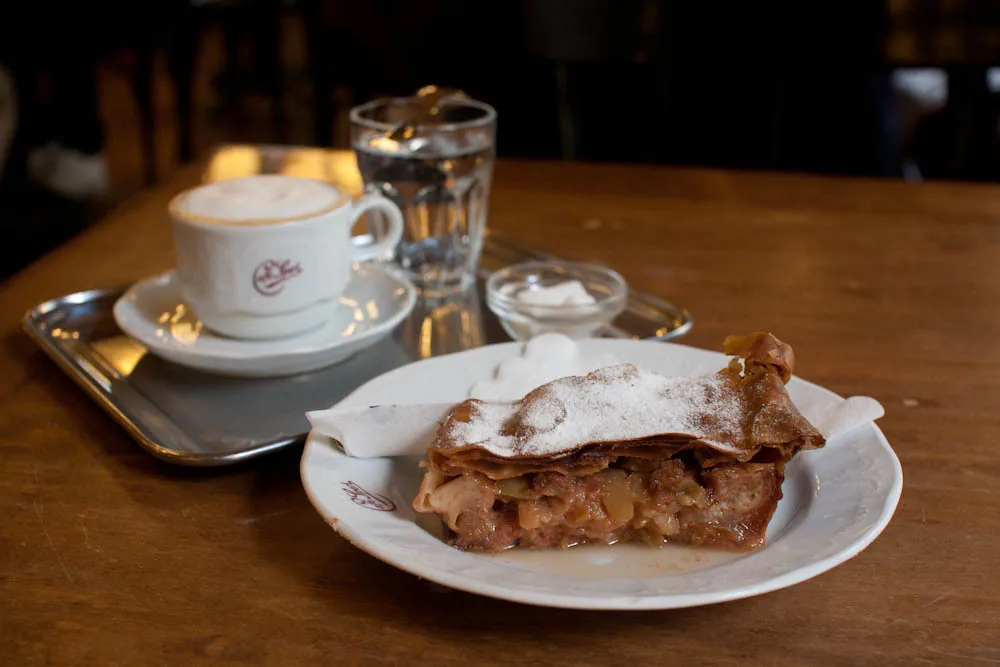
Apfelstrudel is a thin pastry rolled around a spiced apple filling and baked until the layers crisp. The long-running argument is over the filling: some cooks work breadcrumbs into the apples to soak up juice, others leave them out. Viennese cooks still disagree on the point, and no rule settles it, so taste both versions and pick a side.
It arrives warm, dusted with powdered sugar, usually with whipped cream or vanilla sauce on the side. A slice is lighter than Kaiserschmarrn, which makes it a good mid-afternoon choice when you still have a museum or a train ahead. In the Wachau and around the apple-growing valleys it also shows up on breakfast buffets.
Buchteln with vanilla sauce: baked yeast buns and their Czech-Bohemian origin
Buchteln are soft yeast buns baked together in a tray, often filled with jam, poppy seeds or curd, and served warm under a pour of vanilla sauce. The origin story points to Czech-Bohemian cooking, where the small buns are called buchtičky, and the dish became fashionable in Biedermeier Vienna. Order them as a shared dessert: the tray portion is filling and the sauce makes them rich.
They are a cold-weather comfort dish rather than a summer specialty, and they appear on traditional restaurant menus more reliably than on café counters. If you see them as a lunch dessert, split one order across the table so the main course still has room.
Marmorgugelhupf: the marble bundt cake shaped by the Middle High German gugel
Marmorgugelhupf is the marble version of Gugelhupf, a ring-shaped cake baked in a fluted mold and swirled with light and dark batter. The name traces to the Middle High German word gugel, meaning hood, which describes the cake's shape. It spread across Europe from Vienna in the Biedermeier period and is still served with coffee or tea at any hour.
A slice is the standard order in a café and it is the cake most likely to be on the counter when nothing else appeals. Because it keeps well, it is also the cake you see on breakfast tables; Emperor Franz Joseph reportedly ate it in the morning.
Topfenpalatschinken: curd-cheese filled pancakes and the Roman placenta root of the name
Topfenpalatschinken are thin pancakes rolled around a sweetened curd-cheese filling and baked or warmed under a fruit or vanilla sauce. The name Palatschinke traces through Hungarian and Slovak cooking back to the Latin placenta, meaning cake, and Viennese cookbooks have used the term since the 19th century. The curd filling is the classic version, and it makes the dish heavier than a plain crêpe.
Order them when you want a warm dessert that is not as large as Kaiserschmarrn. Two filled pancakes are usually plenty for one person after a main course, and the fruit sauce keeps them from tasting dry.
Punschkrapfen: pink-glazed sponge with jam and rum
Punschkrapfen are small cubes of sponge cake with a jam and rum filling, sealed in a pink punch glaze. They are a bakery-counter item rather than a sit-down dessert, and one is enough: the glaze is sweet and the rum flavor is assertive. Buy one with a coffee and eat it standing at the counter, the way a quick afternoon stop works.
They keep for a day or two, so a boxed pair is a reasonable souvenir to carry to your next town. Do not expect them to survive a hot car in summer; the glaze softens quickly.
Wiener Schlosserbuben and Wäschermadeln: baked plums and baked apricots in Carnival time
Wiener Schlosserbuben are baked plums, fried in lard or oil, and they belong to Carnival season rather than the year-round menu. Their counterpart is the Wäschermadeln, the same treatment applied to apricots. If you are in Austria in the weeks before Lent, look for them; outside that window, expect apricot and plum desserts in other forms instead.
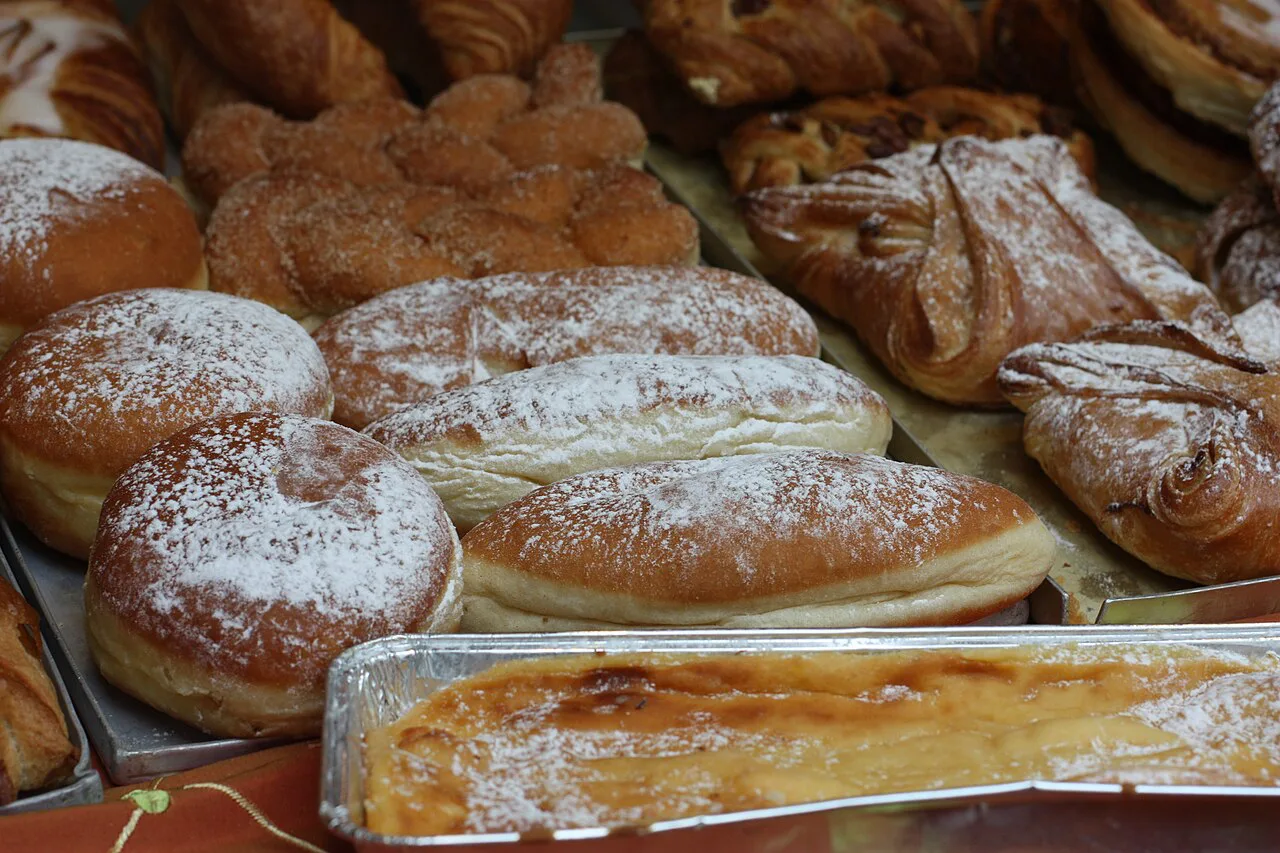
Carnival also brings the Krapfen, the filled doughnut that appears in bakeries across the country. Both are best bought fresh in the morning, when the pastry case is full and the frying oil is clean.
Linzer Torte, Vanillekipferl and Zimtsterne: the cookie and torte side of Austrian baking
Linzer Torte is a latticed tart built on ground nuts and jam, and the Linzer cookie is its small, sandwich-shaped relative. Vanillekipferl are crescent-shaped vanilla shortbreads, and Zimtsterne are star-shaped cinnamon-and-almond cookies. All three sit in the baking tradition rather than the restaurant dessert list.
Vanillekipferl and Zimtsterne are strongly associated with Advent and the Christmas season, so finding them in July is unlikely outside specialty shops. Linzer Torte, by contrast, is sold year-round and makes a sturdy travel snack. The Austrian dessert repertoire runs well beyond cakes, from Kaiserschmarren to Sachertorte, apple pie, Buchteln and Viennese pastries, as a recipe archive shows.
Austrian desserts beyond the classics: Marillenknödel, Germknödel, Salzburger Nockerl and Haselnussmakronen
Marillenknödel are apricot dumplings, usually poached and rolled in buttered crumbs, and they are tied to the apricot harvest in late spring and summer rather than to winter menus. Germknödel is a large steamed yeast dumpling filled with plum jam and topped with poppy seeds, served warm and filling enough to count as a meal. Both reward a traveler who wants a dessert that is genuinely regional rather than a hotel-standard cake.
Salzburger Nockerl is a soufflé-like mound of sweetened egg whites baked until golden, traditionally served in a portion meant for two. Haselnussmakronen are hazelnut meringue cookies, a bakery item rather than a plated dish. Treat the Nockerl as a sit-down order and the cookies as something to carry.
The coffee-house order: cake with coffee, and why Gugelhupf is served any time of day
The Austrian coffee house runs on a simple pairing: a slice of cake and a cup of coffee, taken slowly. Gugelhupf fits that routine because it is served with coffee or tea at any time of day, not saved for a specific hour. Plan an afternoon stop of 45 minutes rather than grabbing a pastry on the move, and the coffee-house ritual becomes part of the trip.
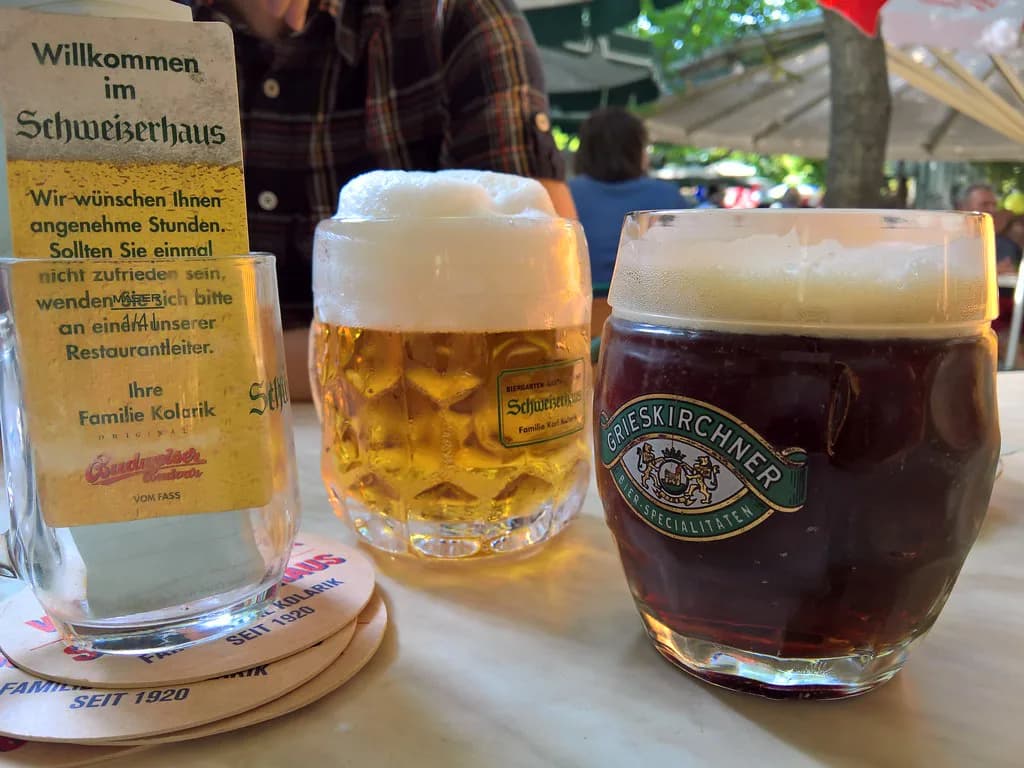
If you drink beer rather than coffee, Austrian beer is a reasonable alternative at lunch, though the afternoon cake tradition is built around coffee. Sit at a table rather than the counter if you want the full tray service, and expect to pay when you leave rather than when you order.
Where sweet dishes sit on a menu: starter, dessert or a meal in themselves
On Austrian menus, sweet dishes can appear as a starter, a dessert, or a main course in their own right. Kaiserschmarrn and Germknödel are often listed among main dishes, which is why a traveler planning a full dinner should check the section heading before ordering. A small soup and one sweet main is a perfectly normal dinner order.
Cafés usually print a separate cake list and do not expect you to order a savory course to get a slice. Restaurants may only serve dessert after a main, so if you want just cake, choose a café or Konditorei. Reading the menu by section, not by dish name, is the simplest way to avoid a surprise portion.
How to fit dessert stops into a route through Austria by train or car
On a train route, plan one long café stop per town rather than several rushed ones. A slice of Sachertorte or Linzer Torte keeps well enough to buy before boarding, while Kaiserschmarrn and Topfenpalatschinken need a table and time. Build the sweet stop into the middle of the afternoon, when museums thin out and the light softens.
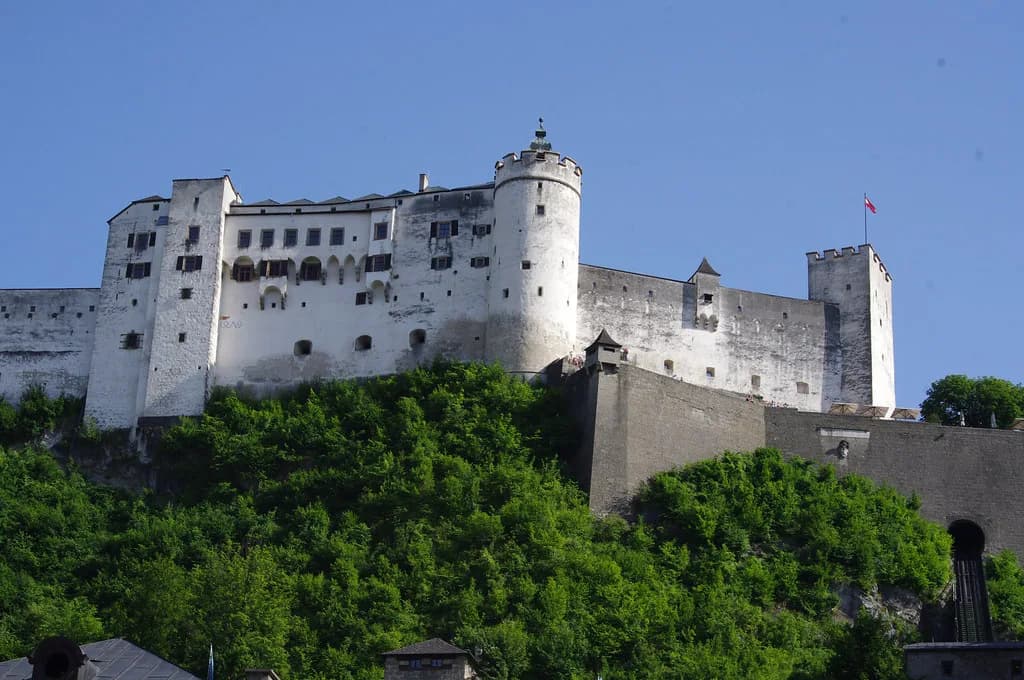
If you are driving between towns and castles such as Festung Kufstein, park once and walk, then take dessert in the old town before continuing. On days built around Austrian castles, the pastry stop is the natural break between two sites. Keep a box of cookies in the car for the stretches between stops.
Which Austrian dessert should you order first?
Start with Kaiserschmarrn if you want a warm, shared plate and have time to sit, and with Sachertorte or Apfelstrudel if you want a slice with coffee and a train to catch. Sachertorte travels best, Kaiserschmarrn is the fullest meal, and the apricot and plum dishes depend on the season rather than the menu. Pick by the shape of your afternoon, not by which name you have heard most.
Explore more Austria guides
Frequently Asked Questions
What fruit is Austria known for?
Apricots are the fruit most closely tied to Austrian sweets, above all in Marillenknödel and the apricot jam inside Sachertorte. Plums appear in Germknödel and in the carnival-time Schlosserbuben. Both fruits are seasonal, so expect the dumplings in the apricot and plum months rather than year-round.
Is Sachertorte the same as a chocolate cake?
It is denser and less sweet than a standard chocolate layer cake, with a thin apricot jam layer between the sponge and the glaze. Order it by the slice with whipped cream, and buy it from a café or confectioner rather than a station kiosk for better texture.
Can I eat Kaiserschmarrn as a main course?
Yes. It is often listed among main dishes rather than desserts, and one portion is large enough for a light lunch. If you plan a full dinner afterward, split one order or choose a slice of cake instead.
Do I need to reserve a table for cake in the afternoon?
Most cafés seat walk-ins, but popular coffee houses fill in the mid-afternoon. Arrive before the peak or expect a short wait, and choose a café over a restaurant if you want cake without a main course.
Sources
Notes for your next Austrian town break
Optional updates when we add or revise town guides.
You might also like
Continue reading
More guides you'll find useful