Austrian Food: The Dishes to Order, Region by Region
A traveler's guide to Austrian food: schnitzel, Tafelspitz, Käsespätzle, dumplings and Kaiserschmarrn, plus the kinds of places to eat them across Austria.
On this page
Order Wiener Schnitzel once, add Tafelspitz and Kaiserschmarrn, and you have the three dishes that define Austrian food for most travelers. Beyond those, the menu splits into mountain staples from the Tyrol, Salzburg and Carinthia and the boiled-beef and pastry tradition of the imperial cities. This guide walks through the dishes worth knowing, where each one comes from, and which kind of establishment suits which meal.
Austrian cooking leans on flour, cheese, butter, sugar and meat, a combination shaped by Alpine dairy farming and by the Habsburg Empire's absorption of Hungarian and Bohemian kitchens. That means dumplings in both savory and sweet forms, paprikaladen stews, and a coffee-house pastry culture that runs from mid-morning to late afternoon. Portions are generous, and a heavy lunch can flatten an afternoon of sightseeing, so it pays to know which dishes are starters and which are the whole meal.
What Austrian food is
The country's cooking divides roughly in two. In the Alps, the plate is built around dairy and starch: cheese, potatoes, noodles and dumplings made to fuel a day outdoors. In the cities, the Habsburg court left a more formal repertoire of boiled and braised meats, often with sweet-sour or horseradish accompaniments. Both traditions share a fondness for breading, frying and finishing with something sweet.
For a traveler moving town to town, that split is useful. A mountain hut lunch of Käsespätzle or Tiroler Gröstl is a different meal from a city Gasthaus dinner of Tafelspitz or goulash, and the coffee houses of the larger towns run on their own schedule of pastries and small plates. Plan the day around which of those you want, since a skillet of potatoes and egg at midday is a full stop, not a snack between sights.
Schnitzel: veal, pork and the naming rule
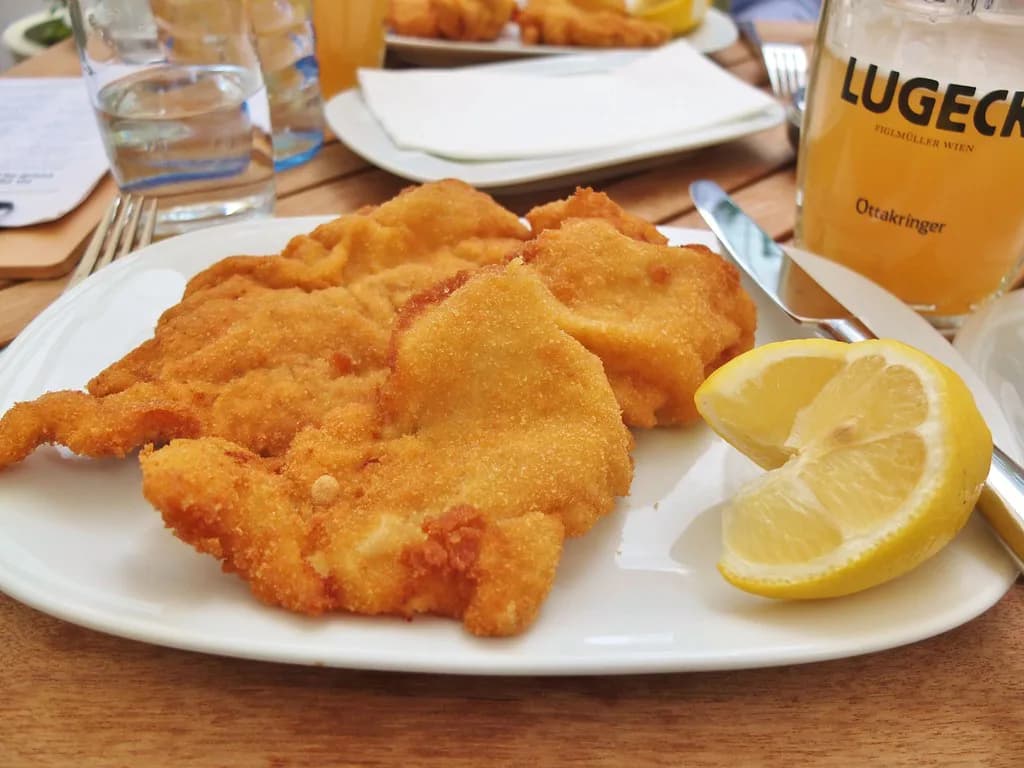
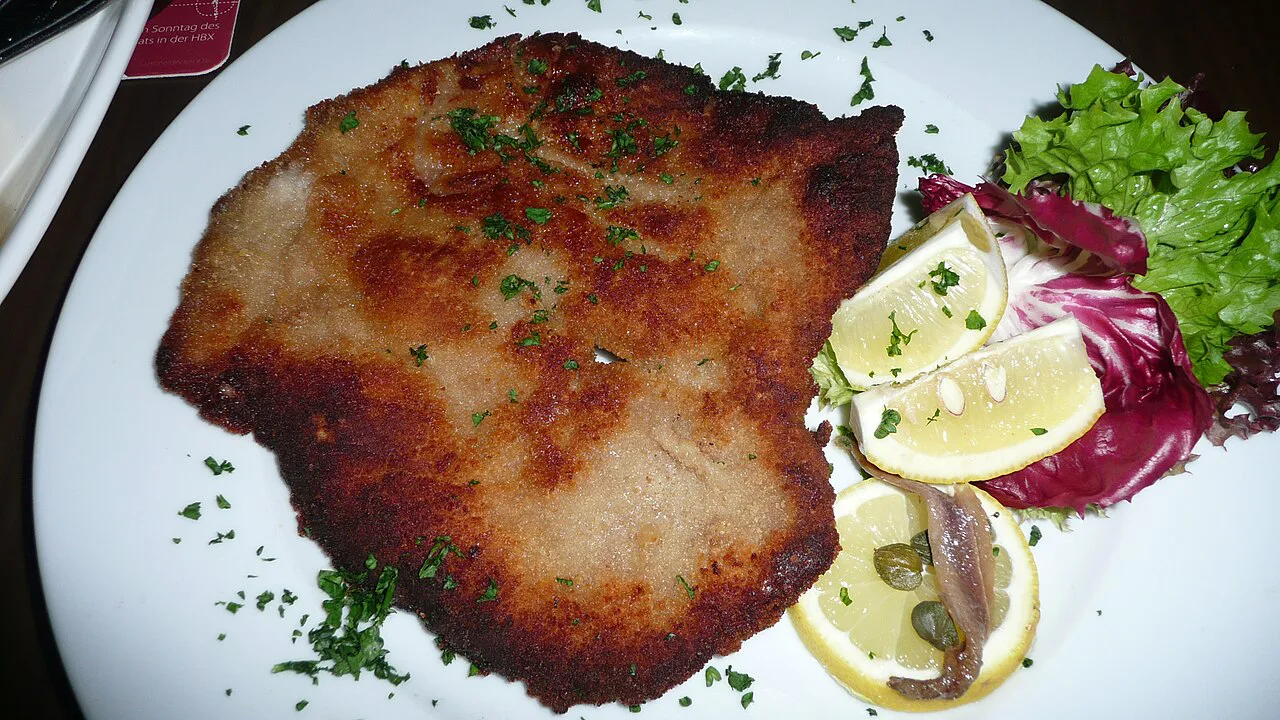
Wiener Schnitzel is a thin cutlet pounded flat, dipped in flour, egg and breadcrumbs and fried until it puffs and turns golden. In Austria the name is reserved for veal; a pork version has to be sold as Schnitzel Wiener Art or Schweineschnitzel. Knowing that distinction is the difference between ordering the classic and ordering the cheaper cut, and menus will tell you which is which.
What is a typical Austrian breakfast? Breakfast in Austrian hotels and Gasthäuser is usually a cold spread: bread rolls and dark bread, butter and jam, sliced cheese and cold cuts, a boiled egg, yogurt or muesli, and coffee or tea. Bakeries in town cover the same ground faster and cheaper if you are heading out early.
What is Austria's most famous dish? Wiener Schnitzel, the breaded veal cutlet, is the dish most travelers associate with Austria, and it is the safest single order if you want the classic. In Austria the name is protected for veal, with pork sold as Schnitzel Wiener Art, so check which one a menu is offering.
It arrives with a lemon wedge and, traditionally, potato salad or cranberry jam rather than fries. The dish is simple enough that execution decides everything: properly fried it is light and crisp, badly fried it is greasy and dull. One order per trip is the sensible approach, then move on to the dishes that show more of the country's range.
Tafelspitz: the boiled beef to order once
Tafelspitz is beef simmered gently in bouillon and served with the broth, root vegetables, apple-horseradish sauce, chive sauce and roasted potatoes. It was the favored dish of Emperor Franz Joseph I, which is why it reads as the imperial plate on city menus. The cooking is patient rather than showy, and the quality lives in the broth and the cut.
Order the full set rather than the meat alone, because the sauces and the broth are half the point. It is also one of the better-value fine-dining experiences in Austria, since the ingredients are humble and the technique carries the price. Our guide to Tafelspitz covers the cuts and the condiments in more detail.
Dumplings: Knödel, Semmelknödel and the sweet versions
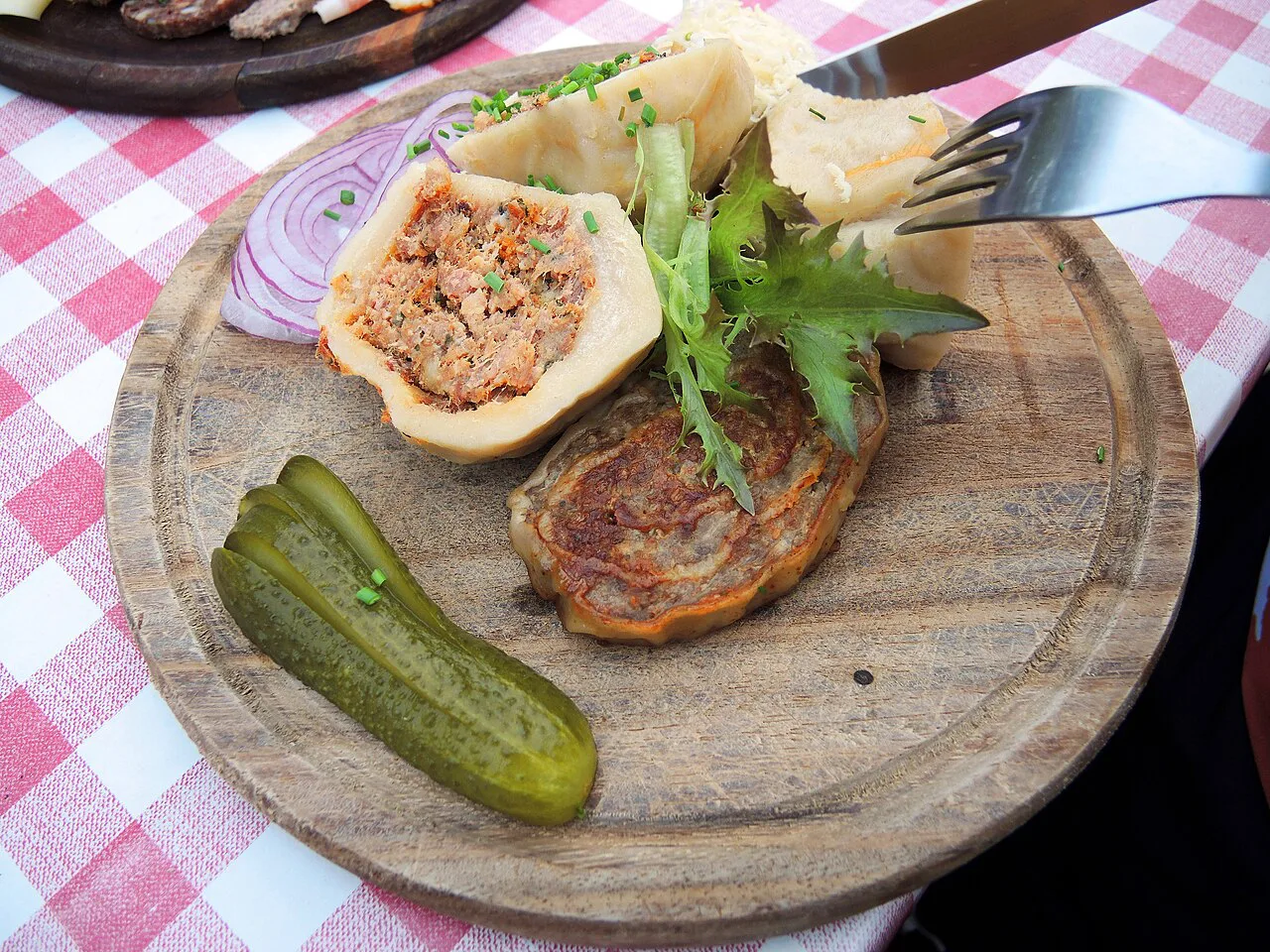
Knödel is a family, not a dish. Savory versions come made from bread rolls, potato or bacon and onions, and they sit alongside roasts, goulash and mushroom dishes in place of potatoes or rice. Sweet versions are filled with apricot, plum or jam and served as a dessert or a main course, and in apricot season the Marillenknödel is the one to look for.
Semmelknödel and Serviettenknödel, the rolled and sliced kind, are the workhorse shapes you will see most often with braised meat. A sweet dumpling order is substantial, so treat it as a dessert to share or as a light lunch on its own.
Käsespätzle and Kasnocken in the mountains
Käsespätzle is egg noodles baked with grated cheese and topped with fried onions, the Alpine counterpart to macaroni and cheese. The Tyrol version often adds Speck, while Vorarlberg leans harder on mountain cheese. In Salzburg the same idea appears as Kasnocken, small dumplings rather than long noodles, and the Pinzgau region gives its name to a local cheese used in them.
This is hut and Gasthaus food, best ordered at lunch when you have walking or driving still ahead of you. The portion is dense, and the fried onions on top make it richer than it looks. In summer, a terrace table with a view is the reason to order it at all.
Kärntner Kasnudeln and Carinthian noodles
Carinthia has its own stuffed pasta: Kasnudeln, half-moon parcels filled with a cheese and potato or curd mixture, often finished with butter and herbs. They belong to the same family as the dumplings further west, but the wrapper is a thin pasta dough rather than a bread or potato dumpling. Order them in a Carinthian Gasthaus as a first course or a light main.
The local lake towns around the Wörthersee are the natural place to try them, ideally alongside a bowl of Frittatensuppe, the sliced-pancake broth that opens meals across the province.
Tiroler Gröstl: the Alpine skillet lunch
Tiroler Gröstl is a cast-iron skillet of pan-fried potatoes with onions, ham or bacon and herbs, topped with a fried egg. It is a lunch dish, served in mountain huts and village Gasthäuser across the Tyrol, and it comes out fast because the potatoes are precooked. For a traveler with an afternoon of sightseeing left, it is the most efficient hot meal in the Alps.
It pairs naturally with a day around Kufstein or Kitzbühel, where the hut terraces fill at midday and empty again by early afternoon. Eat early to beat the rush, and expect the grilled sausage Käsekrainer to be the other quick option at the same counters.
Gulasch and Backhendl
Austrian goulash is a thick paprika beef stew, related to Hungarian gulyás but cooked down further and served with bread or a dumpling rather than as a soup. The Viennese versions include Fiaker goulash with sausage, fried egg and pickle, named for the coachmen who ate it. It is a cold-weather dish and appears on Gasthaus menus all year.
Backhendl is half a chicken breaded and fried, the traditional Sunday dish, and many travelers prefer it to schnitzel because the meat stays juicier. Order it when you want the breading without the cutlet, and pair it with potato salad.
Sweet Austrian food: Kaiserschmarrn, strudel and torte
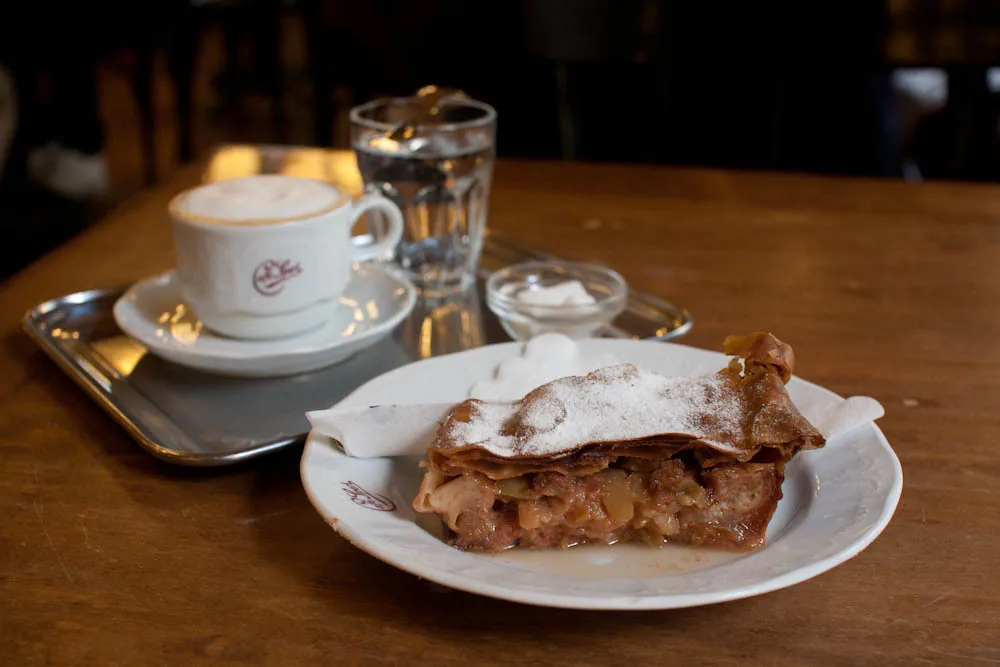
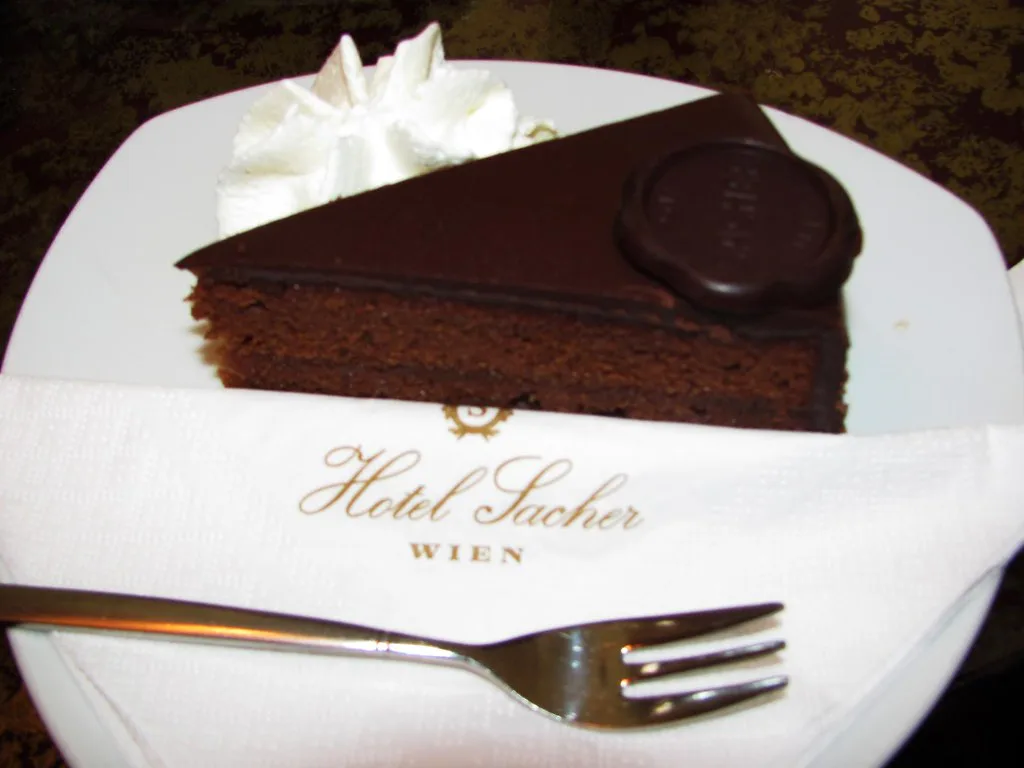
Sweet dishes carry as much weight as savory ones. Kaiserschmarrn is a thick pancake shredded in the pan and served with plum compote, Apfelstrudel is the flaky apple pastry, and Sachertorte is the dense chocolate cake with apricot jam. Buchteln are sweet baked buns, and Palatschinken are thin rolled pancakes.
Kaiserschmarrn is a substantial dessert, and ordering one as a solo dessert is a common mistake. Strudel and torte belong to the coffee-house afternoon, when a slice and a coffee hold you until a late dinner.
What to drink: Almdudler and coffee
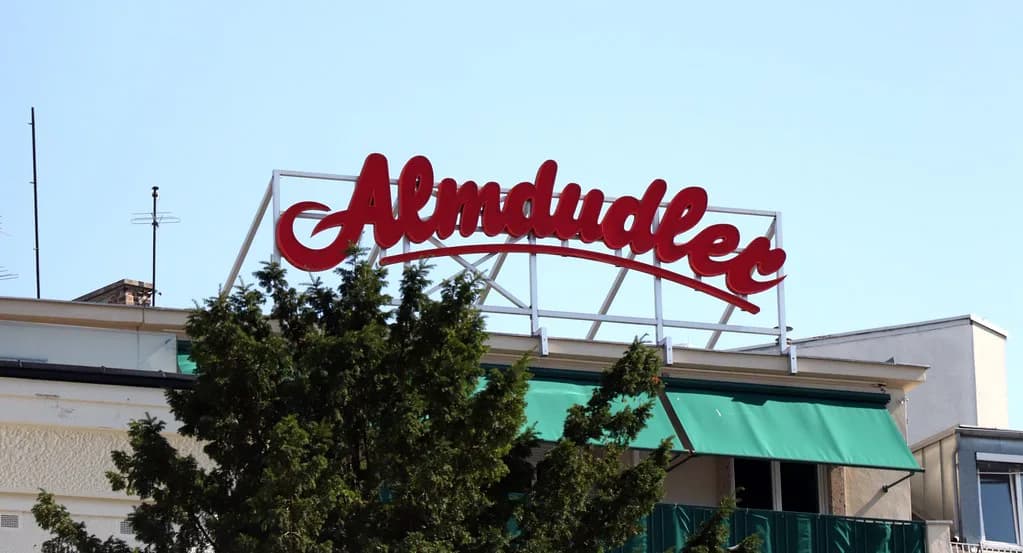
Almdudler is the national soft drink, an Alpine-herb soda with a red label showing a couple in traditional dress against a mountain backdrop. Its flavors come from lemon balm, sage, gentian, elderflower and coneflower with beet sugar and spring water, and there are now holunder and mint variants. Order it when you want something other than beer with a hut lunch.
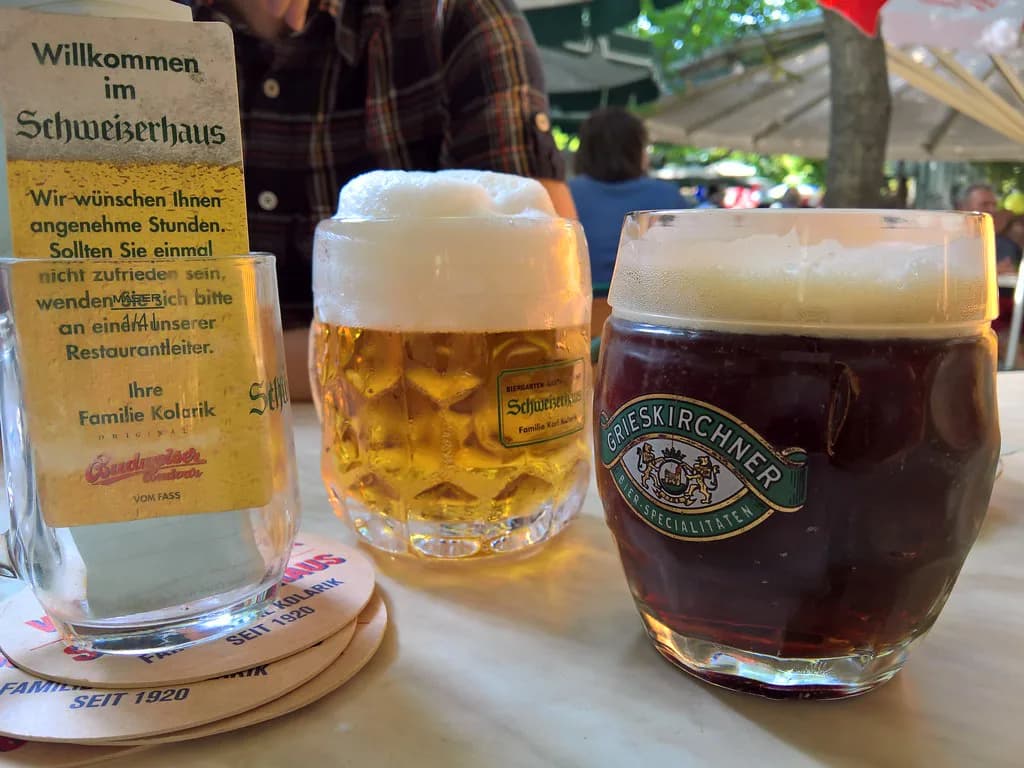
In a coffee house, the order is a melange, roughly a small milky coffee, taken slowly with a pastry and a glass of water on the side. Austrian beer, from lagers to small craft breweries, is the other default at dinner.
Where to eat: Gasthaus, Beisl, hut and Heuriger
A Gasthaus is the village inn, serving regional home cooking at lunch and dinner. A Beisl is the simpler city version, smaller and cheaper, often with a daily special. A mountain hut is the terrace-and-skillet stop on a path.
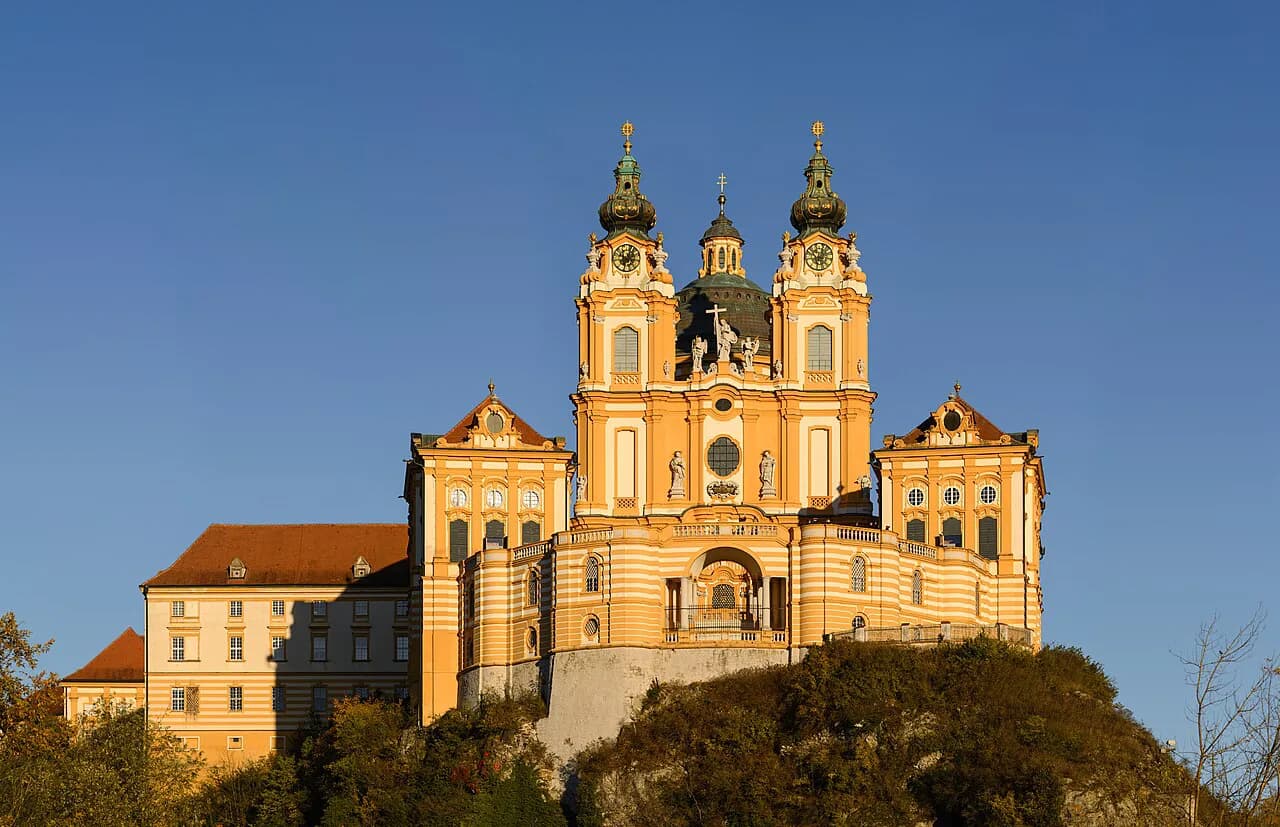
For travelers touring castles and abbeys, the practical pattern is a hut or Gasthaus lunch and a lighter dinner, since the big midday plate is the Austrian habit. Many kitchens close between lunch and dinner, so a late-afternoon meal is the one to plan around.
Ordering, portions and paying in euros
Menus usually list soups and starters separately from mains, and a small mixed salad or a Frittatensuppe is a normal opener. Dumplings and Käsespätzle can be listed as a main or as a side, so ask which portion you are getting. Tipping is done by rounding up or adding roughly five to ten percent and telling the server the total when you pay.
Prices vary by region and by restaurant type, so check the printed menu outside before sitting down rather than assuming a figure. Cash is still common in small Gasthäuser, and cards are more reliable in towns than in mountain huts.
Dishes to recognize on the menu: offal and the unfamiliar
Some traditional dishes are offal-based, and Beuschel, a ragout of lungs and heart in a creamy sauce, is the one cautious eaters most often meet by surprise. Leberkäse, despite the name, is a baked meatloaf-style sausage slice served warm in a roll, not a liver pate. Knowing both names saves a confusing order.
Leberkäse, and the cheese-filled Käsekrainer, are the standard quick bites at a stand or supermarket counter, and both are a cheap, filling lunch between sights. The Käsekrainer is a coarse sausage with pockets of cheese that spill when bitten.
Is Austrian food the same as German food?
No. The two kitchens share a love of pork, potatoes and breaded cutlets, but Austrian cooking carries a distinct Hungarian and Bohemian influence from the Habsburg Empire, visible in goulash and in the dumpling and pastry repertoire. The coffee-house culture and the naming rules around schnitzel are also specifically Austrian. Treat the similarities as a starting point, not an equivalence.
Build your Austrian menu around the region you are in
Match the dish to the landscape: Käsespätzle, Kasnudeln and Gröstl in the Alps and Carinthia, Tafelspitz and goulash in the cities, and Kaiserschmarrn or strudel wherever the afternoon slows down. Order one feast per day and keep the rest light, since the portions are built for people who have been outdoors.
A short list of orders gets you most of the way: schnitzel once, Tafelspitz once, a cheese noodle dish at a hut, a dumpling in both savory and sweet form, and a slice of torte with coffee. Menus and prices change by season and region, so read the board at the door before you commit.
Explore more Austria guides
Frequently Asked Questions
What is a typical Austrian breakfast?
Breakfast in Austrian hotels and Gasthäuser is usually a cold spread: bread rolls and dark bread, butter and jam, sliced cheese and cold cuts, a boiled egg, yogurt or muesli, and coffee or tea. Bakeries in town cover the same ground faster and cheaper if you are heading out early.
What is Austria's most famous dish?
Wiener Schnitzel, the breaded veal cutlet, is the dish most travelers associate with Austria, and it is the safest single order if you want the classic. In Austria the name is protected for veal, with pork sold as Schnitzel Wiener Art, so check which one a menu is offering. Tafelspitz and Kaiserschmarrn are the other two dishes that come up again and again.
Sources
Notes for your next Austrian town break
Optional updates when we add or revise town guides.
You might also like
Continue reading
More guides you'll find useful