Knödel: A Traveler's Guide to Austrian Dumplings
Knödel are Austria's boiled dumplings, served as sides, mains and desserts. Learn the main types, what they come with, and how to order them.
On this page
Knödel are Austria's boiled dumplings, and they turn up on menus three ways: as a side that soaks up gravy, as a main course in broth or with sauerkraut, and as a sweet dessert. The word simply means dumpling, so the type is always named in front of it, and that name tells you what you are getting. This guide sorts the kinds you will actually meet, explains what each one comes with, and shows how to read them on a menu.
Austrian cooking leans on Knödel because they stretch cheap staples, stale bread and flour, into something filling, and because they hold gravy better than potatoes or rice. Once you recognize the dough behind the name, ordering gets straightforward. The pages on Austrian food cover the wider menu these dumplings belong to, from schnitzel to the boiled beef dishes that share the same tables.
What Knödel are, and what the word means
Knödel is German for dumpling, and in Austria it covers a family of boiled dumplings made from bread, flour, potato or semolina dough. They are typically round, poached in salted water or simmered in broth, and served warm rather than as a crisp or fried item. The name on the menu always specifies the dough or the filling, so Semmelknödel means bread dumplings and Kartoffelknödel means potato dumplings.
The dumpling is not a garnish in Austrian cooking; it is often the starchy center of the plate, with the meat or sauce built around it. That is why a single Knödel can arrive larger than a fist and why portions of two or three are normal. If you are ordering for a table, one dumpling side often stretches across two plates.
The main kinds you will see on Austrian menus
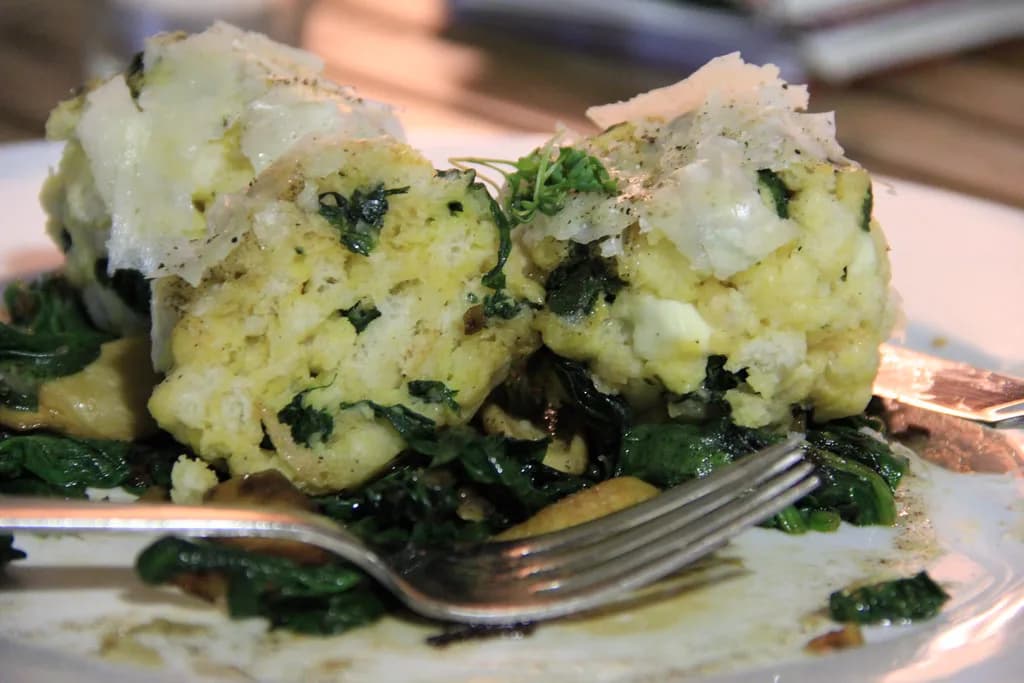
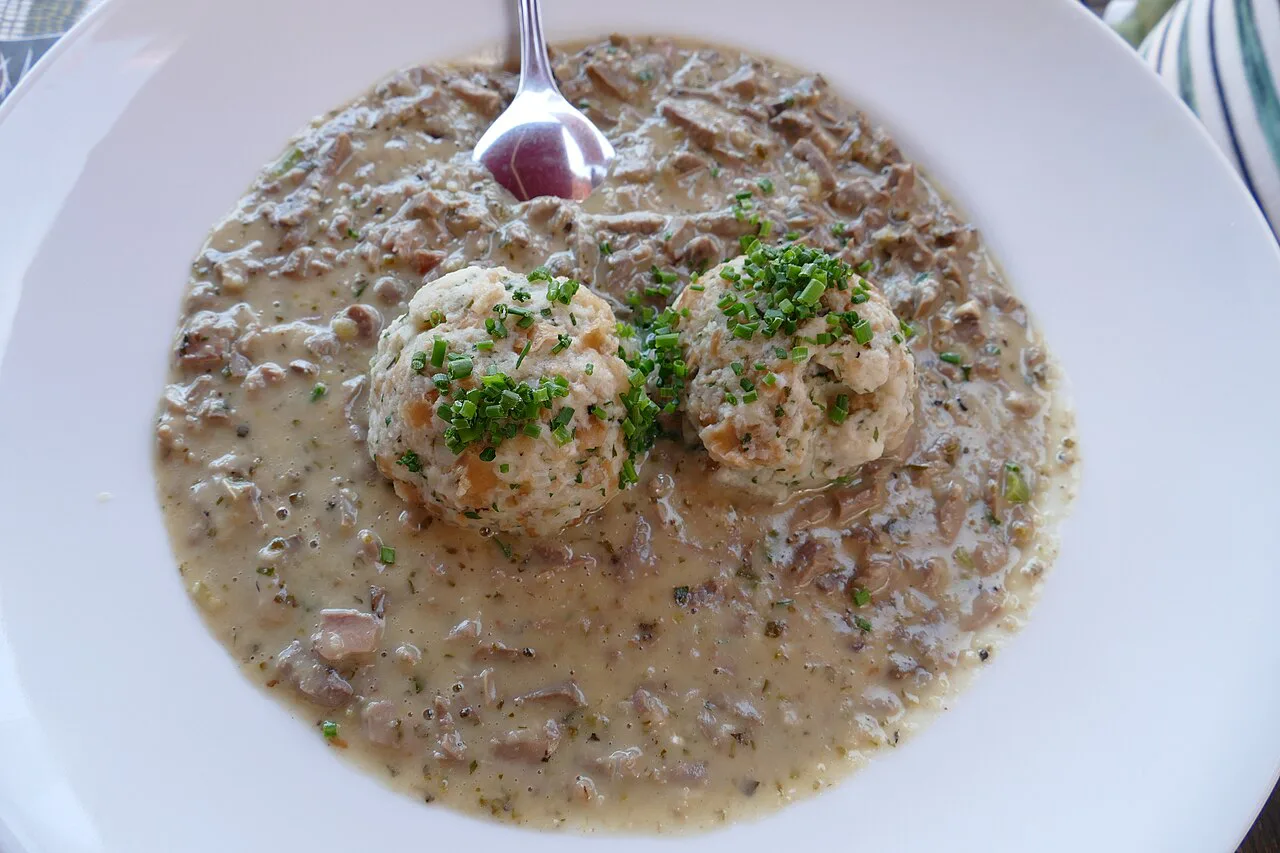
Semmelknödel, made from stale bread, eggs and milk, are the everyday bread dumplings and the ones most often served with gravy. Speckknödel add diced smoked bacon to the bread dough and are substantial enough to be a main course in broth. Kaspressknödel are cheese dumplings, usually flattened and pan-fried, and they belong to the mountain-hut kitchen alongside Kasnocken rather than to the town restaurant.
Are Knödel a main course or a side dish? Both, depending on where they sit on the menu. Under sides, a Knödel accompanies a sauced main course.
What is the difference between Semmelknödel and Böhmische Knödel? Semmelknödel are round dumplings made from stale bread, eggs and milk, poached and served with gravy. Böhmische Knödel are a yeast dough with Bohemian roots, steamed and sliced rather than formed into balls, and served alongside roast meats and sauces.
Do sweet Knödel contain meat? No. The common sweet version wraps a pitted plum in potato dough, poaches it, and rolls it in breadcrumbs and sugar.
Liver dumplings, Leberknödel, are poached and served in clear soup, often as the first course of a Sunday lunch. Semolina dumplings, Grießknödel, work the same way, lighter and softer in a beef broth. Potato dumplings, Kartoffelknödel, are the third staple and appear both savory and, in the sweet version, as dessert.
Böhmische Knödel are the outlier: a yeast dough of flour, yeast, water or milk, eggs and a touch of sugar, steamed and then sliced rather than formed into balls. They come from Bohemian cooking and are served alongside roast meats and sauces, where the slices soak up gravy. If you order a roast pork with a slice of pale, spongy dumpling beside it, that is this one.
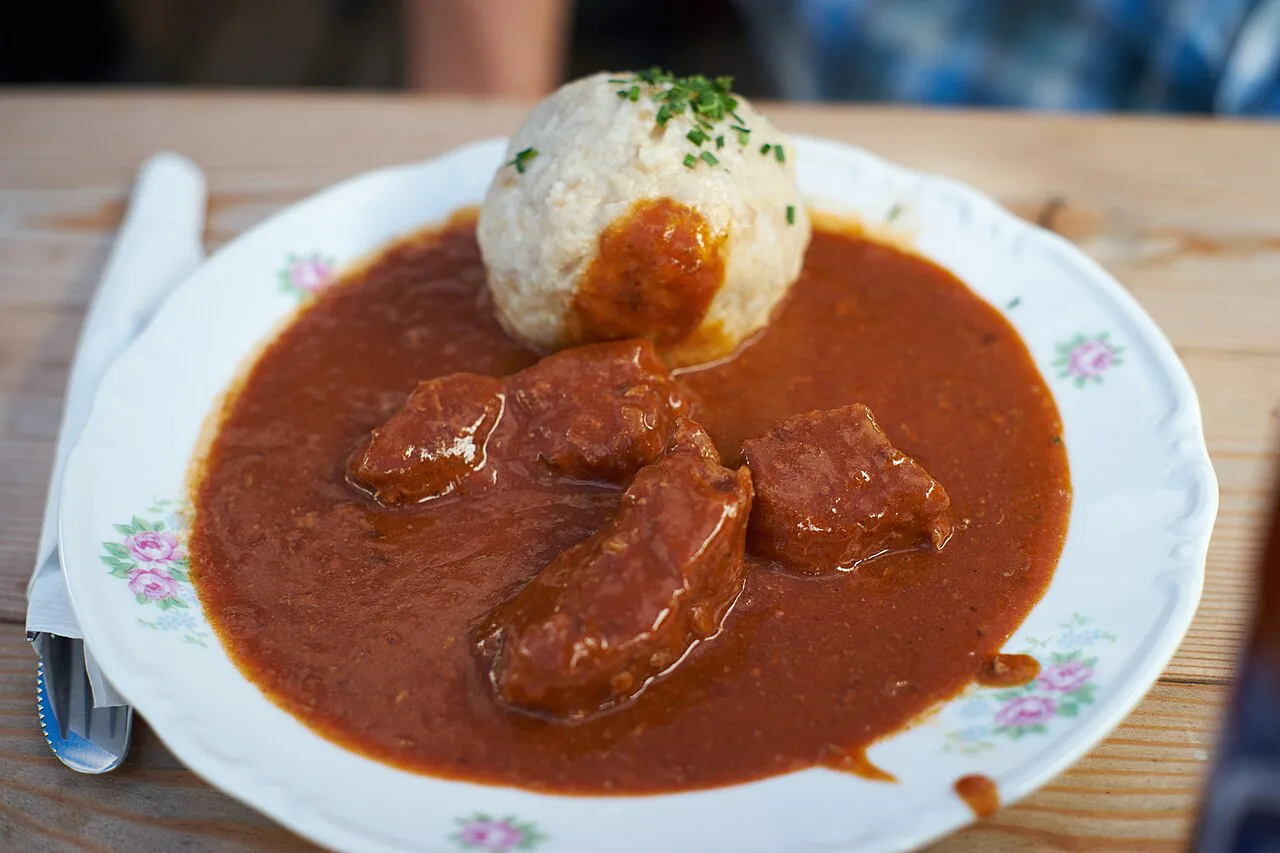
Semmelknödel: stale bread, eggs and milk, boiled and served to soak up gravy
Semmelknödel begin with dry bread, usually rolls a day or two old, sliced and soaked with hot milk and beaten egg, then seasoned with salt and parsley and formed into balls. The mixture is bound just enough to hold together, then poached in gently simmering salted water until firm. A hard boil breaks them apart, which is why the cooking water stays below a rolling boil.
On the plate, the point of a Semmelknödel is absorption: it is served with dishes that produce a lot of sauce, and it is meant to be cut into pieces and dragged through the gravy rather than eaten dry. That is the trade-off to know before you order, because a bread dumpling with a dry plate is heavy going. Pair it with a stew or a roast, not with a plain grilled dish.
What to eat with Knödel: goulash, roast pork with gravy, sauerkraut
The classic pairing is a gravy-rich stew, and Austrian goulash is the one most often served with a bread dumpling beside it. Roast pork with gravy works the same way, and so does sauerkraut, which cuts the heaviness of the dough with acidity. If a menu lists Knödel as a side, the main course above it is usually a saucy one.
Speckknödel in broth are a meal in themselves, and Kaspressknödel are usually served with a salad or in a clear soup at mountain huts. For a lighter first course, liver or semolina dumplings in beef broth are the standard opener, and the same broth often carries sliced pancakes as a Frittatensuppe. The dumpling is filling, so a soup with two dumplings followed by a main course is a full lunch rather than a snack.
Sweet Knödel: potato dough around pitted plums, rolled in breadcrumbs and sugar
Sweet Knödel are a separate tradition, not a variant of the savory side dish. The most common version wraps a pitted plum in potato dough, poaches it, and rolls the finished dumpling in breadcrumbs and sugar. The result is soft, tart from the fruit and sweet from the coating, and it is served as a dessert.
Filled dumplings of this kind are a dessert you order at the end of a meal or in the afternoon, and they are heavy enough that one order often serves two. Apricot versions appear as well, and the coating may be breadcrumbs fried in butter rather than plain. If you want the plum version specifically, ask for Zwetschkenknödel rather than a generic sweet Knödel.
How Knödel show up on a menu and how to order them
Read the position on the menu first. Under Beilagen, or sides, a Knödel is one component of a dish and arrives without a main course; under Hauptspeisen, or main courses, it comes as a full plate, often in broth or with sauerkraut; under Mehlspeisen, it is the dessert. Asking for the dumpling alone when it is listed as a side may not be possible, so pick the main course it belongs to.
Portion sizes vary widely between a town restaurant and a mountain hut, and the split between a dumpling plate and a lighter dish is the practical lever. If you are unsure, order one portion for the table and add a soup or salad, then judge. Because dumplings are filling and starchy, a table of two usually does well with one dumpling main and one lighter plate.
For a first Austrian meal, the safest order is a clear broth with a liver or semolina dumpling, then a goulash with a bread dumpling, and a shared sweet plum Knödel to finish. That covers the three roles in one sitting without committing to three heavy plates. Vegetarians should look for Kaspressknödel or plain Semmelknödel, since Speckknödel contain bacon.
Where to look for them in Austria
Knödel are everyday food rather than a specialty, so you find them in the same places you find goulash and schnitzel: town restaurants with a written menu, rural inns, and mountain huts with a short handwritten list. The hut version tends toward Kaspressknödel and Speckknödel, while the town restaurant is where the goulash-and-bread-dumpling plate and the sweet plum dessert are most reliable.
Dumplings share the table with the rest of the Austrian repertory, so a lunch built around them pairs naturally with a boiled beef course such as Tafelspitz. A plate of Tafelspitz is an alternative centerpiece rather than a second starchy course, so it works well as the main dish beside a lighter dumpling soup or a shared sweet Knödel to finish.
If dumplings are the focus of your eating, build a lunch around them rather than a dinner, when portions feel heavier and the kitchen may be busier. A midday goulash with a bread dumpling, followed by a walk, is the most comfortable way to eat them. Save the sweet plum version for an afternoon when you can share it.
Which Knödel to order first
Start with a Semmelknödel beside a goulash or roast pork: it is the version that explains why Austrians pair dumplings with gravy, and it is the one you will see most often. Add a liver or semolina dumpling in broth if you want a lighter first course, and finish with a shared sweet plum Knödel if the kitchen has one.
The menu word in front of Knödel is the whole decision: Semmel means bread, Speck means bacon, Kaspress means cheese, and Böhmische means the sliced yeast dumpling. Once you can read those, ordering in an Austrian inn stops being a guess.
Explore more Austria guides
Frequently Asked Questions
Are Knödel a main course or a side dish?
Both, depending on where they sit on the menu. Under sides, a Knödel accompanies a sauced main course. Under main courses, it arrives as a full plate, often in broth or with sauerkraut. Sweet versions are listed with desserts and are served as a dessert or a sweet main.
What is the difference between Semmelknödel and Böhmische Knödel?
Semmelknödel are round dumplings made from stale bread, eggs and milk, poached and served with gravy. Böhmische Knödel are a yeast dough with Bohemian roots, steamed and sliced rather than formed into balls, and served alongside roast meats and sauces.
Do sweet Knödel contain meat?
No. The common sweet version wraps a pitted plum in potato dough, poaches it, and rolls it in breadcrumbs and sugar. It is a dessert tradition rather than a savory side dish, though it is filling enough that one order often serves two people.
Sources
Notes for your next Austrian town break
Optional updates when we add or revise town guides.
You might also like

Continue reading
More guides you'll find useful