Frittatensuppe: Austria's Pancake-Strip Soup, Explained
Frittatensuppe is a clear Austrian beef broth with rolled, sliced pancake strips. Learn what it is, how it is served, and how it fits an Austrian menu.
On this page
Frittatensuppe is a clear beef broth served with thin strips of rolled pancake, and it is the soup most likely to open a meal in Austria. Order it and you get a light, savory first course, not a thick soup, so it leaves room for the schnitzel or roast that follows. This guide covers what the soup is, where the name comes from, how it is built and served, how it fits an Austrian menu, and how it relates to its Bavarian cousin.
What Frittatensuppe actually is
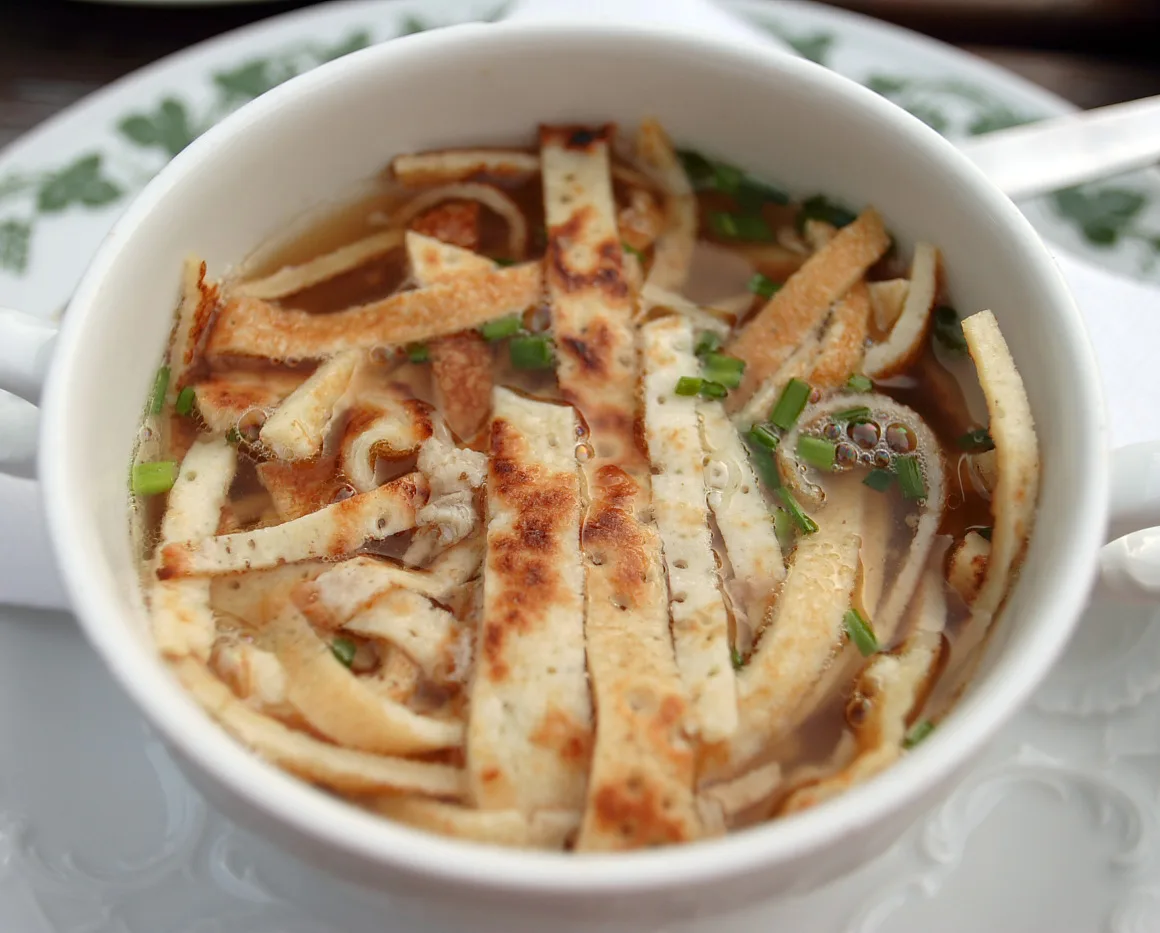
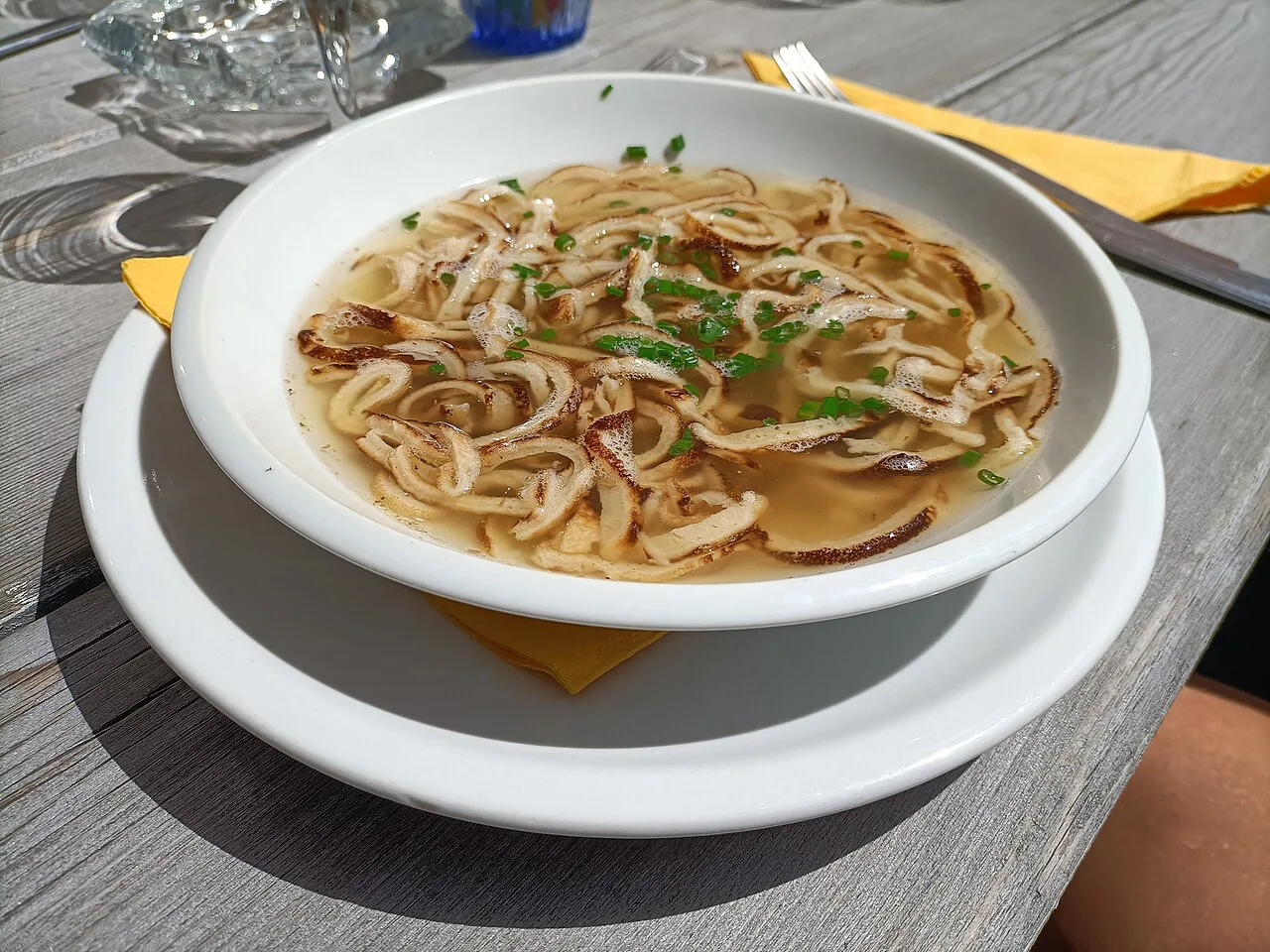
The dish is a clear Rindsuppe, Austria's standard beef broth, with Frittaten floating in it. The Frittaten are thin pancakes known as Palatschinken that have been rolled up and cut into fine strips, so they read as soft ribbons rather than pasta. Vienna's own recipe collection describes them as a signature soup garnish of the Wiener Küche, the city's cooking tradition.
Nothing in the bowl is heavy. The broth is clarified enough to see the strips through it, and the pancake adds a little body without turning the soup creamy. That is the whole point: a warm, savory opener that sharpens the appetite instead of filling you before the main course, and one of the plainest entries in the wider catalog of Austrian food.
Where the name comes from
The word Frittaten traces back to the Italian frittata, which literally means something baked or fried in oil. Vienna used the term for pancakes in general into the 19th century before it settled on this specific soup garnish, as the city's food pages explain. The name traveled with the dish's fame, but in an Austrian bowl there is no egg cake in sight, only strips of thin pancake.
Is Frittatensuppe vegetarian? Classically no. The standard recipe is built on a beef broth made with beef and beef bones, and the pancake strips themselves contain egg and milk.
Are the pancake strips noodles? No. Frittaten are thin Palatschinken pancakes that are rolled and sliced into strips, which is why they soften quickly in hot broth instead of holding a firm bite like pasta.
What is the difference between Frittatensuppe and Flädlesuppe? They are the same basic dish under two names. Frittatensuppe is the Austrian term, while Flädlesuppe is the Bavarian one for a clear broth with pancake strips.
What goes into the broth and the strips
The broth is built the classic way: beef and beef bones simmered with soup vegetables and an onion browned cut-side down in a dry pan, then skimmed as it cooks and seasoned at the end. The result is a deep, savory broth that looks darker than a plain consommé.
The strips come from a simple batter of flour, milk, eggs and salt, cooked thin in butter or clarified butter, then rolled and sliced fine. You are not expected to cook any of it on a trip; the point is recognizing what sits in the bowl when it arrives and why the strips soften quickly in hot broth.
How Frittatensuppe fits an Austrian menu
In Austria the soup is a course, not a main. It comes before the Hauptspeise, the plate of Tafelspitz or roast pork that anchors lunch or dinner, and a small bowl is normal. Treat it the way Austrians do: as a ten-minute opener that sets up the rest of the meal rather than a dish you build a whole lunch around.
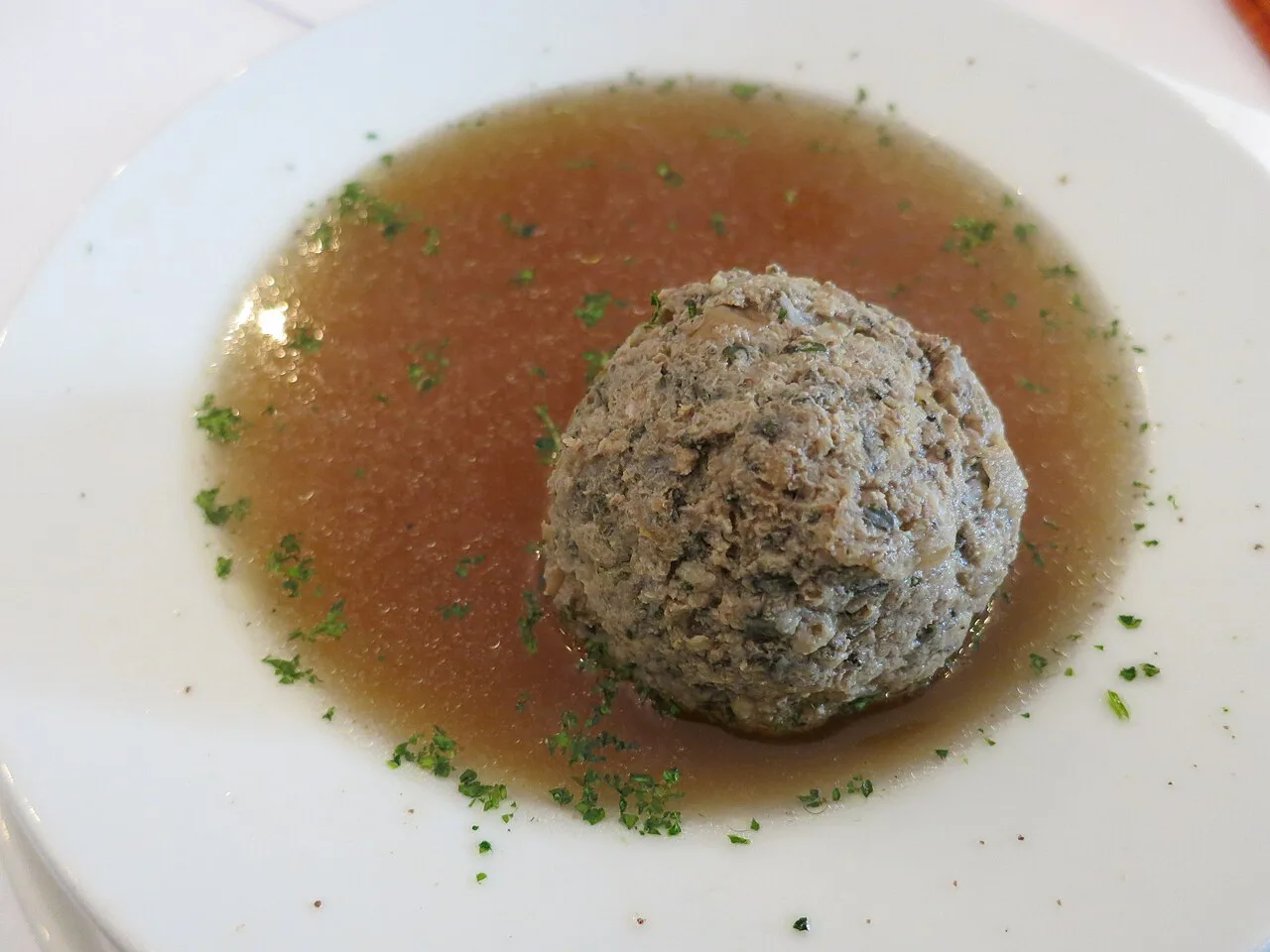
Clear-broth soups form a family, and ordering gets easier once you know the pattern. LeberKnödelsuppe floats a liver dumpling in the same beef broth, while Kaspressknödelsuppe adds a cheese dumpling and often shows up in mountain country as a sturdier variant. Frittatensuppe is the lightest of the group, which is why it suits a long multi-course Sunday lunch and makes a gentler opener than a plate of Knödel.
The Bavarian cousin: Flädlesuppe
Across the border in Bavaria the same dish appears as Flädlesuppe. TasteAtlas identifies Frittatensuppe as the Austrian name for the broth-and-pancake-strip soup that Bavarians know as Flädlesuppe, so a traveler moving from Munich into Tirol or Salzburg will see the idea twice under two names.
If you like the soup in Austria, the Bavarian version will look and taste familiar, since both are clear broth with thin pancake strips. In border regions menus may list both names, so Flädlesuppe and Frittatensuppe can appear side by side.
How it is served and eaten
The order of assembly matters: strips go into the bowl first, hot broth is poured over them, and chopped chives or parsley are scattered on top just before serving. That means the Frittaten absorb broth while you eat, so they are tender at the start and soft at the bottom of the bowl. Wien.info's standard construction puts the garnish in the bowl rather than on the side.
Eat it with a soup spoon and a fork, or just the spoon if the strips are cut fine enough. Do not wait: the soup is served hot and the strips are at their best in the first minutes. This is a dish to finish quickly, not to nurse while it cools.
Where travelers see it on menus
Frittatensuppe turns up wherever Wiener Küche is served, from town restaurants in Lower Austria to traditional inns in the Alps, usually under the soups heading near the top of the menu. In Vienna it belongs to the city cooking repertoire that the tourist office documents.
Menus rarely explain it in English, so look for the word Frittatensuppe or the shorthand Frittaten on its own. In Bavarian or border-country restaurants, Flädlesuppe means the same thing. If you see Rindsuppe mit Frittaten, that is the full name and the safest order.
What to expect on the plate
Expect a shallow soup plate or a wide bowl, clear golden-brown broth, and a tangle of pale strips at the bottom. It arrives hot, unsauced and unfussed, with the herb garnish as the only color. There is no cream, no croutons and no cheese unless a kitchen adds its own twist.
Portions are modest, and that is deliberate. The soup is there to warm you up and signal the start of a proper meal, so do not order it expecting a full lunch. Pair it with a main course, or order two soups if you want a light meal in the middle of a sightseeing day.
If you are eating your way through the Austrian repertoire, the soup course is a good place to start building context. It shares its broth base with the boiled beef plates of the Wiener Küche and with the dumpling soups of the mountains, so one bowl teaches you the family tree.
Questions travelers ask about Frittatensuppe
Most first questions are about what the strips are and whether the soup is vegetarian. The strips are pancake, not noodles, and the broth is beef-based in its classic form, so a vegetarian version is a different dish and worth asking about directly rather than assuming.
Travelers also ask how it compares to a creamy soup. Frittatensuppe is deliberately thin and clear, so it starts a meal lightly; a cream soup is heavier and usually a course in its own right. If you want the lighter option before a big main, this is the one.
Ordering Frittatensuppe on your next Austrian lunch
Treat Frittatensuppe as the opening move of an Austrian meal: a clear beef broth with soft pancake strips, served hot and modest in size. Look for it near the top of the soup list, recognize Flädlesuppe as the Bavarian name, and eat it while the strips still hold their shape.
Explore more Austria guides
Frequently Asked Questions
Is Frittatensuppe vegetarian?
Classically no. The standard recipe is built on a beef broth made with beef and beef bones, and the pancake strips themselves contain egg and milk. A kitchen would need to make a separate vegetable broth to serve a vegetarian version, so ask rather than assume.
Are the pancake strips noodles?
No. Frittaten are thin Palatschinken pancakes that are rolled and sliced into strips, which is why they soften quickly in hot broth instead of holding a firm bite like pasta.
What is the difference between Frittatensuppe and Flädlesuppe?
They are the same basic dish under two names. Frittatensuppe is the Austrian term, while Flädlesuppe is the Bavarian one for a clear broth with pancake strips.
Sources
Notes for your next Austrian town break
Optional updates when we add or revise town guides.
You might also like
Continue reading
More guides you'll find useful