Austrian Goulash: What It Is and How It's Served in Austria
Austrian goulash is a thick beef stew with paprika, not the soupy Hungarian gulyás. Learn what to order, how it's served, and what to expect on menus.
On this page
Order Austrian goulash and you get a thick beef stew, not the brothy soup Hungary calls gulyás. The gravy clings to the meat, and a fork does most of the work. This guide covers what the dish is, how the menu names differ, what arrives beside it, and when it belongs on your table.
Treat it as a plate for a long lunch rather than a pre-train snack. It rewards time in the pot and on the plate, which is exactly how it fits a day built around a town square. It sits comfortably alongside the wider range of dishes in Austrian food, from boiled beef to fried cutlets.
Austrian goulash: a thick beef stew with paprika
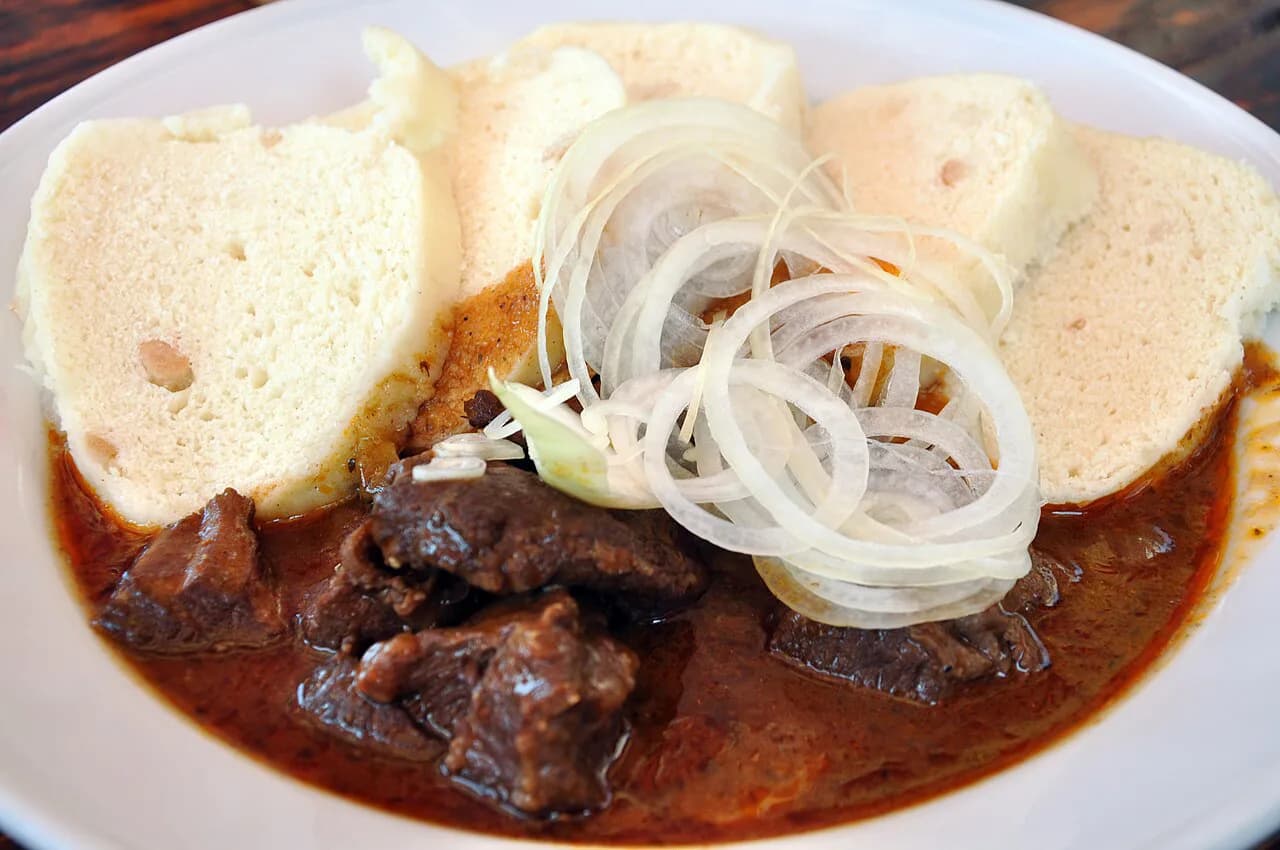
The Austrian version is a stew: beef slow-cooked with onion and sweet paprika into a dark, glossy gravy, and many cooks add caraway. To American eyes it reads closer to a pot roast with a paprika backbone than to a soup. The dish came from Hungary by way of the shared empire, but Austrian kitchens reshaped it to the thicker, stew-like texture they prefer.
Long, slow cooking is the point. A gentle braise turns beef shin or other stewing beef into meat you can pull apart with a fork, and reduces the sauce to a thick gravy. Some cooks thicken it further with flour, while others lean on caramelized onions to build body.
Why Austrian goulash is thicker than Hungarian gulyás
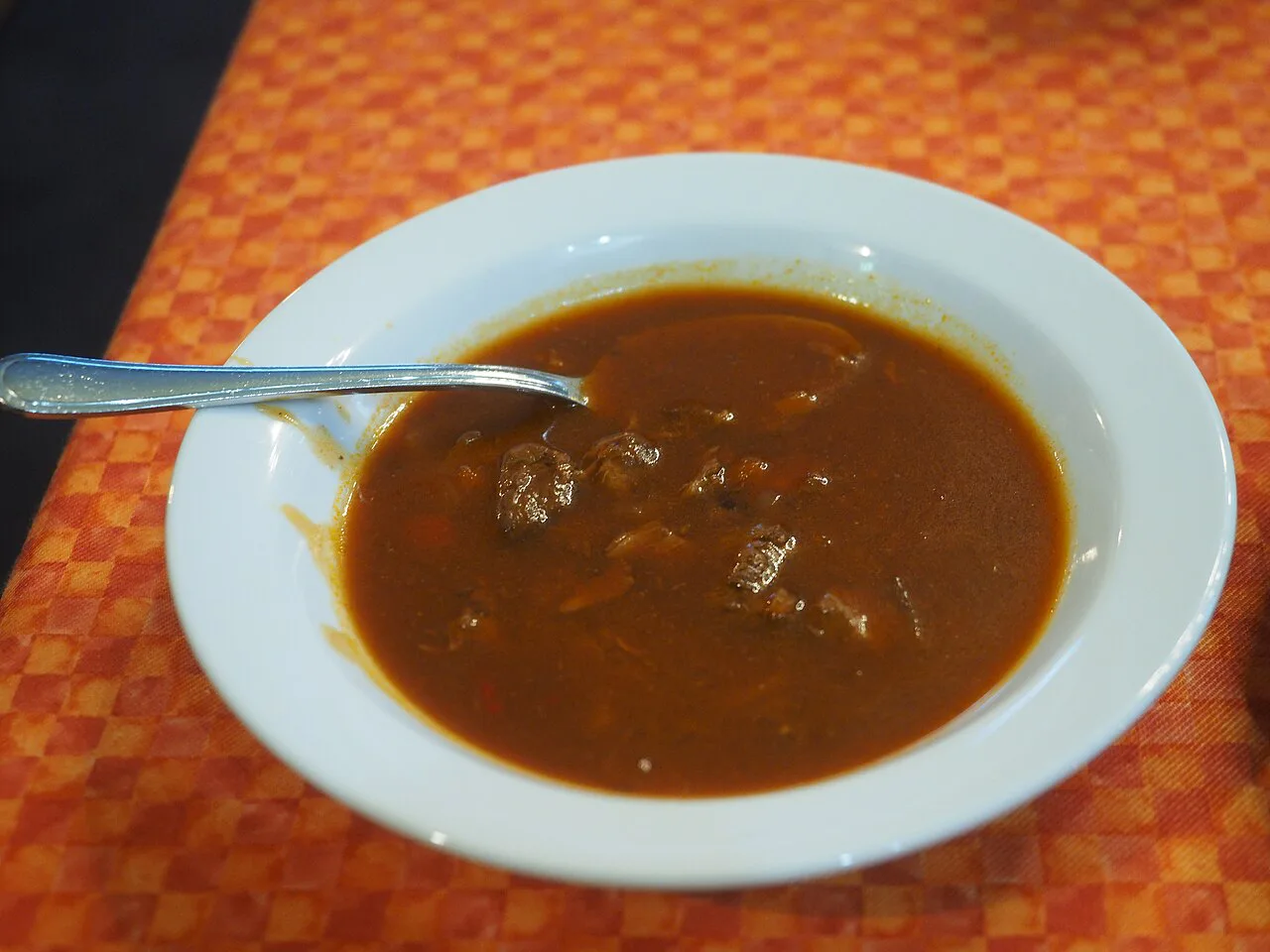
Hungarian gulyás leans soupy, with bell peppers and potatoes floating in the broth. Austrian goulash goes the other way: less liquid, more reduction, a texture closer to stew. The two are family, not twins.
Can you freeze goulash? Yes. A stew like this freezes well because the gravy and tender beef hold up to reheating, and many cooks say it improves after a day in the fridge.
What are the four ingredients in goulash? The core is beef, onion, paprika and a liquid such as stock or water. Austrian versions usually add caraway and often tomato purée or marjoram, so the count rises quickly once you get past the basics.
What does Hungarian goulash taste like compared with the Austrian version? Hungarian gulyás is soupier and often includes bell peppers and potatoes, with a brighter paprika flavor. Austrian goulash is thicker, more reduced, and often carries caraway, giving it an earthier, stew-like taste.
Caraway is what sets an Austrian goulash apart from a purely Hungarian one, at least in some kitchens: Austrian cooking teacher Bianca Gusenbauer's version uses caraway seeds as the defining spice. The seeds bring an earthy, slightly anise edge that reads as Central European. Without them, the dish drifts closer to its neighbor.
How goulash is served: what comes alongside
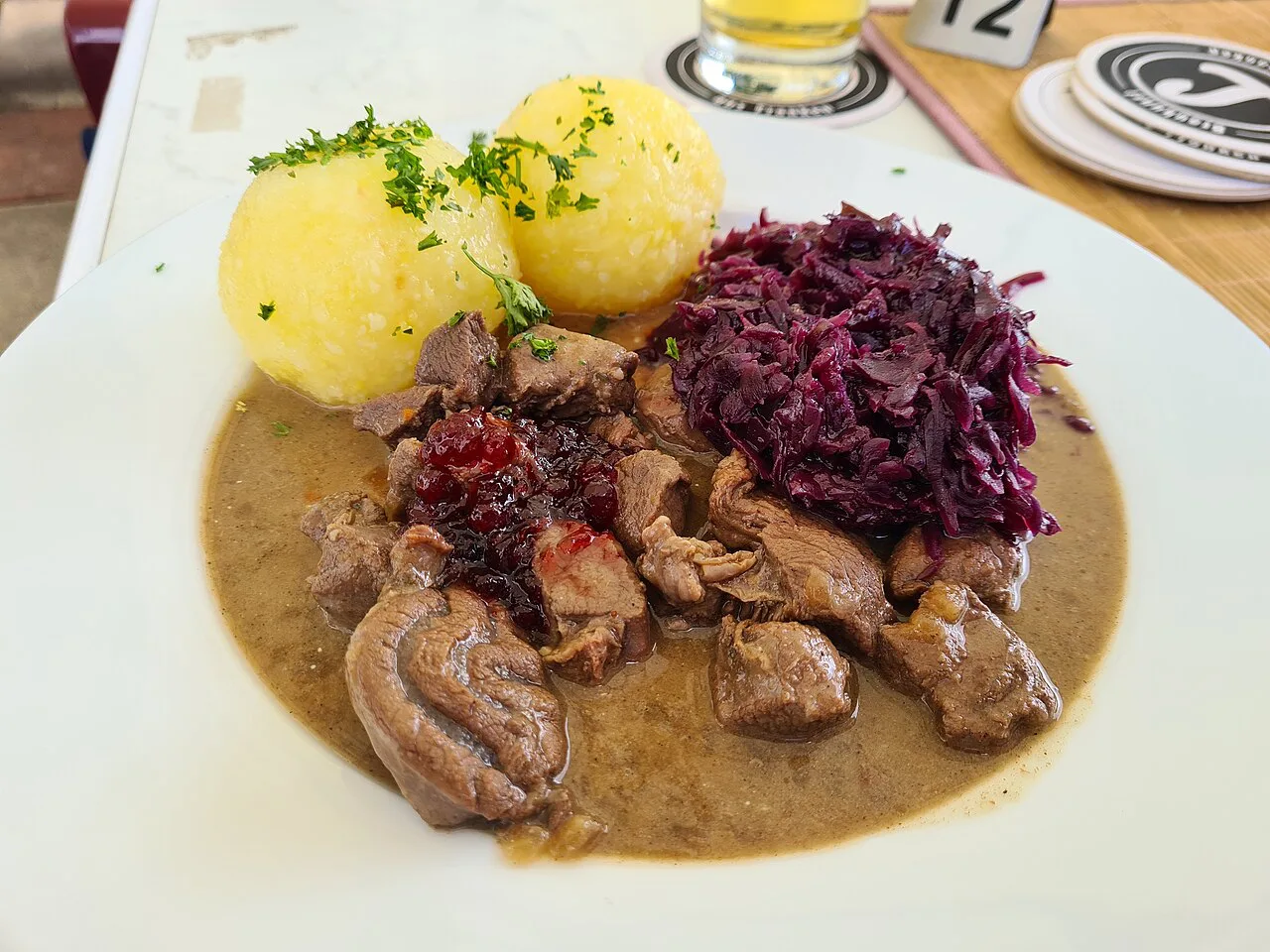
The meat rarely travels alone. Austrian plates pair it with something starchy to catch the gravy: bread dumplings, boiled potatoes, mashed potatoes or spaetzle, the small egg noodles also written Spätzle. Polenta and dark rustic bread show up too.
If dumplings are on the plate, they will be the dense, bread-based kind that soak up sauce rather than fall apart. That is worth knowing before you order a second side. Our guide to Knödel: A Traveler's Guide to Austrian Dumplings explains the varieties you will meet.
Expect a pickle or a dab of mustard on the side of some plates, and a plain green salad on others. Neither is required. Ask what comes with the dish before you add anything, since sides vary by kitchen.
Gulasch and Gulaschsuppe: reading the menu
On a menu, Gulasch means the stew plate, usually with a side, and Gulaschsuppe is the soup version, a lighter bowl that works for a quick stop. Some menus serve the stew over a slice of bread or with a dumpling; the side depends on the kitchen.
The names signal portion and pace more than different recipes. If you want the full sit-down experience, order Gulasch; if you are eating between sights, Gulaschsuppe keeps you moving. Both come from the same pot.
What goes into the pot, and why it takes hours
The core is beef, plenty of onion and sweet paprika, plus garlic and stock, with caraway and marjoram for depth. Some cooks add tomato purée, a splash of red wine or vinegar, or mustard. A Thermomix recipe, for instance, lists mustard, clarified butter and paprika among its ingredients, a reminder that home versions diverge widely.
Time does the heavy lifting. Two to three hours of gentle simmering tenderizes the beef and concentrates the gravy, which is why goulash is often better the next day. A Thermomix recipe card puts total time near four hours, prep included, so it is not a weeknight rush dish.
How it tastes: paprika-forward, sweet rather than hot
Sweet paprika, not chili, sets the flavor. The sauce tastes warm and rounded, with onion sweetness underneath and a gentle heat from a little cayenne or hot paprika if the cook adds it. Marjoram and caraway give it an herbal, slightly resinous edge.
The beef should yield without a knife. If it resists, the pot was rushed. Good goulash tastes of long cooking rather than of spice alone, which is why it holds up as a cold-weather plate.
When to order it: a cold-weather dish
Goulash is most popular in the colder months, when a heavy, warming plate makes sense. It appears on family tables and informal restaurant menus, and is well suited to a cold-weather lunch.
If you are traveling in autumn or early spring, put it on your list for a sit-down lunch after a morning of walking. In high summer, a lighter plate may suit you better.
How goulash fits a food day in an Austrian town
Think of it as the anchor of a midday meal, not a snack between sights. Order it at lunch, take your time, and let the afternoon be lighter. That rhythm matches how Austrian menus are built, with a soup, a main and a sweet to finish.
If you want to branch out across the cuisine, compare it with Wiener Tafelspitz, the boiled beef that shares the same slow-cooked, broth-and-gravy logic. Both are old Austrian plates that reward a proper sit-down.
A bowl of Frittatensuppe, the sliced-pancake broth, is a classic opener before the main arrives. It is light enough not to compete with a heavy goulash.
Where to eat goulash: what to look for on a menu
Look for Gulasch or Gulaschsuppe on the lunch menu of a Gasthaus or a neighborhood Beisl, the informal taverns where Austrian home cooking lands on the plate. The dish is a staple of these kitchens, not a fine-dining specialty. If the menu lists it as a daily lunch special, that is a good sign it was made in quantity and cooked slowly.
Prices vary by town and by whether a side is included. Check the menu board or ask before ordering, especially in tourist-heavy centers where the plate can cost more than in a residential neighborhood.
If you want to build a broader food day, pair goulash with a Käsekrainer from a sausage stand later in the day, or start with a Brettljause of cold cuts and cheese. Both are easy to find and let you compare Austrian staples side by side.
Should goulash be on your Austrian menu?
Yes, if you are traveling in cool weather and want a plate that shows how Austrian cooking handles beef and paprika. Order it at lunch in a Gasthaus, ask whether a side comes with it, and give it the time it deserves.
Skip it if you are in a hurry or eating in high summer, and reach for a lighter dish instead. Goulash is a plate for a leisurely midday meal, not a quick stop between trains.
Explore more Austria guides
Frequently Asked Questions
Can you freeze goulash?
Yes. A stew like this freezes well because the gravy and tender beef hold up to reheating, and many cooks say it improves after a day in the fridge. Cool it fully, portion it, and reheat gently so the meat does not toughen.
What are the four ingredients in goulash?
The core is beef, onion, paprika and a liquid such as stock or water. Austrian versions usually add caraway and often tomato purée or marjoram, so the count rises quickly once you get past the basics.
What does Hungarian goulash taste like compared with the Austrian version?
Hungarian gulyás is soupier and often includes bell peppers and potatoes, with a brighter paprika flavor. Austrian goulash is thicker, more reduced, and often carries caraway, giving it an earthier, stew-like taste.
Sources
Notes for your next Austrian town break
Optional updates when we add or revise town guides.
You might also like


Continue reading
More guides you'll find useful