Austrian Breakfast: What a Wiener Frühstück Actually Is
A Wiener Frühstück means two bread rolls, butter, jam and a soft-boiled egg. Here is what the plate includes and how to compare value across cafes.
On this page
A Wiener Frühstück is the standard Viennese breakfast: two bread rolls, butter, jam and a soft-boiled egg, served on one plate. It is the workhorse of morning menus in the city's coffee houses and cafe-Konditorei, and because the components barely change from place to place, it works as a yardstick for comparing prices around town. This guide covers what lands on the plate, the common variations, the included-coffee question that changes the real cost, and how to fit it around a day of sightseeing outside Vienna.
What lands on the plate
The core plate is deliberately plain: two bread rolls, a soft-boiled egg, butter and jam. Most menus serve it as a fixed constellation, and a server may or may not ask whether you want to adjust anything. The roll is usually a Semmel, the small white roll that turns up on every Austrian breakfast table, so expect a crisp crust and a soft, pale crumb rather than dark sourdough. A typical Austrian breakfast at home follows the same logic, bread with butter and jam plus a boiled egg, which is why the cafe version feels familiar rather than ceremonial.
Preparation is minimal, which is part of the appeal. The egg is boiled just until the yolk sets soft, the rolls go to the table as they are, and the jam and butter arrive in small portions. There is nothing to assemble and nothing that requires a long kitchen wait, so a Wiener Frühstück is a realistic stop when you have a train to catch.
Why it turns up everywhere
Coffee houses treat breakfast as part of the day's rhythm, and the Wiener Frühstück is the dish they can serve without much fuss. That is why it appears on menus alongside muesli, omelets and more elaborate morning plates. Vienna's coffeehouse culture puts newspapers, long conversations and the pastries at the center of the experience, and breakfast is the meal that fits that model well.
Is a Wiener Frühstück the same as an Austrian hotel breakfast? No. The Wiener Frühstück is a specific coffee-house plate of two bread rolls, butter, jam and a soft-boiled egg, or a close variation of it.
Does a Wiener Frühstück always come with coffee? Not always. Some places include coffee or tea, some serve the plate on its own, and a combined offer is usually the better value than ordering separately.
Can I change what comes on the plate? Often yes, but you usually have to ask. Common swaps are honey instead of jam, a different jam flavor, or another type of roll instead of a Semmel.
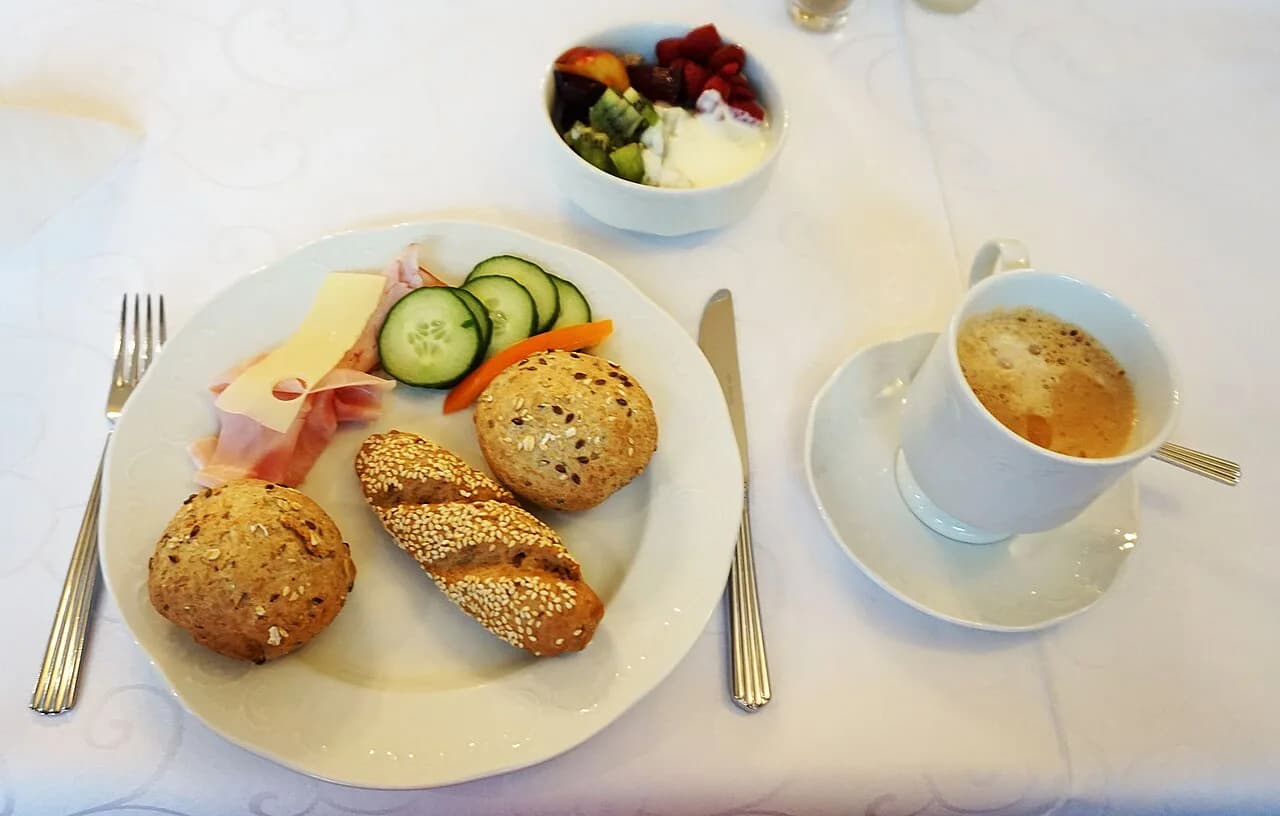
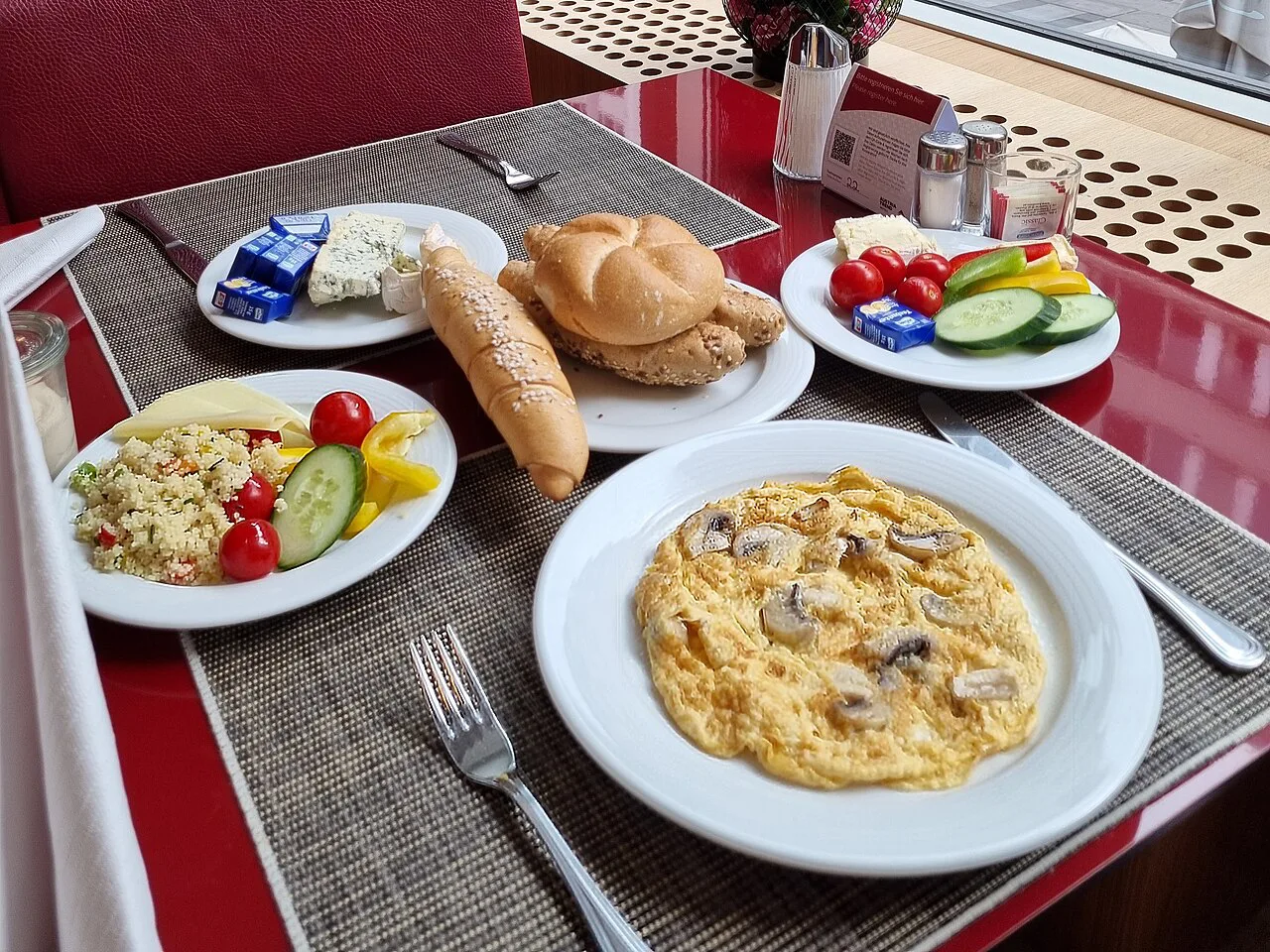
A broader Austrian breakfast spread is a cold table of bread, cold cuts, cheese, yogurt, fruit and boiled eggs, often eaten before a day on the road. If you want the coffee-house version specifically, order it by name in a cafe rather than assuming a hotel buffet will match it.
Common variations
Two substitutions are common. Some places swap a croissant for one or both bread rolls, and Oberlaa on Neuer Markt serves its version that way. Others add sliced ham and cheese, mirroring a typical household breakfast, but that upgrade usually appears under a different name; if a menu calls a ham-and-cheese plate a Wiener Frühstück, a plainer and cheaper version should also be listed.
None of these changes makes the dish a national standard. It is a Viennese coffee-house breakfast, and the wider Austrian repertoire of dumplings, soups and roasts is a separate story worth reading on its own. For the bigger picture of what Austrians eat beyond the morning plate, start with the Austrian food guide and work outward from there.
The coffee question that changes the cost
The single most useful thing to check on a breakfast menu is whether a hot drink is included. Sometimes the Wiener Frühstück arrives with coffee or tea, sometimes it does not, and coffee is expensive enough in the city center that the difference matters. A combined breakfast-and-coffee offer usually works out cheaper than ordering the two separately, so scan for the wording before you settle on the plain version.
If coffee is included, order it the way locals do. A Melange is the milky coffee most often paired with breakfast, and an Einspanner, a strong coffee topped with whipped cream, is the richer alternative. The Café Central has included a hot beverage with its Viennese breakfast, which illustrates how the combined format works.
Swapping components
The plate is more flexible than it looks, but you usually have to ask. Honey can replace jam, a particular jam flavor can be chosen from the ones on hand, and a standard Semmel can give way to another type of roll. Waiting staff do not always offer the options, so state what you want when you order rather than after the plate arrives.
Using breakfast as a price yardstick
Because the dish is nearly universal and made from the same few components, it works as a comparison tool the way Wiener Schnitzel does on lunch and dinner menus. Two rolls, an egg, butter and jam at one cafe and the same at another are close enough that a price gap tells you something about the room, the address and the service rather than the food. Check the included-drink line first, then compare like with like.
That logic also helps you decide where to sit down. A coffee house near a major sight charges for its location, while a cafe a few streets out may serve the identical plate for less. The dish is a quick, low-risk way to test a place before you commit to a fuller meal there later in the trip.
Where to order it
Coffee houses and cafe-Konditorei are the natural venues, and most of them list a Wiener Frühstück somewhere on the morning menu. Café Central is the classic grand-room example, and Oberlaa on Neuer Markt is a cafe-Konditorei stop where the croissant version appears. Both are central and busy, so an early arrival buys you a calmer table and faster service.
If your day continues into a long lunch, keep the rest of the itinerary light. A Brettljause, a board of sliced meats, cheeses, pickles and spreads, is the usual midday counterpart in Alpine country, and it is worth knowing about before you order a second heavy meal.
Fitting breakfast around a sightseeing day
The Wiener Frühstück is fast enough to sit down for before a morning departure. Because it needs no cooking beyond an egg, it lands on the table quickly, which suits a schedule built around a train or a Postbus from a main station. Eat before you travel rather than relying on station food, and you start the day on a proper plate instead of a platform snack.
Once you leave the city, breakfast changes character. A Brettljause of sliced meats, cheeses and spreads is the savory board you will meet later in the day rather than at breakfast. Knowing both formats helps you read a menu on the road and pick the meal that fits the day's travel.
Beyond the morning plate
Breakfast is only the opening act of the Austrian table. Heartier dishes fill the rest of the day, and boiled beef known as Tafelspitz is the lunch classic to plan around if you want a sit-down meal in a traditional dining room.
Dumplings in their many forms are the other staple you will see alongside roasts and stews, and they are worth knowing by name before you order. To understand what arrives on the plate, read about Knödel and how they are served.
A bowl of clear broth with strips of pancake, Frittatensuppe, is the standard starter on many menus and a light way to begin a bigger meal. Austrian goulash is the other reliable order when you want something slow-cooked and warming.
Street food fills the gaps between meals, and a Käsekrainer from a stand is the sausage most travelers remember. None of this replaces the breakfast plate, but it rounds out how you eat across a day of sightseeing.
Order the combined version first
If you want one rule for a Wiener Frühstück, look for the version with a hot drink included before you compare anything else. That single line on the menu shifts the real cost more than a croissant or an extra slice of ham ever will.
Order early, sit down rather than queue at a counter, and use the plate to judge the rest of the menu. If the breakfast is good and fairly priced, the kitchen is worth a return visit for Tafelspitz or a plate of dumplings later in the trip.
Explore more Austria guides
Frequently Asked Questions
Is a Wiener Frühstück the same as an Austrian hotel breakfast?
No. The Wiener Frühstück is a specific coffee-house plate of two bread rolls, butter, jam and a soft-boiled egg, or a close variation of it. A broader Austrian breakfast spread is a cold table with bread, cold cuts, cheese, yogurt and fruit. If you want the coffee-house version, order it by name in a cafe.
Does a Wiener Frühstück always come with coffee?
Not always. Some places include coffee or tea, some serve the plate on its own, and a combined offer is usually the better value than ordering separately. Read the menu line before you order and ask if the wording is unclear.
Can I change what comes on the plate?
Often yes, but you usually have to ask. Common swaps are honey instead of jam, a different jam flavor, or another type of roll instead of a Semmel. Waiting staff do not always offer the options up front.
Sources
Notes for your next Austrian town break
Optional updates when we add or revise town guides.
You might also like
Continue reading
More guides you'll find useful