Kasnocken: Austria's Pan-Baked Cheese Dumplings Explained
Kasnocken are Austrian cheese dumplings finished in a pan with butter, onion and cheese until a crust forms. Here is what goes into them and how they are served.
On this page
Kasnocken are Austrian dumplings finished in a pan rather than on a plate: small Nocken are boiled, then tossed with butter, diced onion, grated cheese and a little stock or cream until the cheese melts and the bottom of the pan browns. They belong to the Salzburg alpine kitchens of the Pinzgau, where the dish is built on local cheese and served in the pan it was cooked in. This guide covers what goes into them, how they differ from Käsespätzle, why the dark pan bottom is the point, and how to recognize them on a menu, and it sits within our wider Austrian food coverage.
What Kasnocken are
The word joins Kas, dialect for cheese, with Nocken, the soft spoon dumplings Austrians also know as Spätzle or Knödel dough depending on the region. The dumplings themselves are neutral; the character comes afterward, when they hit a hot pan with butter, onion and cheese and are left to sizzle. That final pan stage is what separates Kasnocken from a bowl of dumplings with melted cheese poured over the top.
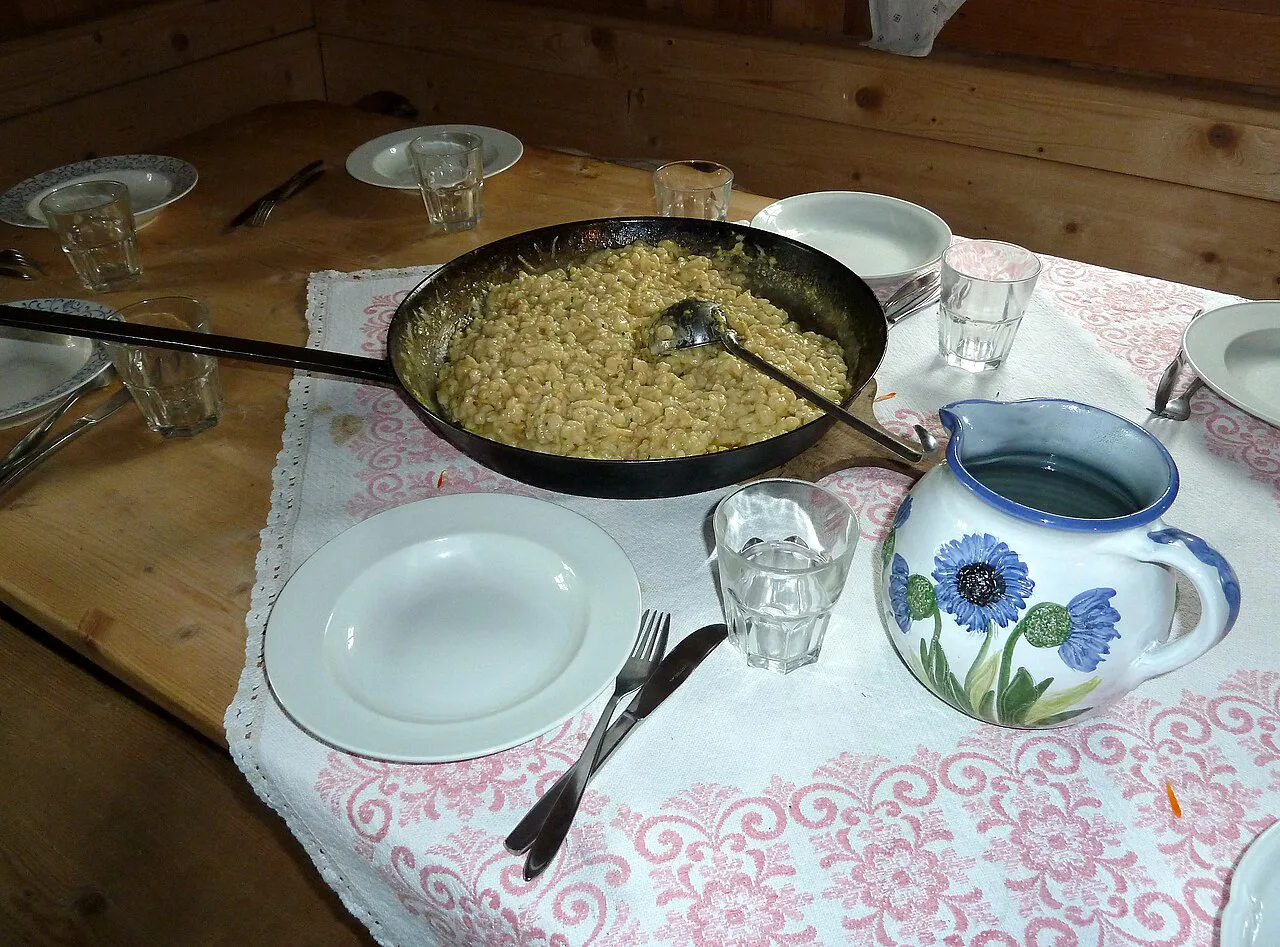
Expect a rustic, intensely savory dish rather than a delicate one. Paula Bründl's Pinzgau version browns diced onion in foaming butter, seasons it with salt, pepper and hot paprika, adds beef stock and cream, then folds in the dumplings and grated cheese for about ten more minutes over medium heat. The result is soft dumplings bound in a thick cheese sauce with a crisp layer underneath.
How Kasnocken differ from Käsespätzle
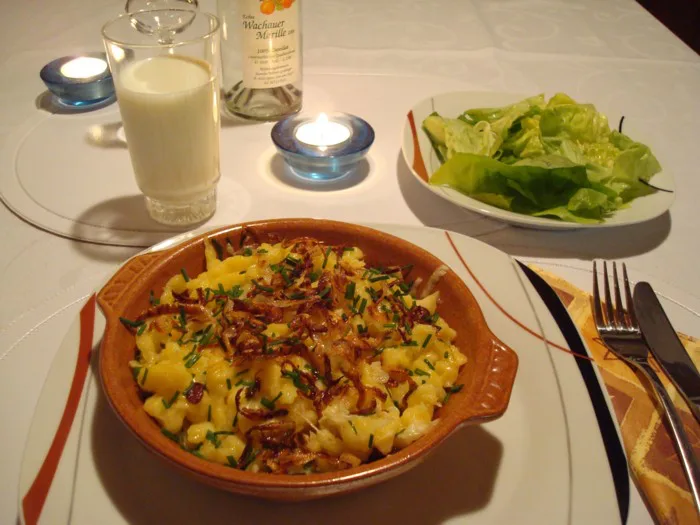
Käsespätzle and Kasnocken share a family tree: egg-and-flour dumplings, cheese, and often fried onion on top. The difference is the pan treatment. Käsespätzle are usually layered in a dish or pan with cheese and onion and brought to the table soft and molten, while Kasnocken are actively cooked in the pan with a liquid so the cheese emulsifies and the base caramelizes into a crust.
What are Kasnocken made of? Kasnocken are small flour-and-egg dumplings boiled in salted water, then finished in a pan with butter, diced onion, grated cheese and a little stock or cream. The Pinzgau version uses Pinzgauer Bierkäse, Bergkäse and Butterkäse, and is finished with chives and fried onion.
Is Kasnocken the same as Käsespätzle? They are close relatives but not the same dish. Käsespätzle are typically layered with cheese and onion and served soft, while Kasnocken are cooked in the pan with a liquid so the cheese blends and the bottom browns into a crust called the Brintschen.
What is the Austrian mac and cheese dish? Travelers often mean Käsespätzle or Kasnocken, the Austrian cheese-and-dumpling dishes. Kasnocken are the pan-baked Pinzgau style with a browned crust, and they are the closer match to baked mac and cheese in texture and intent.
In practice the names blur across regions and kitchens, and a Tyrolean menu may list Kasnockn where a Salzburg one says Käsespätzle. On a menu, look for the word Pfandl or the phrase in der Pfanne, which signals the pan-baked style. If the description mentions a crust or Brintschen, you are looking at the Kasnocken method.
The Pinzgau connection and Pinzgauer cheese
The Pinzgau is the alpine district of Salzburg state around Zell am See and Kaprun, and its cheese is the reason the local version has a following beyond the valley. Milk comes from cows grazing the high meadows of the Hohe Tauern national park, and those herb-rich pastures give Pinzgauer Käse its aroma. The cheese is eaten plain as part of a Brettljause and is the defining ingredient of Pinzgauer Kasnocken.
That local identity means the dish is tied to a specific landscape rather than to a single restaurant. Travelers moving through the Salzburg Alps, from the Zell am See basin up toward the national park, are in the right corner of Austria to meet it. In Kaprun and the surrounding villages it appears on country-inn and hotel-restaurant menus alongside other Pinzgau standards.
Which cheeses go in
The Pinzgau version does not use one cheese but three, and the blend is what gives the sauce its depth. Paula Bründl's recipe calls for 100 grams of Pinzgauer Bierkäse with 50 grams each of Bergkäse and Butterkäse, grated and melted into the onion base. The named regional cheese, rather than a single generic mountain cheese, is the point of the dish.
A simpler inn version uses one grated Pinzgauer cheese, butter, salt, pepper and a finishing pour of brown butter. If you are ordering rather than cooking, the practical takeaway is that a good Kasnocken tastes of aged cheese, not of mild melting cheese alone. A menu that names the cheese, especially Pinzgauer, is telling you the kitchen takes the dish seriously.
How it is made, briefly
The dumpling base is a firm batter of flour, egg, water or milk and salt, beaten smooth and pushed through a Nocken sieve or Spätzle hob into salted water. The dumplings cook for a few minutes, then are drained, and in Bründl's version shocked in cold water so they stay separate before going into the pan. Both the Pinzgau recipes follow this sequence, and it is why the dumplings hold their shape under the cheese.
The pan stage is short and hot. Butter foams, onion softens, stock and cream go in, then dumplings and cheese, and the whole thing cooks until the cheese pulls into strings and the bottom browns. Bründl's version simmers the sauce about five minutes before the dumplings and cheese go in for another ten, which gives the cheese time to blend rather than sit in lumps.
The Brintschen: the browned crust at the bottom
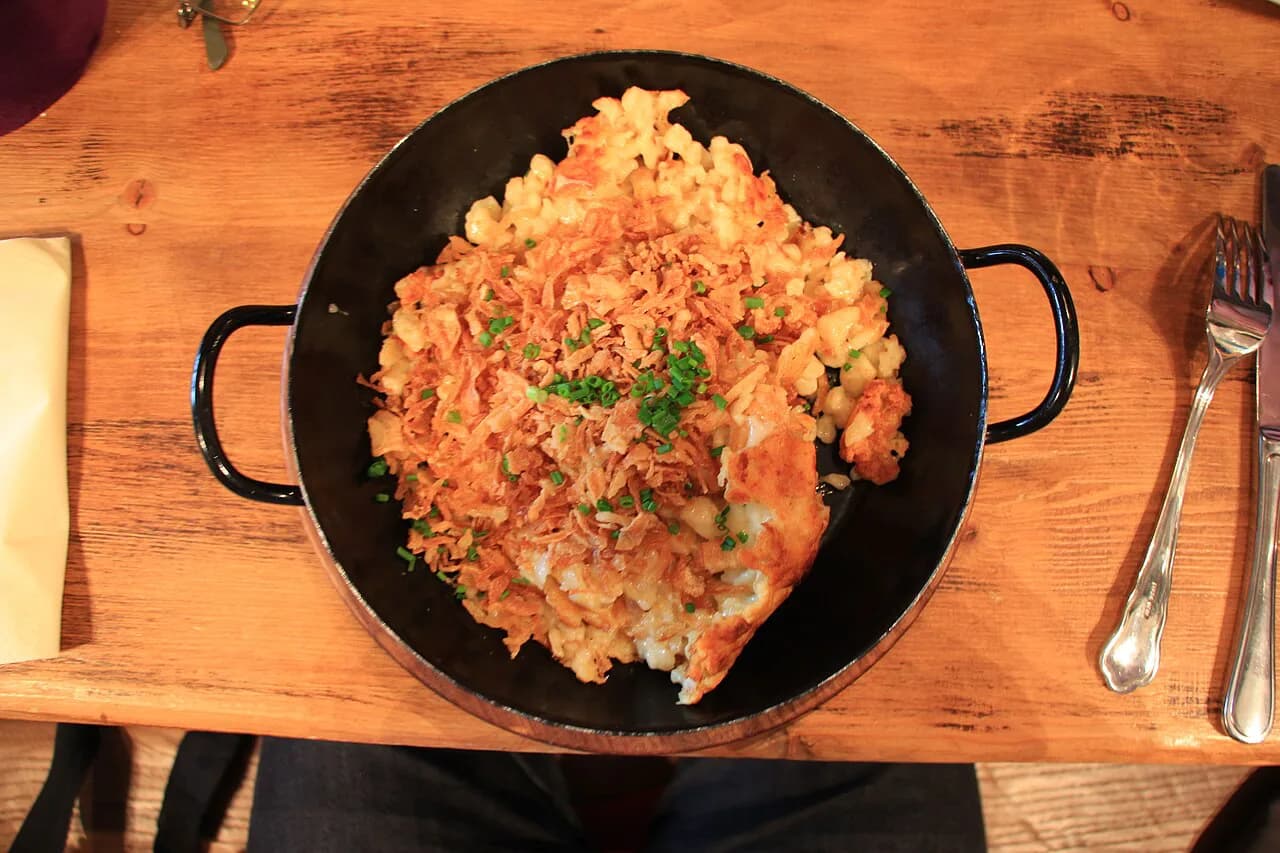
The Brintschen is the browned layer that forms where dumplings and cheese meet the hot pan, and it is the mark of a properly made Kasnocken. It is not burnt and not a mistake; it is the crisp, deeply savory contrast to the soft, creamy dumplings above it. Cooks aim for it deliberately by leaving the dish undisturbed over medium heat at the end.
For a traveler, this is the practical test at the table. If the dish arrives as a soft mound with no crust, it was likely assembled rather than finished in the pan. If you see a browned base and the cheese stretches in long threads, you are eating the real thing.
How it is served and eaten
Kasnocken come to the table in the pan, a small Pfandl, not plated into a neat portion. Chives are scattered over the top, along with fried onion in the Pinzgau version and a grind of black pepper. Diners eat directly from the pan, which keeps the crust intact and the cheese hot to the last spoonful.
Ordering is straightforward once you know the shape of the meal: one pan is a substantial main course, and the sharp cheese makes it filling. A small soup or a green salad before it is plenty. Because it is a cooked-to-order dish, it can take a while at a busy lunch service, so it suits a relaxed stop rather than a rushed one.
Where travelers run into it
Kasnocken belong to the mountain kitchens of Salzburg and the Pinzgau: country inns, alpine huts and hotel restaurants in the Zell am See and Kaprun area. It is lunch and early-dinner food, hearty enough for a cold day and common on menus built around cheese and dumplings. The dish is less tied to Vienna and the Danube than to the alpine west of the province.
The Pinzgau cheese itself travels a little further. It appears on cheese boards and Brettljause platters around Salzburg, so a mountain snack board is a low-commitment way to taste the raw material before ordering the hot dish. Look for the cheese named by origin on the board rather than a generic mountain cheese.
What to order with it and how to read the menu
The dish is rich, so the classic pairing is something sharp and light: a green salad, a sour pickle or a small clear soup. Beer is the traditional match for cheese dumplings in this part of Austria, and a light lager cuts the butter better than a heavy dark one. If you want a heavier second Austrian classic at the same meal, a portion of Wiener Tafelspitz shared between two works better than two full plates.
On menus the spellings vary: Kasnocken, Kasnockn, Käsnocken, and Pinzgauer Kasnocken when the local cheese is named. Käsespätzle is the close relative, and Käsespätzle mit Röstzwiebeln signals fried onion on top. If the listing names a Pfandl, a crust or Pinzgauer Käse, order with confidence that you are getting the pan-baked Pinzgau style.
Should you order Kasnocken or Käsespätzle?
Order Kasnocken if you want the pan-baked version with a browned base, a blend of aged Pinzgau cheeses and the arrival in the pan that makes it a distinctly alpine plate. Choose Käsespätzle if you prefer a softer, layered dish without the crust. Both are cheese-and-dumpling comfort food, but only Kasnocken are defined by the Brintschen.
In the Pinzgau, look for the dish on inn and hotel-restaurant menus around Zell am See and Kaprun and check whether the menu names Pinzgauer Käse. Each kitchen sets its own portion and writes the price on the printed menu at the door.
Explore more Austria guides
Frequently Asked Questions
What are Kasnocken made of?
Kasnocken are small flour-and-egg dumplings boiled in salted water, then finished in a pan with butter, diced onion, grated cheese and a little stock or cream. The Pinzgau version uses Pinzgauer Bierkäse, Bergkäse and Butterkäse, and is finished with chives and fried onion.
Is Kasnocken the same as Käsespätzle?
They are close relatives but not the same dish. Käsespätzle are typically layered with cheese and onion and served soft, while Kasnocken are cooked in the pan with a liquid so the cheese blends and the bottom browns into a crust called the Brintschen.
What is the Austrian mac and cheese dish?
Travelers often mean Käsespätzle or Kasnocken, the Austrian cheese-and-dumpling dishes. Kasnocken are the pan-baked Pinzgau style with a browned crust, and they are the closer match to baked mac and cheese in texture and intent.
Sources
Notes for your next Austrian town break
Optional updates when we add or revise town guides.
You might also like
Continue reading
More guides you'll find useful