Käsekrainer: Austria's Cheese-Filled Sausage, Explained
Käsekrainer is a smoked Austrian pork sausage with cheese that melts inside the casing. Here is what it is, what it tastes like, and how it is served.
On this page
A Käsekrainer is a smoked pork sausage with cheese mixed into the meat before it is cooked and smoked, so every bite carries a molten, savory center. Order one at an Austrian sausage stand and you get the country's most indulgent quick meal, richer than a plain frankfurter and built to be eaten standing up.
This guide explains what the sausage is, how it tastes, where the name comes from, what goes with it, and what to expect when you see it on a stand menu for the first time.
What Käsekrainer actually is
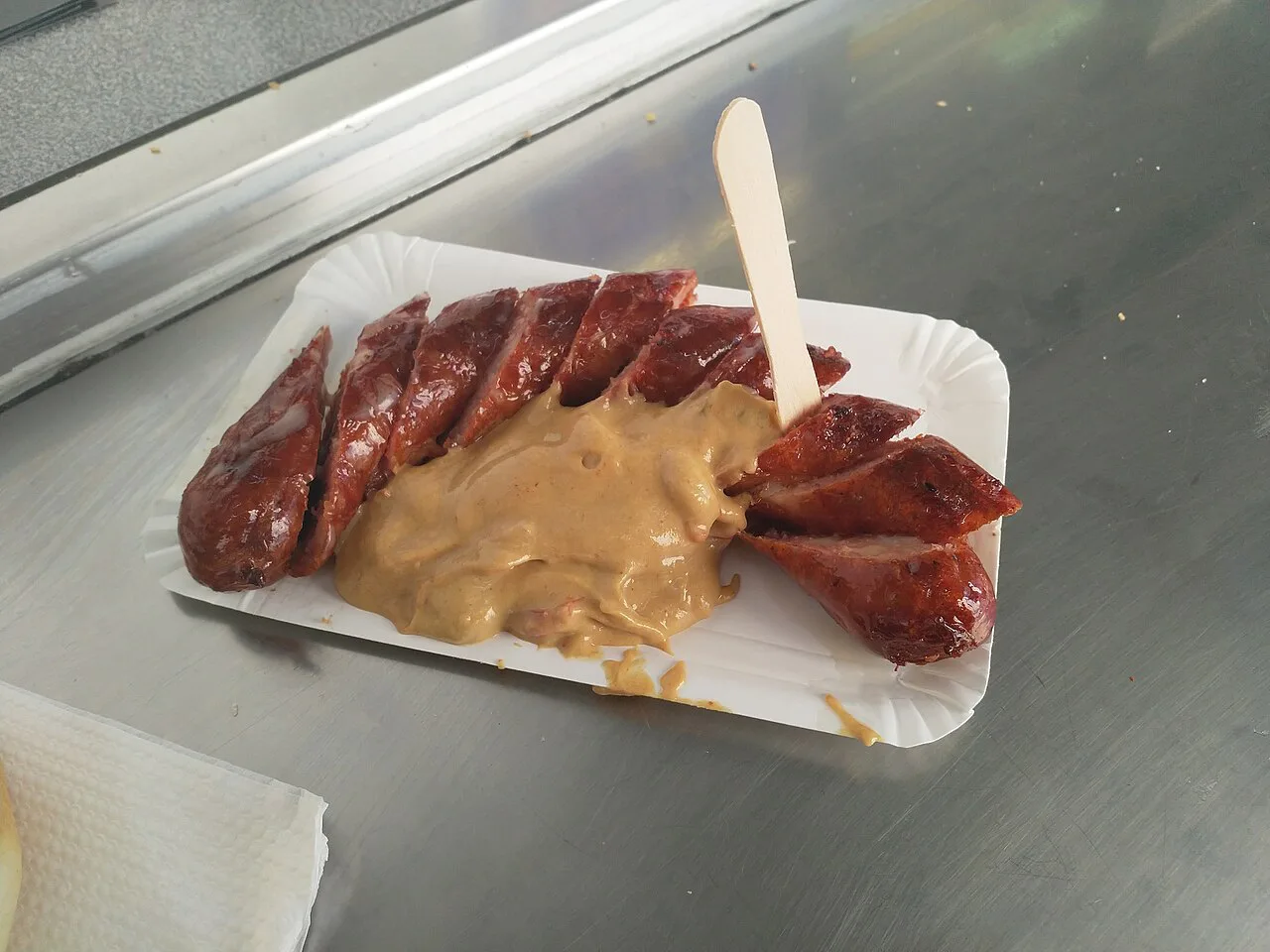
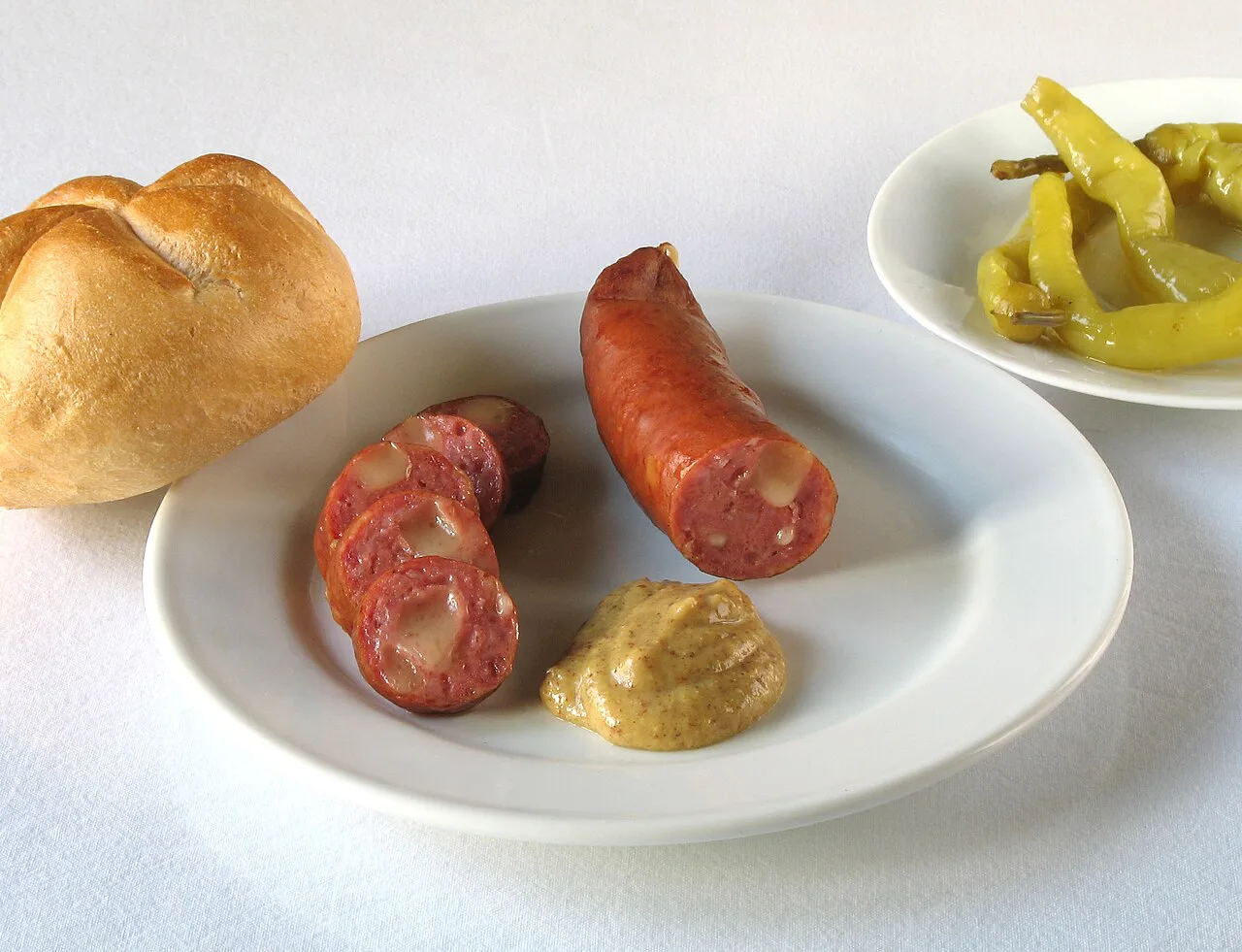
The defining feature is that small pieces of cheese sit inside the sausage meat rather than on top of it. When the sausage is heated, the cheese softens and melts through the center, which is why the texture reads creamy and juicy instead of simply firm. Peel back the casing and you find a smoked pork sausage with a liquid core, not a hot dog with a cheese slice laid over it.
Production stays short to describe: seasoned pork, cubes of cheese, a smoking stage. Anything beyond that, such as a specific meat-to-fat ratio or an exact cheese percentage, is a detail for the butcher rather than something a hungry traveler needs before ordering.
What it tastes like
Expect lightly smoked pork up front and a creamy, salty finish from the melted cheese. The overall impression is heavier than a standard frankfurter, so one sausage with bread is a proper snack rather than a token bite.
Is Käsekrainer the same as a Vienna sausage? No. A Vienna sausage, or Wiener, is a finely ground smoked sausage with a uniform interior; a Käsekrainer has cheese mixed into the meat so the center melts during heating.
Because the cheese is already rich, the sausage does not need a pile of toppings to taste like something. A sharp condiment and something acidic on the side do more work than extra sauce or fried additions.
Where the name comes from
The name splits in two: Käse is German for cheese, and the compound attaches that word to the older Krainer sausage family. On a menu board, that breakdown is what helps most: recognize the cheese word and the sausage name that follows it, and a stand's list of similarly named sausages becomes easier to sort through.
The Krainer part points back to the wider Carniolan sausage tradition from which this style developed, so the full name roughly reads as a cheese sausage in that lineage. Once you recognize Krainer as the sausage family and Käse as the filling, a stand's list of similarly named sausages stops looking like code.
What cheese goes inside
Where producers describe their cheese, it is Emmental, a firm Alpine cheese that melts smoothly and carries a nutty, savory flavor without turning greasy. Firmness helps it survive heating and biting rather than running out the moment the sausage warms, though cheese can still escape if the casing is pierced or the heat is too high.
One US producer, Olympia Provisions, makes a Käsekrainer-style sausage with pork and Emmenthaler smoked over apple wood, which shows how the format travels outside Austria.
How it is cooked, and the one rule that matters
The sausage can be grilled, cooked on a flat griddle or frying pan, or simply heated through in hot water. Grilling and pan-frying give you a bit of browned casing and a firmer snap; the water method is gentler and keeps the skin pale and soft.
Do not pierce the casing before or during heating. A puncture gives the melted cheese an escape route, and you lose the center that makes the sausage worth ordering; the same advice applies when reheating one at home.
How it is served
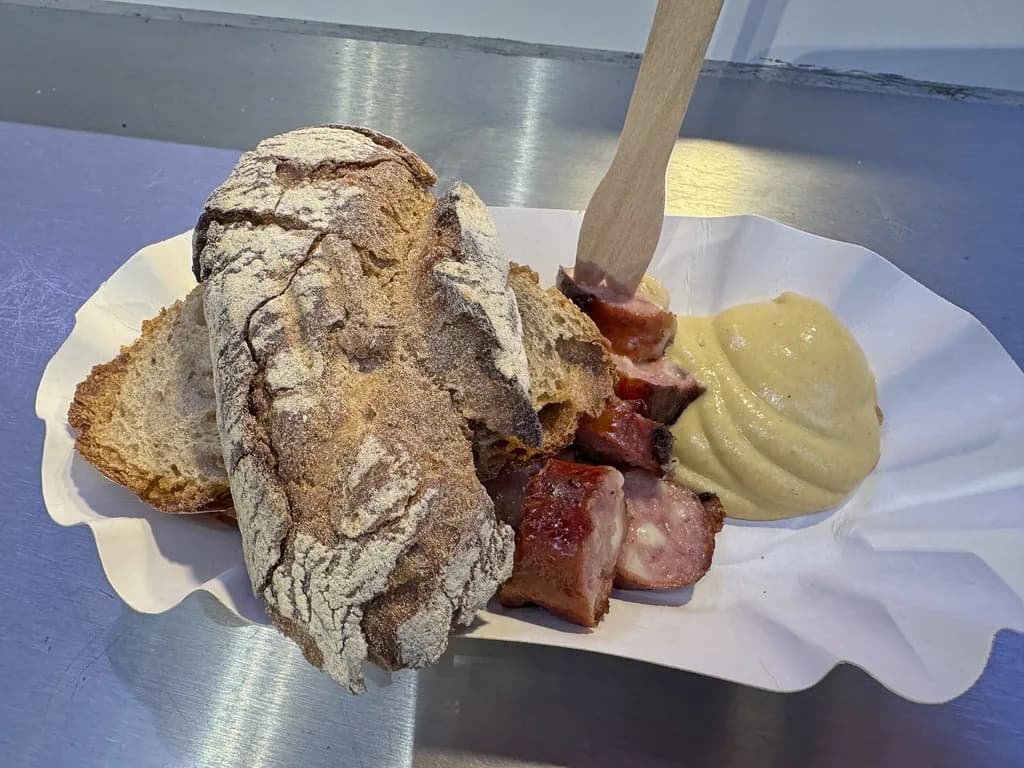
The classic plate is simple: mustard, a roll, sauerkraut, potatoes or pickles, with crispy onions and curry ketchup as common additions. Sharp, fresh sides cut the fat and keep the whole thing from feeling heavy, which is why they appear again and again rather than heavier sauces.
If you want a fuller meal in the same register, Austrian dumplings and a bowl of soup round out the plate well; both are stand and tavern staples rather than restaurant-only dishes.
Where travelers in Austria run into it
It belongs to stand and casual food-counter settings rather than formal dining rooms, so look for it where sausages are sold to eat on the spot or wrapped to carry. These are quick, standing-room orders, which makes the sausage an easy stop between a town square and a museum without committing an hour to lunch.
Order it with a slice of bread and a sharp drink, eat it while it is hot, and treat any cheese that escapes onto your fingers as a sign the casing held until you bit it. Pair it with a light soup if you want a sit-down rhythm instead of a stand.
It is also a natural snack alongside the other classics of the Austrian table, so it fits a trip that is already tracking down Wiener Schnitzel and Tafelspitz without adding a separate food mission.
What to expect to pay
Sausage-stand pricing shifts with the city, the season and the size of the portion, so the reliable move is to read the board at the stand itself, where the price in euros is posted with the item. Budget the way you would for a substantial snack rather than a full restaurant meal, and check whether the bread or a side is included before you pay.
Käsekrainer versus a frankfurter or Vienna sausage
A standard frankfurter is a finely ground, lightly smoked sausage with a uniform interior; the Käsekrainer adds cheese to the mix, so the interior is no longer uniform and the bite changes from firm to molten. That single difference defines the eating experience more than length, curing or smoke level.
If you want to see where the sausage sits among Austria's larger dishes, the broader survey of Austrian food covers the schnitzel, dumpling and boiled-meat canon it shares a counter with, including Wiener Schnitzel and Schnitzel Wiener Art.
What it is called outside Austria
In the United Kingdom, one supplier sells this style as a Cheese Frankfurter, a name chosen because it reads instantly on a menu or shop shelf, while Käsekrainer signals the traditional Austrian and southern German version. Outside Austria you may also see it labeled as cheese sausage or cheese frankfurter.
What to order at the stand
Treat the Käsekrainer as the order that tells you whether a stand knows what it is doing. Ask for it with mustard and bread, add sauerkraut or pickles if you want acidity against the cheese, and skip anything that weighs the plate down.
Across a trip it slots neatly into the Austrian food repertoire next to Tafelspitz, goulash and dumplings, so you can work through the stand menu town by town rather than hunting for a single famous address.
Prices and posted menus change, so read the stand board before ordering and treat the number there as the one that counts.
Explore more Austria guides
Frequently Asked Questions
Is Käsekrainer the same as a Vienna sausage?
No. A Vienna sausage, or Wiener, is a finely ground smoked sausage with a uniform interior; a Käsekrainer has cheese mixed into the meat so the center melts during heating. The two are related sausages, but the cheese changes both the texture and how they are served.
Sources
Notes for your next Austrian town break
Optional updates when we add or revise town guides.
You might also like
Continue reading
More guides you'll find useful