Tafelspitz: Austria's Boiled Beef, Explained for Travelers
Tafelspitz is Austria's classic boiled beef, served with its broth, apple-horseradish and chive sauce. Here's the cut, the taste and how it reaches the table.
On this page
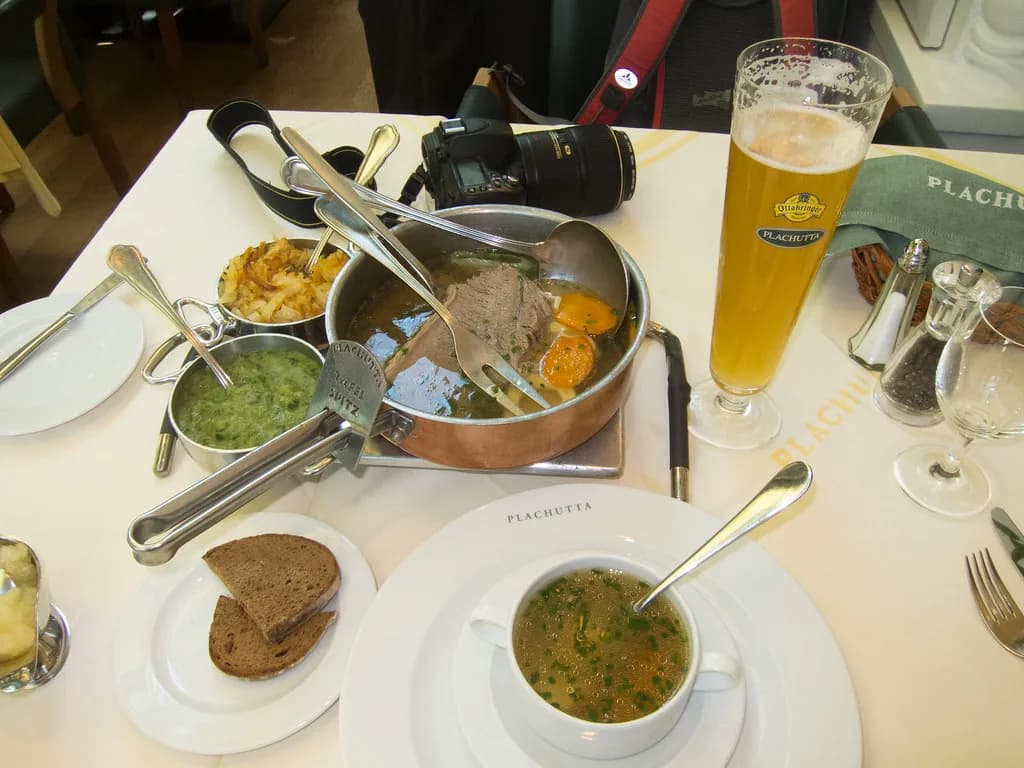
Tafelspitz is boiled beef, and in Vienna it comes to the table in its own clear broth with apple-horseradish sauce, chive sauce, creamed spinach and potatoes alongside. The meat is the tapered end of a muscle strand from the beef rump, simmered gently until a fork slides through it, then sliced and moistened with soup. This guide covers what the cut is, how it tastes, how it fits into Austrian food more broadly, and where to order it without surprises.
The city is where the dish is most closely associated, but boiled beef turns up on Gasthaus menus across Austria, and the plate is designed for sharing a pot of broth rather than for a quick solo lunch. It is a sit-down dish that rewards an unhurried appetite.
What Tafelspitz is: beef, broth and the sauces beside it
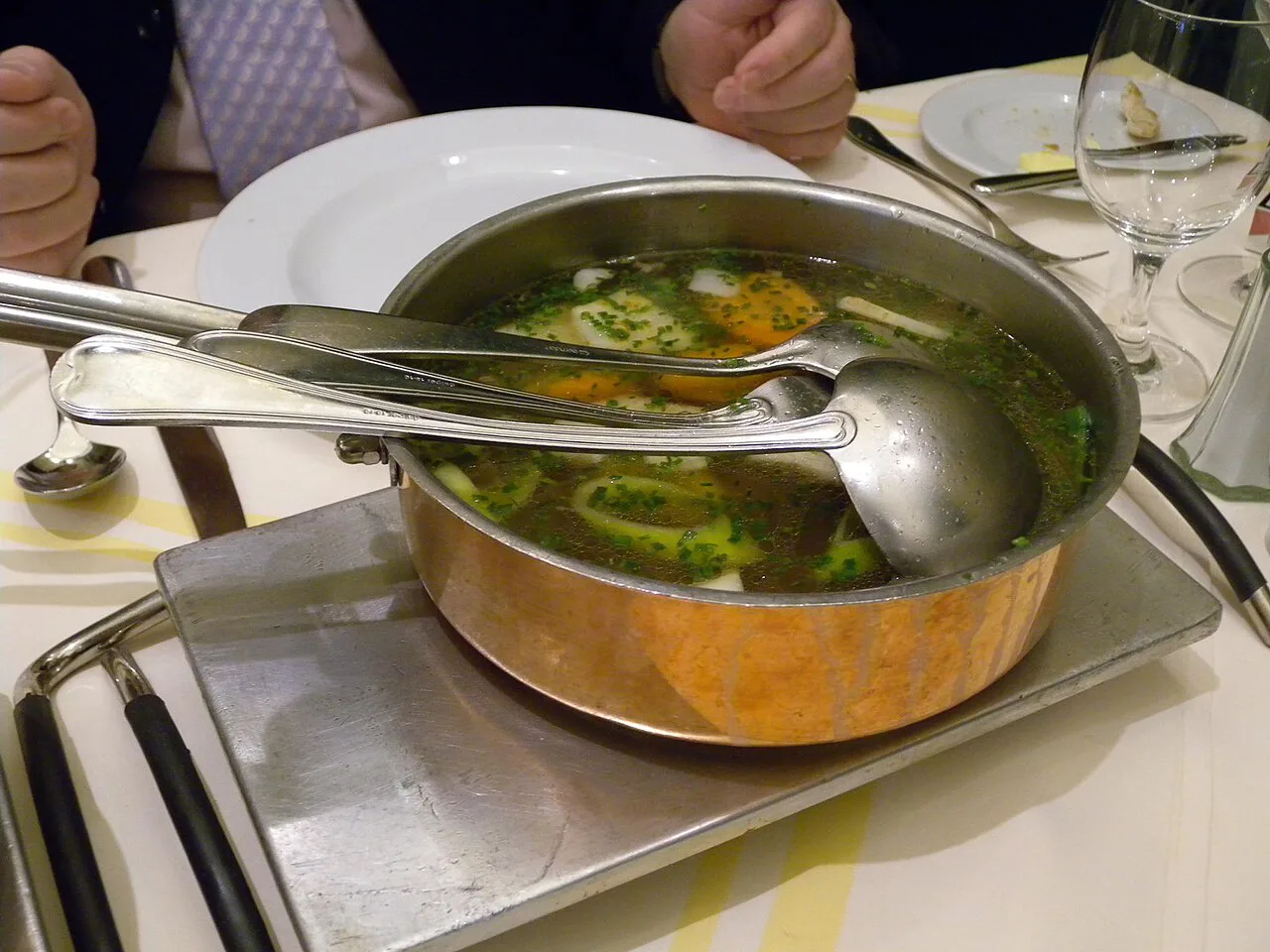
The core of the dish is a piece of beef cooked in seasoned water, and the cooking liquid doubles as the soup that starts the meal. The meat arrives sliced on a warmed plate with a little of that broth poured over it and chopped chives scattered on top, and the sauces sit in separate small dishes so you control the balance. Official Vienna city guidance describes the dish as boiled fillet of beef haunch served this way with extra-crispy fried potatoes, chive sauce and apple-horseradish sauce.
That separation matters when you order: nothing on the plate is heavily sauced for you, so the first bite is plain beef and broth and the sharp, sweet horseradish comes later. If you want a single plate that shows you the whole construction, Tafelspitz does that better than almost any other Austrian main.
Which cut of beef Tafelspitz is
Tafelspitz is not a generic stewing cut. It is the tapered end of a muscle strand from the beef rump, which is why the name describes the shape of the piece rather than a cooking method. Vienna developed its own way of dividing a carcass, known as the Viennese division, and it produces five cuts of beef against the four of the international method; this butchery tradition is what made a dish like Tafelspitz possible.
What cut of beef is Tafelspitz? It is the tapered end of a muscle strand from the beef rump, cut according to the Viennese division of the carcass rather than the international one. That shape gives the dish its name and its fine, lean texture.
Does Tafelspitz taste strong? No. The beef is simmered without browning, so the flavor is clean and mild, and the sweetness and heat come from the apple-horseradish sauce on the side.
Is Tafelspitz served as a soup? The cooking broth is served with the dish, often as a first course or poured over the sliced meat, so you get soup and a main plate from the same pot. The meat itself arrives sliced with the sauces and sides separate.
For a traveler the practical consequence is that you are eating a lean, fine-grained cut with a little fat left on, not a marbled roast. That is also why the cooking is long and gentle rather than fast, and why the result is soft rather than chewy.
What it tastes like
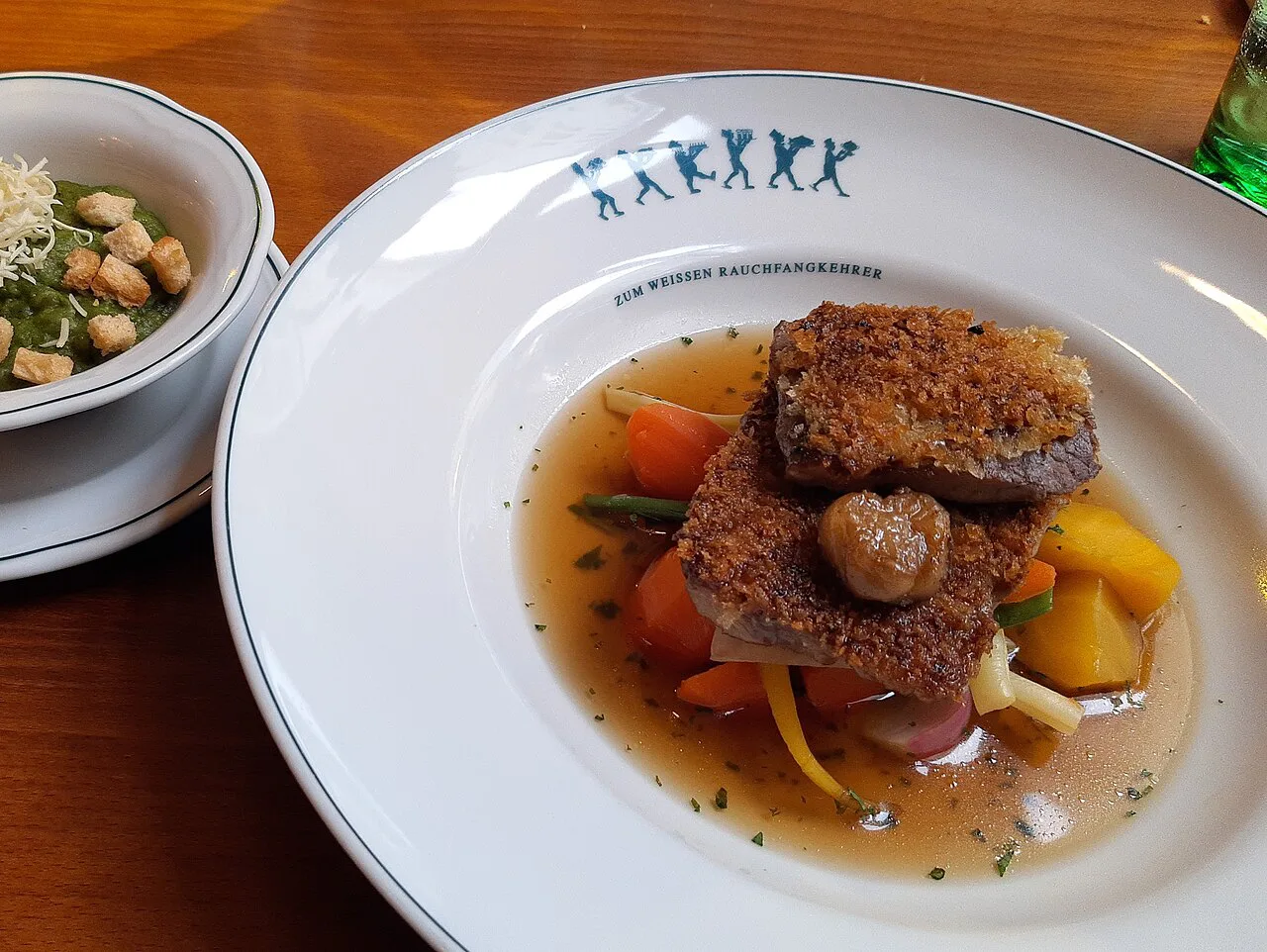
Expect soft, buttery beef with a clean beef flavor rather than a roasted or caramelized one, because the meat never browns. The broth is savory and light, the chive sauce adds a mild onion freshness, and the apple-horseradish brings a sweet-sharp edge that cuts through the fat. Some plates add a mustard-and-egg white sauce, and the combination gives you several flavors from one piece of meat.
If you are used to steak, the texture is the surprise: it is tender but not springy, and it is meant to be eaten with a spoon as much as a knife. Diners who dislike boiled meat rarely change their minds, and those who like clean, subtle flavors tend to order it again.
How it is cooked, in brief
The meat goes into cold water with bones, bay leaves, peppercorns and juniper, then simmers just below boiling point for roughly two to two and a half hours before vegetables and a browned onion go in for another hour. The fat is skimmed as it rises, the meat rests back in the strained soup, and salt goes in only at the end so the beef does not turn dry.
That is all the method a diner needs to understand what lands on the table. The reason restaurant versions taste consistent is that the timing and the gentle heat are the whole technique, and a kitchen that rushes either one produces tough beef.
The accompaniments on the plate
The standard set is apple-horseradish sauce, chive sauce, creamed spinach and potatoes, usually fried or boiled depending on the house. The horseradish is the one to taste first: it is grated into apple rather than served pure, so it is sweet before it is hot. The chive sauce is the milder partner and is often spooned over the meat along with a little broth.
Portions are generous, and the broth plus the sides make it a full meal rather than a light starter. If you are ordering for two, one Tafelspitz plus a soup or a plate of Knödel is usually enough; Austrian dumplings make a natural side order if you want something to soak up the broth.
Where Tafelspitz sits in Austrian cooking
Beef has a long history in Vienna because cattle could be driven to the city from breeding areas such as the Marchfeld and Bukovina, while pigs and sheep could not be moved as easily over long distances. In the centuries before rail, that made beef the everyday meat of all classes, and boiled beef the practical way to use the lesser cuts. The fattier pieces actually commanded higher prices than Tafelspitz until the 1920s, which is the reverse of today's ranking.
Emperor Franz Joseph I was fond of the dish and was often served it, and the story that it was invented at the Hotel Sacher is a legend rather than a documented origin. The dish belongs to the wider Austrian repertoire of substantial meat mains, which runs from Wiener Schnitzel to Austrian goulash, and it is the plainest of them.
It also sits comfortably beside the soup course, since the cooking broth is served as soup in its own right; the Austrian soup tradition is why a plate of beef in broth reads as two courses in one.
Where to eat it
Boiled beef appears on the menus of traditional Vienna gasthäuser and on the beef-focused houses that build their identity around it, and it is a lunch dish as often as a dinner one. The Viennese beef specialist is Gasthaus Plachutta on Wollzeile, where boiled beef is the center of the menu and a reservation is advised.
Prices vary by house and by cut, so check the menu board or the restaurant's own listing rather than budgeting from secondhand figures. Outside Vienna, the dish shows up less often, and places that serve it tend to flag it as a house classic rather than a daily item.
Ordering and eating it
Order it as a main and expect the broth to arrive first or alongside, with the sauces in small bowls so you can add them gradually. Start with a little horseradish, then try the chive sauce, and use the potatoes to mop up the broth at the end. If the portion looks large, it is: this is a plate built on the assumption that you are hungry.
Tafelspitz is a sit-down, knife-and-fork meal rather than street food, so it fits a long lunch better than a quick stop between sights. Pair it with a lighter evening meal, since the beef, sides and broth together are substantial.
Is Tafelspitz the Austrian dish to order first?
Order Tafelspitz if you want to understand how Austrian cooking treats beef: gently, plainly, and with the broth treated as part of the dish rather than a byproduct. It is the least showy of the country's famous plates and the one that most depends on a kitchen's patience.
If you prefer crisp, browned, salted flavors, start with Wiener Schnitzel or a Käsekrainer instead and come back to boiled beef when you want something quieter. Either way, book the beef house rather than walking in at peak lunch, and confirm the current menu and prices with the restaurant before you go.
Explore more Austria guides
Frequently Asked Questions
What cut of beef is Tafelspitz?
It is the tapered end of a muscle strand from the beef rump, cut according to the Viennese division of the carcass rather than the international one. That shape gives the dish its name and its fine, lean texture.
Does Tafelspitz taste strong?
No. The beef is simmered without browning, so the flavor is clean and mild, and the sweetness and heat come from the apple-horseradish sauce on the side. The chive sauce adds a gentler onion note.
Is Tafelspitz served as a soup?
The cooking broth is served with the dish, often as a first course or poured over the sliced meat, so you get soup and a main plate from the same pot. The meat itself arrives sliced with the sauces and sides separate.
Sources
Notes for your next Austrian town break
Optional updates when we add or revise town guides.
You might also like

Continue reading
More guides you'll find useful