Brettljause: Austria's Cold Board of Speck, Cheese and Bread
A Brettljause is Austria's cold board of Speck, sausage, cheese, spreads and bread, served at huts and taverns. Here is what to expect and how to order.
On this page
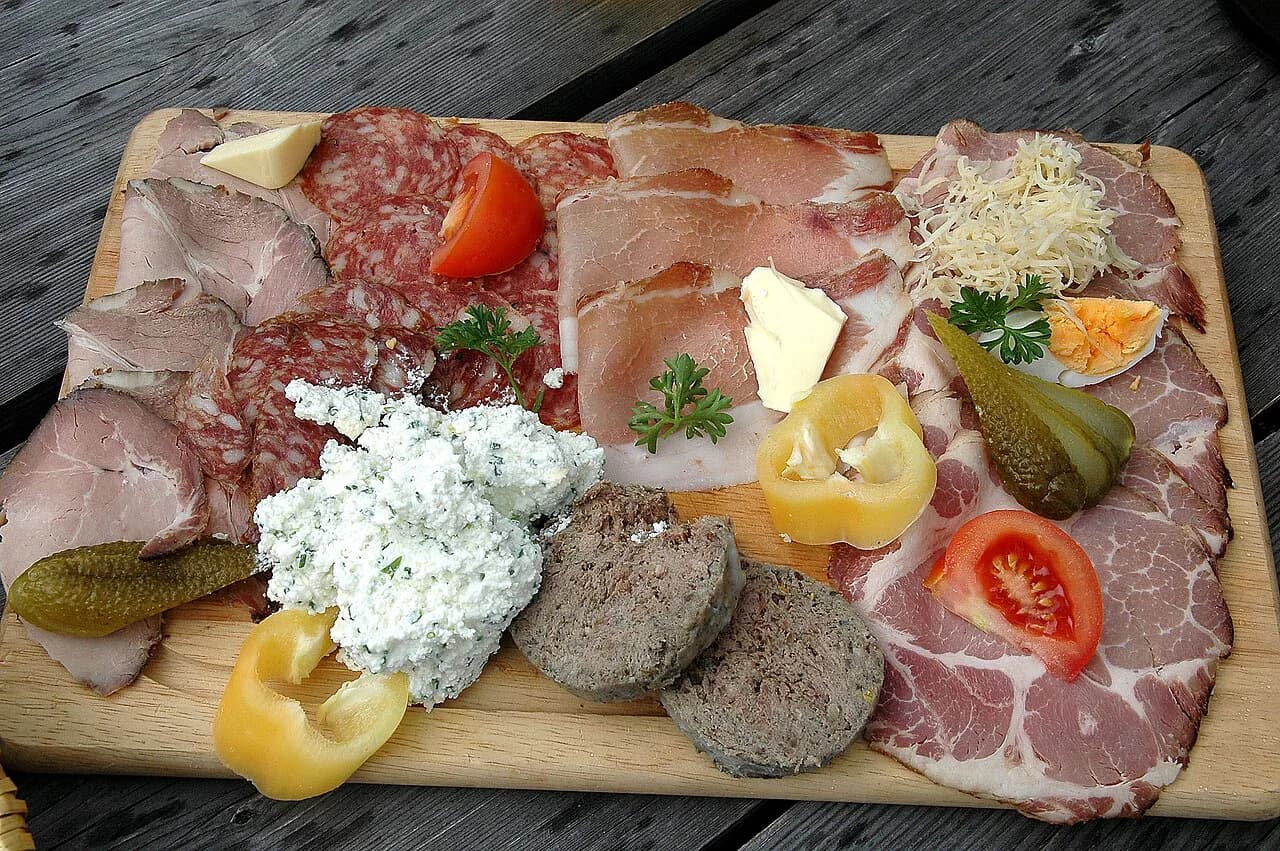
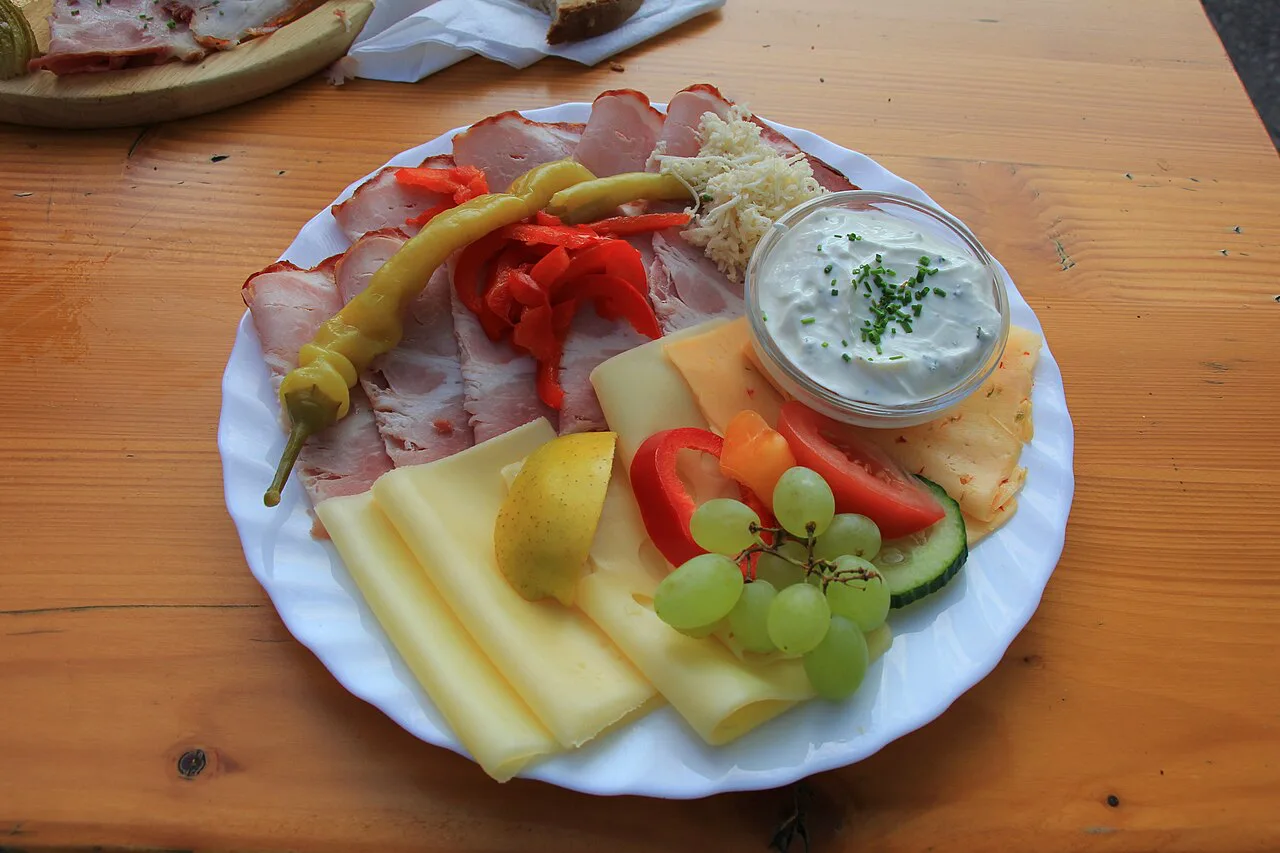
A Brettljause is a cold wooden board of sliced Speck, sausage, cheese, spreads, vegetables and bread, served at Alpine huts and rural taverns across Austria. It is a build-your-own cold meal rather than a cooked dish, designed to be shared and eaten with a drink. This guide breaks down what lands on the board, what the German menu terms mean, where travelers order one, and how the Styrian and mountain-hut versions differ.
Think of it as the Austrian counterpart to a cold cut platter, with cured pork, firm mountain cheese and bread sturdy enough to hold a spread. It sits within the wider range of Austrian food, but it has its own logic and vocabulary worth knowing before you sit down.
What a Brettljause Is and What the Name Means
Brettl means a small wooden board, and Jause is the Austrian word for a cold snack or light meal between main meals. Put together, a Brettljause is the snack served on a board: an arrangement of cold items that the table picks at rather than a plated portion for one person. The board itself is part of the presentation, and huts and taverns treat it as a shareable centerpiece.
The word signals a style of eating as much as a set list of ingredients. A Jause can be as simple as bread with a spread, while a Brettljause is the fuller, arranged version with several components. Steirische Spezialitäten groups a light Brotjause and a full Brettljause under the same Jausen recipe heading, which shows how flexible the term is.
What Usually Comes on the Board
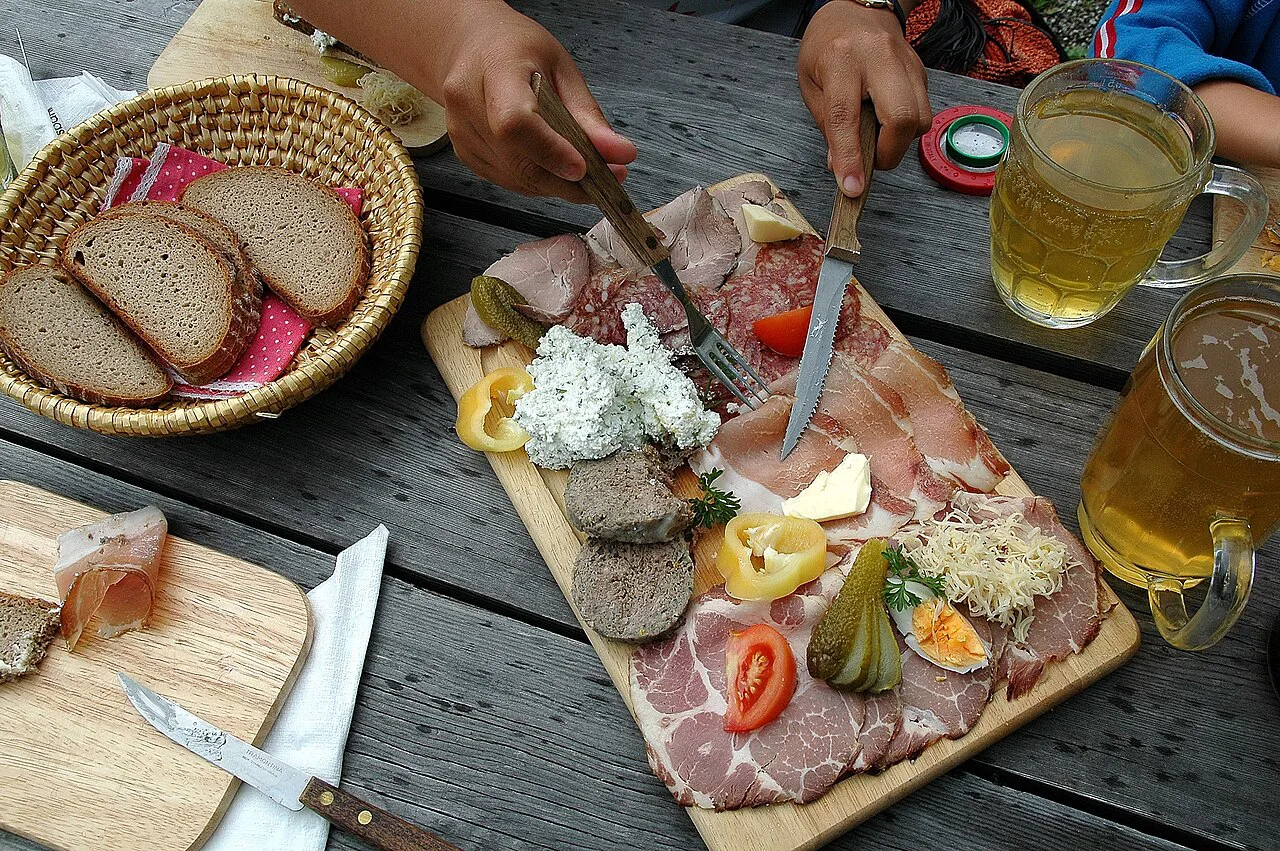
The core is cured and sliced pork: Speck (air-dried cured ham or bacon), sausages and cold cuts, alongside a firm cheese such as Bergkäse. Around that come spreads, raw or pickled vegetables, hard-boiled eggs, and dense bread or rolls. The board is assembled cold, so nothing depends on kitchen timing, which is why it is the default order at a busy hut.
What is a Brettljause in English? It is a cold wooden board of sliced cured meats, cheese, spreads, vegetables and bread, the Austrian equivalent of a cold-cut platter served as a light meal or snack.
Is a Brettljause always served cold? Yes, the board is assembled cold and set out on the table for sharing; some components such as Griebenschmalz and hard-boiled eggs are prepared but served cold. Warm dishes are ordered separately.
Can I get a vegetarian Brettljause? Huts increasingly list a vegetarian version, sometimes called a Veggiejausn, built on cheese, eggs, vegetables, hummus or carrot spread. Ask which spreads contain Schmalz or Speck before ordering if you want no meat at all.
Styrian versions lean on pork products and spreads, and Steirische Spezialitäten lists components such as Grammelaufstrich (a spread of pork cracklings), Grammelschmalz (rendered pork fat with cracklings) and a Kürbiskernaufstrich made from pumpkin seeds. Those last items reflect Styria's pumpkin-seed oil tradition, so the board carries a regional signature even in its spreads.
A Tyrolean hut version looks similar but with mountain dairy in the foreground. The Alpenverein recipe from the Kasseler Hütte in the Zillertal names Zillertaler Bergkäse, egg and sour vegetables alongside the bread, with Schinken, Speck and Griebenschmalz on the meat side. That is a useful template: cheese and bread at the center, cured pork around the edge.
If you want something warm alongside the board, Austrian soups are served at the same huts and taverns, and a light broth is a common opener. A Frittatensuppe, a clear beef broth with sliced pancake, is the standard choice when the board alone feels like a lot of cold food.
Brettljause vs. Jause vs. Brotzeit: How the Words Differ
Jause is the umbrella term in Austria for a cold snack, whether that is bread with a spread at mid-afternoon or a full board at a hut. Brettljause narrows it to the arranged board. Aufstrich means spread, so a menu listing Liptauer, Grammelaufstrich or a pumpkin-seed spread is telling you which cold spreads come with the bread.
Brotzeit is the Bavarian and German term for a similar cold snack, so travelers moving between Bavaria and Austria will see the same idea under a different name. In Austria, ordering a Jause is normal at any time of day, not only as a between-meals snack, which is why huts serve it at lunch.
The vocabulary does not overlap with the boiled-beef main course: a Tafelspitz is a hot lunch dish, not a board, so read the menu section before you order. Knowing the difference keeps you from expecting a cold platter and getting a soup-and-meat meal instead.
Where Travelers Order One: Alpine Huts and Rural Taverns
The most reliable setting is an Alpine hut, where a Brettljause is standard fare because it requires no cooking and pairs with the setting. The Alpenverein's Kasseler Hütte in the Stillupptal in the Zillertal serves Brettljausen alongside other Tyrolean dishes, and it is the kind of staffed hut where the board is a normal order. Hut menus rotate, so read the posted menu on arrival rather than expecting a fixed list.
Rural taverns in Styria and elsewhere serve the same board, often with a regional accent, and a Buschenschank (a farm tavern serving its own cold food) is a classic setting for a Styrian Jause. Do not assume every kitchen serves one at every hour; the board is easy to assemble, but taverns may serve it only during their set cold-food hours.
In towns, look for a Gaststätte or a hut-style restaurant with a Jausen section on the menu. If the printed menu does not list a Brettljause, ask for a Jause or a kalte Platte, which is the plated cold version.
Vegetarian and Meat-Light Versions of the Board
Vegetarian boards are now a normal menu item rather than an afterthought, and huts sometimes list them as a Veggiejausn. The Alpenverein's Kasseler Hütte version pairs Zillertaler Bergkäse, egg and sour vegetables with hummus and a spiced Karottenaufstrich on hut bread, so the board still reads as a full Jause rather than a side salad.
The modern vegetarian style often uses hummus as the protein-rich anchor. Cooking Catrin's spring Brettljause pairs two hummus variants, one with paprika and one with beetroot, with eggs, radishes, carrots, tomatoes, cheese and a horseradish cream alongside a crusty Schwarzbrot or Vinschgerl. That is a useful picture of a meat-free version: cold vegetables, eggs, cheese and spreads, bread on the side.
One caveat for meat-free eaters: Speck and Schmalz flavor many spreads, so ask which components are pork-free before assuming the board is fully vegetarian. A cheese-and-hummus Jause is the safest order when you want no cured meat at all.
How It Is Eaten: Cold, Shared and Sliced Yourself
A Brettljause arrives cold and arranged, with the cheese and Speck sliced and the spreads in small dishes. Diners help themselves, cutting cheese and meat into bites and building open-faced breads. That makes it a shared table order rather than a single portion, which is why groups often order one board and a few extras rather than one plate each.
The drinks pairing is part of the meal. In Styria, a Schilcher rosé is presented as one match for a Jause, with the source describing the wine as coming from the Blauer Wildbacher grape in the Weststeiermark. Treat that as one regional pairing rather than a rule; at a hut, the usual order is beer, a light wine or a soft drink.
For travelers used to ordering a hot main at lunch, the board can feel like a lot of cold food. In winter and after a cold walk, a soup or a hot dish alongside it is the usual balance.
How It Is Made at Home: A Short Note on Spreads
The home version is mostly assembly: slice Speck and cheese, cook eggs, cut vegetables, and set out bread. The one component that takes real work is the spread. Cooking Catrin's recipe builds a paprika hummus from chickpeas, roasted peppers, garlic, olive oil, cumin and lemon juice, and a separate beetroot hummus from chickpeas, precooked beetroot, tahini, lemon and olive oil, both blitzed smooth.
The Alpenverein's hut version of the same idea soaks dried chickpeas overnight, cooks them, then blends them with olive oil, lemon juice, vinegar, garlic and Garam Masala for a hummus, and roasts carrots with onion and spices for a separate carrot spread. Huts make these in batches and serve them as a normal menu item, which is a reminder that the vegetarian board is not an improvised substitution.
Regional Variations: Styria and the Mountain Huts of the Zillertal
Styria's version is defined by pumpkin-seed products and pork spreads. Steirische Spezialitäten lists a Kürbiskernaufstrich, a Grammelaufstrich and Grammelschmalz among its Jause recipes, so the board leans toward more spreads and more pork fat than a Tyrolean cheese board.
In the Zillertal and similar high valleys, the board is built around Bergkäse and hut bread, with Speck, sausage and Schmalz as the meat side and hummus or carrots for the vegetarian option. The setting matters: a staffed hut serves this food for lunch to travelers coming off the mountain, so the kitchen favors a board it can plate without cooking to order. That is a practical fact to plan around when you want a quick lunch.
What It Costs and How to Order Without German
Hut and tavern menus post their own prices, so read the Jausen section on the menu or ask before ordering. Prices vary by hut, region and what the board includes. If you are splitting one board, ask whether the price is per board or per person.
Ordering without German is straightforward once you know the words. Say Brettljause or Jause and point to the menu; add mit Käse for a cheese-forward board or ohne Speck for no bacon. If you want a warm dish instead, Austrian dishes such as Käsekrainer, an Austrian goulash or a plate of Knödel are the usual alternatives at the same taverns.
If you plan a route through the mountains, build lunch around the huts rather than around restaurant opening hours, and read the specific menu when you arrive. A coffee stop fits the same pattern, and our Austrian breakfast guide is a useful reference for the lighter end of the day before a hut lunch.
Which Board to Order, and Where
Order a Brettljause at an Alpine hut if you want the classic version with Bergkäse, Speck and bread; order a Styrian Jause if you want pumpkin-seed spread and porky components. If you eat no meat, look for a Veggiejausn or ask for a cheese-and-hummus board.
The words are the key: Jause for the snack, Brettljause for the board, Aufstrich for the spreads. Read the Jausen section and order one shared board plus a soup if you want a hot element, and check the posted price before you commit.
Explore more Austria guides
Frequently Asked Questions
What is a Brettljause in English?
It is a cold wooden board of sliced cured meats, cheese, spreads, vegetables and bread, the Austrian equivalent of a cold-cut platter served as a light meal or snack.
Is a Brettljause always served cold?
Yes, the board is assembled cold and set out on the table for sharing; some components such as Griebenschmalz and hard-boiled eggs are prepared but served cold. Warm dishes are ordered separately.
Can I get a vegetarian Brettljause?
Huts increasingly list a vegetarian version, sometimes called a Veggiejausn, built on cheese, eggs, vegetables, hummus or carrot spread. Ask which spreads contain Schmalz or Speck before ordering if you want no meat at all.
Where do travelers typically order one?
Alpine huts are the classic setting, and rural taverns in Styria serve their own versions. In towns, look for a Jausen section on the menu of a hut-style restaurant.
Sources
Notes for your next Austrian town break
Optional updates when we add or revise town guides.
You might also like
Continue reading
More guides you'll find useful