Apfelstrudel: Austria's Stretched-Dough Apple Pastry
Apfelstrudel is Austria's paper-thin apple pastry, served warm with vanilla sauce or whipped cream. Here's what makes it authentic and how to order it.
On this page
Apfelstrudel is Austrian by origin: thinly sliced apples, raisins and cinnamon rolled in dough stretched until it is paper-thin, baked until flaky and served warm. It is the sweet strudel you will meet on menus from Vienna outward, and it is also eaten in Germany and Italy among other places. This guide covers what defines the pastry, how it is served, how it is made in brief, and how to order it the Austrian way.
What Apfelstrudel is: apples, raisins and cinnamon in stretched dough
The filling is cooking apples, peeled and thinly sliced, tossed with sugar, ground cinnamon, lemon zest and juice, and raisins that have been soaked and drained. A layer of toasted breadcrumbs goes down first, then the apples are spread along one long edge of the dough and the whole thing is rolled up. The result is a long, rough cylinder rather than a neat cake, and it is served in slices.
Strudel as a category is older than the apple version and wider than dessert: the pastry can be savory, with fillings such as spinach, or sweet with berries and other fruit. Apfelstrudel sits at the sweet end and, like Wiener schnitzel, carries the weight of a national dish, which sets expectations for how seriously Austrians treat the texture.
The earliest known written strudel recipe dates to 1697 and is held in the Wienbibliothek im Rathaus in Vienna, the city library in the Rathaus. The pastry spread through the 18th century as Austrian cooking absorbed influences from across the Habsburg Empire. Treat that date as the first documented recipe, not as a description of the modern Apfelstrudel.
The two decisions that define the pastry: stretched dough and buttered breadcrumbs
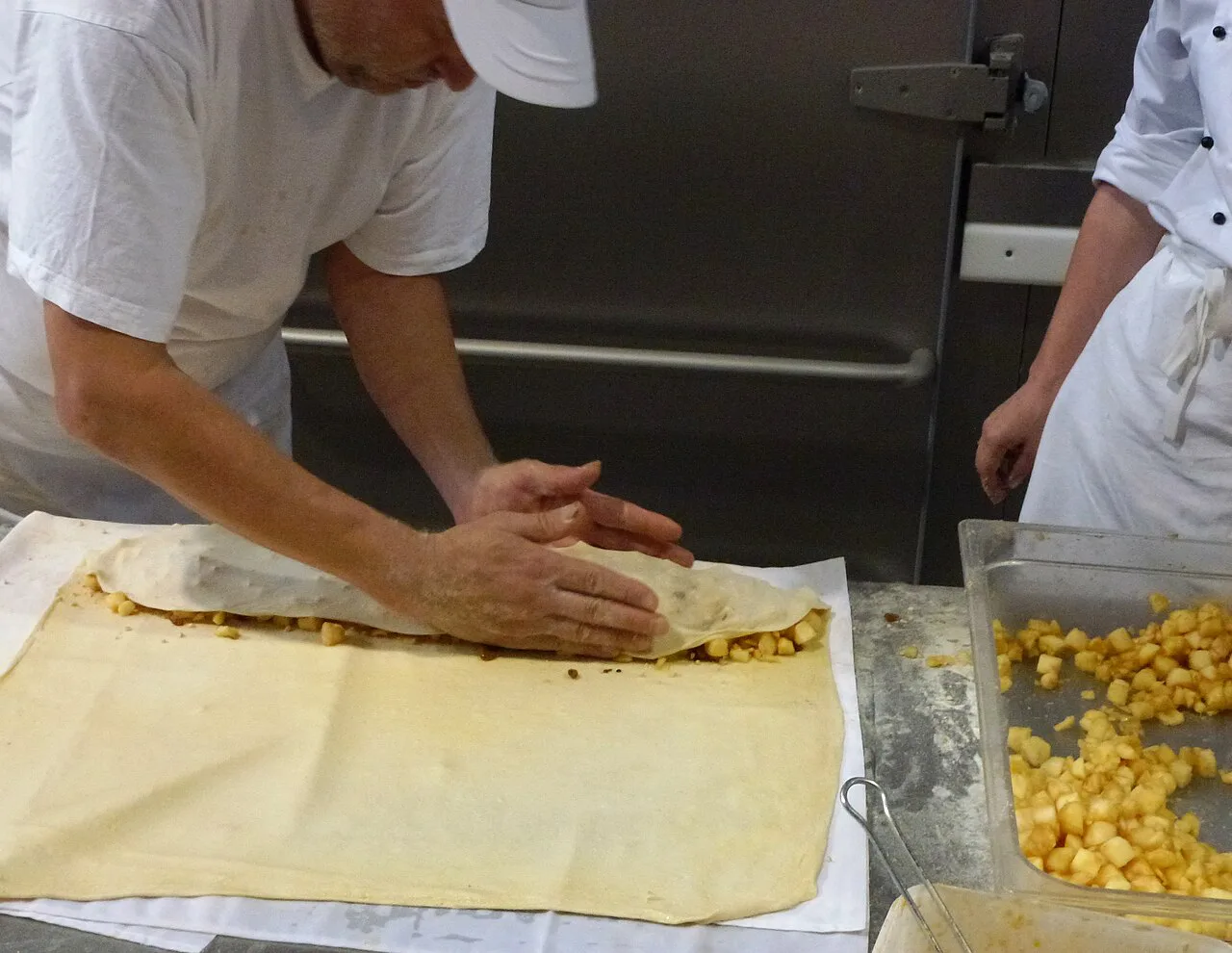
The first decision is the dough. A strudel dough of strong flour, a little oil, vinegar, salt and lukewarm water is kneaded until smooth and elastic, then rested so the gluten relaxes enough to stretch without tearing. The baker rolls it out, lifts it onto the backs of their hands and stretches it outward over a cloth-covered table until it is thin enough to read through and roughly a meter across, trimming the thick edges.
What country is famous for apple strudel? Austria, where Apfelstrudel is treated as a national dish alongside Wiener schnitzel. The pastry is Austrian by origin, and versions of it are also popular in Germany, Italy, Romania and Poland, so you will find it well beyond Austria's borders.
What are the best apples to make apple strudel? Cooking apples, which hold their shape and bring enough acidity to balance the sugar and cinnamon. They are peeled, cored and sliced thin so they soften in the time the pastry takes to bake, and raisins and lemon zest go in with them.
What is apple strudel served with? Warm, dusted with powdered sugar, and usually with vanilla sauce or whipped cream; vanilla ice cream or vanilla custard also turn up. In an Austrian café it typically comes with a coffee in the afternoon.
The second decision is the breadcrumb layer. Dried breadcrumbs are toasted in butter and scattered over the dough before the apples go on, and that layer soaks up the juice the apples give off as they bake. Without it, the underside steams and turns soft, which is why a strudel that looks right can still eat soggy.
Filo pastry is the shortcut, and it behaves differently: buttered sheets give a flakier, less tender result than a dough stretched by hand. A hand-stretched strudel tends to have a slightly irregular, delicate surface rather than uniform crisp layers. Neither is a disaster, but they are not the same pastry.
To finish, the roll is brushed with melted butter, baked until golden and crisp, brushed again partway through, cooled a little and dusted with powdered sugar. At the table, what matters is the thinness of the dough and the crumb layer underneath, not the baking schedule.
How Apfelstrudel is served: warm, sugared, with vanilla sauce or whipped cream
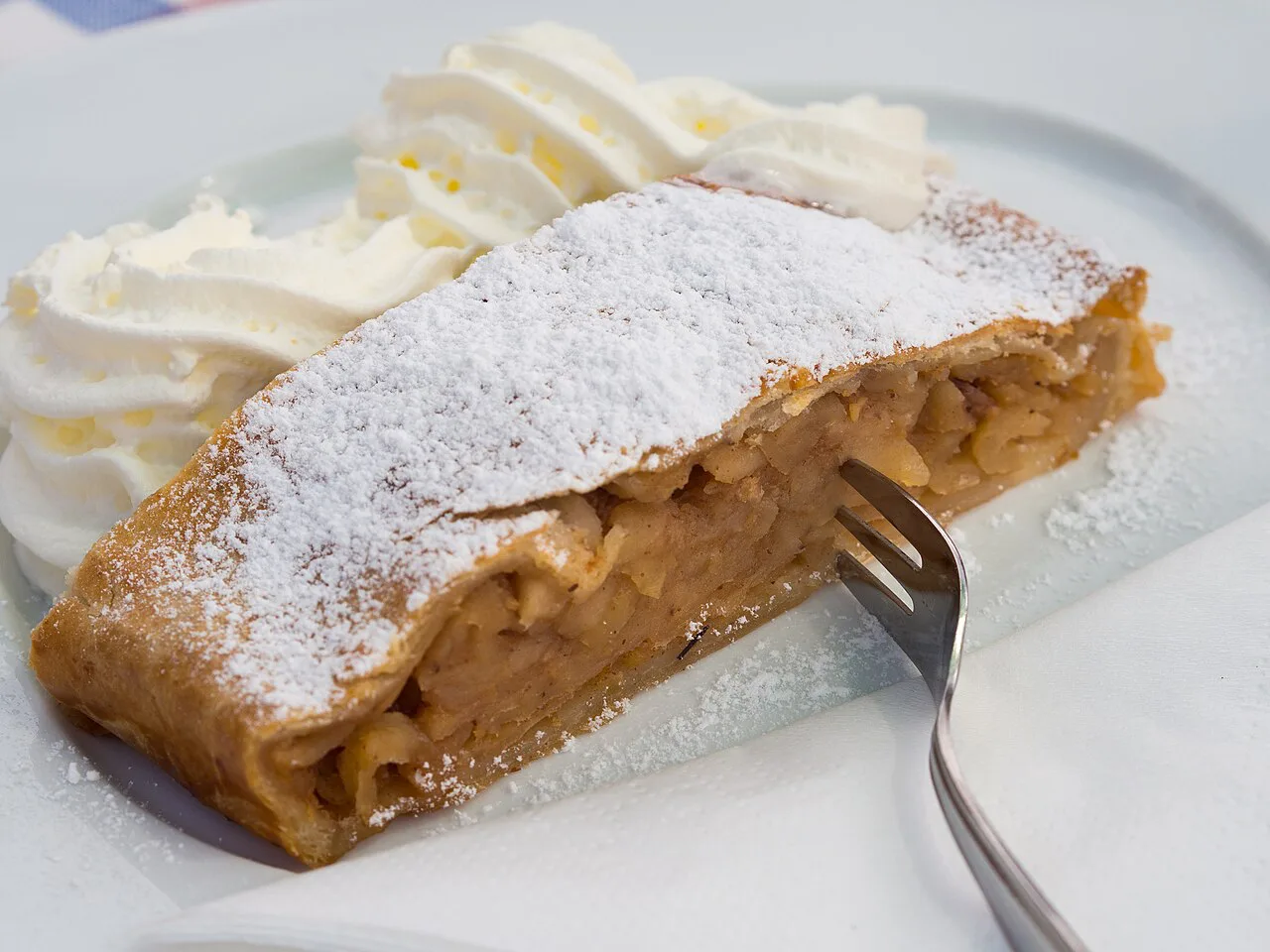
Apfelstrudel comes to the table warm, dusted with powdered sugar, in a slice cut from a long roll. The classic accompaniments are vanilla sauce or whipped cream, and vanilla ice cream or vanilla custard also appear. It is a substantial slice, so one between two is a reasonable opening move.
Choose the sauce deliberately. Vanilla sauce soaks into the warm pastry and plays up the cinnamon and apple; whipped cream sits on top and keeps the crust crisper. Take the cream to taste the dough clearly, the sauce for a softer dessert, and ask for both if you cannot decide.
Prices vary by venue and city, so read the menu at the counter rather than budgeting from hearsay. In a café, Apfelstrudel usually belongs to the afternoon coffee ritual rather than the lunch menu. See the wider picture in this guide to Austrian desserts, including Franz Sacher's cake and the pancakes called Wiener Schlosserbuben.
Other strudels on the same menu
Austrian menus often list several strudels side by side, and they are worth reading as a set. The apple version is the standard, but the same dough carries other sweet fillings, and savory versions with spinach or cheese appear as a light main course or a snack. If you only have room for one dessert, Apfelstrudel is the benchmark.
Beyond strudel, Austria's dessert list runs to cakes and pancakes that reward the same curiosity. Kaiserschmarrn, the torn pancake named for Emperor Franz Joseph I, is served in the same cafés and belongs to the same Austro-Hungarian story as the strudel. Put Apfelstrudel and Kaiserschmarrn at the top of a short list and let the rest follow.
How to order and eat it the Austrian way
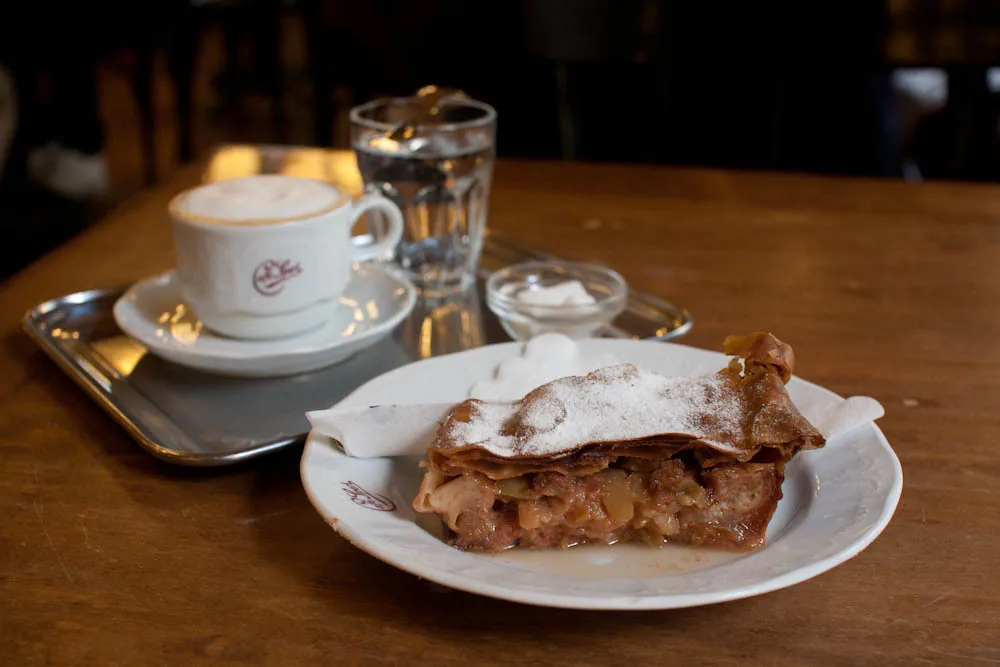
Order Apfelstrudel in a café in the afternoon, with a coffee alongside, and let the slice come warm rather than expecting it chilled from a display case. In a restaurant it closes the meal, and asking whether it is served warm is a fair question because a slice held too long loses the contrast between crisp pastry and soft filling. Say whether you want vanilla sauce or whipped cream when you order, since it often comes as a choice.
Eat it with a fork and knife rather than picking it up, and moisten each bite with the sauce or cream rather than pouring it over the whole slice at once. The pastry is fragile, so a gentle cut keeps the layers intact. If you are sharing, ask for an extra plate; a single slice is long and awkward to divide cleanly.
Austrian coffee house culture is the natural setting for this, and a mid-afternoon order of strudel and a coffee is the local rhythm rather than a tourist invention. Knowing how table service, water refills and the bill usually work makes the stop easier to enjoy.
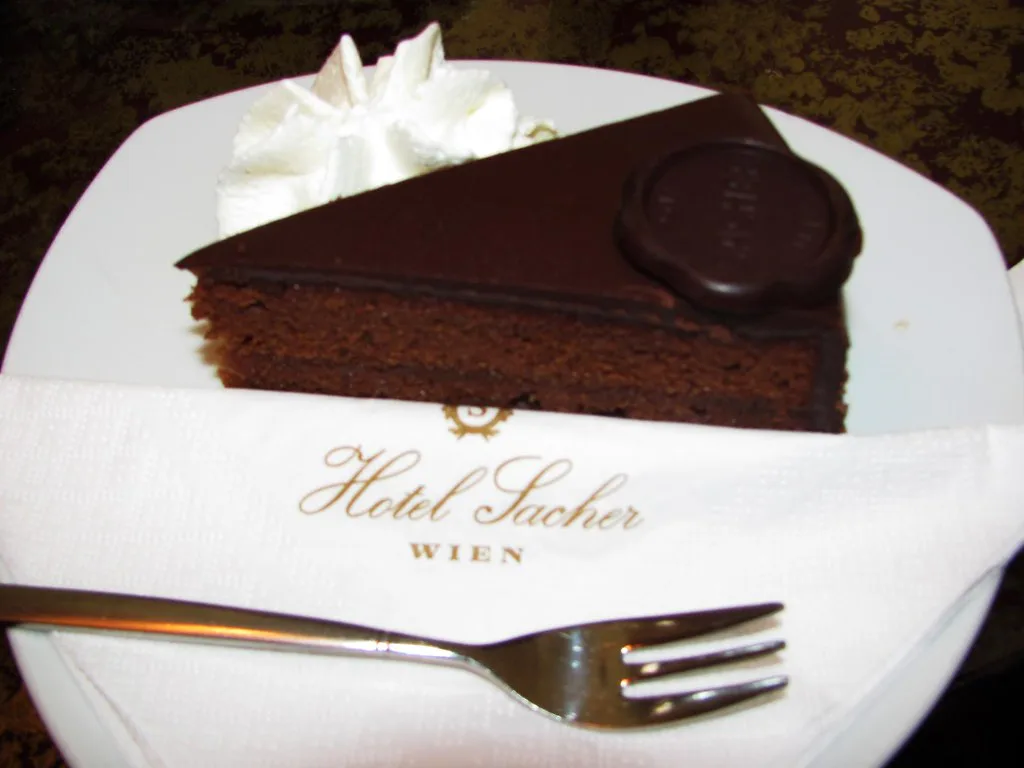
If Sachertorte sits on the same counter, note that it is a different exercise entirely: a dense chocolate cake with a layer of apricot jam under a chocolate glaze, built to be firm rather than flaky. It is worth trying on its own merits, not as a substitute for strudel.
Which strudel to order first
Start with the plain Apfelstrudel: stretched dough, toasted breadcrumbs, warm apple and cinnamon, and your choice of vanilla sauce or whipped cream. That is the version against which every other strudel on the menu is measured, and it is the one most likely to show you what the fuss is about.
From there, branch out to the savory spinach strudel as a light lunch or to Kaiserschmarrn if you want a second Austrian classic in the same sitting. Menus and serving times vary by café and season, so confirm what is available when you sit down rather than planning around a specific venue.
Explore more Austria guides
Frequently Asked Questions
What country is famous for apple strudel?
Austria, where Apfelstrudel is treated as a national dish alongside Wiener schnitzel. The pastry is Austrian by origin, and versions of it are also popular in Germany, Italy, Romania and Poland, so you will find it well beyond Austria's borders.
What are the best apples to make apple strudel?
Cooking apples, which hold their shape and bring enough acidity to balance the sugar and cinnamon. They are peeled, cored and sliced thin so they soften in the time the pastry takes to bake, and raisins and lemon zest go in with them.
What is apple strudel served with?
Warm, dusted with powdered sugar, and usually with vanilla sauce or whipped cream; vanilla ice cream or vanilla custard also turn up. In an Austrian café it typically comes with a coffee in the afternoon.
Is filo pastry a good shortcut for strudel?
It works, but it gives a flakier and less tender result than dough stretched by hand until thin. The toasted breadcrumb layer still matters either way, because it absorbs the apple juices and keeps the underside from going soggy.
Sources
Notes for your next Austrian town break
Optional updates when we add or revise town guides.
You might also like

Continue reading
More guides you'll find useful