Krapfen: Austria's Jam-Filled Doughnut, Explained for Travelers
Krapfen are Austria's jam-filled doughnuts, sold in bakeries and eaten at Fasching. Learn what's inside, why one may hide mustard, and how to order one.
On this page
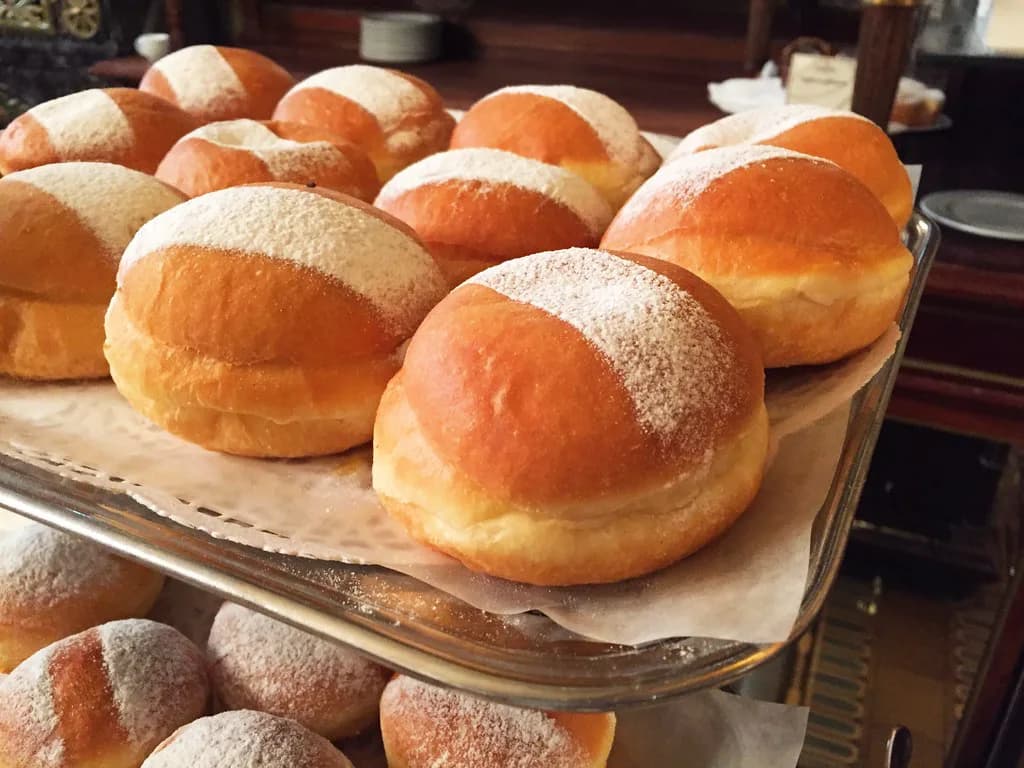
A Krapfen is Austria's jam-filled doughnut: a round of soft yeast dough, fried until golden, filled with fruit jam, and dusted with powdered sugar. Austrians eat them most heavily during Fasching, the Carnival season that runs up to Lent, when bakeries turn them out by the tray. This guide covers what is inside, the names they go by, the mustard-filled Carnival prank, and how to order one as a traveler.
You do not need a recipe to enjoy a Krapfen, so this page stays at the bakery counter. It treats the pastry as something to order with coffee or eat on a bench rather than something to fry at home, and it puts Krapfen alongside the wider world of Austrian desserts.
What a Krapfen actually is
Think of a Krapfen as a filled doughnut without the hole. The dough is a rich yeast dough made with egg yolks and butter, which gives it a tender, airy crumb rather than the dense bite of a plain doughnut. After frying, a pastry tip is pushed into the side and jam is piped in, and the finish is a heavy sift of powdered sugar, not a glaze.
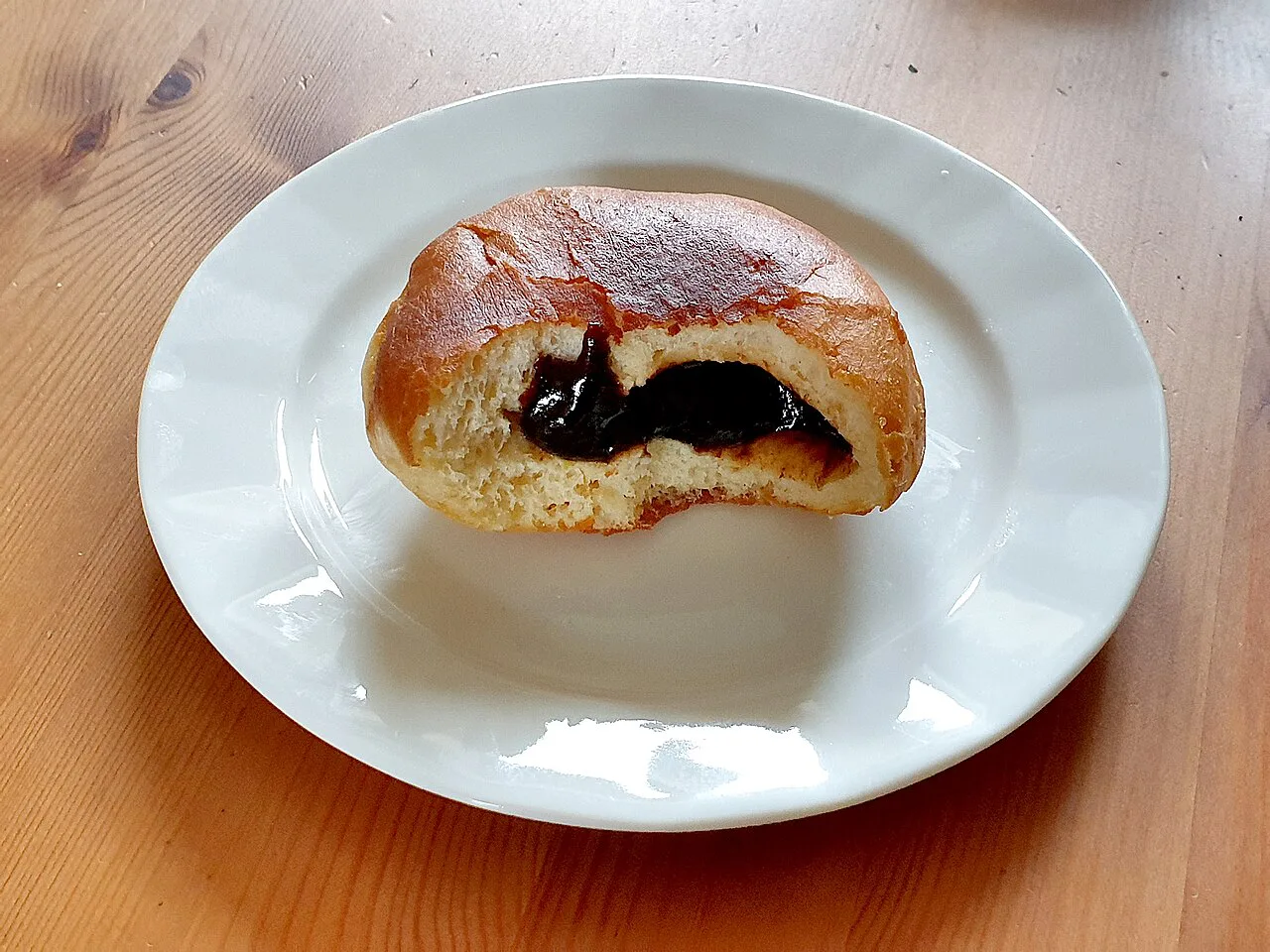
Faschingskrapfen and the other names on the menu
In Austria the Carnival version is called a Faschingskrapfen, and the same pastry is sometimes sold as a Glaskrapfen. The name shifts as you cross into Germany: Krapfen is the usual word in Franconia and southern Germany, while Berlin and eastern Germany say Berliner Pfannkuchen, Hessen says Kreppel or Kräppel, and Baden-Württemberg and Saarland use Fastnachtsküchle.
Is a Krapfen the same as a Berliner? They belong to the same family of jam-filled, sugar-dusted yeast pastries, but the names are regional. In Austria the Carnival version is a Faschingskrapfen, while in Germany the pastry is a Krapfen in Franconia and southern Germany, a Berliner Pfannkuchen in Berlin and eastern Germany, and a Kreppel or Kräppel in Hessen.
When do Austrians eat Krapfen? Krapfen are bakery fare that can be found year-round, but they peak during Fasching, the Carnival season leading up to Lent. That is when bakeries sell them in quantity and when the Carnival names and the mustard-filled prank turn up.
What is the mustard-filled Krapfen? It is a Carnival prank rather than a regular flavor. One pastry in a batch or box is filled with mustard instead of jam, so the person who bites into it gets a sharp surprise while the group laughs.
For a traveler this means the pastry you want may not carry the word Krapfen at all. If you see Berliner, Kreppel, or a jam-filled round on a German bakery shelf, it is the same family of pastry under a regional label. In Austria, look for Faschingskrapfen at Carnival time and plain Krapfen the rest of the year.
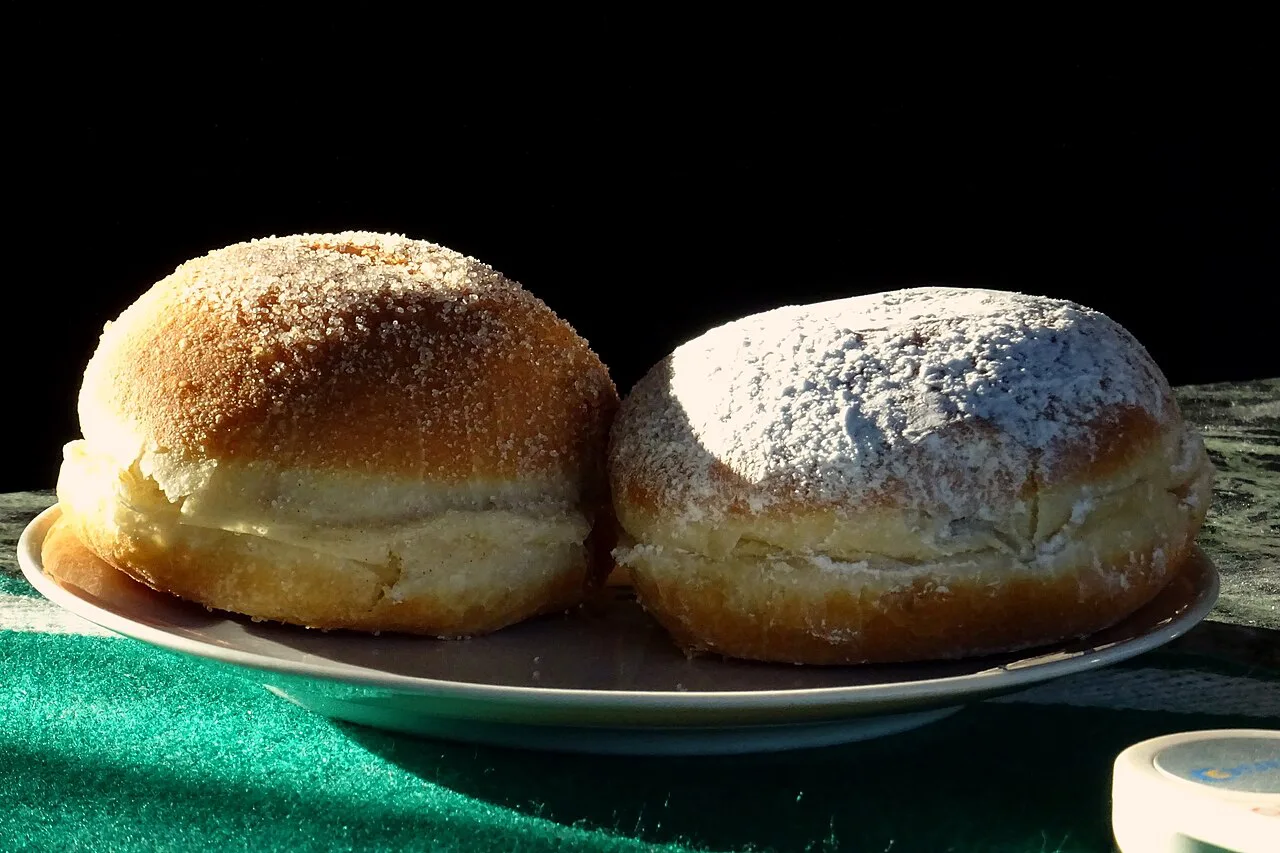
What's inside: apricot, rose hip and the mustard prank
Apricot jam is a classic filling, rose hip jam is traditional in Carnival batches, and modern bakers also pipe in chocolate, vanilla cream, or eggnog. The jam is injected after frying, so the dough stays crisp on the outside and soft around the filling rather than soaking through.
The Carnival twist worth knowing is the mustard-filled Krapfen. A Carnival prank fills one pastry in the box with mustard so the unlucky person who bites into it gets a sharp surprise while everyone else laughs; it is a game, not a flavor you order on purpose.
If you are buying a box during Fasching, this is the reason to bite with a little care rather than assume every Krapfen is sweet. Outside the Carnival season, the mustard trick is not something you need to worry about, and the fillings are sweet.
Where travelers buy Krapfen in Austria
Krapfen are everyday bakery fare, sold at the pastry counter of ordinary Austrian bakeries and eaten as a snack or with coffee. Look for them in the display case next to other pastries, dusted white with powdered sugar. They pair naturally with the Austrian coffee house tradition: order one with a melange and you have a standard local pause.
Buy one first and see how it suits you before committing to a box for a group. At Fasching, bakeries sell them in quantity and a box for sharing is common; the rest of the year, a single Krapfen from the counter is the normal purchase. Prices are set by each shop rather than by any national standard, so check the counter.
How a Krapfen is made, briefly
The process is short to describe and long to do: mix a yeast dough, let it rise, shape rounds, let them rise again, then fry them in deep oil until browned on both sides. The pastry is drained and cooled, then filled through the side with a piping bag and finished with powdered sugar.
That second rise and the frying oil are what separate a good Krapfen from a heavy one. A well-made Krapfen feels light for its size and the sugar dusts your fingers rather than sticking in a wet layer, which is a fair way to judge a bakery you have never tried before.
How to eat one: size, sharing and what to drink
Eat a Krapfen with your hands, ideally soon after buying it while the sugar is still dry and the filling has not seeped into the dough. Coffee is the standard pairing in the morning or afternoon, and a small Krapfen is a reasonable snack while a large one can stand in for a light meal. If you are sharing, cut it so everyone gets filling on the first bite rather than leaving the jam in the last piece.
Ordering phrases and what the name means
At a bakery counter, the simplest order is one Krapfen with the filling you name: apricot, rose hip, or chocolate. Pointing at the display works everywhere, and the word itself is close to English enough that you will be understood; the Carnival name, Faschingskrapfen, is what to say if you are there in season.
Do not confuse it with Punschkrapfen, a different Austrian pastry that is a small square soaked in punch and coated in pink glaze, or with a plain doughnut. If the counter has both, the Krapfen is the round, sugar-dusted one, and the Punschkrapfen is the dense pink cube.
Order a Krapfen from the bakery counter
The move for a traveler is to buy a single Krapfen from a bakery counter, eat it while the sugar is still dry, and skip the box unless you are feeding a group. If you are in Austria during Fasching, try a Faschingskrapfen and, if you are with friends, keep the mustard prank in mind before taking a big bite.
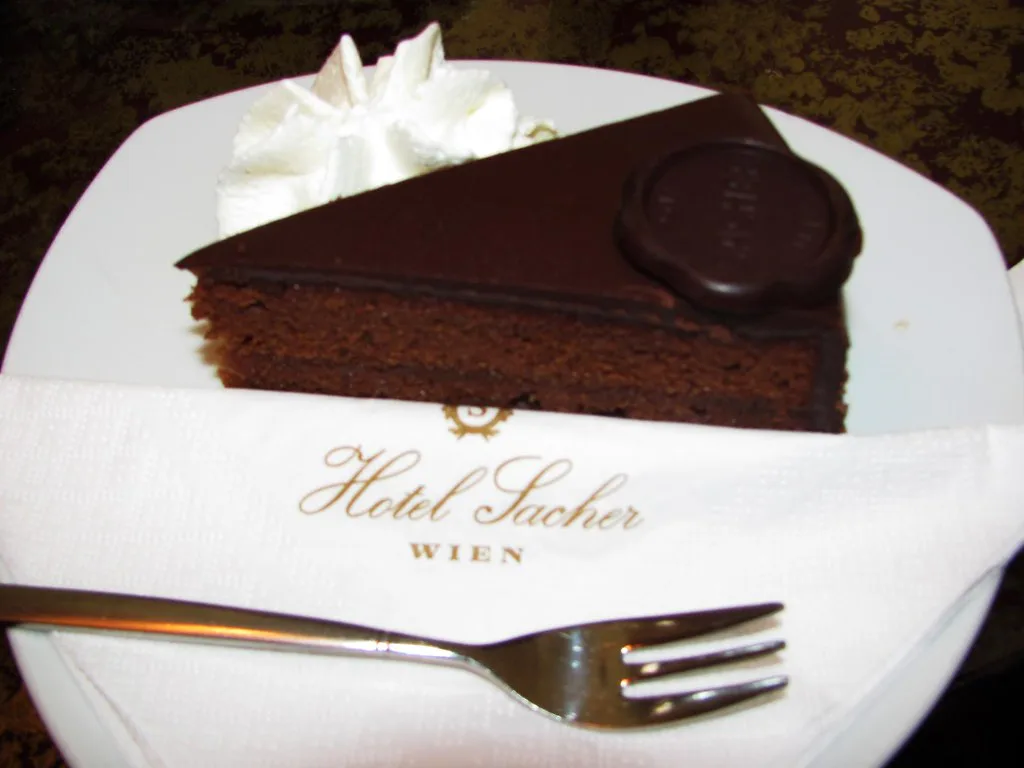
Krapfen fit into a wider tour of Austrian sweets, from the Sachertorte to the Apfelstrudel and the Linzer Torte, so use them as a starting point rather than a single stop. Austrian desserts are easy to find town by town, and one pastry a day is a reasonable pace.
Explore more Austria guides
Frequently Asked Questions
Is a Krapfen the same as a Berliner?
They belong to the same family of jam-filled, sugar-dusted yeast pastries, but the names are regional. In Austria the Carnival version is a Faschingskrapfen, while in Germany the pastry is a Krapfen in Franconia and southern Germany, a Berliner Pfannkuchen in Berlin and eastern Germany, and a Kreppel or Kräppel in Hessen.
When do Austrians eat Krapfen?
Krapfen are bakery fare that can be found year-round, but they peak during Fasching, the Carnival season leading up to Lent. That is when bakeries sell them in quantity and when the Carnival names and the mustard-filled prank turn up.
What is the mustard-filled Krapfen?
It is a Carnival prank rather than a regular flavor. One pastry in a batch or box is filled with mustard instead of jam, so the person who bites into it gets a sharp surprise while the group laughs. It is not something you order on purpose.
What fillings should I look for?
Apricot jam is a common choice, and rose hip jam is traditional in Carnival batches. Modern bakers also offer chocolate, vanilla cream, and eggnog fillings, all piped in after frying.
Sources
Notes for your next Austrian town break
Optional updates when we add or revise town guides.
You might also like
Continue reading
More guides you'll find useful