Austrian Coffee House Culture: What to Order and How It Works
An Austrian coffee house runs on a glass of water, a newspaper and no rush. Learn the coffee names, how to order, and what to expect inside a Kaffeehaus.
On this page
An Austrian coffee house works on a simple bargain: you order one coffee, and the table is yours for as long as you want it. A small glass of water usually lands beside the cup, newspapers are there to be read, and the pace is deliberately unhurried. This guide covers the coffee names you will see on the menu, what arrives with the order, how to behave once you sit down, and which Vienna houses are worth your afternoon.
The ritual matters because it shapes how you should plan the stop. Treat a Kaffeehaus as a proper pause of an hour or more with cake, not as a five-minute refuel between sights, and the whole institution makes sense.
What an Austrian coffee house actually is
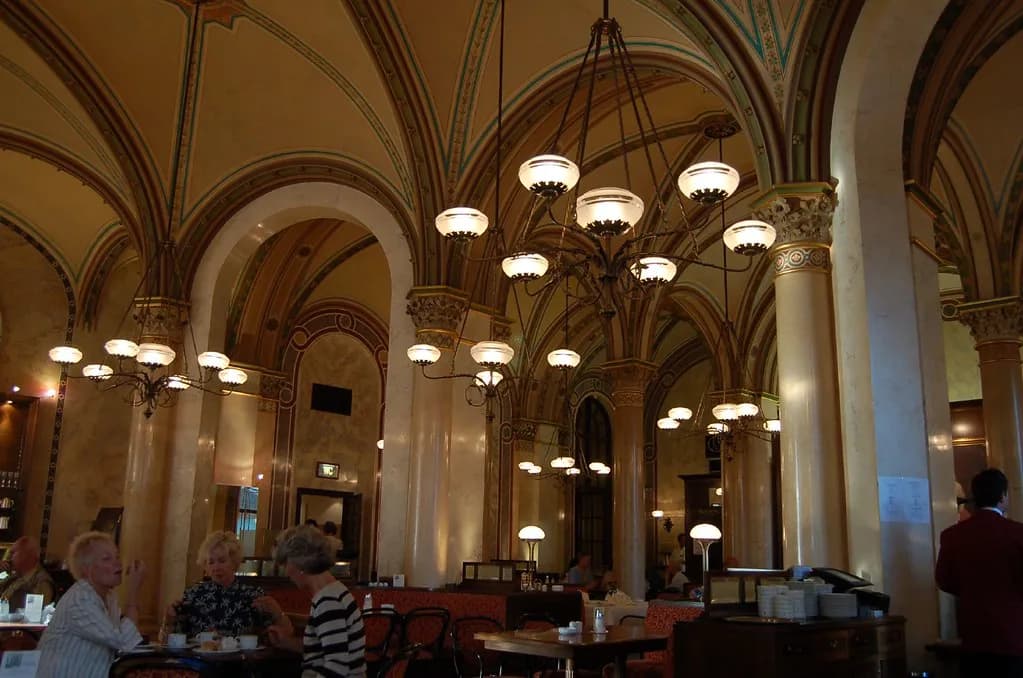
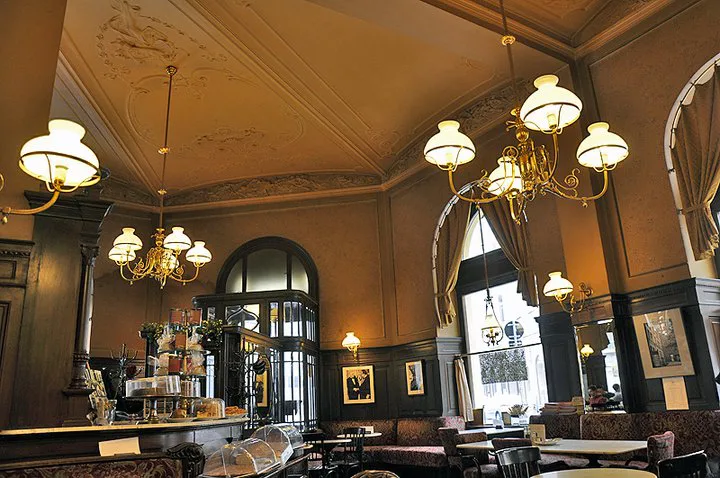
A Kaffeehaus is a sit-down room built around coffee, cake and reading time rather than speed. Vienna is the reference point, but the format travels: you take a seat, a waiter comes to the table, and the order is a coffee plus whatever is in the cake case that day. The room does the rest, with marble, mirrors and a hum of conversation that discourages rushing.
Because the coffee is modest in size and the sitting is long, the economics favor ordering in stages. Many visitors start with a coffee, add a slice of cake later, and let the afternoon run.
The coffee menu, translated
The names on an Austrian coffee menu describe milk and strength rather than beans. A Melange is the standard order, close to a small milky coffee with a foam top; a Verlängerter is a longer, weaker black coffee; an Einspänner arrives in a glass, topped with whipped cream. If you want a plain, strong cup, ask for a Mokka or a Kleiner Brauner and you will get something close to an espresso or a small coffee with a dash of milk.
Viennese coffee house menus also run to house specialties, which is where the personality shows. One house serves its house coffee with apricot liqueur, a rich and sweet combination that reads as dessert as much as a drink. Apricot turns up repeatedly in Viennese sweet things, so it is a flavor worth trying at least once.
If you are undecided, order a Melange first. It is mild enough to drink alongside cake, and it lets you judge whether you want a stronger Einspänner on the next visit.
What arrives with your coffee
The glass of water is part of the service, not a mistake, and it usually comes without being asked for. It cleans the palate between bites of cake and gives you something to sip while the coffee cools. Newspapers are the other fixture: reading at the table is expected, not tolerated, which is why a coffee house can absorb a rainy afternoon.
Cake is ordered at the table, but the choosing often happens at the case. At Café Central, regulars walk up to look at the day's cakes before deciding, and a server will bring the slice to your table once you have picked. That walk-up habit is worth copying: it is far easier to choose from what you can see than from a printed list.
How to order and how long you can sit
Order from your table; there is no counter queue at a traditional coffee house and no expectation that you leave the moment the cup is empty. Take your time with the menu, ask what the cakes are, and order in rounds if you like. Nobody will bring the bill until you ask for it.
The one real cost of lingering is at the famous houses, where demand shapes the visit. Café Central keeps its hall relaxed and unhurried once you are inside, but you may wait outside to get in, and the house takes bookings through its website if you want to skip the uncertainty of the queue. Book ahead for a specific afternoon, or arrive off-peak and accept the wait as part of the outing.
Cake and coffee: the pairing to get right
Coffee house cake is the practical entry point into Austrian desserts, and the case is usually a better guide than the menu description. A slice of chocolate torte, a fruit-topped cake or a cream-filled pastry all work with a Melange; the coffee is there to cut sweetness, not compete with it. Order one slice between two if you want to try more than one thing.
Not every sweet on the table is a torte. Kaiserschmarrn is a shredded pancake served warm with fruit compote, and it works as a late-morning order with a Melange, but it is a full plate rather than a small slice.
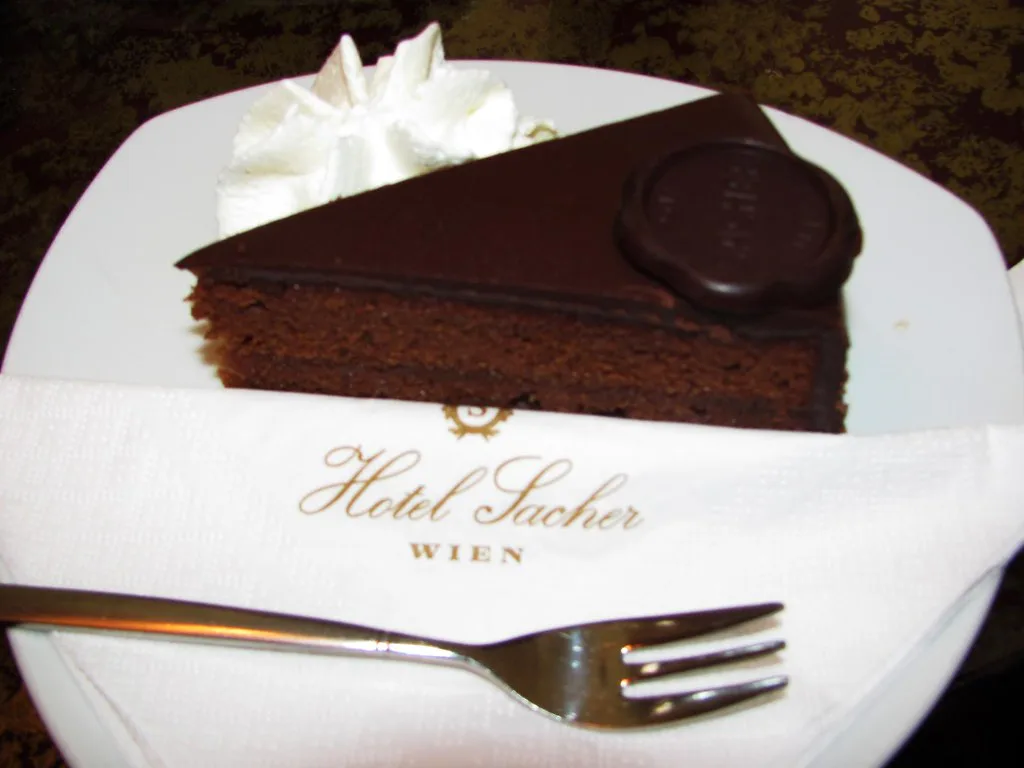
The famous cake here is dense and sweet, and a strong coffee cuts it well. Order it once to see what the fuss is about, then move on to what is in the case.
Café Central and Café Sacher: the famous two
Café Central is the classic stop, a grand hall that once hosted writers and thinkers, and it delivers the full coffee house experience: cakes in a case, a proper coffee list, and a room that feels like an occasion. Expect company. The house torte, layered with orange and marzipan, is the one to try if you want something other than Sachertorte, and the menu also covers light coffee house food such as a wurst with a roll and two mustards.
Café Sacher sits inside the Hotel Sacher, which makes it a natural cake stop on a Vienna sightseeing day. It is a busy, formal room rather than a neighborhood hangout, so treat it as the cake stop rather than the whole afternoon.
Both houses can fill up, so a late-afternoon coffee and cake is a realistic plan rather than a rushed one.
The quieter houses locals use
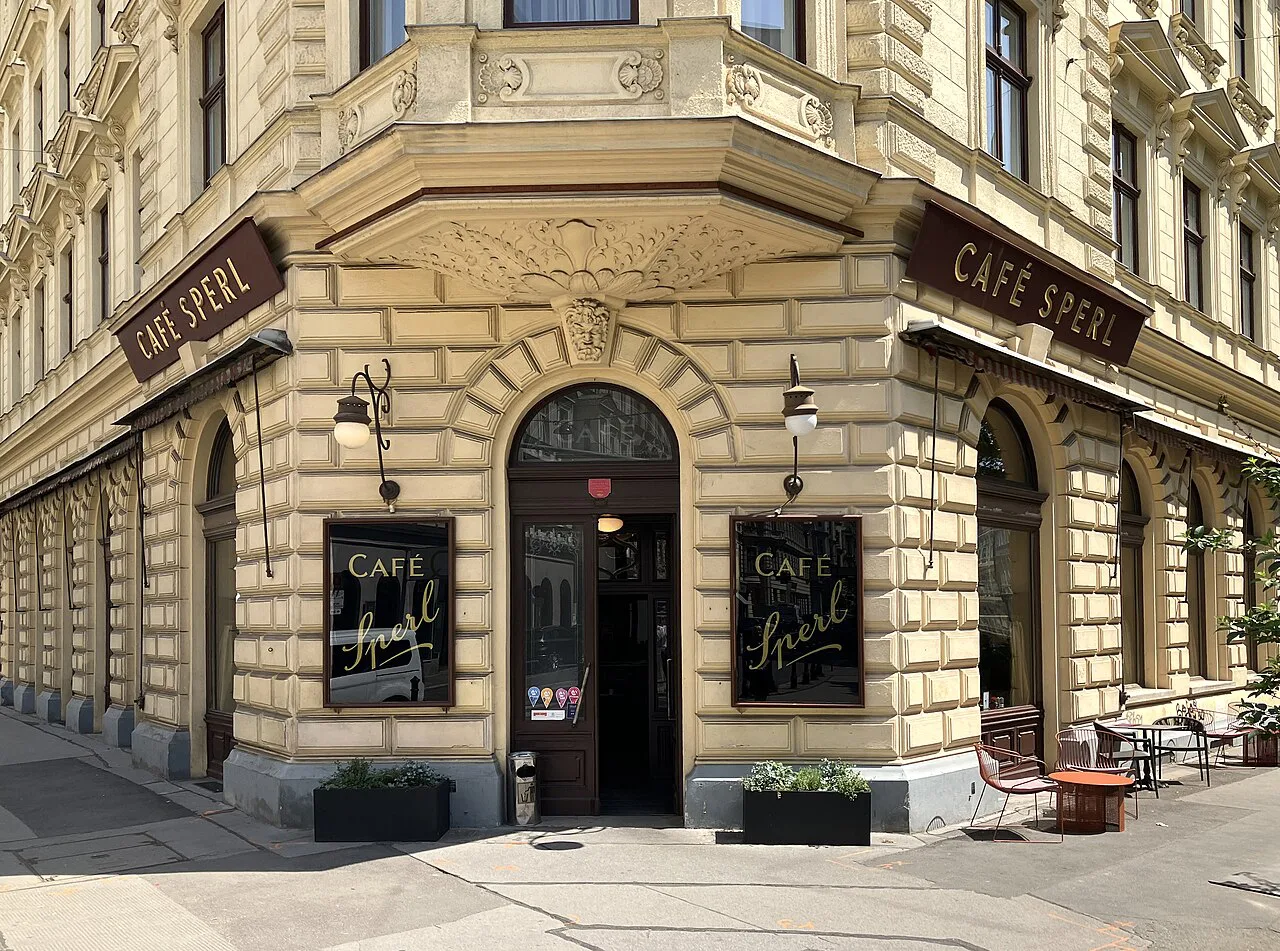
For a coffee house that feels like a neighborhood room rather than a landmark, look away from the center. Café Zartl on Rasumofskygasse stays open late into the evening, Monday to Saturday from 7am and Sunday from 8am, which makes it a workable stop on either side of a day of sightseeing.
The trade-off is straightforward: the famous halls give you the room and the history, while the quieter ones give you a table without a queue and a crowd that lives nearby. Pick the famous house for one ceremonial visit and the local one for the coffee you actually want to drink.
Customs and mistakes first-time visitors make
Treating the coffee house as a takeaway counter is the most common error. Sit down, order at the table, and stay; the point of the institution is the pause. Tipping by rounding up or leaving a small amount is normal, and the bill comes when you ask for it.
The other mistake is skipping the water and rushing the cake. The water is there to reset your palate between sweet bites, and the slower you go, the better the pairing works.
Which coffee house should you pick?
Choose Café Central or Café Sacher for the ceremonial version, book Café Central online if you want a guaranteed table, and use a quieter house such as Café Zartl when you want coffee without the crowd. Either way, order a Melange, take a slice from the case, and stay for longer than feels polite.
Explore more Austria guides
Frequently Asked Questions
What is so special about Vienna coffee?
The coffee itself is a small, simple cup; what makes it special is the setting and the pace. You get a table, a glass of water, a newspaper and unlimited time, and the coffee is delivered in a named style such as a Melange or an Einspänner rather than as a generic latte.
Sources
Notes for your next Austrian town break
Optional updates when we add or revise town guides.
You might also like
Continue reading
More guides you'll find useful