Gugelhupf: Austria's Ring Cake and How to Eat It Like a Local
Gugelhupf is the fluted ring cake behind the name: a semisweet baked cake, usually yeast-leavened with raisins, citron, and nuts.
On this page
Gugelhupf is a semisweet cake baked in a fluted tube pan, and the ring shape is the thing to recognize when it sits on a café counter or a bakery shelf. Dictionaries describe it as usually yeast-leavened, with raisins, citron, and nuts. Order a slice with a coffee in the afternoon rather than after dinner. This guide covers what the cake is, the versions you may meet, the menu words that signal them, and how to eat it the way Austrians do.
Treat it as a coffee-table cake, not a plated dessert. That single shift changes when you order it and what you drink with it.
What Gugelhupf is: the shape defines the cake
Dictionaries describe Gugelhupf as a semisweet cake, usually of yeast-leavened dough, containing raisins, citron, and nuts and baked in a fluted tube pan. The mold leaves a central chimney and a ring of ridges, so a whole cake looks like a crown and a slice arrives with a rounded top and a soft crumb.
The name travels in several spellings: Gugelhupf, Guglhupf, and the Alsatian Kugelhopf. All point to the same pan and roughly the same idea, so a dropped vowel on a handwritten label is not a different cake.
Ring, not Bundt: how the two pans differ
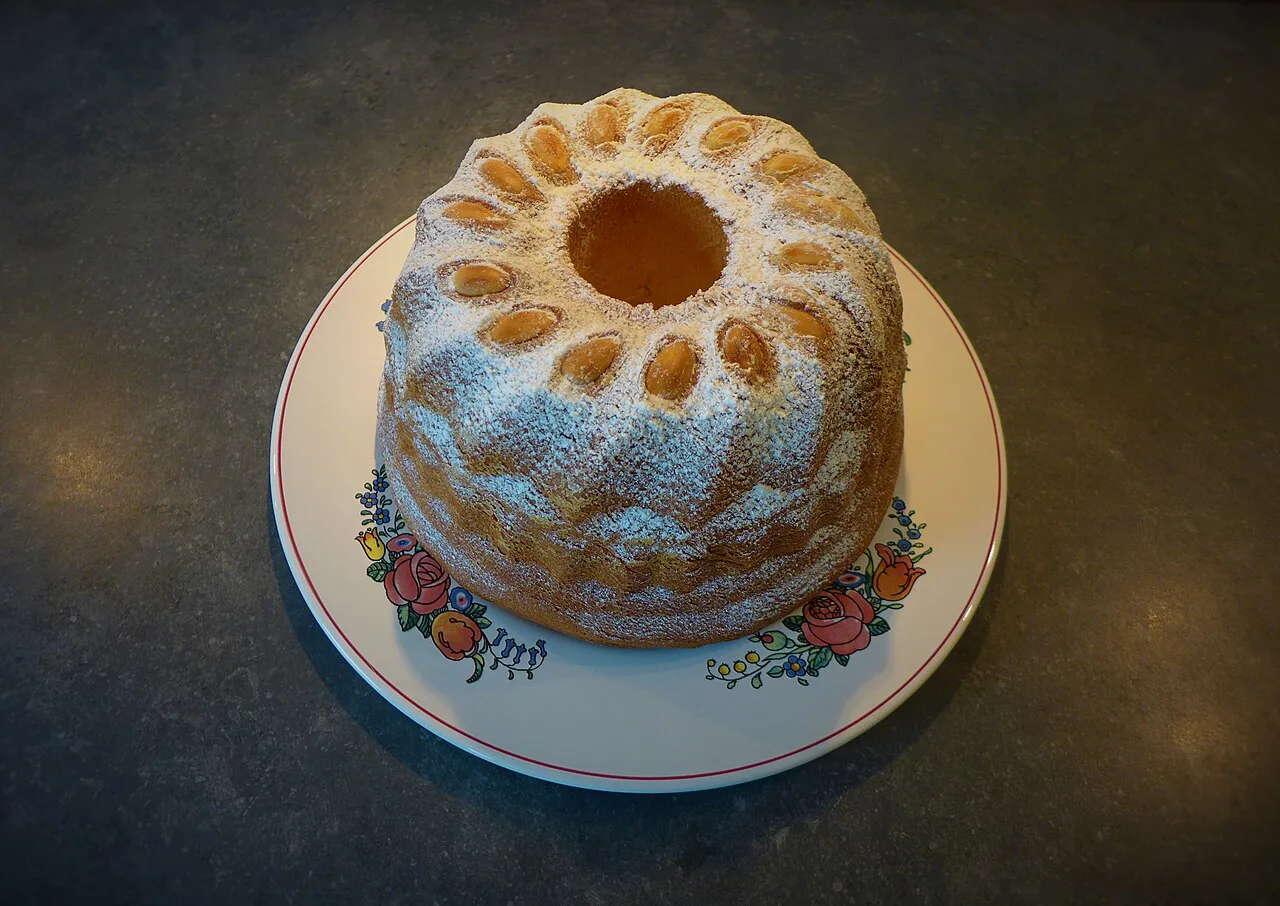
An American Bundt pan and a Gugelhupf pan both produce a ring with a hole in the middle. The resemblance is in the bakeware, not in a shared recipe: Austrian versions lean toward a firmer, less sugary crumb built for slicing alongside coffee rather than for frosting.
What does Gugelhupf mean in English? Dictionaries define it as a semisweet cake, usually of yeast-leavened dough containing raisins, citron, and nuts, baked in a fluted tube pan. The ring shape, not a single recipe, is what the name points to.
How do you pronounce Gugelhupf? Ask a server to say it at the counter and you will have it for the rest of the trip. Spelling varies between Gugelhupf and Guglhupf, and both are understood.
Is Gugelhupf the same as a Bundt cake? They share a ring mold with a central chimney, but they are not the same thing. The dictionary definition describes Gugelhupf as usually yeast-leavened, often with raisins, citron, and nuts, and it is served in slices with coffee rather than frosted as a dessert cake.
The word cake is doing useful work here. The Austrian ring is meant to be cut into modest slices and eaten with a drink, so the sweetness stays restrained and the texture holds up.
The versions you may meet
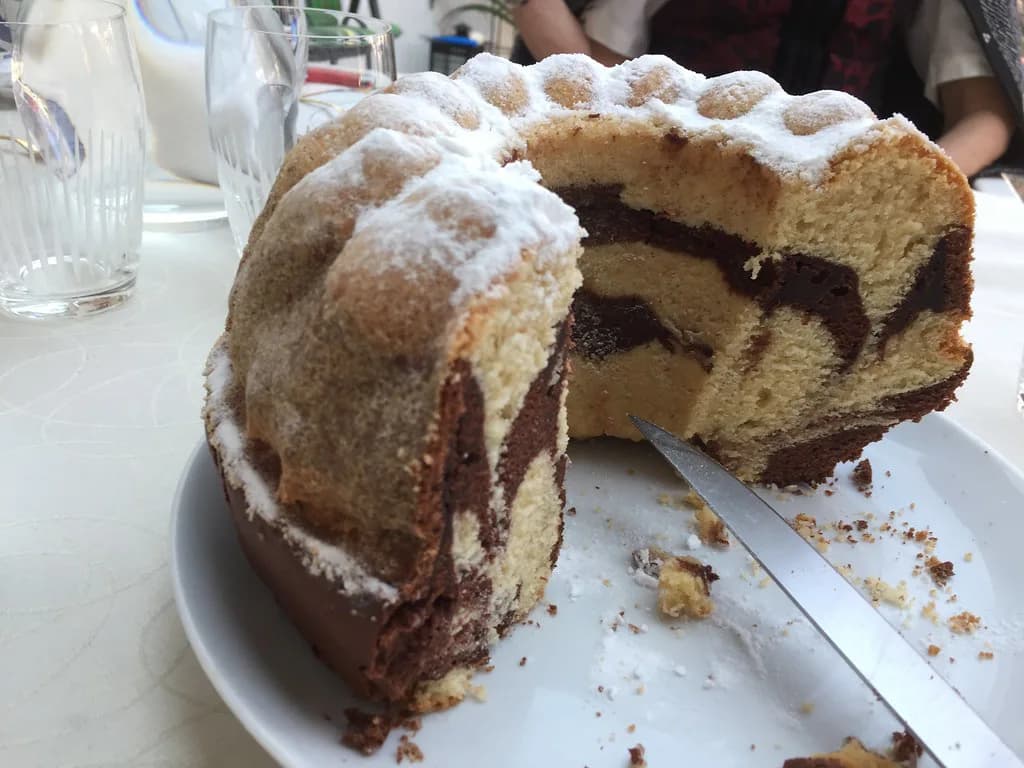
Marble is the version most travelers meet first. A Marmorgugelhupf swirls light and dark batter in the same ring, which gives you two textures and a cocoa note in one slice.
Yeasted versions sit on the other side of the family. The dictionary definition gives yeast-leavened dough as the usual base, and a denser, bready slice is a different branch of the same cake rather than a fault.
Topfengugelhupf adds curd cheese to the batter, which pushes the cake toward a tangier, moister slice. On a menu, the prefix tells you what has been added; the base cake stays the same ring.
What goes into it
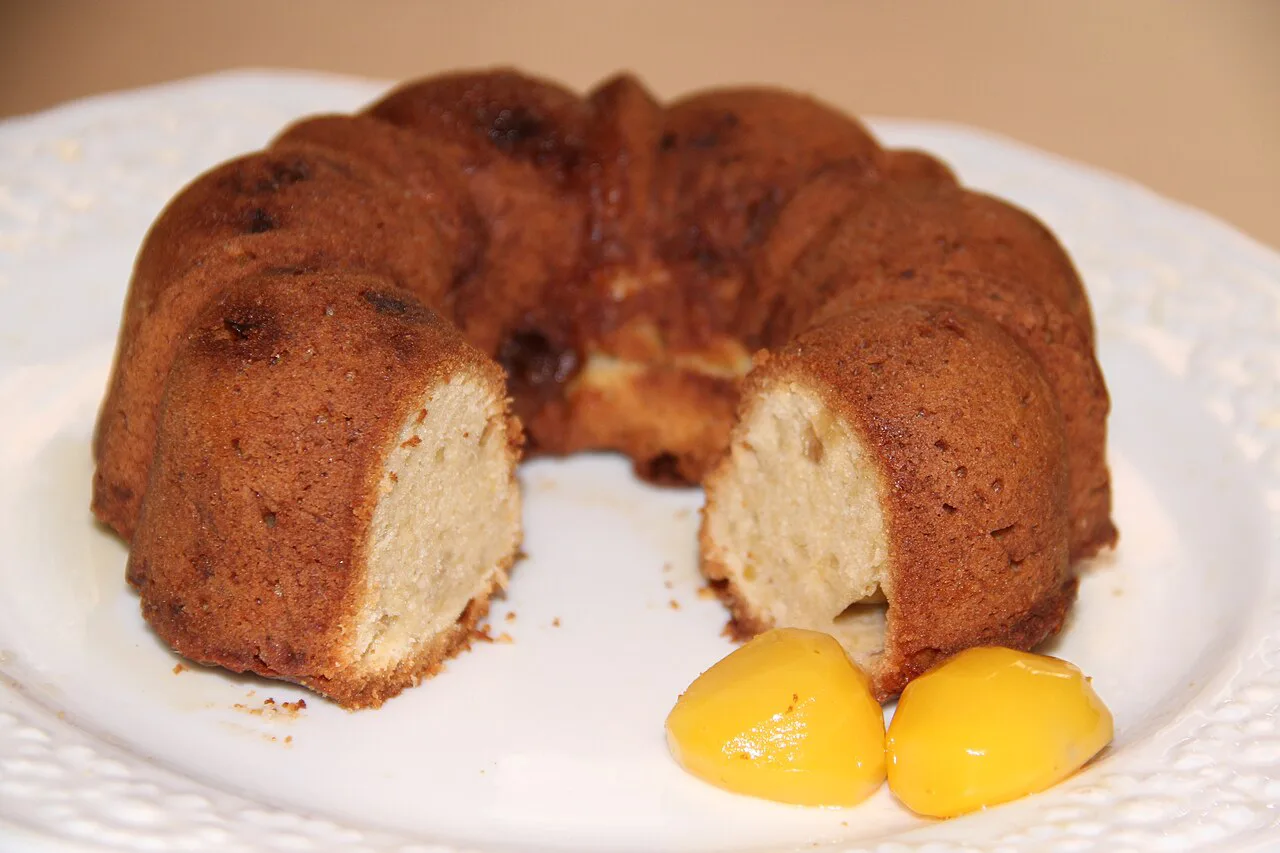
The dictionary definition lists raisins, citron, and nuts as typical additions and specifies a fluted tube pan. A published recipe for a ring cake in a bundt tin uses sultanas soaked in tea, butter, eggs, sugar, flour, ground almonds, lemon zest, milk, and baking powder, which shows how much one version can vary; treat it as a checklist for reading a menu, not a method to follow.
That published recipe finishes the cooled cake with a light dusting of icing sugar rather than a glaze. On a counter, a plain ring with a fine sugar coating is a good sign you are looking at a Gugelhupf.
How it is served: a slice with afternoon coffee
In Austria the cake belongs to the coffee table. You order a slice in the afternoon with a coffee, and it functions as a pause in the day rather than a final course, so ask for it as a pastry with your drink instead of waiting for a dessert menu.
This is where the cake fits into the wider picture of Austrian desserts, a category that runs from layered chocolate cakes to dumplings and strudels. Gugelhupf is the quiet everyday member of that group.
Reading a café menu: Marmor-, Topfen-, and other prefixes
The word before Gugelhupf is the useful part of the menu entry. Marmor- means marble, with a cocoa swirl; Topfen- means curd cheese has been added, giving a tangier slice.
If the menu or counter label says simply Gugelhupf or Guglhupf, expect the plain ring with dried fruit and a sugar dusting. Ask the server whether it is the yeasted style or the lighter baking-powder style if the difference matters to you.
What to order with it: coffee that balances the sweetness
A milky coffee such as a Wiener Melange works well with the plain ring, and a black coffee does too because the cake is only semisweet. The goal is a drink that cuts through the sugar dusting rather than adds to it.
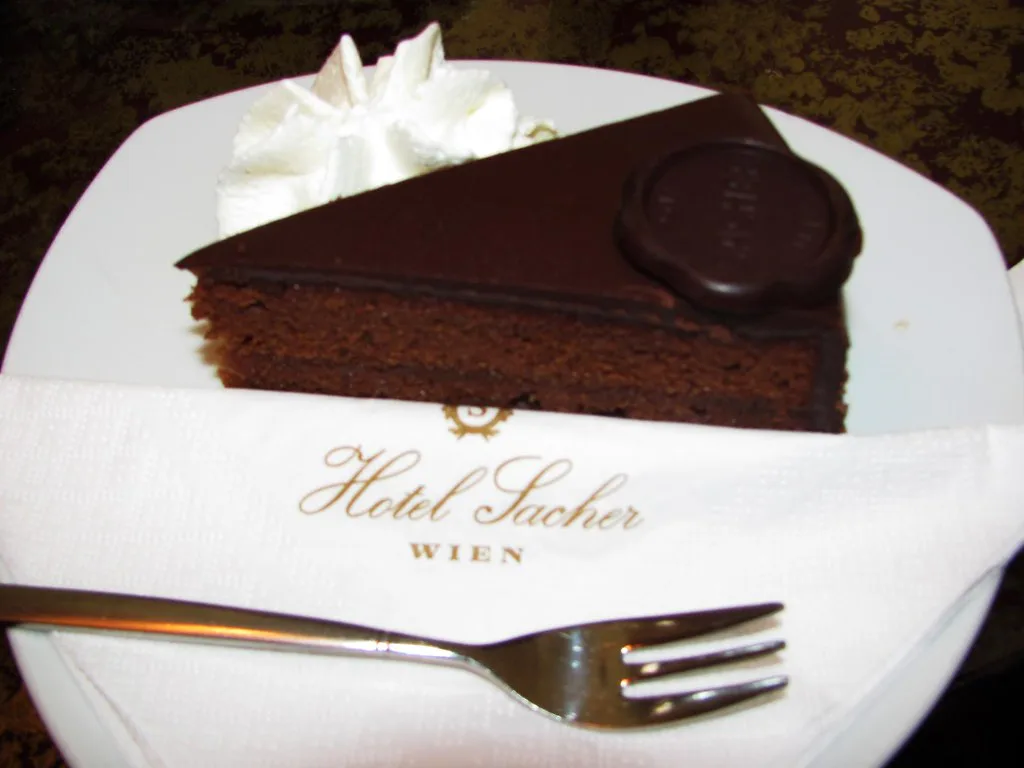
Gugelhupf makes a lighter mid-afternoon choice than a cream-heavy slice, leaving room later for a Sachertorte with its apricot jam and chocolate glaze. That kind of sequencing keeps a pastry-and-coffee itinerary enjoyable over several days.
Where travelers find it: cafés, bakery counters, and breakfast buffets
Three places put Gugelhupf within easy reach of a visitor: the café pastry case, the bakery counter, and the hotel breakfast buffet. The cake belongs to everyday Austrian eating as much as to a dessert course, so it turns up across the day.
Bakery counters are a good place to buy a whole cake. A whole Gugelhupf travels well because its ring shape protects the crumb.
What it costs: priced as a café stop, not a splurge
Compare Gugelhupf to the price of a coffee and a pastry rather than to a restaurant dessert, because that is how it is sold. Café prices differ by town and by how formal the room is, and the printed menu is the number to trust when you sit down.
At a bakery counter the shelf label prices a slice or a small ring, and a whole cake costs more than a slice but less than a full torte from a patisserie. Read that label before you commit rather than guessing from the size of the ring.
Buying one to take home
A whole Gugelhupf is a sensible edible souvenir because the ring shape packs flat and the cake keeps for several days in an airtight container. The published recipe notes it will keep for up to three days stored that way, which is a realistic window for carrying one home.
Because it is only semisweet and lightly dusted, it survives travel better than a cream-filled pastry or a fragile layered cake. Wrap it well and keep it out of direct heat.
The pan itself: why the fluted ring matters
The fluted tube pan is what turns batter into a Gugelhupf. The central chimney and the ring of ridges are the shape the dictionary definition itself names, which is why the pan sits inside the definition rather than acting as decoration.
A Gugelhupf pan is a kitchen souvenir you can actually use. It is bulky but light, and it is the only way to recreate the ridged shape at home.
Common mistakes: expecting a light sponge or skipping the coffee
The most common misstep is expecting a fluffy sponge cake. Gugelhupf is semisweet and moderately dense, especially in the yeasted versions, and that texture is deliberate; it is meant to be eaten in slices with a drink.
The second is ordering it as a plated dessert after a heavy dinner, when it makes far more sense as an afternoon pause. The third is skipping the coffee altogether, which leaves the sugar dusting with nothing to balance it.
Do not confuse it with its European cousins either. A Linzer Torte is a lattice-topped tart and a Krapfen is a filled doughnut; both belong to the same coffee table but neither is a ring cake.
Where the ring cake sits among Austrian classics
Gugelhupf is the everyday anchor of the Austrian pastry table, while other classics are served warm and plated. Kaiserschmarrn, the torn pancake, is a full dessert rather than a slice beside coffee.
Order Gugelhupf when you want something modest with a mid-morning or mid-afternoon coffee; order the warm, plated classics when you want a sit-down dessert. Knowing which is which keeps you from expecting the wrong dish at the wrong hour.
How to order your first slice
Order Gugelhupf in the afternoon with a coffee, choose the prefix that appeals to you, and treat it as an everyday Austrian pause rather than a special-occasion dessert. If a marble swirl or a Topfen version is on the counter, take that slice and compare it with the plain ring later in the trip.
The cake also makes a practical edible souvenir: buy a whole one from a bakery counter, wrap it well, and eat it within a few days of getting home.
Explore more Austria guides
Frequently Asked Questions
What does Gugelhupf mean in English?
Dictionaries define it as a semisweet cake, usually of yeast-leavened dough containing raisins, citron, and nuts, baked in a fluted tube pan. The ring shape, not a single recipe, is what the name points to.
How do you pronounce Gugelhupf?
Ask a server to say it at the counter and you will have it for the rest of the trip. Spelling varies between Gugelhupf and Guglhupf, and both are understood.
Is Gugelhupf the same as a Bundt cake?
They share a ring mold with a central chimney, but they are not the same thing. The dictionary definition describes Gugelhupf as usually yeast-leavened, often with raisins, citron, and nuts, and it is served in slices with coffee rather than frosted as a dessert cake.
Where can I buy a whole Gugelhupf to take home?
Try a bakery counter. A published recipe notes the cake keeps for up to three days in an airtight container, so plan to eat it soon after you get home.
Sources
Notes for your next Austrian town break
Optional updates when we add or revise town guides.
You might also like

Continue reading
More guides you'll find useful