Grafenegg Castle: Neo-Gothic Palace, Park and Concert Grounds
Grafenegg Castle near Krems pairs 17th-century fabric with 19th-century neo-Gothic style. See the Beletage, Knights' Hall and the year-round castle park.
On this page
Grafenegg packs three quite different things into one estate near Krems: a castle remodeled in romantic historicist style, a 32-hectare landscaped park, and modern concert grounds with an open-air stage. The castle interior opens only on summer weekends, while the park stays open all year, so the season decides how much of the ensemble you actually see. This guide walks through the castle rooms, the park and the concert architecture, then shows how to fit the stop into a Lower Austria route.
The setting is countryside rather than town: the address is Grafenegg 10, 3485 Grafenegg, in the rolling land southeast of Krems an der Donau. Most travelers arrive by car or combine it with other Lower Austria stops, and the castle publishes its own contact channel for confirming details before a trip.
What Grafenegg actually is
Visitors often conflate three layers at Grafenegg. The first is the historic Schloss Grafenegg itself, a four-winged complex with medieval and Renaissance roots and a 19th-century rebuild. The second is the landscaped park around it, which the estate describes as open every day of the year. The third is the modern concert layer added with the Grafenegg Festival, founded in 2007, which brought the Auditorium concert hall and the Wolkenturm open-air stage into the grounds.
That split matters for planning. A park walk needs no season, a castle visit depends on summer weekend hours, and a concert evening changes access to part of the grounds entirely. Treat Grafenegg as a half-day stop built around whichever layer is open when you pass through.
The castle: from late Gothic turret to English-style rebuild
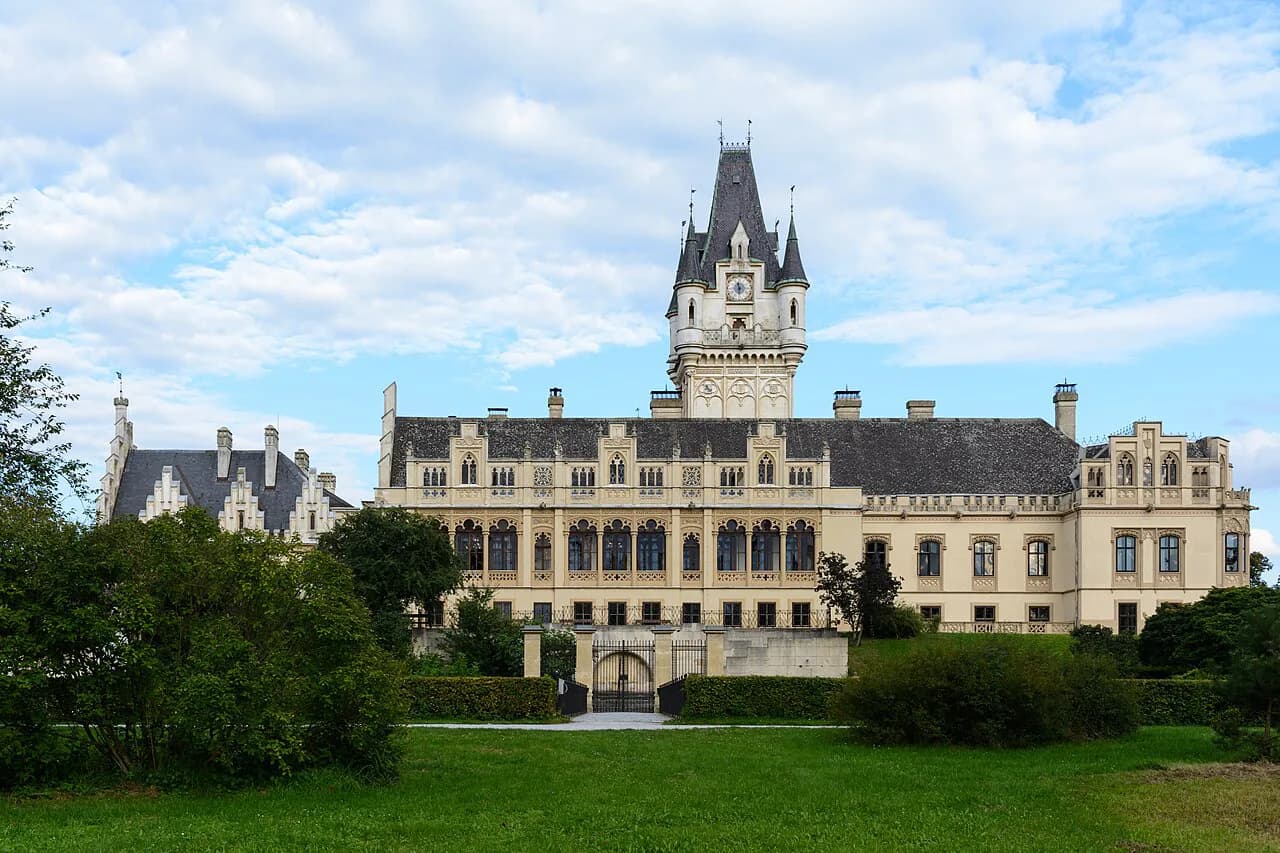
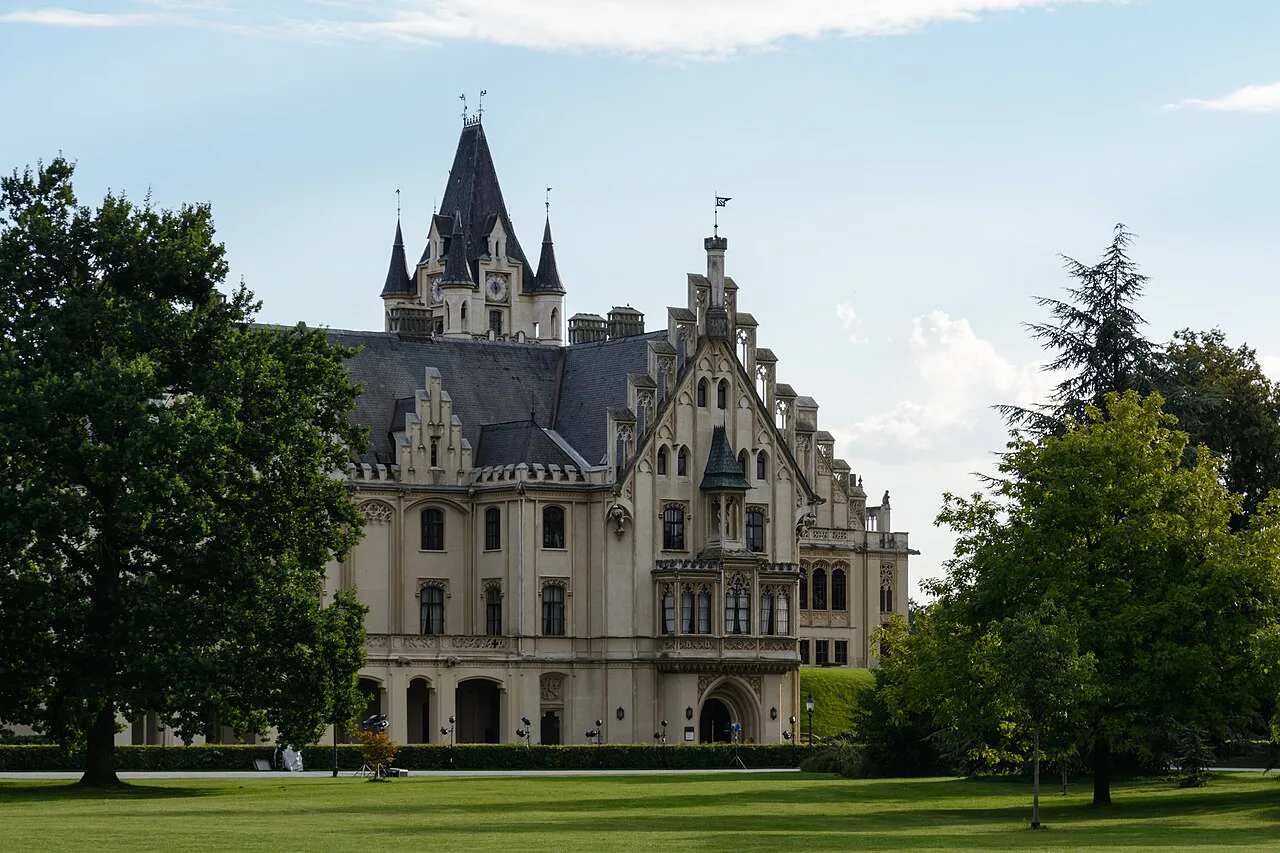
The slender turret on the courtyard side marks the late Gothic building phase, and the Renaissance left its own stamp: by the first half of the 17th century the castle was already a four-winged complex with two tall towers, a moat and four ramparts, plus a chapel on the east side. A garden pavilion survives from the Baroque period, when the grounds hosted parties and plays.
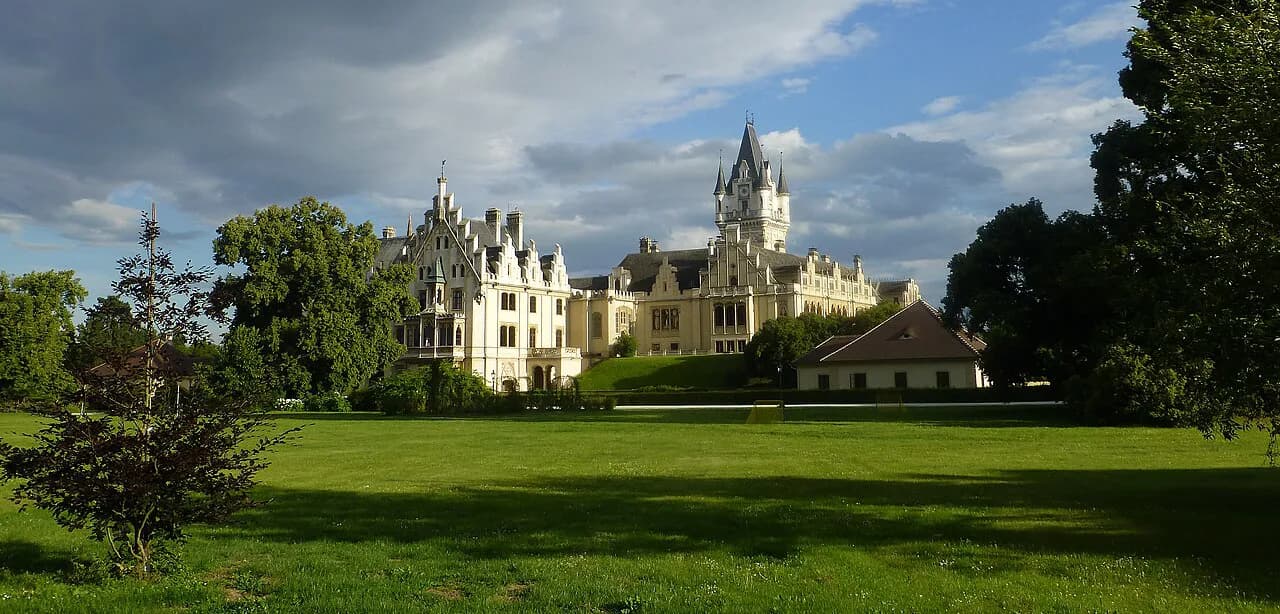
The face you see today is 19th-century work modeled on English castles, in the style of romantic historicism. The result is the landmark silhouette of a towering tower, grand façades, staircases and arcades, layered over the older 17th-century fabric rather than replacing it.
Inside: staircase, Beletage and Knights' Hall
The interior rewards attention to detail more than scale. The staircase carries ribbed vaults, and the Beletage holds the library and garden hall, salons and rooms with coffered ceilings, wood paneling and tiled stoves, along with the Knights' Hall. The chapel still contains an altar from the 15th century.
Because these are furnished historic rooms rather than a museum gallery, the visit is about reading a lived-in aristocratic interior across centuries. Budget your time for the chapel and the Beletage, which carry the strongest mix of medieval survival and 19th-century reworking.
When the castle opens and how you see it
The castle opens on summer weekends only, Saturday and Sunday from 10 a.m. to 3 p.m., in the window from June 21 through September 7. On those days you can walk through independently or join a guided tour, which runs at 2 p.m. on Saturdays and Sundays.
The tour timing is the key decision. Arriving after 2 p.m. on a weekend means the guided option is gone, while an independent visit fits any time between 10 a.m. and 3 p.m. If you are unsure whether the season's hours match the June 21–September 7 window, check the castle's own published hours before you travel.
The 32-hectare park, open all year
The landscaped park covers 32 hectares and folds together 300 years of park history, rare plants from around the world, old solitary trees and contemporary works of art. It is open every day of the year, which makes it the reliable part of a Grafenegg visit outside the summer castle window.
Plan the park as a slow walk rather than a circuit to tick off. The mix of historic planting and modern sculpture is spread across open lawns and shady avenues, so a picnic or a longer loop makes more sense than a quick photo stop.
The concert layer: Auditorium and Wolkenturm
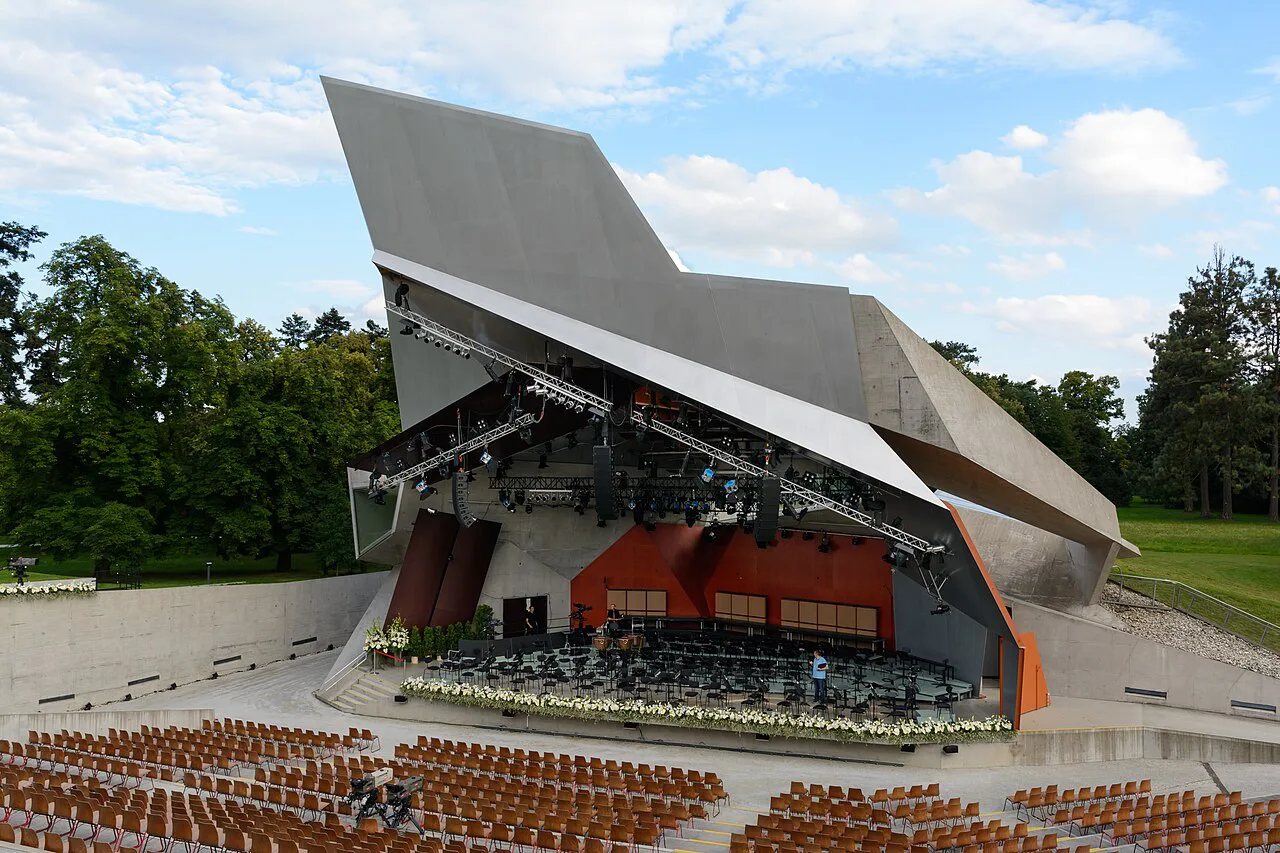
The Grafenegg Festival, founded in 2007, reshaped the grounds architecturally. The Auditorium concert hall and the Wolkenturm open-air stage now stand as focal points within the park, sitting alongside older estate buildings such as the garden pavilion and the 19th-century riding school rather than replacing them.
The concert hall and stage are performance venues rather than sights with visitor hours, so plan around a concert ticket if you want to see a performance from inside. Otherwise, admire the architecture from the park and let the season and program decide whether an evening at Grafenegg is part of your trip.
Event days: the Wolkenturm access rule
On concert days at the Wolkenturm, the surrounding area becomes accessible only with a concert ticket, from three hours before the start. This is the one rule most likely to trip up a park stroll planned for a summer evening.
Check the concert calendar before you set a park visit for late afternoon or evening, and shift your walk to the morning if a performance is scheduled. On non-event days the park stays open as usual, so the restriction only bites around concert times.
Getting there and confirming details
The address is Grafenegg 10, 3485 Grafenegg, and the castle lists a phone line and an email address for tickets and questions. Use them to confirm the current opening window, tour time and any event-day access rule before you drive out.
The estate publishes its own directions and a route-planning tool for arrivals, and describes the castle as reachable by public transport. If you are coming by train or bus, take the connections you find there rather than estimating a drive time, and allow slack for the walk from the stop into the park.
Whether Grafenegg fits your Lower Austria route
Grafenegg works best as a half-day stop on a Lower Austria circuit based around Krems an der Donau, combining the castle interior and a park walk as the two halves. In summer, time the castle for the late morning and the park for after lunch; outside that window, the park alone still justifies the detour.
Castle-focused travelers can pair Grafenegg with Rosenburg Castle in the Kamp valley, another historic seat with a very different setting and story, or push on toward Retz in the Weinviertel for a town of cellars and sgraffito façades. Each sits in a different corner of the region, so plot them on a map before committing to a driving day.
Is Grafenegg worth the detour?
Yes, if you go for the right layer. The park alone rewards a year-round visit, the castle interior rewards a summer weekend timed for the 2 p.m. tour, and the concert grounds reward an evening with a ticket. Skipping all three because the castle is closed would be a mistake, since the grounds keep working outside the season.
Build the stop around your date: summer weekend for the full ensemble, any other day for the park and the exterior architecture. Confirm the castle's current hours and event-day access before you go, then give the estate enough time to walk rather than rush through.
Explore more Krems guides
Frequently Asked Questions
Do you have to join a guided tour to see inside Grafenegg Castle?
No. On summer weekend opening days the castle can be explored independently, and a guided tour is also offered at 2 p.m. on Saturdays and Sundays for visitors who want commentary.
When is the castle park open at Grafenegg?
The estate describes the 32-hectare park as open every day of the year, so it functions as the year-round part of a visit. Note that on Wolkenturm concert days the area around the stage becomes ticket-only from three hours before the start.
Sources
Notes for your next Austrian town break
Optional updates when we add or revise town guides.
You might also like
Continue reading
More guides you'll find useful