Danube Cycle Path in Austria: The Wachau Stretch from Melk to Krems
The Danube Cycle Path runs about 300 km from Passau to Vienna, and the Wachau is its best-known stretch. Here is how the Melk to Krems ride works on both banks.
On this page
The Danube Cycle Path is the best-known riverside bike route in Europe, and the stretch through the Wachau between Melk and Krems is the part most riders remember. The path is marked in both directions on both banks of the river, so your real planning task is choosing where to cross, not reading a map. This guide covers what the route is, how the Passau to Vienna section works, and how to spend a day between Melk Abbey (Stift Melk) and the old town of Krems an der Donau.
The route began in the early 1980s and is now part of EuroVelo 6, the long-distance path that links the Atlantic to the Black Sea. The Austrian section follows the Danube through the Wachau Valley, where orchards and terraced slopes sit between the river and the hills. Riding here is gentle, but the valley is also a working landscape of villages, ferries and small roads, so a little planning pays off.
What the Danube Cycle Path is and where the Wachau fits
The Danube rises in Germany's Black Forest and runs roughly 2,850 km to the Black Sea, passing Vienna, Bratislava, Budapest and Belgrade along the way. The cycle route that shadows it was established in the early 1980s and forms part of the EuroVelo network, which plans a web of long-distance paths across the continent. For most riders, the practical route is the middle section through Austria.
The Wachau is the stretch of the Austrian Danube between Melk and Krems, a narrow valley of orchard slopes, terraced vineyards and small towns strung along the water. Because the cycle path runs on both banks, the valley works well as a one-way ride: start at one end, finish at the other, and return by train or boat. That makes it one of the easiest places in Austria to plan a linear day rather than a loop.
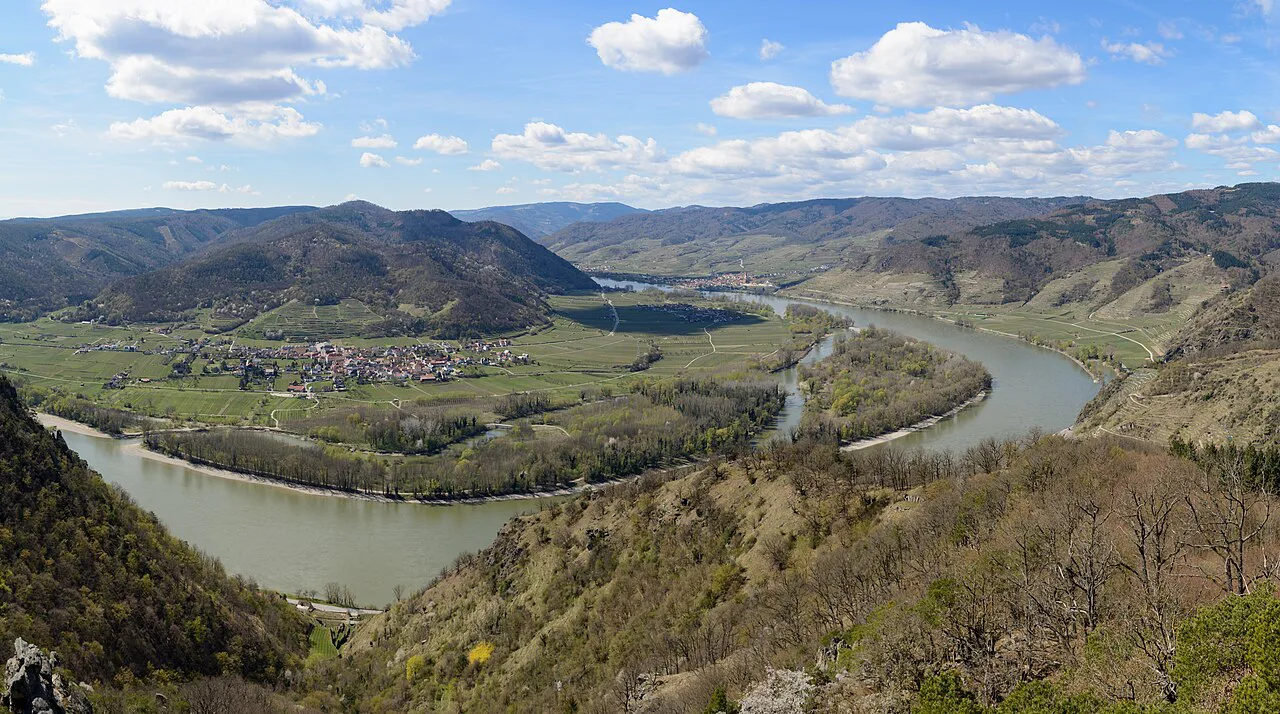
Passau to Vienna: the famous stretch
The section from Passau, the city of three rivers, to Vienna runs about 300 km and is the most ridden part of the whole route, drawing an estimated 300,000 cyclists a year. The German Cyclists' Federation has ranked it the most used cycle path abroad for years, which tells you both how good the infrastructure is and how busy the corridor can get in high season.
The route passes the big Danube bend at Schlögen, the modern city of Linz, and then the Wachau before reaching Vienna. It is fully signposted in both directions on both banks, and the gradients are negligible: the only real climbs are the bridges you cross. Hotels and sights set higher up the slope are usually served by transfers or shuttles, so you rarely have to grind uphill with luggage.
The German stretch upstream is equally gentle. The Danube cycleway through Germany is described as a very gentle downhill gradient all the way from Tuttlingen toward Passau, which is why the route suits riders of mixed ability and families with children in trailers.
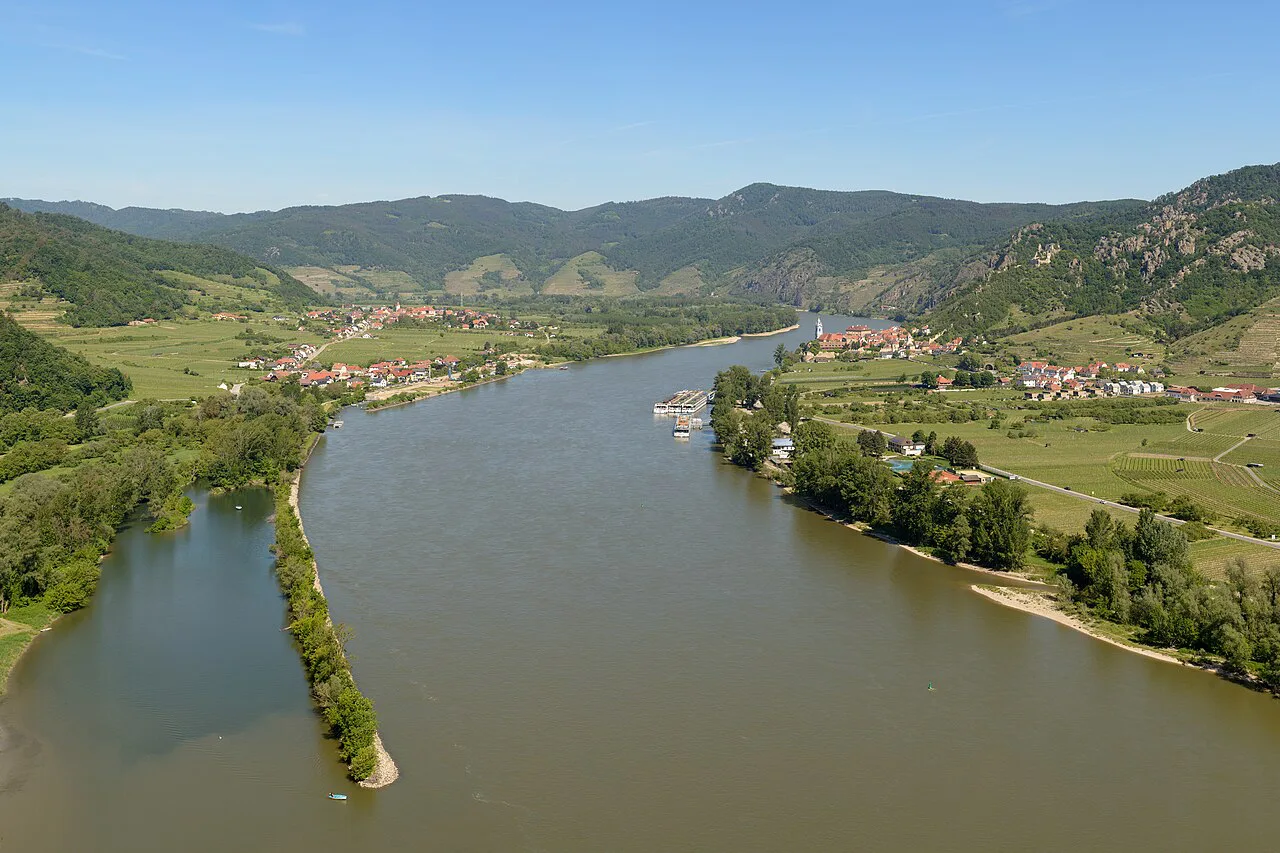
Melk to Krems: what the ride passes
Start in Melk, where Melk Abbey (Stift Melk) sits on its rock above the town, a Baroque complex that is the reason many riders take the train out from Vienna and begin here rather than in Passau. Leave the bike in the town and walk up, then roll down to the river and pick your bank.
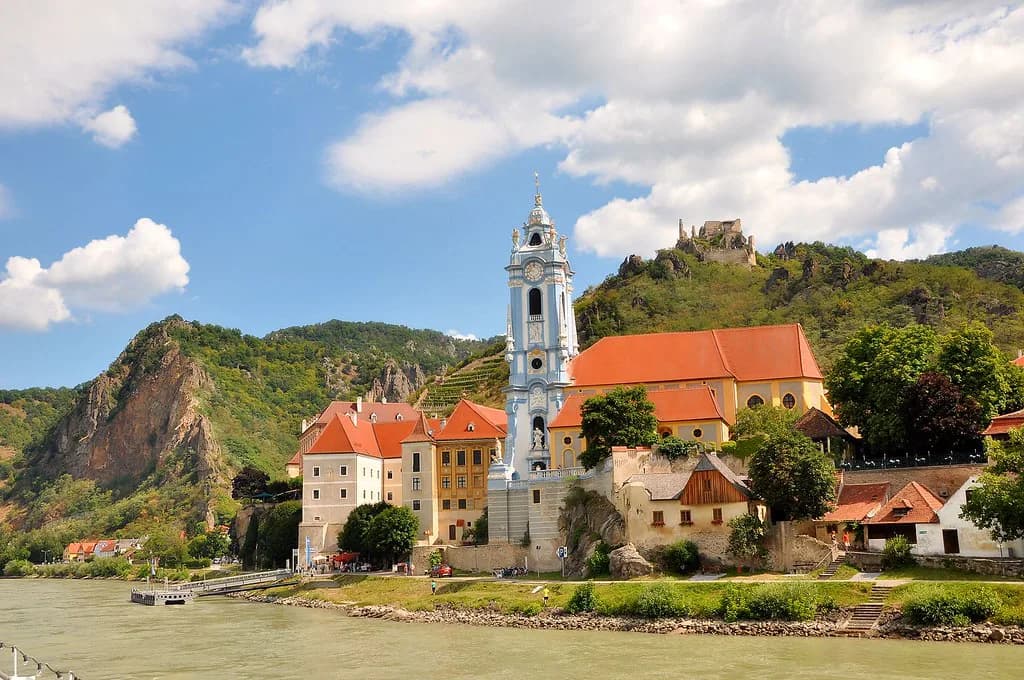
Heading downstream, the north bank passes through villages and orchard slopes, while the south bank keeps close to the water and the rail line. Either way the valley narrows toward Dürnstein, where the blue tower of the Kunigunden Church is the classic photograph and the ruins of Dürnstein Castle sit on the ridge above. Dürnstein Castle Ruins are a stiff walk up from the village, so decide before you lock the bike whether you want that climb.
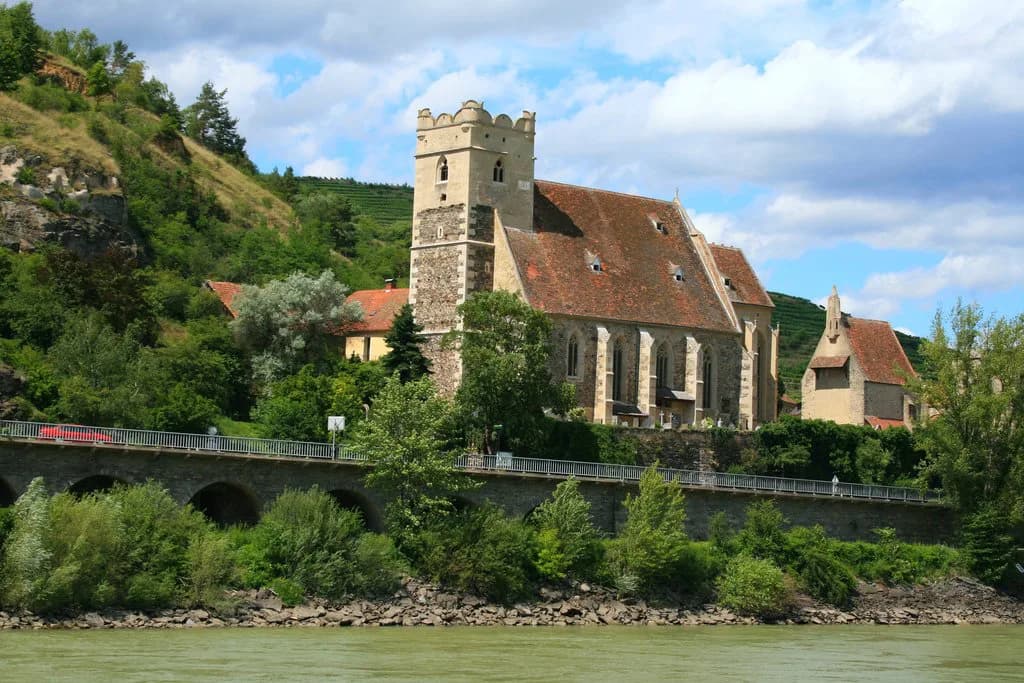
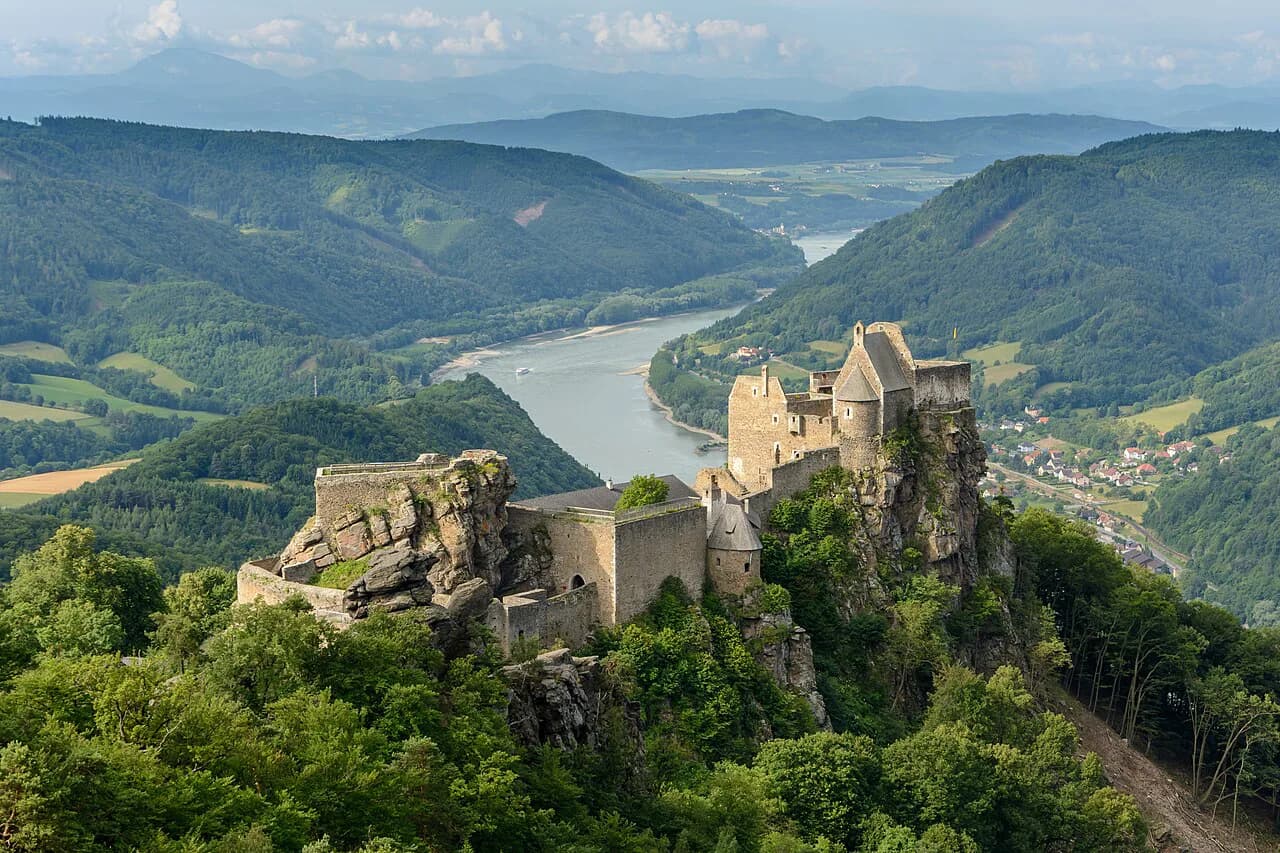
Beyond Dürnstein the valley opens toward Weissenkirchen and Spitz an der Donau, both useful places to stop for lunch or to catch a ferry across. Weissenkirchen in der Wachau sits below a fortified church, and Spitz an der Donau spreads along the water with the ruins of Burgruine Aggstein on the hill opposite. Aggstein Castle rewards the detour with a view over the whole valley, but the climb is real and the ruins sit well above the path.
The ride ends at Krems an der Donau, where the Steiner Tor marks the entrance to the old town and the streets behind it are made for walking rather than riding. Krems Attractions: 10 Visitor Guides covers the museums and churches worth an extra hour if you arrive with time before your train. From the station, services back toward Melk run along the south bank, which saves you the return ride.
Riding on either bank: how crossings work
Because the path is marked on both sides of the river, the planning question is which bank you ride and where you switch. Decide your crossing points before you set out, so you are not caught on the wrong side when you want to change banks or head for a train or boat.
A one-way ride also needs a way back. The Wachau is served by the rail line on the south bank and by river boats that link the towns, and both let you return to your starting point without retracing the whole route. A Wachau cruise on the Danube is the more scenic option and pairs well with a bike carried on board, though you should confirm which boats take bicycles when you book.
If you are riding the full Passau to Vienna route, the Wachau is simply one day within a longer trip. The wider Wachau Valley Guide covers the towns, abbeys and viewpoints along the river in more depth and helps you decide where to base yourself for a night or two.
Signage, gradients and the riding surface
Navigation is the least of your worries. The Austrian path is fully marked in both directions and on both banks, which is why the route suits touring bikes, e-bikes and trailers. You will rarely need to consult a map except to plan your crossings.
Bike rental and repair services are common in the larger Danube towns, and self-guided tour operators build daily rentals into their packages. If you are arranging your own bike, book before you arrive in high season and check what the rental includes, since terms vary by shop.
Sights within reach of the path
The Austrian Danube corridor puts an unusual concentration of sights within a short ride of the water. Linz offers contemporary architecture, Tulln has the Schiele Museum, and Melk Abbey is a short climb from the path. All of them sit within easy riding distance of the route, which is part of why the corridor is so popular.
The Mauthausen memorial stands above the river on the north bank, east of Linz. It commemorates the Nazi concentration camp system, and the site is a place for sober reflection rather than a sightseeing stop. Riders should approach it as a memorial, allow quiet time for the grounds, and check the memorial's own published information for opening arrangements before planning a visit around it.
Farther east, the abbey at Melk and the old towns of the Wachau make up the densest run of stops on the whole route. Plan at most two major sights per day if you want to keep riding enjoyable; the valley rewards slow progress more than mileage.
Where the climbing happens
On the path itself, climbing is almost nonexistent. The only regular ups and downs are bridge approaches, and hotels or sights set above the river are usually reached by shuttle or transfer rather than by a steep ride. That is why the route is often recommended as a first multi-day tour.
The exceptions are the deliberate detours: Dürnstein Castle Ruins and Aggstein Castle sit on ridges above the river and require a climb away from the path. Treat these as half-day side trips rather than quick photo stops, and leave the bike locked at the bottom.
How the Wachau fits a longer Passau–Vienna ride
If you are riding the whole corridor, the Wachau is the scenic highlight between Linz and Vienna and deserves the most generous allocation of time. Riders who try to cover the entire 300 km in a handful of days often see the valley only from the saddle, which is a waste of the best part. Build in at least one full day between Melk and Krems.
Package operators run guided and self-guided versions of the Passau to Vienna route, with bike and boat tours combining daily rides with a cabin on the river. One eight-day tour runs from Prague to Budapest through five countries, scheduled from May to October, which reflects the operator's season rather than any promise about the path itself. Independent riders can follow the same signposting without a tour.
What the cycle path does not cover
East of Vienna the character changes. The continuation to Budapest is described as the wilder section of the route, less developed than the Austrian corridor and with a different feel from the gentle riding upstream. It is a separate trip rather than an extension of the same day, so do not assume the same services and signposting carry over.
Farther east, beyond Hungary and toward the Black Sea, the route is largely planned rather than built, and the Danube Cycle Route itself continues for more than 2,000 km. If your ambition runs to the full EuroVelo 6, treat Austria as the well-serviced heart of it and the rest as a different kind of expedition.
Which bank should you ride?
For most visitors, the simplest plan is to start at Melk, pick the bank that matches your return train or boat, and ride one way to Krems. Ride the north bank for orchards and villages and the south bank for the river and rail access, and settle your crossings before you set off.
If you have only a day, Melk to Krems with a stop in Dürnstein is enough. If you have two, add Spitz an der Donau or the climb to Aggstein Castle, and consider returning by boat.
Explore more Krems guides
Frequently Asked Questions
Can you walk along the Danube in the Wachau instead of cycling?
The Wachau's towns are linked by the rail line on the south bank and by river boats, so you can combine short stretches on foot with a train or boat back. For the full Melk to Krems distance, a bike is the practical choice.
When is the best time to ride the Danube Cycle Path in Austria?
Spring through early autumn is the usual riding window, and package operators schedule their Danube tours from May to October. Mid-summer brings the most riders, so late spring and September are quieter choices for a full day on the bike.
Sources
Notes for your next Austrian town break
Optional updates when we add or revise town guides.
You might also like
Continue reading
More guides you'll find useful