Spitz an der Donau: A Wachau Village Guide to the Thousand-Bucket Hill
Spitz an der Donau is a Wachau wine village below the Tausend-Eimerberg terraces, with a parish church, old lanes and Danube boats. What to see and how to fit it in.
On this page
Spitz an der Donau deserves a two-hour stop on a Wachau itinerary: a small wine village on the north bank of the Danube, backed by a steep vineyard hill, between Krems an der Donau and Melk. It is the quiet alternative to busier stops along the river, not a headline sight. This guide covers how the village is laid out, what a short walk takes in, and how it fits a route by train, boat or car.
Where Spitz sits in the Wachau Valley
The Wachau is the stretch of the Danube between Melk and Krems an der Donau where steep terraced vineyards drop toward the water, and UNESCO listed the cultural landscape as a World Heritage Site in 2000. Spitz is one of the villages inside that corridor, alongside Weißenkirchen in der Wachau and Dürnstein. Treat it as a mid-route stop rather than a base for a whole day, and you will plan it well.
The region's vineyard area is roughly 1,400 hectares worked by around 650 growers, and the local white wines are branded Steinfeder, Federspiel and Smaragd. That scale matters to a visitor only as orientation: Spitz is a working wine village whose lanes run straight into the terraces of the Tausend-Eimerberg. The best approach is to arrive with the river in view and follow the slope uphill until the view opens.
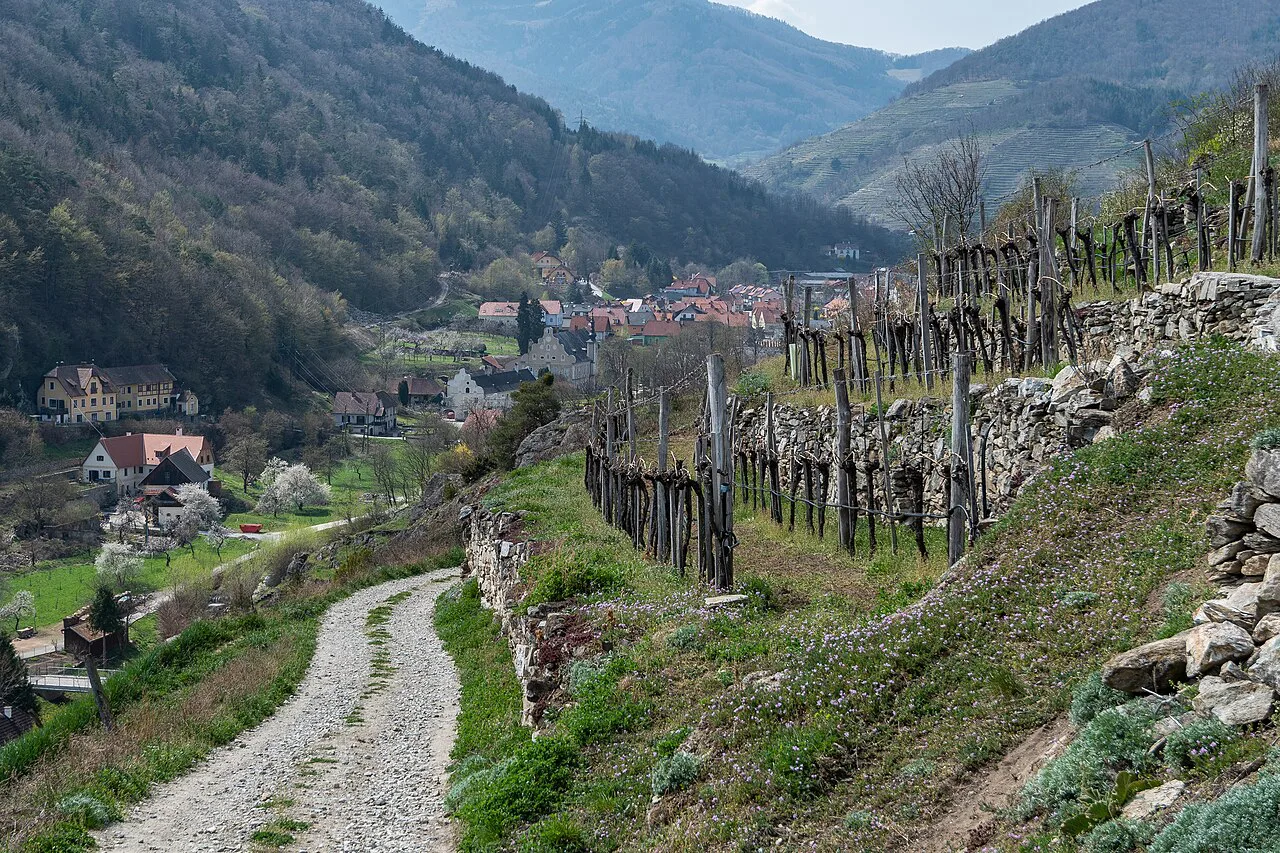
How Spitz is laid out: main square, church lanes and the Danube waterfront
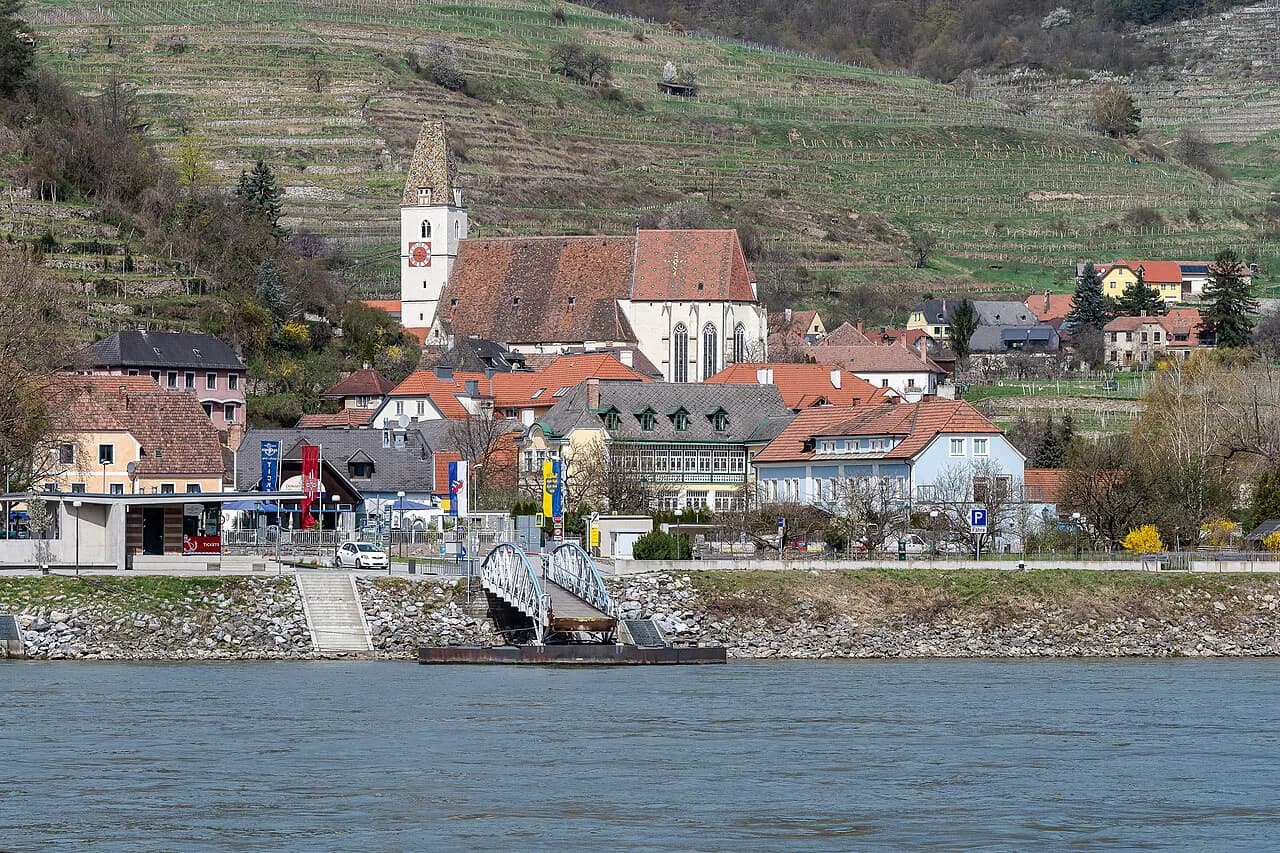
Spitz runs in a narrow band between the river and the hill. The old center clusters around the parish church and the small square just inland from the water, and narrow lanes climb from there toward the vineyard terraces. One practical rule: start at the riverbank, walk up through the lanes, and come back down on a different lane so you see the village from both directions.
In a village this small, the waterfront is the natural place to begin and end. The main villages on this stretch are served by river boat lines during the season, so the dock area changes with the ships; the rest of the village stays calm. Allow time to simply look back at the terraces from the water's edge, which is the view most photographs of Spitz try to capture.
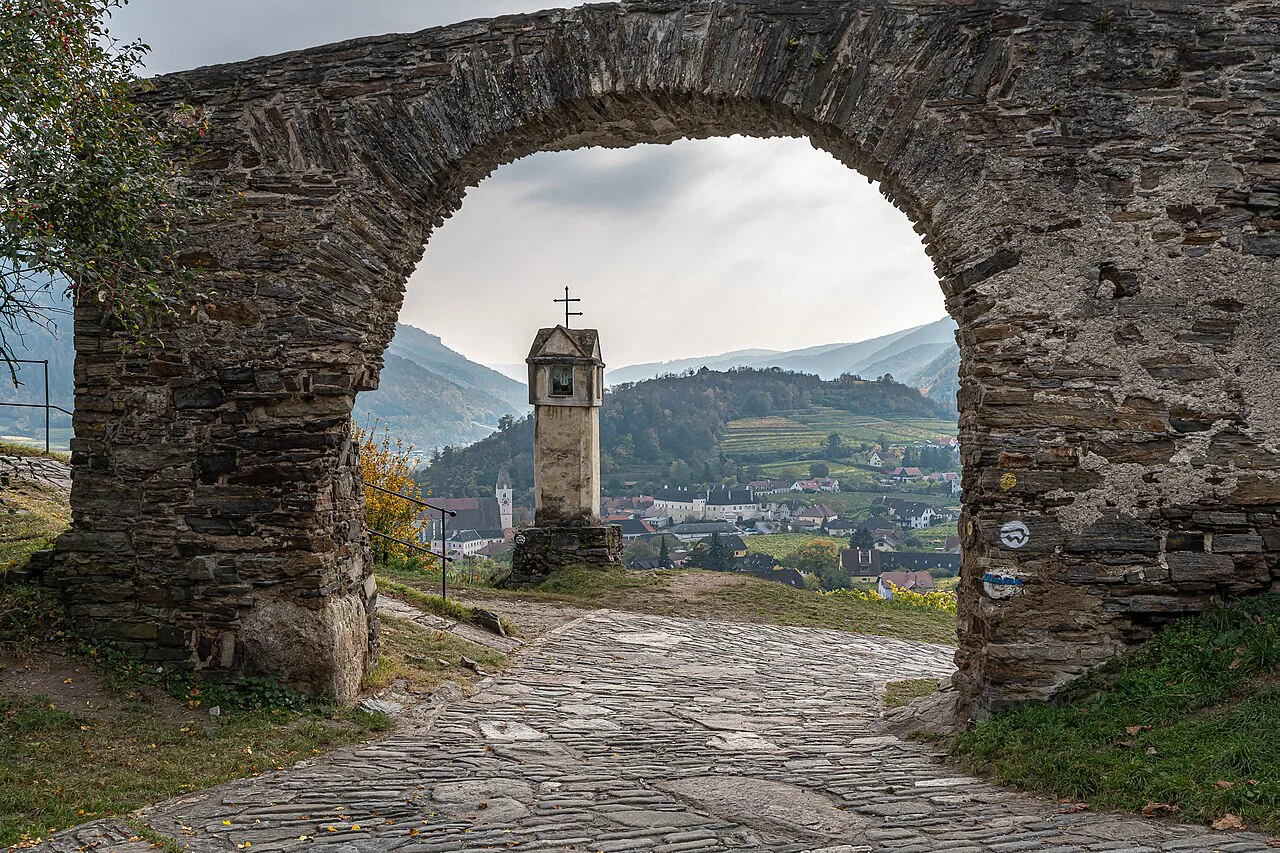
Tausend-Eimerberg: the vineyard hill above the village
Tausend-Eimerberg, the Thousand-Bucket Hill, rises directly behind Spitz and is the reason the village looks the way it does: the slope is one continuous set of stone-walled vineyard terraces. The name refers to the old measure of wine the hill reputedly could yield, and it still defines the local Riesling and Grüner Veltliner. You do not need to climb far to understand the place — a short ascent through the lanes opens up the view along the river.
Walking up the vineyard terraces is free and needs no ticket, which is the main reason a half-day here is easy on a budget. The trade-off is time and effort: the slope is steep, and the reward is a view rather than a museum interior. The Wachau World Heritage Trail runs through this landscape, and its riverside stages are a good way to understand how the terraces connect the villages.
The parish church and what a short walk covers
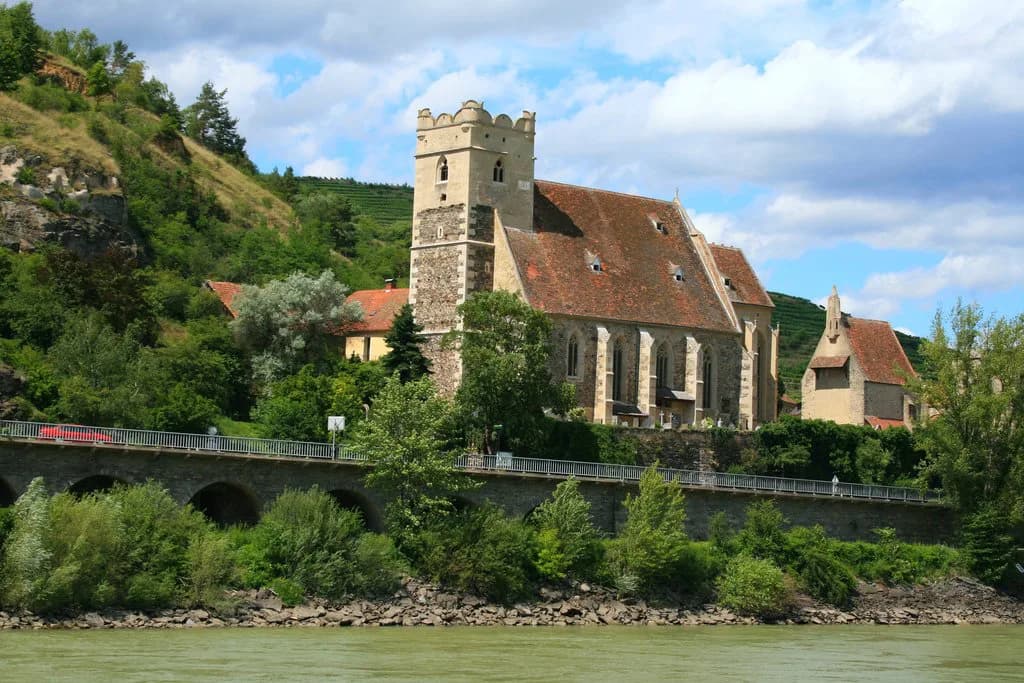
The parish church is the architectural anchor of the old center, and the lanes around it hold the village's older houses and a few wine-growers' signs. A circular walk of the church, the main square and the nearest climbing lanes takes well under an hour at a relaxed pace. Add the waterfront and you have a solid two-hour visit walking the village on foot.
The village itself is not a monument but a lived-in place, so the appeal is the street pattern rather than a single sight. If you are choosing how to spend a limited number of villages on a Wachau day, Spitz works best as the stop where you slow down between more famous names such as Weißenkirchen and Dürnstein.
Museums and the village's small sights
Spitz's appeal is riverside and agricultural rather than museum-heavy. The old lanes near the center are where the village's small details are, and they are worth a slow look because the street pattern frames the slope above. The shipping history of a Danube village like this one belongs to the working river, and the Wachau site links Spitz with the villages served by boat.
For a proper museum hour, plan around the region rather than Spitz alone. Krems an der Donau has the art mile, and the countryside holds the abbeys and castles that define the Wachau's visitors' calendar. Spitz is where you spend the unprogrammed time between those stops.
Crossing the Danube and how the far bank fits a visit
A ferry links the two banks of the Danube in this stretch, which makes Spitz a plausible point to cross rather than a dead end on the north bank. Crossing turns a linear river itinerary into a loop and lets you see the terraces from the south side, where the slope reads as a single wall of vineyard. Check the ferry's operating season before you build a crossing into the day, since the service is seasonal.
Getting to Spitz by train, bus or boat along the Danube
Spitz has a station on the Danube's north-bank railway line, and the village sits on the cycle path and the river's boat route, so trains, bicycles and cruise ships all reach it without a car. The Wachau site describes boat travel as the most comfortable way to see the region, and the river boats call at the main villages in season. Since timetables change, confirm departures on the operator's own site before choosing which leg goes by water.
Buses and trains along the valley also connect Spitz to its neighbors, though the exact departures are the one detail to verify on the day. Cars work too, provided you park at the edge of the village rather than driving into the lanes. The simplest route logic is to arrive by water or rail, walk the village, and leave the same way.
How Spitz fits a Wachau route with other towns and abbeys
Spitz slots naturally between the two anchors of the valley: Melk Abbey (Stift Melk) at the western end and Krems an der Donau at the eastern end, where the Danube reaches the larger town. A common route runs boat or train eastward from Melk through Spitz, Weißenkirchen and Dürnstein into Krems. Spitz is the stop where you get off, walk the lanes, and get back on with time unchanged.
Göttweig Abbey (Stift Göttweig), the Benedictine monastery that calls itself the Austrian Montecassino, sits on the eastern edge of the Wachau above the Danube and is normally open for visitors March through November, daily from 10 a.m. to 6 p.m., with last admission at 5 p.m. Its imperial staircase with Paul Troger's ceiling fresco is the highlight. If you add Göttweig, give Spitz the shorter two-hour treatment.
West of Spitz, Aggstein Castle keeps the medieval alternative to the baroque abbeys: a ruin high above the river with the Knights' Hall and terraces looking down the Danube. Between a ruin, an abbey and a wine village you have a full Wachau day that never repeats the same kind of sight.
Costs in euros: what a village stop costs
The village stop costs little: walking the lanes, the church square and the terraces is free and needs no ticket, and a picnic by the water beats a restaurant bill. The money goes on boats, museums and abbeys. For scale, Melk Abbey at the region's western end is the well-known ticketed sight, and Schloss Hof Estate further east in the Marchfeld publishes adult admission at €24.00, children from six at €13.50, and an annual ticket at €54.00.
Boat fares along the Danube vary by operator and leg and change seasonally, so read the price on the operator's own page before booking rather than assuming a figure. Budget for one paid sight per day and let Spitz be the free breather. That contrast is exactly why the village works as a stop.
Should Spitz be the stop you linger in?
Spitz an der Donau earns its place on a Wachau itinerary as the calm two-hour stop: the church and lanes, the vineyard hill, and a look across the river from the waterfront. If you want museums, go to Krems an der Donau; if you want an abbey interior, go to Melk Abbey. If you are carrying the same route further upriver, the Wachau Valley guide covers the villages around it.
Book the boat or check the train times before you arrive, since the village's small scale makes a missed departure costly in hours. Then plan Spitz as the hinge between the valley's bigger names and keep the rest of the day light.
Explore more Krems guides
Frequently Asked Questions
Do Danube boats stop at Spitz?
Yes. The Wachau boat lines call at the main riverside villages in season, and Spitz is one of them. Because departure times and seasons change, check the operator's current timetable before you rely on a boat leg.
Can you walk up the Tausend-Eimerberg vineyards?
The terraces above Spitz are working vineyards crossed by walking paths, and going up costs nothing as long as you stay on the paths and respect the vines. The climb is steep but short, and it gives the best view of the village from above.
Is Spitz an easy stop without a car?
Spitz has a railway station on the north-bank line and sits on the Danube cycle path, so trains, bikes and river boats all get you there. Confirm the day's departures on the operator's site, then walk the whole village on foot.
Sources
Notes for your next Austrian town break
Optional updates when we add or revise town guides.
You might also like
Continue reading
More guides you'll find useful