Melk, Austria: The Town Below the Abbey, Square by Square
Melk's old town sits below Stift Melk, a UNESCO-listed center of squares, lanes and a hilltop abbey. See what's in the town and how long it takes.
On this page
Melk rewards a walk before the abbey. The old center is small enough to cover on foot in a couple of hours, and the great Benedictine monastery on the hill is the reason most travelers stop at all. Together they fill a solid half day, and the town alone is a pleasant place to stretch your legs between boat and train.
This guide covers the town below the abbey: how the Hauptplatz, Rathausplatz and Sterngasse fit together, which small sights are worth the detour, and how to sequence an abbey visit with the lanes. It also explains how Melk slots into a Wachau Valley day by boat, train or car.
Melk at a Glance: Abbey Above, Old Town Below
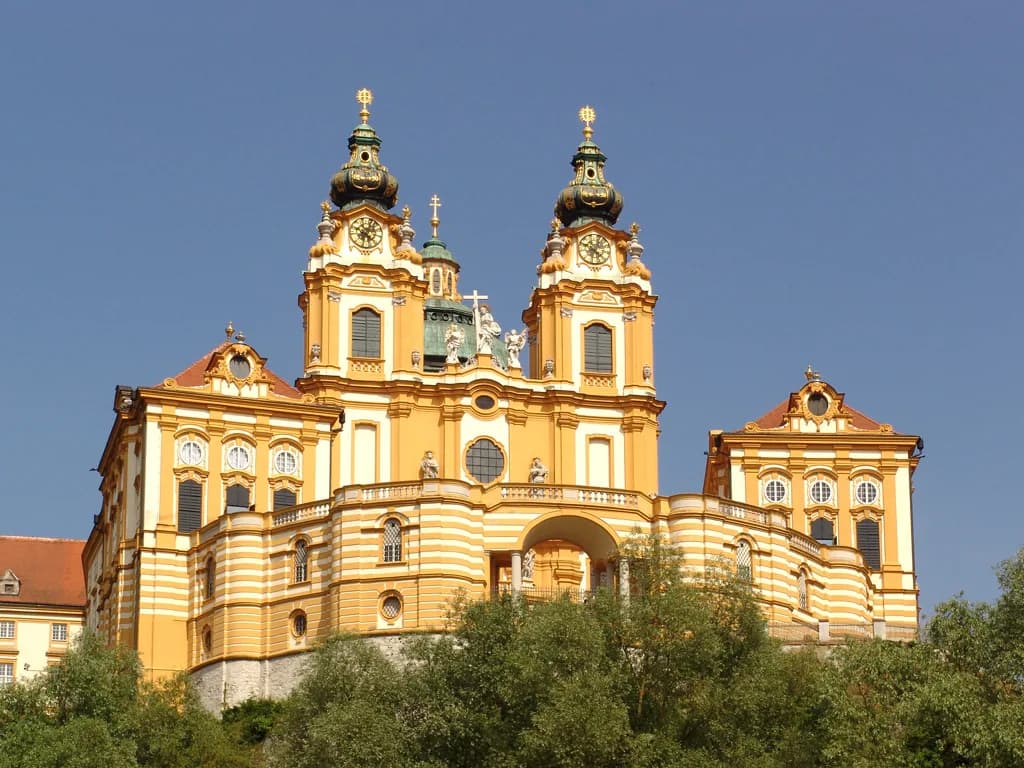
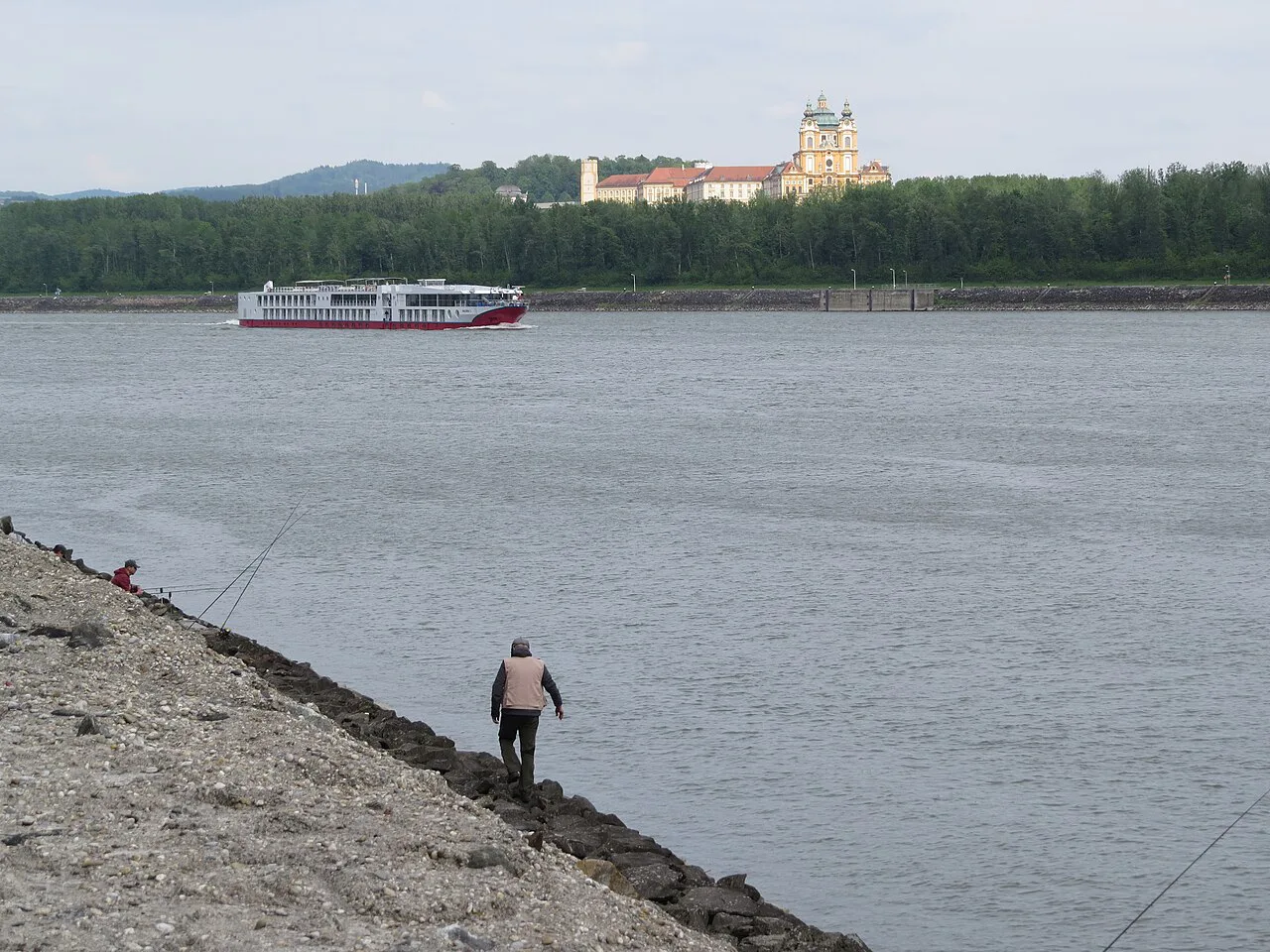
Melk sits where the Wachau opens up along the Danube, and for more than a thousand years it has been a religious and cultural center: first a Babenberger castle, then from 1089 a Benedictine monastery founded by Margrave Leopold II. The monastery still dominates the town from its hill, and the historic center below is itself part of the UNESCO World Heritage landscape.
That vertical layout decides how you visit. You walk the squares and lanes first, then climb to the abbey, or reverse it and come down for coffee and the parish church. Either way, allow time for the hill, because the abbey sits well above the streets and the approach is uphill.
Hauptplatz and Rathausplatz: The Heart of the Old Town
The Hauptplatz and the Rathausplatz next to it are the two rooms of Melk's old center, connected by the Hauptstrasse and short lanes. The town's tourism office lists both squares among its named sights, alongside the Sterngasse, the town walls and the former brewery. This is where you get your bearings: the abbey rises behind the rooftops, and the scale of the town becomes obvious within a few minutes.
In front of the Rathaus stands the Kolomanibrunnen, a stone fountain crowned by a figure of St. Koloman. It was made in 1687 for the prelates' courtyard at the monastery, then given to the town in 1722 by Abbot Berthold Bietmayr because it no longer suited the abbey's baroque plan. The saint in pilgrim's hat and staff stands on a base carried by four water-spouting dolphins in an octagonal basin, and the inscription records the donor and the year.
Look for the small shingled house on the west side of the Rathausplatz, where the Sterngasse leaves the Hauptstrasse. Called the Alte Brotladen, it dates from the 17th century and has two round turrets and keyhole slits. Melk's three bakers ran it jointly and in rotation, and a baker's widow was allowed to sell their bread there as a modest income.
Sterngasse, Haus am Stein and the Lanes
The Sterngasse is the lane that bends away from the Rathausplatz corner and is one of the town's listed sights in its own right. Walk it slowly: the old center is a loop of narrow streets rather than a single promenade, and the small details, house signs, wrought-iron gates and old wells, are what make the walk. Photographers will find motifs in every direction, from facades to the abbey overhead.
Haus am Stein began as a 15th-century tower converted into a dwelling, and it is known for its view over the town. Treat it as a viewpoint stop on your loop rather than a sight with a ticket desk, and use the lanes and squares to frame the abbey rising above the rooftops.
Stadtpfarrkirche Mariä Himmelfahrt
Melk's parish church, the Stadtpfarrkirche Mariä Himmelfahrt, stands in the old center and is the counterweight to the abbey's grandeur. A chapel existed in the town by the 13th century, was enlarged into a church in the second half of the 15th century, and received parish rights in 1508. After the great fire of 1847 it was given a neo-Gothic west front and, in 1868, its tower with a pointed stone helm.
Inside, the late-Gothic stepped church retains Gothic features apart from the baroque Maria Hilf chapel. Between two northern buttresses stands the Ölberg relief, considered the finest late-Gothic Calvary scene in Lower Austria and attributed to a master of the Danube school around 1520. The church is a working parish, so visit respectfully and check locally whether the doors are open when you arrive.
Stift Melk (Melk Abbey) Above the Town
Melk Abbey (Stift Melk) is the centerpiece and follows a set route. In the Kaiserzimmer, rooms that once housed Emperor Charles VI, Maria Theresa, Pope Pius VI and Napoleon, a permanent exhibition uses pieces from the abbey's treasury, archive and library to tell the monastery's history. The Marmorsaal and the library, with Paul Troger's frescoes, are part of the tour, as is the terrace with its view over the Danube and the west front of the abbey church.
Visits run as guided tours, and the abbey is still home to a small community of monks, so you follow the monastery's own route and timing rather than wandering freely. Check the abbey's published tour schedule for the day you plan to come and build the town walk around it. Booking ahead matters most in the middle of the day, when tour groups arrive together.
The Rest of the Old Town: Walls, Stadtpark and Kunstmeile
Beyond the squares, several fragments of the town wall survive, and the town's tourism office lists them among the sights along with the former brewery, the cottage-villa quarter and the old post building. The Stadtpark, opened in 1886, holds a tree trail created in 2018, plus the small private allotment gardens along the railway line that are typical of much of Central Europe.
The Kunstmeile Melk is an open-air art mile, still being extended, that mixes modern sculpture with older works across the town. It works well as the connective tissue between the squares. A nature-protected vine several centuries old is another of the town's small curiosities, listed with the sights.
The Danube Side: Hubbrücke and the Landing
The Danube edge is part of the town, not a separate excursion. The Hubbrücke and its viewing platform are listed among Melk's sights, and the riverbank is where boat passengers arrive and where cyclists on the Danube Cycle Path roll through. Come down here at the end of the day for the light on the water and the abbey above you.
Melk is a Danube town and the riverbank is where boat passengers and cyclists on the Danube Cycle Path arrive; boat trips along the Wachau can start or finish here. Boat schedules change with the season, and the operator's timetable is the only reliable source for departure times; check it the day before you travel.
How Long Melk Needs
Budget a half day for the abbey plus the old-town lanes, and a full day if you add a boat leg or a long lunch. The town center itself is compact: Hauptplatz, Rathausplatz, Sterngasse, the parish church and the Danube bank are all within a short walk of each other. The uphill approach to the abbey and the guided-tour format are what stretch the visit.
If you are short on time, choose one: the abbey interior, or the town walk with the parish church and the Danube. The town is the better choice on a tight train connection, because the squares and the lanes do not depend on a tour slot. The abbey is the better choice if you have not seen a baroque monastery interior before.
Fitting Melk into a Wachau Route
Melk is the western gateway to the Wachau, which makes it a natural first or last stop on a river-and-vineyard route. Krems an der Donau anchors the eastern end, and boats and the riverside path connect the villages between the two. Coming from Krems by boat and returning by train is the classic loop; check current departure times with the boat operator and ÖBB rather than relying on memory.
By car, Melk sits close to the Danube road and is easy to combine with Spitz an der Donau and Weissenkirchen further upriver, where the terraced vineyards begin. Parking in the old center is limited, so plan to leave the car and walk. The Wachau Valley Guide covers the wider routing if you are building a multi-day loop.
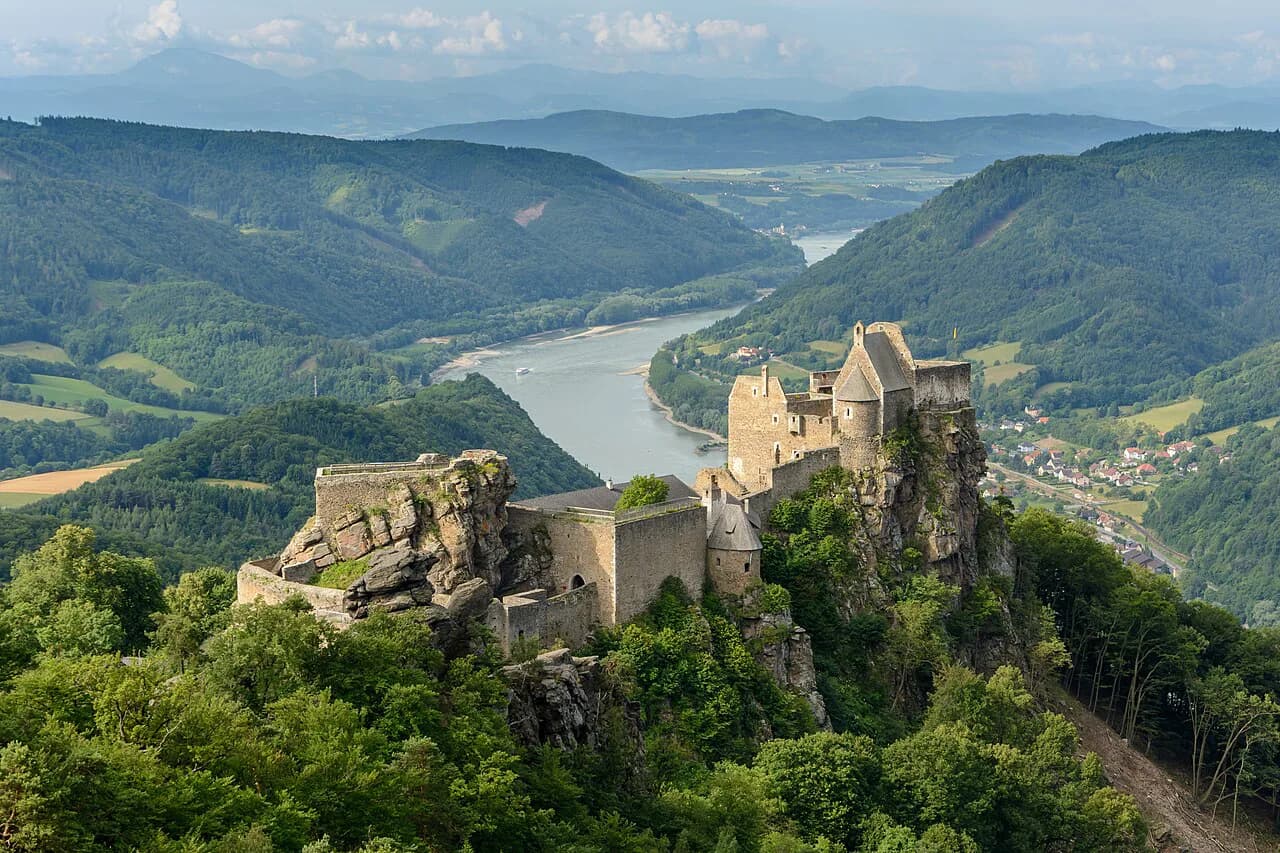
Two further stops shape a Wachau day. Dürnstein has the blue-and-white Stiftskirche and the castle ruins above the river, and Aggstein Castle perches on its ridge across the valley. Both are short hops from Melk by boat, bus or car, and both reward an early start before the midday rush.
Practical Trade-offs
The abbey is a guided-tour visit at set times, so the town walk has to fit around it rather than the other way round. Midday brings the heaviest arrivals, both at the abbey gate and in the lanes; morning and late afternoon are calmer on the squares.
The parish church, the Danube bank, the Kunstmeile and the squares are outdoor or publicly accessible parts of the town, which makes Melk a low-cost stop apart from the abbey ticket. Prices for the abbey are published on the monastery's own site, so check there before you go. The town is small enough that you never need a bus or taxi once you have arrived.
Sequence Your Melk Stop Around the Abbey Tour
The workable plan is simple: lock in an abbey tour slot first, then build the town walk around it. Do the Hauptplatz and Rathausplatz, walk the Sterngasse, step into the parish church, and finish at the Hubbrücke with the abbey above you. That order keeps the uphill climb at the right point in the day and leaves the flat lanes for when you are tired.
If you are continuing along the Danube, decide the direction now: boat upstream to Spitz and Weissenkirchen, or train east toward Krems. Either way, confirm the day's departures with the operator and ÖBB before you commit to a return time. Reserve the abbey slot online where the monastery offers it, especially for a summer visit.
Explore more Krems guides
Sources
Notes for your next Austrian town break
Optional updates when we add or revise town guides.
You might also like
Continue reading
More guides you'll find useful