Dürnstein, Austria: Blue Abbey Tower, Castle Ruins and Old Town
Dürnstein in the Wachau pairs a blue-and-white abbey tower with castle ruins above the Danube. Here is what to see and how the town is laid out.
On this page
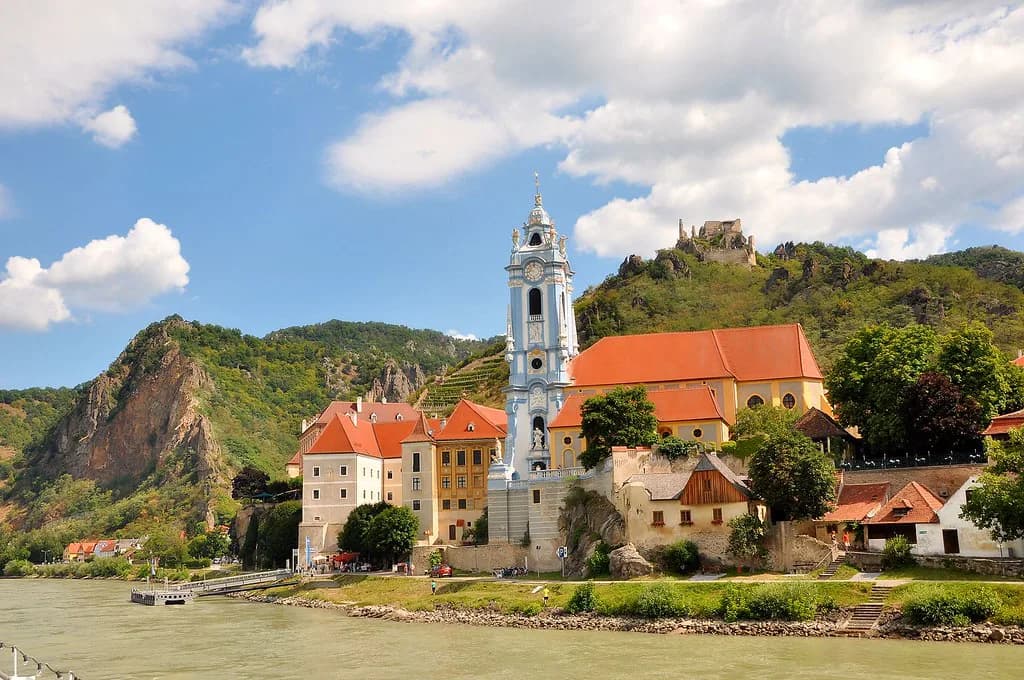
Dürnstein is a small Wachau town on the Danube known for two things you can see from the river: the blue-and-white tower of Stift Dürnstein (Dürnstein Abbey) and the castle ruins on the rock above, where Richard the Lionheart was held in 1192–1193. The whole historic core is compact and vertical — river landing, lanes and abbey below, ruins above — so a visit is mostly a short walk with one climb attached. This guide covers the layout, the abbey church, the lanes and churches of the old town, and how to sequence a stop here as part of a Wachau day.
Where Dürnstein sits in the Wachau and what the town is known for
Dürnstein lies in the Wachau, the Danube gorge between Krems and Melk where terraced vineyards and stone towns line both banks. Its reputation rests on the abbey with its striking blue church tower and magnificent baroque church, the medieval lanes preserved behind the riverfront, and the ruins of the Kuenringer castle on the rock overhead.
The town's history is bound up with the Kuenringer dynasty, who built the castle, and with the English king Richard the Lionheart, imprisoned there from 1192 to 1193. The abbey's permanent exhibition, billed as an invitation to discover the precious, gives the church and its treasures context before you walk the lanes. That combination of one great church, one ruin and one short Gothic main street is the reason Dürnstein holds a place on nearly every Wachau itinerary.
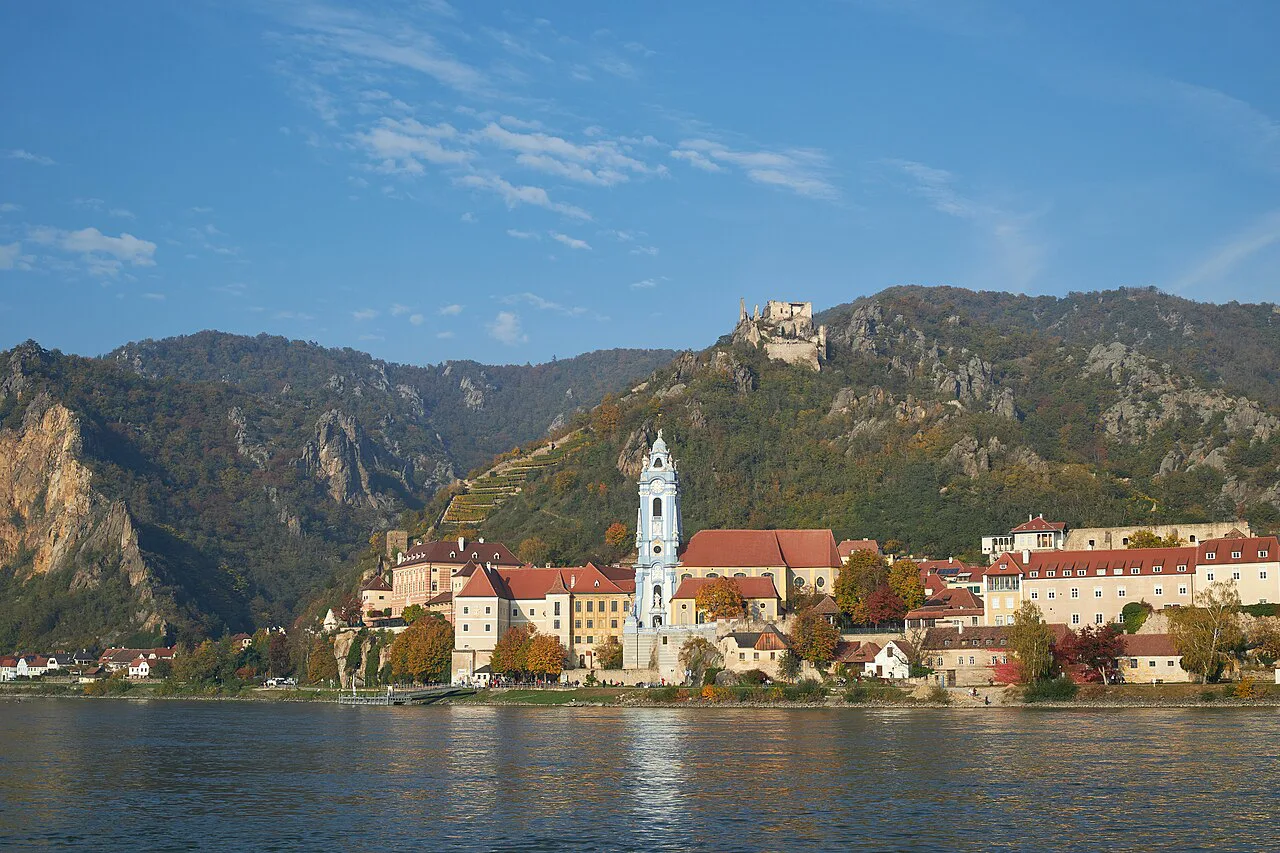
The layout: Danube landing, old-town lanes, Prangerplatz and the abbey
Think of Dürnstein in three horizontal bands. At river level sit the Danube landing and the main street, lined with small stores and boutiques; above it, terraced against the slope, the abbey complex with its blue tower; and on the rock highest up, the castle ruins. Because the town is so narrow, everything on this list is within a few minutes of everything else on foot, but the vertical gain is what makes the walk feel longer than the map suggests.
Two named spots anchor the old town: Prangerplatz, the small square where the pillory once stood, and Kunigunden Church, a chapel that predates the baroque rebuilding around it. Gothic, Renaissance and Baroque elements sit side by side in the town houses, which is why the lanes read as a layered medieval streetscape rather than a single-period ensemble. Look for the Kremser Tor, the old gate through which the road leaves town toward the vineyards and Loiben.
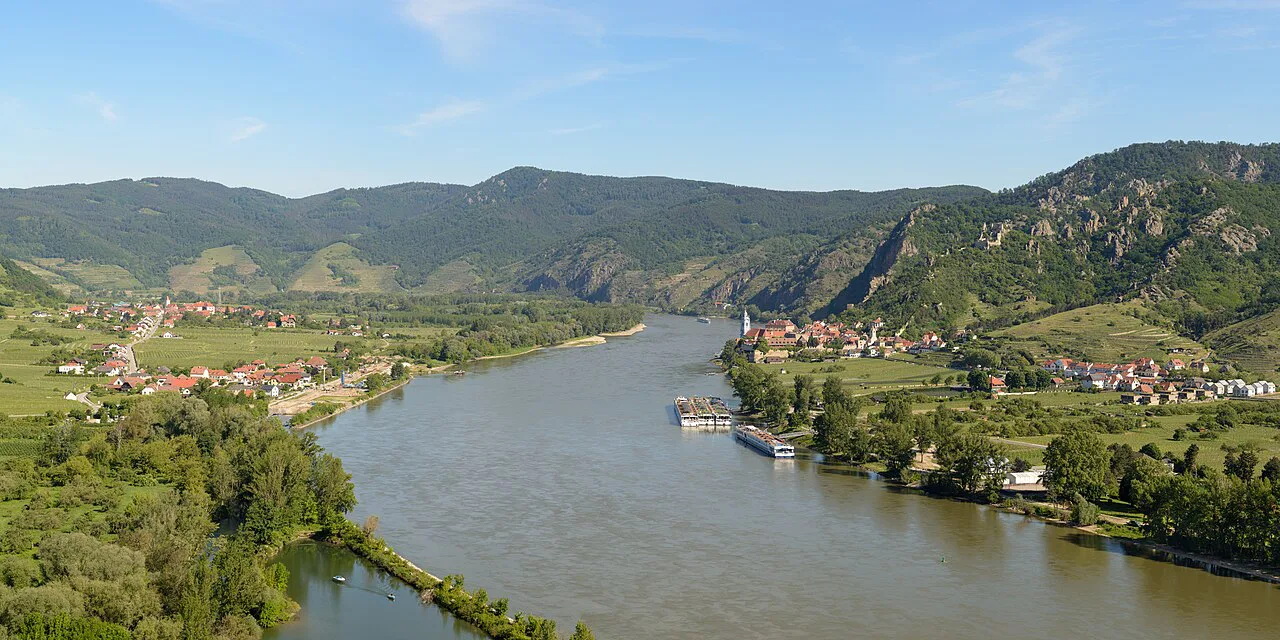
Stift Dürnstein: the blue tower, the baroque church and the exhibition
The abbey is the visual signature of Dürnstein and the reason many travelers step off a boat here. The blue-and-white tower belongs to the baroque church, whose interior is the town's principal artistic set piece; the adjacent exhibition explains the foundation and its treasures. Budget the abbey as a single stop rather than a museum circuit, and check the abbey's own published opening season and admission before you build a day around it, since the ruins are the town's only sight the source calls freely accessible all year round.
If baroque churches are the point of your Austria trip, the abbey here is the small, riverfront counterpart to the great monasteries along the Danube, above all Melk Abbey (Stift Melk) further upstream. Seeing a riverside church of this scale after one of the giant monasteries makes the difference in size and setting clear.
Kunigunden Church and the lanes of town houses
Walk the main street slowly and look up: the facades mix Gothic, Renaissance and Baroque details in a way that rewards close reading more than a checklist. Kunigunden Church is the oldest-surviving piece of the picture and sits among the lanes rather than on a grand square. Prangerplatz gives the old town its one small open space, a natural pause between the abbey and the river.
The lanes are also where Dürnstein's everyday commerce sits: small stores and boutiques, inns and taverns, and restaurants including Toque-awarded kitchens. Treat the street as the place to eat and shop around the sightseeing rather than as a sight in itself, and expect the narrowest sections to be busiest when boat groups arrive.
The Dürnstein ruins: the castle where Richard the Lionheart was held
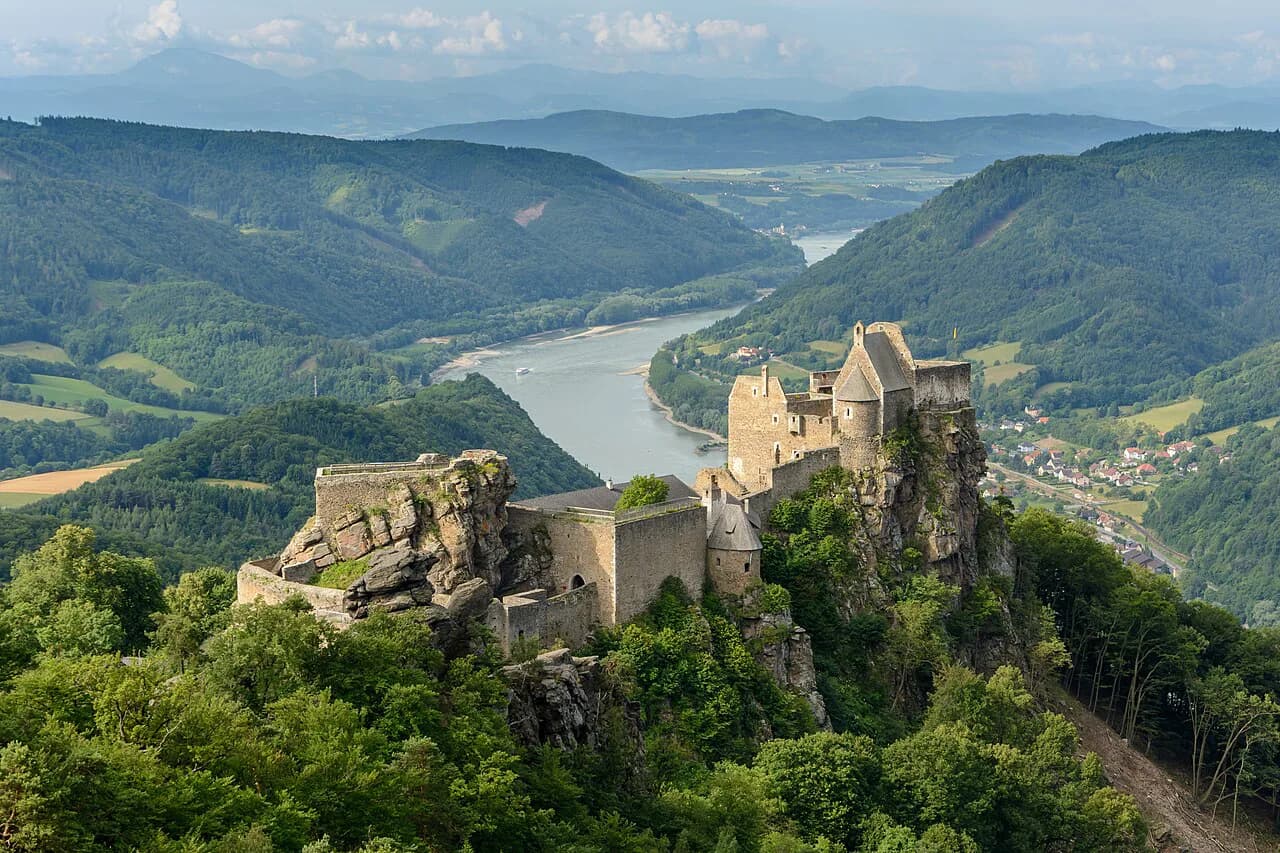
The Dürnstein ruins were once the castle of the Kuenringer dynasty, and Richard the Lionheart was imprisoned here from 1192 to 1193. The ruins are freely accessible all year round, which makes them the one sight in town you can count on outside the main visitor season. The reward at the top is a panorama far across the Danube valley, with the river, the abbey tower and the opposite bank laid out below.
Plan the climb as part of the visit rather than an optional extra, because it is the only part of Dürnstein that asks real effort of you. The path rises through the rock formations above the town, so wear proper shoes and leave the abbey interior for after you come down, when you can sit. Travelers who want the history of the fortress and its walls before climbing will find it worth reading up in advance.
Walking the old town: a short route from the river to the abbey
Start at the Danube landing, where boats tie up and the main street begins, and walk inland through the lanes past the stores toward Prangerplatz. From there, Kunigunden Church and the abbey church with the blue tower are minutes away, and the path up to the ruins leaves from the edge of the built-up center. Doing the town in this order keeps the climb as the finale rather than an interruption.
The most beautiful extension on foot leads out through the Kremser Tor and up into the vineyards toward Loiben, past the rock formations that frame the town. That makes Dürnstein one of the few Wachau stops where the walk out of town is as good as the walk through it. The road approach from Krems runs along the Danube bank and delivers you close to the riverfront.
How long Dürnstein needs, and how to order the visit
Half a day covers Dürnstein well: the lanes, the abbey church, Kunigunden Church and the climb to the ruins, with time to sit. The order that works best is riverfront first, abbey second, ruins last, because the abbey interior is a fixed-hours stop while the ruins are open whenever you arrive. If you are short on time, the ruins and the exterior of the blue tower are the two things to keep.
Dürnstein works as a stop on a Wachau day rather than a base, tied as it is to the river landing and the road from Krems. Travelers assembling an itinerary usually pair it with the abbey towns further upstream; Melk: The Town Below Stift Melk and How It Fits a Wachau Route explains how the western end of the valley fits with a stop here.
Getting there: Danube boats, the road from Krems and the Wachau route
Dürnstein is reached two ways: by boat along the Danube, which lands passengers at the riverfront, and by road from Krems, which follows the bank through the vineyards. Bus and train services along the valley exist, but schedules change seasonally, so check the operator's current timetable for the day you travel instead of relying on a printed plan. With a car, the riverside road is the practical approach. Confirm current boat sailing times and landing arrangements with the operator before you set out.
On a longer Wachau route, Dürnstein sits between Krems downstream and the towns toward Spitz an der Donau and Melk upstream, which makes it easy to slot between two other stops. Guests arriving by boat often continue on the same line; those driving usually pair it with one more town on the same bank. Weissenkirchen in der Wachau and Spitz an der Donau are the next stops upstream.
Seasonal constraints: what opens when
The ruins are the reliable year-round element, freely accessible on any day you arrive. The abbey, the Kuenringerbad Dürnstein and the slow train through the vineyards are the seasonal pieces: the pool operates in the summer months as Lower Austria's only fully biological swimming pool, and the vineyard train runs on its own schedule. Confirm the abbey's published season and the pool and train operating dates before planning a day around them, using the town's official Dürnstein page as a starting point.
For the wider valley, Krems is the practical gateway, and its other sights — the Steiner Tor and the museums of the old town — work well as a prelude before you drive or sail into the Wachau. If you are planning the valley in depth rather than a single stop, the Wachau Valley guide covers the full chain of towns and the river links between them.
Which half of Dürnstein do you book around?
If your day depends on the abbey, its interior and exhibition, build the visit around its published season and set your other stops around that. If it depends on the ruins and the lanes, you can go any time of year and climb whenever you like. For most travelers assembling a Wachau day, Dürnstein earns a half-day stop tied to the river landing, with the ruins as the finish rather than a side trip.
Frequently Asked Questions
What is Dürnstein known for?
Dürnstein is known for the blue-and-white tower of Stift Dürnstein (Dürnstein Abbey) and its baroque church, and for the castle ruins on the rock above the Danube where Richard the Lionheart was held in 1192–1193. The medieval lanes with Gothic, Renaissance and Baroque houses and the named spots Prangerplatz and Kunigunden Church make up the rest of the short walk.
How hard is the climb to the Dürnstein ruins?
The path up is steep but short, following the rock above the town to the freely accessible ruins. Wear shoes with grip, climb before or after the abbey rather than between, and allow time at the top for the panorama over the Danube valley. Travelers with limited mobility can still see the lanes, the abbey church and the riverfront and skip the climb.
Where is Dürnstein, Austria?
Dürnstein is on the Danube in the Wachau, the valley between Krems an der Donau and Melk in Lower Austria. Boats on the Danube stop at the river landing, and the road from Krems follows the bank into town.
Sources
Notes for your next Austrian town break
Optional updates when we add or revise town guides.
You might also like
Continue reading
More guides you'll find useful