Melk Abbey: What to See Inside Austria's Great Baroque Monastery
Melk Abbey above the Danube is Austria's grandest baroque monastery. Here is what your ticket covers, how long to allow, and how to arrive by train or bus.
On this page
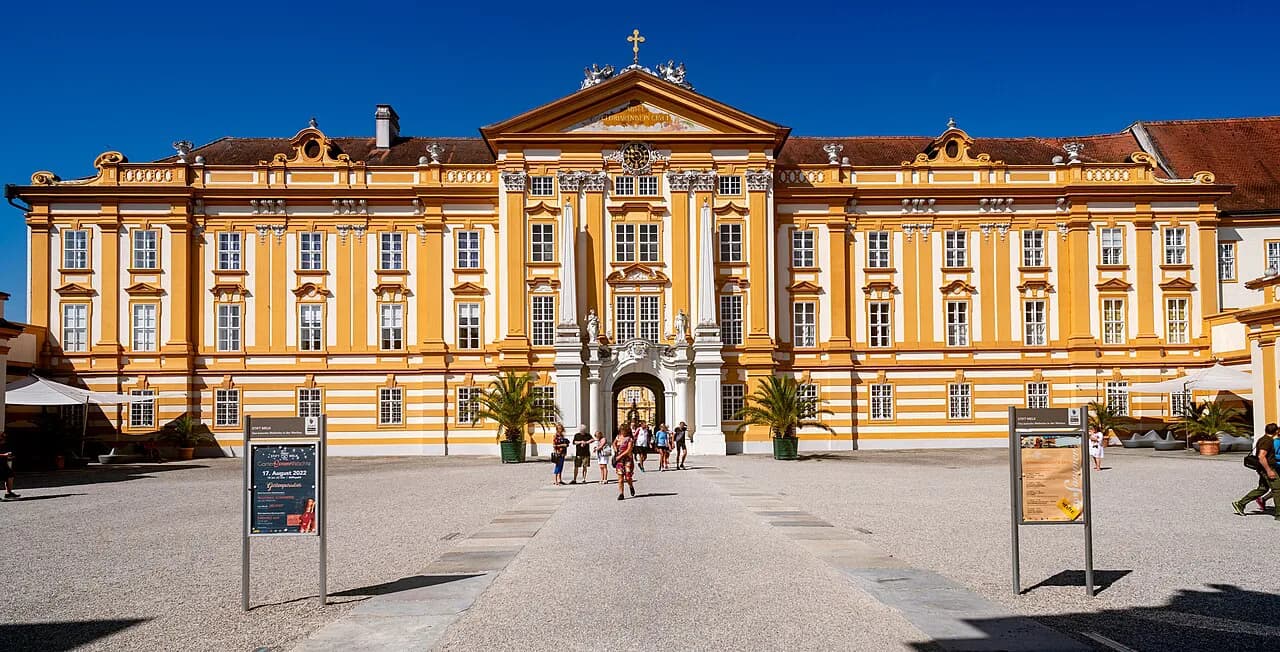
Melk Abbey is worth a half day: a single ticket carries you through the imperial rooms and museum, the Marmorsaal (Marble Hall), the balcony looking over the Danube valley, the Stiftsbibliothek (abbey library) and the Stiftskirche (abbey church). Benedictine monks have lived and worked on this bluff above the Danube since 1089, and the rebuilding of the early 1700s left one of Europe's largest and most uniform baroque ensembles, set inside the UNESCO-listed Wachau cultural landscape. This guide walks through the rooms in order, explains what the ticket does and does not cover, gives the current prices in euros, sets out the season and last admission, and shows how to reach the abbey by train, bus or car.
A working monastery, not a museum piece
The monks are not a historical exhibit: the community still runs the monastery, a school and the estate, which is why parts of the complex feel active rather than curated. The visitor route threads through the showpiece rooms while the religious life continues alongside it, so treat the church as a place of worship first. The setting does much of the work — the abbey sits on a rise directly above the Danube, and the Wachau Valley around it is farmed and settled right up to the water.
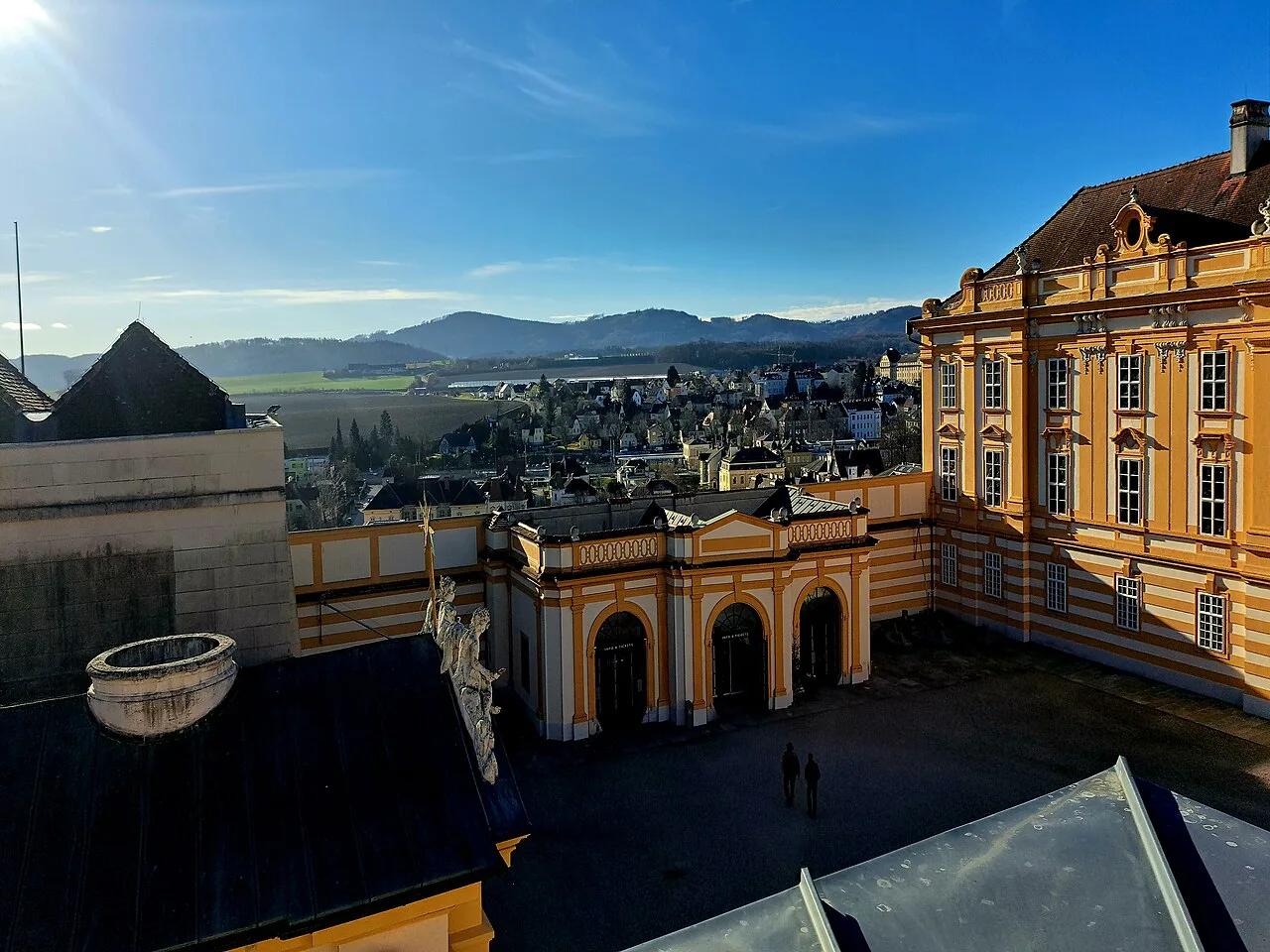
What your ticket covers: the imperial rooms and museum
Start with the imperial rooms and the museum, which set out the abbey's history and its role as a courtly residence on the Danube; the same ticket also admits you to special exhibitions. The route continues through the Marmorsaal, a ceremonial hall in colored marble and fresco, and out onto the Altane, the connecting balcony between the Marble Hall and the library, where the view opens across the Danube valley. The Stiftsbibliothek follows, a long baroque room whose manuscript holdings are the reason many travelers rate it the highlight of the circuit.
The Nordbastei, a northern bastion of the complex, houses the Wachaulabor, a student-run project space that approaches the region's themes experimentally rather than as a conventional display; it is open to visitors within the abbey admission. If you are traveling with someone who tires of state rooms, this makes a useful change of pace between the museum and the church.
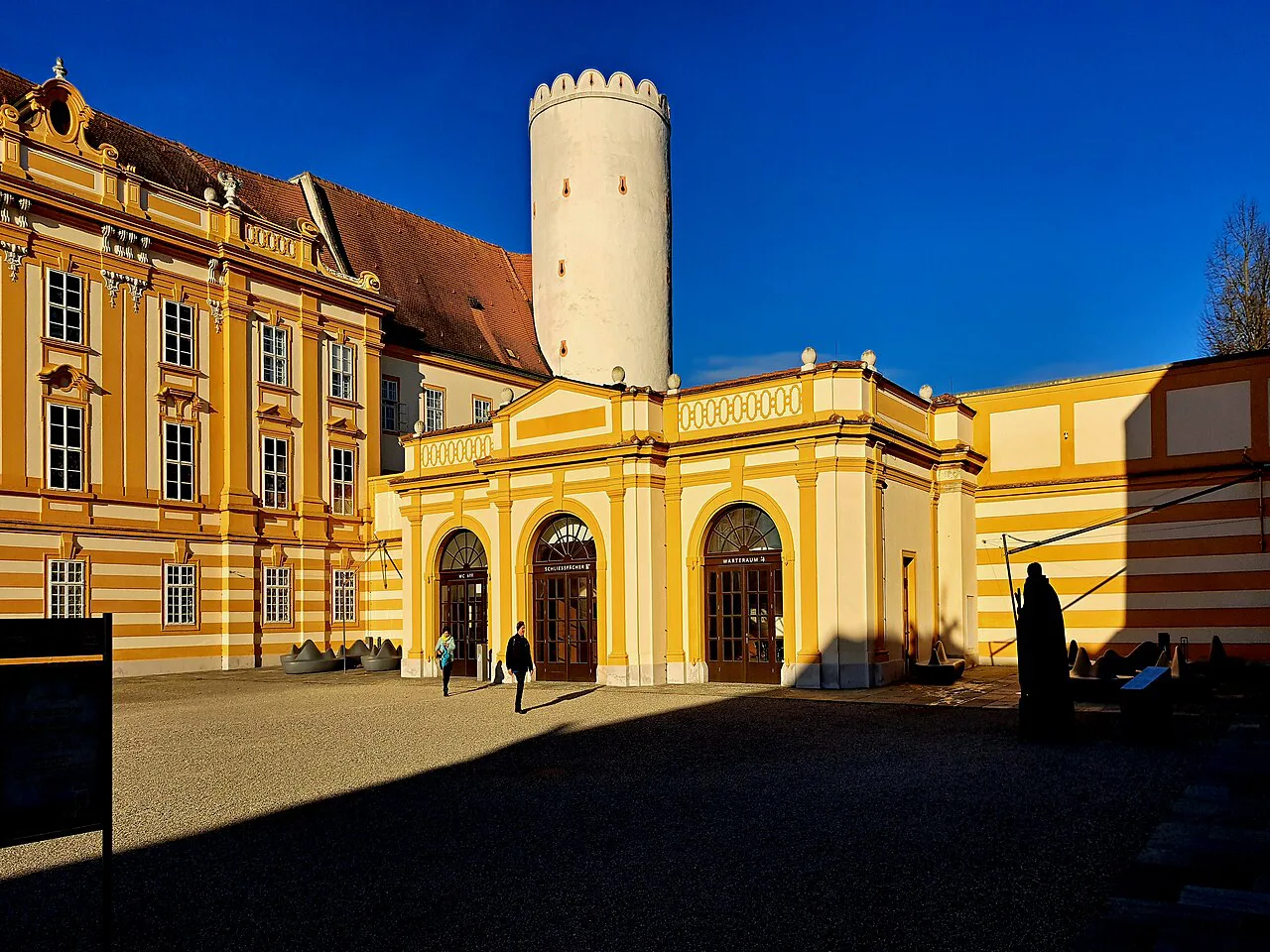
The Stiftskirche: high baroque without a guide
The abbey church is the masterpiece of the whole ensemble, with precious frescoes, paintings and a lavish high altar, and you can walk in without joining a guided tour. Set aside time here rather than hurrying through on the way to the exit, because the interior is the one room most visitors remember. The church is also where services take place, so keep your voice down and step aside when a service is forming.
The Stiftspark: baroque parterre and English landscape garden
The Stiftspark mixes baroque garden structure with English landscape-garden planting, and the baroque pavilion holds frescoes by the Bohemian painter Johann Wenzel Bergl. Look for the Benediktusweg, a meditative path, and the "Sprechenden Steine", stones that tell the creation story in children's voices. The small, densely planted Paradiesgärtlein is tucked away and easy to miss at the end of a loop. The abbey's own site describes the grounds and the visitor route in more detail.
The garden has its own ticket, which is the right purchase if you want the grounds and the Danube view without the museum circuit. The park-only rate is cheaper than full admission, and students and children pay less again, so a family that has already seen the abbey interiors can split the visit.
Guided tour or self-guided walk?
Themed guided tours take you through the Marmorsaal, Kaisergang, library and museum with commentary a self-guided walk cannot give, and they run at set times, which anchors your day whether you want it anchored or not. Self-guided admission lets you move at your own pace and linger in the church or on the Altane, and it suits anyone arriving by train with a boat or bus to catch later. Choose the tour if this is your only baroque monastery and you want the context; choose the self-guided route if you would rather spend the time looking.
Season, opening hours and last admission
In 2026 the abbey opens for visits from 28 March to 1 November. From 28 to 31 March and again on 1 November, hours are 9.00–16.30 with last entry at 16.00; from 1 April to 31 October, hours run 9.00–17.30 with last entry at 17.00. The complex is closed on the afternoon of 24 December.
Those spring and November days matter more than they look: the doors shut an hour earlier and the last entry is at 16.00, so a late-afternoon train from Vienna will not leave time for the full circuit. Aim to be inside by mid-afternoon on those dates. Outside the visit season the abbey is not open to tourists, so a November or March trip needs the dates checked before you build a Wachau itinerary around it.
Separately, the abbey lists a daily tourist information line reachable from 8.30 to 16.30, useful if you need to confirm the day's arrangements before setting out.
Ticket prices in euros
Adult admission is 16 EUR, and students up to 27 with ID pay 8 EUR. The abbey garden on its own is 5.50 EUR for adults, 4 EUR for students and 1.50 EUR for children from age 6. Group rates exist as well, so a larger party should ask when booking rather than paying adult rates one by one.
How long to allow, and where to eat
Budget two to three hours for the rooms, the church and a walk through the garden; the museum and library alone can absorb ninety minutes if you read the displays. The complex has a restaurant and café, plus a souvenir shop, so you can eat on site instead of descending into town first. If you want the old town as well, the walk down from the abbey is short and puts you in Melk for the rest of the afternoon.
Getting there by train and bus
Melk's station is about 10 minutes from Melk, and the abbey rises on the bluff above the old town, which makes the train from Vienna or Salzburg the simplest car-free approach. VOR bus lines 715 (Krems–Spitz–Melk), 720 (Krems–Rossatz–Melk) and 721 (Emmersdorf–Melk–Schallaburg) connect the abbey town with the rest of the valley. From Krems an der Donau you can ride the bus up the Danube instead of driving.
Driving and parking at the abbey
The large abbey lot sits at the complex and has E-charging stations; parking is free for visitors who buy an abbey ticket, but you must have the parking ticket validated at the ticket desk in the first courtyard when you pay for admission. If you pull in and change your mind, you can leave within 15 minutes of taking an entry ticket without paying, which is the escape route when the lot is fuller than expected. Tour buses use the same lot and park free.
Melk on a Wachau route
Melk anchors the western end of the Wachau, so most itineraries pair it with a boat or bus run east through Spitz and Weissenkirchen toward Krems, or with a train ride from Vienna and a return the same day. Arriving by river fits a boat run through the valley; arriving by train is faster and independent of river schedules. Either way, the abbey is the morning stop and the valley the afternoon, or the reverse if you are coming from Krems.
If you are stringing together baroque sights along the river, Dürnstein with its blue church tower and ruined castle is the obvious next stop east of Melk. Both sit on the same bus and boat corridor, so a single day can hold the abbey and one valley town without rushing.
Is the ticket worth it if you only have a morning?
With a morning in Melk, buy the full admission and move briskly: the museum, the Marmorsaal with the Altane view, the library and the church are the core, and you can skip the park if time runs short. Anyone with a Danube cruise or a train to catch should enter as early as the doors allow rather than counting on the last hour. If your schedule only fits the garden, the park-only ticket still gives you the pavilion frescoes and the view without the interior circuit.
Explore more Krems guides
Frequently Asked Questions
Do monks still live at Melk Abbey?
Yes. Benedictine monks have lived and worked at Melk in unbroken tradition since 1089, and the community still runs the monastery, its school and its estate today. For visitors this means the church is an active place of worship, so keep noise down and give way when a service is forming.
Is there a dress code for Melk Abbey?
Because the Stiftskirche is a working church, modest dress and quiet behavior are the sensible default, especially during services.
Can I visit the abbey church without a guided tour?
Yes. The Stiftskirche can be visited without a guide, and it is included with admission to the abbey rather than sold as a separate ticket. Guided tours add commentary on the Marmorsaal, Kaisergang, library and museum, but the church itself is open to walk through on your own.
Sources
Notes for your next Austrian town break
Optional updates when we add or revise town guides.
You might also like
Continue reading
More guides you'll find useful