Wachau Valley Guide: Melk, Dürnstein, Spitz and Krems on the Danube
Plan the Wachau Valley between Melk and Krems: Melk Abbey, Dürnstein's blue tower and castle ruin, Spitz, Göttweig and the Kunstmeile museums in Krems.
On this page
The Wachau Valley is the roughly 30-kilometer stretch of the Danube between Melk and Krems in Lower Austria, protected as a UNESCO World Cultural Landscape and best seen as a chain of riverside towns rather than a single sight. Almost every visitor builds the trip around three anchors: Stift Melk above the river, the blue-and-white abbey tower at Dürnstein, and the old town and museum strip at Krems. This guide puts the towns in river order, explains what each stop contains, and lays out the real choice between boat, train, bike and car.
The valley sits about 80 kilometers west of Vienna, which makes it the most practical first excursion from the capital into the countryside. The Danube carves a mild, south-facing trough here, and the terraced vineyards above the water are why the region is known for its wines and apricots. Read the sections in order if you are building a route, or jump straight to the transport section if your stops are already fixed.
How the Wachau Valley is laid out along the Danube
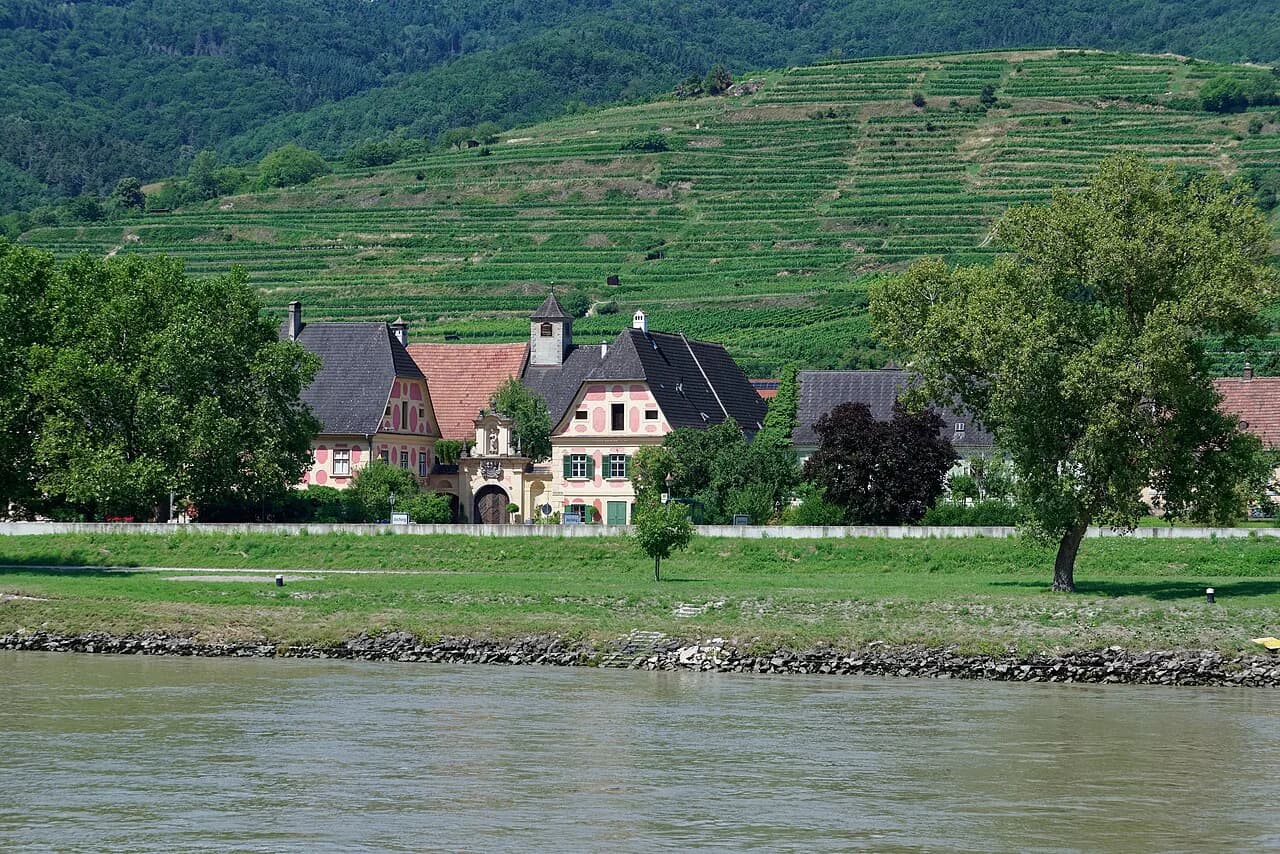
Think of the Wachau as a corridor running west from Krems an der Donau to Melk, with the Danube bending between steep vineyard terraces on both banks. The south bank carries the main road and the railway and holds Dürnstein, Weissenkirchen and Spitz; Melk sits at the western end and Krems anchors the eastern end. Because the river does the organizing, a route is simply a list of towns in order, not a web of detours.
Distances are short but the scenery is the point, so fast transit defeats the purpose. The river towns connect by riverside road, by train on the south bank and by seasonal boat services on the water, and the Donauradweg runs the length of the valley as a flat, signposted route along the river. The Welterbesteig Wachau links 13 municipalities of the World Heritage area through the vineyards and side valleys above the water.
Two kinds of stops get muddled in planning. The river towns are walkable from a boat pier or a train station, while Stift Göttweig and Schloss Schallaburg sit inland and need their own transport. If you want abbeys, ruins, old towns and apricot orchards in one compact stretch of river, the Wachau delivers all of it without a car, which is why it earns a place on a first Austria itinerary beyond Vienna.
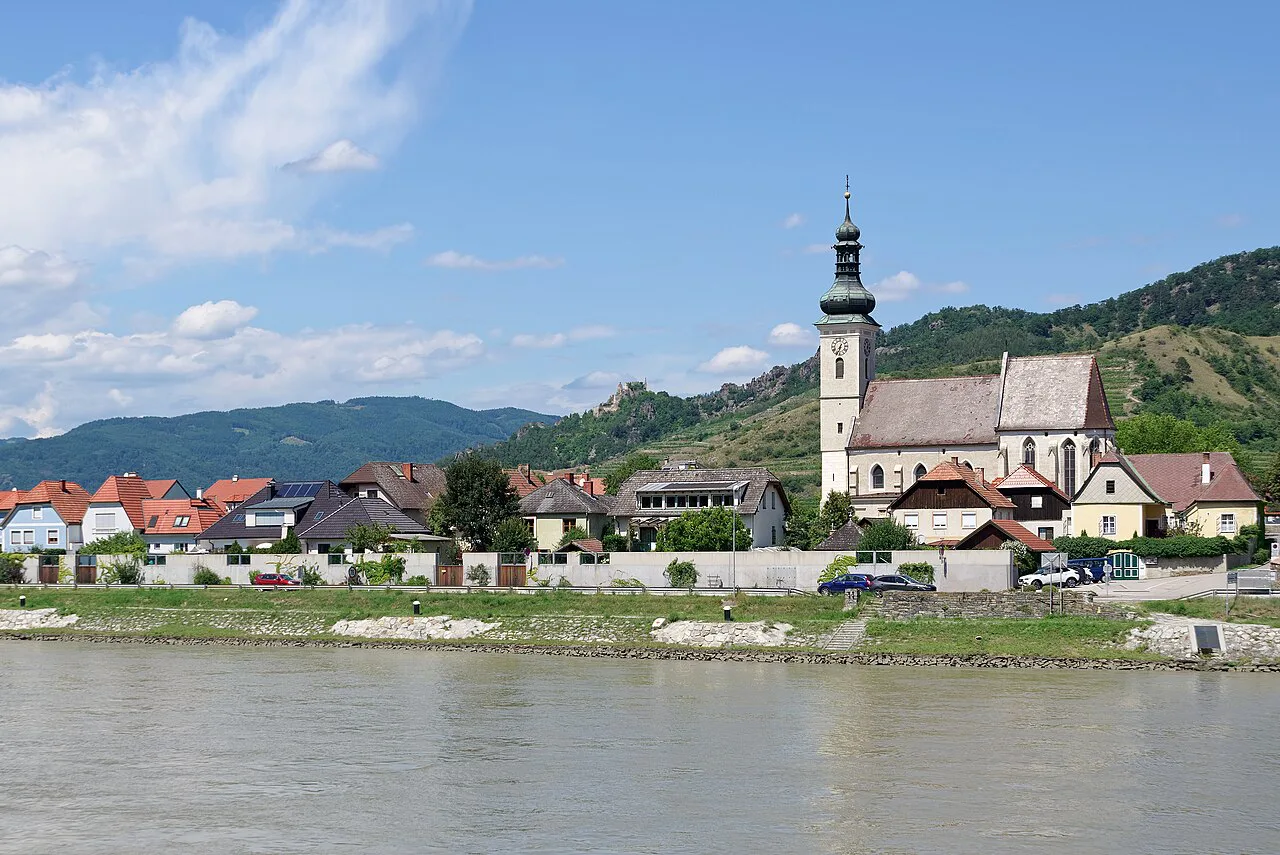
The towns in river order: Krems, Dürnstein, Weissenkirchen, Spitz, Emmersdorf and Melk
Coming from Vienna, you hit Krems first, a real city with a thousand-year-old Altstadt at one end and the Kunstmeile museum quarter at the other. West of it comes Dürnstein, the postcard stop, then the smaller wine village of Weissenkirchen, then Spitz an der Donau below the Tausendeimerberg hill. Emmersdorf faces Melk across the river, and Melk itself climbs from the waterfront up to its abbey.
The order matters for scheduling. If you start at Krems in the morning and finish at Melk in the afternoon, you travel with the current and can end at the abbey; reversing the direction puts Melk first and leaves Krems for the evening, when the Altstadt is quieter and the museums are closed anyway. Weissenkirchen is the stop most people skip, and it rewards a short wander between the river and the terraced slopes.
Emmersdorf is essentially Melk's opposite bank, useful mainly for views back across the water at the abbey and the old town stacked above it. Melk on the south side is where most of the town's life is, and the walk from the river up to the abbey gates gives you a sense of how completely the monastery dominates the place.
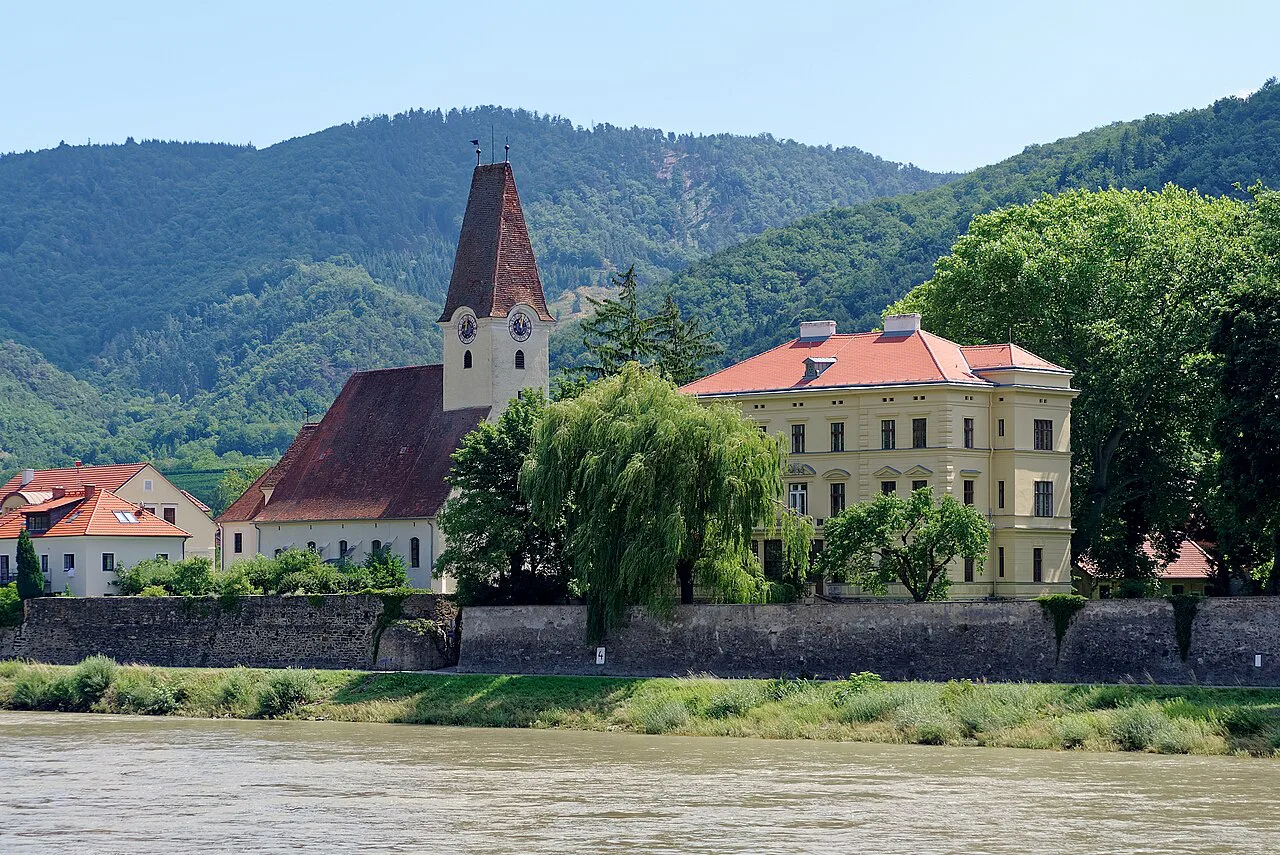
Melk and Stift Melk (Melk Abbey) above the Danube
Melk Abbey (Stift Melk) is a working Benedictine monastery and the valley's single most impressive building, a baroque complex on a rock above the town with a long, yellow-gold facade facing the river. The interior sequence — the abbey church with its frescoed ceiling, the library and the terrace with the view down over Melk — is what visitors come for, and it is a formal visit rather than a casual stroll.
The abbey receives visitors on guided tours at set times rather than letting them wander freely through the state rooms, and admission and tour hours change with the season. Check the monastery's own published tour times and ticket prices for your date before you build the day around it, since a missed tour slot at Melk can cost you an hour or more in a town with limited alternatives.
The old town below is small but pleasant, with a main street of modest facades and cafes leading up toward the abbey gate. Budget the bulk of your Melk time for the abbey and treat the town as the approach and the exit, unless you are staying overnight.
Dürnstein: the blue-and-white abbey tower and the castle ruin
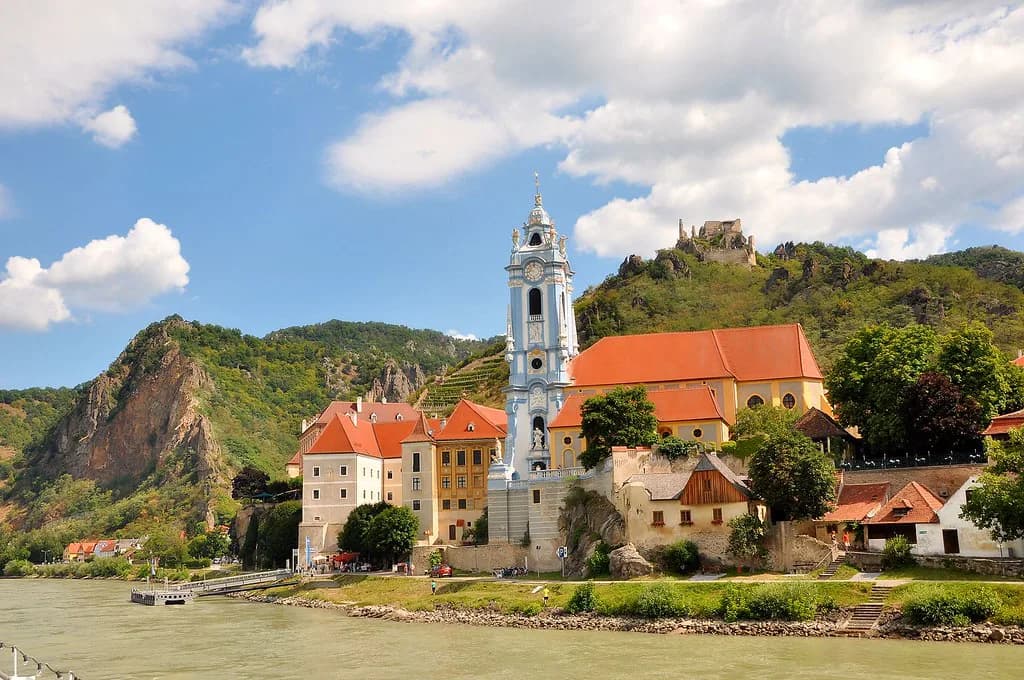
Dürnstein is the Wachau's signature view: a small town squeezed between the Danube and a rock, with the blue-and-white tower of the former Augustinian canons' abbey rising above the roofs. The tower, rebuilt in romantic baroque form in the 18th century, is visible from the water and from the road, and the old town behind it mixes Gothic, Renaissance and baroque buildings along a compact lane.
Walk through and you pass the 16th-century Rathaus, the old Clarissan convent, town gates and the houses built into the rock at the edge of the village. The Kunigunden Church is the other reason people stop here, a baroque interior worth a few quiet minutes before you start uphill.
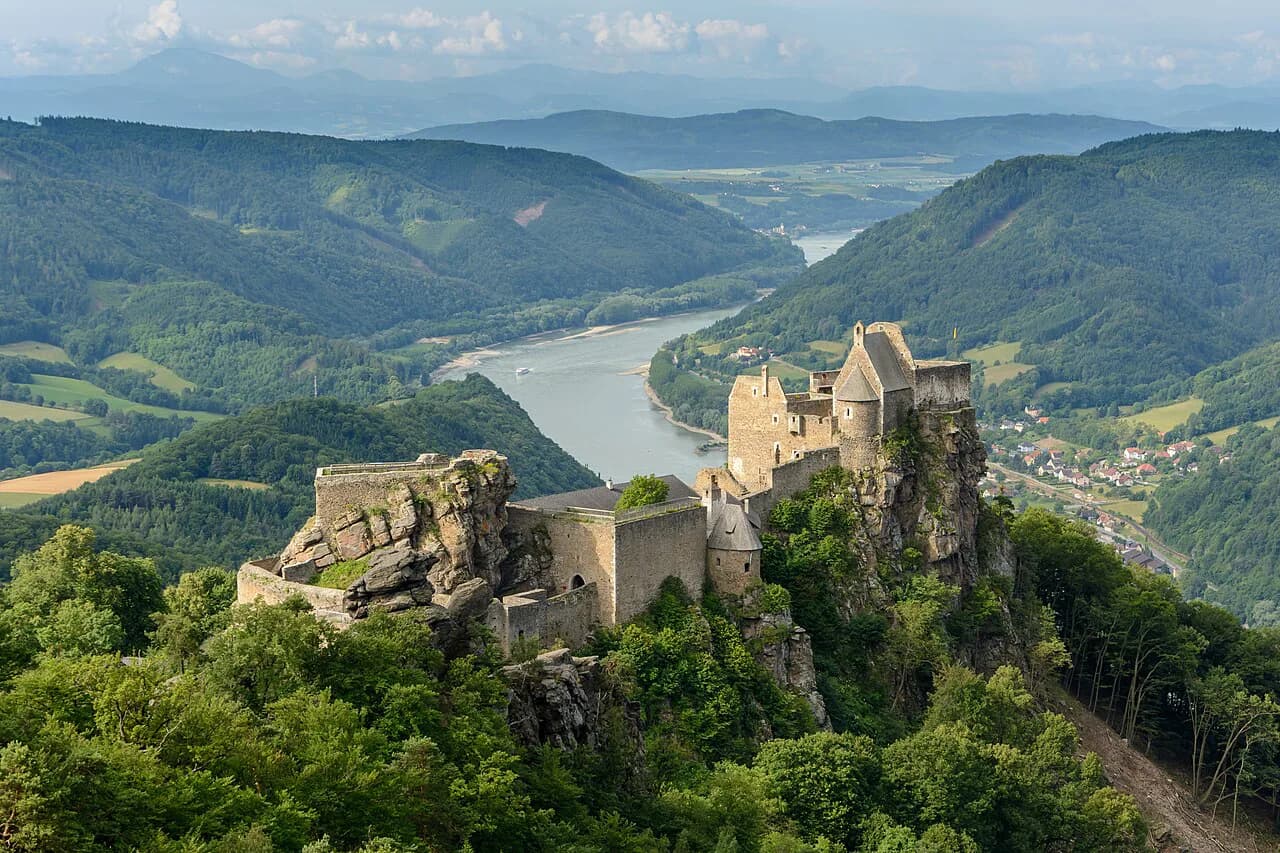
Above the town, the castle ruin where Richard the Lionheart was held in the 12th century is roughly a 20-minute climb from the streets, and the reward is the best panorama in the valley at a cost of an honest uphill walk. Wear shoes with grip and skip it if the rock is wet, because the path is steep and stone-stepped in places.
Dürnstein is also the valley's most congested stop, and the lanes fill quickly once tour groups arrive. Arrive early in the morning or late in the afternoon if you want the blue tower photographed without a crowd in front of it.
Spitz an der Donau: the Tausendeimerberg and the crooked church
Spitz an der Donau is an old wine-growers' village set against the Tausendeimerberg, a hill whose name — a thousand buckets — comes from the volume of wine it supposedly yielded in good years. The terraced slopes above the houses are the visual signature of the place, and the cobbled lanes below them pass the old town hall, the castle and the traditional vintners' houses.
The 14th-century Gothic parish church has an unusual plan: its long axis is bent by about 20 degrees, a quirk visible from inside the nave and worth knowing before you walk in. The Rotes Tor, a gate tied to memory of the Thirty Years' War, marks the start of the paths up into the vineyards and gives you the wide view back over Spitz.
Spitz is smaller and calmer than Dürnstein and makes a good base for a slower half-day of walking between the church, the lanes and the lower vineyard paths. The apricot orchards on the slopes here are the source of the valley's most famous crop.
Krems an der Donau: the Altstadt and the Kunstmeile museums
Krems an der Donau is the valley's largest town and needs to be treated as two separate stops. One is the Altstadt, a long, handsome street of burgher houses and the Steiner Tor gate, good for a slow walk and a coffee. The other is the Kunstmeile Krems, a compact museum strip running from the Minoritenkirche to the Dominikanerkirche.
The Landesgalerie Niederösterreich anchors the Kunstmeile with 3,000 square meters of exhibition space for Austrian art. The Kunsthalle Krems, directly opposite, covers contemporary international art, and the Karikaturmuseum Krems, Austria's only museum for caricature, comic and cartoon, occupies the same square. Give the museums a dedicated block of time; opening days and ticket prices are published by each institution and vary by season.
Walk the Kunstmeile, then continue into the old town for the architecture, and you have covered Krems in a half-day without rushing. The Steiner Tor is the natural finish if you are heading back toward the station or the boat pier.
Stift Göttweig and Schloss Schallaburg as inland detours
Stift Göttweig sits on a hill south of the Danube, a Benedictine monastery whose baroque rebuilding gave it one of the grandest staircase frescoes in Austria and a high view back over the valley. Schloss Schallaburg, in the Melk foothills, is a Renaissance castle that now runs changing exhibitions of high quality. Neither is a river stop: both require road access or a combination of train and local transport.
Treat these as detours that cost you a separate half-day rather than additions to a boat-and-train itinerary. If you have two days, one of them can absorb a morning at one of them; if you have a single day, keep to the river, because the driving, parking and walking time around Göttweig or Schallaburg eats an afternoon.
Opening seasons and admission for both follow their own calendars, with exhibition periods rather than year-round daily hours, so verify directly with each site and buy tickets in advance if an exhibition is the reason for the trip. None of this is guessable from a riverside walk, which is exactly why it needs its own plan.
Getting around without a car: boat, train and bus
The Wachau is one of the easiest rural corners of Austria to tour without a car. Regional trains run the south bank between Krems and Melk with stops at Dürnstein and Spitz, which makes hopping between towns straightforward and fast. The trade-off is that the railway sits back from the waterfront, so you see the valley from above the river rather than from the water.
Boat services on the Danube are the classic way to see the abbey towers, terraces and ruins from the correct angle, and the scenery is unambiguously better from the water. The catch is speed and schedule: boats move slowly and run to a fixed timetable, so you get one or two towns in a day, not five. The trip from Krems toward Melk past Dürnstein and Spitz takes a long morning on the water, and return options need to be checked against the same timetable.
Boat operators publish their own seasonal timetables, and Austrian rail timetables are available through ÖBB and Postbus. Confirm sailing dates, departure times and fares with the operator for your specific day before you commit, especially outside the summer months when services thin out. For a car-free day, the practical pattern is train to Melk or Krems, boat one way, train back.
Doing the valley by car
Driving gives you Göttweig, Schallaburg and the north-bank villages in a single day, which no boat or train can do. The riverside road on the south bank runs through Krems, Dürnstein, Weissenkirchen and Spitz toward Melk, and the north bank offers the quieter counterpart with views back across at the abbey. Parking in Dürnstein and Melk is the bottleneck, and in summer the lanes slow to walking pace.
Drive west in the morning and return east in the evening, or the reverse, but do not plan to park in Dürnstein at midday in season. If you add Göttweig or Schallaburg, leave the river for that block and come back rather than dragging the car through the towns between stops.
Note that any side routes into the hills are on ordinary rural roads rather than toll motorways, so no vignette logic applies to the valley itself, though reaching it from Vienna or Salzburg on the motorway does require one. Check the rental company's vignette and any toll policy before you set out.
Seeing the Wachau by bike and on foot
The Donauradweg is a flat, signposted riverside route along the entire valley and is the most flexible way to combine towns at your own pace. The full path is part of a 1,200-kilometer route from Donaueschingen in Germany to Budapest, so the Wachau stretch is a comfortable, well-marked segment rather than an expedition. Bikes can be rented in Krems and Melk, and many trains and some boats carry them.
Walkers get the Welterbesteig Wachau, a 180-kilometer long-distance trail connecting 13 communities of the UNESCO World Heritage area through the vineyards and side valleys. You do not need to walk the whole thing: short loops up to the terraces above Dürnstein, Weissenkirchen or Spitz give you the views across the vineyards and apricot orchards in an hour or two.
The honest trade-off is that the bike path and the trail climb are exposed and hot in high summer, with little shade on the terrace edges. Start early, carry water, and remember that the uphill sections above the towns are steeper than they look from the water.
Marillen and Wachauer Laberl: what to eat in the valley
The valley's signature crop is the apricot, called Marille in Austria, grown on the terraced slopes and sold fresh in season and as jam, juice and schnapps year-round. Marillenknödel, apricot dumplings, and Marillenstrudel are the two dishes to look for on dessert menus. Fish from the Danube also appears on local menus.
The other regional staple is the Wachauer Laberl, a dense flatbread roll that accompanies soup and cold plates in most of the valley's inns and taverns. Apricot orchards themselves are a seasonal sight: the trees bloom in spring and fruit in high summer. Wine is grown and sold everywhere, but for travelers the vineyards are easiest to appreciate as landscape and as a local product on a menu rather than on a tasting itinerary.
For a specific picnic or dessert, the Marillen-Erlebnis-Weg starts at the Weingasthof Aufreiter in Angern, where a picnic backpack with apricot dumplings, filled rolls, juice and apricot frizzante is assembled for the orchard walk. This is a seasonal food-and-walk package tied to the Marillen season, so check availability with the inn before you count on it.
How much time the valley needs: one focused day or two
One day in the valley works if you accept a narrow route: Melk Abbey in the morning, then train or boat to Dürnstein for the old town and the climb to the ruin, finishing in Krems or back in Melk. That is one abbey, one town and one ruin, and it leaves no room for Göttweig, Schallaburg or Weissenkirchen.
Two days lets you spread out: a river day with a boat, a train hop and two towns, and a second day for the inland detours or for Krems, with its museums and Altstadt. If you add a bike, the second day can carry you between Weissenkirchen and Spitz on the flat, with the vineyards above.
A short stop is also legitimate, since the valley sits directly on the route between Vienna and Salzburg. A half-day at Melk or a single evening in Dürnstein is better than a rushed dash through four towns, because each stop is best experienced on foot at a walking pace.
Where the Wachau fits a route through Austria
Coming from Vienna, the valley is the natural first stop on a westward route toward Salzburg and the Alps, roughly 80 kilometers from the capital, with regular trains serving Krems and Melk. Going from the Wachau toward Hallstatt or Salzburg, you continue west; going back to the capital, you reverse through Krems. The valley therefore works as a through-route rather than a loop.
For travelers heading to the Alps, the Wachau is the low-country counterweight to a week of mountains: a day of river, abbey and old town before the roads start climbing. Lower Austria around it, with St. Pölten as the regional hub, is where connections to the rest of the province are made.
If your itinerary already includes Vienna and Salzburg, placing the Wachau between them uses a travel day instead of adding one, provided you accept slower transport on the valley day itself. Build the route around trains between Krems and Melk, and let a boat or a bike handle the middle stretch.
Which Wachau stop should anchor your day?
If you have one anchor, choose Melk Abbey or Dürnstein and build the rest as the approach and the exit. Melk rewards the traveler who wants a single, substantial monument with a formal tour, while Dürnstein rewards the one who wants a town, a tower, a riverside walk and a climb to the castle ruin in a compact space. Krems is the answer if museums matter more than scenery. For other Austrian towns that pair a compact old town with a major sight, see our guide to towns in Austria worth visiting.
Whichever you pick, the order along the Danube does the planning for you: Krems, Dürnstein, Weissenkirchen, Spitz, Emmersdorf, Melk. Confirm the day's boat timetable and the abbey's tour slots before you travel, then let the river pace the day rather than the timetable of four towns in an afternoon.
Explore more Krems guides
Frequently Asked Questions
Is the Wachau Valley worth visiting?
Yes, if you want a compact stretch of river where abbeys, old towns, a climbable castle ruin and terraced vineyards sit within a short train ride of each other. It is less rewarding as a fast sightseeing circuit: the boat is slow, the towns are small, and the best of it comes from spending an hour on foot in two or three places rather than driving through six.
What is the Wachau Valley famous for?
The valley is known for its UNESCO World Heritage river landscape, for Stift Melk above the Danube and the blue-and-white abbey tower at Dürnstein, for wines grown on the terraced slopes and for apricots, sold fresh in season and as Marillenknödel, jam and juice.
How far is the Wachau Valley from Vienna?
The eastern end at Krems an der Donau lies about 80 kilometers west of Vienna, a distance reported for the region as a whole, close enough for a day trip by train or car. Melk at the western end is farther, so plan your direction according to whether you continue toward Salzburg or return to the capital.
Sources
Notes for your next Austrian town break
Optional updates when we add or revise town guides.
You might also like
Continue reading
More guides you'll find useful