Dürnstein Castle Ruins: Richard the Lionheart and the Wachau View
Dürnstein Castle is a ruined hilltop fortress above the Wachau town, tied to Richard the Lionheart's captivity. Here is what stands there and how the climb works.
On this page
Dürnstein Castle is not a furnished palace but a roofless ruin on the rocky hill directly above the Danube town of Dürnstein, and the payoff for the climb is the view across the Wachau rather than interiors and exhibits. Plan on a half-day stop in town that pairs the climb with the baroque center below. This guide covers what the fortress was, how the walk up works, and where the ruin fits on a route through the Wachau Valley.
A Ruin on the Hill, Not a Castle to Tour
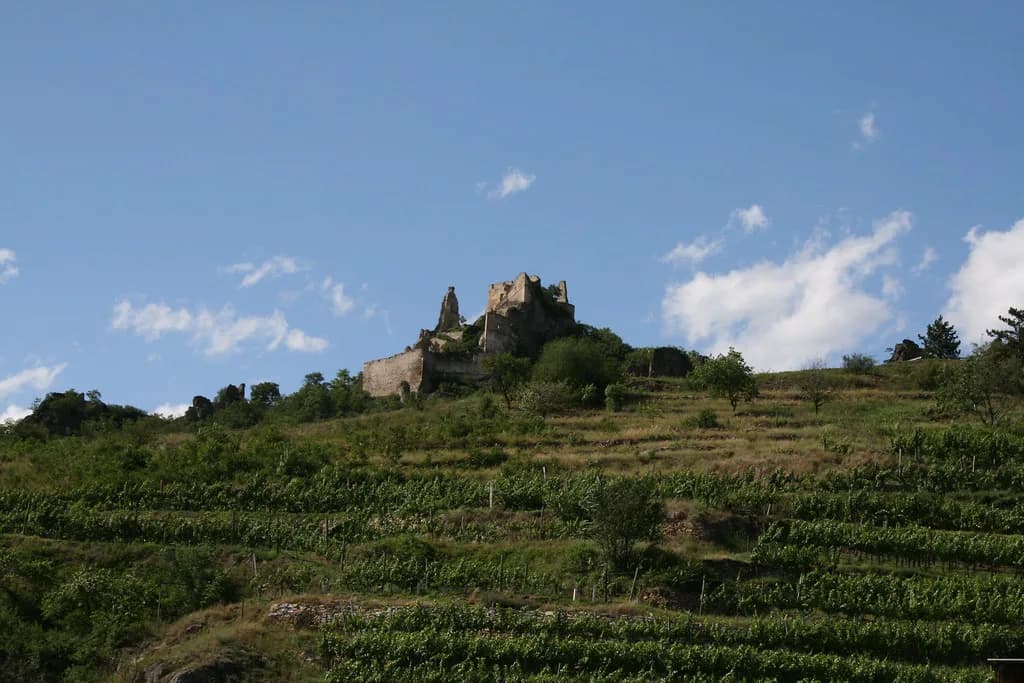
The fortress was built above the Danube in the 12th century, which is where the name comes from: duerr for dry and Stein for stone. It is a Burgruine in the Austrian sense, meaning standing walls and open ground rather than reconstructed halls with period furniture. Read the site that way and it delivers: the masonry frames the river valley, and the interest is archaeological and scenic rather than curatorial.
Visitors arrive expecting something closer to a palace museum, and the Tripadvisor listing for the Burgruine resets that expectation quickly. There is no roof to shelter under and no sequence of decorated rooms, so the ruin is best understood as a viewpoint with a medieval story attached. Give it the time you would give a belvedere, not a state apartment.
Richard the Lionheart and the Captivity Story
Dürnstein's fame rests on one episode. King Richard the Lionheart of England, returning overland from the Third Crusade, was taken and held by Duke Leopold V of Austria, and the castle above the town is tied to that captivity. The story of the minstrel Blondel finding the king by singing outside his prison grew around the same event. The connection is why a modest ruin in Lower Austria carries such weight in English-speaking travelers' imaginations.
Treat the legend as legend and the imprisonment as the documented core. Nothing at the ruin reconstructs a dungeon cell or stages the captivity, so the story is carried by the place itself and by what you read before or after the climb. If the Richard connection is your main reason for coming, climb first and walk the town second.
The Kuenringers and the Fortified Market Town
Before the ruin became a Romantic landmark it was part of a working defensive system. The Kuenringer family, powerful nobles in the region, fortified the area and made Dürnstein a significant waypoint on the Danube. The walls you pass on the way up belong to that military logic, not to scenery.
The later centuries went the other way, toward Baroque church building and a cultured river town. That split is the useful thing to hold in your head: the hill is medieval and military, the streets below are Baroque and mercantile. Two different periods, two different visits, and neither one requires the other.
Castle Ruin and Baroque Town Below
Many visitors treat Dürnstein as a single sight, but the ruin and the town are separate stops with separate time costs. The town's draw is its abbey and church architecture and its compact lanes along the river; the ruin's draw is altitude and outlook. If your knees or your schedule only allow one, choose by appetite: architecture and interiors below, landscape and story above.
A sensible order is the climb first, while legs and weather are fresh, then the town at street level afterward. The reverse works too if you want to warm up on pavement, but the hill is the part that sets the pace of the day. Either way, don't schedule the ruin between two other timed stops that day.
The Walk Up from the Village
The approach is a climb on a hill path, and the footing is the thing to plan around rather than the distance. Wear shoes with real grip, carry water, and treat the walk as exposed to weather. The climb is the price of the view, so decide before you set out whether everyone in your group is up for it.
Weather is the deciding variable. A dry day means predictable footing; after rain the same path is a different proposition, so keep the ruin as a flexible slot in your Wachau day and move it if the ground is wet. Since the ruin is unroofed, there is no sheltered half of the visit to fall back on once you are up there.
What You See at the Top
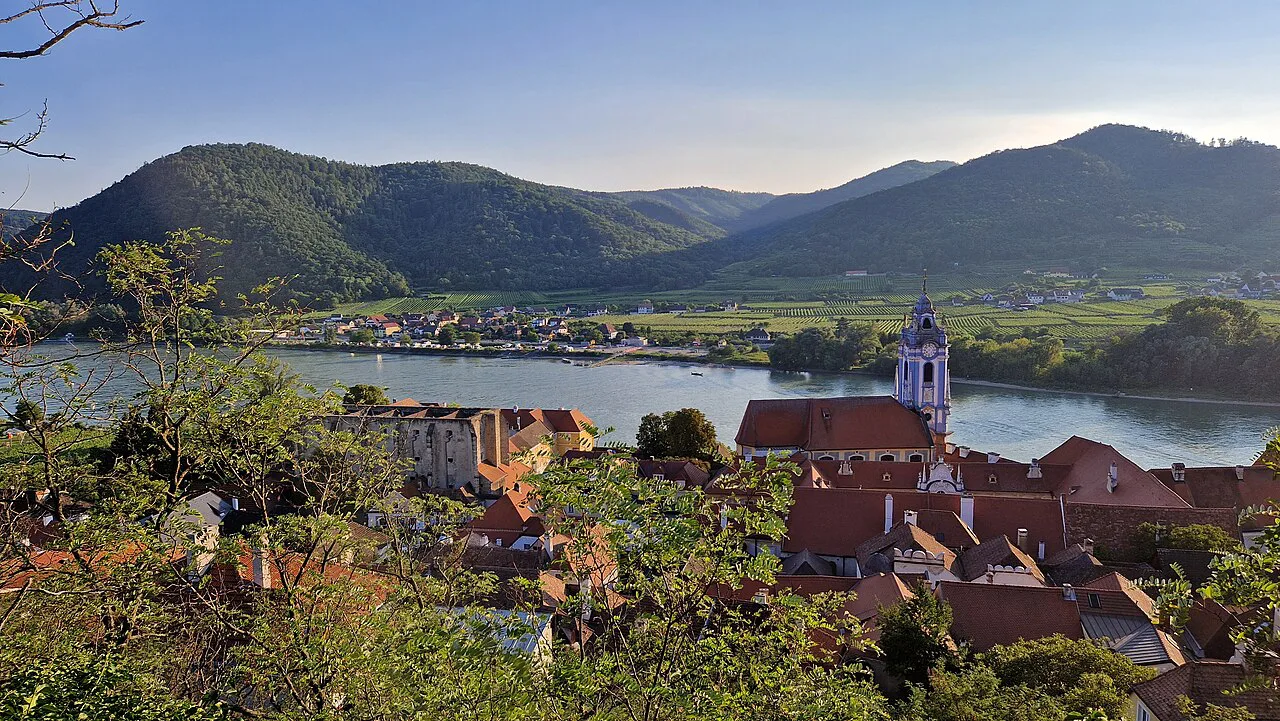
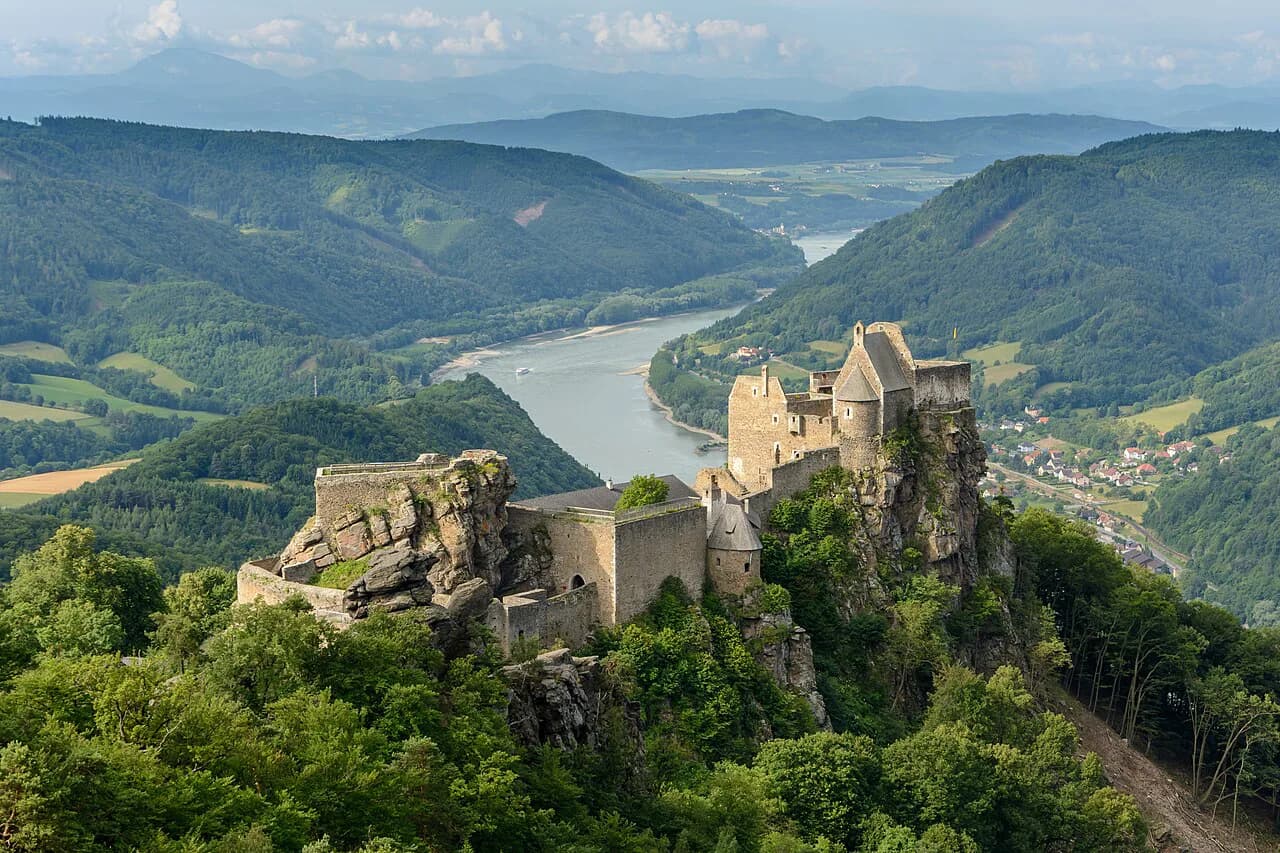
At the top you get standing walls of the Burgruine and the Danube Valley spread out below, with the river bending through the Wachau and the town's roofs directly underneath. That panorama is the reason the climb exists as a visitor experience. Plan to linger on open ground rather than expecting benches and shade.
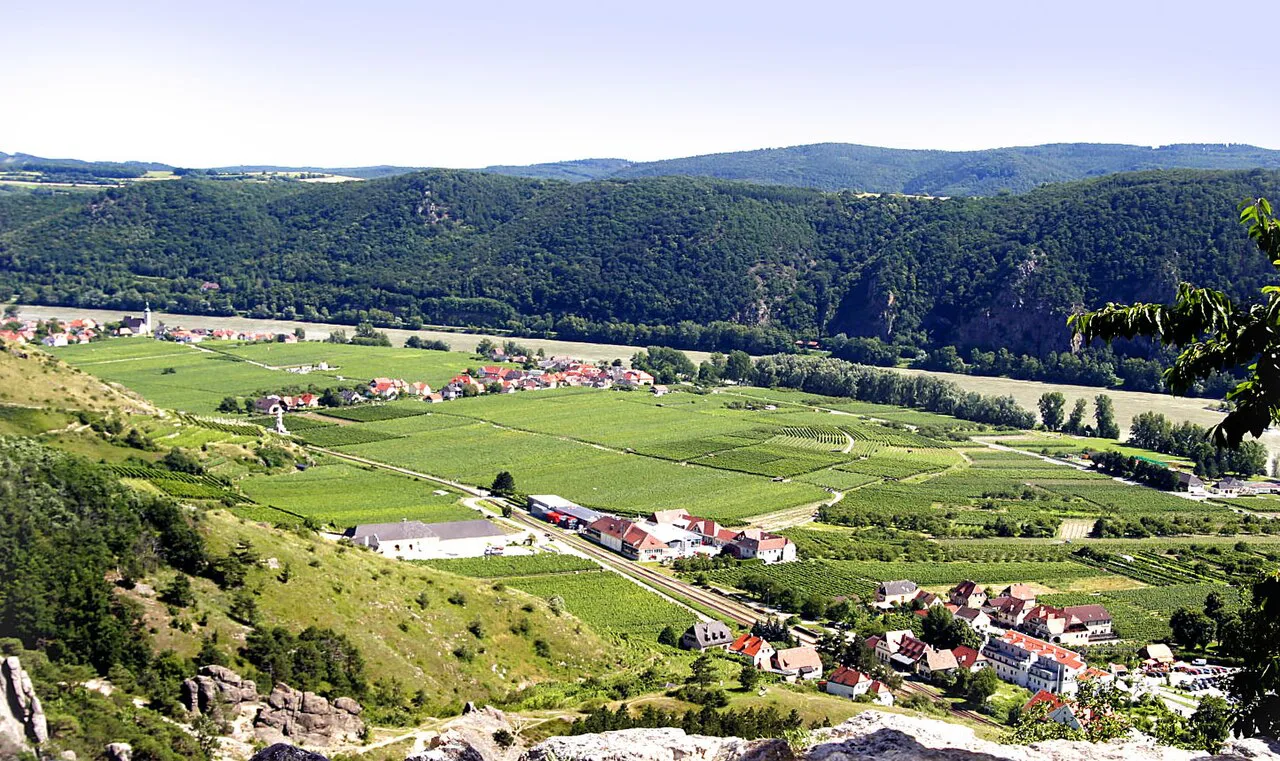
The view also explains the region's geography better than any map: the terraced slopes, the river road, and the string of settlements along the bank. Once you have seen it from above, the rest of a Wachau route makes more sense. Photographers should note the light shifts through the day, so the outlook changes even if you only stay twenty minutes.
Fitting the Ruin into a Wachau Route
Dürnstein sits on the Danube between Krems and Melk, so the ruin is a natural half-day stop on the standard run through the valley. River boats and the riverside road both put the town on your line, and the Danube Cycle Path passes through as well, which matters if you are touring on two wheels. Confirm boat and train times against current ÖBB and operator schedules before you commit to an order of stops.
Boats along this stretch run seasonally, so a river arrival in Dürnstein is a summer arrangement rather than a year-round one; check the operator's sailing calendar for the dates you plan to travel. A Wachau cruise also makes a pleasant way to see the castle from the water before you climb it. Building the day around one boat departure shapes everything else, so pick the boat first and the ruin second.
Pairings Upstream and Downstream
The most obvious companion stop is Melk Abbey (Stift Melk), the Benedictine monastery on its bluff above the Danube at the western end of the valley, whose Baroque church and library are the counterweight to Dürnstein's medieval ruin. The two together give you one fortress and one monastery in a single arc of the river. If you only have one Baroque interior in your Wachau itinerary, this is the one.
East of Dürnstein, Burgruine Aggstein is the other hilltop ruin on this stretch, a fortress perched above the river with its own walls and layout. It is a different ruin with a different layout, so visiting both is not a repeat. Weissenkirchen and Spitz an der Donau fill the wine-village gaps between, useful when you want a shorter walking day.
Krems is the practical base at the eastern end, with a cluster of sights worth an afternoon of its own. Start or end the valley run there and you can leave the car behind for the day.
Practical Constraints: Weather, Daylight and Footing
Three things govern a visit to the ruin: the weather, the daylight, and your footwear. The path is exposed, the ruin has no roof, and the round trip eats daylight you might otherwise spend in town. A dry day with a clear forecast is the version worth planning around, and an afternoon climb leaves you descending in fading light in spring and autumn.
Allow more slack than you think you need, because a hill path with a group takes longer than the same ground alone. If the climb is the priority, book the rest of the day loosely; if the town is the priority, treat the ruin as the optional add-on. Either way, don't promise anyone a sunset from the walls without first checking how early the light goes.
Climb or Stay in the Streets?
Climb if you want the medieval story and the valley laid out below you, and accept that the reward is a view, not a museum. Skip the ruin and stay in the streets if Baroque architecture and a compact river town suit you better; Dürnstein works as a town visit on its own. The ruin and the town are close enough that you can change your mind at the trailhead.
Build the day around Dürnstein's position between Krems an der Donau and Melk, confirm boat and train times against current operator and ÖBB schedules, and keep the climb for a dry forecast. The Wachau rewards a loose plan with one firm anchor.
Explore more Krems guides
Frequently Asked Questions
How hard is the climb to Dürnstein Castle?
The approach is a hill path rather than a paved stair, and the footing matters more than the distance. Wear shoes with grip, carry water, and accept that the upper sections are exposed to sun and wind. After rain the same path is harder going, so choose a dry day and leave slack in your schedule.
Can you go inside Dürnstein Castle?
You walk within the standing walls of the ruin, but there are no roofed interiors, furnished rooms or exhibits to tour. The visit is the masonry, the ground and the view over the Danube Valley. Anyone expecting a palace museum should budget their time for the Baroque town below instead.
Sources
Notes for your next Austrian town break
Optional updates when we add or revise town guides.
You might also like
Continue reading
More guides you'll find useful