Carnuntum: Austria's Roman City on the Danube
Carnuntum spreads across Petronell-Carnuntum and Bad Deutsch-Altenburg, with the Heidentor, two amphitheaters and a rebuilt Roman quarter to see.
On this page
Carnuntum is Austria's answer to a Roman city, and it is for many visitors an add-on to a Vienna trip rather than a destination in its own right. The site lies about 25 miles east of Vienna on the Danube, split between two villages, and most of the ancient town still sits under fields and vineyards. What you see is a set of ruins and reconstructions: the Heidentor arch, a civilian and a military amphitheater, a reassembled Roman quarter and a museum. This guide covers each cluster, the layout, and how to move between them.
Carnuntum began as a legionary fortress holding the eastern border of the empire around A.D. 40, garrisoned by the Legio XV Appollinaris, and grew into the capital of the Roman province of Upper Pannonia with a population of about 50,000. The site is the largest archaeological landscape in central Europe, which is worth knowing before you go: this is a spread-out visit measured in clusters, not in rooms.
What Carnuntum was: the Roman capital of Upper Pannonia on the Danube
The fort controlled the eastern border of the empire and drew on the Amber Road, the trade route linking the Baltic to the Mediterranean. Within a few decades the settlement had become the capital of Upper Pannonia, with soldiers' families, veterans, merchants, and wealthy Roman citizens who founded a second town west of the military zone. That two-part structure, fort and civilian town, is what you are walking through today.
The site was abandoned in A.D. 433 after the pressures its own history names: political threats, economic stress and the impact of a major earthquake. Archaeology here has run for more than a century, and a gladiator school found in 2011 raised the site's profile further. Read the ruins with that timeline in mind: what survives is the durable stone, not the town.
If you are building a Lower Austria itinerary around Roman and medieval sites, Carnuntum sits at the eastern end of the region while the Danube and Waldviertel towns lie west. The Lower Austria guide lays out the wider map so you can see how a Carnuntum morning fits a route along the Danube.
How the site is split between Petronell-Carnuntum and Bad Deutsch-Altenburg
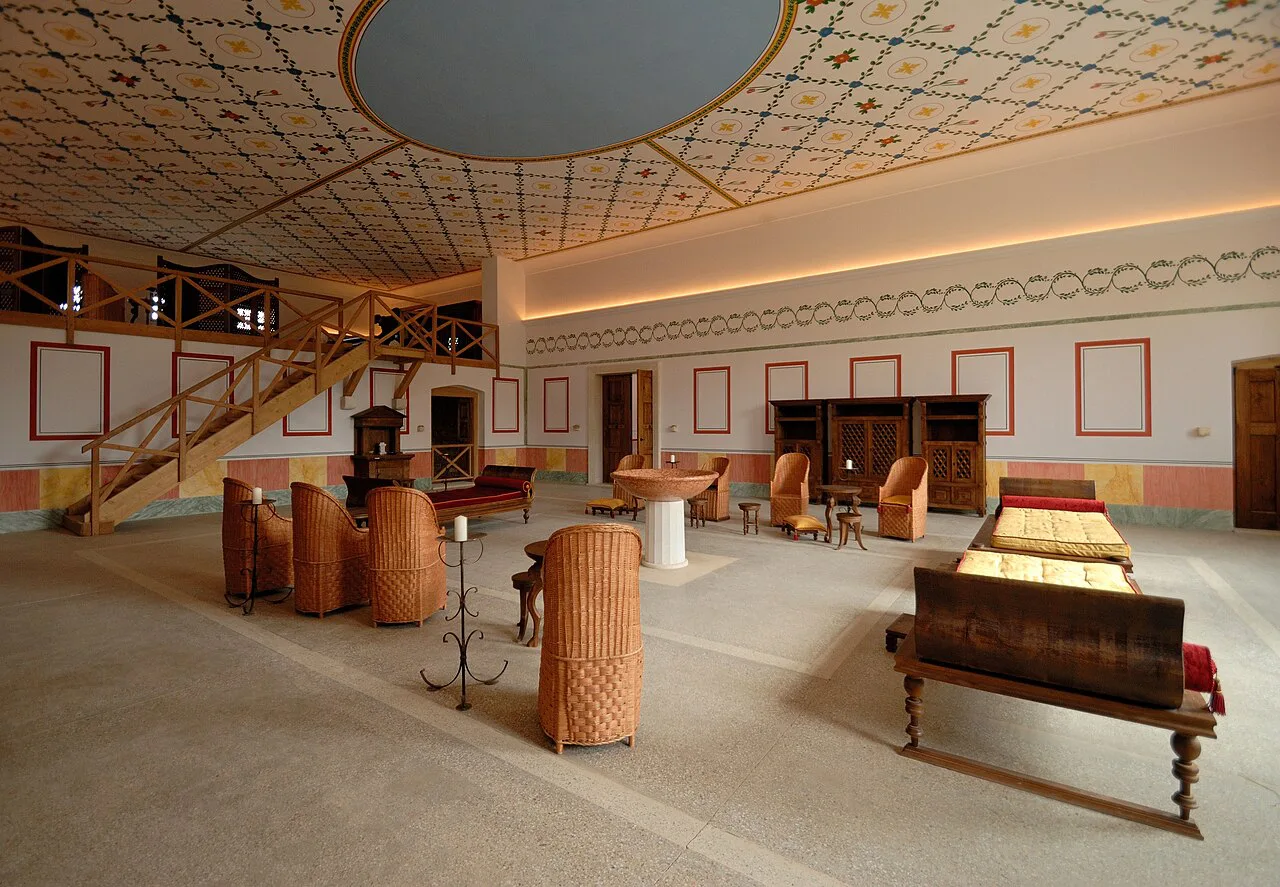
Carnuntum is not one ticket gate. In the modern village of Petronell-Carnuntum you find the Heidentor, the remains of the civilian amphitheater, and the open-air museum with three reassembled ancient buildings. To the east, in the village of Bad Deutsch-Altenburg, are the military amphitheater and the original site museum. Plan the two villages as separate stops on the same day, and check the map before setting out so you do not do one cluster and miss the other.
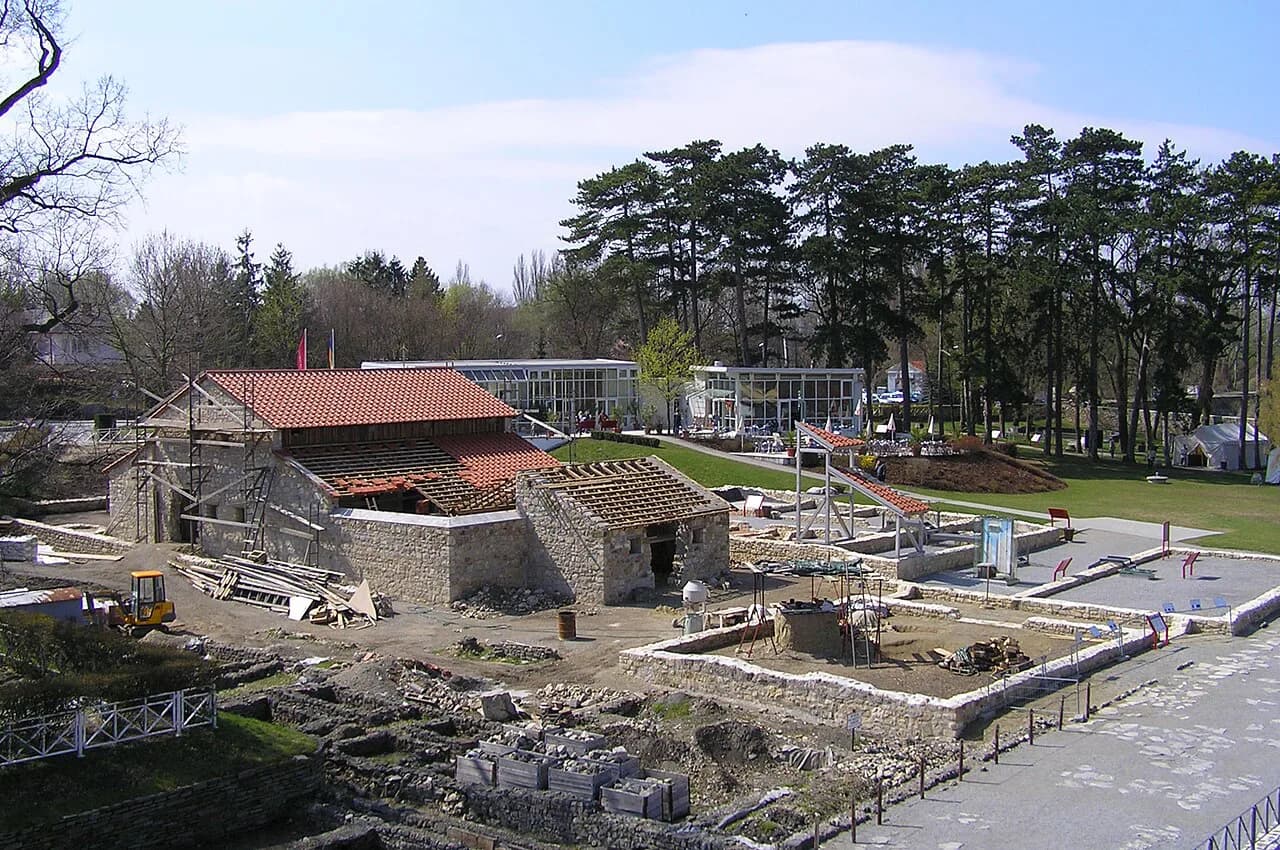
The open-air museum is the piece most visitors picture: a Roman house, a villa and a bath house rebuilt on the ancient footprint. Treat these as reconstructions for understanding how the town worked, not as original interiors, and look for the actual excavated ruins alongside them. The Bad Deutsch-Altenburg museum, which opened in 1904, holds the finds, so the two halves of a visit complement each other.
The Heidentor (Pagan's Gate) and what survives of it
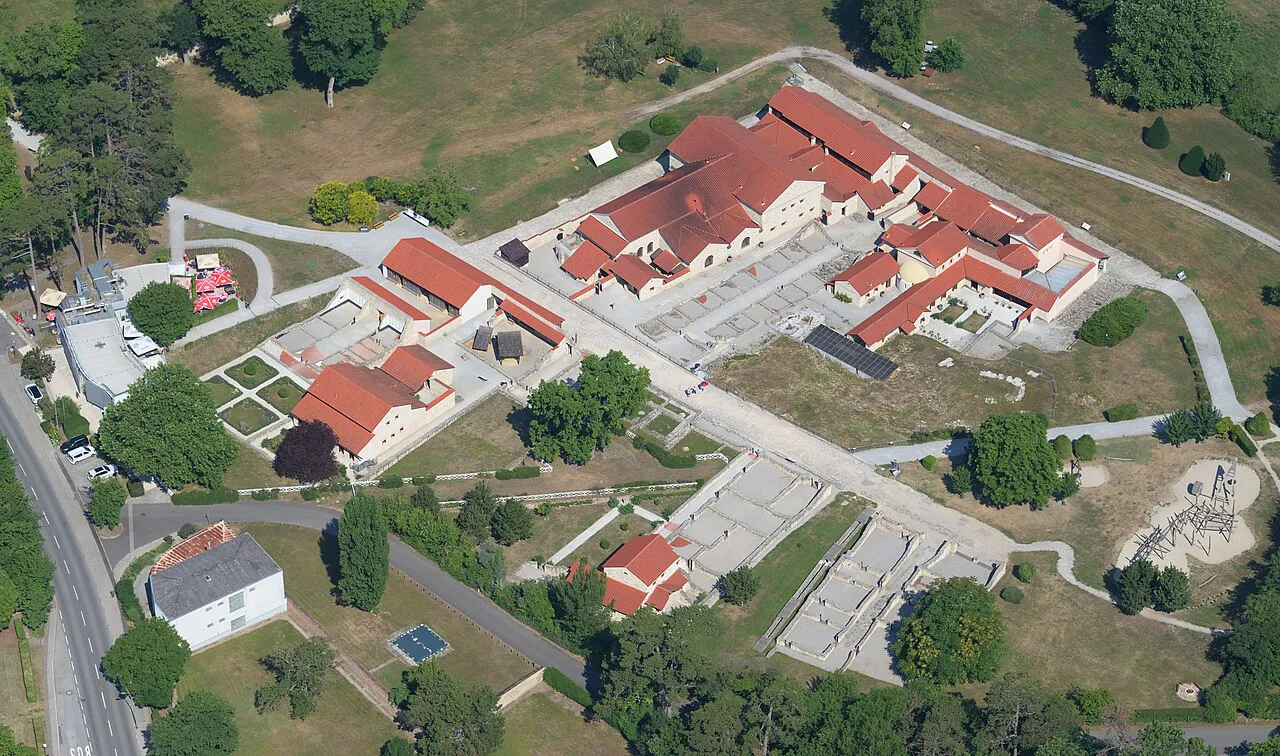
The Heidentor, also called Pagan's Gate, is a monumental Roman arch standing in open country, built in the mid-fourth century to commemorate victories of the emperor Constantius I. It is the single most photogenic fragment on the site and the one you reach without entering the museum grounds. Give it a proper stop rather than a drive-by glance; it is the image most travelers take home.
What survives is the arch itself, stripped of its original setting. The surrounding town that gave it meaning is under the fields, so the Heidentor reads best when you have already seen the reconstructions and understand the street grid it once framed. Combine the two in one direction and the arch stops looking like a lone curiosity.
The civilian amphitheater and the open-air museum with the reassembled house, villa and bath house
Near Petronell-Carnuntum are the remains of the civilian amphitheater, the arena for the town rather than the garrison. The open-air museum close by reassembles three ancient buildings on their original footprints: a house, a villa and a bath house. The distinction matters for how you read the site; these are reconstructions built to explain the ruins, and the source separates them clearly from the original remains.
Use this cluster to learn the vocabulary of a Roman town: the bath house shows the sequence of rooms, the villa shows the domestic scale, and the amphitheater shows the public one. Budget most of your site time here, because it is where the reconstructions do the explaining. Around the corner, the landscape turns back into farmland, which is a reminder of how much is still underground.
The military amphitheater and the site museum in Bad Deutsch-Altenburg
East in Bad Deutsch-Altenburg stand the military amphitheater and the original site museum, which opened in 1904. The museum contains a temple relief depicting the god Mithras killing a bull, a highlight of the indoor collection. Look for it deliberately; it is the kind of object that rewards knowing what you are looking at.
The military amphitheater served the garrison, so it belongs with the fortress story rather than the civilian town's. Walk the two arenas in the same visit and the difference in scale and siting becomes obvious. If you only have time for one indoor stop, make it this museum; the Petronell side is mostly open air.
The gladiator school found in 2011 and what visitors can see of it
In 2011 researchers identified a three-acre gladiator school compound, the first found outside Rome and Pompeii. Visitors can see the school's training area, advertisements announcing gladiatorial contests, and exhibitions of gladiatorial paraphernalia. It is the discovery that lifted Carnuntum from a regional Roman site to one worth planning around.
Treat the 2011 date as the history of the discovery, not as a current exhibition schedule. What is on view can change with the season and with excavation work, so check the archaeological park's own information before you build the day around it. The amphitheaters and the museum remain the fixed anchors of any visit.
Most of the Roman town is still under fields and vineyards: what that means for your visit
Almost all of ancient Carnuntum is preserved under fields and vineyards, which shapes the experience more than any single monument. You are not walking a standing town; you are reading a landscape where ruins surface in clusters and the rest is farmland. Set expectations accordingly and the site delivers, because the reconstructions fill in what the ground cannot show.
The countryside around the ruins is wine country, and Rubin Carnuntum, a local wine, carries the Heidentor on its label. That is reason enough to notice the vineyards you cross rather than treat them as empty space between sights. Keep the walking realistic: the clusters are spread out, and sun exposure on open ground is the main comfort issue on a summer visit.
Expect a half-day of ruins and reconstructions rather than a full Roman city, and you will enjoy it more. If you are touring Lower Austria's castles rather than its Romans, Rosenburg Castle in the Kamp Valley is the contrasting medieval counterpoint.
Getting there from Vienna and how to move between the two villages
Carnuntum lies about 25 miles east of Vienna on the Danube, which makes it a straightforward trip from the capital, and many visitors come as a day trip from the city. The two villages, Petronell-Carnuntum and Bad Deutsch-Altenburg, sit close together but are separate stops, so plan the order before you leave Vienna. Check current train and bus connections and times with ÖBB and the regional bus operators, since schedules change by season.
Without a car, match your arrival point to the cluster you want first, with a sensible order of Petronell for the Heidentor and the open-air museum, then Bad Deutsch-Altenburg for the military amphitheater and the museum. If you drive, the villages are short hops apart and parking is the practical question rather than distance.
If your wider trip runs west along the Danube, Krems an der Donau is the natural base for the Wachau and pairs well with a Carnuntum morning on the way out of Vienna. The Roman site and the baroque Danube towns belong to the same Lower Austria loop.
How long the site needs and what to see first
Give Carnuntum half a day and start with the open-air museum in Petronell-Carnuntum, because the reconstructed house, villa and bath house teach you how to read everything else. Then see the Heidentor while you are in the village, followed by the civilian amphitheater. Finish in Bad Deutsch-Altenburg with the military amphitheater and the museum, where the Mithras relief is the reward.
Check opening seasons and ticket prices with the archaeological park before you go, because the open-air museum and the museum keep their own schedules and the ruins in the fields do not. Build in time for the gaps between clusters instead of assuming one continuous site.
Is Carnuntum worth the detour from Vienna?
Yes, if you want Roman history and are already in Vienna; no, if you are expecting a Pompeii-scale standing town. The Heidentor, two amphitheaters, the reassembled Roman quarter and the Mithras relief make a solid half-day, and the fields over the rest of the town are part of the story rather than a flaw. Plan the two villages in one direction and the visit works.
For the rest of the region's castles, abbeys and Danube towns, use the Lower Austria guide to build the route around it. If you are heading west, Retz in the Weinviertel adds a stop with underground cellars and sgraffito facades on the way.
Explore more Krems guides
Frequently Asked Questions
Are there any Roman ruins in Austria?
Yes. Carnuntum, about 25 miles east of Vienna on the Danube, preserves the ruins of a Roman provincial capital, including the Heidentor arch, a civilian and a military amphitheater, excavated and reconstructed buildings, and a site museum with a Mithras relief. Much of the ancient town remains under fields and vineyards, so the visit is a set of clusters rather than a standing city.
What happened to Carnuntum?
Carnuntum grew from a legionary fortress founded around A.D. 40 into the capital of Upper Pannonia, then was abandoned in A.D. 433 amid political threats, economic stress and the impact of a major earthquake. The site lay largely buried, and archaeology has continued for more than a century, including the identification of a gladiator school in 2011.
How do I get to Carnuntum?
Carnuntum is about 25 miles east of Vienna on the Danube, split between Petronell-Carnuntum and Bad Deutsch-Altenburg. The two villages are separate stops, so plan the order of your visit and confirm current train and bus connections and times with ÖBB and the regional bus operators before you set out.
Sources
Notes for your next Austrian town break
Optional updates when we add or revise town guides.
You might also like
Continue reading
More guides you'll find useful