Retz, Austria: Windmill, Old Town Square and Wine Cellars
Why Retz, Austria deserves a half day: the working windmill's tour seasons and ticket prices in EUR, the sgraffito-lined square, and the cellar labyrinth.
On this page
Retz is worth a half day, and the reason is a windmill. The Retzer Windmühle on its hill above town is the only fully equipped, working windmill in Austria, and its touring schedule should set your timing. This guide covers the mill's seasons and ticket prices, the old town square and its decorated facades, the underground cellars, and how the town fits a Lower Austria route by train or car.
The town sits in the Weinviertel, the rolling wine country north of the Danube and northeast of Vienna in Lower Austria. It is not a Vienna day trip in the usual sense: it rewards travelers already moving through the region by car or along the railway line, and it works best paired with nearby stops rather than tacked onto a city break.
What Retz is and where it sits in the Weinviertel
Retz was founded as a town in 1278, and its wealth came from the marine sand beneath it, up to 30 meters thick, which the townspeople hollowed out into cellars and used to store their wine. That geology explains the town's two signatures: a square ringed by proud burgher houses above ground and a cool labyrinth of wine cellars below. Think of Retz as a compact, walkable town with one headline sight on a hill and a second one underground. The regional chapter for this part of Austria is where route planning starts.
For orientation, place Retz on the map before you book anything: it sits close to the Czech border in Lower Austria, and it pairs naturally with other small towns rather than with the Danube. The province's broader town network anchors a loop through the region, and Retz works as the northern end of one.
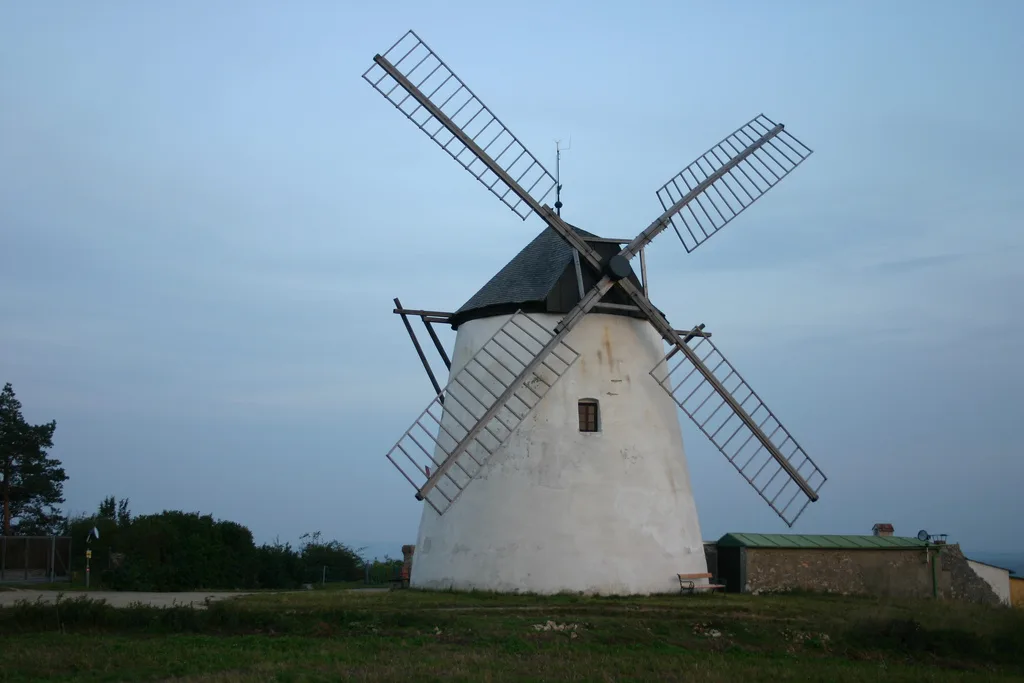
The Retzer Windmühle: Austria's working windmill above town
The windmill was built in 1853 by Tobias Bergmann and milled grain profitably until it was shut down in 1924. Dutch windmill builders later restored it, and it grinds again today as Austria's only operating mill of its kind. It stands on a hill above the town, so reaching it is a short climb or drive from the main square rather than a stop on the square itself.
Because the mill works only on guided tours, arriving between tours leaves you looking at the sails from outside. The regional tourism board publishes the full schedule and ticket prices on its windmill page, and individual visitors do not need to phone ahead; showing up in time for a tour is enough. The same page also notes that tickets under the Niederösterreich-CARD cannot be purchased online, so cardholders should simply turn up.
Windmill tours, opening seasons and ticket prices in EUR
The season runs April through October, but the rhythm changes month by month, so check the calendar before you set a date. In April, May and October the mill opens on weekends and public holidays from 11:00 to 17:00, with weekday tours at 11:00 and 15:00. July and August are the easy months, with daily tours from 11:00 to 17:00, while June and September run weekday tours at 11:00, 12:00, 15:00, 16:00 and 17:00. On days when tours start hourly, the last tour begins at 17:00.
Tickets cost 8 euros for adults, 4 euros for children and teenagers from 6 to 15, and nothing for children under 6. Groups of 20 or more pay 7 euros per person and should register by phone, and holders of the Niederösterreich-CARD get in free. That pricing makes the windmill a cheap anchor for a morning, and the guided format means you should plan around a tour start rather than a casual drop-in.
Other stops in Retz: the Erlebniskeller, the Fahrradmuseum and the Bürgerspital museum
Below the square, the Retzer Erlebniskeller is billed as the largest wine cellar in Austria, a guided walk through the hollowed sand beneath the town. The cellar, the town's wine museum setting, is the reason many travelers come, and it is a separate ticket from the windmill, so budget time and money for both if you want each. Tours run on their own schedule, and you should confirm the day's departure times and admission when you arrive in town.
Smaller collections fill out a rainy hour. The Fahrradmuseum, called "s Fahrradl," occupies part of the castle, and the Museum and South Moravian Gallery sit in the Bürgerspital, the former hospital building. Neither is a blockbuster, so treat them as optional add-ons rather than the core of a visit, and check locally whether they are open on your day.
The main square and the sgraffito house fronts
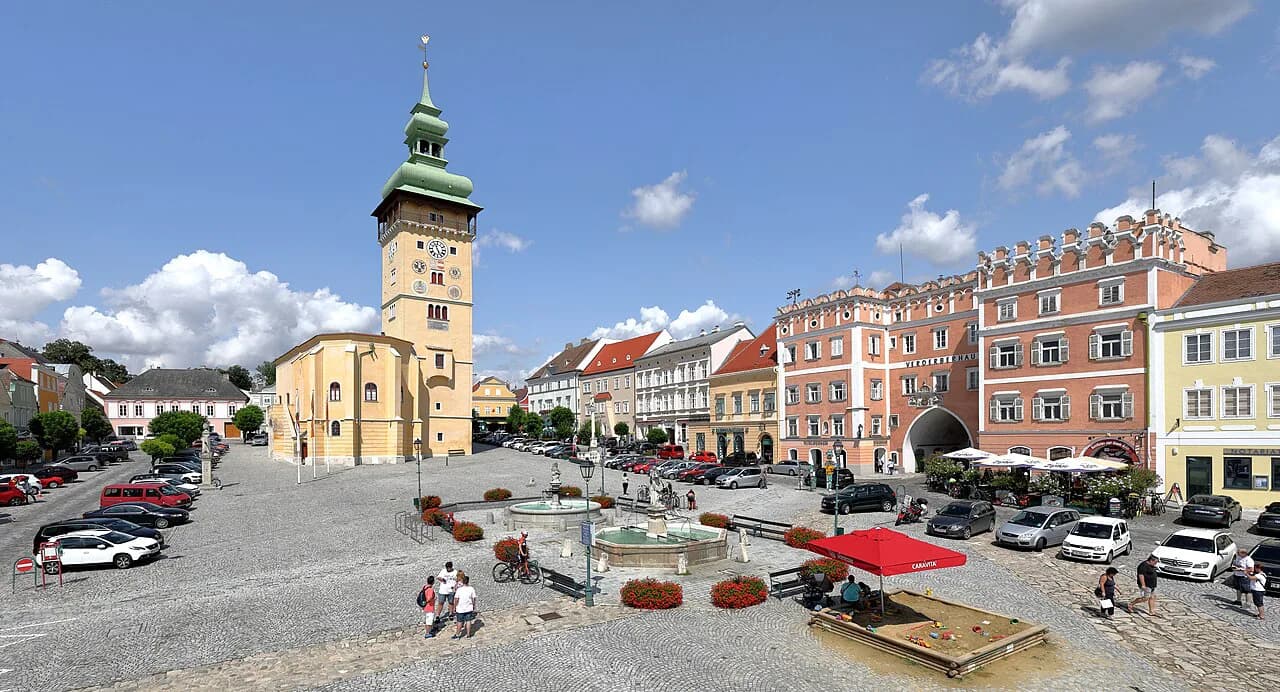
The Hauptplatz is one of the most handsome market squares in Austria, lined with tall burgher houses whose facades carry sgraffito decoration scratched into the plaster. Walk the perimeter slowly: the point of Retz above ground is the ensemble, not any single building, and the square is short enough to cross in a few minutes but rich enough to hold you for a while. The town hall and the surrounding lanes make a natural loop back toward the windmill path.
The square also served as a television backdrop, standing in for the courthouse town in the Austrian series "Julia – eine ungewöhnliche Frau," which is part of why the ensemble looks familiar to Austrian visitors. The town is small enough that the square, the lanes and the windmill hill connect on foot in well under an hour of walking, which is what makes a half day realistic.
How long Retz takes and how to pace a half day
Plan on a half day: a windmill tour, a walk around the Hauptplatz and its sgraffito fronts, and one underground or museum stop. Start at the windmill in the morning if you are relying on a fixed tour time, then descend to the square for the rest, because the town's sights cluster tightly and the walking between them is short. If you add the Erlebniskeller, allow extra time for its own guided format.
The trade-off is depth. Retz is a small town, and travelers who skip the cellar or the mill will see the square in twenty minutes and wonder what the fuss is about. Decide in advance whether you are there for the windmill, for the cellars, or for both, and set your arrival so a tour departure does not slip past. A weekday in June or September gives you hourly windmill tours, while a weekend in April gives you only the afternoon window.
Getting to Retz by train or car and fitting it into a Lower Austria route
Retz has a railway station, so a car is convenient but not essential. Driving gives you more flexibility for combining Retz with other Weinviertel stops, and the roads here are ordinary country roads rather than Alpine passes. For exact departures, use the ÖBB timetable rather than guessing at frequencies; the town is far enough from Vienna that a missed connection costs real time.
The best fit is a loop through Lower Austria's small towns. Rosenburg Castle (Schloss Rosenburg), with its Renaissance courtyards and falconry setting, makes a natural companion stop, and the broader region offers a chain of castles and monasteries for a longer route. Retz works as a northern anchor, with Krems an der Donau and the Wachau as a southern one if you are building a multi-day drive.
Where to eat and what to order in a Weinviertel wine town
Retz is wine country, and the local tables lean on the Weinviertel classics: hearty roasts, dumplings and the crisp white wines grown on the surrounding slopes. The windmill page also lists the Windmühlheuriger Bergmann, so you can pair a mill visit with a meal. Beyond that, the square and its lanes have inns and wine taverns, and the town's cellar tours explain why wine storage shaped the place.
The Windmühlheuriger is the one venue worth naming in advance because it is tied to the sight you are already visiting, and the windmill page confirms its existence on site. For everything else, walk the Hauptplatz and pick by what is open; a weekday lunch in a small wine town is not the moment for a carefully booked reservation, and the town's scale makes browsing easy.
Should Retz get the half day?
Yes, if you are already in the Weinviertel and can time your arrival to a windmill tour. The combination of a working mill, a grand square and a cellar labyrinth is unusual for a town this small, and the ticket prices are modest. Skip it if your route hugs the Danube, because the detour north is real and the square alone is not worth it without the windmill.
Explore more Krems guides
Frequently Asked Questions
Do I need to book the Retz windmill in advance?
Individual visitors do not need to phone ahead; arriving in time for a scheduled tour is enough, and the schedule is posted on the windmill's page. Groups of 20 or more should register by phone, and Niederösterreich-CARD holders get in free but cannot buy the card tickets online, so they simply show the card on site.
When is the best month to see the windmill working?
July and August are the simplest, with daily tours from 11:00 to 17:00. June and September offer weekday tours at 11:00, 12:00, 15:00, 16:00 and 17:00, while April, May and October limit weekday tours to 11:00 and 15:00 and open from 11:00 to 17:00 only on weekends and public holidays.
Is Retz reachable without a car?
Yes. Retz has a railway station, so you can arrive by train and walk the town center. Check current departures on the ÖBB timetable before committing, since regional service can be sparse.
Sources
Notes for your next Austrian town break
Optional updates when we add or revise town guides.
You might also like
Continue reading
More guides you'll find useful