Wiener Neustadt: Old Town, Cathedral and Military Academy Guide
Plan a stop in Wiener Neustadt, the planned medieval city south of Vienna, with its main square, cathedral and Military Academy grounds.
On this page
Wiener Neustadt is worth a half day, not a full one. The city sits on the plain about 50 kilometers south of Vienna, and its old center is a compact medieval grid you can cross on foot in a morning, with the Hauptplatz, the Military Academy and St. Georgs-Kathedrale as the three anchors.
This guide separates what you can walk freely (the squares, the parish church, Stift Neukloster, the Kasematten) from what runs on controlled access, namely the Theresianische Militärakademie and its cathedral. It then places the town on a Lower Austria route and explains how to arrive by train or car without over-planning.
Why Wiener Neustadt is worth a stop between Vienna and the south
The plain south of Vienna is easy to skip, which leaves Wiener Neustadt feeling unhurried. You get a planned medieval townscape, a cathedral tucked inside a military academy, a former Cistercian monastery and a stretch of old fortification walls in a single, flat walk.
Treat it as a half-day stop rather than a destination in itself. It fits naturally on the rail line running south from Vienna toward Graz and the Semmering, or on a car route through Lower Austria, so it works best as a morning that breaks a longer journey instead of a day you build a trip around.
How the medieval grid is laid out
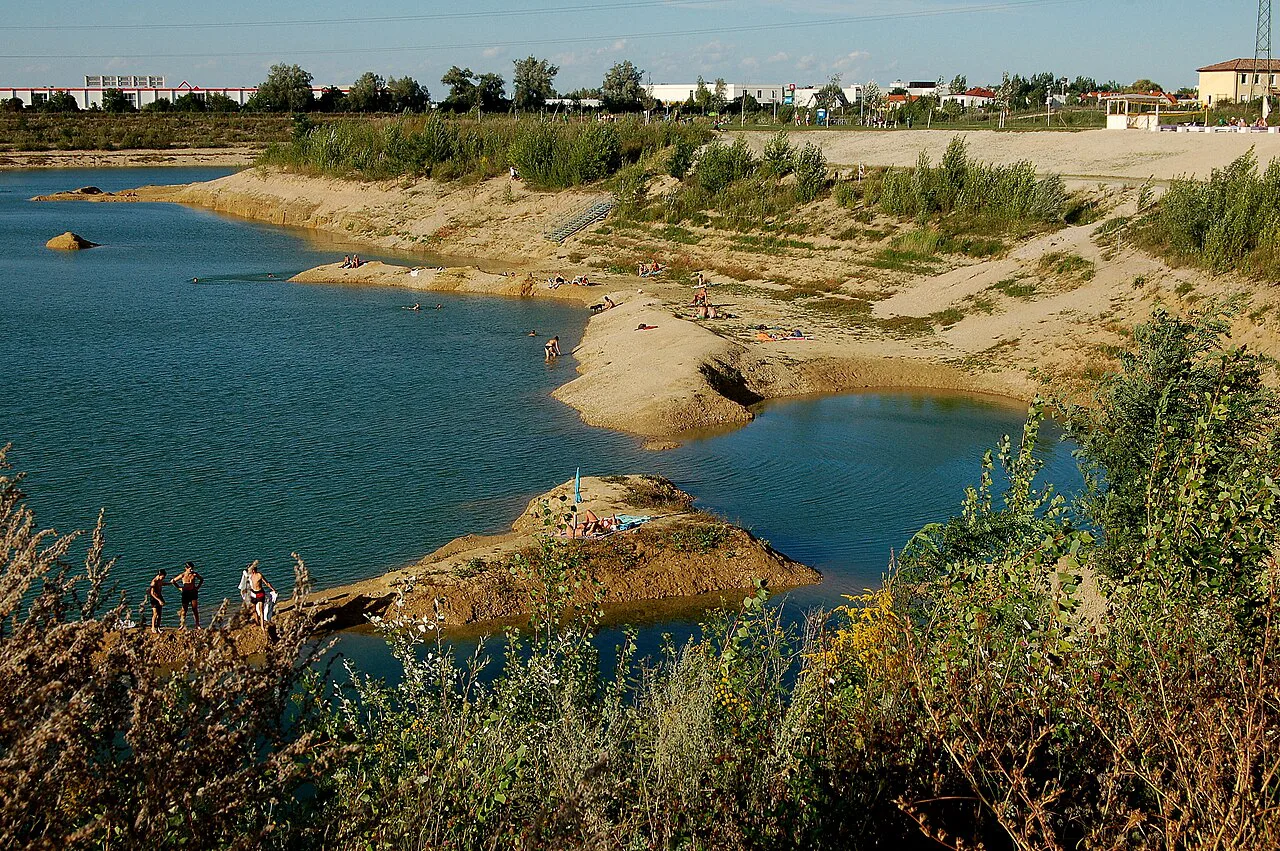
Wiener Neustadt was laid out as a planned town, and the street pattern still shows it: a broad rectangular main square with streets running off it at right angles and a ring of former fortifications around the core. Once you understand that, you can navigate the center without a map app, because almost every lane leads back to the Hauptplatz.
Orient yourself at the Hauptplatz first. The city's own homepage is the reference point for the town hall and civic offices at Hauptplatz 1–3, and from there the shopping streets of the pedestrian core fan out toward the stations and the academy grounds.
Hauptplatz and the surrounding streets on a short walk
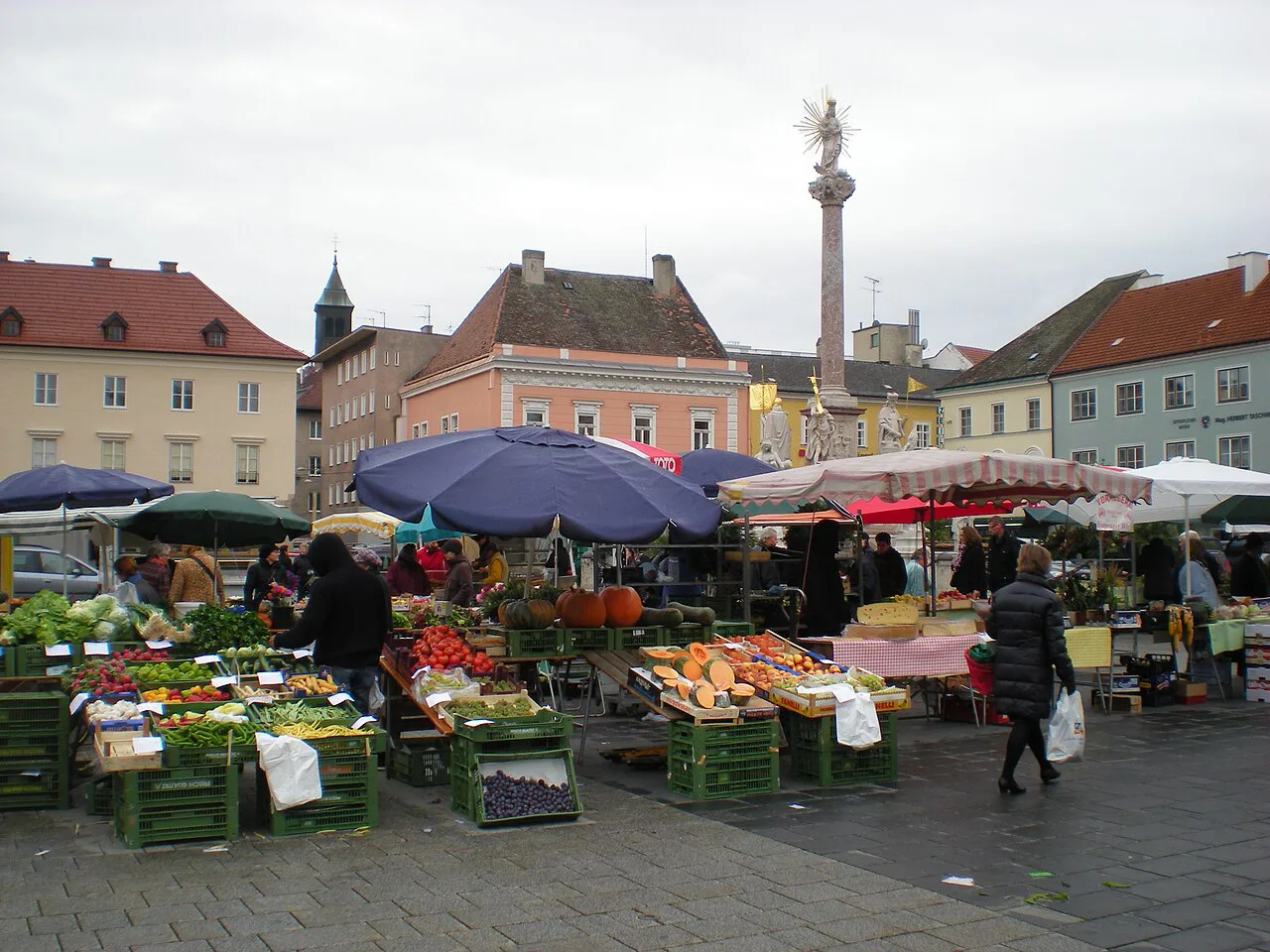
The Hauptplatz is the natural start and the place to get your bearings: a long, open square lined with facades, with the civic buildings grouped at its address block. Walk the full length once, then pick a side street and loop back, which is a better use of an hour than ticking off individual buildings.
The pedestrian core is small enough that a walk from the Hauptplatz to the academy grounds and back covers most of the historic center. Keep the loop short and save time for the interiors that need it, such as Stift Neukloster, rather than trying to see every facade.
St. Georgs-Kathedrale at the Military Academy
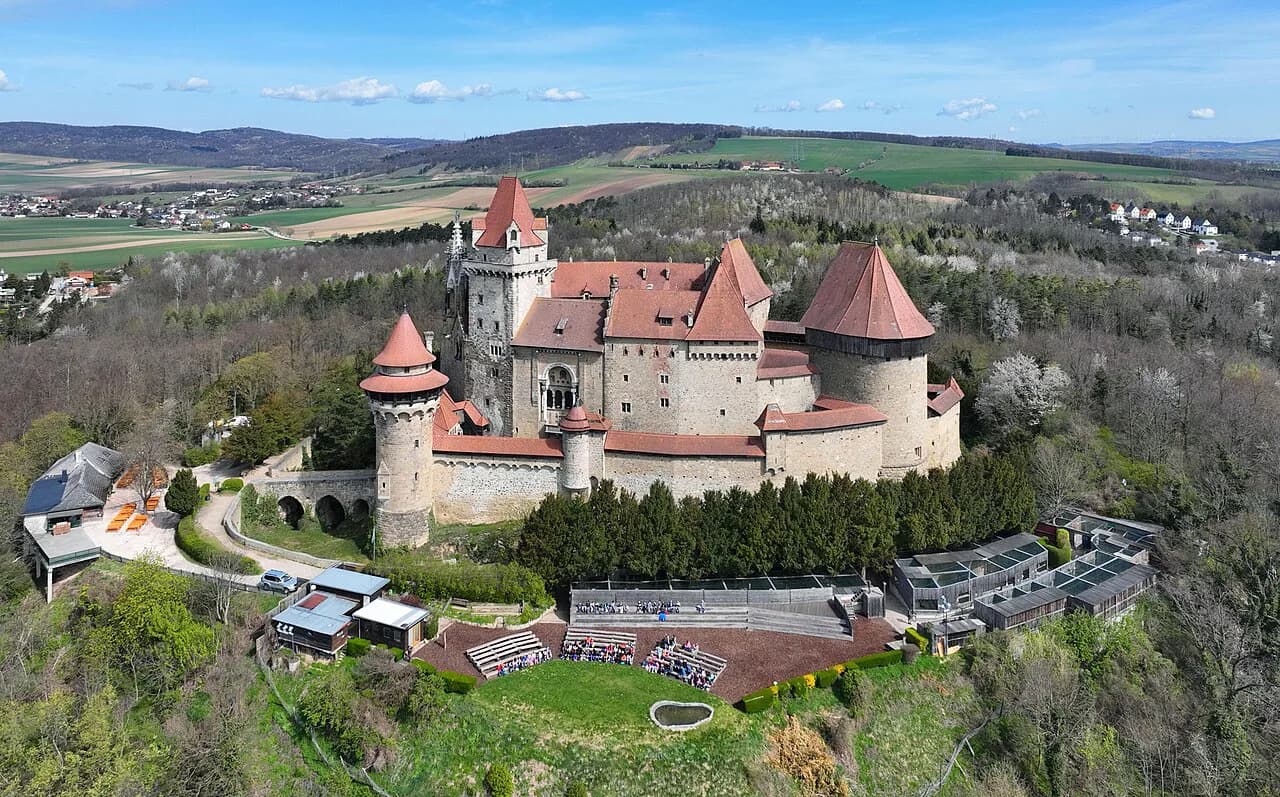
The Theresianische Militärakademie, the Military Academy, occupies the castle-like complex at the edge of the old town, and St. Georgs-Kathedrale stands within it. This is the one part of Wiener Neustadt where you should not assume you can simply walk in, because the grounds are a working military installation rather than an open monument.
The practical move is to see the complex from outside and treat any interior visit as a separate decision. Confirm access rules and any guided-tour arrangements with the academy or the city's tourism office at Hauptplatz 1–3 before you build your morning around the cathedral, since entry conditions are not something to guess at on the day.
Stift Neukloster and the churches of the old town
Stift Neukloster, the former Cistercian abbey, is the major ecclesiastical stop in the center. It pairs well with the churches around the grid, so you can see them without a long detour and still keep the loop short.
For a town of its size, the concentration of churches and monastic buildings is the reason to come. If you have seen the baroque abbeys along the Danube, the appeal here is different: a medieval planned town where the religious houses sit inside the street grid rather than on a hill above it.
The Kasematten and the museum landscape
The Kasematten, the old casemate vaults, are used for events and are one of the town's more unusual spaces, and the city lists them among its cultural venues alongside the Museum St. Peter an der Sperr and the Stadttheater. Check what is actually open on your date before you count on a museum visit, since event programming shapes access to the vaults.
Museums are where a short stop can quietly eat a morning. If your time is tight, pick one indoor sight and spend the rest outdoors, because the squares, the academy exterior and the monastery are what make the town distinctive, and they cost nothing to walk.
Akademiepark and the green edge of the center
The Akademiepark is the green space listed among the attractions of the academy area, and it is the natural place to end a walk when you want shade and a bench rather than another facade. It also gives you a sense of how the planned town meets its fortifications.
Treat the park as a pause, not a sight. Twenty minutes on a bench is enough before you head back through the grid to the station or the car park, and it keeps a half-day stop from turning into a rushed circuit of churches.
How much time the center needs
Budget about half a day for the center: an hour for the Hauptplatz and the surrounding streets, an hour for Stift Neukloster and the parish church, and the rest for the academy exterior, the Kasematten area and a coffee. That leaves room to absorb the place without racing between doorways.
The trade-off is interiors. Every hour spent inside a museum is an hour not spent on the street pattern and the fortification edge, which are the reasons this town is different from the Wachau stops. A morning arrival gives you the calmest version of the center before the day fills up.
Getting there by train and onward connections
Wiener Neustadt Hauptbahnhof is the arrival point for rail travelers, and the town sits on the main line south from Vienna toward Graz and the Semmering. The station area is served by the city's own transport information, which is where you check the local bus network and connections into the center.
For journey times, frequencies and platform details, use the ÖBB timetable rather than a fixed number in a guide, since schedules change by season. From the station the old center is a straightforward walk through the grid, so you do not need a connecting bus for the Hauptplatz.
Arriving by car and parking in the center
By car, Wiener Neustadt is a straightforward stop on the route south from Vienna, and the city operates parking management in the center, so plan to leave the car at the edge and walk in. The city's traffic pages set out the parking arrangements and the pedestrian core, which is easier to cross on foot than to drive through.
Note that current roadworks affect the northern approach, with construction on the four-track expansion of the Nordeinfahrt and related closures and diversions. Check the city's notices before a car arrival, and allow a little slack if you are connecting to a train.
Where it fits a Lower Austria route
Wiener Neustadt belongs on the southern leg of a Lower Austria circuit, between Vienna and the Semmering or Graz, rather than on the Danube. Travelers heading toward the Wachau and the Kamp valley are better served by towns like Krems or Retz, or by Rosenburg Castle, which sit on a different axis.
If you are building a wider sweep, the Lower Austria guide maps the Danube and Weinviertel sights against the southern line, and a stop here slots in cleanly before you continue south. Pairing it with a Danube day in Krems or a visit to Rosenburg Castle means two different days, not one.
Tickets and opening seasons
Most of what makes Wiener Neustadt worth the stop is outside: the Hauptplatz, the streets, the academy exterior and the park edge. For the interiors, the city's culture pages and the venues themselves carry current opening days and any admission charges, so confirm those before you travel rather than relying on a printed figure.
If a museum or the Kasematten is your reason for coming, check its schedule first, because event use and seasonal hours vary. Build the walk around confirmed openings and keep the unconfirmed interiors as optional, which is how a half day stays relaxed.
Coffee and stops in the center
The Hauptplatz and the streets off it are where to look for a cafe, and the city's shopping and center pages point to the Marienmarkt area as part of the commercial core. Use the square as your rest stop between the academy and the monastery rather than hunting for a specific address.
A practical rhythm for the morning is coffee on arrival, the Hauptplatz loop, then the academy and St. Georgs-Kathedrale, and lunch before you leave. That keeps you in the pedestrian core when you are tired and puts the walking at the start, when the town is quietest.
Is Wiener Neustadt worth the half-day stop?
Yes, if you are already moving between Vienna and the south. The planned grid, the Hauptplatz, Stift Neukloster and the academy complex with St. Georgs-Kathedrale give you a compact, flat morning that is unlike the Danube abbeys and the Kamp valley castles.
Skip it if your trip is built around the Wachau or the Weinviertel, where Krems, Retz and Rosenburg Castle sit on a more natural route. Otherwise, plan a morning, arrive by train at Wiener Neustadt Hauptbahnhof, and confirm the academy's access rules and museum hours before you go.
Explore more Krems guides
Frequently Asked Questions
What does Neustadt mean in German?
Neustadt translates as new town, which is why several Austrian and German cities carry the name. Wiener Neustadt distinguishes itself by the Wiener prefix, a reference to its connection with Vienna, and it should not be confused with Vienna's own districts.
Can you visit the Military Academy in Wiener Neustadt?
The Theresianische Militärakademie is a working military installation with controlled access, so you should not assume the grounds are open to walk-in visitors. Confirm current access rules and any guided-tour arrangements with the academy or the city's tourism office before planning your morning around St. Georgs-Kathedrale.
How do you get from Vienna to Wiener Neustadt?
The town sits on the main rail line south from Vienna, with Wiener Neustadt Hauptbahnhof as the arrival point and a walkable route into the old center. Check the ÖBB timetable for current journey times and frequencies, since schedules change by season.
Sources
Notes for your next Austrian town break
Optional updates when we add or revise town guides.
You might also like
Continue reading
More guides you'll find useful