Traunsee, Austria: Lake Towns, Trains and the Traunstein
Traunsee puts Gmunden, Traunkirchen and Ebensee on one Salzkammergut lake below the Traunstein. Here is how the shore fits a route and what each stop offers.
On this page
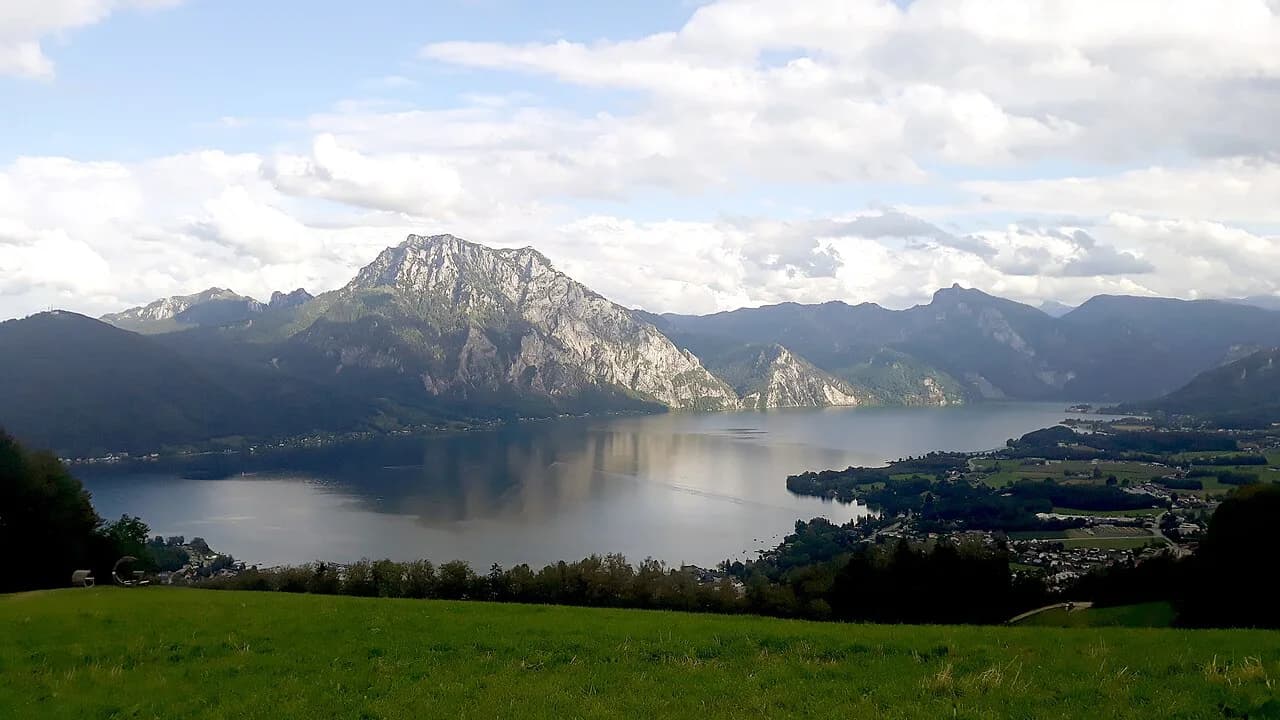
Traunsee is the long Salzkammergut lake that runs north to south with Gmunden at its top, Traunkirchen on the western shore and Ebensee at the southern end, all beneath the Traunstein on the east side. Plan it as a chain of shore towns rather than a single stop: each one asks for a different slice of a day. This guide walks the shore in order, covers the paid attractions on the Grünberg above Gmunden, and shows how the lake slots into a route through Upper Austria.
The Salzkammergut rail line and the B145 federal road both follow the water, so you can string Gmunden and Traunkirchen together without a car. The train is the practical way to see the lake from the shore, but check the ÖBB timetable for what runs on your date.
Where Traunsee sits in the Salzkammergut
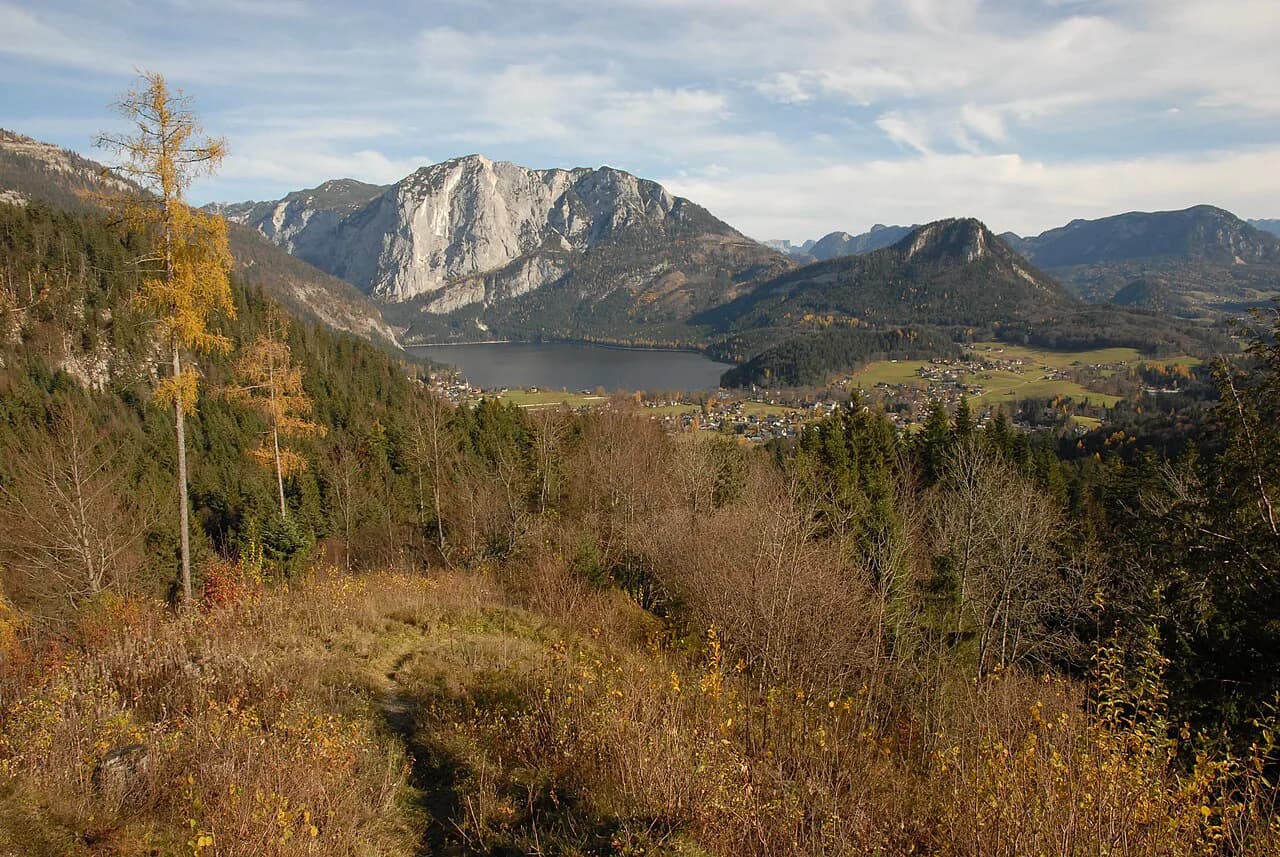
The lake belongs to the Salzkammergut, the lake-and-mountain landscape of Upper Austria that continues east toward Bad Ischl and the Wolfgangsee. Traunsee is its northern showpiece: a body of water framed by limestone and dolomite peaks, with the Traunstein as the landmark above the eastern shore.
For a traveler coming from Vienna, Linz or Salzburg, Gmunden at the north end is the natural first landfall and the point where the lake opens up. Gmunden repays more than a quick look, so give the town its own half day before you head down the shore.
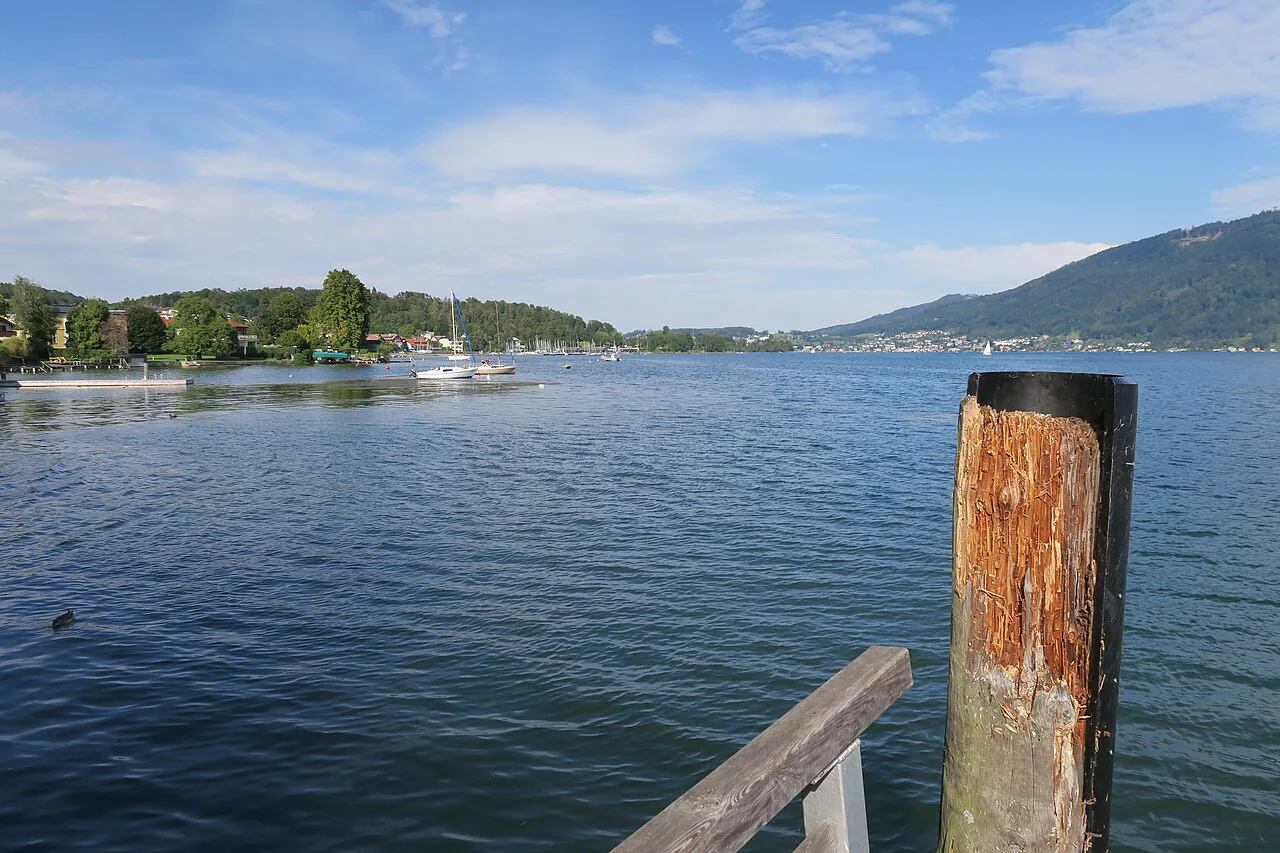
The shape of the lake and the order of the towns
Think of Traunsee as a corridor. Gmunden anchors the north, Traunkirchen sits a short way down the western shore, and Ebensee closes the southern end, which keeps the lake's quieter face. The Traunstein rises on the opposite, eastern side, so the mountain views come to you from across the water as you move south.
That geography decides your day. A car lets you hop between all three and add the Grünberg above Gmunden; the train ties Gmunden and Traunkirchen together neatly and carries on to Ebensee. The shore road and the rail line are the reliable ways to move between towns.
Gmunden: Schloss Orth and Gmundner Keramik on the shore
Gmunden's landmark is Schloss Orth, a lakeside castle first mentioned in a document in 909 and one of the oldest buildings in the Salzkammergut. It began as a fortress and stands directly on the water, which makes it the obvious anchor for a walk around the old center.
A short walk away, Gmundner Keramik carries a tradition dating to 1492 and is now the largest ceramics manufacturer in Central Europe. You can take a guided tour of the workshop or simply visit the shop; either way it is the town's signature stop.
The Grünberg above Gmunden: treetop walk and Alpine Coaster
Above Gmunden, the Grünberg carries the Treetop Walk Salzkammergut, a wooden walkway raised over the mountain forest and capped by a 39-meter observation tower. It is a separate paid attraction on the mountain, not part of the lakefront, so budget time to ride up and back down. Confirm current ticket prices and opening days with the operator before you commit a morning to it.
The same mountain has the Grünberg-Flitzer, a 1.4-kilometer toboggan run that drops 160 meters, with a tow lift bringing riders back to the top. Families often pair the two, and a children's climbing park sits a few minutes from the treetop walk. From there, Laudachsee is about an hour's walk away, an emerald-green mountain lake in a nature reserve, with the Ramsaualm near the shore for a meal.
Traunkirchen: the small village on the western shore
Traunkirchen is the opposite of Gmunden in scale: a compact village on the Traunsee shore with its square, the Ortsplatz, as the center of things. It works well as a slow half day, with the lake in front of you and the slopes behind.
Reaching it is straightforward by public transport. The Westbahn line runs to Attnang-Puchheim, where you change onto the Salzkammergut line for Traunkirchen; by road, leave the A1 motorway at Regau and follow the B145 Salzkammergut-Bundesstraße to the village.
Buses also serve the village: line 2031 runs from Linz via Wels, Lambach and Gmunden, and lines 2031 or 3000 come from Salzburg via St. Gilgen and Bad Ischl. Check the Postbus timetable for departure times on your day.
Ebensee and the southern end of the lake
Ebensee closes the lake at its southern tip, where the Traunsee narrows and the mood turns quieter than in Gmunden. It is the end of the rail line along the water, which makes it a natural final stop on a shore-by-shore day.
The town also holds the Ebensee memorial at the site of the former concentration camp, which should be approached soberly and with time set aside. If you want the memorial, the Feuerkogel above town or the full southern shore, plan Ebensee as its own stop rather than a quick pass-through.
The Traunstein above the eastern shore
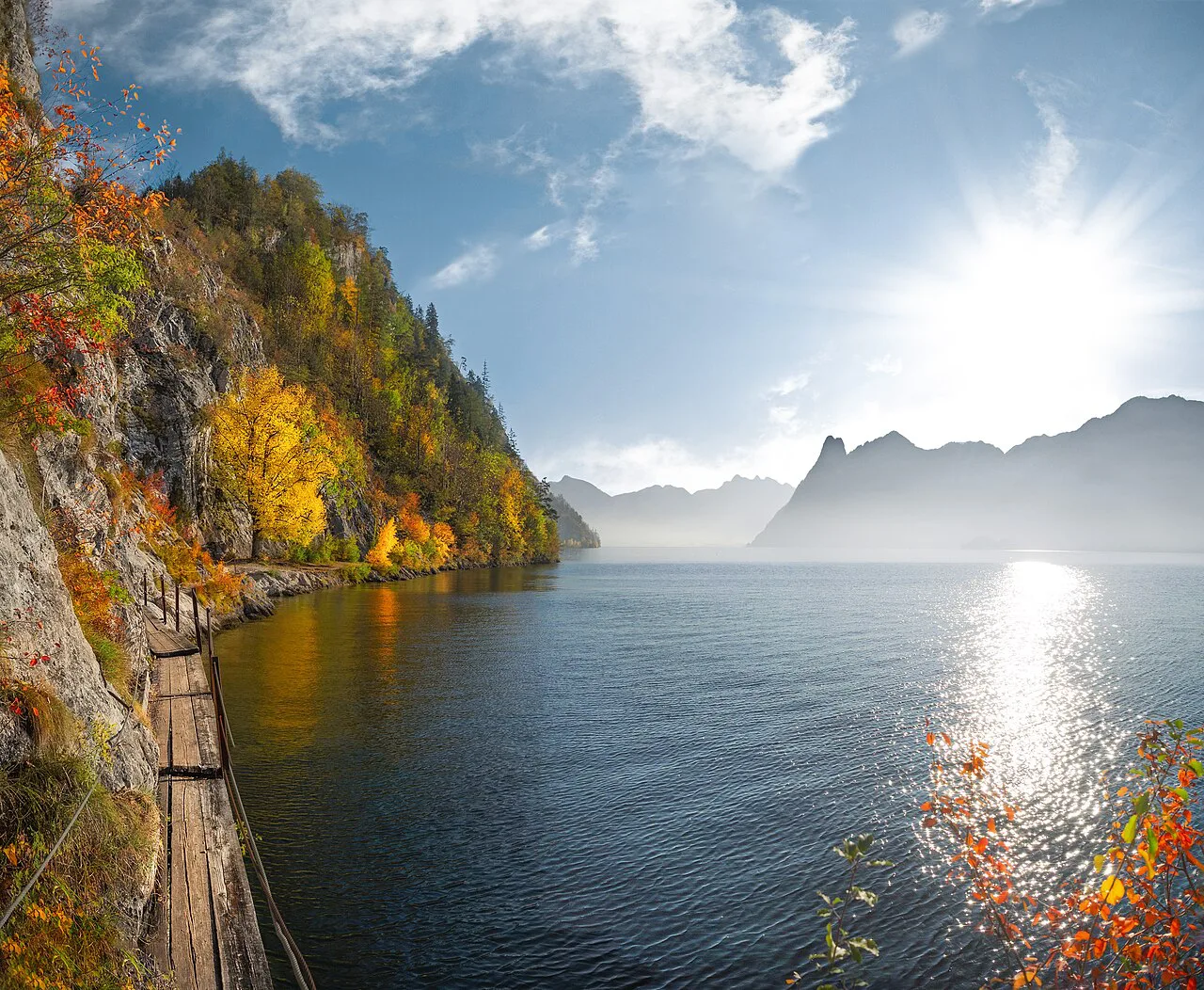
The Traunstein is the steep massif on the lake's east side and the reason so many Traunsee views have a wall of rock behind them. It shapes the light on the water in the late afternoon, when the eastern shore falls into shadow and the western villages stay bright.
Treat the mountain as scenery from the shore towns and the boat rather than a route on this page. The classic view is from Gmunden's lakefront or from the water itself, with the Traunstein filling the frame behind the town.
Getting around Traunsee by train, car and on foot
The Salzkammergut rail line is the backbone: it links Gmunden, Traunkirchen and Ebensee along the western shore, with the change at Attnang-Puchheim on the Westbahn main line. For a car, the A1 exit at Regau puts you on the B145, which follows the water south.
Give the lake a day for the shore towns and a second for the Grünberg above Gmunden, and treat the mountain attractions as ticketed stops that follow their own calendars. In practice, the train works best as a one-way link along the water, which keeps the day flexible.
How long Traunsee needs and how it fits a route
One full day covers Gmunden and Traunkirchen comfortably by train. Add a second day if you want the Grünberg treetop walk, the Alpine Coaster or the Laudachsee walk, and a third if Ebensee and the southern end of the lake are on your list.
On a wider Salzkammergut route, Traunsee works as the northern gateway: come in from Linz or Salzburg, spend a day or two on the shore, then continue south toward Bad Ischl and the Wolfgangsee. Travelers heading the other way can finish at Gmunden before the train back to Linz or Salzburg.
Costs and seasons on the Traunsee shore
The shore towns themselves cost nothing to walk, and the train along the lake is the cheapest way to move between them. The Grünberg attractions are separate ticketed experiences: the treetop walk and the Alpine Coaster each publish their own prices and opening days, which you check with the operator before you go.
Seasonality hits the mountain first: the treetop walk and the Grünberg-Flitzer run on their own calendars, so an October visit and a July visit are not the same trip. The shore towns and the train run year-round, but confirm the mountain attractions' opening days before you go.
Pick your shore before you book
If you have one day, base yourself in Gmunden, see Schloss Orth and the ceramics workshop, and take the train to Traunkirchen for the afternoon. If you have two, give the Grünberg its own morning and use the train for the in-between.
The lake rewards a traveler who treats it as three towns on one shore instead of one viewpoint. Decide which end of Traunsee fits your route, check the treetop-walk and coaster opening days for your dates, and let the train handle the in-between.
Explore more Bad Ischl guides
Frequently Asked Questions
Do you need a car to see Traunsee?
No. The Salzkammergut rail line links Gmunden, Traunkirchen and Ebensee along the western shore, with a change at Attnang-Puchheim from the Westbahn main line. A car helps if you want the Grünberg above Gmunden and the Laudachsee walk in the same day, since both sit off the shore.
Can you get around Traunsee without a car?
Yes. The Salzkammergut rail line follows the western shore between Gmunden, Traunkirchen and Ebensee, and the B145 road follows the water for drivers. The Grünberg attractions above Gmunden need a separate trip up the mountain.
Is Traunsee part of the Salzkammergut?
Yes. Traunsee is the northern lake of the Salzkammergut in Upper Austria, with Gmunden at the north end and Ebensee at the south. Bad Ischl and the Wolfgangsee lie farther south and east, which makes the lake a natural first stop on a Salzkammergut route.
Sources
Notes for your next Austrian town break
Optional updates when we add or revise town guides.
You might also like
Continue reading
More guides you'll find useful