Almsee, Austria: The Alpine Lake at the End of the Almtal
Almsee sits at the end of the Almtal near Grünau im Almtal in Upper Austria. Plan the loop trail, parking fees, buses and what makes the reserve distinct.
On this page
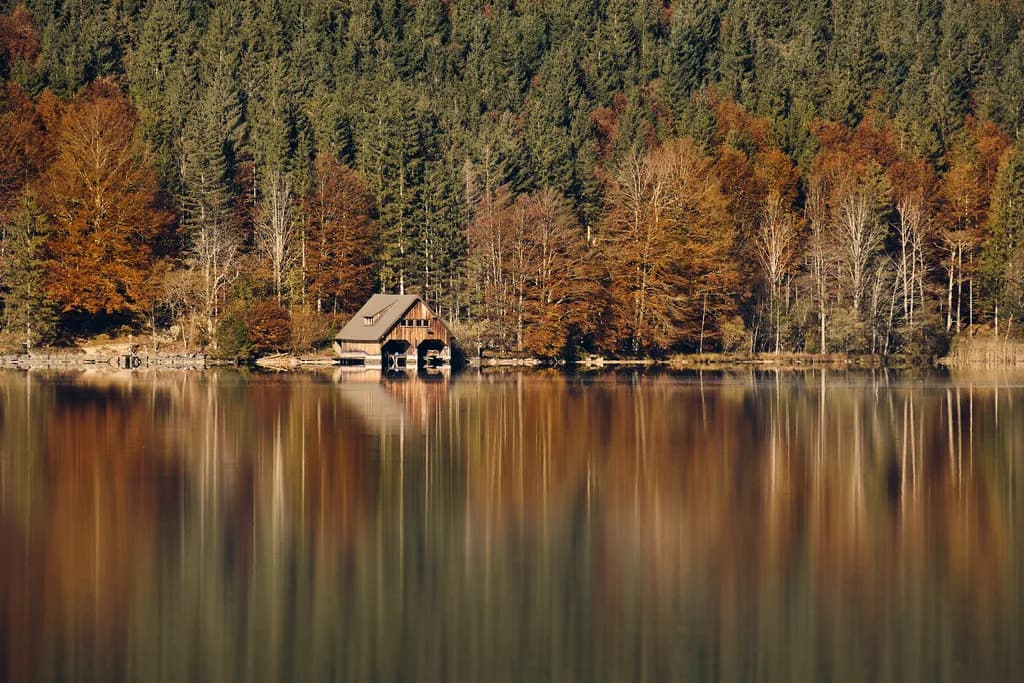
Almsee is worth a half day, not a full one: a compact nature-reserve lake in the Almtal near Grünau im Almtal, in Upper Austria, with an easy loop path around the water and no village on its shore. The appeal is quiet birdlife and mountain scenery rather than boats, promenades or cafes on a square. This guide covers where the lake sits, how to reach it by train and bus or by car, what the loop involves, what parking costs and how it slots into a wider Salzkammergut trip.
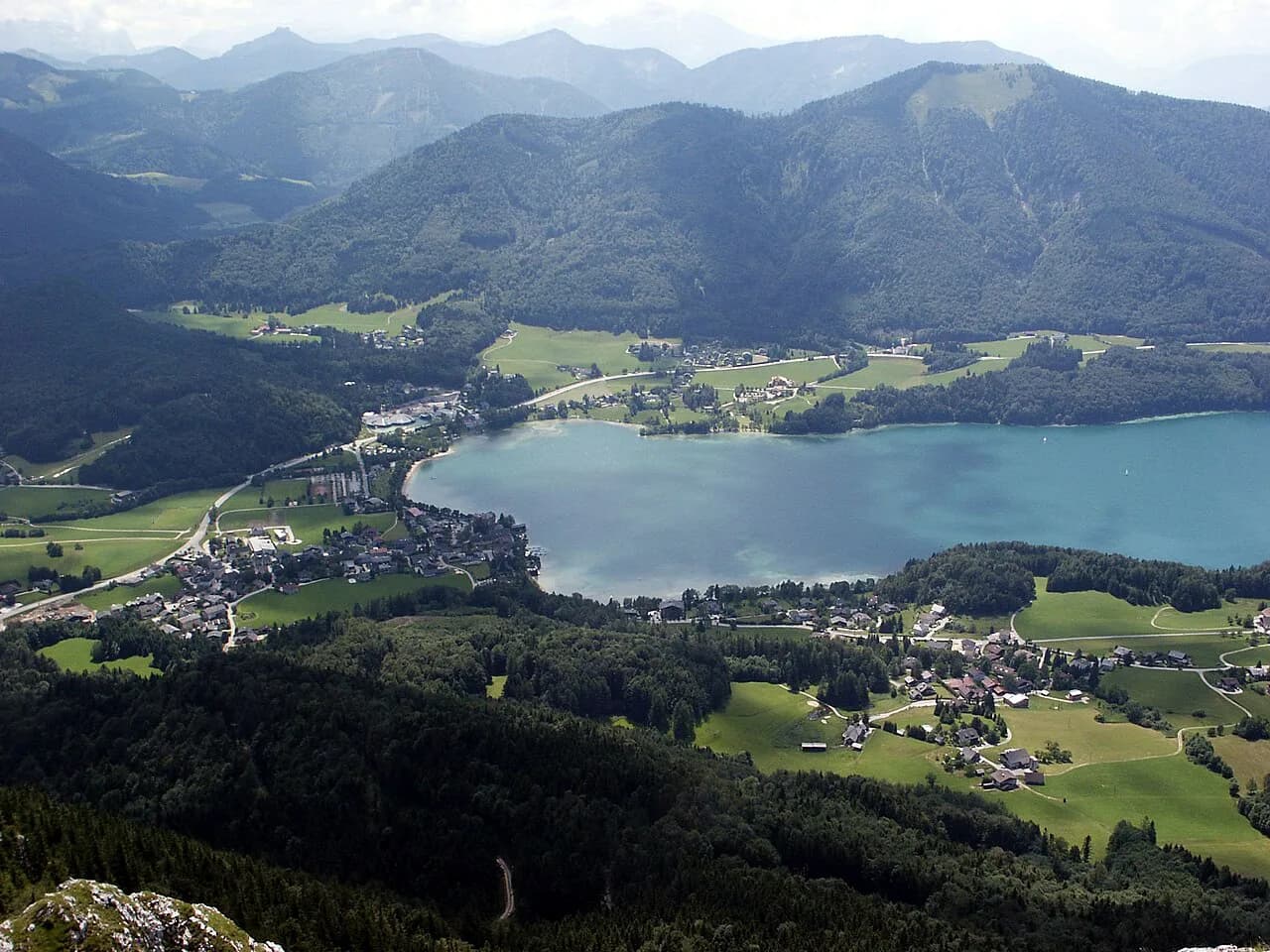
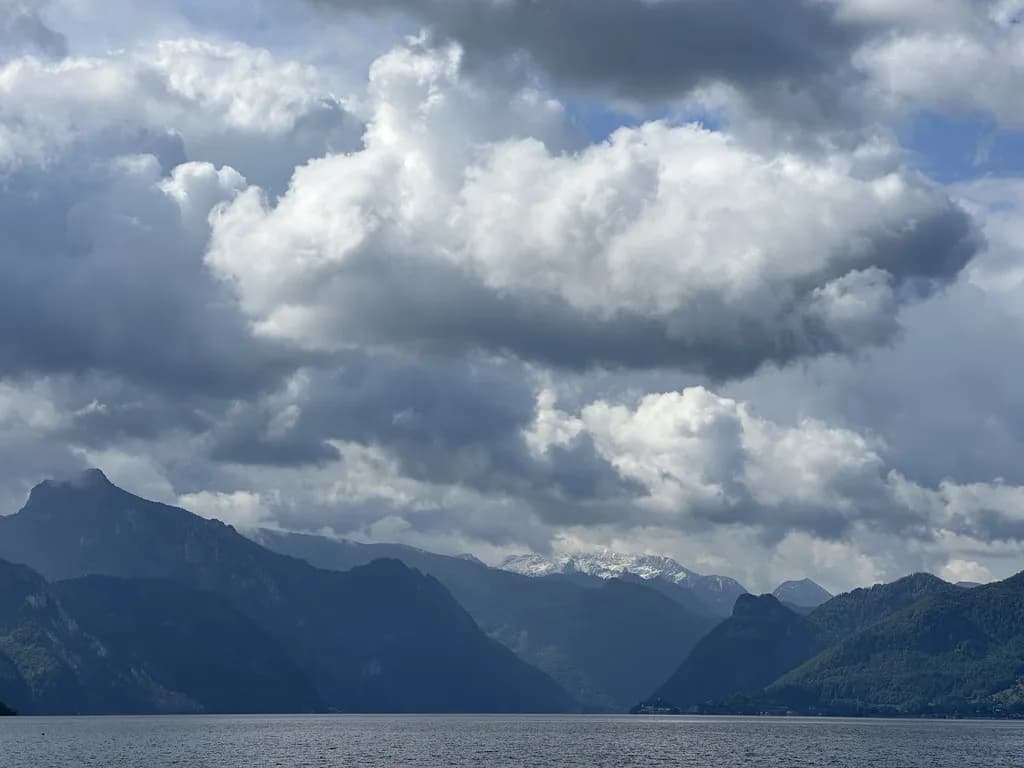
The lake lies at the foot of the Totes Gebirge (Dead Mountains) and is associated with Konrad Lorenz's gray geese, which still live in this natural valley. It is a marked contrast to the busier lake towns of the region, so treat it as a scenic stop rather than a resort.
Where Almsee is and why it draws visitors
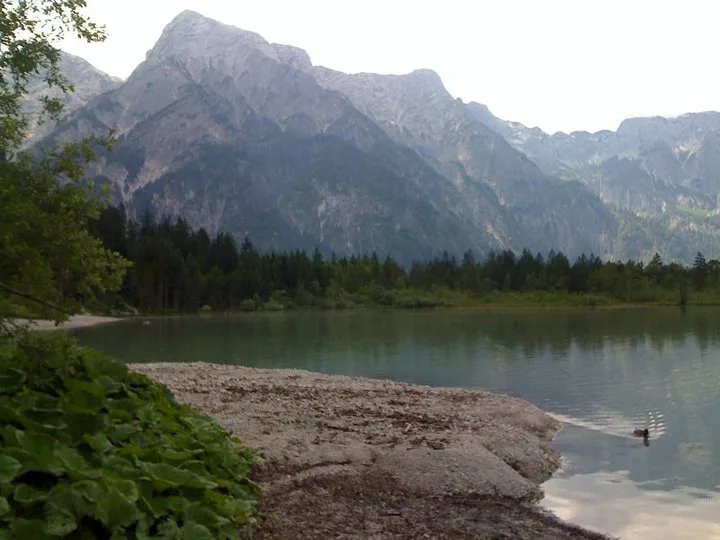
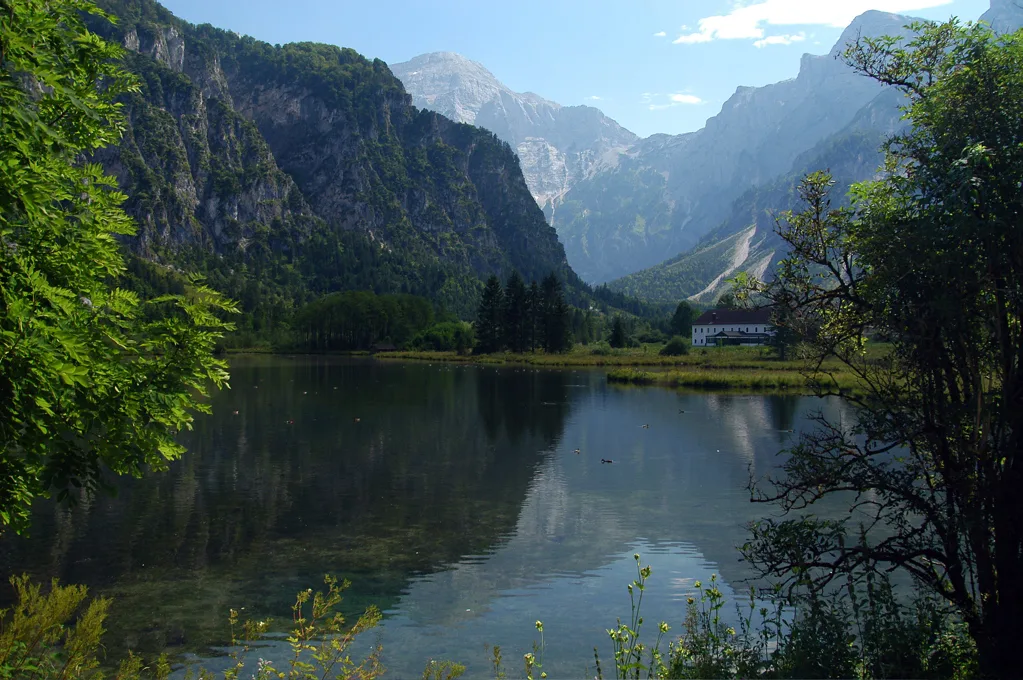
Almsee is a small lake in the Almtal valley south of Grünau im Almtal, within the Salzkammergut region. The water is a nature reserve, and the surrounding meadows and shoreline are managed for wildlife rather than recreation infrastructure. You come here for the setting, the birdlife and a flat walk, not for a town to wander afterward.
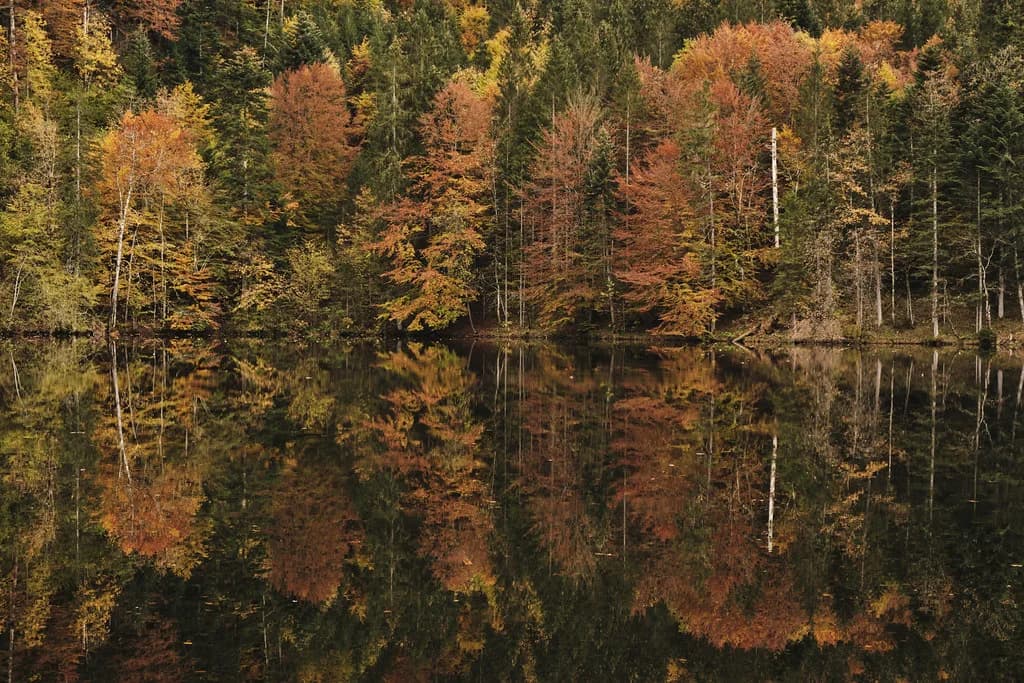
The reserve is known for its birdlife: 35 different songbird species have been counted here, and 20 of them also breed at the lake. Waterbirds and songbirds both use the shoreline, and a silting zone at the southern end of the lake shapes the habitat there. Bring binoculars if you have them, and keep your distance from nesting areas.
The lake's oddity is a floating island formed from fallen trees and driftwood, which has sat stuck in a small bay near the hiking trail for some time. It is not a boatable feature and there is no jetty or tour boat, so viewing it means walking the shore path.
Getting there by train and bus
Without a car, take the Almtalbahn (Line 153) from the Wels train station to Grünau im Almtal; Wels connects to mainline trains on the Westbahn line toward Linz and Vienna or Salzburg and Munich. From the Grünau station, OÖVV Bus Line 534 runs to Almsee, and Bus Line 535 links Gmunden, St. Konrad and Scharnstein with the Grünau station. Check current departure times on the ÖBB and OÖVV timetables before you set out, since the lines run on a rural schedule rather than a city frequency.
A door-to-door option is the Salzkammergut Shuttle Service Route 60 from the Grünau station to the Almsee Gasthaus Seehaus stop. It requires calling the taxi dispatch center at least one hour in advance or booking online at salzkammergutshuttle.at. This is the practical choice if the bus times do not line up with your arrival by train.
On foot from Grünau's center or train station, the Almuferweg trail follows the Alm river to the lake, passing the Cumberland Wildlife Park on the way. The valley road from the town center to Almsee runs about 15 km, so the walk is a genuine outing rather than a stroll from a platform.
Driving to Almsee and what parking costs
By car from the A1 West Highway, the usual approach runs via the Ried im Traunkreis exit, Voitsdorf, Pettenbach and the B120 to Scharnstein, then the Almseelandesstraße to Grünau im Almtal and on to the lake. From the Salzburg side, the route comes via Regau, the B145 to Gmunden, the B120 to Scharnstein and the same valley road. The last stretch follows the Alm river into the valley and ends at the lake lots.
The two parking lots at the northern and southern ends of the lake are subject to a fee: EUR 5 per passenger car per day, or EUR 15 for up to seven days for hikers parking overnight in the valley. A daily bus ticket costs EUR 20. Camping at the lake is prohibited, so a multi-day stay needs a base in Grünau or elsewhere in the Salzkammergut.
The lots together provide about 30 car spaces and two bus parking spaces. Entering the area itself is free, so the only cost is parking.
Walking the Almsee loop
The loop around the lake covers about 6 km and takes roughly 1.5 hours on easy, flat ground of gravel and hiking trail. The official route description gives 9 km and about 2 hours 18 minutes from the Jagersimmerl hotel starting point in the valley, with around 134 m of uphill and 110 m of descent, and rates the difficulty as easy with a great panorama. Choose the shorter lake circuit if you are combining Almsee with other stops; take the longer version if you want a proper half day.
From the Jagersimmerl parking lot, the path runs up the left bank of the Alm through the Au to the Seeklause, along the lake to the Fischerhütte, past Gasthaus Seehaus and on to the Echoplatzerl rest spot before returning to the Seeklause. The names are useful waypoints on the ground: Seeklause and Seehaus are where the practical facilities are.
The route is easy enough for most walkers, but it is a nature reserve, so stay on the trail and keep voices down near the shoreline. The silting zone and floating island sit near the southern stretch, which rewards a slower pace.
Season, winter access and facilities
The area is freely accessible all year round, and the landowner asks visitors to treat nature with care, especially at dusk. There is no gate, ticket booth or seasonal closure to plan around.
In winter the loop path is not cleared, even though the trail can be used. That makes the lake a fair-weather and shoulder-season stop for most travelers, and it means winter walking here needs proper footwear and a realistic assessment of snow conditions.
Public toilets are available at the Seeklause, by the lake, and at the parking lot at Gasthaus Seehaus. Those are the only facilities; there is no visitor center, shop or rental desk at the lake.
Some sections suit wheelchair users only with assistance, since the paths do not fully conform to the legally stipulated ÖNORM. Travelers with mobility needs should plan for a companion and check the surface conditions before committing to the full circuit.
Nearby: Cumberland Wildlife Park and the wider Salzkammergut
Travelers arriving without a car pass the Cumberland Wildlife Park on the Almuferweg walk from Grünau to the lake, which makes a natural pairing with the lake loop. Allow extra time if you want to stop there on the way back.
Almsee works best as a morning or early-afternoon stop on a Salzkammergut route based around the region's lake towns, since it has no accommodation or restaurant cluster of its own. The Salzkammergut Guide covers the bigger stops and how they connect.
Is Almsee worth the detour?
Yes, if you want an easy, low-cost nature stop rather than another lake resort: a 6 km flat loop, a small parking fee, birds and mountain scenery. Skip it if you have no car and no patience for rural bus timing, or if you need cafes, boats and a town at the water's edge.
Pair it with a night in Bad Ischl or elsewhere in the Salzkammergut and treat Almsee as a half-day excursion by train, shuttle or car. Budget EUR 5 for parking, or check the current ÖBB and OÖVV schedules for the Almtalbahn and Line 534 before you go.
Explore more Bad Ischl guides
- Altaussee
- Ebensee: The Memorial, the Feuerkogel and the South End of the Traunsee
- Fuschl am See and Lake Fuschl
- Gmunden: A Lakeside Town Guide for Traunsee and the Old Center
- Mondsee: A Guide to the Lake Town, Its Basilica and Its Lakefront
- Salzkammergut Lakes
- Schafbergbahn
- St. Gilgen on the Wolfgangsee
Frequently Asked Questions
Can you swim in the Almsee?
The lake is a nature reserve with a managed shoreline, and the published visitor information focuses on walking and birdlife rather than swimming areas, beaches or lifeguards. If swimming matters to you, ask the Almtal tourist office before you travel.
Are there facilities or a visitor center at the Almsee?
Public toilets are available at the Seeklause and at the parking lot at Gasthaus Seehaus. There is no visitor center, shop or rental desk at the lake, so bring what you need for the walk. The area is freely accessible all year round.
Sources
Notes for your next Austrian town break
Optional updates when we add or revise town guides.
You might also like
Continue reading
More guides you'll find useful