Salzkammergut Guide: Lakes, Towns and How to Link Them
Plan the Salzkammergut by lake and town: Hallstatt, Bad Ischl, Traunsee, Mondsee, Attersee and the Ausseerland, with boats, cable cars and rail links.
On this page
Plan the Salzkammergut by lake and valley, not by a checklist: pick one or two bases, then let boats, mountain railways and Postbus lines decide the days. The district stretches from the Attersee and Mondsee in the west through Bad Ischl and the Traunsee to Hallstatt and the Ausseerland in the east, so geography, not distance, is what makes a route work. This guide covers what each lake and town is like, which sights anchor a day, and how the pieces fit a route through Austria.
The name is literal history rather than scenery: the Salzkammergut was the salt chamber's estate, the administration that managed the region's salt mines, and the salt works at Hallstatt and Altaussee still explain several of its landmarks.
Two planning rules save the most time. First, Hallstatt and the Dachstein side sit at the far eastern end and reward an early start, because the salt mine, the Skywalk and the village fill the classic day. Second, mountain railways and cave tours are seasonal, so build days around the ones that are running rather than assuming year-round access.
Where the Salzkammergut sits in Austria
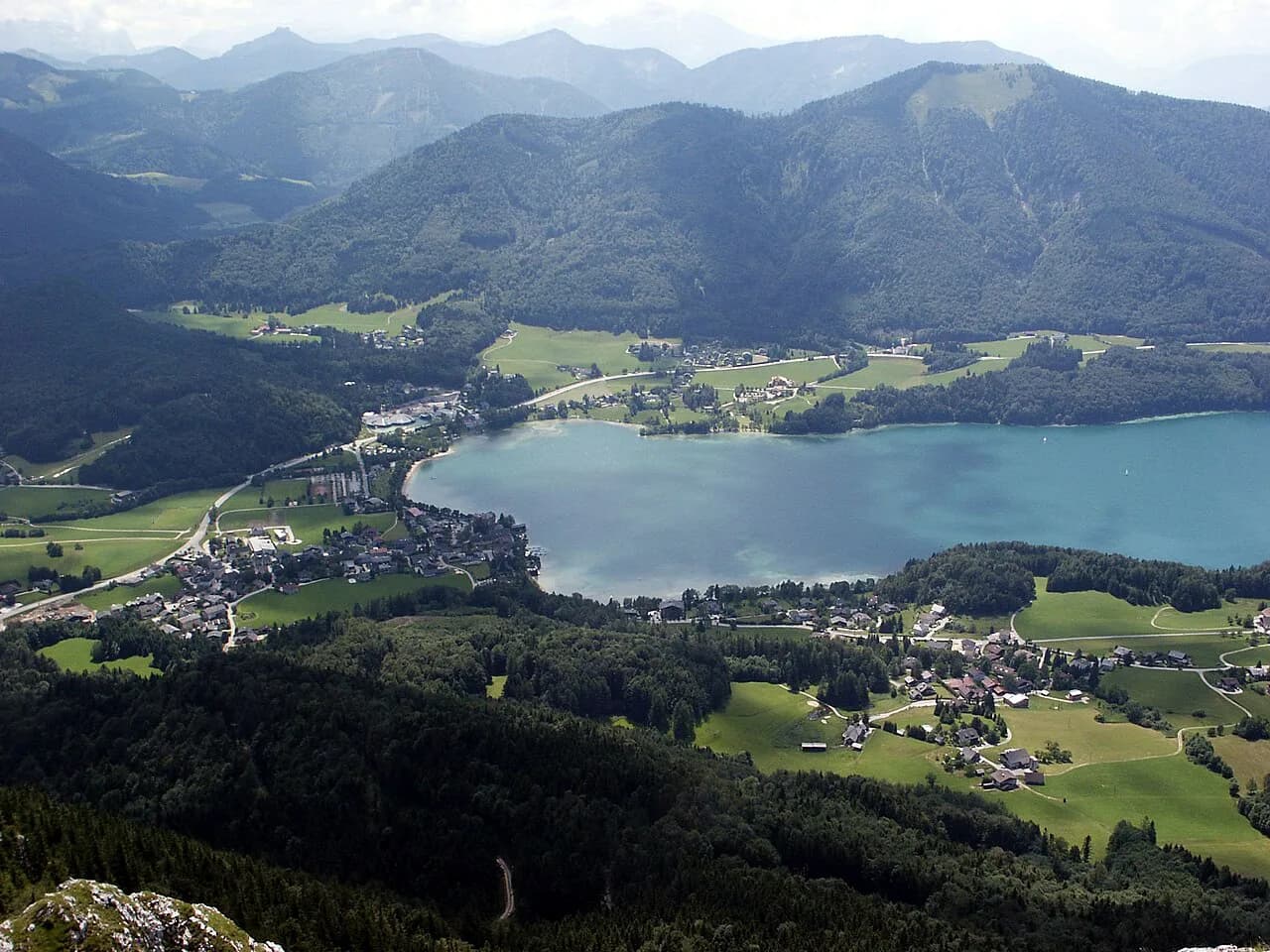
The Salzkammergut spreads across the Salzkammergut lake district, with Hallstatt, Bad Ischl, the Wolfgangsee and Traunsee, the Mondsee and Attersee, and the Ausseerland each making up part of the region. Because the area straddles provincial and regional boundaries, transport networks and guest cards can differ from one shore to the next.
Salzburg city sits roughly an hour by road from the Wolfgangsee and Mondsee, and is the usual arrival point for travelers coming by train from Munich or Vienna. Linz works better for the Attersee and Traunsee. Treat both cities as starting points and put your nights inside the lake district.
The lakes sort into three groups that rarely combine well in one day. The western pair, Attersee and Mondsee, links to Salzburg. The central cluster, Bad Ischl with the Traunsee and Wolfgangsee, is the natural base. Hallstatt, Obertraun and the Ausseerland form the eastern group beyond the Pötschen pass.
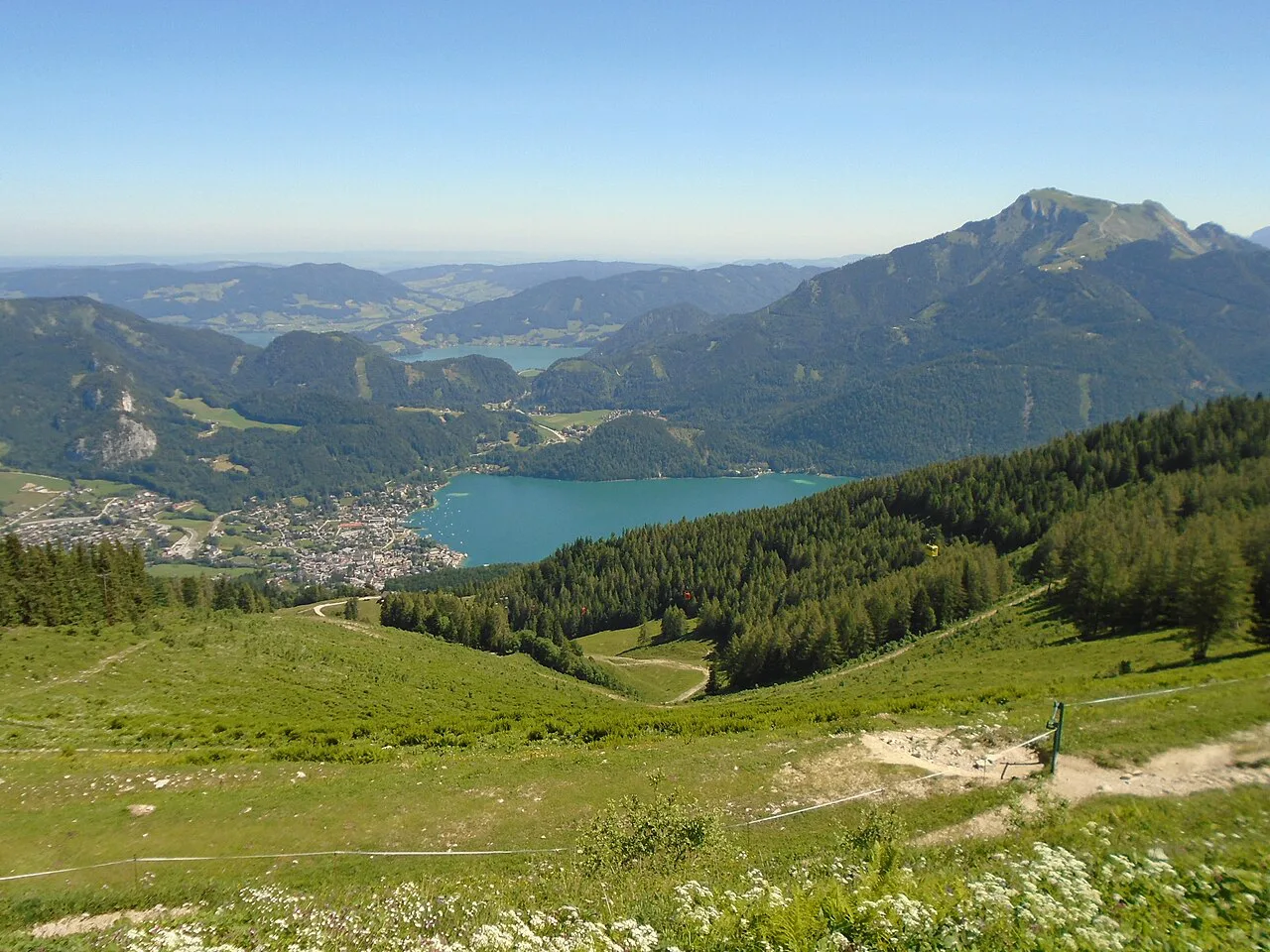
The region at a glance: which lake suits which traveler
Choose by what you want on the water and above it. The Traunsee gives you Gmunden, an island castle and a historic paddle steamer; the Wolfgangsee pairs a rack railway with a pilgrimage village; the Attersee and Mondsee are swimming and boat-trip country; the Ausseerland is quieter and mountain-framed.
Bad Ischl works as the central base. It has rail connections, an imperial villa and a house mountain reached by cable car, and it puts the Traunsee, Wolfgangsee and Hallstatt within reach of day trips.
Travelers without a car should favor Bad Ischl, Gmunden, Hallstatt and St. Wolfgang, where train stations and Postbus stops sit close to the sights. The southern Attersee shore and the smaller Ausseerland villages thin out quickly in the evening, so a car helps there.
Hallstatt and the Dachstein side: salt mine, Skywalk and the midday crowd
Hallstatt is a small village on a steep shore, and the classic day stacks three things: the salt mine above town, the Skywalk viewing platform, and the Marktplatz below. The Salzwelten mine tour goes roughly 400 meters underground through galleries that trace 7,000 years of Hallstatt culture, and the Skywalk looks down on the village and the Hallstättersee from above.
The geometry is simple but steep. The funicular and the mine sit above the rooftops, the church and Marktplatz at lake level, and the lanes between them are narrow enough that tour groups move in blocks. Arrive early or stay late; the middle of the day is when the village is at its tightest.
Across the lake, Obertraun is the gateway to the Dachstein caves and the Krippenstein cable car. The Five Fingers viewing platform sits a short walk of roughly 20 to 30 minutes from the cable car's mountain station, and the Dachstein Rieseneishöhle (giant ice cave) offers a cold alternative when the weather turns.
Bad Ischl and the Traunsee: Gmunden, Schloss Orth and Traunkirchen
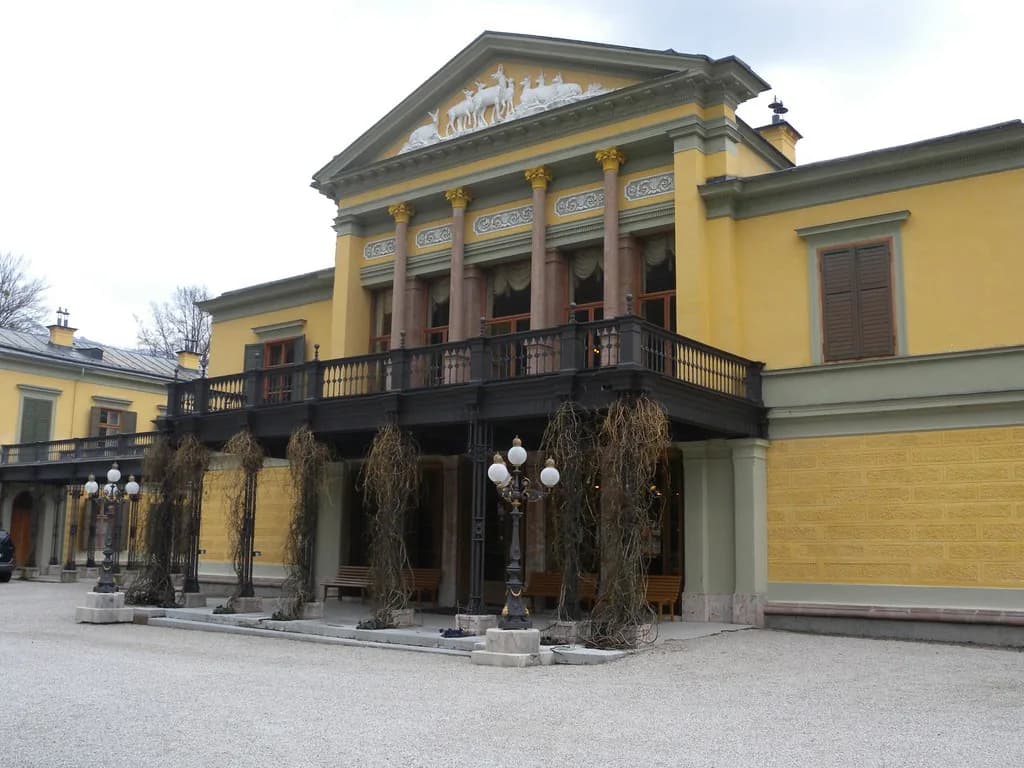
Bad Ischl was the imperial summer capital, and the Kaiservilla, the summer residence of Kaiser Franz Joseph I. and Kaiserin Elisabeth, is the reason to give it a half day. Guided tours run through the original imperial rooms, and the Kaiser Park and Marmorschlößl sit on the same estate, so the villa and the park fill one visit.
Bad Ischl's other sights, from the town center to the Katrin cable car, are covered in Bad Ischl Attractions: 9 Visitor Guides.
At the Traunsee, Gmunden is the main town, with the Gmundner Keramik Manufaktur and its green-flamed patterns as the most distinctive stop; the factory offers guided tours and a chance to paint your own piece. Schloss Orth sits on an island just offshore and is reached by a short footbridge, while Traunkirchen on the opposite shore holds the Johannesbergkapelle above the water.
The Traunsee is Austria's deepest lake, about 191 meters down at its lowest point, with the Traunstein massif rising directly from the eastern shore. The Gisela, a historic paddle steamer, crosses the lake, which makes a boat crossing a practical way to link Gmunden and the eastern shore instead of driving around.
The Wolfgangsee: Schafbergbahn, St. Wolfgang and beyond
The Wolfgangsee is the most theatrical of the lakes: the Schafbergbahn, a rack railway, climbs from St. Wolfgang to a summit terrace that looks across the lake toward the Dachstein and the Salzkammergut. The railway and the summit are a summer proposition, so plan this day inside the operating season rather than in a shoulder month.
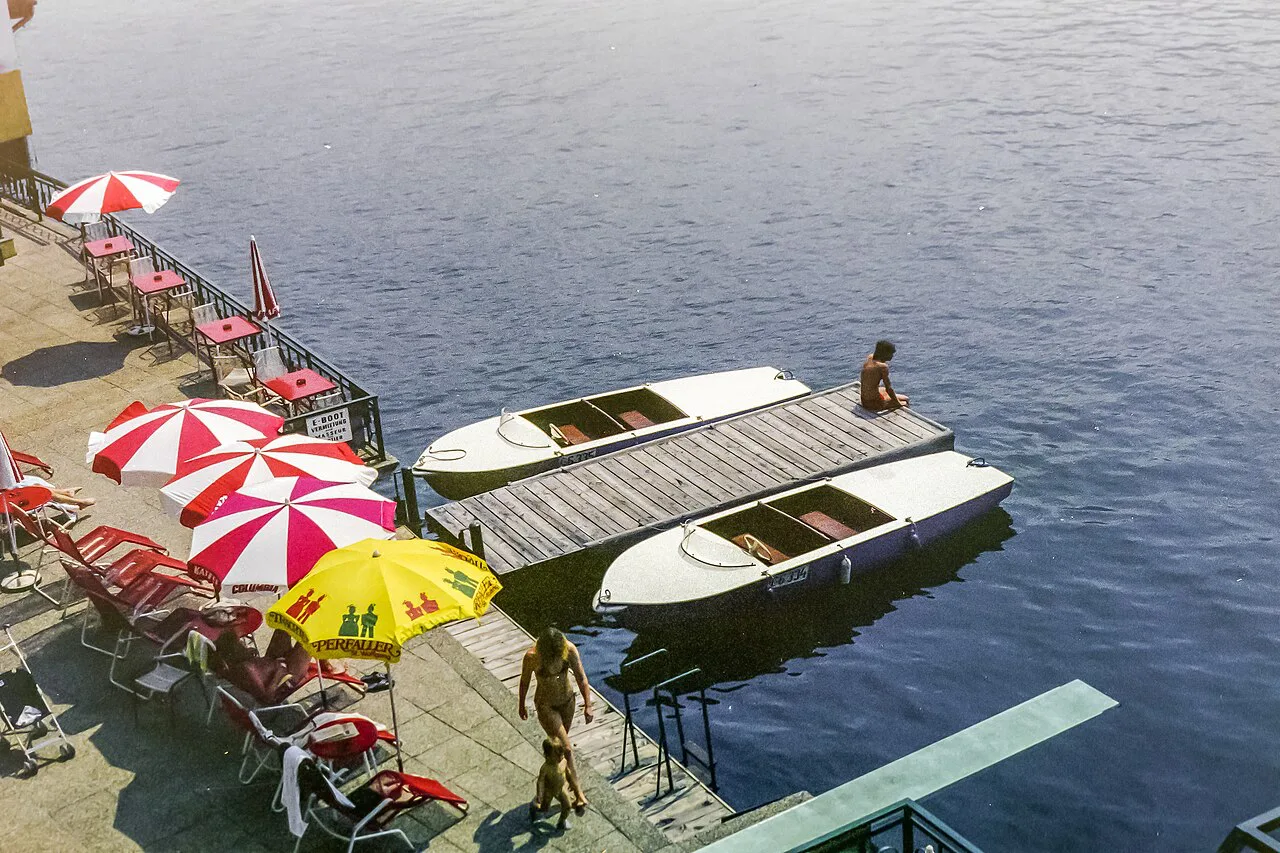
St. Wolfgang village sits at the foot of the railway, with a compact center and boat docks along the shore. Lake boats connect St. Wolfgang with St. Gilgen and other landings, which makes a one-way boat plus a bus return a sensible loop when you would rather not double back on the road.
Mondsee and the Attersee: swimming, boats and the Attergau tower
The Mondsee is small and warm, with the yellow Basilika St. Michael on the market square as its landmark; the church is known to many visitors as the wedding scene in The Sound of Music, but its carved works by Meinrad Guggenbichler and its altarpiece give it an artistic reason to step inside.
The Attersee, Austria's largest lake entirely on Austrian soil, is where swimming, sailing and lake cruises set the pace. The Attersee Schifffahrt runs round trips, sections and themed crossings with a small fleet, which puts Unterach, Weyregg and other shore points within a boat ride of each other.
For a view over the whole region, the Attergauer Aussichtsturm on the Attersee's northern side asks for 208 steps and 36 vertical meters before it hands you the Traunstein, the Höllengebirge, the Dachstein and, on clear days, the Bavarian Alps. It is a cheap, short stop that pairs well with a boat or a swim rather than a day of its own.
The Ausseerland: Altaussee, Grundlsee and the Altaussee salt mine
The Ausseerland is the region's quiet corner: the Altausseer See under the Loser massif, the Grundlsee a few kilometers east, and Bad Aussee as the small service town between them. This is where a car pays off, because buses thin out and the villages are spread across a high valley.
The Altaussee salt mine continues the region's salt story in a mountain setting, and the salt works at Altaussee belong on the same itinerary as Hallstatt's if the mining history interests you. Solar-powered boats cross the Altausseer See, which keeps the lake itself calm and quiet.
Getting around without a car
The region works without a rental car if you accept three legs: ÖBB trains on the main lines, Postbus services on the lake roads, and boats where a lake has a scheduled crossing. The train line through Attnang-Puchheim links the west, and Gmunden, Bad Ischl and Hallstatt have stations of their own, which makes rail the spine of a car-free route.
Boats are links, not just excursions. The Gisela on the Traunsee, the Attersee fleet and the Wolfgangsee boats cut road detours around the water, and the Salzkammergut's own sightseeing pages group the lake shipping lines so you can see which shore landings connect.
Build each day around one transport spine and keep stations or docks at both ends; a day that mixes a train, a boat and a Postbus needs the published timetable in hand, not an estimate. Timetables are the place to confirm sailings and bus runs for the date you travel.
Getting around by car
By car the region is a loop of shore roads, and the risk is time rather than distance: the Hallstättersee road and the Hallstatt approach are the bottleneck, with parking filling early in the day and the village best reached by the park-and-ride outside it.
Mountain roads over the passes that connect the Traunsee side with the Ausseerland close with snow in winter, which turns a short map hop into a long detour. Summer gives you the full network; late autumn and early spring are when you should plan the long way round rather than assume the pass is open.
Cable cars and high viewpoints
There are four high points worth planning around: the Katrin above Bad Ischl, the Schafbergbahn above St. Wolfgang, the Dachstein Krippenstein cable car with the Five Fingers platform, and the funicular up to Hallstatt's salt mine.
Each one is a weather decision. A cable car ride into cloud buys nothing, so keep the mountain day flexible and swap it for a lake boat or a cave when the summits disappear. The Katrin cable car serves the Bad Ischl house mountain, where the ridge walk opens views over several lakes on a clear day.
Cable cars and rack railways in the region run through the warmer half of the year, so confirm the season for the specific lift before you write it into a day.
Rainy days and shoulder season
The Dachstein caves at Obertraun and the salt mines at Hallstatt, Altaussee and Hallein are the region's built-in rain plan, since they run underground whatever the sky is doing. The Rieseneishöhle's ice formations and the mine galleries give you a dry, cold half day; bring a jacket even in summer.
The salt mines go further: Hallstatt, Altaussee and Hallein all offer underground tours that explain why the region was economically important long before tourism. In the Salzkammergut's own listing of sights, castles, monasteries, museums and mines sit alongside the lakes and viewpoints, which is useful when a wet day forces a switch.
Where the region fits a route through Austria
The Salzkammergut sits between Salzburg and the Alps, roughly on the line from Salzburg toward Graz or toward the Dachstein and the south. A route from Salzburg through the Wolfgangsee and Bad Ischl to Hallstatt and on to the Ausseerland works as a west-to-east sweep without backtracking.
Two bases are plenty. Bad Ischl covers the Traunsee, the Wolfgangsee and a Hallstatt day, while a second night in Hallstatt or Obertraun gives you the Dachstein side and the caves without a long return. Adding the Attersee and Mondsee means either a third base near Mondsee or a deliberate westward leg.
Three nights is the realistic minimum for the central lakes and Hallstatt; four or five lets you add the Ausseerland or a boat day on the Attersee. Resist adding lakes per day rather than per base, because the connecting roads and bus lines eat the time you meant to spend on the water.
Choosing your two bases in the Salzkammergut
For a first visit, make Bad Ischl your base and Hallstatt or Obertraun your second. Bad Ischl has the train station, the Kaiservilla and the Katrin cable car, and it keeps the Traunsee and Wolfgangsee within reach; Hallstatt gives you the salt mine, the Skywalk and the Dachstein caves without a long daily drive. If you want to weigh how long the village itself takes, our Hallstatt guide covers what to see, how long it takes, and how to get there.
Then add one more thing rather than one more lake: a Gisela crossing on the Traunsee, the Schafbergbahn on a clear day, or a boat trip on the Attersee. Each uses the region's own transport and gives the day a shape that a car park and a viewpoint cannot.
Explore more Bad Ischl guides
- Altaussee
- Bad Ischl
- Ebensee: The Memorial, the Feuerkogel and the South End of the Traunsee
- Fuschl am See and Lake Fuschl
- Gmunden: A Lakeside Town Guide for Traunsee and the Old Center
- Mondsee: A Guide to the Lake Town, Its Basilica and Its Lakefront
- Salzkammergut Lakes
- Schafbergbahn
- St. Gilgen on the Wolfgangsee
- Strobl: The Village at the East End of the Wolfgangsee
- Traunkirchen
- Traunsee
- Wolfgangsee
- Almsee: A Small Alpine Lake in the Almtal near Grünau im Almtal
Frequently Asked Questions
What does Salzkammergut mean?
The name refers to the salt chamber's estate, the Habsburg administration that managed the region's salt mines and salt trade. Salt is why the area around Hallstatt, Bad Ischl and Altaussee developed at all, and the mines at Hallstatt and Altaussee are still visitor sights today.
How do you pronounce Salzkammergut?
Say it in four chunks: SALTS-kah-mer-goot, with a short a in the second syllable and a long oo at the end. German speakers run the syllables together, so listening to a station announcement at Gmunden or Bad Ischl is the quickest way to fix the rhythm.
Can you see the Salzkammergut without a car?
Yes, if you keep to the towns and lakes on the rail and Postbus corridors. Gmunden, Bad Ischl, Hallstatt and St. Wolfgang have stations or bus stops near the sights, and the Gisela, Attersee and Wolfgangsee boats cover several lake crossings. The Ausseerland and the southern Attersee shore are harder without a car.
Which lakes are closest to Salzburg?
The Wolfgangsee and Mondsee sit on the Salzburg side of the region and are the easiest lakes to reach from the city. The Traunsee and Attersee are further east and work better from Bad Ischl or Linz, so pair them with an overnight in the lake district rather than a Salzburg day trip.
Sources
Notes for your next Austrian town break
Optional updates when we add or revise town guides.
You might also like
Continue reading
More guides you'll find useful