Klosterneuburg Monastery: What to See Inside Stift Klosterneuburg
Klosterneuburg Monastery pairs a medieval Verdun Altar and Habsburg imperial rooms with a treasury, wine cellar and gardens. Here is what each ticket covers.
On this page
Klosterneuburg Monastery is worth a half day from Vienna because one admission covers several different things: the treasury with the Archducal Coronet, the monastery museum, the Marble Hall and the current exhibition in the Sala Terrena Gallery. The abbey was founded in 1114 by Margrave Leopold III and sits in the town of Klosterneuburg in Lower Austria, on the Danube just outside the capital. This guide walks through the layout, the individual highlights, what admission includes versus the guided-tour upgrade, the museum's weekend-only hours, and how to reach it by S-Bahn.
What Klosterneuburg Monastery is and why it matters
Stift Klosterneuburg began as a Babenberg foundation: Leopold III and his wife Agnes established it in 1114 and lived next door, and the Augustinian Canons arrived a little under two decades later. Apart from a break during World War II, the community has stayed, and the abbey still runs some 28 parishes and a large landholding that includes serious wine estates. That continuity is what gives the visit its weight: you are walking through Romanesque, Gothic and baroque layers in a single complex, not a reconstructed set piece.
For a traveler the abbey works as a Lower Austria stop rather than a Vienna city sight, even though the abbey windows look down toward the capital's high-rises and the S-Bahn ride is short. Its visitor draw is a combination that few single sites match: the Verdun Altar, the treasury, the imperial apartments and the wine cellar, all within one walled compound.
How the complex is laid out
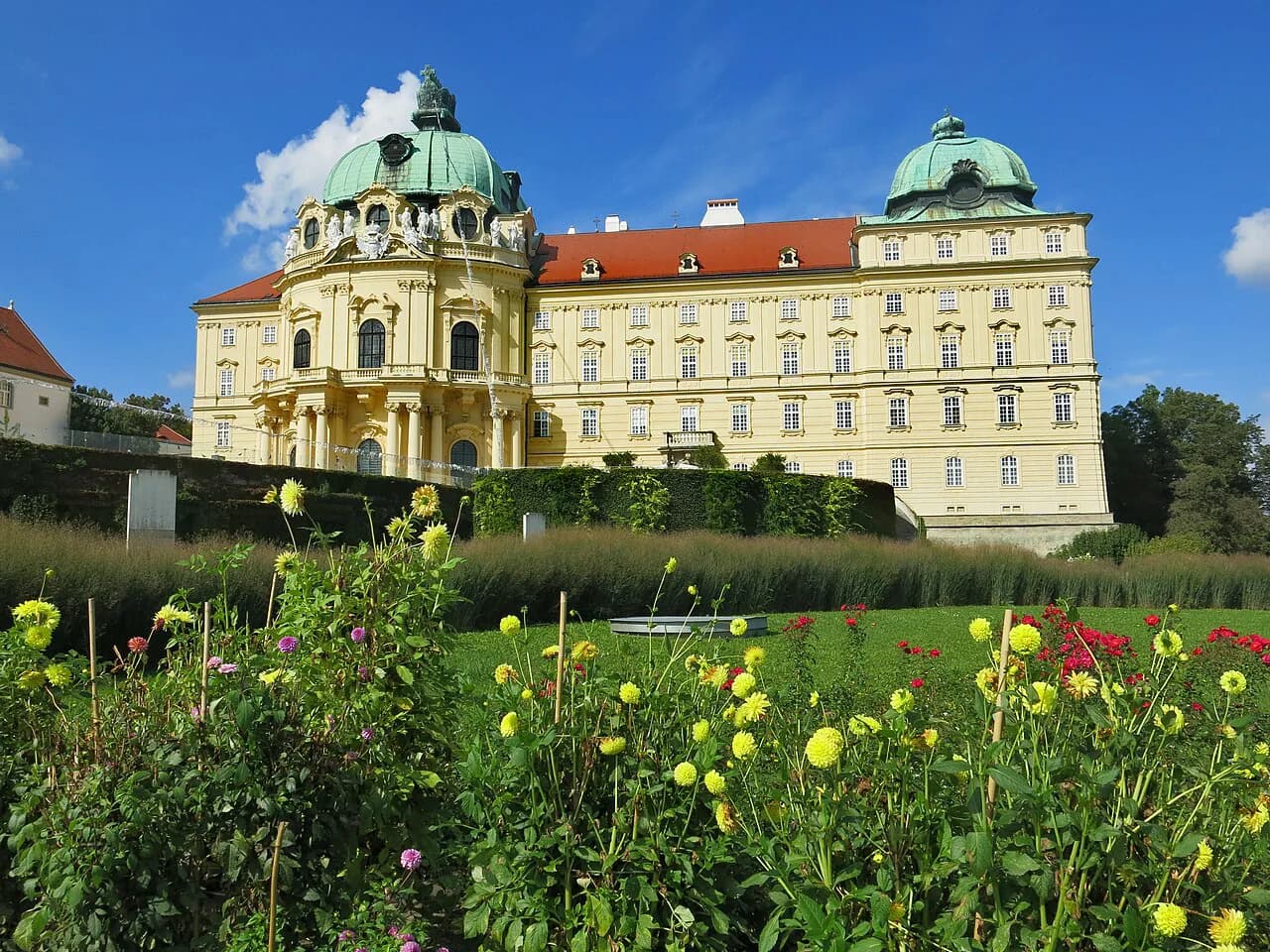
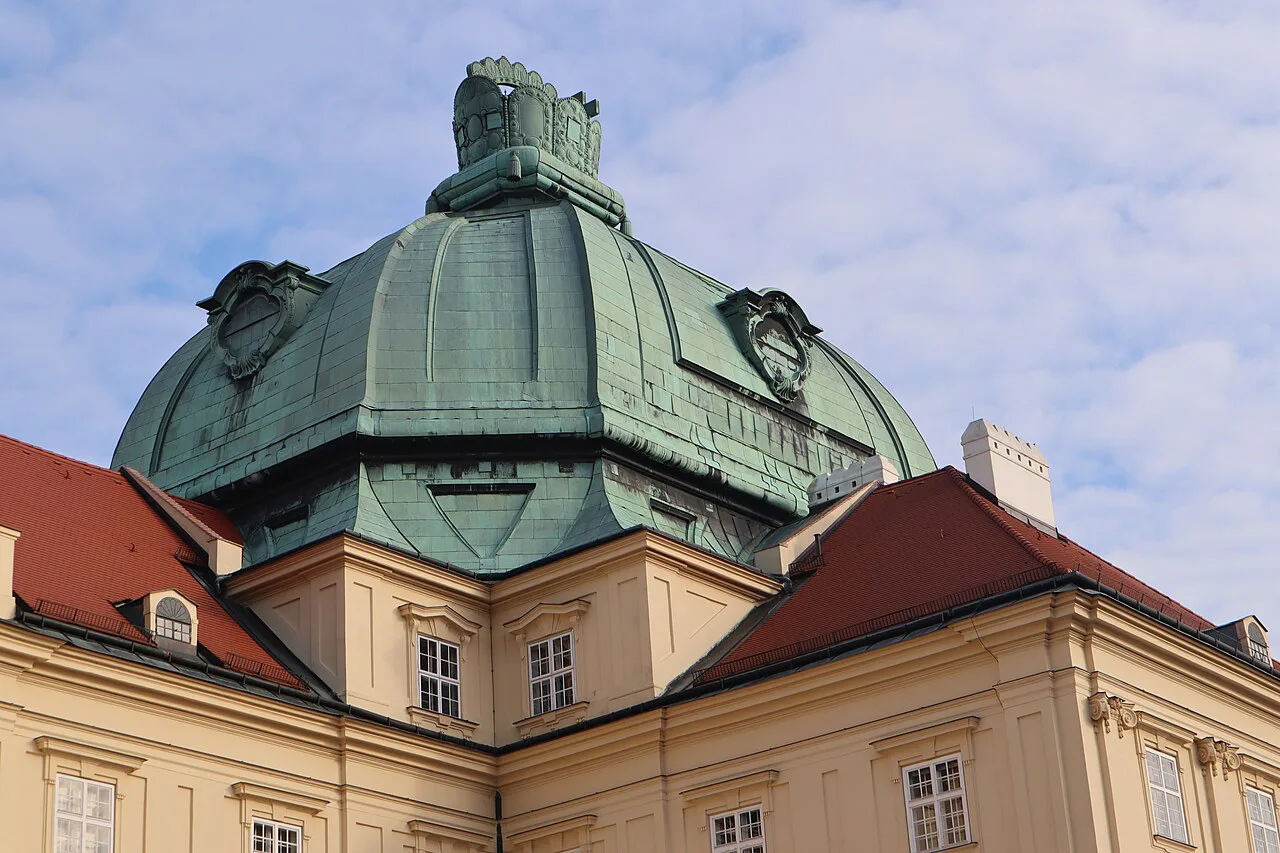
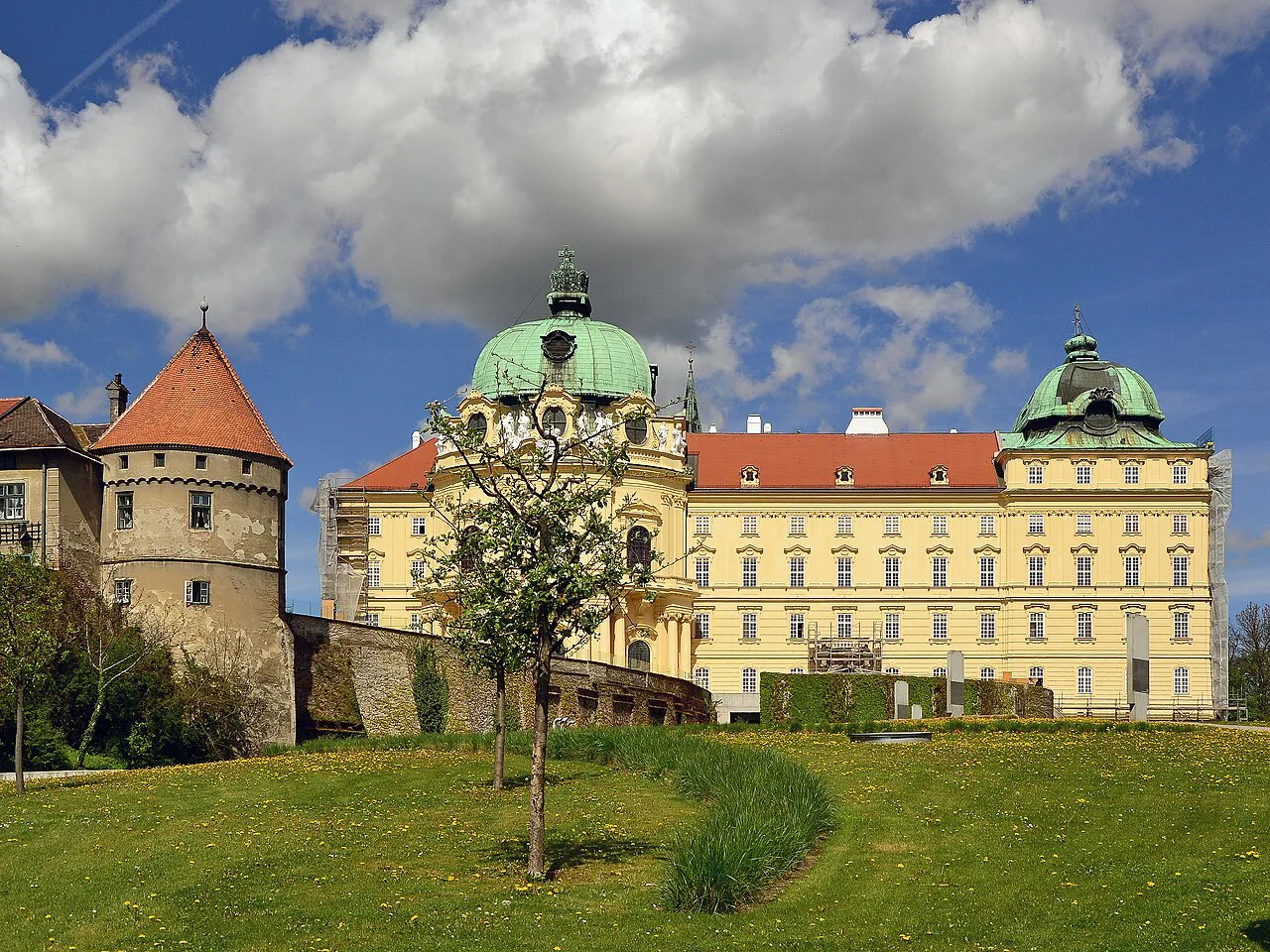
Think of the monastery in three parts: the former Babenberg residential area, the church and ecclesiastical buildings, and the baroque imperial wing. The imperial wing was Charles VI's early-1700s attempt at a local Escorial, a four-courtyard, nine-dome scheme; work stopped well before completion, and what stands today is roughly a quarter of the original plan. That unfinished quality is part of the appeal, and it tells you where the ticket boundary falls.
The entrance sits in the Sala Terrena, the huge hall intended as the gateway to the planned residence; its oversized wall statues and raw state are original to the 1740 halt, not a modern shortcut. Inside the ticketed area, the treasury, monastery museum, Marble Hall and the current exhibition are included in admission. The church itself can be entered for a look down the nave, though access is limited to a few steps beyond the door.
The Verdun Altar and the medieval treasures
The Verdun Altar is the abbey's headline medieval work, a goldsmithing masterpiece that the extended monastery tour introduces in the medieval section of the site before moving on to the baroque rooms. On that visit you also see the Archduke's Hat and the imperial apartments with the Marble Hall. Walk the complex without the tour and you still get the treasury and the exhibitions, but the guided sequence is what ties the medieval core to the 18th-century addition.
The treasury is where the medieval and early modern objects pile up: golden jeweled chalices from the 1700s, reliquary skulls from the 1600s, Limoges reliquary boxes from around 1200, and a 17th-century nativity scene in red coral. The 3D ivory carvings of the Last Judgment from the early 18th century reward a slow look, and there is an ivory relief over a thousand years old that is easy to walk past. Give the treasury real time rather than treating it as a corridor to the exit.
The imperial rooms and the Marble Hall
The imperial apartments are the part of the complex most often compared to Schönbrunn and Belvedere, and the Marble Hall is the showpiece room on the extended tour. Because Charles VI's full palace was never finished, the rooms you walk through represent a fragment of an imperial ambition rather than a complete residence; that makes the scale easier to read and the baroque detailing easier to appreciate.
If you want the imperial rooms and the Verdun Altar together, book the extended monastery tour rather than relying on the basic ticket alone. The basic admission is still the right floor for most first-time visitors because it includes the treasury, which many people rate as the single best part of the visit.
The treasury and the Archducal Coronet
The Archducal Coronet is the treasury's centerpiece, an insignia of the Archduchy of Austria made in the early 1600s for Maximilian III; by tradition it left Klosterneuburg only for the inauguration of a new Archduke, and the last such occasion was in 1835. Its shrine is seriously locked, which tells you how the abbey regards it. Seeing it is the strongest reason to buy at least the basic ticket.
The three-room treasury reads like a compact blend of Vienna's Schatzkammer, the Dom Museum and a Kunstkammer cabinet of wonders, and the range of objects is broad enough that a single pass will not do it justice. Plan on lingering here if you care about goldsmithing and reliquaries, because the objects are dense and the labels reward attention.
The monastery museum and its weekend-only hours
The monastery museum holds the abbey's art collections, from the Babenberg family tree to a gallery of modern art, and it is the main scheduling constraint on a visit. Its hours are weekend and public-holiday only: 2 to 4 pm in the winter season and 2 to 5 pm in the summer season. If the museum matters to you, build your day around a Saturday, Sunday or public holiday afternoon.
For the current exhibition, Wien.info lists Charts on the Table in the Sala Terrena Gallery from May 1 to November 15, 2026, open daily 9 am to 6 pm, with the exhibition, treasury, monastery museum and Marble Hall all included in the admission price. That daily window makes the gallery the flexible part of a weekday visit, while the museum keeps its own weekend and public-holiday afternoon hours.
Tickets: what the basic admission covers
Admission is the sensible default: it includes the exhibitions, the monastery museum within its limited hours, the Marble Hall and the Schatzkammer treasury, and the treasury alone justifies the stop. The guided tours carry an extra charge on top, so think of the decision as treasury-and-exhibitions first, upgraded access second.
Current admission and tour prices are set by the abbey and change over time, so check the official Stift Klosterneuburg site or the ticket desk before you commit. The Wien.info page for the monastery confirms which rooms the admission price covers but not the euro figures. The clean split is: buy admission for the treasury, then add a tour only if you want the medieval core and imperial rooms explained.
Guided tours: extended monastery and wine cellar
Two tours are the practical upgrades. The extended monastery tour starts in the medieval section with the Verdun Altar, then continues into the baroque complex with the imperial apartments and the Marble Hall. That order is a good way to read the building because you see the oldest layer before the 18th-century addition.
The wine cellar tour is the other option, and the baroque cellar complex reopened in 2024 after a redesign, with light installations and a sensory approach to the abbey's winemaking history. It suits anyone curious about the estate's wine side, which the Vienna tourist board describes as the oldest winery in Austria. Tour departure times and prices come from the abbey's current schedule, so confirm them at the desk or on the abbey site rather than assuming a fixed slot.
The church, gardens and exterior without a tour
You can see a fair amount without buying anything: stroll the abbey exterior, walk the landscaped gardens and pass through the former Babenberg courtyard, then step into the church for a view down the nave. The catch is that entry into the church stops a couple of meters in, so it is a look rather than a full interior visit.
For a wider day in the region, the abbey pairs naturally with the towns and castles of Lower Austria, and the Lower Austria Travel Guide maps out the options. If you are heading west along the Danube afterward, Krems an der Donau is the natural next base. Both work best if you decide the abbey's ticket level first, because the museum hours can pull your departure time later than planned.
Getting there from Vienna and how much time to allow
Klosterneuburg sits just outside Vienna on the Danube, and the S-Bahn is the simplest way in; the abbey's own visitor information and the Vienna tourist board list the connection, and the local line is the one to look up in the ÖBB or VOR timetable for your date. Because the abbey is technically in Lower Austria, do not treat it as a city sight you squeeze between two museums.
Allow a half day if you want the treasury, the exhibition and the church, and add time for a tour if you are taking one; the museum's afternoon-only opening can extend the whole outing to most of a day. A weekday visitor who skips the tour and the museum can move faster, but the treasury deserves at least an hour on its own.
Practical trade-offs and pairing the abbey with the town
The main trade-off is the museum's weekend and public-holiday schedule against the daily exhibition hours. If you only have a Tuesday, plan on the treasury, exhibition and church, and accept that the museum collection is a separate weekend trip. That is a real limit, not a footnote, so decide before you travel.
Once the abbey is done, the surrounding town has an upmarket feel and is easy to walk, and from there you can push on to the Kamp valley for Rosenburg Castle or continue into the Wachau. Rosenburg Castle in the Kamp Valley is a reasonable next stop if you have a car and a full day. Budget the abbey first, then build the rest of the route around it.
Should you upgrade to a guided tour?
Buy admission for the treasury, exhibition and museum, and add the extended monastery tour if you want the Verdun Altar and the imperial rooms explained in sequence. The wine cellar tour is the better upgrade for anyone drawn to the abbey's winemaking side, especially since the cellar reopened in 2024 after its redesign. Whichever you choose, check the abbey's current tour times and ticket prices at the desk or on its site before you go.
Explore more Krems guides
Frequently Asked Questions
What is Klosterneuburg Monastery famous for?
It is known for the medieval Verdun Altar, a treasury that holds the Archducal Coronet and other ecclesiastical treasures, and an unfinished baroque imperial wing begun for Charles VI. The abbey also runs what the Vienna tourist board calls Austria's oldest winery, and a redesigned baroque wine cellar opened in 2024.
How do I get to Klosterneuburg from Vienna?
Take the S-Bahn from Vienna; the abbey is just outside the city in Lower Austria, on the Danube. Check the ÖBB or VOR timetable for your date for current departure times, since they vary by day.
When can I visit the monastery museum?
The museum opens only on Saturdays, Sundays and public holidays: 2 to 4 pm in the winter season and 2 to 5 pm in the summer season. Plan that afternoon around it if the art collections are the reason for your visit.
Sources
Notes for your next Austrian town break
Optional updates when we add or revise town guides.
You might also like
Continue reading
More guides you'll find useful