Rosenburg Castle: Austria's Renaissance Schloss in the Kamp Valley
Rosenburg Castle is a Renaissance Schloss on a rock above the Kamp valley in the Waldviertel. See what's there, how visits work, and how to reach it by train.
On this page
Rosenburg Castle is the Austrian Schloss Rosenburg: a Renaissance castle on a rock above the Kamp valley in the Waldviertel of Lower Austria, roughly northwest of Krems. It is a different place from Copenhagen's Rosenborg Castle, so searches for Danish crown jewels and royal apartments lead to the wrong country. This guide covers what the grounds contain, how the visit is organized, what the castle's own calendar shows, and how to reach it without a car.
A Renaissance castle above the Kamp valley
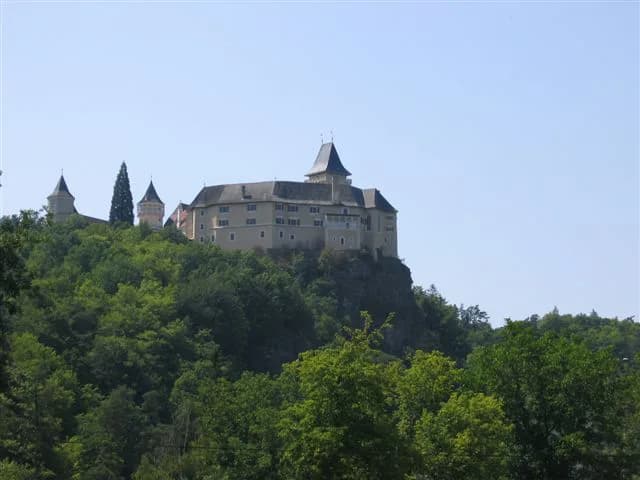
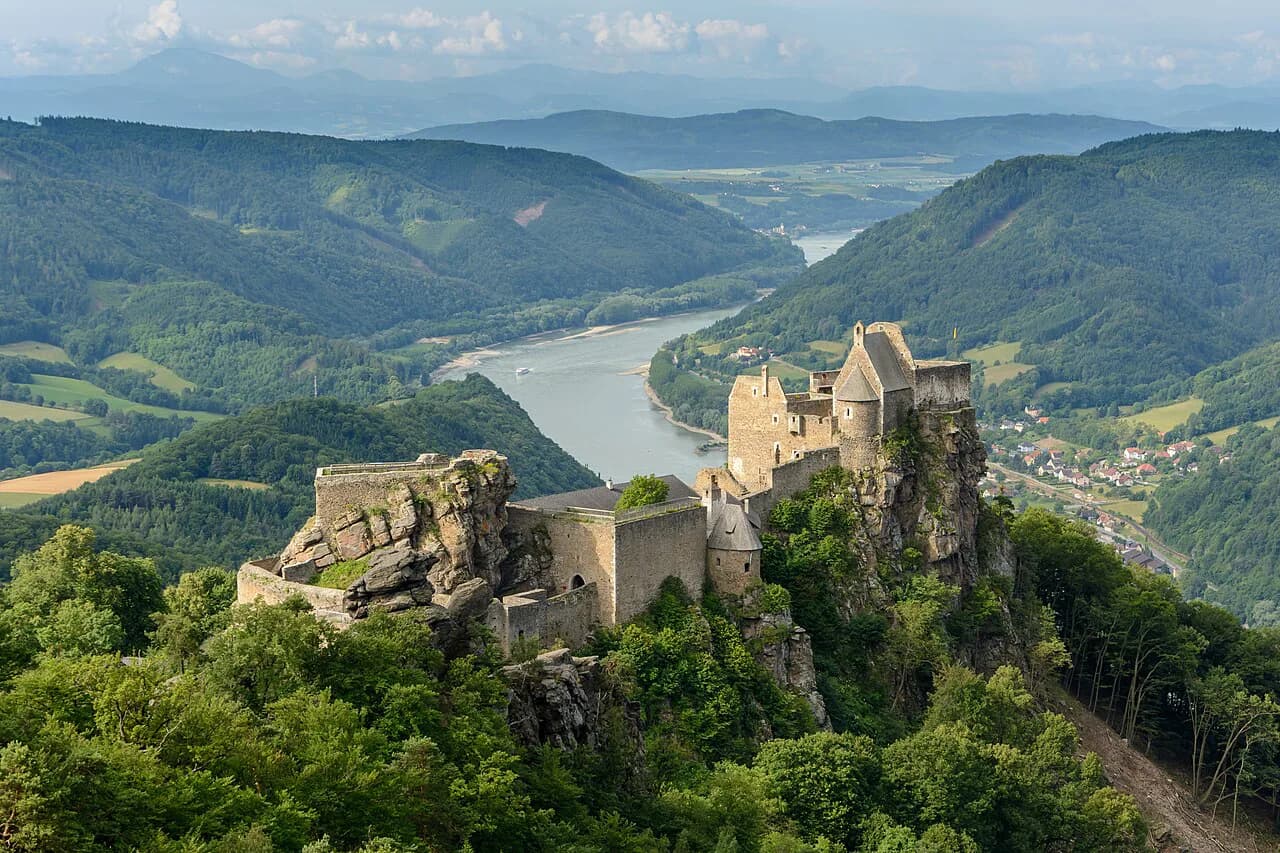
The castle sits on a powerful rock high over the Kamptal, visible from a distance and counted among the most visited attractions in Lower Austria, with more than 65,000 visitors a year. Below it lies the summer resort of Rosenburg, known for its dozens of Gründerzeit villas strung along the Kamp. The setting explains the appeal: you get a Renaissance silhouette on a crag, a river valley at its foot and a small historic village between the two.
Administratively the site belongs to Rosenburg-Mold in the Kamp valley. That places it on the western edge of Lower Austria rather than in the Vienna or Salzburg orbit, which matters when you build a route. If you are working through the province town by town, the Lower Austria Travel Guide is the sensible place to start sequencing stops.
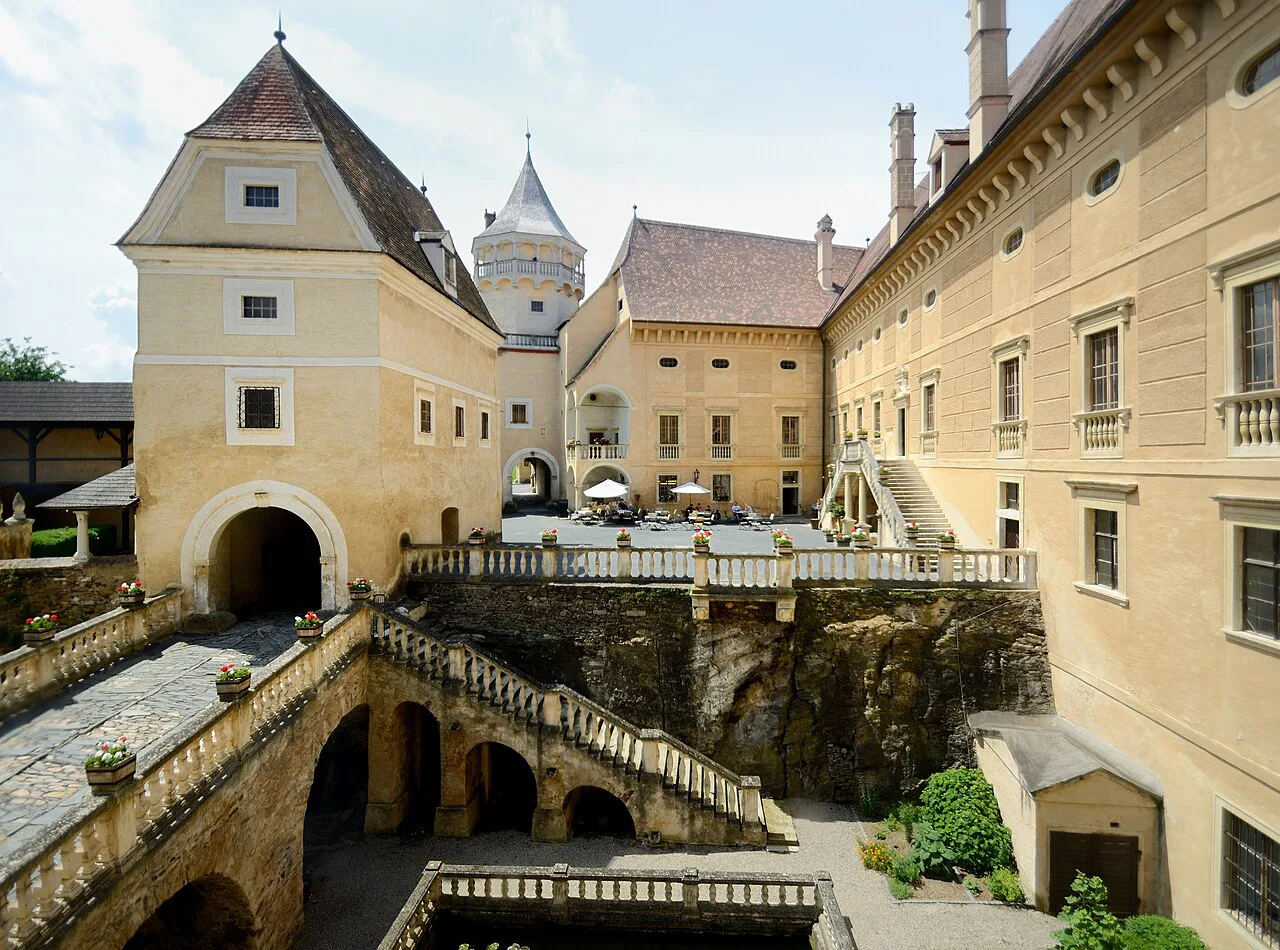
History in brief: Babenberg fortress to Renaissance Schloss
The original castle dates from the 12th century and formed part of the Babenberg chain of fortifications. In the Renaissance it took on the form you see today, which is why the building reads as a residence rather than a bare medieval stronghold. Keep that two-layer history in mind as you walk the courtyards: the defensive origin and the later representational rebuilding are both part of the story.
The Waldviertel around it is dense with historic building of every kind, from walled towns to abbeys and ruined burgen. Rosenburg belongs to that same landscape of Schlösser, Stifte and Stadtmauerstädte, and it is easiest to understand as one piece of a region-wide circuit rather than a single isolated sight.
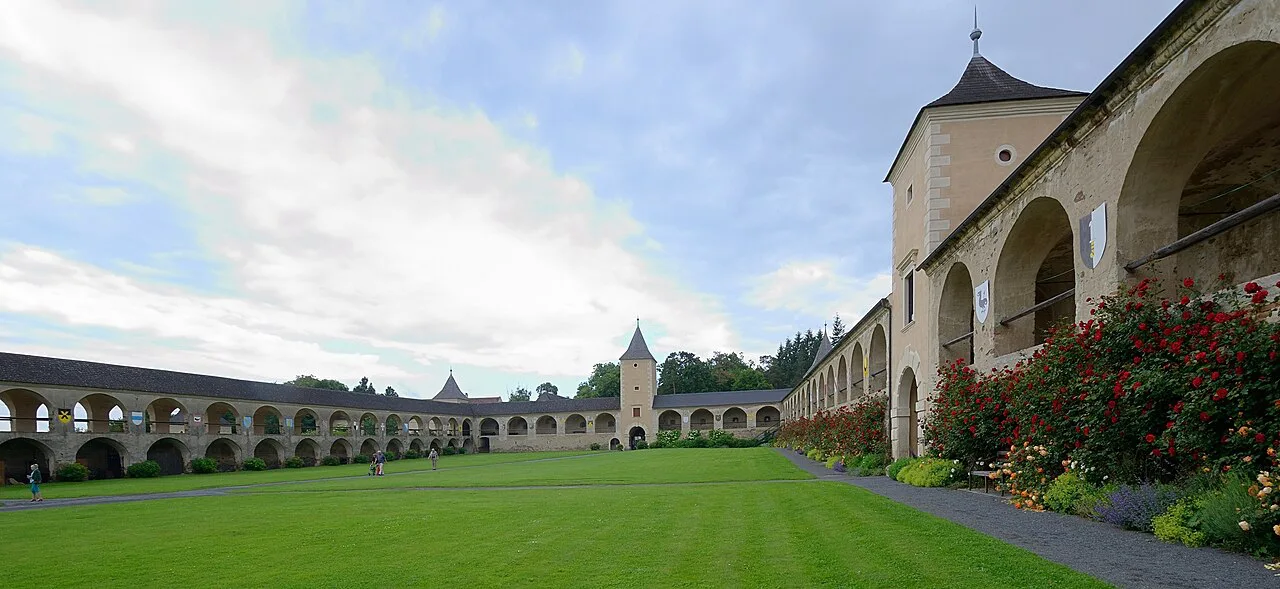
How the visit is laid out: castle, gardens, museums and falconry
The castle's own site treats the grounds as distinct parts rather than one continuous interior route: the gardens, the museums, the Falknerei (falconry) and the Erlebnispark each appear as separate menu areas alongside the event location and rentals. Plan your time by part rather than assuming one ticket carries you through everything in a single sweep.
That structure shapes the day. Gardens reward a slow pass on their own, the museums are an indoor stop, and the falconry runs to its own rhythm. Because the parts are separate, decide before you arrive which two or three you actually want, especially if you are fitting Rosenburg into a wider Kamptal drive.
What to see: gardens, museums and falconry
The castle's own site sorts its offering into separate parts — gardens, museums, falconry, event location, rentals and an adventure park — so a visit is assembled from those pieces rather than one continuous walk-through. The castle publishes its current program through its events section, which is also where the falconry dates appear.
Check the day's program before you commit to an arrival time, and treat any published start time as the anchor of the visit rather than an optional extra. If a falconry date is the reason you are coming, build the journey around it. If you mainly want the gardens and the view over the Kamp, you have more flexibility.
Falconry and the October dates on the calendar
The Falknerei appears on the castle's own menu as a separate attraction, and its schedule is published through the events calendar rather than as an open walk-up extra. The calendar lists "Falknerei zu Pferd" for October 24–25, 2026, alongside a special exhibition and two Waldviertler Christkindlmarkt weekends. Treat the calendar as the source of truth for what is running during your dates.
Dates and start times are the only reliable basis for planning around the falconry, so build the rest of your day around whichever slot is confirmed and keep the gardens or the museums as the flexible part of the afternoon. This is the single biggest reason to look at the program before booking train tickets.
Seasonal events and what the calendar shows
The castle's event listing carries a rolling program rather than a single fixed season. It shows "Falknerei zu Pferd" on October 24–25, 2026, the special exhibition Hubertus von Hohenlohe – „Selfie Couture“ from May 29 to October 26, 2026, and two Waldviertler Christkindlmarkt weekends, November 21–22 and November 27–29, 2026. Dates and times come from the listing itself, so confirm them there rather than from an older page.
That spread matters for planning: a late-May-to-October exhibition visit and a late-November market visit give you quite different castles. If you are coming specifically for an exhibition or the market, confirm the day and the start time on the listing before you fix transport, since a market weekend fills the valley quickly. On other days the gardens, museums and falconry are the core of the visit.
Tickets: what is published and what to settle at the desk
The event listing prices the Waldviertler Christkindlmarkt at €4.00 to €8.00, with different ticket options to choose from. That is an event ticket, not castle admission, so do not read it as the general entry price.
Castle admission, museum entry and falconry tickets sit in different categories, and the practical approach is to check the castle's own pages for the current figures and buy what you need for the parts you plan to see. Settle the total before you travel so the ticket desk is a transaction rather than a decision.
Getting there: Rosenburg-Mold and the car-free loop from the station
Rosenburg lies in the Kamp valley in the Waldviertel, reached by road through the Kamptal and by rail to Rosenburg station. From the station, the published Rosenburg-Rundweg is a circular route of 6.42 km with 220 m of ascent, rated medium difficulty and given a walking time of about two hours.
That loop makes a car-free arrival realistic for a fit walker, with the castle as the high point between 252 and 404 m of elevation. The trade-off is that the climb is real and the return leg comes after your visit, so a two-hour walking allowance is the floor, not the whole outing. If you are coming for a timed falconry show, leave enough margin that the walk does not become a race.
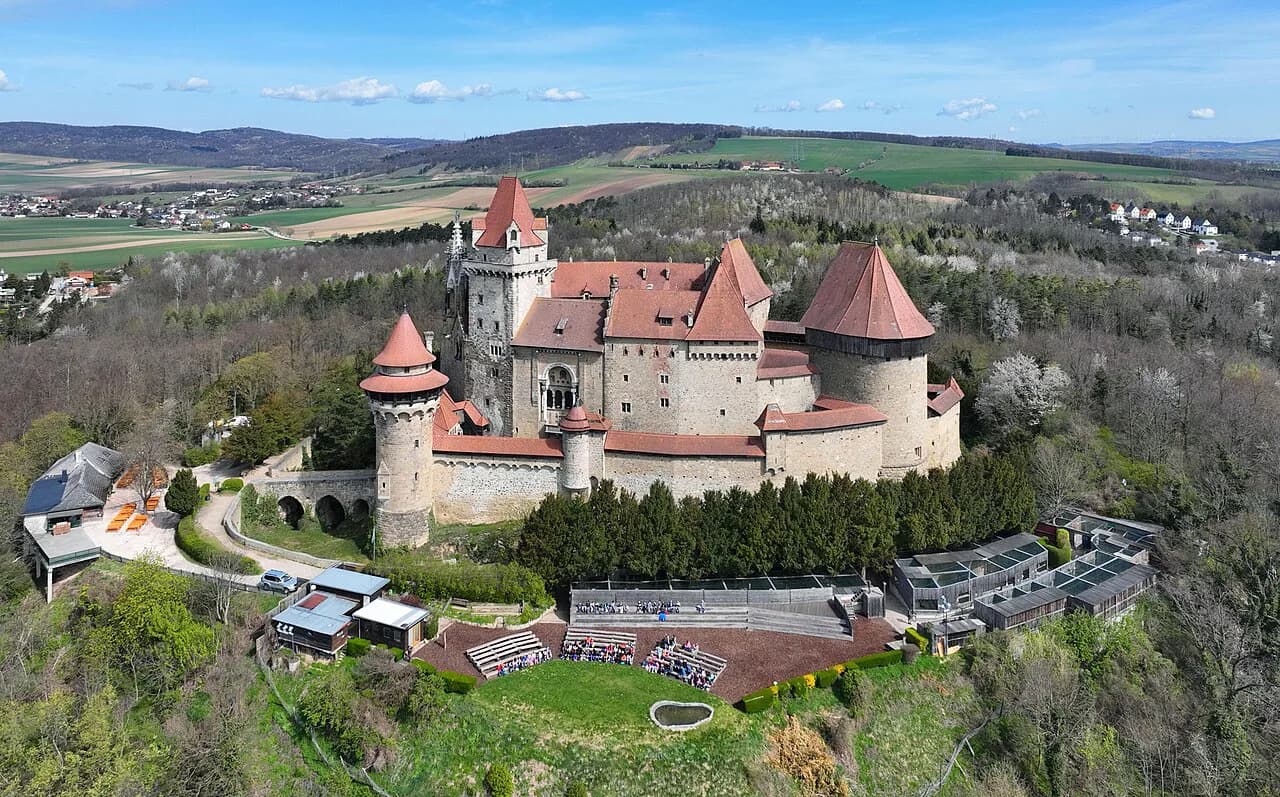
By car, the castle is a natural stop on a Kamptal drive, and the valley road links it with the surrounding small towns. Farther east, the Lower Austria Travel Guide covers the province's other castle and abbey stops, including Burg Kreuzenstein, a rebuilt medieval fantasy north of Vienna that makes a pointed contrast with Rosenburg's Renaissance rebuilding.
How long to allow, and fitting Rosenburg into a Lower Austria route
Budget at least half a day on site once you include the walk up, the gardens, the museums and one scheduled falconry slot. Add the two-hour loop from the station if you are arriving by train, which turns the outing into a full day. The gardens and courtyards alone can absorb an hour if the weather is kind.
Rosenburg works best as a Waldviertel day folded into a route that also takes in the province's walled towns and abbeys. Krems an der Donau is the obvious Danube-side base for the eastern end of the Kamptal, and it gives you a town center to return to after the castle.
If you are collecting Lower Austria's historic highlights, Rosenburg sits comfortably alongside Retz with its windmill and cellars, and Grafenegg with its castle and park, both reachable within the same western circuit. Schloss Hof is farther east toward the Slovak border, better saved for a different day. Pick two of these rather than racing through all of them.
Rosenburg among the region's castles and abbeys
The Waldviertel and the Kamptal together hold a remarkable density of castles, abbeys and walled towns. Rosenburg's distinguishing feature is its Renaissance rebuilding on a medieval Babenberg base, on a rock that dominates the valley. Where Kreuzenstein is a nineteenth-century reconstruction, Rosenburg's Renaissance fabric is the historic layer itself, which makes the two a useful pair rather than duplicates.
Abbey and monastery stops belong to the same circuit: Klosterneuburg Monastery on the Danube west of Vienna, and Schallaburg Castle with its exhibitions in the Melk direction. If your route runs along the Danube, both are more logical than backtracking to the Kamp.
Is Rosenburg worth the Waldviertel detour?
Yes, if you want a Renaissance castle in a valley setting with a falconry program and a walkable village below it, and you are willing to plan around scheduled times. It is a poor fit for a rushed Vienna day trip, because the journey and the walking eat the hours you would otherwise spend inside. Give it half a day at minimum, or a full day if you arrive by train.
Anchor your date on the castle's events listing first, then fix transport and the walking allowance around it. That order keeps the falconry, an exhibition or the market from becoming an afterthought on a day you have already committed to.
Explore more Krems guides
Sources
Notes for your next Austrian town break
Optional updates when we add or revise town guides.
You might also like
Continue reading
More guides you'll find useful