Tulln an der Donau: Schiele's Birthplace, Old Town and Danube Promenade
Tulln an der Donau pairs a compact old center and Danube promenade with Egon Schiele's birthplace and a Roman fort. Here is how to plan the stop.
On this page
Tulln an der Donau earns a stop on a Lower Austria route because it compresses three layers into a few walkable blocks: a Roman cavalry fort, a medieval trading town on the Danube, and the birthplace of painter Egon Schiele. The old center, the river bank and the museum quarter sit close enough that you can cover the core in half a day. This guide lays out the town by district, sizes the museums honestly, and shows how Tulln slots between Vienna and the Wachau by train or car.
Why Tulln earns a stop on a Danube route
Tulln counts among Austria's oldest towns, and its position directly on the Danube explains why: Roman cavalry held the ford here, watched the fertile Tullnerfeld and later used the site as a base for the Danube fleet. That Roman layer is not buried folklore; the town keeps visible remains and a dedicated museum, so history is part of the sightseeing rather than background reading.
The medieval chapter is unusually well preserved. Tulln appears as an urban settlement in 791, hosted the noble assemblies of 985 and 991 that are tied to the birth of Austria, and served as a Babenberg residence from the 11th century. The center's Gothic and Baroque house fronts survived later Turkish invasions, floods and the Thirty Years' War, and the town credits civic pride for keeping the ensemble intact.
The practical payoff for a traveler is density. You can stand on the main square, reach the parish church, walk the Danube promenade and be back at the station without a bus. Treat Tulln as a compact town if you focus on the streets, or give it a full day if you add a museum and the garden grounds.
How Tulln is laid out
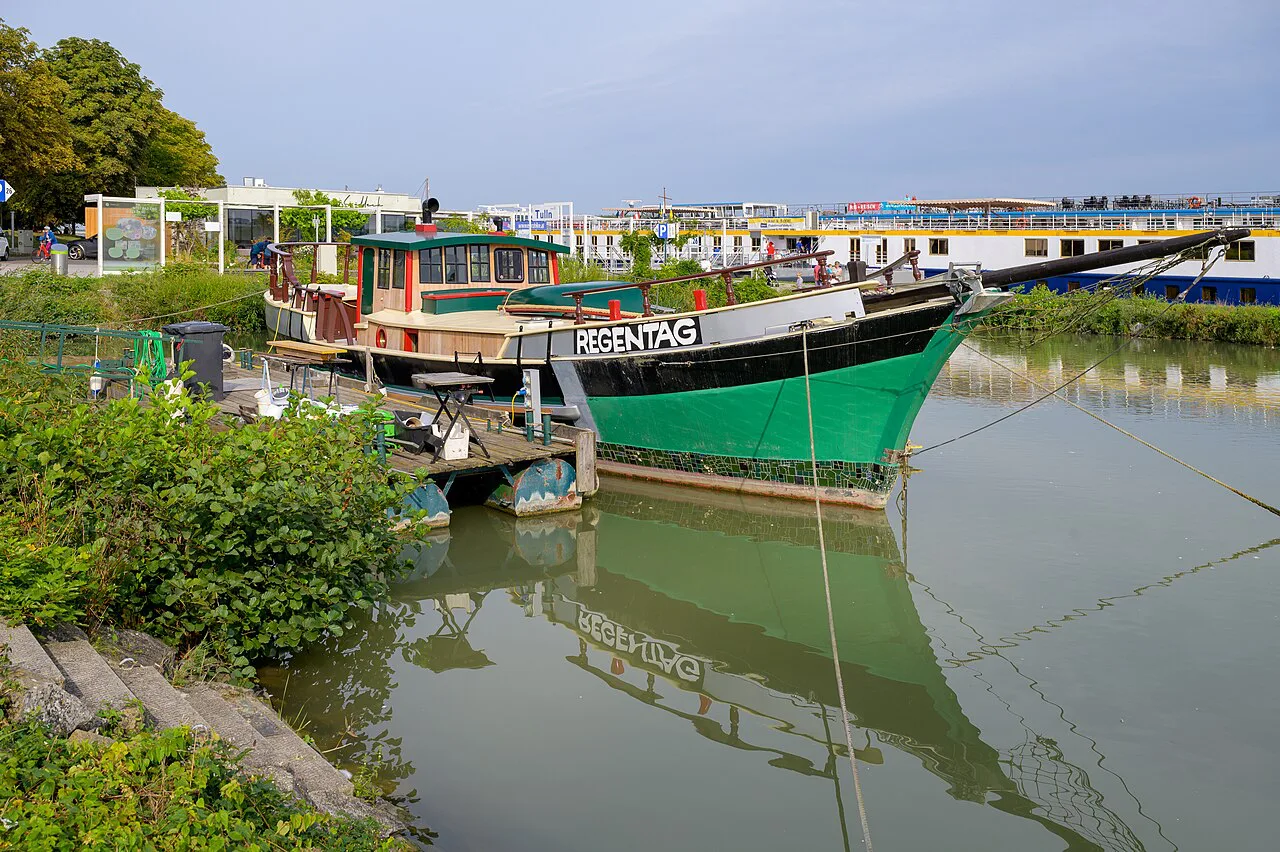
The town reads around the river. The Danube and its promenade line the town, the historic main square functions as the town's living room and was recently redesigned, and the lanes around it hold the Gothic and Baroque houses. Beyond that core lie the station axis and the garden district, so you cross the center on foot and only need wheels for the gardens.
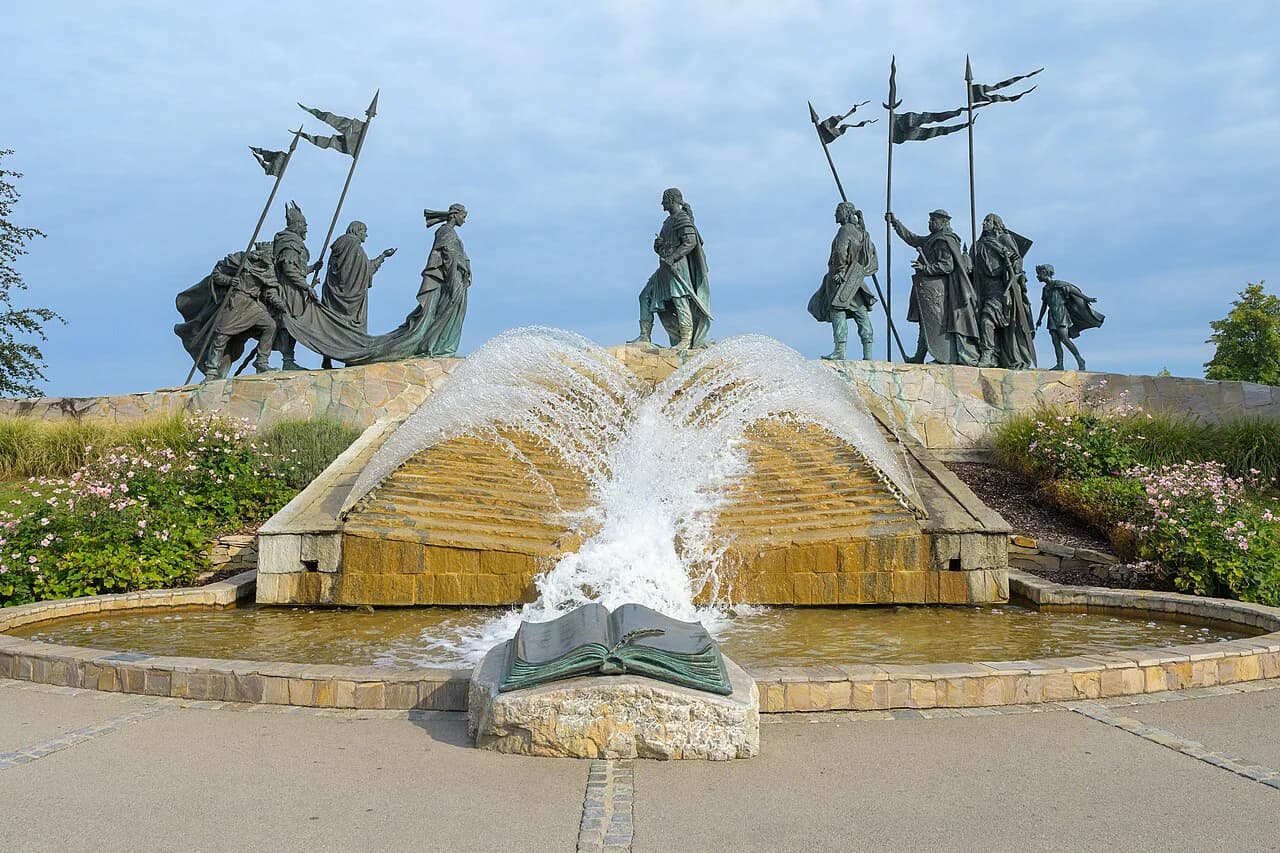
Use the main square as your anchor and work outward. The city tower, the parish church and its Romanesque charnel house, and the Church of the Friars Minor all sit within the old town, so a loop of roughly an hour covers the architecture without rushing. Nibelungenplatz and the Monument to the Nibelungs connect the streets to the Song of the Nibelungs, which places the meeting of Etzel and Kriemhild in Tulln around 1200.
The Danube promenade is the decompression point after the lanes. It is also the reminder of why the town exists: the river carried the trade that made Tulln flourish, and the 1870s Franz Josef Railway plus a Danube bridge triggered its modern upswing. Walk it last, when the light is low and the day-trippers have thinned.
What to see in the old center
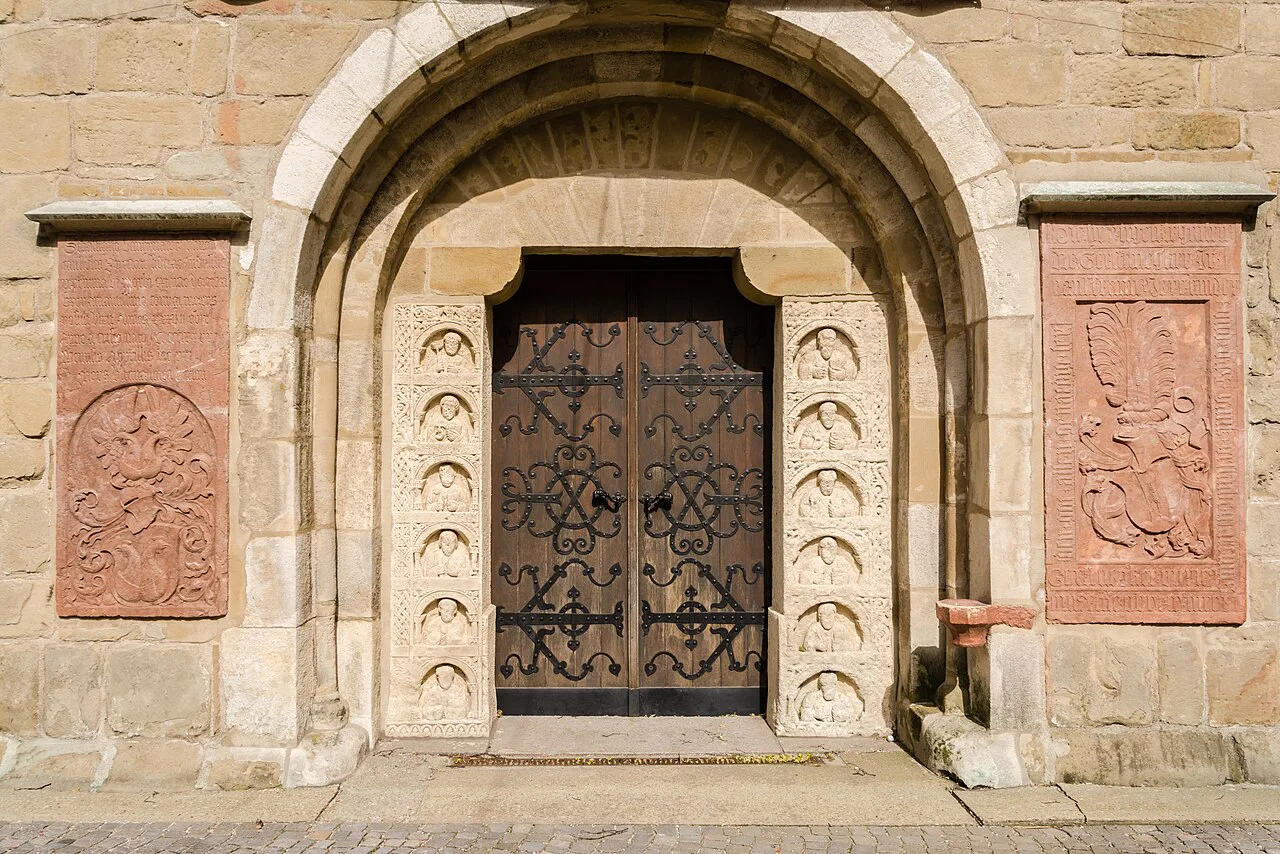
Start with the main square and look up: the facades are the sight, a continuous run of Gothic and Baroque fronts that the town has kept rather than rebuilt. The city tower gives the square its vertical marker and is easy to fold into a short walk toward the river.
Two churches carry the ecclesiastical weight. The parish church keeps a Romanesque charnel house beside it, a rare survivor that anchors the oldest layer of the townscape, while the Church of the Friars Minor adds a second, quieter interior a few minutes away. Both are working churches, so time your look around services rather than treating them as museums.
The Nibelungenplatz and its monument are the literary stop: the square names the medieval epic that mentions Tulln, and the monument gives the connection a physical place. It takes a few minutes, so pair it with the riverside walk rather than making it a separate errand.
Roman Tulln: Fort Comagena and the Roman Museum
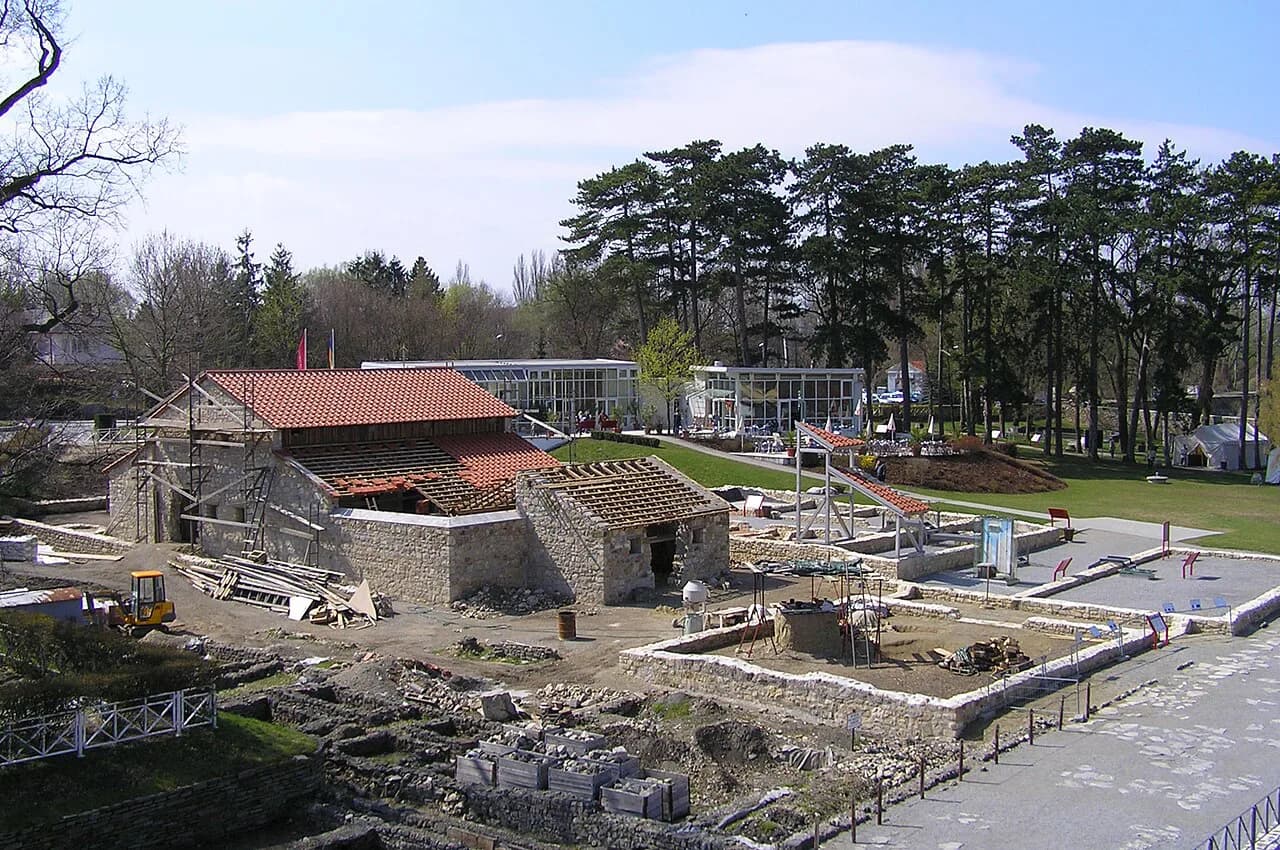
Fort Comagena is the origin story. Roman troops arrived in the 1st century AD to guard the Noric Limes, control the ford and watch the Tullnerfeld, and from late antiquity the site served as a naval base for the Danube fleet. Visible remains include the Roman tower and the former double gate, which let you read the fort's footprint in the street plan.
The Roman Museum Tulln supplies the objects and context the stones cannot. Budget around an hour if you read the displays, less if you skim; it is the natural companion to the tower and gate rather than a substitute for them. The town's own presentation of its history is the source to check for current visiting details before you go.
Egon Schiele in Tulln
Schiele belongs to Tulln before he belongs to Vienna. The town presents his birthplace, the Egon Schiele Museum and the Schiele Trail as a connected trio, which lets you follow his early life at street level rather than through gallery labels alone. Allow a couple of hours if you want the museum plus the trail, and check current opening details with the town before you build a day around it.
For travelers coming from the capital, this is the reason to see Schiele outside Vienna: the scale is small, the setting is the town that shaped him, and the trail links the sites on foot. It also gives Tulln a second museum anchor after the Roman collection, which is what turns a stroll into a half day.
The garden side of Tulln
Tulln markets itself as a garden city, and the town carries that identity with the garden show grounds, garden artworks and paths around them. The garden history is tied to the International Horticultural Fair, so treat the grounds as a designed landscape to wander rather than as an event with a fixed program. Check the town's own pages before planning around a specific exhibition.
The gardens are the part of Tulln that rewards a car or a longer stay, since they sit outside the compact center and add a separate walk. If you are traveling by train with a tight schedule, choose between the gardens and a second museum rather than trying to force both. The trade-off is time on your feet versus depth in one place.
How long Tulln needs
A half day covers the old center, the Danube promenade and one museum, with time for coffee in between. That is the right shape for a traveler breaking a journey between Vienna and the Wachau.
A full day lets you add the gardens and a second museum, and it is the better choice if Schiele or the Roman layer is your main interest. The town is small enough that the constraint is not distance but how much you want to read and look; build in slack rather than stacking three collections back to back.
Getting there and onward
Tulln sits on the Franz Josef Railway line west of Vienna, and the town's history ties its modern growth to that railway and to a Danube bridge built in the 1870s. For current departure times, connections and fares, use the ÖBB timetable rather than a printed schedule. From the station you continue on foot into the old center.
The Danube bank setting also makes Tulln a natural river stop, with the promenade as the arrival point for boat travelers and cyclists following the Danube route. If you continue west toward Krems or the Wachau, the same line and the river corridor carry you onward.
Where Tulln fits a route
Tulln works best as a Danube stop between Vienna and the Wachau: close enough for a morning train, compact enough to leave by afternoon. Travelers heading into the Kamp valley can pair it with Rosenburg Castle as a separate day rather than a same-day add-on.
If you are building a Lower Austria loop, Tulln also sits within reach of the Roman site at Carnuntum east of Vienna, which extends the same imperial story along the Danube. Choose one Roman stop if your time is short: Tulln for the fort and museum inside a historic town, Carnuntum for the open-air reconstruction.
Half day or full day in Tulln?
Book Tulln as a half day if you want the old center, the Danube promenade and one museum; make it a full day if Schiele or the Roman fort is the reason you are coming, and add the gardens on foot or by car. The town rewards a slower pace than its size suggests.
Confirm museum opening days, tour times and garden access directly with the town before you travel, then fix your train on the ÖBB timetable. That way the only decision left is which museum gets your second hour.
Explore more Krems guides
Sources
Notes for your next Austrian town break
Optional updates when we add or revise town guides.
You might also like
Continue reading
More guides you'll find useful