
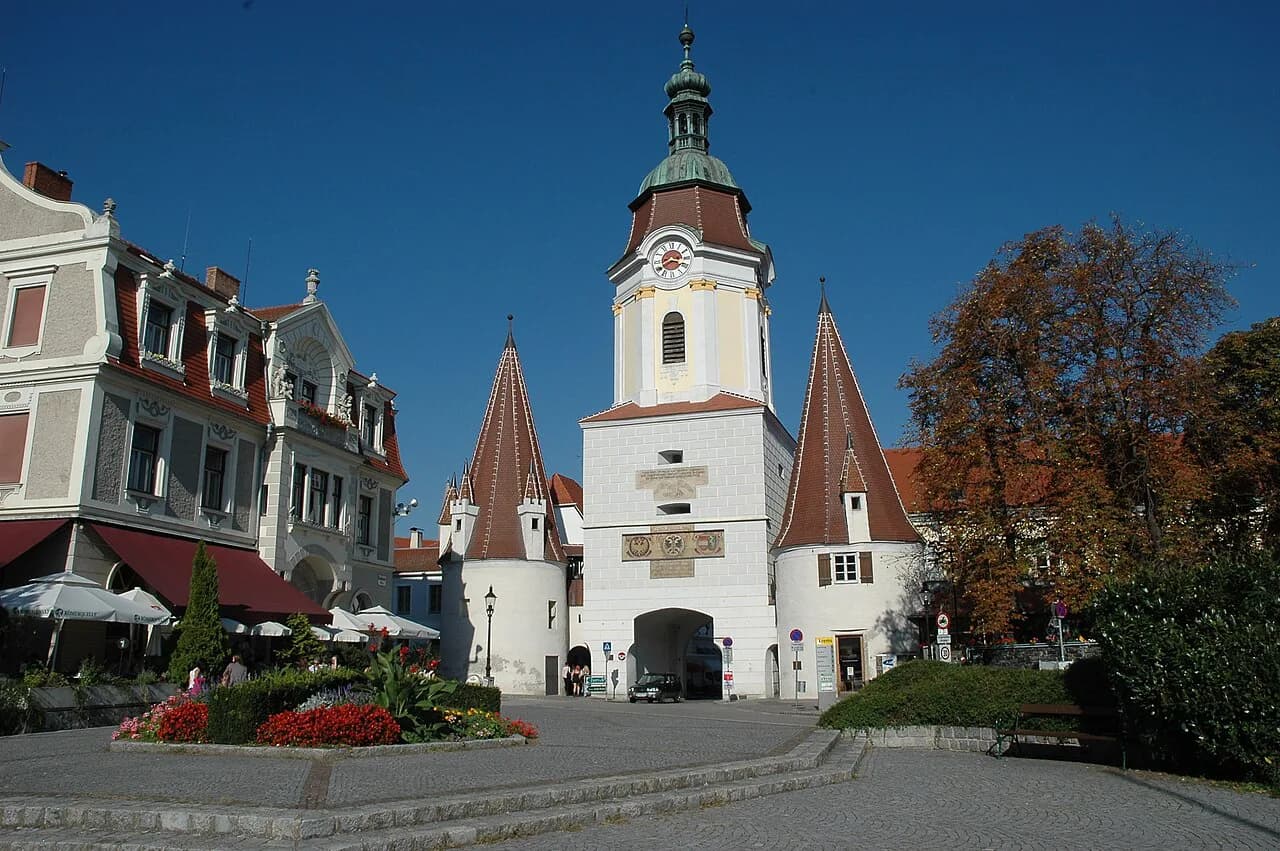
Steiner Tor, Krems: The Last Surviving City Gate

Steiner Tor is the one city gate Krems kept, and it is the town's emblem: a late-15th-century portal refashioned in the Baroque style, standing at Südtirolerplatz where the old town begins. Plan on a short stop of a few minutes rather than an excursion, because the gate is a monument you read from the street, not a building you tour. This guide covers where it stands, which parts of the facade are medieval and which are 1756, and what to pair with it on foot in Krems.
It helps to arrive knowing what you are looking at, since the gate compresses four centuries into one facade. Flanking towers and the lower floor belong to the late Middle Ages, while the crowning tower dates from the reign of Maria Theresa in the 18th century. That mix is the reason the gate reads as Baroque from a distance and medieval up close.
Where Steiner Tor stands in Krems
The gate sits at Südtirolerplatz on the edge of Krems's old town, in Krems an der Donau, the town at the eastern entrance of the Wachau valley where the Krems river meets the Danube. Walk through the arch and you are in the pedestrian core; walk the other way and you head toward the station side of town. Treat the gate as a doorway rather than a destination.
Krems was walled until the last third of the 19th century, when the fortifications were systematically razed and three gates removed along with them. Steiner Tor survived that clearance, which is why it now stands freestanding rather than embedded in a circuit of walls. The surrounding streets show no trace of the ramparts, so the gate's isolation is itself the historical evidence.
The gate's position makes it the natural first stop on a walk through Krems, and our Krems Attractions: 10 Visitor Guides covers the other sights in the same compact center so you can sequence them without backtracking.

What to look for on the facade
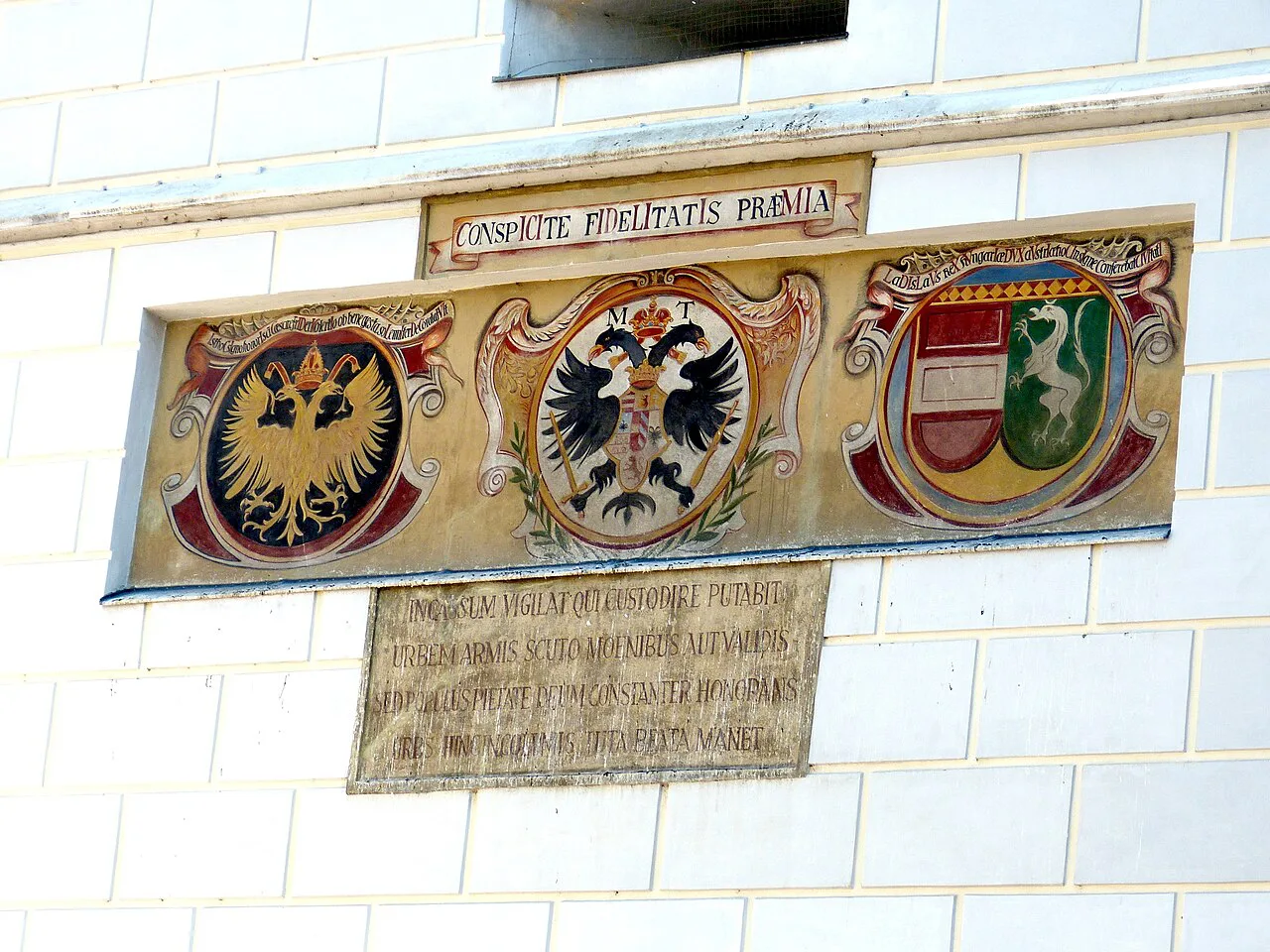
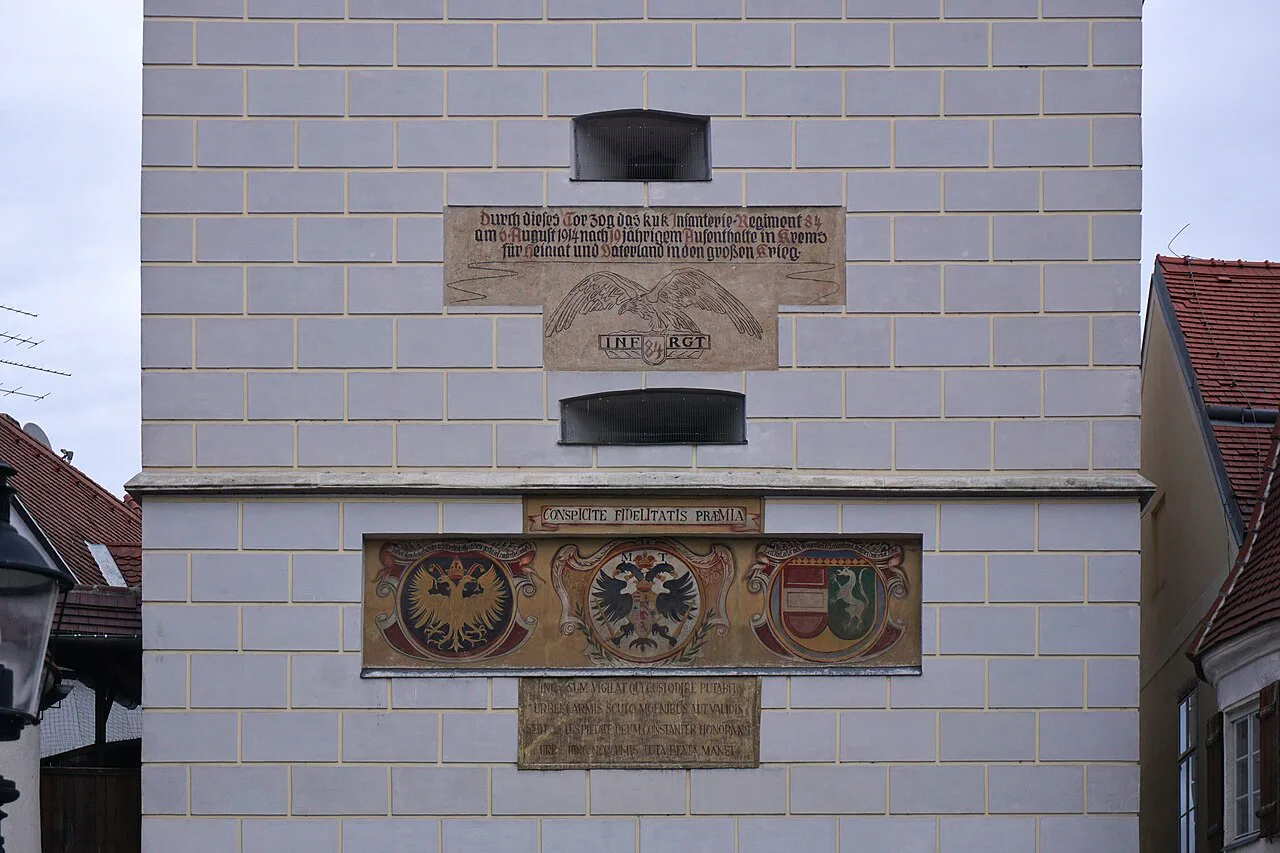
Start with the stone coat of arms to the right of the archway, which names Emperor Friedrich III and carries the year 1480 in Roman numerals. That date is taken to mark a rebuilding of the fortifications made necessary after Hungarian troops destroyed them in 1477. Most visitors pass it at eye level without stopping.
Above the medieval base, the tower building belongs to the Baroque period, added in 1756 during the reign of Maria Theresa. Look for the change in masonry and window style between the two phases; the lower flanking towers are late medieval, and the upper storey is not. The year 1756 is history, not a statement about current access.
Inside the archway, on the inner face of the stone door, a mounted memorial recalls a flood disaster in 1573. It is easy to miss because it faces the old town rather than the approach, so turn around after walking through. Outside the gate, the Danube once threatened the spot directly, which is what the plaque commemorates.
The gate was restored as closely as possible to its original form from 2005, the year Krems marked the 700th anniversary of its city rights. That campaign explains why the stonework and paint look cleaner than the age of the structure would suggest. Read the monument as a restored object, not a weathered ruin.

How much time to allow
Ten to fifteen minutes covers the gate properly: the coat of arms, the two building phases, and the flood memorial on the inner side. Photographers should add a little time, since the arch frames the old-town street beyond it. There is no interior to work through, so the visit does not stretch.
The real value comes from pairing the gate with the pedestrian lanes immediately behind it, which hold most of what a short Krems stop is for. Walk through the arch, follow the street into the center, and let the gate serve as the start and end of a loop. That way the few minutes at the gate become the opening of a half day rather than a detour.
Pairing the gate with Krems's old town
A few minutes from the gate, the Piarist church is the strongest single interior in the old center; the Gothic building was refurbished in the mid-15th century and its choir consecrated in 1457. Make it part of the same old-town walk rather than a separate trip.
For a different register, the Kunsthalle Krems sits in the Kunstmeile Krems museum district in Stein an der Donau, the quarter across the river reachable on foot from the old town. It is the obvious choice if you want contemporary exhibitions after the medieval and Baroque streets.
The Landesgalerie Niederösterreich anchors the same Kunstmeile Krems district, so the two museums combine naturally into one afternoon of art after a morning on the gate and the old town.
Gozzoburg in Krems, a medieval town house in the heart of the center, rewards anyone who wants more building archaeology after reading the gate's two phases; it is a short walk from Südtirolerplatz.
Getting there from the station and by car
Krems is served by rail and bus, and the old town and Südtirolerplatz are a walk from the station side of town; check current ÖBB and Postbus timetables for connections from Vienna or St. Pölten before you set out. Drivers should look into parking on the edge of the old center, since the lanes around the gate are pedestrian.
Because the gate stands on a public street at Südtirolerplatz, there is no ticket desk and no fixed visiting window to plan around; the constraint is your transport, not the monument, so confirm train times on the day and leave slack if you are connecting onward into the Wachau. From Krems, the Wachau valley itself begins to the west, and our Danube Cycle Path Wachau guide covers the river route if you are continuing along it.
Göttweig Abbey as the nearest major excursion
Stift Göttweig, the Benedictine abbey above the Danube at Furth bei Göttweig, is the closest large excursion from Krems and sits roughly five kilometers away. It is a separate visit from the gate, best done by car or bus, and worth its own half day for the Baroque interior and the river view.
Set against the gate, the abbey shows the two ends of the same Baroque story: a town portal rebuilt under Maria Theresa and a monastery interior on the ridge above the Wachau. Doing both in one day is possible but tight, and the abbey deserves the larger share of the time.
Practical notes around the gate
Krems is known for its Wachau setting, its old-town lanes, and the museum quarter across the river, which is what draws most visitors off the Vienna–Melk axis for a stop. The gate is the visual shorthand for that identity and appears on town material accordingly.
There are no fixed opening hours, tickets, concerts or interior rooms at the gate itself; it is a monument you read from the public street, not a building you enter. Treat any performance listing you see in town as something to verify for your dates rather than a standing fixture.
If your interest runs to the town's other churches and museums, the wider set of Krems Attractions gives each one its own page so you can judge which fit your hours. The gate remains the fixed point you navigate from.
Should you build your Krems walk around the gate?
Yes, but as a starting point rather than a sight in its own right. Give Steiner Tor fifteen to twenty minutes, read the 1480 coat of arms and the 1756 tower, find the 1573 flood memorial on the inner wall, then walk through into the old town and let the Piarist church and the riverfront carry the rest of the morning.
Travelers with a car should add Stift Göttweig as a half-day extension, and museum-goers should cross to the Kunstmeile for the Kunsthalle and the Landesgalerie. Confirm rail and bus times with ÖBB and Postbus before committing to a tight connection.
Explore more Krems guides
Frequently Asked Questions
Is there an entrance fee for Steiner Tor?
The gate stands on a public street at Südtirolerplatz, so there is no ticket desk to buy from. Any charges you meet in Krems belong to the museums and churches nearby, and those are posted at each site.
How do I get to Steiner Tor from Krems station?
Head for the old town and Südtirolerplatz, which is where the gate stands at the edge of the pedestrian center. Check current ÖBB and Postbus timetables for trains and local buses, and allow walking time from the station side of town.
What is the difference between the medieval and Baroque parts of the gate?
The flanking towers and the lower floor are late medieval, and the stone coat of arms of Emperor Friedrich III carries the year 1480. The tower building above was added in 1756 under Maria Theresa, which is why the upper section reads as Baroque.