
Frauenbergkirche Stein an der Donau: A Hilltop Church Near Krems

The Frauenbergkirche is a Gothic hall church on the slope above Stein an der Donau near Krems, and it is a short but steep climb from the parish church of St. Nicholas rather than a museum-style visit. Plan on a look-in through a grille, a walk around the tower and nave, and the view back over the rooftops toward the Danube. This guide covers the address, the approach from the town, what to look for in the building, and how to fold it into a morning in Stein.
Two things shape a visit. The church interior can be viewed through a grille year-round, according to the Lower Austria tourism portal, so you should not count on walking through the nave. And the building stands on a rise reached by a staircase, which means sturdy shoes matter more here than at the churches down in the lanes.
Where the Frauenbergkirche stands
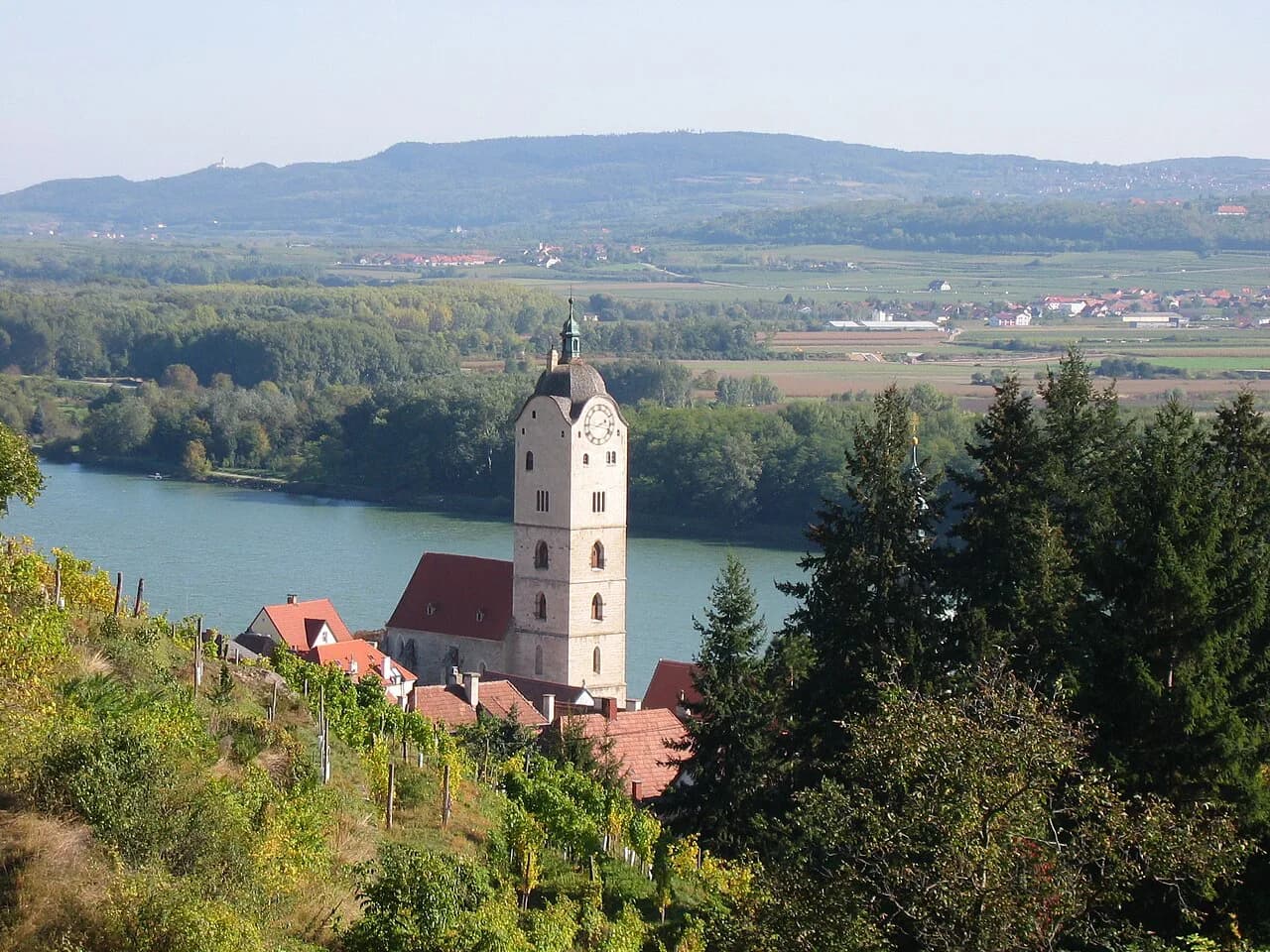
The church sits on the Frauenberg, the small hill directly above Stein an der Donau, with the address Frauenberg 23, 3500 Stein an der Donau. It looks down on the parish church of St. Nicholas and the old riverside lanes, and it is a landmark you can pick out from across the water.
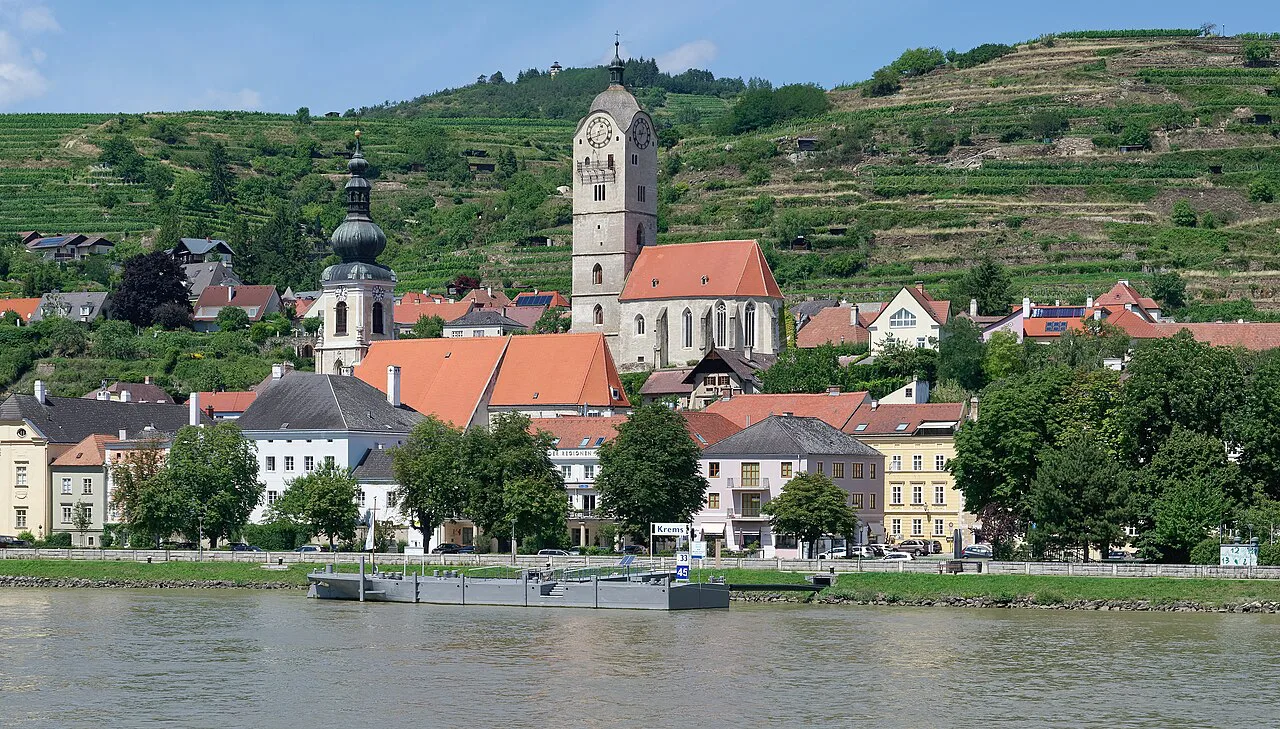
Stein an der Donau is a historic riverside town opposite Krems, and the two sit on the Danube close together. Historians date the tower and church to the years around 1380, with a first documentary mention in 1401, and a historic photograph in the Austria-Forum archive shows the parish church and Frauenbergkirche seen across the Danube.
The wider setting is the eastern end of the Wachau, the Danube valley between Krems and Melk. That makes the church an easy add-on to a day built around the river towns rather than a destination of its own.

Getting there from Krems and Stein
The direct approach on foot starts at the east side of the parish church of St. Nicholas, where a steep staircase climbs to the former Frauenbergkirche. The climb is short, but it is a staircase rather than a gentle ramp, so allow a few minutes and take it slowly in warm weather.
For the wider trip, Krems and Stein are served by rail and by regional bus routes along the Danube, and the riverside lanes of Stein connect on foot. Check current departure times with ÖBB and the regional transport operators before you set out, since schedules change by season.
If you come by boat on a Wachau day cruise, you land in the riverfront part of Stein and walk up through the old lanes. Either way, the last stretch to the church is on foot and uphill.
Drivers should leave the car in the town and walk; the lanes of Stein are narrow and the church itself sits above the built-up area. The Steiner Tor, the old west gate of Krems, and the Kunstmeile are both a short walk or bus ride from Stein if you want to build a loop.

Can you go inside?
The interior of the church can be viewed through a grille year-round, which is the arrangement the Lower Austria tourism portal describes. In practice that means you can see into the space and get a sense of the building without entering it, and the visit is a look-in rather than a full tour.
No admission price or guided-tour schedule appears for the Frauenbergkirche on the tourism portal, so build the stop around the exterior and the setting. For anything beyond that, ask at the Krems cultural office, which the portal lists as the contact for the church.
Because the look-in takes only a few minutes, treat the climb as the main event and pair it with St. Nicholas below. A stop here rewards the traveler who likes quiet hilltop churches more than the one chasing a checklist.
What to look for: the old Michel and the tower room
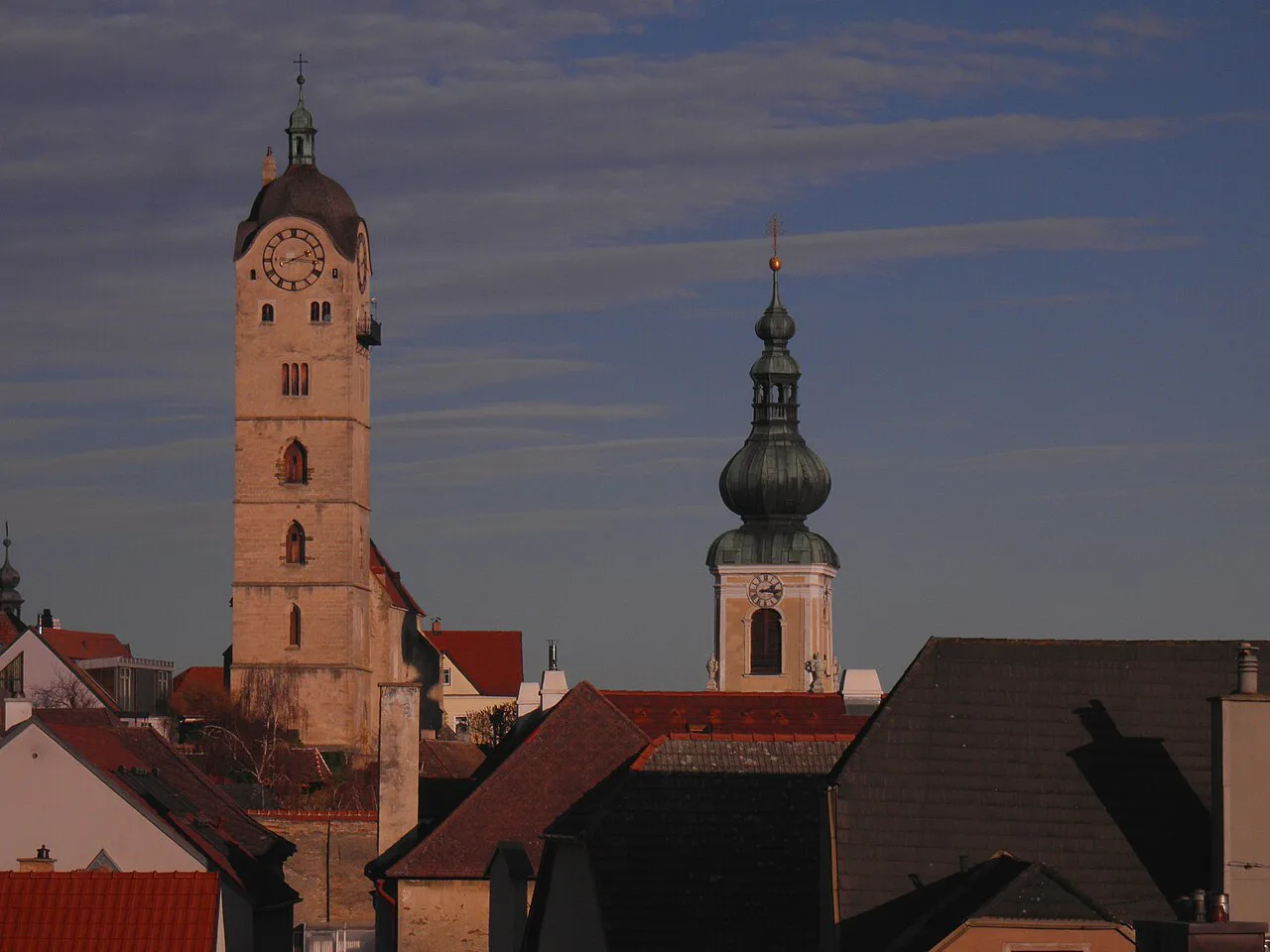
The square tower with its domed roof is the church's signature, and locals call it the "old Michel" because it is visible from far off. Match that silhouette against the skyline from the Danube bank before you climb, and the building will make sense as a landmark rather than just a church.
On the tower's top floor is the former apartment of the fire warden, who worked there until 1970. The chimney and balcony of that room can still be seen from outside, a detail worth pointing out to anyone who assumes the tower is purely medieval fabric.
The nave is lower and slightly wider than the tower and is attached to its east side. On the north wall, remains of a late medieval Adoration of the Magi have survived, one of the few interior features you can still read in the building.
Older layers under the church
The site is older than the Gothic building. An early church settlement stood here in the eleventh century, grouped around St. Michael's Church, which is first mentioned in 1081.
Restoration work turned up the foundations of a Romanesque altar and a Roman floor, a reminder that the hill was in use long before the hall church was built around 1380. That sequence, from Roman floor to Romanesque altar to Gothic church, is the most interesting thing about the site for travelers who like reading layers in stone.
The Gothic church itself is documented in 1401, a date that anchors the building in the boom years of the Danube towns. The historic view across the river in the Austria-Forum archive shows how the church and St. Nicholas have long formed a single composition from the water.
The war memorial and the hilltop setting
The Frauenbergkirche also serves as a memorial to the fallen of both world wars, a role the tourism portal states plainly. Treat the building quietly and read any plaques and inscriptions rather than treating the nave as a photo backdrop.
The church's position on the slope above Stein is what makes the stop memorable for most visitors: you climb out of the lanes and reach a quiet churchyard with the town and river below. The trade-off is the ascent, so plan this for early in a walking day rather than at the end of it.
The tower and the domed roof read best from the foot of the hill, where the full silhouette is visible. That lower viewpoint is also the practical place to appreciate the landmark before committing to the staircase.
How long to allow
Budget about half an hour for the climb, a look through the grille, and a walk around the churchyard. If you stop to read the memorial inscriptions and photograph the tower, an hour is plenty, and there is no ticket queue to absorb time.
The natural combination is a morning in Stein: St. Nicholas, the staircase to the Frauenbergkirche, then a walk back down through the lanes toward the Steiner Tor. That sequence uses the climb while your legs are fresh and finishes on level ground.
Nearby sights worth pairing with the climb
Below the church, the parish church of St. Nicholas anchors the lower end of Stein and is the starting point of the staircase. The old lanes of Stein, with their painted facades, connect the riverside to the church in a few minutes of walking.
In Krems, the Kunstmeile Krems gathers several museums in a compact quarter, including the Landesgalerie Niederösterreich and the Karikaturmuseum Krems. Those are indoor stops that make sense on a changeable day when the hill is wet and slippery, and the Kunsthalle Krems is part of the same quarter.
For a fuller day in the Wachau, Stift Göttweig sits on its own hill across the valley near Furth bei Göttweig, and the abbey is a natural counterpart to the smaller hilltop church. The Piaristenkirche Krems is another stop in the town itself if you are collecting churches.
Is the climb up to the Frauenbergkirche worth it?
Yes, if you are already in Stein and like quiet hilltop churches, layered history, and a view back over the old town. No, if you expect a full interior visit or a museum; no admission arrangement is published for the church and the interior is seen through a grille.
Treat the Frauenbergkirche as a thirty-minute addition to a Stein morning, climb from St. Nicholas while you are fresh, and check with the Krems cultural office if you need details beyond what the town publishes.
Explore more Krems guides
Frequently Asked Questions
Do you need tickets for the Frauenbergkirche?
No ticket booth or admission arrangement is published for the church. The interior is viewed through a grille year-round, so there is nothing to book in advance for a standard look-in.
When is the best time to climb to the church?
Morning works well because the light falls on the Stein facades and the staircase is quieter. The grille view is available year-round, so the season matters less than the weather and the condition of the steps.
How do you reach the Frauenbergkirche from Stein?
Walk to the east side of the parish church of St. Nicholas and take the steep staircase up to the church. If you arrive by train or bus, check current ÖBB and regional bus connections to Krems and Stein before you travel.