Austrian Souvenirs Worth Buying: What to Take Home from Austria
Austrian souvenirs worth packing: Sachertorte and Mozartkugel, Manner wafers, Augarten porcelain, Lobmeyr glass, loden coats and snow globes, plus where to buy them.
On this page
The best Austrian souvenirs are the ones that survive the flight: sealed torte and chocolate boxes, tins of Manner wafers, Augarten porcelain, Lobmeyr glass and a loden coat you will actually wear. Skip the fragile overflow and the tenth fridge magnet. This guide sorts the souvenirs worth buying by how well they travel, names the shops and streets that sell them, and flags the weight, breakage and food-import decisions you make before checkout.
What counts as an Austrian souvenir
Austrian souvenirs fall into four usable groups: edible gifts that disappear, porcelain and glass that need padding, wearable traditions such as loden and hats, and small kitsch that fits in a carry-on. Vienna keeps local craft and long-standing markets alive rather than stocking the same globalized goods as every other European city, which is why the shopping doubles as sightseeing. Build your list around what fits your luggage and your kitchen, not around what looks best under shop lights.
If your route runs beyond Vienna and Salzburg, plan purchases around the towns you already pass through: a boxed cake travels fine on a train, a porcelain vase does not enjoy a bus transfer. The towns in Austria guide sets out which stops reward a shopping hour, and pairing a purchase with a named square or shop makes it easier to find again.
Sweets to bring home: Sachertorte, Imperial Torte, Mozartkugel and Manner wafers
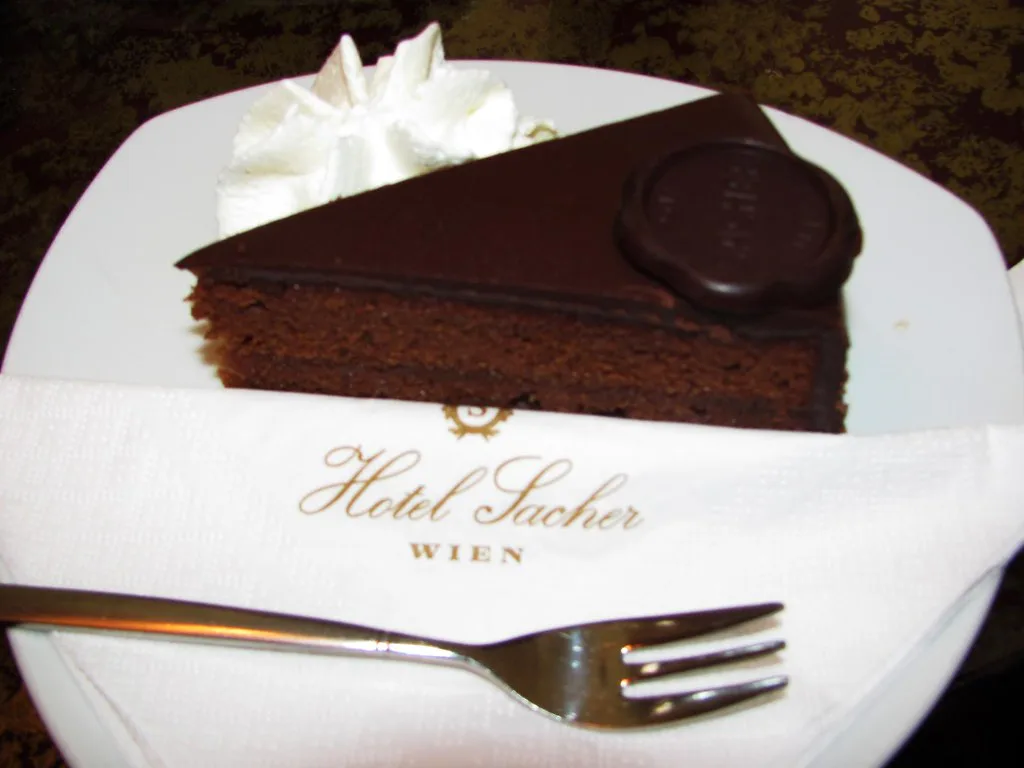
Sachertorte is the flagship edible souvenir, and the Sacher Hotel's cake store on Kärntner Straße 38 sells the original in various sizes with proper wrapping; Demel sells its own boxed interpretation. History dates the cake to 1832, but what matters at the counter is size and seal: full cakes are heavy and need cool transport, while individual portions and mini boxes fit a day bag. The Imperial Torte, sold in compact cubes and gift boxes, is the second cake most travelers pack.
Is a Sachertorte practical to bring home from Austria? A full cake is heavy and needs cool transport, so individual portions and sealed mini boxes are the practical choice for most travelers. Buy it late in the trip, keep it out of heat and check your airline's rules for carrying food before you pack it.
Where should I buy Mozartkugel in Austria? Supermarkets stock presentable Mozartkugel packaging for much less than souvenir shops charge, so buy there rather than at the airport. The candy originated with a Salzburg confectioner, which makes Salzburg an especially good place to pick some up.
What is the most durable Austrian souvenir? Loden coats and traditional hats are the most durable purchases because you wear them and they add nothing to your luggage on the way home. Porcelain and glass are beautiful but need padding and hand luggage, so buy them late and carry them aboard.
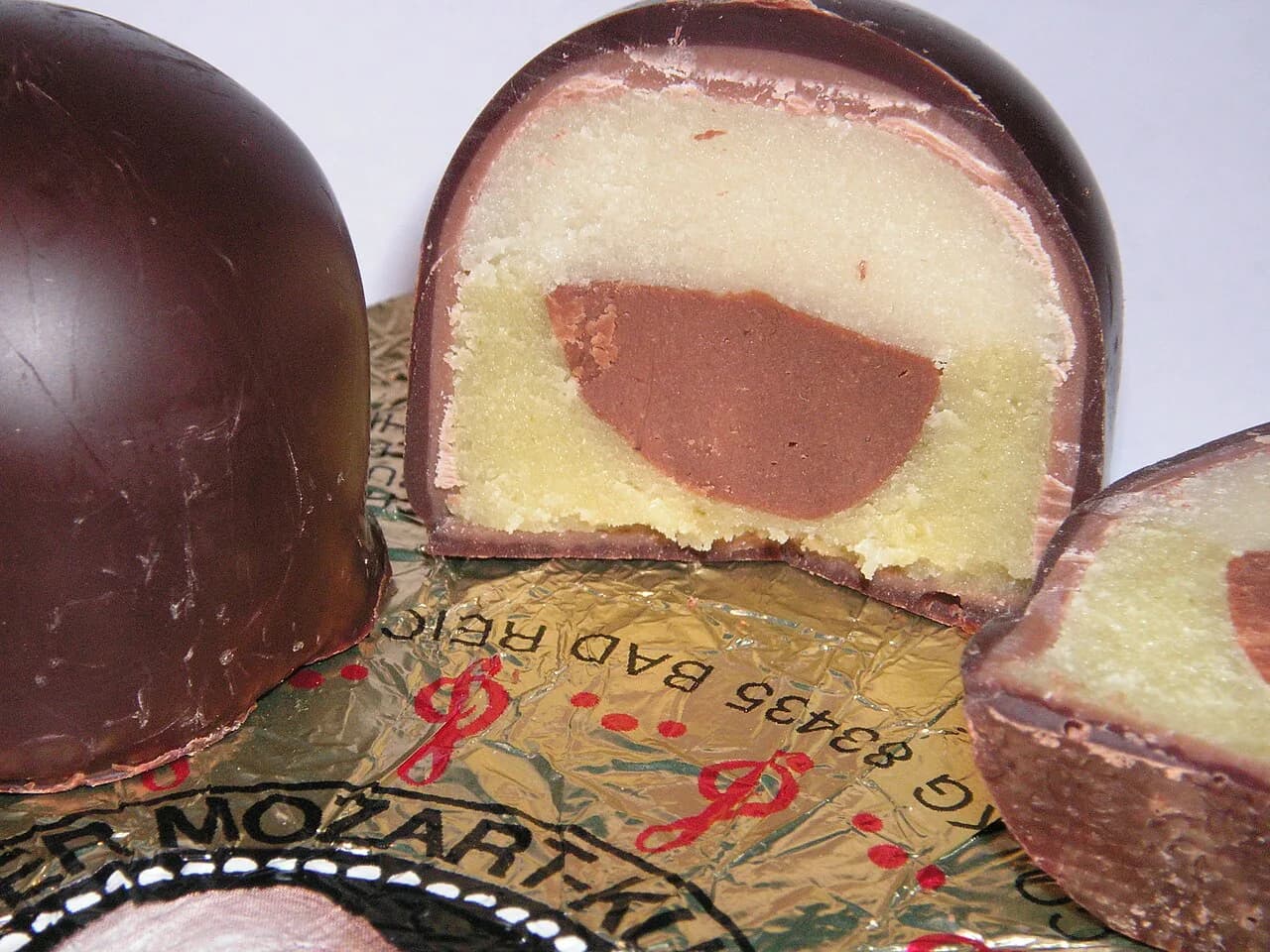
Mozartkugel, the pistachio, marzipan, nougat and chocolate ball that traces back to an 1890 Salzburg confectioner, comes in every pack size and shaped box, and most supermarkets stock presentable versions for much less than souvenir shops charge. Buy them where locals shop, not at the airport. Manner Schnitten, the pink-wrapped hazelnut wafers first sold in 1898, make light, inexpensive thank-you gifts, and the Manner shop at Stephansplatz 7 next to the cathedral is the easy central stop.
For something with more ceremony, Altmann & Kühne at Am Graben 30 sells its own chocolate and pralines in miniature chests, books and hat boxes that open to reveal the sweets. The packaging is the gift; the chocolate is a bonus. Treat this as your one premium edible purchase and keep the cheaper staples for the supermarket run.
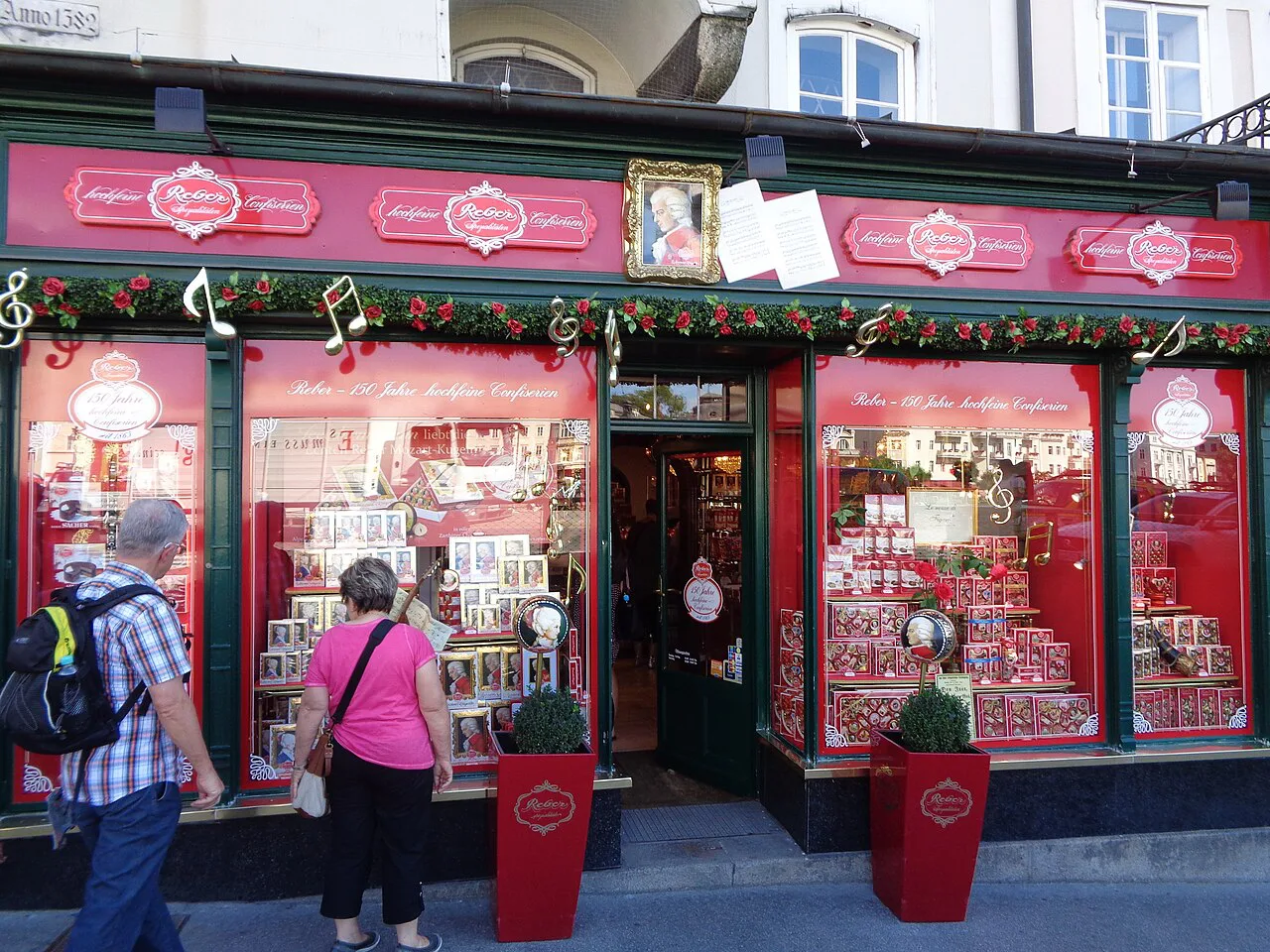
Coffee, preserves and pantry gifts from an Austrian supermarket
Coffee belongs on the list, and so do Staud's jams, pickles and compotes, whose miniature jars with art-motif lids come in packs of three and slot into any suitcase. The main Staud's shop sits at the Brunnenmarkt market at Schellhammergasse 15 in the 16th district, and the products also turn up in museum shops and other stores. Supermarket mustard, including the tarragon version Austrians put on sausages, is the cheap, light, genuinely local add-on most visitors overlook.
Viennese wine is a real category, not a joke: outlying slopes have grown grapes for centuries, and the city-owned Weingut Cobenzl has collected top prizes at the Vienna Wine Awards, most recently across the 2020s. Look for the WienWein brand in specialist wine stores and larger supermarkets. Glass bottles add weight and breakage risk, so buy wine late in the trip and wrap it in clothing rather than trusting a thin cardboard carrier.
Porcelain: Augarten tableware, figurines and the museum shop
Augarten porcelain gives you a gift with a paper trail: the Viennese Porcelain Manufactory began production in 1718, was nationalized by Maria Theresia in 1744, closed in 1864 and reopened under its current name in 1923, and every piece carries the blue-striped shield. The flagship store is at Spiegelgasse 3 in the center, with a second outlet attached to the in-house Porcelain Museum at Obere Augartenstraße 1. Vases and tableware are the classic buys; figurines are smaller and easier to pack.
Porcelain is the souvenir most likely to arrive in pieces, so ask for the shop's wrapping, carry it in hand luggage and skip the temptation to stack it under heavier purchases. If you are touring baroque abbeys and palaces, a single Augarten piece reads as a considered memento rather than clutter.
Glassware and jewelry: Lobmeyr and FREYWILLE in the city center
Lobmeyr glassware turns a drinking glass into a display object, and the shop entrance alone signals the price tier. FREYWILLE jewelry, fired enamel on gold, is the other central purchase that travels flat and light. Both sit in the city center, so they fit between sightseeing stops rather than requiring a separate trip.
Glass is the highest-risk item in any suitcase, so buy it on your last city day, keep the box and carry it aboard. If the piece is decorative rather than useful, ask yourself whether it will survive the trip home before you fall for it in the shop.
Loden coats, dirndls and hats: wearable souvenirs
Traditional Viennese clothing means more than dirndls and lederhosen: the classic green loden coat never goes out of style, and Viennese hats are a serious craft. Unless you have an actual occasion, a dirndl is costume money better spent on a coat you will wear for years. Loden-Plankl is the standard stop for high-quality, tasteful traditional clothing that doubles as a wearable souvenir.
A coat also solves the packing problem in reverse: wear it home and you have added nothing to your luggage. Try it on early in the trip, because alterations take time you may not have on departure day. If your route runs through smaller places, the villages in Austria guide shows where traditional clothing shops sit outside the capital.
Snow globes, Swarovski and small kitsch that travels light
The snow globe was invented in Vienna, and you can still buy them from the original manufacturer's factory shop in the 17th district at Schumanngasse 87, where motifs range from Stephansdom and the Ferris wheel to Empress Elisabeth. That provenance makes a snow globe a better gift than a generic magnet. Swarovski crystal is another Austrian-founded option; designs are not generally cheaper in Vienna, so buy because you like the piece, not because you expect a discount. For the lightest gifts, postcards sent to yourself and fridge magnets fill the gaps in any bag.
Equestrian souvenirs from the Spanish Riding School
The Spanish Riding School's gift shop sells equestrian-themed souvenirs, from leather bracelets modeled on horse bits to small gifts carrying the Lipizzaner motif. The performance calendar is limited, so seeing a show depends on your dates, but the shop and the practice sessions give you the theme without a ticket. This is the souvenir to buy for the horse-obsessed person back home.
Where to buy: the addresses worth writing down
The practical list is short: Sacher's cake store at Kärntner Straße 38, Manner at Stephansplatz 7, Altmann & Kühne at Am Graben 30, Staud's at Schellhammergasse 15 by the Brunnenmarkt, Augarten at Spiegelgasse 3 or Obere Augartenstraße 1, and the snow globe shop at Schumanngasse 87. Write these down before you leave the hotel, because central Vienna's winding streets reward a plan. Most sit within walking distance of each other in the first district.
Spread purchases across the trip instead of saving everything for the last afternoon: chocolate shops and confectioners keep their own schedules, and a missed counter means a missed gift. If your route includes a lake town or an Alpine stop, browse there too; regional food souvenirs often cost less and pack better than city equivalents. Plan the shopping day around the places to visit in Austria already on your list.
Practical trade-offs: weight, refrigeration, customs and breakage
Edible gifts are the easiest to carry and the hardest to keep: chocolate and torte boxes dislike heat, so pack them last, keep them out of a hot trunk and check your airline's cabin rules for food. Porcelain and glass need padding and hand luggage. Loden and textiles are forgiving but heavy. Decide early whether your priority is a few good pieces or a bag of small gifts, because the two strategies produce different luggage.
Food and alcohol imports are governed by your home country's customs rules, not the Austrian shop's advice, and those rules change; check your own government's current allowances for meat, dairy and alcohol before you buy. Anything you cannot legally bring home is money wasted. Wine is the usual casualty, so confirm the allowance before you invest in a bottle.
Beyond Vienna: Salzburg origins and regional food souvenirs
The Mozartkugel's origins are in Salzburg, not Vienna, so the candy is a natural purchase when your Austria itinerary includes that city. The same logic applies across the regions: buy local food specialties where they are made and you get a fresher product with a story attached.
Pack regional food gifts near the top of your bag, keep them cool and eat or give them soon after arrival. A jar of preserves or a box of wafers weighs little and clears customs more easily than meat or dairy. Save your luggage space for the one non-edible item you will keep for years.
Which Austrian souvenir should you actually buy?
Buy one thing that lasts, one box of sweets that disappears, and nothing that needs a second suitcase. For most travelers that means a loden coat or a single piece of Augarten porcelain, a sealed Sachertorte or Mozartkugel box, Manner wafers for the office and a snow globe from the original Viennese maker. Cross the fragile and the heavy off the list before you reach the counter, and check your home customs allowance for food and alcohol before you commit.
Explore more Austria guides
Frequently Asked Questions
Is a Sachertorte practical to bring home from Austria?
A full cake is heavy and needs cool transport, so individual portions and sealed mini boxes are the practical choice for most travelers. Buy it late in the trip, keep it out of heat and check your airline's rules for carrying food before you pack it.
Where should I buy Mozartkugel in Austria?
Supermarkets stock presentable Mozartkugel packaging for much less than souvenir shops charge, so buy there rather than at the airport. The candy originated with a Salzburg confectioner, which makes Salzburg an especially good place to pick some up.
What is the most durable Austrian souvenir?
Loden coats and traditional hats are the most durable purchases because you wear them and they add nothing to your luggage on the way home. Porcelain and glass are beautiful but need padding and hand luggage, so buy them late and carry them aboard.
Sources
Notes for your next Austrian town break
Optional updates when we add or revise town guides.
You might also like
Continue reading
More guides you'll find useful