Most Beautiful Towns in Austria: Historic Picks Worth the Detour
The most beautiful towns in Austria, from Dürnstein and Hallstatt to Krems and Admont, with the sight that earns each stop and how to reach it.
On this page
The prettiest towns in Austria are mostly small, and each is beautiful for a reason you can name: Dürnstein for its castle ruin above the Danube, Hallstatt for its lakefront under the Dachstein, Admont for a monastic library, Mondsee for a color-washed main street. This guide picks eight towns where one specific sight justifies the detour, and it groups them by region so you can build a Wachau day and a Salzkammergut day without backtracking. Vienna and Salzburg work best as rail starting points to these places, not as the destination themselves.
Beauty in an Austrian town is rarely a single view. It comes from the shape of the place: a market square with a painted facade, an abbey on a rock above the river, a lane that ends at a lake. So each pick below names the square, church, abbey, castle or stretch of water that earns it a place, says how long the town needs, and notes whether it fits a train, boat or car day. Sights that open only in the warm months, set tour times and ticket prices in euros are the details to pin down at each town's own site before you commit.
What makes an Austrian town beautiful: old town centers, squares, abbeys and setting
The pattern repeats across the country: a compact historic center, one or two baroque set pieces, and a setting — river, lake or mountain — that frames the whole thing. That is why Austrian towns reward a slower visit than a photo stop. A market square takes ten minutes to cross and an hour to actually see, once you notice the facades, the fountain and the side lanes.
For readers planning a route, the useful split is regional. The Wachau section of the Danube gives you Dürnstein, Melk and Krems within a short stretch of river; the Salzkammergut gives you Hallstatt, Mondsee and St. Gilgen around lakes; Admont and Graz sit in Styria. Keep those three clusters in mind, because hopping between them eats a day each time. The same logic scales down to smaller places, which is why the villages in Austria Worth the Trip list works alongside this one.
One trade-off to settle early: fame and ease are not the same thing. Hallstatt is the most photographed village in the country and also the most crowded at midday, while Admont and St. Gilgen ask more of your schedule and give you room to move. Match the town to your patience, not to a picture.
Dürnstein in the Wachau: the castle ruin above town and the Danube setting
Dürnstein is the Wachau in miniature: a small old town pressed between the Danube and a hillside, with the tall remains of a medieval castle standing directly above the roofs. The ruin carries the town's best-known story, the legend of King Richard the Lionheart being held here after the Crusades, and the climb gives you the valley spread out below.
What is the most beautiful village in Austria? Hallstatt is the most photographed, with alpine houses rising straight from Hallstätter See and the salt mine above town. Mondsee is the strongest alternative if you want color-washed streets and a famous church square without the midday coach crowds.
Which of these towns can you see without a car? Dürnstein, Melk, Krems an der Donau and Hallstatt all work by rail, with boats on the Danube and the Salzkammergut lake ferries filling in the last stretch. Admont, Hochosterwitz Castle and the Grossglockner High Alpine Road are far easier with a car.
How long does each town need? Dürnstein and Mondsee are half-day stops built around one sight and a walk. Melk, Hallstatt and Admont want most of a day once you include the abbey, the mine or the library.
At river level, the draw is the setting rather than any single building. The historic center sits among the farms and vineyards of the Wachau Valley, and the lanes between the Danube bank and the hillside are short enough to cover on foot in an afternoon. Treat Dürnstein as a half-day stop with the ruin climb as its anchor, and leave slack for the climb itself.
The easiest way to arrive is by river or rail along the Danube, which puts you in the center without hunting for parking. River levels and boat timetables vary, so confirm the sailing schedule for your date with the operator and check ÖBB train times for the Wachau stations before you set out.
Hallstatt in the Salzkammergut: the lakefront, the salt mine and the midday crowds
Hallstatt is a salt-mining village wedged between Hallstätter See and the mountains, and the density is the point: alpine houses rise straight from the water, reflected in the lake when it is calm. The must-do sight is the salt mine above town, reached by funicular, where the tour includes the underground salt lake and the wooden slides.
Above the village, the Skywalk viewing platform and the Five Fingers platform near the Dachstein Ice Caves deliver the panoramas people come for, and the lake itself is best seen from a small boat. The crowds are the trade-off, and they peak in the middle of the day as tour buses arrive. Going early, or staying overnight so you get the village before and after the buses, changes the experience more than any ticket choice.
Hallstatt is straightforward without a car: trains on the Salzkammergut line connect to a short ferry crossing to the village, which is how most rail travelers arrive. Confirm the ferry and train connections for your date before you travel, since the crossing is tied to the rail timetable.
Melk in the Wachau: Stift Melk (Melk Abbey) and its position on the Danube
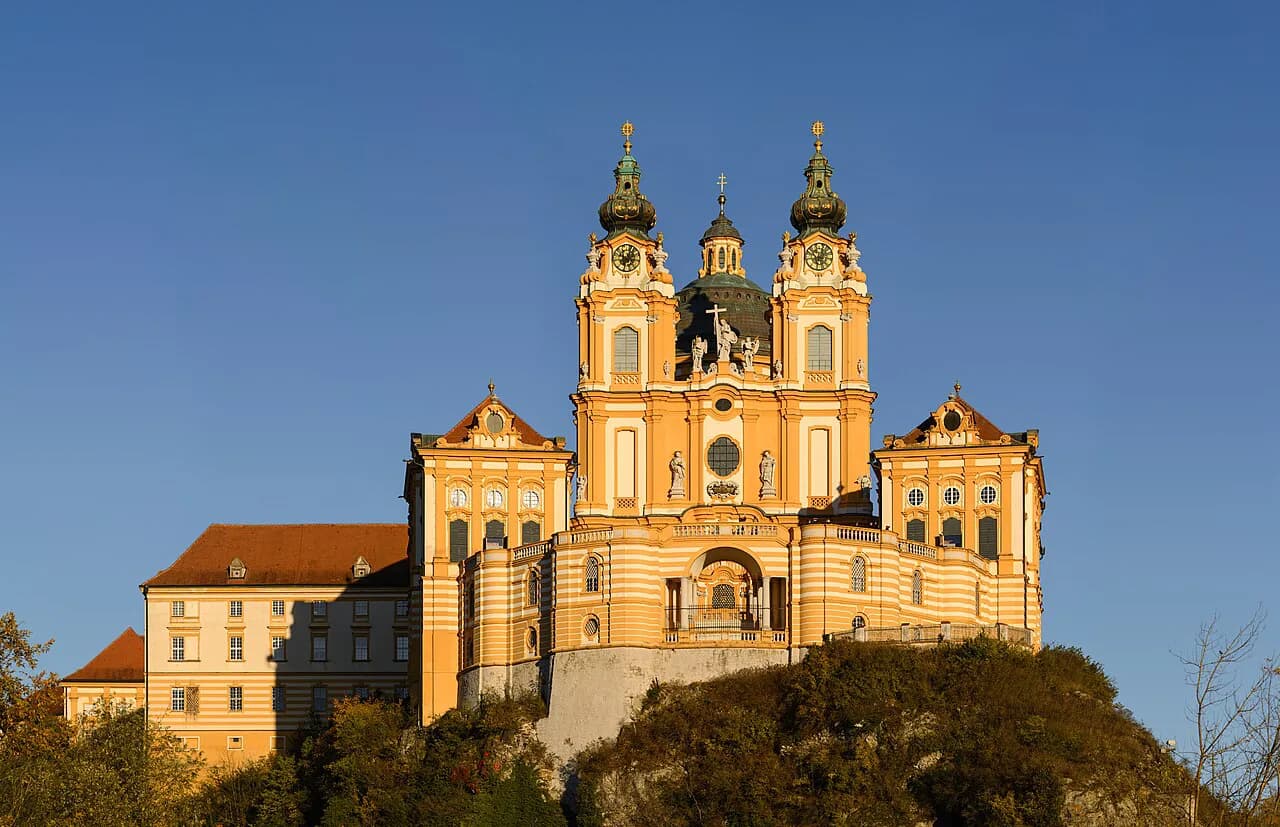
Melk is a river town with one overwhelming reason to stop: Stift Melk (Melk Abbey), a baroque monastery on a rise above the Danube, whose Marble Ballroom was used by the imperial family and whose terraces look over the river and the town below. The abbey is the set piece; the town is the frame around it.
Allow time on both sides of the visit. Inside, the state rooms and the library reward a slow pass; outside, the abbey garden with its pavilion is a separate pleasure, and the pink garden building is the sort of thing people photograph without planning to. Afterward, eat in town or at the abbey's own garden restaurant rather than rushing back to the boat.
Melk and Dürnstein are close enough on the Danube to pair in one day, which makes the abbey a natural morning and the ruin a natural afternoon, or the reverse. Check the abbey's own site for the day's opening window and ticket prices in euros, and confirm the boat or train times that link the two towns.
Krems an der Donau: the Lower Austrian town as a Wachau base
Krems an der Donau is the practical anchor of the Lower Austrian Wachau: a real town with a historic core, rather than a village that empties after the last boat. That makes it the place to sleep if you want two Wachau days without repacking, with Dürnstein and Melk as outings along the river. The old lanes and the riverside give you something to do in the evening, which the smaller Wachau stops do not.
Krems is also the transport hub for the valley. Trains run along the Danube through the Wachau, so you can base here and reach the abbey and the ruin without a car, then return in the evening. Confirm connections for your dates on the ÖBB timetable rather than relying on a remembered schedule.
Mondsee in the Salzkammergut: the color-washed main street and Basilika St. Michael
Mondsee is small, and its beauty is concentrated in a single stretch: a main street of buildings painted in rich raspberry, pistachio and blueberry tones, with restaurants spilling onto the pavement in warm weather. It is the rare Austrian town where the appeal is the street itself as much as any monument, and a slow meal outdoors is part of seeing it properly.
The monument is Basilika St. Michael, the church across the main square, painted a bright lemon yellow that stands out even against the neighboring facades. Its fame travels with The Sound of Music, in which it serves as the church where Maria marries Captain Von Trapp, and that association brings tour groups from Salzburg.
If you would rather avoid the coach traffic, drive or take a bus for a half day and arrive outside the tour window, or stay overnight on the way to or from Salzburg. Mondsee is close enough to Salzburg to be an easy add-on, which is also why it fills up. Either way, it needs only a few hours, not a full day.
Admont in Styria: Admont Abbey and its monastic library
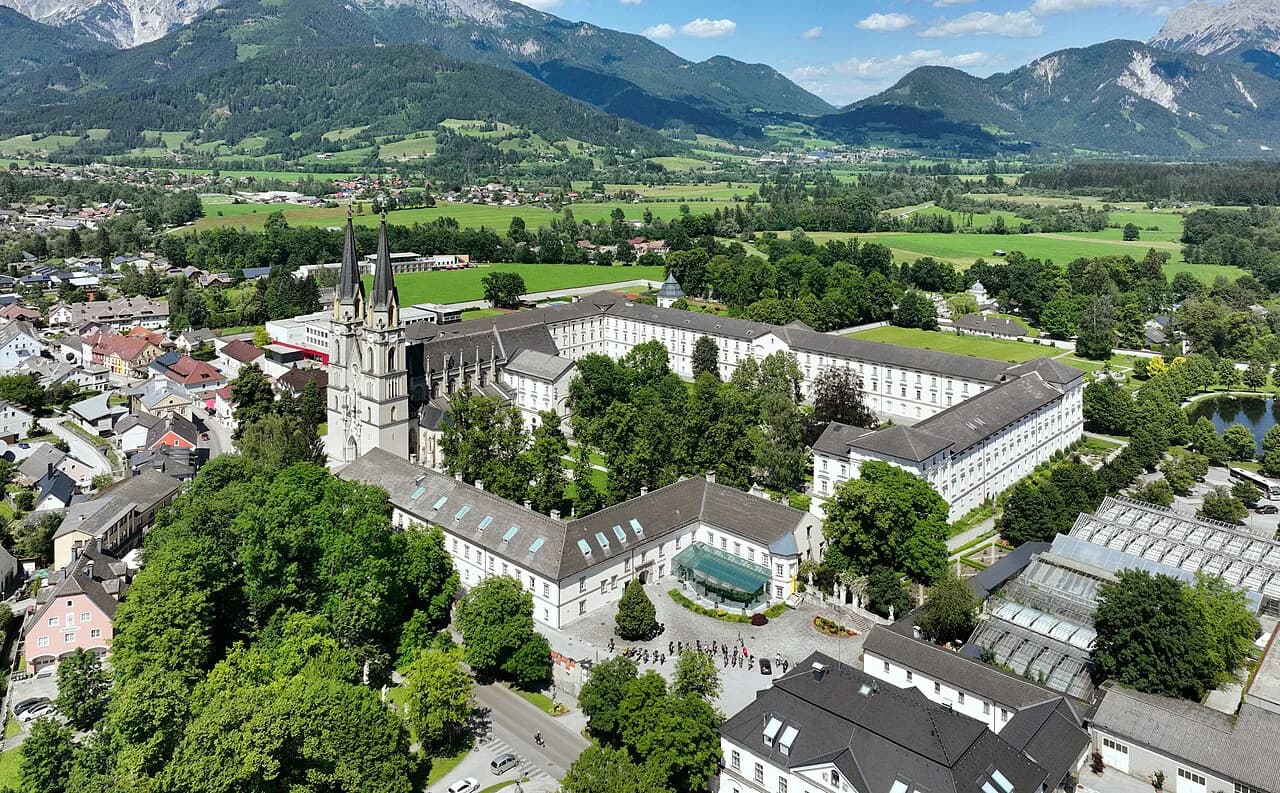
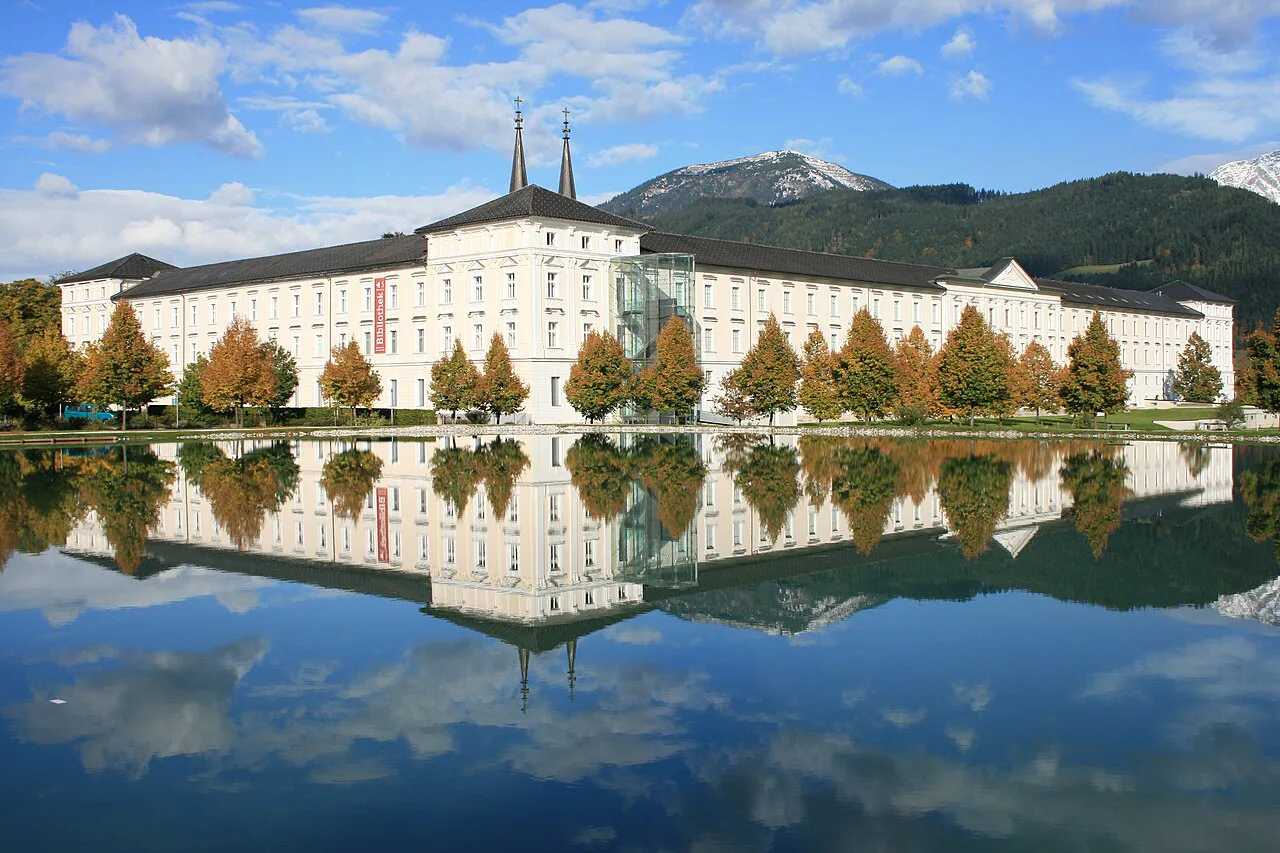
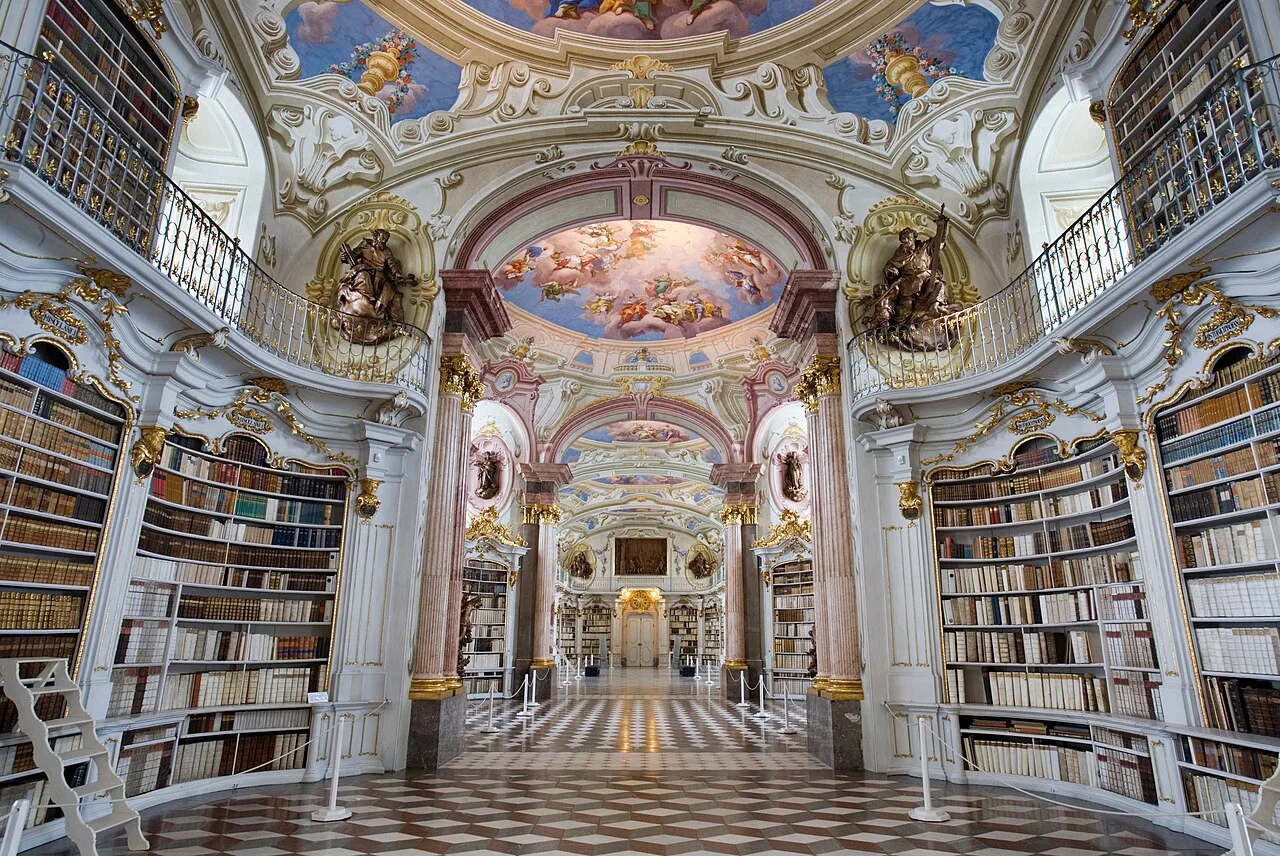
Admont is the quiet achiever of this list: an off-the-beaten-path Styrian town whose reason to visit is Admont Abbey and its monastic library, the largest monastic library in the world. The library hall is the kind of room people describe in superlatives, with its book collection and painted decor, and the abbey also holds an art museum next door.
Build the visit around the abbey rather than the town. The library and museum take a solid block of time, and the abbey's gardens and restaurant make an easy way to end the stop with a view over the grounds. Admont is far enough from the Danube and the Salzkammergut that it works best as its own leg of a Styria route, linked with Graz rather than squeezed between lake stops.
St. Gilgen on Wolfgangsee: the lake town as a quieter Salzkammergut stop
St. Gilgen sits on Wolfgangsee, and its appeal is the combination of a lakefront village and a mountain backdrop without Hallstatt's crush. The town works as a base for the eastern Salzkammergut: you get the water, the boats and the lake views, then return to a calmer center in the evening.
The trade-off is that St. Gilgen is quieter for a reason: fewer headline sights than Hallstatt, so the day is about the lake and the village rather than a checklist. That suits travelers who want the scenery without standing shoulder to shoulder. Pair it with a boat crossing on Wolfgangsee and confirm the sailing times with the operator for your date.
Graz: the Styria city for travelers who want an old town with a city's museums
Graz is the one city on this list, and it earns the place by pairing a preserved old town with the museums and energy of a university city. Where the small towns give you one square and one abbey, Graz gives you a whole district to wander plus the kind of contemporary collections that smaller places cannot support.
Graz is also where these picks turn into a trip rather than a string of stops. It is the natural city anchor for Styria, with Admont as an outing in the same state, and it connects onward by rail toward the south. Use it as the hinge of the eastern half of your route and confirm train times on the ÖBB timetable as you plan.
Hochosterwitz Castle in Carinthia: the fortress as a town-adjacent stop
Hochosterwitz Castle in Carinthia is not a town, but it belongs on a tour of Austria's most beautiful places because the approach is half the experience: a fortress on a rock, reached by a route of gates and ramps that builds anticipation with every turn. It is the classic Carinthian castle stop, and it suits travelers driving between the lakes and the south.
Treat it as a driving stop rather than a rail one. Carinthia's castles and lakes reward a car, and Hochosterwitz pairs naturally with a Wörthersee day. Check the castle's own site for the season's opening window and admission prices in euros, since a hilltop fortress is the sort of place that keeps limited hours.
Grossglockner High Alpine Road: the alpine drive that links Salzburg and Carinthia
The Grossglockner High Alpine Road is the drive that ties the Salzburg and Carinthia halves of a mountain trip together, climbing past glaciers and peaks on a road built for the view. It is a scenic experience in its own right rather than a way to get somewhere, and it belongs in the plan as a destination, not a shortcut.
The trade-off is commitment: this is a car day, with a toll and a seasonal opening window, and mountain weather decides whether the high section is worth driving. Check the road operator's site for the season's dates, the current toll in euros and the day's conditions before you commit the day. Build in time to stop at the viewpoints rather than treating the road as transit.
Putting the towns into a route: Wachau by boat or train, Salzkammergut by Postbus or car
The cleanest way to see these towns is two river-and-lake loops. In the Wachau, base in Krems an der Donau and use trains and boats to reach Melk and Dürnstein, with the abbey as one half-day and the ruin as the other. In the Salzkammergut, base in St. Gilgen or Hallstatt, use the lake boats and the rail line with its ferry link, and add Mondsee as a half day.
Styria and Carinthia want a car. Admont, Graz, Hochosterwitz and the Grossglockner road do not combine neatly by train, and the alpine road is a drive by definition. If you are mixing modes, do the Wachau and Salzkammergut by rail and boat first, then pick up a car for the southern leg, or accept that Admont and the Carinthian castles each need their own day.
Where Postbus regional buses fill the gaps around the lakes, they run to a timetable that changes with the season, so check the connection for your specific date on the operator's timetable rather than assuming a summer frequency holds in spring or fall. For broader route ideas beyond these eight, the places to visit in Austria list fills in what sits between them.
What these towns cost and when sights are open: what to confirm before you go
Costs here come in small pieces: abbey and castle admission, a salt-mine ticket, a lake boat, a funicular, the Grossglockner toll, and train or bus fares. None of these is fixed year to year, and each is set by the operator running it. Get the current price in euros from the sight's own website or ticket desk when you book, and treat any figure you saw in an older guide as history rather than a quote.
Opening windows matter as much as prices. Funiculars, cable cars, lake boats and the alpine road generally run a warm-season schedule, while abbeys and museums keep fixed daily hours and sometimes close a weekday. Build the day around the one sight you cannot move, then fit the town's lanes, squares and riverside around it.
Which of these towns earns your detour
If you have one free day on a Danube route, choose the Wachau pair: Stift Melk in the morning and Dürnstein's ruin in the afternoon, based in Krems an der Donau. If you want the lake picture, choose Hallstatt early and stay overnight, or trade some of the fame for St. Gilgen's calmer waterfront.
For a trip with a car and a taste for the quieter side of Austria, the southern leg is the better bet: Admont's library, Graz's old town and museums, Hochosterwitz on its rock and the Grossglockner road as the finale. Whichever you choose, lock in the one timed sight first and let the rest of the day fill around it.
Explore more Austria guides
Frequently Asked Questions
What is the most beautiful village in Austria?
Hallstatt is the most photographed, with alpine houses rising straight from Hallstätter See and the salt mine above town. Mondsee is the strongest alternative if you want color-washed streets and a famous church square without the midday coach crowds.
Which of these towns can you see without a car?
Dürnstein, Melk, Krems an der Donau and Hallstatt all work by rail, with boats on the Danube and the Salzkammergut lake ferries filling in the last stretch. Admont, Hochosterwitz Castle and the Grossglockner High Alpine Road are far easier with a car.
How long does each town need?
Dürnstein and Mondsee are half-day stops built around one sight and a walk. Melk, Hallstatt and Admont want most of a day once you include the abbey, the mine or the library. Graz deserves an overnight or more, and the alpine road is a full driving day.
Sources
Notes for your next Austrian town break
Optional updates when we add or revise town guides.
You might also like
Continue reading
More guides you'll find useful