Stams Abbey (Stift Stams): What to See and How Tours Work
Stams Abbey in the Upper Inn valley pairs a baroque church with the Princes' Crypt of Tyrol's rulers. See how tours, the museum and the audioguide work.
On this page
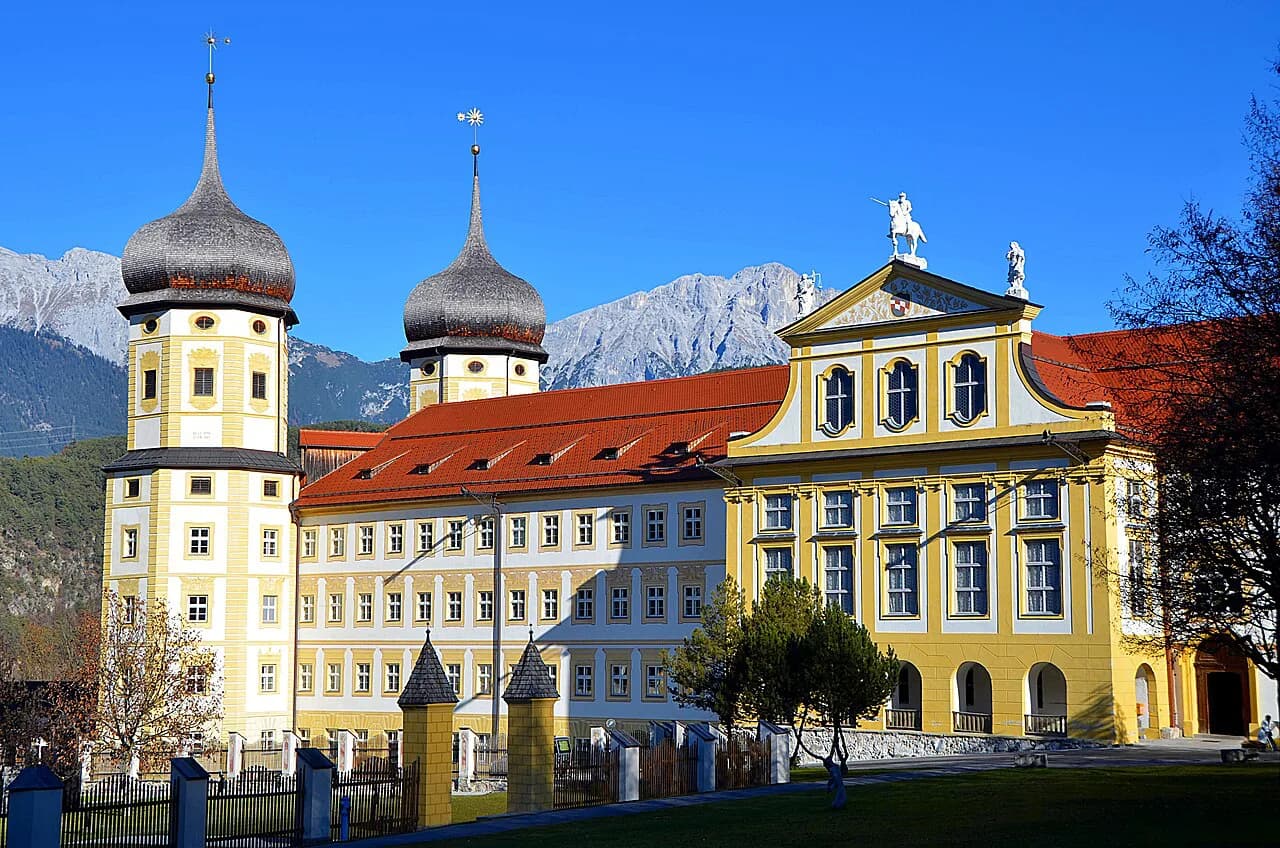
Stams Abbey, Stift Stams in German, is a Cistercian monastery in the village of Stams in the Oberinntal, the Upper Inn valley, about halfway between Innsbruck and the Arlberg. Its draw for a traveler is twofold: a baroque abbey church that holds the Princes' Crypt of the Tyrolean rulers, and a museum with a permanent collection and rotating special exhibitions. This guide separates those two visits, explains how access works, and shows how to slot the abbey into a train-based route through North Tyrol.
A Cistercian abbey founded under Meinhard II of Tyrol
The abbey was founded in the thirteenth century under Meinhard II, Count of Tyrol, and its 750-year anniversary was marked with a celebration that included a festival concert by the Militärmusikkapelle Tirol and a jubilee service in the Stiftsbasilika. That anniversary framing matters for a visitor because the church is referred to in abbey communications as a basilica, and the burial of the Tyrolean princes sits at the center of the site rather than at its edges. The community is Cistercian, and the monastery remains an active religious house, not a museum piece.
Stams belongs to the small group of Austrian abbeys where the ruling dynasty's burial is the headline sight. If you are building a Tyrol itinerary around churches and monasteries rather than mountain lifts, this is one of the stops that justifies getting off the train.
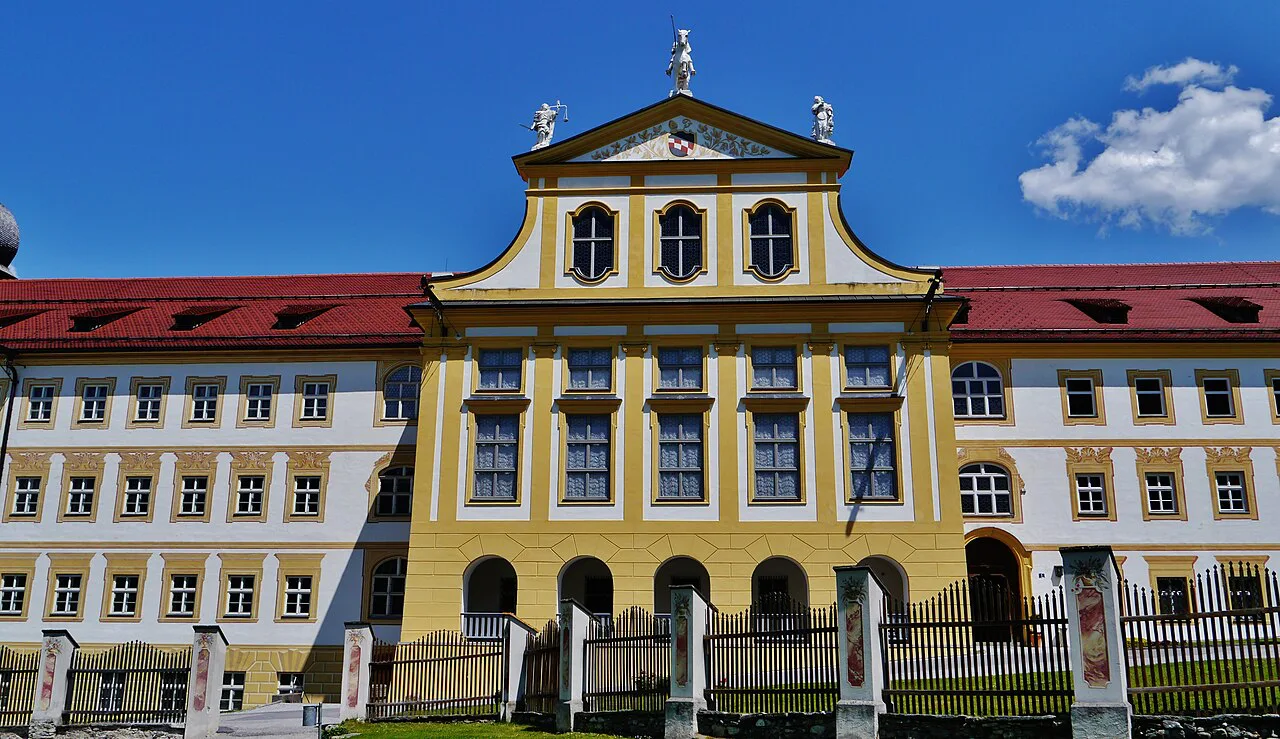
The setting: Stiftshof 1 and the courtyard approach
The abbey address is Stiftshof 1 in 6422 Stams, and the complex is entered through the Stiftshof, the monastery courtyard, which shapes how you experience the site. Rather than a single facade on a street, you arrive into an enclosed yard with the church and convent buildings around you. The village of Stams sits on the flat Inn valley floor, with the Stubai Alps to the south and the Mieminger chain to the north, so the approach by train stays level.
Innsbruck is the nearest big starting point and the natural base for a half-day here. Travelers continuing west toward Landeck, Imst or the Arlberg can treat Stams as a leg-stretch rather than a detour, since the abbey sits close to the main valley road and rail line.
The Stiftskirche and the Princes' Crypt (Fürstengrablege)
The Stiftskirche, referred to in abbey communications as the Stiftsbasilika, holds the Fürstengrablege, the burial place of the Tyrolean Landesfürsten, the ruling princes of Tyrol. The monastery's own presentation links the site directly to Meinhard II and to the founding of the abbey, and the princely burial is described in terms of the Meinhard and Heinrich vaults, which were opened in November 2023 for research. A scholarly volume on the princely burial site, edited by Leo Andergassen and running to 312 pages, came out of that project.
Also within the church complex is the Heilig-Blut-Kapelle, the Holy Blood Chapel, which the abbey lists alongside the Bernardisaal and the Stiftskirche under its art and culture pages. Treat the church and crypt as one visit and the museum as another, because they follow different access rules and you cannot assume one ticket covers both.
Museum Stift Stams and the Neuer Kreuzgang exhibitions
The museum presents a permanent display drawn from the abbey's collections, and for a defined period it hosted two special exhibitions in the Neuer Kreuzgang, the New Cloister: a selection of 24 major works by the Tyrolean painter Jakob Anton Bucher (1927–2012) and a memorial exhibition for the hundredth anniversary of the death of the painter and illustrator Hugo Engl (1852–1926), focused on Alpine nature and hunting motifs. Those exhibitions were scheduled for 2 June to 30 September 2026; for current displays and hours, check the abbey site before you build a day around them.
Published hours for that 2026 exhibition period were Tuesday to Saturday 10:00–12:00 and 14:00–17:00, with Sundays and public holidays open 14:00–17:00 only. Note the midday closure: the museum does not run through lunch, so an 11:30 arrival leaves you half an hour before the doors shut again. Those hours are tied to that exhibition season; confirm the current ones before you build a day around them.
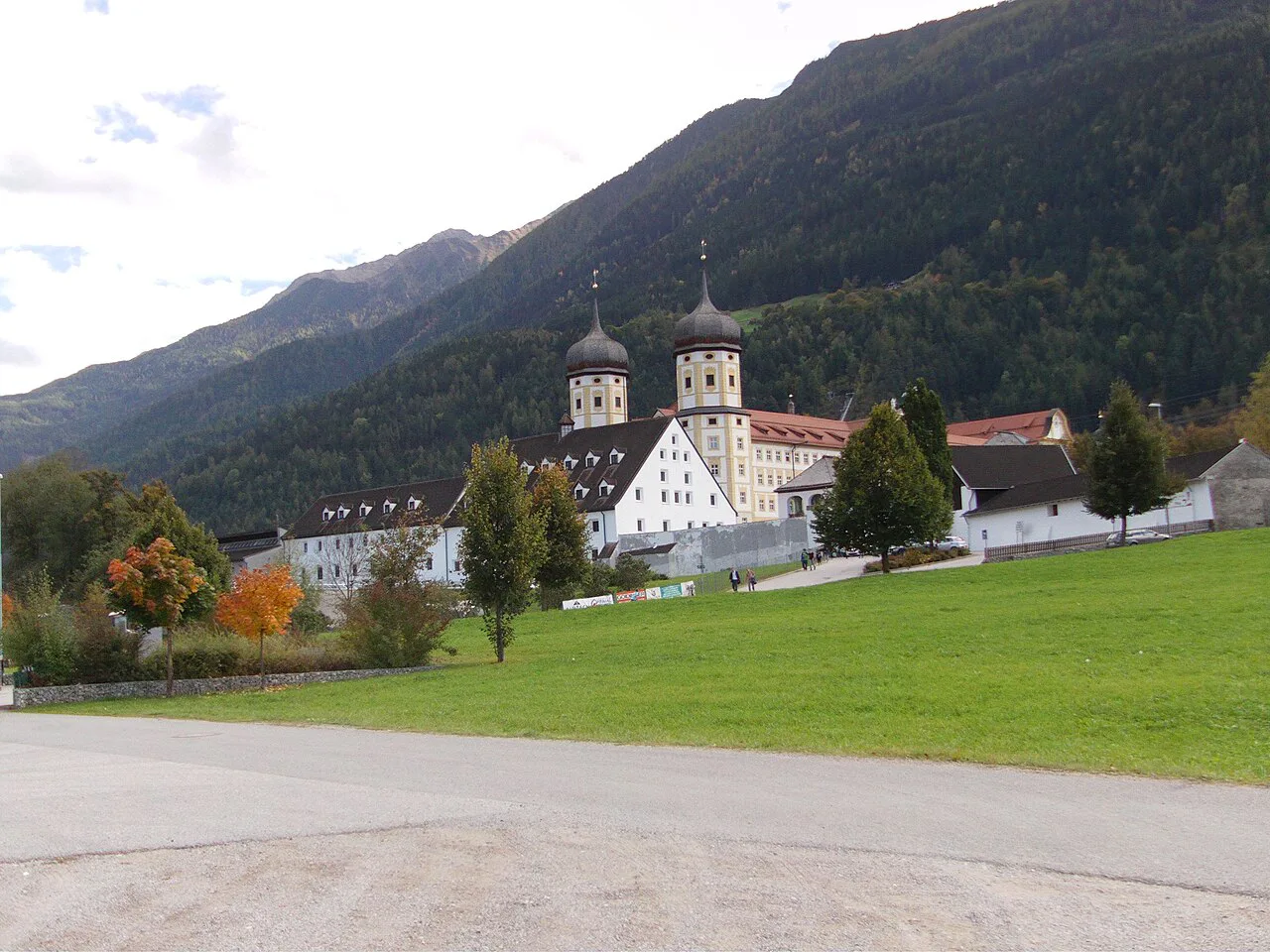
Guided tours: Thursdays at 16:00, October to May
The abbey lists guided tours from October to May on Thursdays at 16:00. This is the constraint that shapes an off-season visit: the only time published for a live tour in that stretch is the Thursday slot, so a Tuesday or Saturday afternoon in winter needs a different plan. If your trip falls in that window, build the day so the tour is the anchor and the museum or courtyard fills the time before it.
Check the tour time before booking train tickets, because a 16:00 start in Stams means arriving on an early afternoon service from Innsbruck rather than a late one. Innsbruck is the natural base for the visit, so this fits as a half-day rather than a full excursion.
The free audioguide as your alternative to a live tour
For visitors who cannot make the Thursday slot, the abbey offers a free audioguide that covers the guided tours and the museum route in German, English, French and Italian, played on your own phone. For an English-speaking traveler this is the practical substitute for a live guide, and it means a self-directed visit still gets explanation rather than labels alone. Bring headphones; the courtyard and church interiors are not places where you want to hold a phone to your ear.
The Klosterladen in the Orangerie and what to add on
The monastery shop, the Klosterladen, sits in the recently renovated Orangerie and stocks guides, postcards and books about the abbey alongside house-made products such as marmalade, honey, brandies and liqueurs. It is a compact add-on rather than a destination in itself, useful if you want a bottle or a jar that is actually made at the monastery rather than bought in at a souvenir stand.
Set aside roughly two hours for the church, the crypt and the museum, and add twenty minutes if you want the shop and the courtyard without hurrying. A short visit that skips the museum still gives you the Stiftskirche and the princely burial, which are the reason most people come.
Getting there on the Innsbruck–Landeck line
Stams sits on the Inn valley rail corridor between Innsbruck and Landeck, which puts it on the same line as Imst, Landeck and the Arlberg route. Regional trains on this stretch are frequent, but the timetable changes with the season, so check departure times for your date on the ÖBB schedule rather than relying on a remembered pattern. The abbey is a short walk from the station in the village, which makes a car unnecessary for this stop.
If you are touring Tyrol by rail, Stams works well paired with Landeck and its castle above the Inn, or as a stop on the way to the western valleys. Drivers coming from the Zillertal side can reach the Inn valley via the main roads, though the abbey itself rewards arriving without a car.
Honest trade-offs: fixed tour times and what a short visit skips
The main frustration at Stams is timing. The abbey lists guided tours only from October to May on Thursdays at 16:00, so outside that Thursday slot in the off-season you have no scheduled tour to join. Add the museum's midday closure and a tight afternoon window, and a late train leaves little slack. Arriving on a Thursday morning gives you the museum first and the tour after; arriving at 15:45 gives you the tour and almost nothing else.
The second trade-off is that the site is often treated as a quick stop between Innsbruck and the western valleys, and a rushed visit skips the very things that make it worth the stop: the princely burial, the Heilig-Blut-Kapelle and the audioguide commentary that ties them together. If you only have forty minutes, see the church and the crypt and leave the museum for another trip.
Where Stams fits in a wider Tyrol route
Stams is one component of a Tyrol itinerary built around monasteries, old towns and valley scenery rather than a destination on its own. Readers heading south from Innsbruck into the side valleys will find the Stubai Valley and the Ötztal within easy reach of the same rail hub, and both reward a separate day.
East of Innsbruck, the Zillertal offers a contrasting Tyrolean landscape of a broad valley floor and side valleys, useful if you are weighing a second monastery stop against mountain scenery. Either way, keep Stams as the calm, indoor half of a day and the valleys as the outdoor half.
Is Stams worth the stop between Innsbruck and Landeck?
Yes, if you want the Princes' Crypt and a baroque church interior rather than another mountain viewpoint, and if you can build the visit around the Thursday 16:00 tour from October to May or around the museum's published opening windows. It is not a full-day destination and it does not pretend to be one. Book the train leg that puts you in Stams with an afternoon to spare, and plan on two hours on site.
Explore more Innsbruck guides
- Austrian Alps Villages
- Ehrwald: A Tyrolean Mountain Village Below the Zugspitze
- Gerlos: The Tyrolean Village Between the Zillertal Arena and the Krimml Road
- Imst: A Tyrolean Town Guide to the Old Center, the Rosengartenschlucht and Hoch-Imst
- Pitztal in Summer
- Plansee: The Long Alpine Lake Near Reutte in Tyrol
- Reutte: A Practical Guide to Tirol's Ausserfern Town
- The Austrian Alps
- Timmelsjoch
- Tratzberg Castle
- Waterfalls in Austria
- Innsbruck Attractions
Frequently Asked Questions
How do Stams Abbey guided tours work?
The abbey lists guided tours from October to May, every Thursday at 16:00. For a group or to confirm whether the tour runs on your date, contact the monastery administration at Stift Stams, Stiftshof 1, 6422 Stams, before you travel.
Is the Princes' Crypt included in the museum visit?
No. The Stiftskirche and the Fürstengrablege are part of the church complex, while the museum has its own entrance and its own opening windows, which in the 2026 exhibition season were Tuesday to Saturday 10:00–12:00 and 14:00–17:00, Sundays and holidays 14:00–17:00. Treat them as two separate stops and check current hours before you go.
Sources
Notes for your next Austrian town break
Optional updates when we add or revise town guides.
You might also like
Continue reading
More guides you'll find useful