Schlutzkrapfen: Tyrol's Spinach and Curd Cheese Pasta Explained
Schlutzkrapfen are Tyrol's half-moon pasta, filled with spinach and curd cheese and served with brown butter and Parmesan. Here is what to expect on a menu.
On this page
Schlutzkrapfen are Tyrol's half-moon filled pasta: thin pockets of rye-and-wheat dough wrapped around spinach and Topfen, the Alpine curd cheese, then finished with brown butter and grated Parmesan. They appear on menus across Tirol and Südtirol, and recognizing the shape and the toppings is the fastest way to order them with confidence. This guide covers what is inside, where the dish comes from, how it is served and what to ask when a meat filling is listed.
What Schlutzkrapfen are
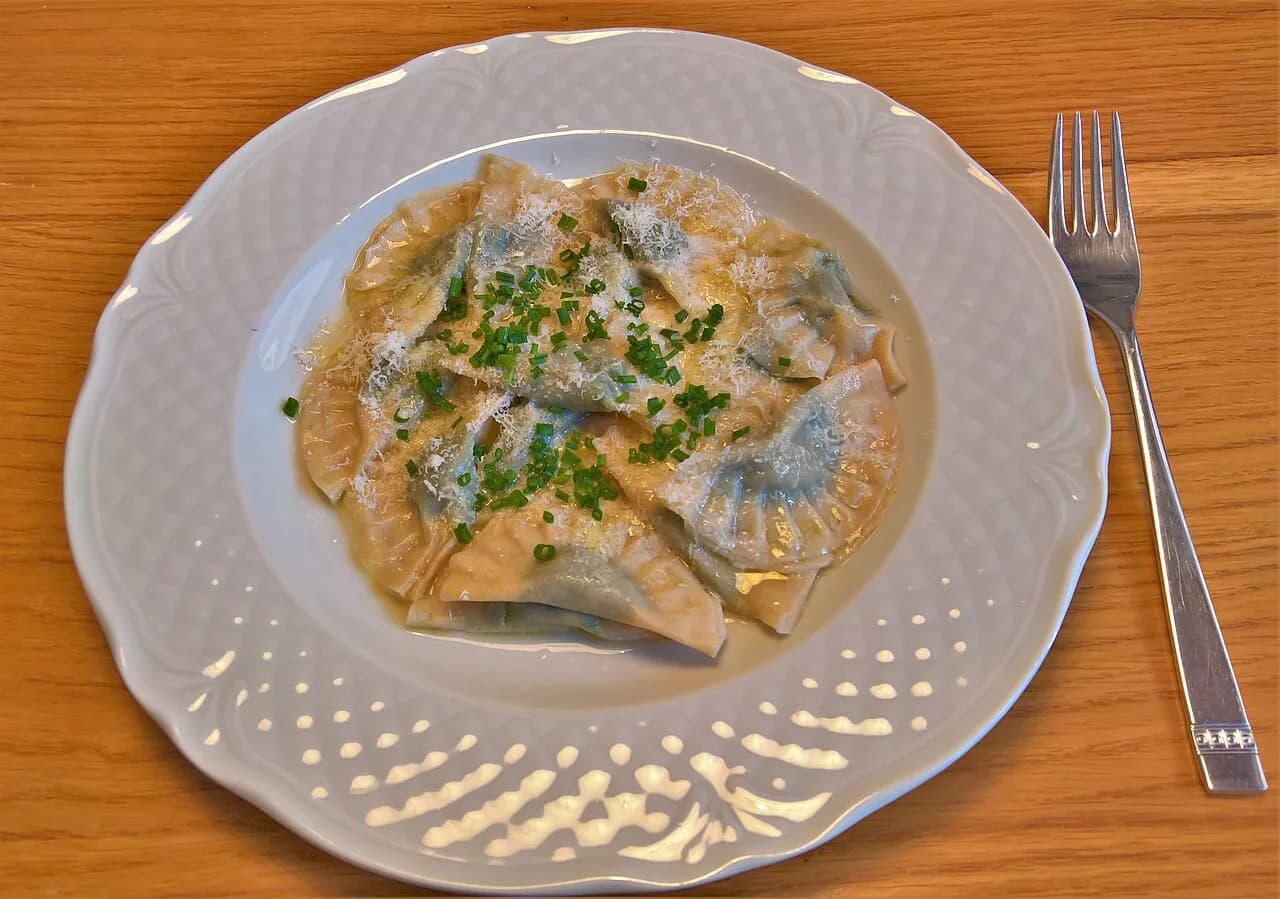
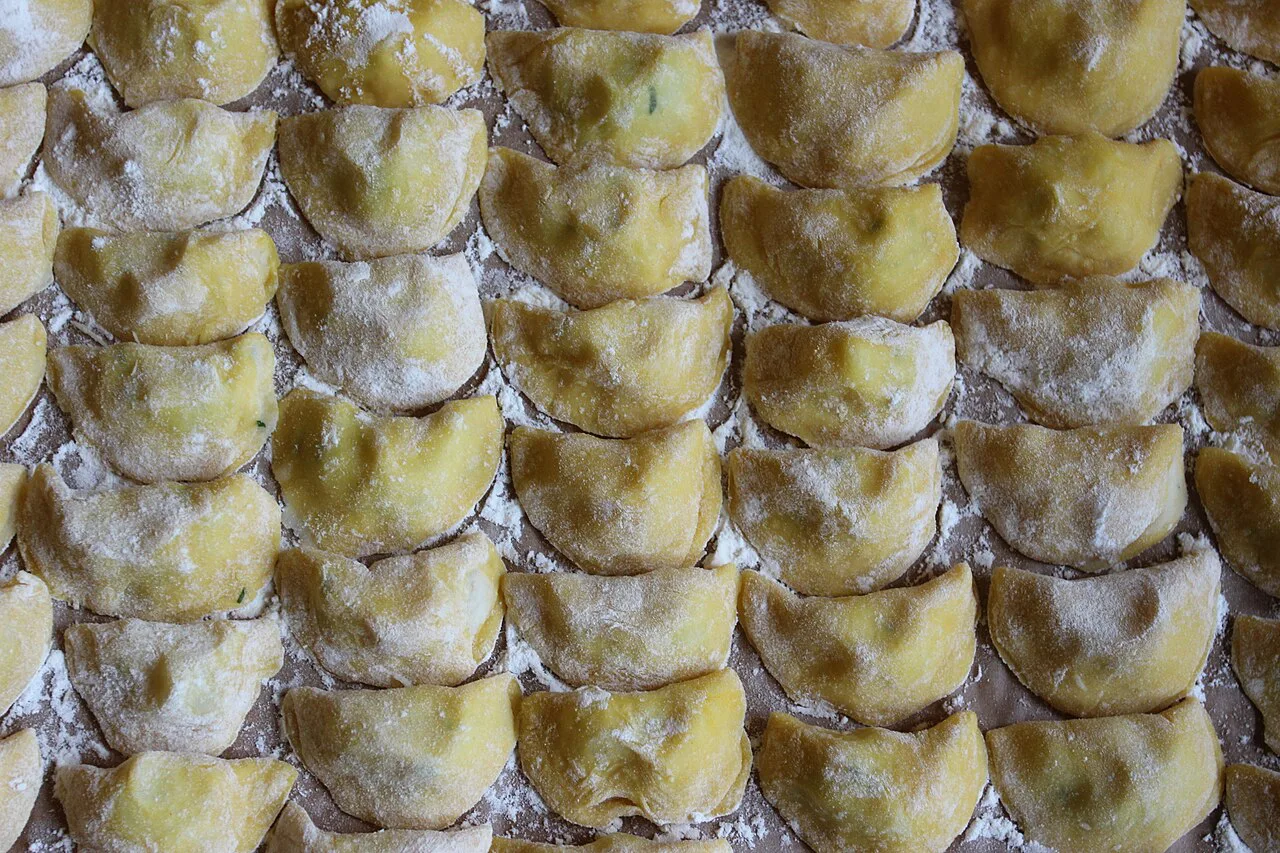
Schlutzkrapfen are traditional Tyrolean filled pasta made from a dough of rye flour and wheat flour, shaped into half-moons and filled. The classic dish holds spinach and Topfen, a fresh curd cheese close to quark, seasoned with herbs such as basil and mint. Tirol's tourism board calls them the Tyrolean version of ravioli, and they make a substantial mountain lunch.
On a plate they read as neat half-moons rather than squares. The dough is rolled thin, so the pasta itself stays light and the filling carries the flavor. For anyone building a mental map of Tyrolean food, they sit alongside dumplings and noodles as one of the region's starch-based staples.
Where they come from: Tirol and Südtirol
The dish belongs to the alpine arc spanning Tirol in Austria and Südtirol in Italy, and both tourism regions claim it as their own. Tirol's official recipe page places the origin in the alpine space of Tirol and Südtirol and calls Schlutzkrapfen a classic poor-man's dish, made from simple, regionally available ingredients. That history explains the rye flour in the dough and the curd cheese in the filling, both simple farm staples.
Südtirol's tourism board presents Schlutzkrapfen as an original South Tyrolean recipe and lists it in every South Tyrolean cookbook, which signals how firmly the dish sits in the local repertoire rather than in restaurant showmanship. Travelers moving between Innsbruck and points south will meet the same word on menus on both sides of the border. The version served today is a farmhouse dish that stayed on the table after the economy around it changed.
What is inside
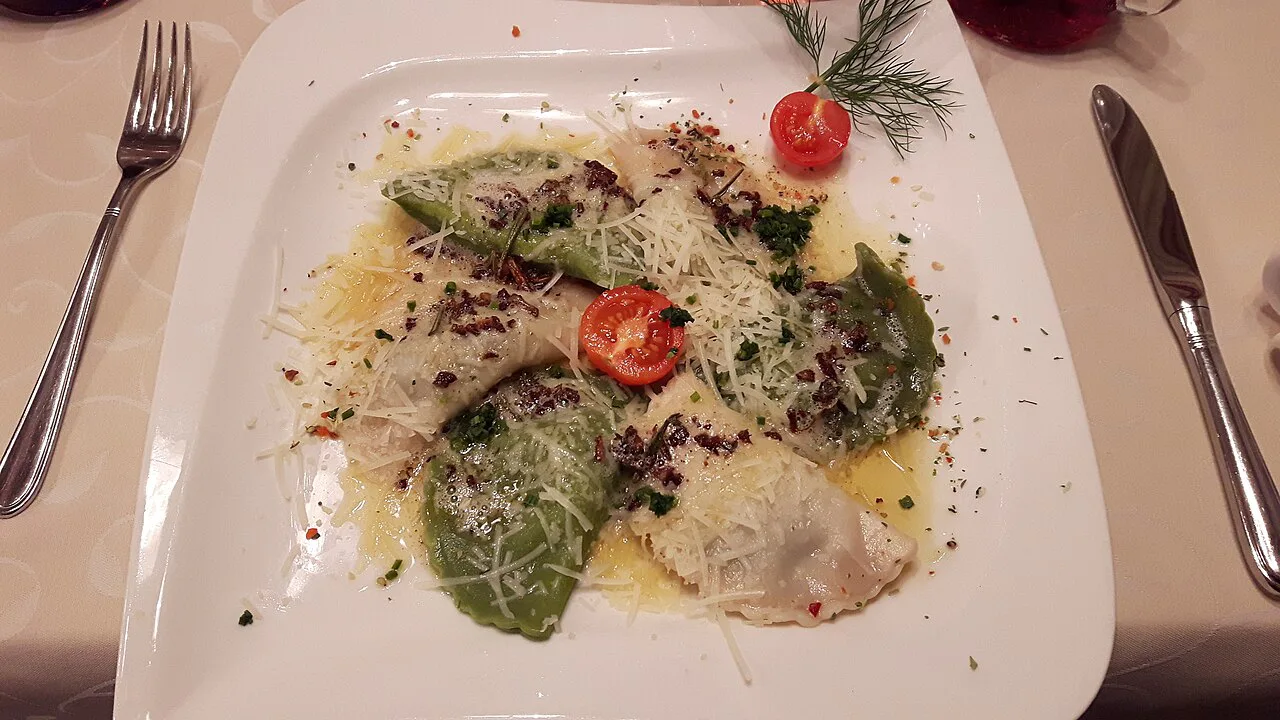
The reference filling is spinach with Topfen, bound with herbs and seasoned with salt, pepper and often nutmeg. The Südtirol version cooks spinach with onion and garlic in butter, then folds in Topfen, Parmesan and chives. Tirol's own recipe takes a simpler route, mixing curd cheese with leek or spring onion, basil and mint. Either way, the filling is a soft green mix that tastes of dairy and herbs rather than of spice.
Regional variants exist, and some kitchens fill the pockets with meat instead of spinach and cheese. A South Tyrolean recipe also suggests extending the filling with cooked, passed potatoes, which makes the dish heartier without changing its character. If the menu line reads only Schlutzkrapfen, the spinach-and-Topfen version is the safe assumption.
How they differ from ravioli
The clearest line between Schlutzkrapfen and ravioli is the dough. Schlutzkrapfen are traditionally made with a mixed rye-and-wheat dough, while ravioli usually rely on wheat flour alone, and the filling follows the alpine larder rather than an Italian one. That means rye pasta around a dairy-and-greens center rather than an Italian-style filling.
The shape reinforces the difference: a crescent closed with fingers or a fork rather than a square sealed between two sheets. Travelers who order them expecting a tomato sauce will be surprised, because the Tyrolean serving style is butter-based and dairy-forward. Think of them as their own dish rather than a regional spelling of ravioli.
How they are served
Schlutzkrapfen arrive tossed in melted or brown butter, dusted with grated Parmesan and scattered with cut chives. The Tirol recipe drains the pockets well and dresses them with melted butter, while the Südtirol version finishes with brown butter, Parmesan and chives and suggests a Pinot Grigio alongside. The toppings are deliberately plain, so the filling and the rye dough stay legible.
As a main course they are filling enough on their own, and Tyrolean inns serve them as a plate in their own right. If you want a second plate, a small green salad or a clear broth balances the butter better than another starch. A Tiroler Gröstl with a fried egg is the heartier alternative if someone at the table wants potatoes and bacon instead.
How they are made, in short
The dough is kneaded from the two flours, egg, oil and a little water or salt, then left covered to rest for about half an hour before rolling. It is rolled very thin, cut into rounds roughly seven centimeters across, filled and folded into half-moons with the edges pressed shut. The pockets then boil briefly in salted water, a matter of minutes, and go straight into the butter.
The practical point for a traveler is that this is fresh, hand-shaped pasta, not a dish assembled from a packet. That is why it tends to appear on menus in places that still roll dough in-house rather than in kitchens built around speed. It also means the texture varies from kitchen to kitchen, with thicker edges in some versions and finer ones in others.
Where travelers find them in Austria
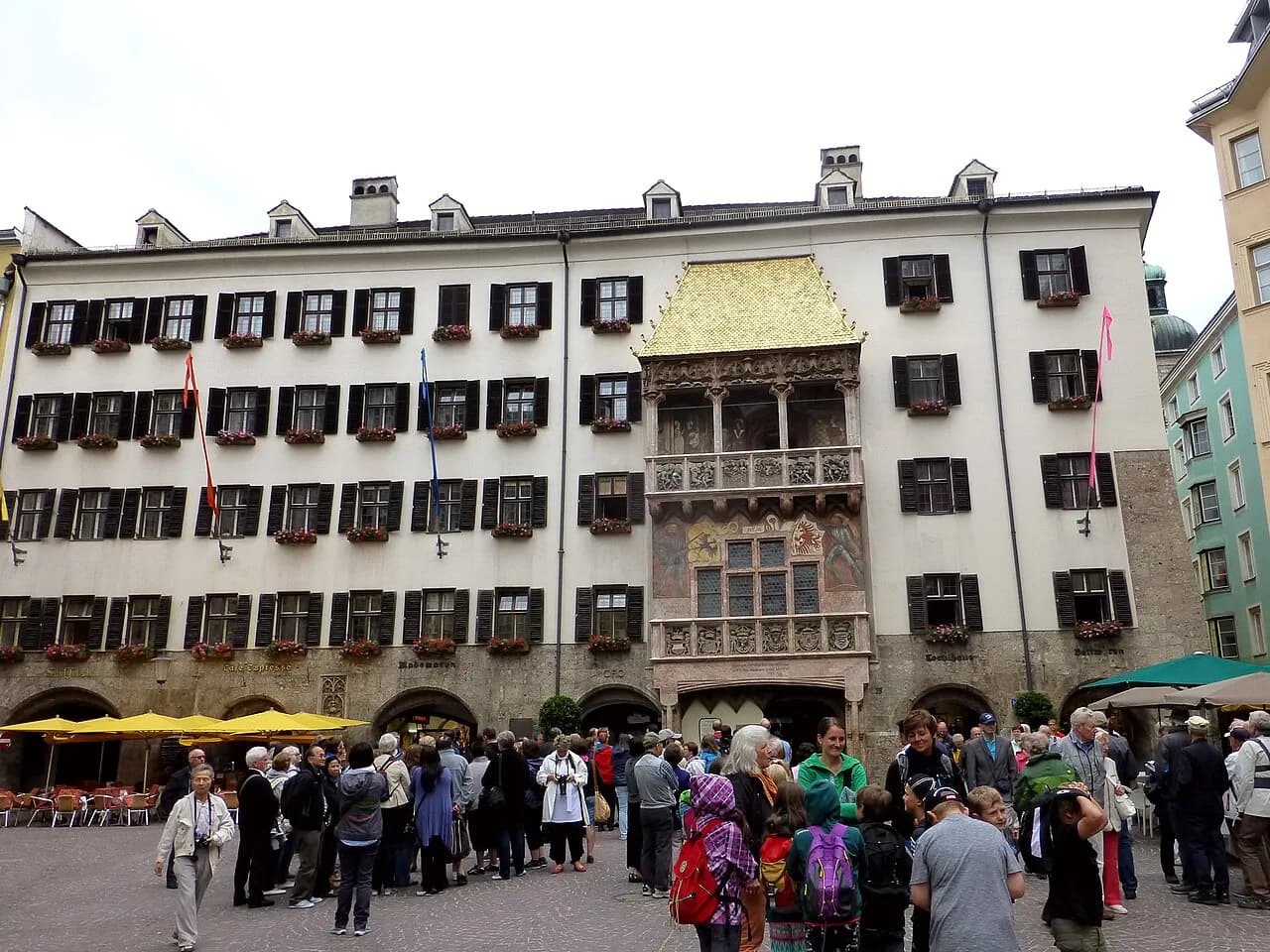
In Tirol, Schlutzkrapfen are served fresh in traditional Wirtshäuser and on mountain huts. The dish turns up across the Tyrolean countryside rather than in one town, so a stop in a village inn between sights is as good a bet as a city restaurant. Innsbruck works as a base for the region, with the wider set of city sights covered in the Innsbruck attractions guide.
Look for a line listing Schlutzkrapfen with Spinat and Topfen, or simply order the dish by name and expect the spinach version. Prices are set by each inn and printed on its own menu, so compare the day's board rather than relying on a remembered figure. Portions are usually a full main course, which matters when you are planning a second stop for cake later.
Vegetarian or not
Classic Schlutzkrapfen are vegetarian, since the standard filling is spinach, Topfen and herbs. Tirol's own guidance notes that regional variants with a meat filling do exist, so the dish is vegetarian by default rather than by rule. That distinction matters in a region where bacon and Speck appear in so many other dishes.
The simplest question to ask is whether the filling is Spinat und Topfen or contains Fleisch. In Südtirol the same check works, since the spinach-and-cheese version is the reference recipe there too. If the kitchen offers only a meat-filled variant that day, a plate of Käsespätzle with fried onions is the dependable meat-free fallback on most Tyrolean menus.
What the name means
The name probably comes from Schlutz, meaning to fold or close, which describes how the pockets are sealed into half-moons. Tirol's tourism board gives this as a presumed derivation rather than a settled etymology, so treat it as a shape clue. Once you know it, the German word on the menu maps neatly onto the crescent on the plate.
That reading helps at the table: here Krapfen refers to a filled pocket whose name points to how it is folded shut. Ordering by shape and filling rather than by translation avoids surprises. The same logic applies to other Tyrolean dumplings, which are usually named for their form or their filling.
Which version to order
Order the spinach-and-Topfen Schlutzkrapfen with brown butter and Parmesan if you want the dish as most kitchens in Tirol and Südtirol make it. Ask about the filling when the menu lists a meat variant, and expect a full main course rather than a starter. Pair them with a light white or a glass of water and save room for the rest of the Tyrolean menu.
Explore more Innsbruck guides
Frequently Asked Questions
Are Schlutzkrapfen the same as ravioli?
No. Schlutzkrapfen are traditionally made with a mixed rye-and-wheat dough and filled with spinach, Topfen and herbs, then served with butter and Parmesan. Ravioli usually use a wheat-only dough and follow Italian fillings instead.
Do Schlutzkrapfen always contain meat?
The classic version is meat-free, built on spinach and Topfen, and Tirol's tourism board calls it vegetarian. Regional variants with a meat filling exist, so ask which filling the kitchen is serving that day.
Where in Austria can I eat Schlutzkrapfen?
They are served in traditional Wirtshäuser and mountain huts across Tirol, with Innsbruck a practical base for the region. Menus usually print the dish in German, so look for Schlutzkrapfen with Spinat or Topfen in the description.
Sources
Notes for your next Austrian town break
Optional updates when we add or revise town guides.
You might also like
Continue reading
More guides you'll find useful