Käsespätzle: Alpine Cheese Spaetzle, Explained for Travelers
Käsespätzle is the Alpine cheese-and-noodle comfort dish topped with fried onions. Here's what's in it, how it's served, and what to order on an Austrian trip.
On this page
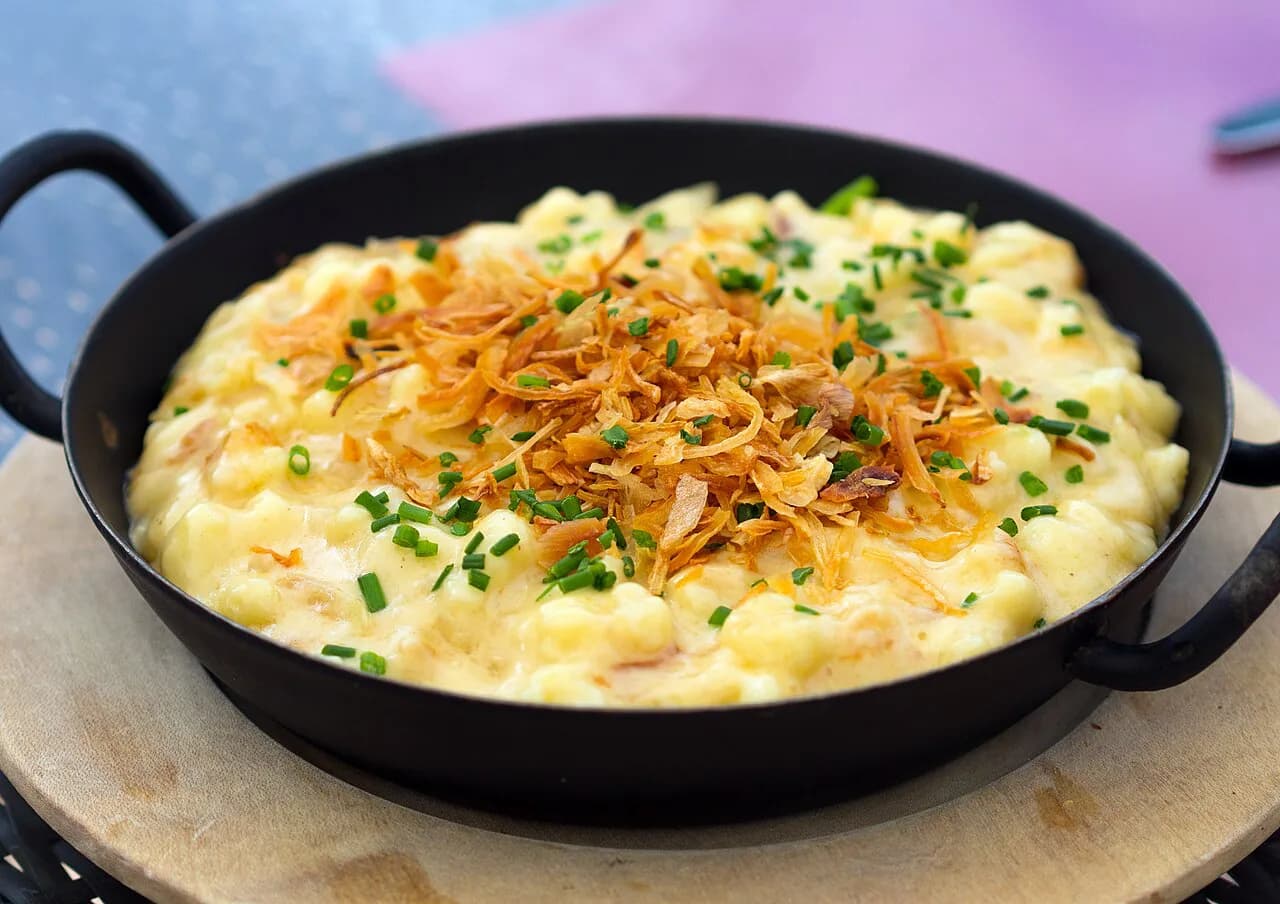
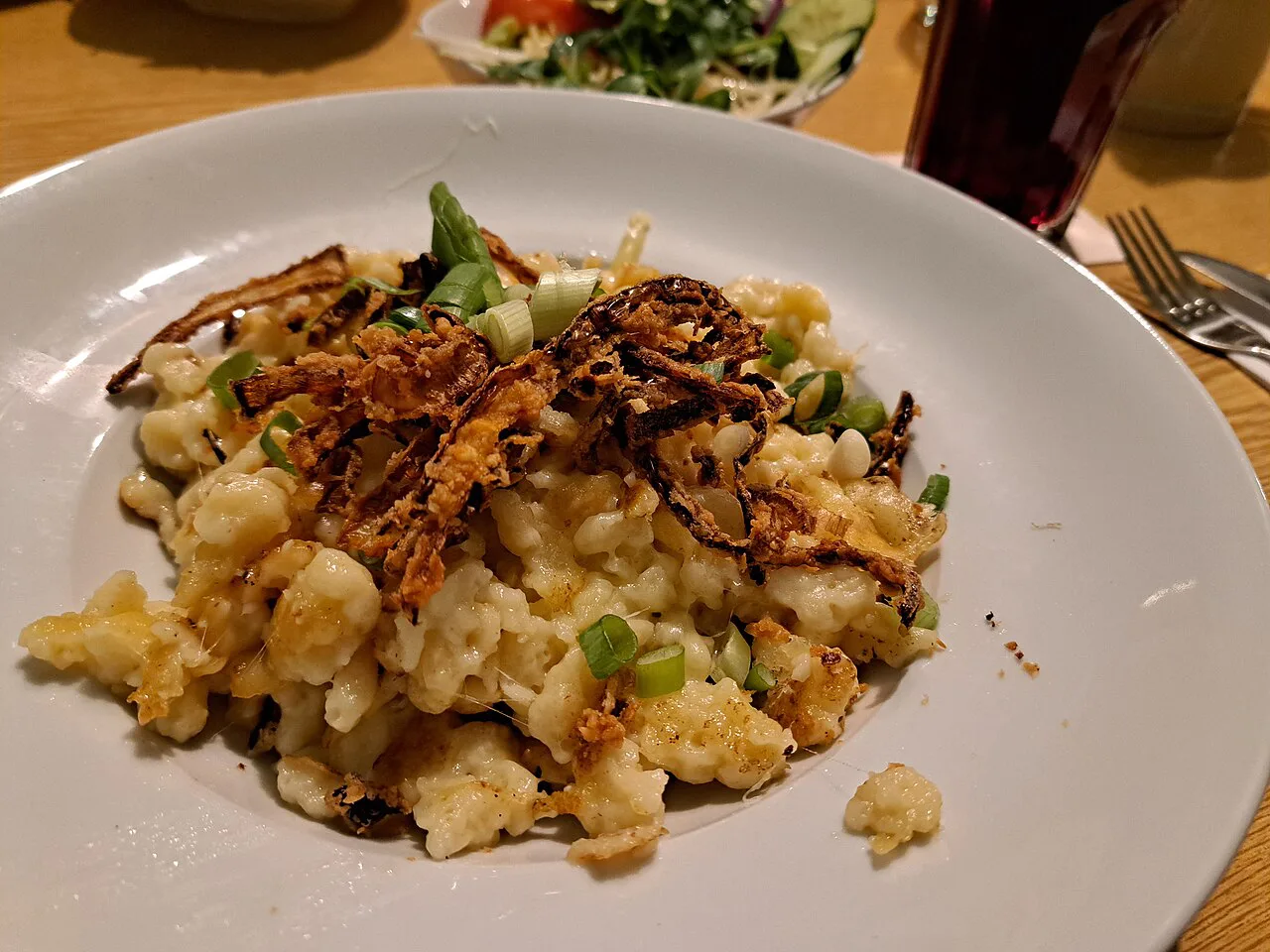
Käsespätzle is the Alpine cheese-and-noodle comfort dish: soft egg spätzle layered with melted cheese and topped with fried onions, served as a main course rather than a side. It belongs to the border country where Germany, Austria and the Allgäu meet, and it is the plate to order when you want to understand what Tyrolean food tastes like without a long menu negotiation. This guide covers what is in it, how it is cooked and served, how to pronounce it, and how to order it in a town restaurant or a mountain hut.
What Käsespätzle actually is
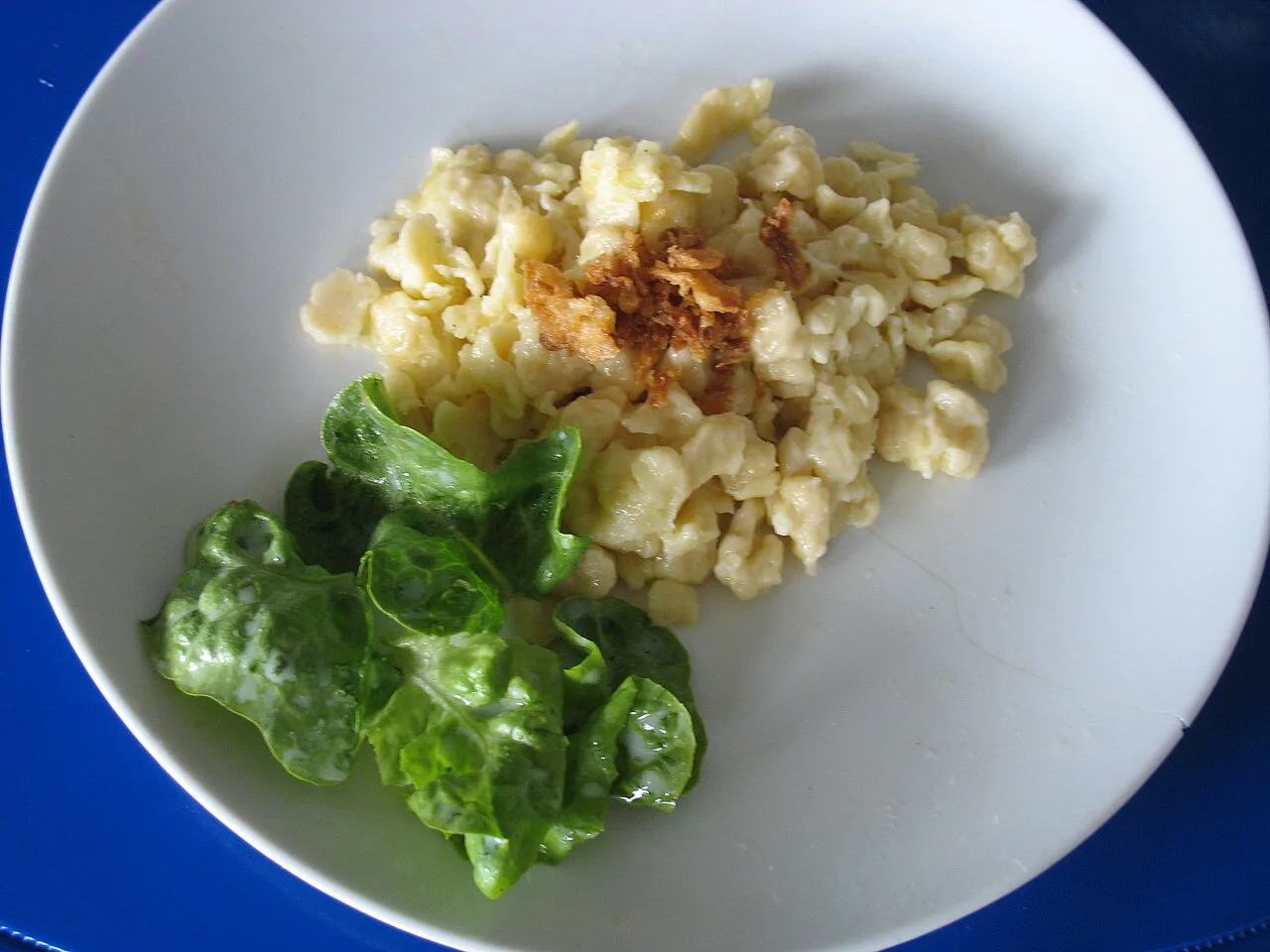
The base is spätzle, a soft egg-and-flour noodle that is pressed or scraped into boiling salted water and lifted out as soon as it floats. The noodles are then layered with grated cheese and, usually, fried onions, so the cheese melts into strings between the layers rather than forming a sauce. A basic version is deliberately plain: noodles, cheese and caramelized onion, with no nutmeg or mustard powder required, though some kitchens season more aggressively.
Because the cheese is layered rather than stirred into a béchamel, Käsespätzle is not macaroni and cheese in the American sense, even though English-language recipe writers often translate it that way. Expect a denser, stretchier plate with the tang of a hard Alpine cheese, and a texture closer to baked pasta than to a creamy sauce.
Where it comes from: Vorarlberg, Tyrol and the Allgäu
Käsespätzle is often filed under German food, and that is only half the story. Recipe sources place closely related cheese spätzle in Baden-Württemberg and the Allgäu, the Bavarian Alpine region that runs up to the Austrian border, while the dish is equally at home in Vorarlberg and the Tyrol. Treat it as border-country cooking: the same mountain cheeses, the same noodles and the same fried onions appear on both sides of the frontier under slightly different names.
That shared geography explains why the dish sits so comfortably on Tyrolean menus alongside other cheese and dumpling plates. If you are building a picture of the region's cooking, it belongs with the same family as Schlutzkrapfen, the filled pasta of Trentino-Alto Adige, and Graukäse, the sour Tyrolean cheese.
What's in it: mountain cheese, aged Emmental, butter and onions
The cheese is the decision that changes everything. Robust mountain cheese, known as Bergkäse, or an aged Emmental gives the dish its savory pull; a mix of the two is common, and a little Parmesan or a blue cheese can sharpen it further in some kitchens. Avoid any version built on a bland young cheese, which turns the plate gluey instead of stringy.
Beyond that, the shopping list is short: flour, eggs, salt, butter and onions, with the onions either caramelized slowly in a pan or bought ready-fried for speed. Some cooks add a pinch of nutmeg or sugar at the end, but neither is essential to the dish.
How it reaches the table: pan-layered or oven-baked
The version that arrives at your table tells you how the kitchen works. Pan-layered Käsespätzle is assembled and tossed in a skillet so the cheese melts into soft strands and the noodles stay loose; oven-baked Käsespätzle is built in a buttered dish in layers and finished under heat, which gives a firmer, casserole-like plate with a crust on top. Both are legitimate, and the difference in texture is the main reason two restaurants can serve the same dish and feel like different foods.
Day-old or firm spätzle hold up better in the oven, because fresh soft noodles release water and turn mushy under heat. If you order the baked version, expect a denser plate that keeps its heat longer, which matters on a cool terrace.
How to eat it: as a main, with a green salad
In Austria, Käsespätzle is a main course, not a side dish, and portions reflect that. The standard accompaniment is a green salad with a simple vinegar-and-oil dressing, which cuts through the fat of the cheese and onions far better than a creamy dressing would. Order it as a deliberate counterweight rather than a garnish, especially if you are eating a late lunch before an afternoon of walking.
If the plate is offered in two sizes, take the smaller one unless you have skipped lunch, and add the salad instead of a second side.
Pronunciation and spelling on Austrian menus
You will see the dish written several ways: Käsespätzle with umlauts, Kasespatzle without them, Käse Spaetzle split into two words, and Kässpätzle in some regional spellings. All refer to the same plate. The pronunciation roughly runs KAY-zeh-SHPETS-leh, with the first syllable stressed and a short, clipped ending.
Menus that cannot render umlauts usually substitute ae, oe or ue, so a printed Kasespaetzle is not a different dish. If you are ordering in German, saying Käsespätzle slowly is enough; nobody expects a flawless accent.
How it fits an Austrian trip
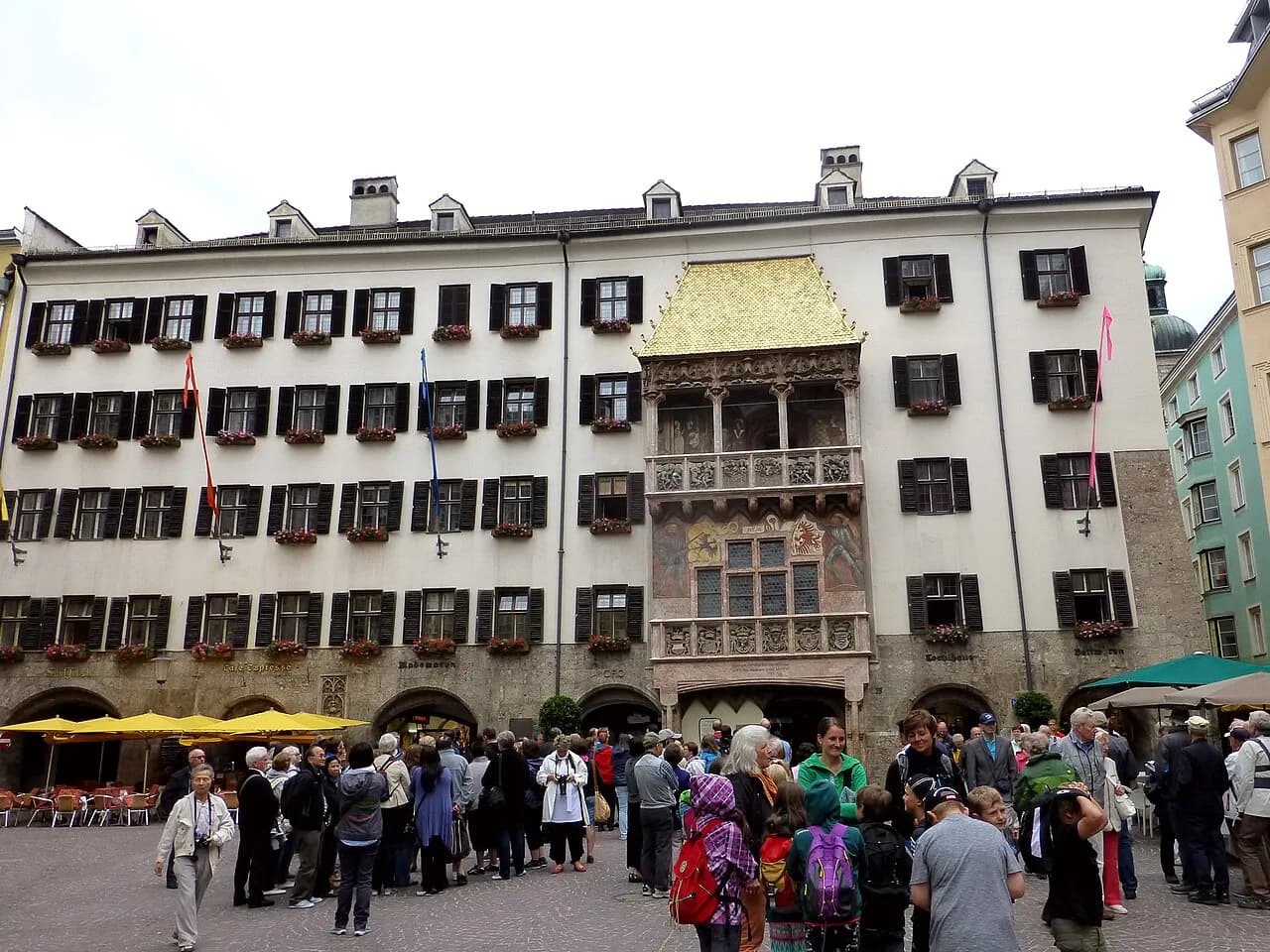
Käsespätzle is a lunch dish by nature: heavy enough to anchor the middle of the day, light enough that you do not want a big dinner afterward. In Innsbruck it slots neatly between a morning in the old town and an afternoon on a cable car, since town-center restaurants serve it from lunch onward and mountain huts serve it through their opening season.
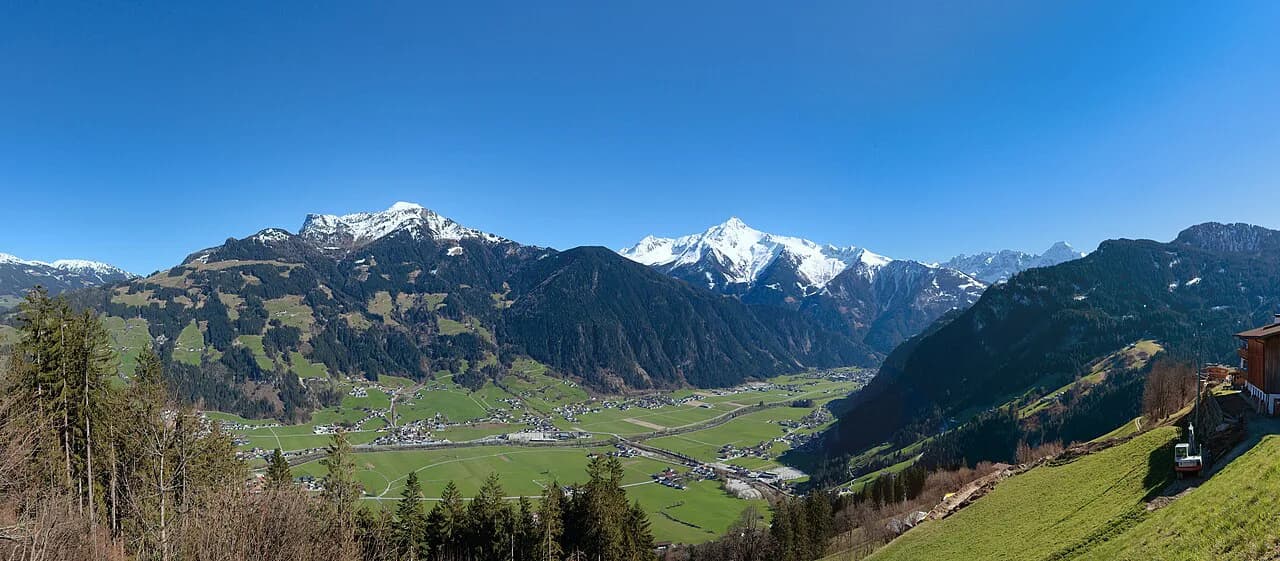
In Vorarlberg and the western Tyrol, it appears on the same menus as other cheese-based plates, so it is a safe order when you want something filling after a long drive. Hut kitchens often have a shorter list than town restaurants, and Käsespätzle is one of the dishes most likely to be on it.
Käsespätzle next to the rest of a Tyrolean menu
If you are choosing between the starch-heavy Tyrolean classics, the closest rival is Tiroler Gröstl, a pan-fried mix of potatoes, onion and pork topped with a fried egg; it is lighter on cheese and heavier on meat. Tyrolean Speck, the cured smoked ham of the region, is a common topping and a starter in its own right, so check whether your Käsespätzle comes with it before you order a plate of Tyrolean Speck alongside.
Dumplings, filled pasta and cheese plates dominate the rest of the list, which is why a green salad is worth ordering rather than assuming vegetables come with the meal.
Ordering it in a mountain hut versus a town restaurant
The kitchen, not just the setting, decides how the plate arrives. A town restaurant is likelier to bake it in layers in a buttered dish and to offer a small and large portion plus the salad as an explicit side, while a pan-layered version stays looser and stringier. Decide which experience you want before you sit down, because the two versions eat quite differently.
Prices vary by region and by whether the plate includes salad, so check the printed menu at the door, and carry some euro cash in case the hut does not take cards.
Ordering tips for travelers from the US
Portions are generous, so one plate plus a salad is usually enough for a moderate appetite, and sharing a single order between two people is often possible if you add a starter. Ask whether the fried onions are included or an extra, and confirm the cheese style if you dislike very sharp flavors, since mountain cheese can be pungent.
Austrian restaurants quote prices in euros and include service in the bill, so a small rounding-up is normal rather than a percentage tip. If you are paying by card, check before ordering in smaller huts, where cash is still common.
Is Käsespätzle the right plate for your Tyrol day?
Order Käsespätzle when you want one filling, savory plate that tells you what the Alpine border country cooks with: mountain cheese, simple egg noodles and fried onions. Choose the pan version if you want soft, stringy cheese, the baked version if you prefer a firmer crust, and add the green salad either way.
It fits best as a mid-day meal in Innsbruck, a Vorarlberg town or a hut along your route, leaving the evening free for something lighter. Read the menu at the door for the day's price and portion sizes, and treat the spelling variants as the same dish.
Explore more Innsbruck guides
Frequently Asked Questions
Is spaetzle the same as mac and cheese?
No. Käsespätzle uses soft egg noodles layered with melted hard cheese and fried onions, not a béchamel sauce, so the result is denser and sharper than American macaroni and cheese. The dish is often translated that way in English recipe writing, but the texture and the cheese are different.
Can I order Käsespätzle without fried onions?
Often yes, since the onions are a topping rather than part of the noodle dough, and kitchens can usually leave them off. Ask when you order, because in some baked versions the onions are layered through the dish and cannot be removed afterward.
What should I drink with it?
A dry white wine, a light beer or plain water all work with the cheese, and many Austrians order a small salad and a soft drink at lunch. The dish is rich enough that a heavy drink adds little.
Is Käsespätzle served year-round?
It appears on menus across the seasons in town restaurants and in mountain huts during their opening period. Hut opening dates shift with the weather, so confirm that the hut you plan to visit is serving before you set out.
Sources
Notes for your next Austrian town break
Optional updates when we add or revise town guides.
You might also like
Continue reading
More guides you'll find useful