Tiroler Gröstl: What It Is and How It's Served in Austria
Tiroler Gröstl is a Tyrolean pan of potatoes, meat, onions and bacon topped with a fried egg. Learn what it is, where it's served, and how it varies.
On this page
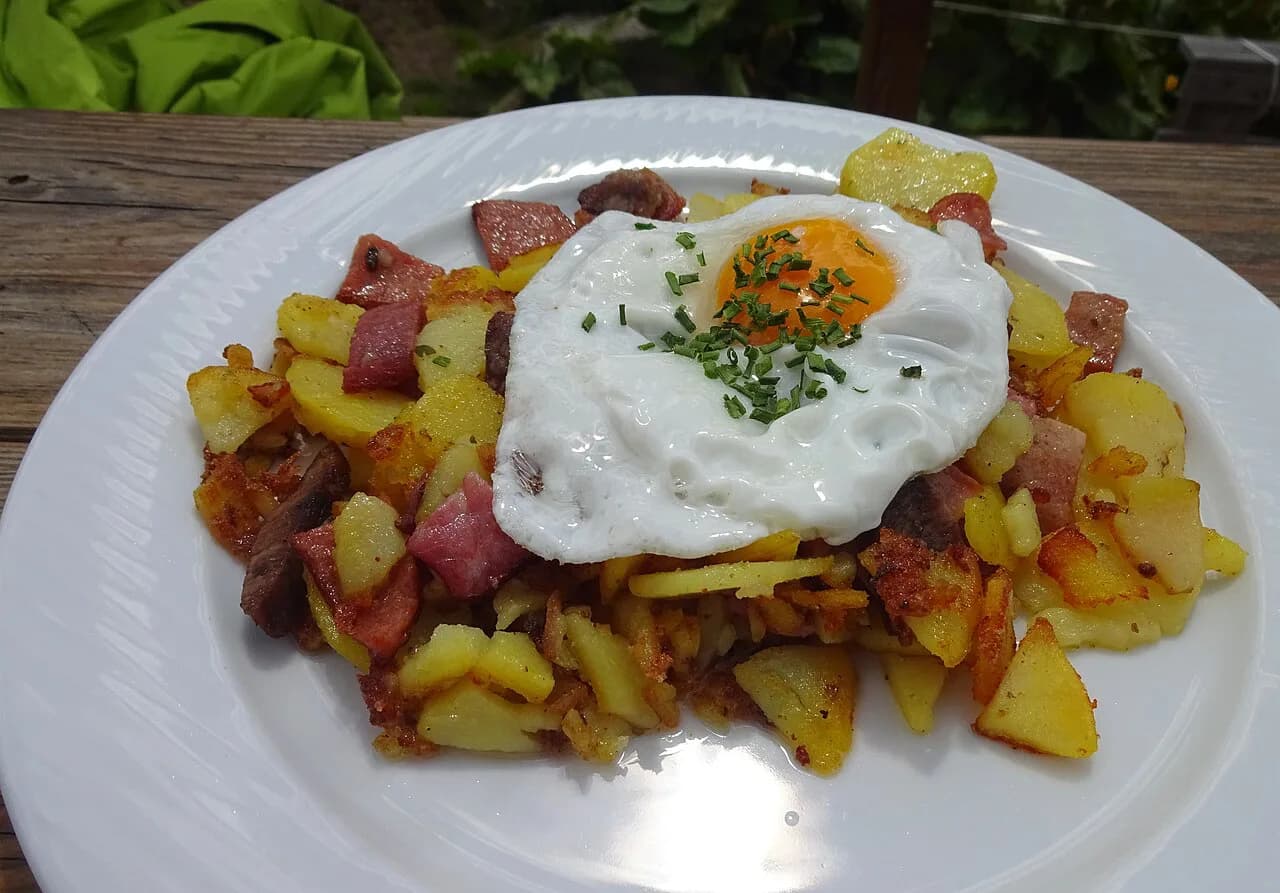
Tiroler Gröstl is a hot pan of sliced boiled potatoes, diced meat, bacon and onions, browned in butter and served with a fried egg on top. It is a mountain-hut and mountain-restaurant staple across Tyrol, filling rather than delicate, and it comes to the table as one generous plate. This guide covers where the dish comes from, what goes into a classic version, how it is served, and the variations and side orders you will meet in Austria.
Think of it as a farmhouse answer to leftovers rather than a chef's invention: the dish grew out of putting Sunday's roast beef and yesterday's boiled potatoes back to work. That history explains why no two versions taste alike and why the recipe shifts from valley to valley. If you are eating your way across the region, it sits naturally alongside the wider spread of Tyrolean food.
What Tiroler Gröstl is
At its core, Gröstl is a fry-up: potatoes boiled ahead, sliced, and browned in butter with onions and meat. A fried egg goes on top, and chopped chives or parsley finish the plate. The name describes the technique as much as the ingredients, since Gröstl refers to something roasted or fried in a pan.
Expect a hearty, salty, butter-rich plate rather than anything refined. The potatoes should be crisp at the edges and soft inside, the meat and bacon deeply browned, and the egg yolk loose enough to run into the potatoes. It arrives hot in the pan or on a warmed plate, and the portion is a full meal for most travelers.
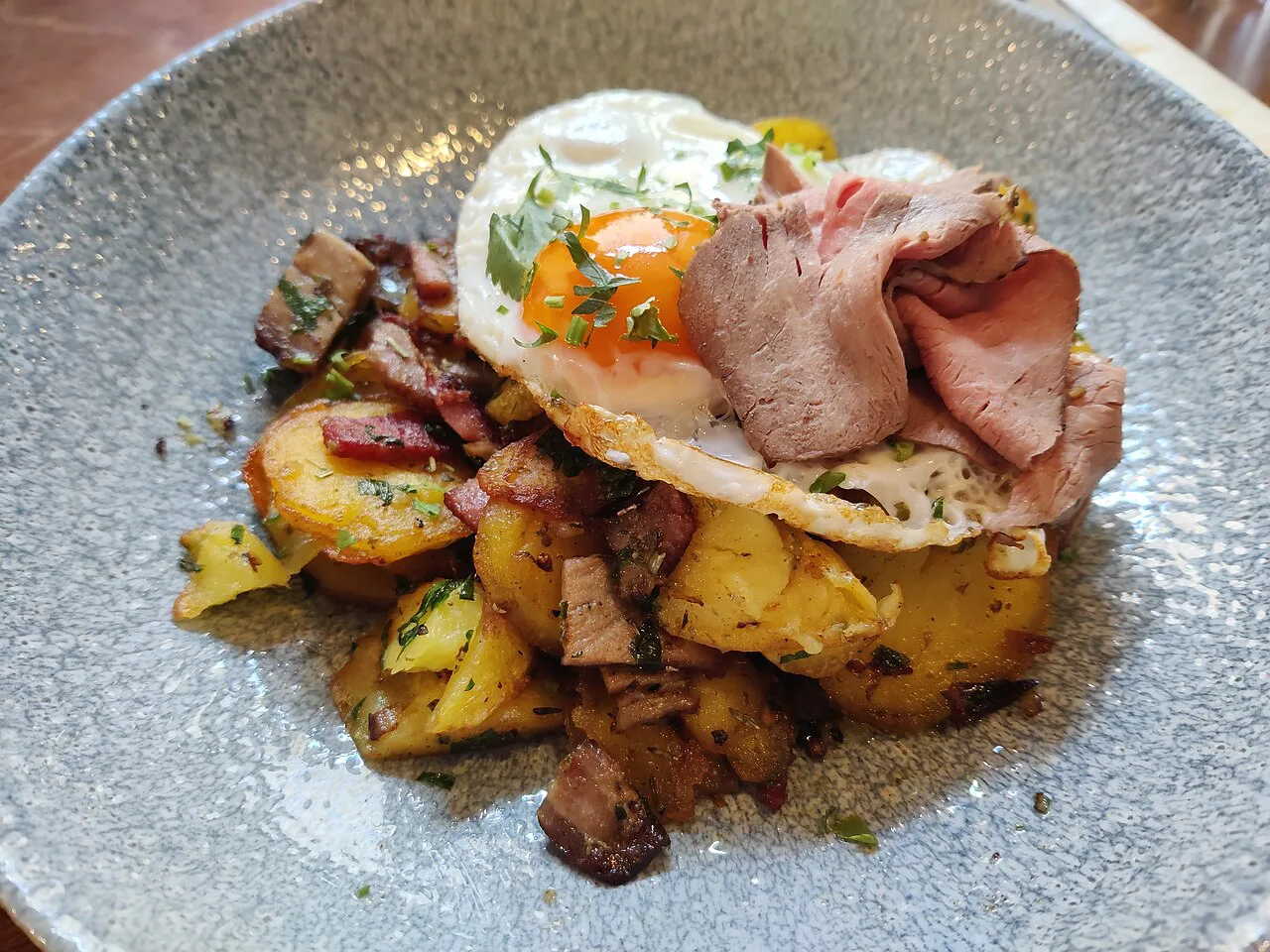
Where the name comes from and why it was a farmhouse dish
Gröstl began in Tyrolean farmhouse kitchens as a way to use up what was already cooked. A Sunday roast and boiled potatoes from the day before reappeared on the table as a second dish, which is why the recipe reads more like a method than a fixed formula. That practical origin also explains the confidence with which cooks change it.
Today it is a beloved specialty not only in Tyrol but across Austria, and it appears on the menus of mountain restaurants and ski huts as well as in town kitchens. Hikers and skiers value it for the energy it delivers after a morning outdoors. For a visitor, that means the dish is easiest to find where people come in from the cold hungry, not in white-tablecloth dining rooms.
What goes into a classic Tiroler Gröstl
The constants are boiled potatoes, onions, butter, salt and pepper, with a fried egg to finish. Meat is where versions part company: one Tyrolean recipe calls for cooked beef plus bacon, while other versions use pork, sausage or bacon cubes depending on what the kitchen has. Marjoram and caraway are common seasonings; caraway appears in Tyrolean recipes, and marjoram is often added.
Potato choice matters more than any single spice. Waxy, firm potatoes hold their shape when sliced and fried, so they are the type to look for. Cooking them a day ahead and letting them cool is the usual approach, which is why the dish is associated with yesterday's potatoes rather than fresh ones.
Bacon carries a lot of the seasoning, so a version loaded with smoked bacon tastes noticeably saltier and smokier than one built on diced beef. British home cooks know the same combination as Austrian hash, where bacon, onion and potato are fried with caraway and paprika and served with a fried egg. The paprika is a non-Tyrolean addition, but it shows how far the basic pan travels.
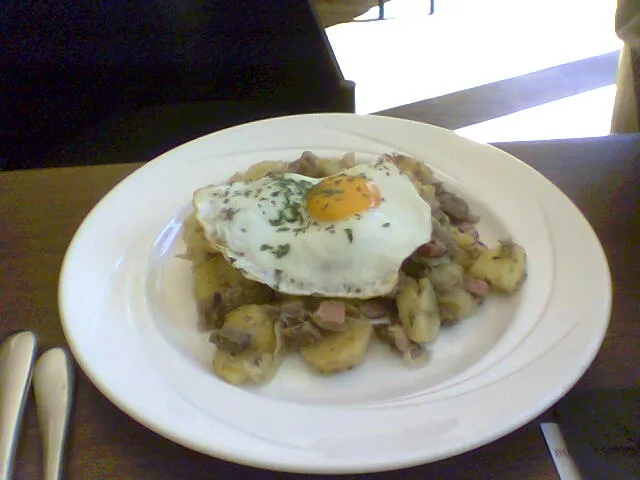
How it is made, in brief
Boil the potatoes, cool them, then peel and slice. Sauté chopped onion in butter, add the meat, sausage or bacon, then the potato slices, and keep everything moving until the edges brown. Season with salt, pepper and, if you like, marjoram and caraway, then slide a fried egg on top and scatter chives or parsley.
The sequence matters: meat and onions first for color, potatoes second so they pick up the fat and browned bits, egg last so the yolk stays soft. A generous knob of butter rather than oil gives the plate its characteristic richness. This is also why Gröstl works well in a vacation rental kitchen, since it needs one large pan and little watching.
How it is served and eaten
Gröstl comes as a single pan or plate with the fried egg on top, not as a starter to share. Chives or parsley go over the egg, and a crisp green salad often arrives alongside to cut the butter and bacon. Bread to mop the plate is a natural companion, and there is nothing delicate about the presentation.
Order it when you want one dish that ends the meal, rather than a sequence of courses. It is substantial enough that a salad and a shared plate can be plenty for two lighter appetites. If you want to try more than one Tyrolean classic in a sitting, order the Gröstl as the main and a plate of Käsespätzle for the table to share.
Where travelers find it in Tyrol
Look for Gröstl on the menus of mountain huts and mountain restaurants, where it is served to hikers in summer and skiers in winter. Its reputation as a filling, energy-dense plate is tied to those settings rather than to town restaurants. On a hut terrace at lunchtime, it is one of the most reliable orders on the board.
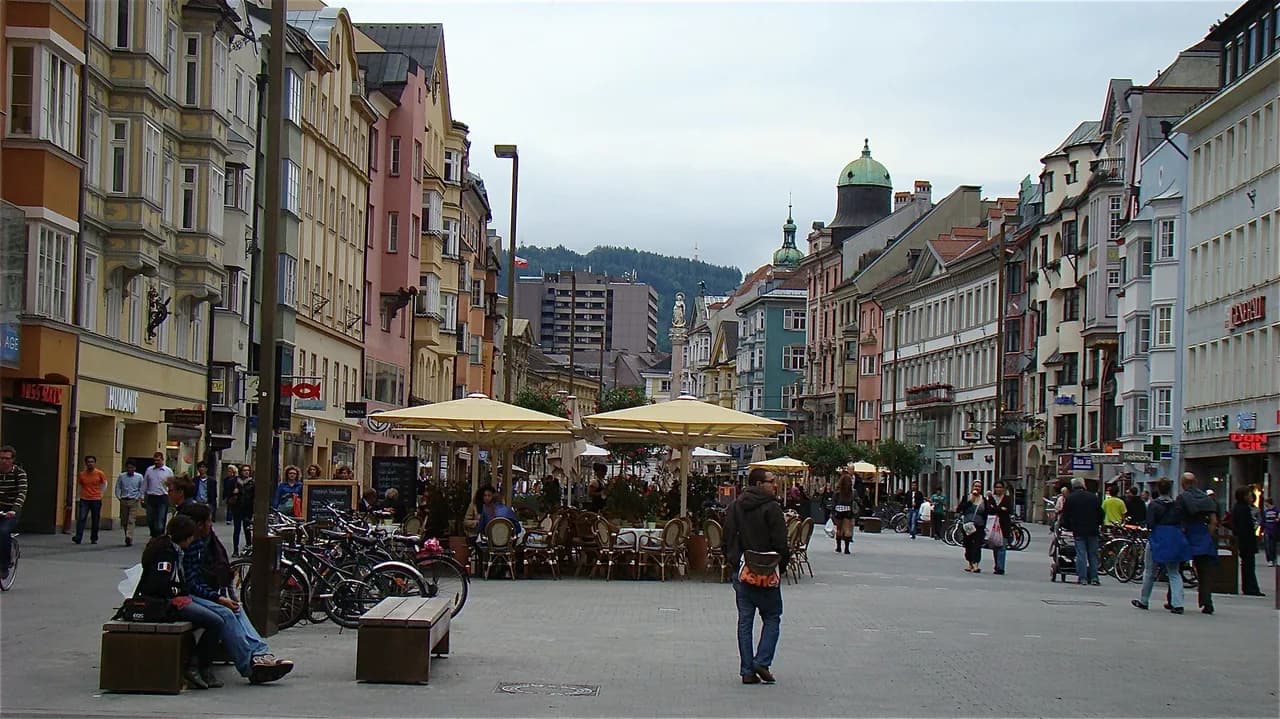
In Innsbruck and the larger Tyrolean towns, the dish turns up in traditional inns and pub-style kitchens rather than in fine dining. Menus change with the season and with the kitchen, so read the board rather than assuming it is available every day. Prices vary by venue and are printed on the menu, which is the figure to budget from.
If you are basing yourself in the city and want to plan around the meal, see our Innsbruck Attractions: 17 Visitor Guides for what else to do between lunches and dinners.
Vegetarian versions
Vegetarian Gröstl is common and every bit as substantial as the meat version. Cooks swap the beef, sausage or bacon for mushrooms such as button or king oyster, or for vegetables including zucchini, bell peppers, leeks, carrots, sugar snap peas and spinach. Smoked tofu or cheese also stands in for the meat, and the egg on top usually stays.
If you are ordering in a hut, ask whether the vegetarian version is cooked in the same butter and pan as the meat one, since that affects how strict the dish really is. A cheese-based version will taste richer and saltier than a vegetable one. Neither is a lighter meal: the potatoes and butter still carry the plate.
Variations you will see
Beyond the meat question, expect bell peppers, garlic or extra bacon in some kitchens, and sliced sausage instead of diced meat in others. Each region and every family has its own reading of the dish, so the version in front of you may bear little resemblance to the one you read about.
Seasoning shifts too: caraway and marjoram are the Tyrolean norm, while paprika and hot pepper show up in borrowed versions. A dish listed simply as Gröstl may be built on pork, on beef, or on bacon alone. Read the description on the menu and ask if you are avoiding a particular meat, since the name covers all of them.
What to order with it
A green salad is the classic side, and a small one is usually enough given the size of the potato plate. Bread to mop the yolk and butter is common, and a sharp nonalcoholic drink or a beer cuts the richness. If the plate looks large, share one Gröstl and add a soup or a salad to start.
For a broader table, pair it with other Tyrolean staples rather than a second potato dish. Tyrolean Speck is a natural addition to a cold board, and Schlutzkrapfen makes a lighter first course before a pan of Gröstl arrives. Ordering two fried potato dishes at the same meal is usually more than most tables finish.
What to expect on the plate
Tiroler Gröstl is a farmhouse pan, not a restaurant invention, and that is exactly why it is worth ordering: potatoes boiled ahead and crisped in butter, meat or bacon and onions browned together, seasoned with caraway and marjoram, and finished with a fried egg and a green salad. It is a full meal, best eaten where the mountain air has made you hungry.
Vegetarians should ask for the mushroom or vegetable version and check how it is cooked, and anyone avoiding a particular meat should read the menu description or ask, since the name covers beef, pork, sausage and bacon alike. If the plate is a standard part of a hut menu, prices and availability are posted where you order.
Explore more Innsbruck guides
Frequently Asked Questions
What does Gröstl mean in English?
Gröstl refers to a roasted or fried pan dish, and Tiroler Gröstl translates roughly as a Tyrolean fry-up. In practice it means sliced boiled potatoes fried in butter with onions and meat, topped with a fried egg.
How is Tiroler Gröstl different from a plain potato fry-up?
The Tyrolean version pairs the fried potatoes and onions with cooked beef or bacon, seasons them with caraway and often marjoram, and finishes the plate with a fried egg and chives or parsley. That combination is what distinguishes it from a simple pan of fried potatoes.
Is Tiroler Gröstl always made with beef?
No. Tyrolean recipes use cooked beef, pork, sausage or bacon cubes, and some versions rely on bacon alone. The constants are potatoes, onions, butter and a fried egg, not one fixed meat.
Can I get a vegetarian Gröstl in Austria?
Often. Kitchens swap the meat for mushrooms, bell peppers, leeks, spinach, smoked tofu or cheese, and the egg usually stays. Ask how the vegetarian version is cooked if you avoid meat strictly.
Sources
Notes for your next Austrian town break
Optional updates when we add or revise town guides.
You might also like
Continue reading
More guides you'll find useful