Tyrolean Speck: What It Is and How to Eat It in Austria
Tyrolean Speck is a cured, lightly smoked ham served on Brettljause boards across western Austria. Here is what it is and how to order it.
On this page
Tyrolean Speck is a cured, lightly smoked pork ham, and you will meet it most often as part of a Brettljause, the shared cold board that anchors a mountain inn lunch in western Austria. It is not a raw ham like prosciutto and not a fresh bacon: the salt cure and a light smoking step give it a firm, savory character that holds up on bread. This guide covers what Speck is, how it is made in brief, how it appears on menus from cold boards to dumpling soup, and how to buy a piece to take home.
What Tyrolean Speck is and where it comes from
Speck is a cured ham that gets a light smoking, and the version travelers encounter in Austria is usually South Tyrolean Speck, the Italian smoked ham from the province around the Dolomites. That split identity matters at the table: the product is closely tied to the German-speaking Alps on both sides of the Austrian-Italian border, so it appears on Tyrolean menus as a regional staple even when the meat was made south of the border.
For a wider look at how Speck sits among the region's other dishes, the broader guide to Tyrolean food covers the dumplings, noodles and cheese plates that share the same tables. Speck is the through-line: it turns up as a topping, a filling and a snack, not just as a slices-on-a-board item.
How Speck is made, in short
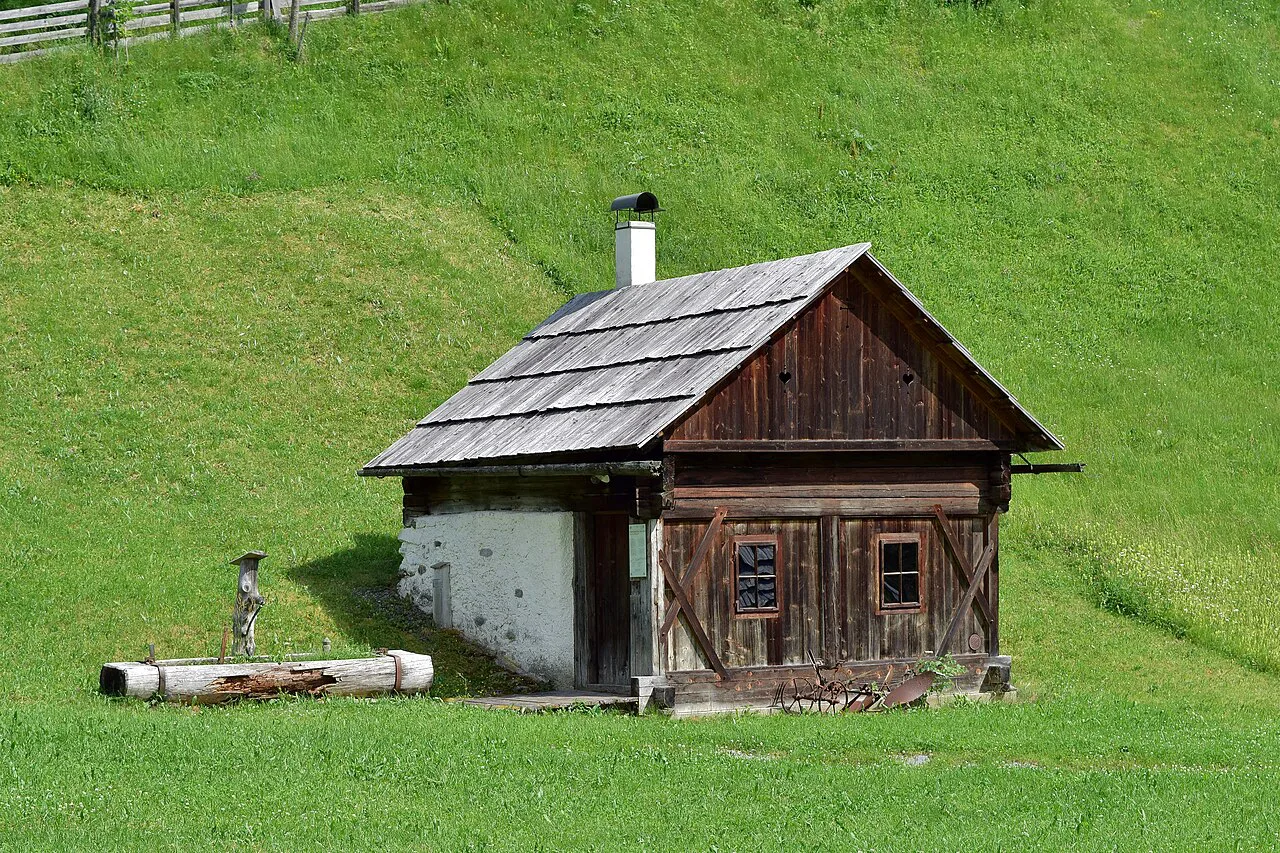
The making process is simple enough to explain in a few lines: the pork is salted and rubbed with a spice mixture, then smoked. South Tyrol's own tourism board describes the spice rub and the smoking step as the core of the method, which is why the result tastes more seasoned and smoky than a plain cured ham.
Speck on a Brettljause: what else comes on the board and how it is eaten
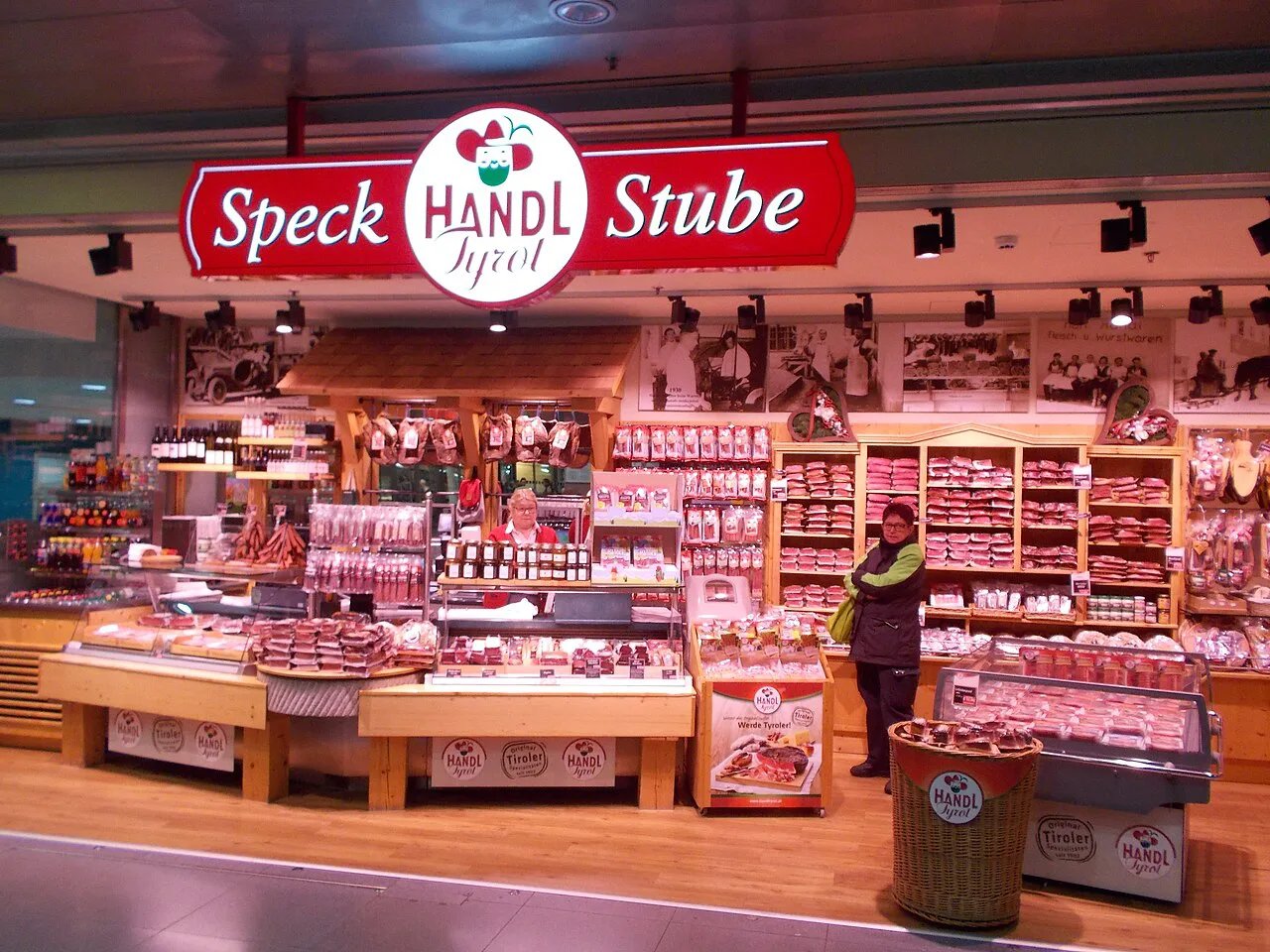
A Brettljause is a wooden board of cold cuts, cheese, pickles and bread, meant to be shared, and Speck is one of its standard components rather than the whole dish. South Tyrol's tourism board notes that farmhouse bacon or Speck can be found on every Brettljause snack, which tells you how central it is to the format.
Eat it the way the board intends: Speck slices on dark bread, with a pickle or a piece of cheese between bites to cut the salt. If the board is your main meal, add a bowl of soup or a plate of Käsespätzle for the table; the cheese noodles with fried onions are a heavier counterweight to the cold cuts and make a shared lunch work for a mixed group.
Speck in hot dishes and cold plates
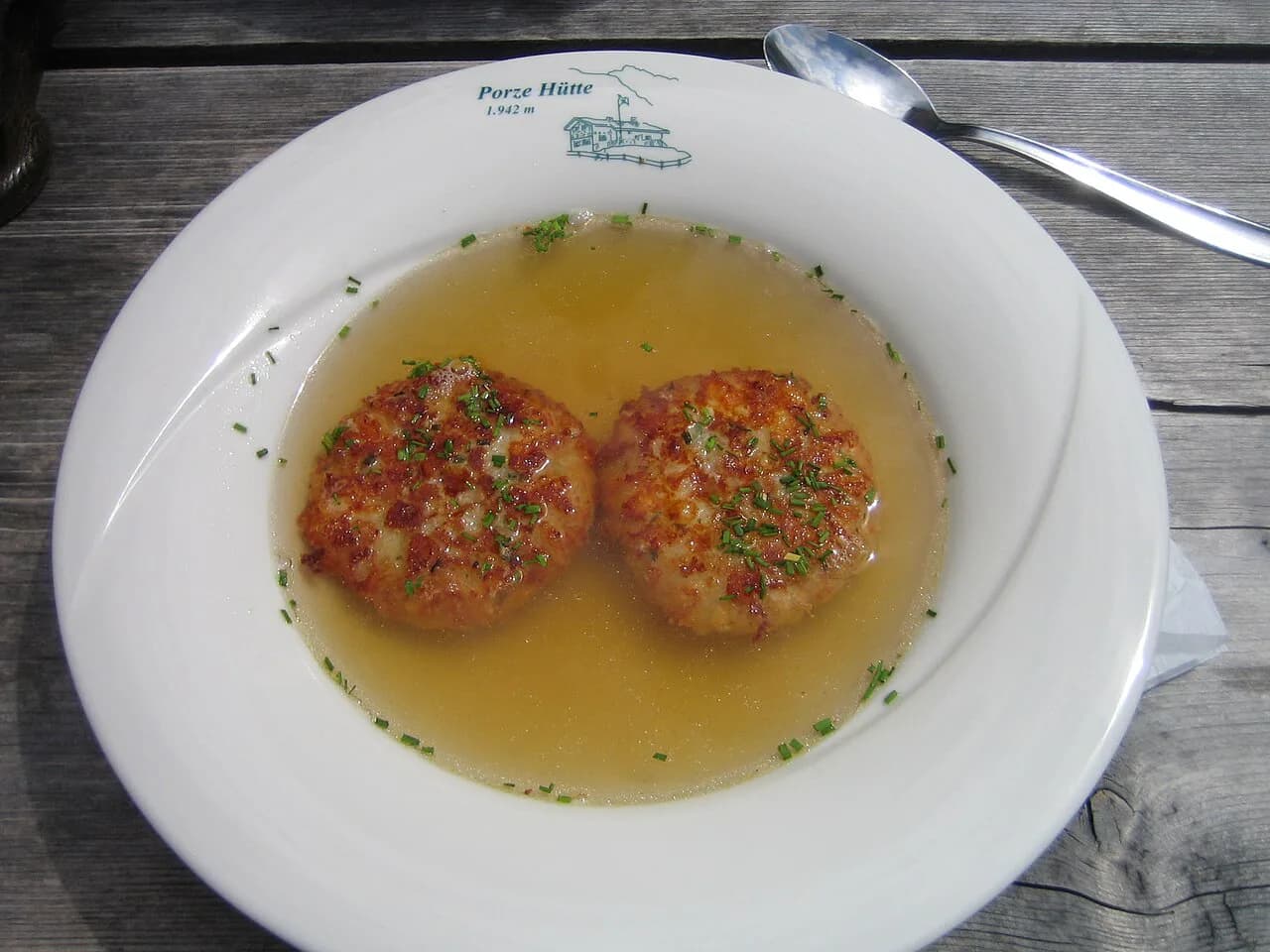
Beyond the board, Speck is a flavoring as much as a food: it is diced into dumplings, simmered into soup and scattered over warm salads. On a Tyrolean menu, look for Speckknödel (bacon dumplings), Speck soup and Speck salad, and expect the meat to be cut in small cubes or thin strips rather than the thicker slices of a cold board. The smoked edge is what makes those dishes work, so a Speck soup tastes noticeably different from a plain ham broth.
If you order a hot plate built around ham and potatoes, Speck may appear alongside it rather than in it, since Tiroler Gröstl is a skillet of potatoes, onion and meat topped with a fried egg. That is the pattern across the region: Speck is one ingredient in a larger plate, so read the menu description rather than assuming the dish is a pile of smoked ham.
How to buy Speck: farm shops, markets and vacuum-packed cuts
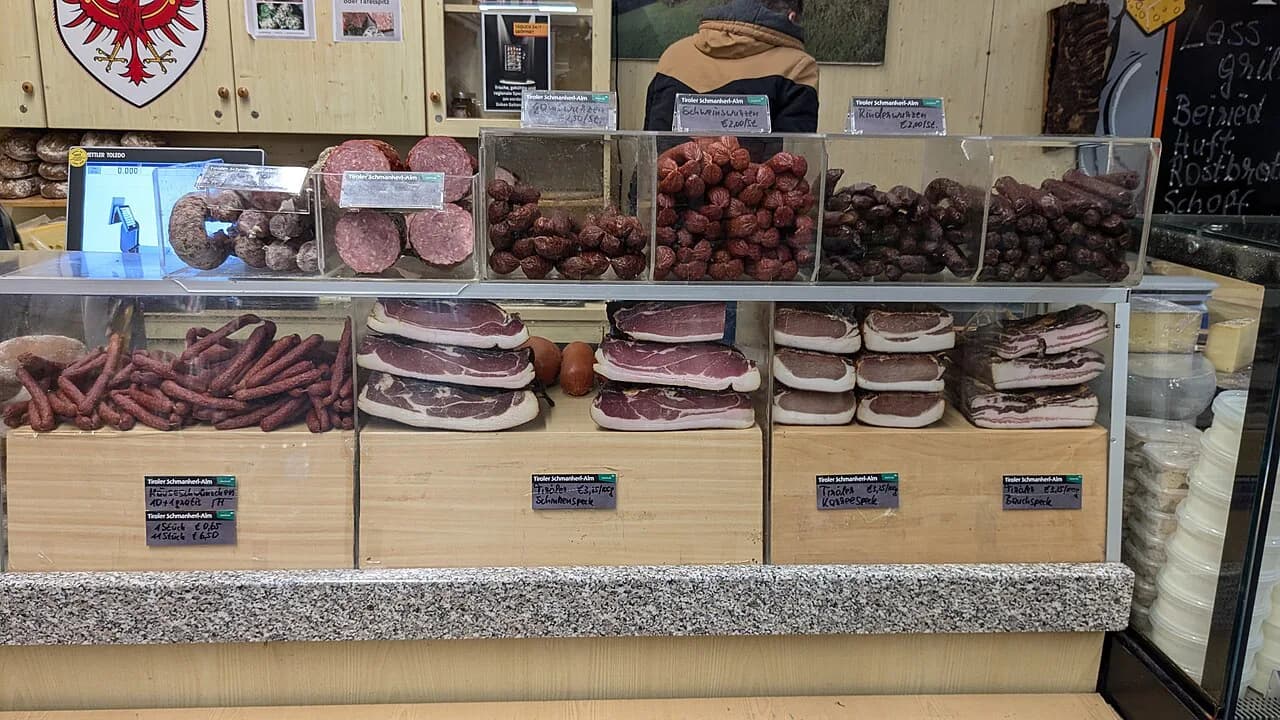
For a piece to carry home, buy from a farm shop, a mountain inn that sells its own products or a market stall, and ask for it vacuum-packed; whole cuts travel better than presliced packs, which dry out and crush in a bag. South Tyrol's tourism board notes that some taverns and farms still produce bacon in its original form, which suggests farm-direct buying is a real option in the region rather than a tourist fiction.
Sold in Austria, Speck often carries a South Tyrol origin on the label, which is a useful cue rather than a warning: it tells you the meat came from the Italian side of the Alps. If the packaging is unclear, ask the vendor at the counter whether the piece is smoked.
Speck vs. bacon, prosciutto and pancetta
Speck is its own product, distinct from the others you may see on the same menu. Eataly describes Speck as a cured, lightly smoked ham made in South Tyrol, the province in northeast Italy known for the Dolomites, and the two steps that define it are the salt cure and the light smoke. Prosciutto is cured without that smoking step, which is why it is a different product; bacon is usually sold raw or lightly cured and is cooked before eating; pancetta is cured pork belly, unsmoked and rolled, with a much higher fat ratio.
The practical upshot for ordering is simple: if you want the smoky, firm slices on a cold board, ask for Speck, not prosciutto. If a menu offers Speck as a pizza topping or a pasta addition, it will be cut thin or cubed, and the smoke will dominate the dish more than a plain ham would.
Ordering and eating it: portions, bread, cut style and what to pair it with
At the counter or the table, order Speck thin-sliced for a board or thick-cut if you want it as a snack with bread. A Brettljause already includes bread, so check what comes on the board before adding a separate basket.
If you are building a lighter meal, treat Speck as a flavoring for a green salad with a sharp dressing rather than a main course. The same logic applies to a plate of Käsespätzle: a small side of Speck adds smoke, but the cheese and onions are already rich, so keep the portion modest.
Where Tyrolean Speck fits on an Austria route
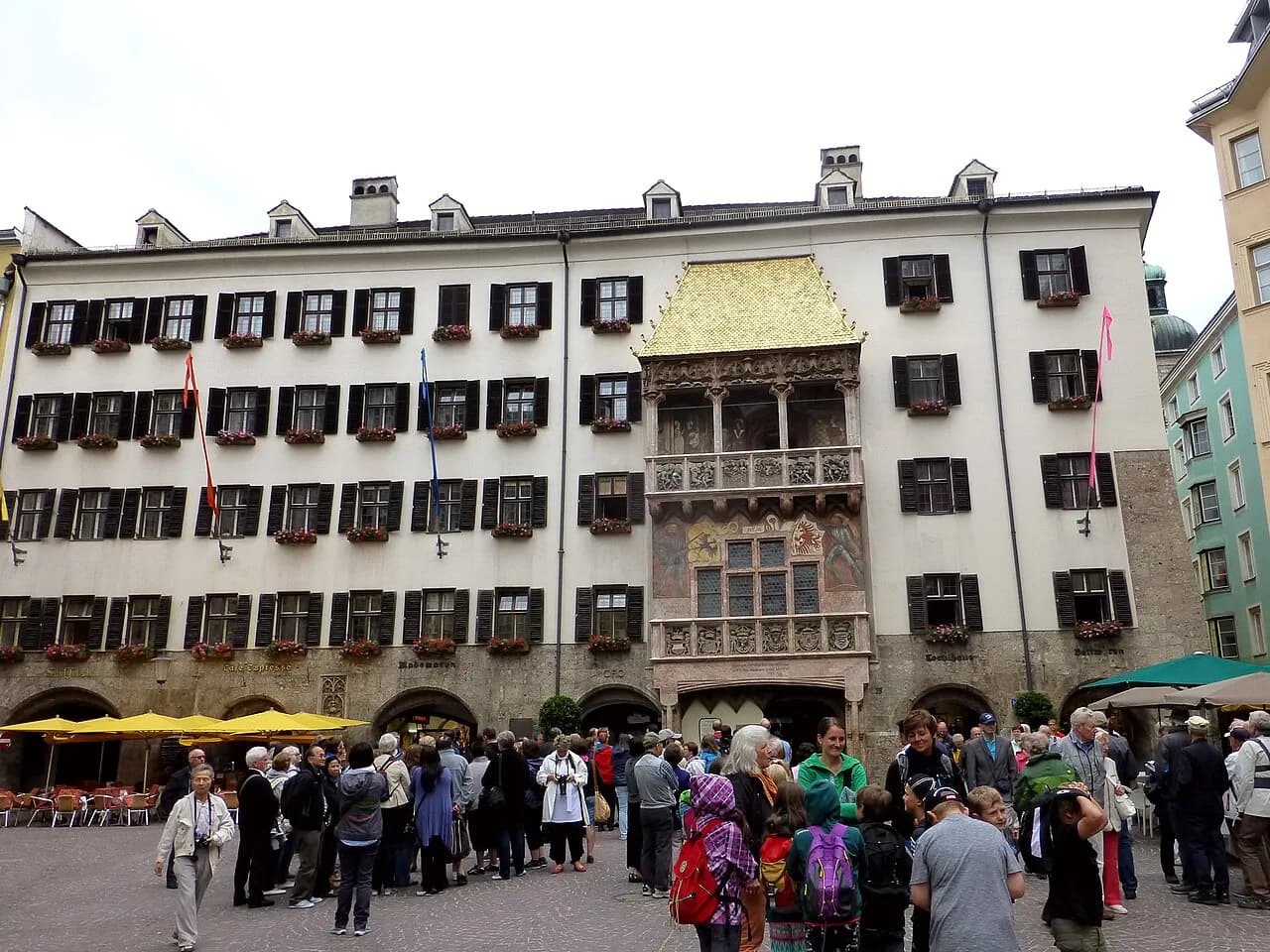
Speck is easiest to find in the mountain west, where Innsbruck makes a practical base for a few days of town and valley stops before you head toward the Salzkammergut or the Danube. From Innsbruck, a Brettljause lunch at a mountain inn is a natural half-day anchor, and the city's own sights fill the rest of the day.
If you continue south toward the Dolomites, you cross into the region where most Speck is made, so a farm-shop purchase on the way is a sensible souvenir stop rather than an afterthought. If you head east instead, the product stays on menus but the local focus shifts toward the Danube and lake towns, where the food is built around fish, fruit and wine rather than smoked ham.
Where to eat your first Brettljause
The best first encounter with Tyrolean Speck is a shared Brettljause at a mountain inn, ordered for two with bread and a soup or salad on the side, so you can taste the ham as part of a meal rather than as a lone snack. If you want to take some home, buy a vacuum-packed piece from a farm shop or market stall and ask whether it is smoked, since the label may simply read Speck.
Explore more Innsbruck guides
Frequently Asked Questions
Is Speck just smoked prosciutto?
No. Both are cured pork, but Speck goes through a light smoking step after the salt cure, while prosciutto is cured without smoke. That is why Speck tastes savory and firm rather than delicate and sweet, and why it holds up on a cold board with bread and pickles.
What is Speck called in the US?
There is no exact American equivalent. The closest everyday comparison is a smoked, cured ham, but American smoked ham is usually cooked, while Speck is served cold and sliced thin. Look for it in specialty food shops or Italian delis under the name Speck or Speck Alto Adige.
Is Speck better than bacon?
They are different products for different uses. Bacon is usually cooked before eating, while Speck is cured and lightly smoked and eaten cold or used as a flavoring in dumplings and soups. If you want a smoky slice to eat with bread on a hike, Speck is the one on Austrian menus.
Sources
Notes for your next Austrian town break
Optional updates when we add or revise town guides.
You might also like
Continue reading
More guides you'll find useful