Piber Stud Farm: Visiting the Lipizzaner Stud Near Graz
See where the Spanish Riding School's Lipizzaner stallions are bred at Piber near Graz, with guided stud tours, mares and foals, and how to get there.
On this page
The Piber Stud Farm, officially the Bundesgestüt Piber, is the breeding home of the Lipizzaner horses that perform at Vienna's Spanish Riding School. It sits in the village of Piber near Köflach, roughly a 45-minute drive west of Graz, and the visit is built around a guided tour of the stables rather than a free wander.
Expect mares and foals rather than polished white stallions: the young males leave for training, and only a select few come back to Piber briefly for breeding. This guide covers the tour times, the buildings at the farm entrance, the drive and rail options from Graz, and how the stud slots into a wider Styria itinerary.
What the Piber Stud Farm is and why it matters
Piber has been the birthplace of the Spanish Riding School's Lipizzaner stallions since 1920, which makes it the start of a chain that ends in the Riding School's baroque hall in Vienna. The breed itself traces back to 1580, when the Habsburgs crossed Spanish Andalusian stock with other European horses to create a horse suited to both military use and court riding schools, with the main stud at Lipica in what is now Slovenia.
By the 18th century six foundation stallions had been identified at Lipica, and every Lipizzaner today descends from them. After World War I, when the Austro-Hungarian Empire was divided, Austria kept the most significant animals, the main stallions, and their descendants still supply the white horses of the Spanish Riding School.
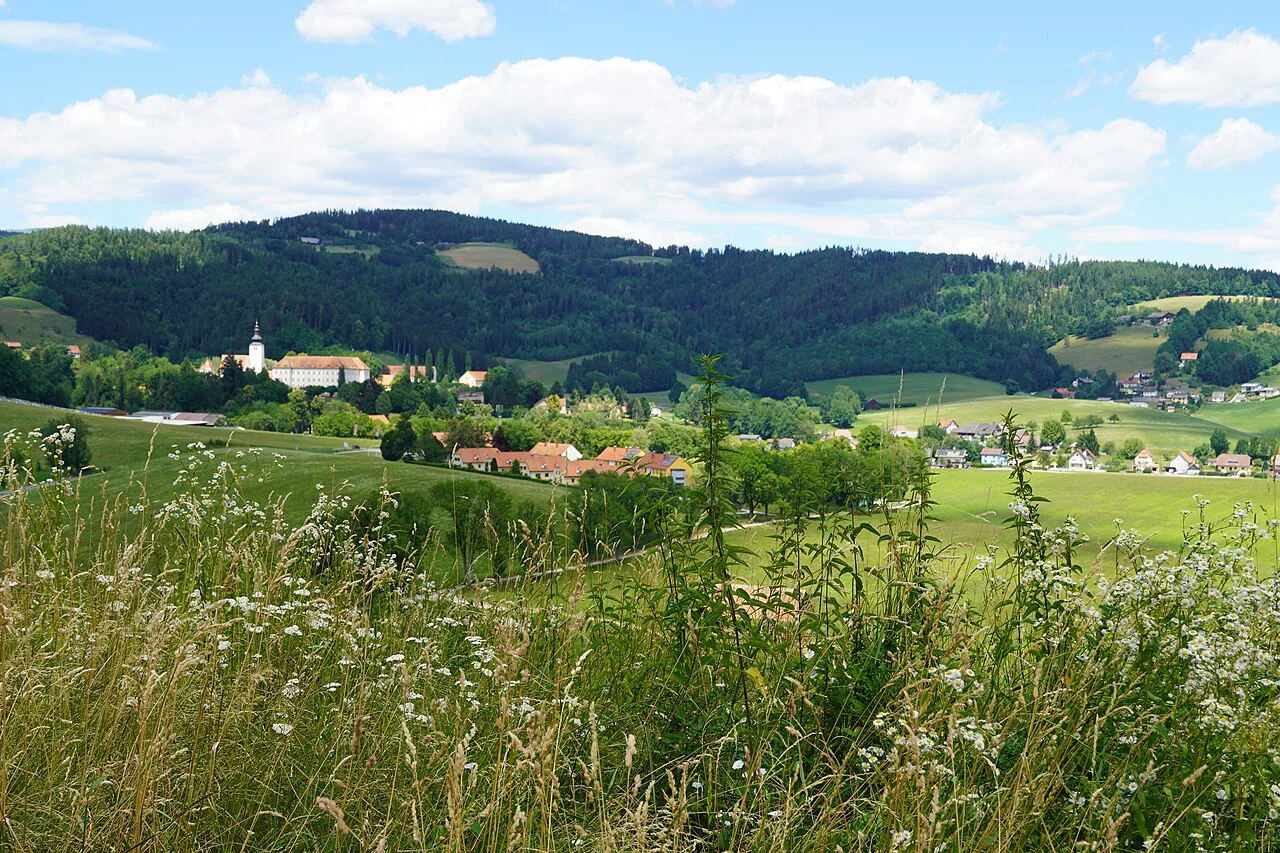
Where Piber is: the village near Köflach, west of Graz
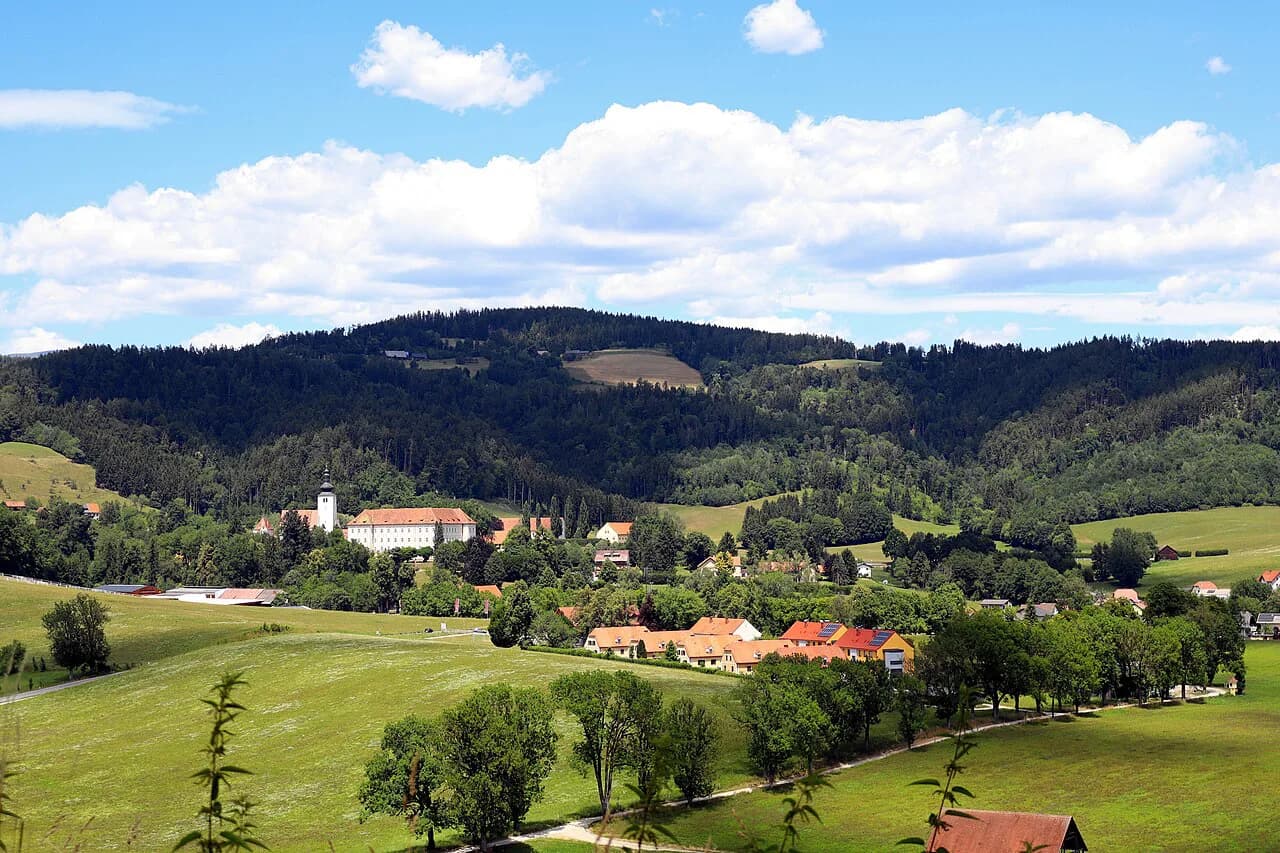
The farm lies at Piber, next to the small town of Köflach in western Styria, in rolling green hills with forests and villages in the distance. It is countryside, not a city sight, so build it into a day that also uses Graz as its base or a car route heading west.
The broader region rewards a slower loop: the Styria: A Traveler's Guide to Graz, the Vineyard Hills and the Alps maps the main towns and roads, so you can see whether Piber fits your direction of travel before you commit a day to it.
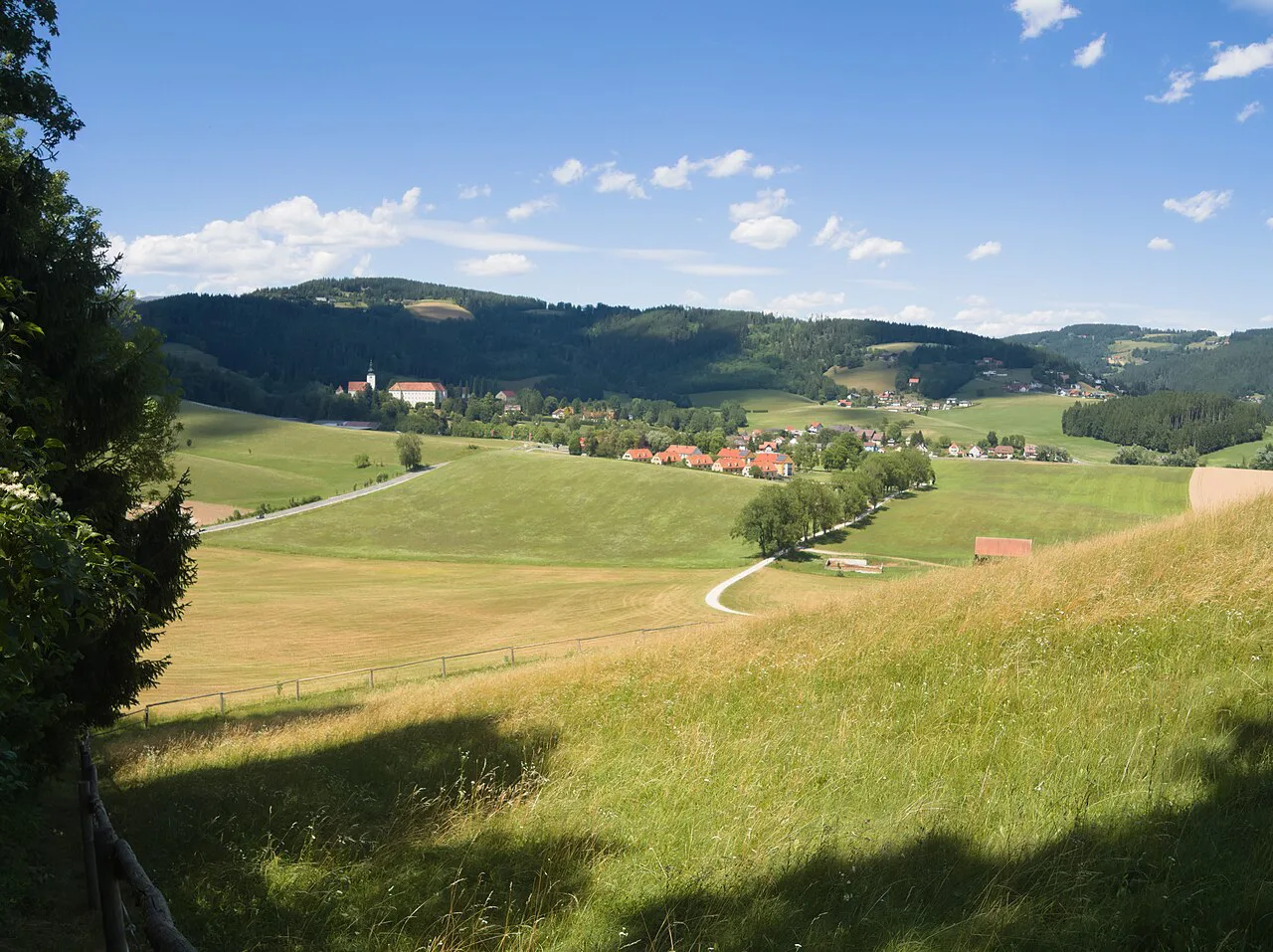
How to get to Piber from Graz by car and by train and bus
Driving is the straightforward option. The farm is about 45 minutes west of Graz by car, which makes a half-day round trip realistic if you leave in the morning and combine it with Köflach or another stop on the way back.
Without a car the trip is harder to plan, and the tour runs at set times, so a missed connection costs you the visit rather than just an hour. If you are relying on public transport, work out your connections before you commit to a departure slot, and budget the roughly 45-minute drive time as the baseline if you drive instead.
The guided stud tour: what it covers and when tours run
Guided stud tours depart daily at 9:45, 11:00, 13:30 and 14:00, according to the Spanish Riding School's own page for Piber. Treat those four departures as the skeleton of your day: arrive with enough margin to park, buy your ticket and join the group, because the tour is the visit.
The tour takes you through the stables and explains the breeding program, which is where the value lies for anyone who has seen a Riding School performance and wondered how the horses get there. Confirm the current tour times and admission on the Spanish Riding School site when you book, since the schedule is fixed rather than rolling.
What you see on a visit: stables, mares, foals and the stallion story
Piber is a working stud, and the mares are at its center. Foals are born and raised here, while stallions are transferred to Heldenberg at about four years old for roughly six years of training before the best go on to Vienna, and only a few return to Piber briefly for breeding.
That means you should not expect to see the polished white performing stallions at Piber. What you get instead is the breeding side: mares, young stock and the practical work of a federal stud, which is a different and arguably more interesting story than a dressage display.
The farm also offers a Lipizzaner carriage ride, an add-on worth deciding on when you arrive rather than assuming it is part of the standard tour. Ask at the ticket desk what is running that day.
Piber Castle and St Andrews Church at the entrance to the farm
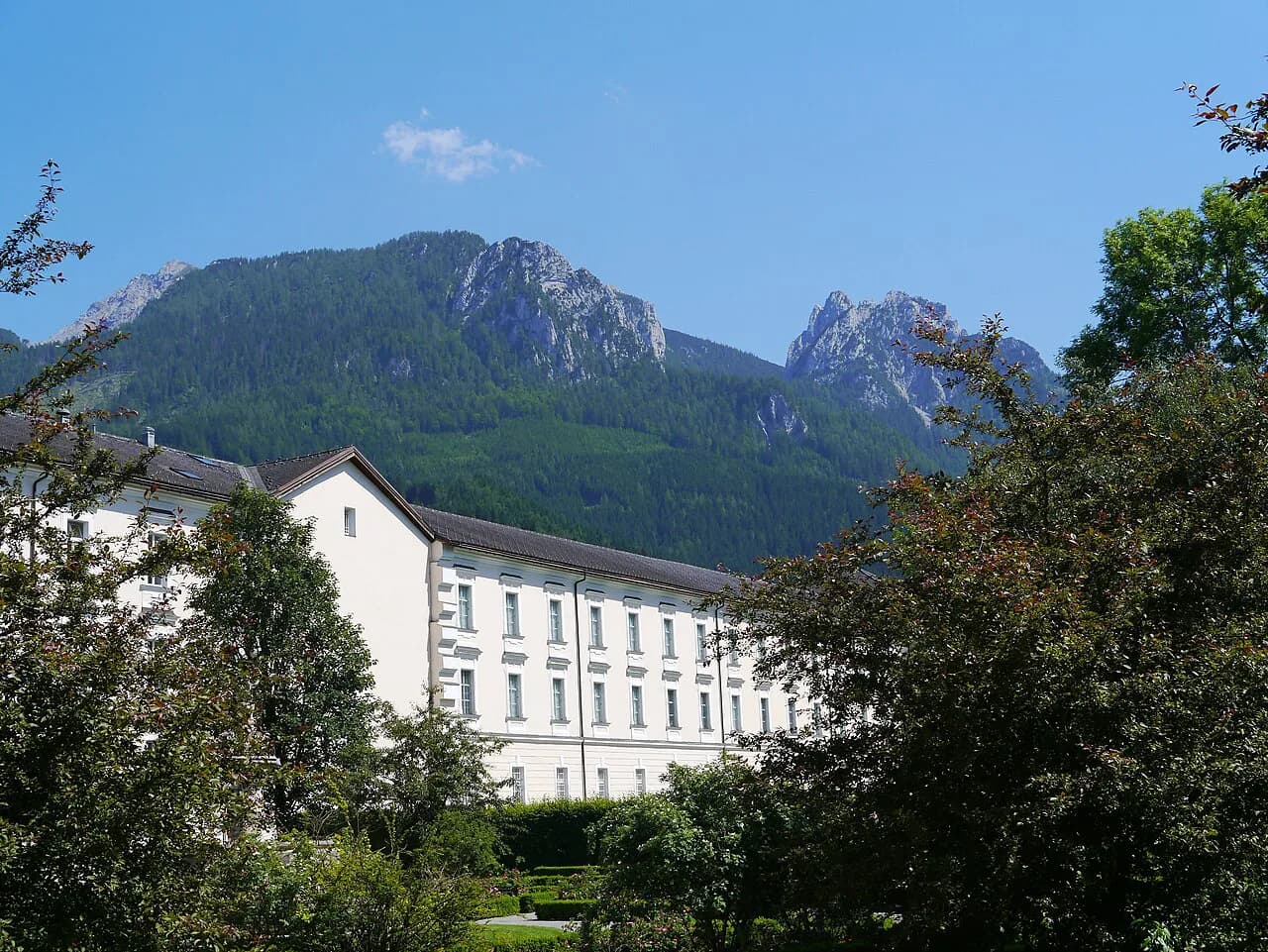
At the entrance stands Piber Castle, originally built as a baroque abbey at the start of the 1700s, almost a century before the stud opened here in 1798. Next to it is St Andrews Church, founded on the site in 1066 and rebuilt several times since.
Piber Castle and St Andrews Church stand right at the farm entrance, so they are easy to take in around your tour slot rather than as a separate stop. Budget a little time for the castle exterior and church before or after your departure instead of rushing straight to the stables.
How the stud fits a Styria route from Graz
Read the Styria: A Traveler's Guide to Graz, the Vineyard Hills and the Alps before you book anything, because Piber works best as one stop on a westward loop from Graz rather than a destination on its own. A morning tour, lunch in Köflach and a scenic drive back fills a day comfortably.
If you are building a longer Styria itinerary, the Graz Attractions: 7 Visitor Guides covers the city's own sights, which pair naturally with a Piber morning. Farther afield, the Admont Abbey library in the Gesäuse is a strong second-day target for anyone heading north.
East of Graz, Riegersburg Castle and the Thermen- & Vulkanland make a separate day of castles and volcanic hills, so resist trying to link them with Piber in one push.
What to know before you go: tour timing and booking
Book around a specific departure rather than turning up and hoping. With tours at 9:45, 11:00, 13:30 and 14:00, the middle of the day is tight if you are driving from Graz, and the last two departures leave little room for a leisurely look at the castle afterward.
Admission prices are published by the stud operator, so check the current euro rate on the Spanish Riding School's Piber page when you book rather than relying on older figures. Wear shoes you don't mind getting dusty, since this is a working farm with stables and yards.
Should Piber be on your Styria route?
Yes, if you care how the Lipizzaner is bred and want a countryside half-day out of Graz; no, if you are hoping to watch dressage, which happens in Vienna. Set your day around one of the four daily tour departures and keep the rest of the schedule loose.
Pair Piber with a Graz city day or a westward drive through Styria, and leave the castle and church for the margin around your tour slot. That is enough to make the trip feel complete without padding it.
Explore more Graz guides
- Bruck an der Mur
- Erzberg in Eisenerz
- Gesäuse National Park
- Hartberg
- Leoben: The Mur Town's Old Center, Schwammerlturm and Stift Göss
- Mariazell
- Murau: A Guide to the Old Town, Schloss Murau and the Brewery
- Ramsau am Dachstein
- Weiz: A Guide to the Old Town, the Taborkirche and the Weizberg Basilica
- Zotter Chocolate
Frequently Asked Questions
Do you see the white performing stallions at Piber?
Generally not. Piber is the breeding stud: mares and foals live here, while young stallions go to Heldenberg for training and the best later move to Vienna's Spanish Riding School. Only a few return briefly for breeding, so the visit shows the breeding side of the chain rather than a dressage display.
How long does a visit to the Piber Stud Farm take?
The visit is built around a guided tour, and tours depart at fixed times, so how long you stay is shaped by which departure you join. The drive from Graz is about 45 minutes each way, so allow for that in your day.
Are tickets sold on site or in advance?
The Spanish Riding School publishes the current tour times and admission details on its Piber page, and booking around a specific departure is the safer approach. Check the euro price there when you book rather than relying on older figures.
Sources
Notes for your next Austrian town break
Optional updates when we add or revise town guides.
You might also like
Continue reading
More guides you'll find useful